Our readers keep the lights on and my smoothie glass nicely filled. As an Amazon Associate, I earn from qualifying purchases.
You should not have to stand on a wobbly ladder or fight with a squeegee to get spotless, streak-free windows. An automatic window cleaner fastens itself to the glass, sprays a fine mist, and methodically scrubs and wipes its way across every inch of the pane, leaving you free to do something else entirely — or nothing at all.
I’m Mohammad Maruf — the founder and writer behind WellFizz. I have analyzed over sixty robotic glass-cleaner markets and compared dozens of suction ratings, navigation systems, water-delivery methods, and safety protocols to find the models that actually deliver on their promise of hands-off clarity.
Whether your windows look out over a quiet backyard or a busy city street, the right machine eliminates the danger and drudgery of glass cleaning. This guide walks through the specs that matter so you can confidently pick the best automatic window cleaner for your home.
How To Choose The Best Automatic Window Cleaner
Every automatic window cleaner must balance three core demands: it must stick reliably to vertical glass, clean without leaving a film, and keep itself from crashing into window frames. The following factors separate machines that earn their keep from those that just spin their wheels.
Suction Power and Safety Systems
The robot’s suction, measured in Pascals (Pa), is what keeps it clamped to the glass. Entry-level models hover around 2,700 Pa, while premium units push past 6,500 Pa. Higher suction is not just about staying attached — it also lets the robot apply more downward pressure for scrubbing. Look for a backup battery that maintains suction during a power failure, and a secondary safety tether that keeps the unit from dropping even if the seal breaks.
Navigation, Path Planning, and Edge Detection
Early robots wandered randomly, but modern units use SLAM (Simultaneous Localization and Mapping) algorithms to trace a systematic Z-shaped path across the pane. Good navigation reduces cleaning time and ensures no strip of glass is missed. Equally important is edge detection — sensors that tell the robot to stop spraying near the frame so water does not trickle down the trim. Models without reliable edge detection may leave wet rings or require manual intervention.
Water Delivery and Pad Design
How the robot applies water matters more than most buyers realize. Ultrasonic atomization creates a fine mist that coats evenly without oversaturating the pad, while pump-driven sprayers shoot larger droplets that can dissolve stubborn dirt. External water tanks (65 ml to 85 ml) allow you to see the water level at a glance and refill without removing the robot from the glass. Microfiber pad quality, thickness, and the quantity of spares included also influence how many windows you can do before needing to rinse and swap.
Quick Comparison
On smaller screens, swipe sideways to see the full table.
| Model | Category | Best For | Key Spec | Amazon |
|---|---|---|---|---|
| ECOVACS WINBOT MINI2 | Premium | Smart navigation & multiple modes | Win-SLAM 4.0, 5 modes | Amazon |
| HUTT S55 Pro | Premium | High suction & deep cleaning | 6,500 Pa suction | Amazon |
| Tosima W5 | Mid-Range | Variable suction & large tank | 6,400 Pa adaptive suction | Amazon |
| HIXZAP X1 | Mid-Range | High suction & ultrasonic spray | 6,400 Pa dual helix | Amazon |
| ECOVACS WINBOT Mini | Premium | Compact design & quiet operation | 8.46-inch footprint | Amazon |
| KKI X3 | Mid-Range | AI path planning & dual spray | 3,200 Pa suction | Amazon |
| CHOVERY CL3 | Budget | Entry-level value with dual spray | 3,000 Pa suction | Amazon |
In‑Depth Reviews
1. ECOVACS WINBOT MINI2
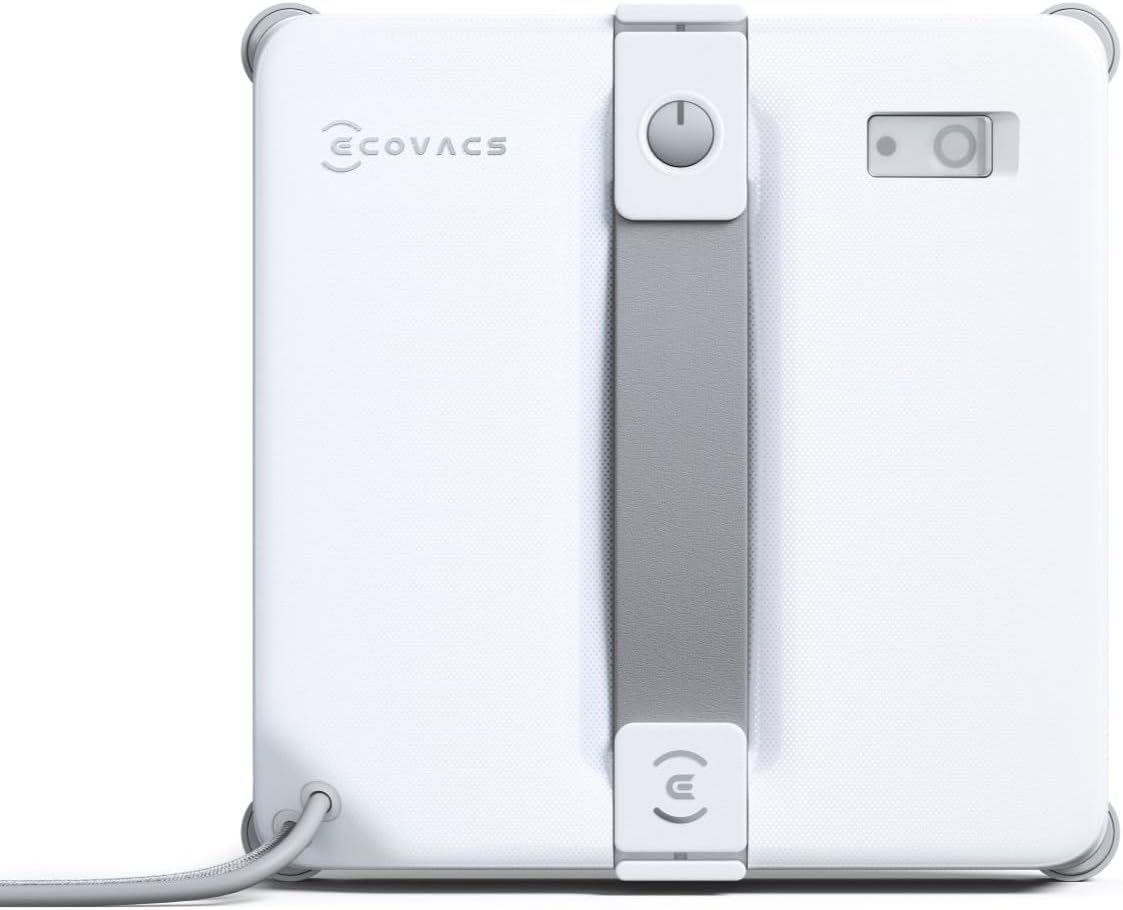
The WINBOT MINI2 feels like the robot that the category has been working toward for years. Its Win-SLAM 4.0 navigation scans the window frame, calculates a Z-shaped path, and systematically covers every inch of glass without wasting time on redundant passes. The five cleaning modes — Deep, Fast, Precision, Spot, and Edge — let you tailor the behavior to a single greasy fingerprint or a full-length patio door. Owners report that the robot cleans roughly 95% of a standard window in a single run, with only the corners requiring a ten-second manual touch-up.
Safety is handled through strong suction adhesion and a backup battery that engages the moment power drops. The compact footprint (13.78 by 20.98 inches) fits narrow window panes where larger models cannot go. The app-based control connects via Bluetooth and adds extra convenience, though several users note the Android app sometimes fails to auto-reconnect after the robot finishes its cycle. That minor communication hiccup does not affect the cleaning itself — the robot still completes its route and parks correctly on its own.
Sprayer nozzles can clog if the recommended cleaning solution is not used, but the included washable cloths pull off the glass with zero streaks when swapped frequently. For routine maintenance on standard windows, mirrors, and glass doors, the MINI2 delivers the most polished out-of-box experience in the current market. It is not built for heavily caked-on grime or textured glass, but for the daily dust, smudges, and light dirt that most homes face, it is the most reliable pick.
Why it’s great
- Smart SLAM 4.0 navigation eliminates missed spots
- Five cleaning modes let you choose speed or depth
- Compact design reaches narrow panes and tight corners
Good to know
- App is Bluetooth-only and does not auto-reconnect reliably
- Sprayer nozzles require periodic cleaning to prevent clogs
- Pre-wash recommended for heavy stains and hard water marks
2. HUTT S55 Pro
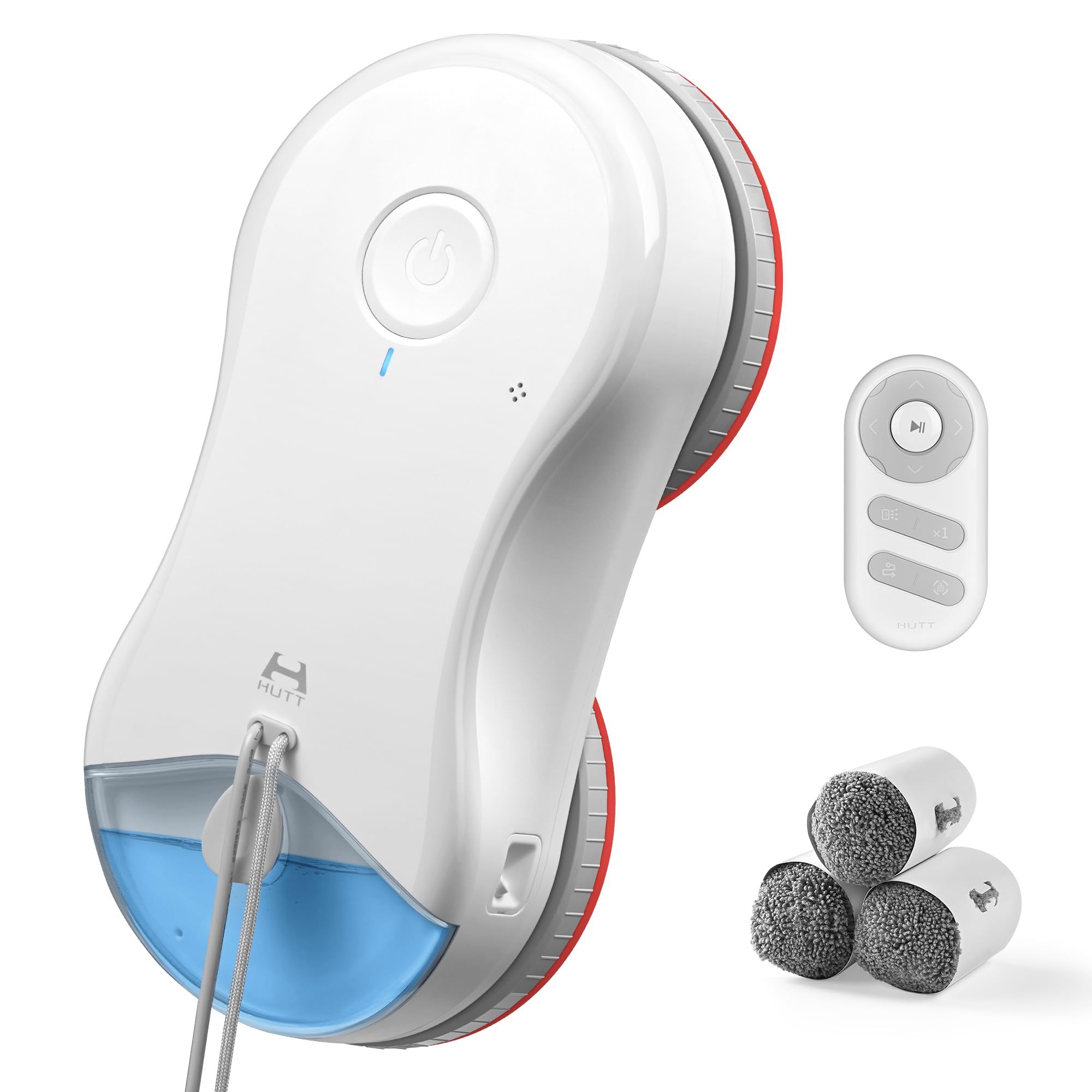
The HUTT S55 Pro takes a brute-force approach to window cleaning. With peak suction rated at 6,500 Pa — one of the highest numbers available — this robot clings to glass with enough force to handle moderately dirty surfaces without slipping. The patented 3D floating disc system uses spring suspension to keep the microfiber pads in constant contact even if the glass is slightly uneven, which improves scrubbing consistency across the full pane.
The HydroJet pump spray delivers larger droplets compared to ultrasonic mist models, and the 80 ml visible water tank lets you monitor how much fluid remains without pulling the robot off the glass. A SLAM 4.0 navigation chip guides the robot through a systematic Z-shaped cleaning path, then repeats passes in spot mode for stubborn areas. Multiple owners note that two passes with a clean wet pad followed by one pass with a dry pad produces the best streak-free results. The machine also auto-detects edges and stops spraying near frames to avoid dripping on window sills.
A few complaints mention that the remote control can feel unresponsive out of the box, and the included instruction manual is not helpful. On the other hand, the robot works perfectly with just the onboard button — the remote is not necessary for day-to-day operation. The safety tether and emergency backup battery provide peace of mind for high-rise windows. If you prioritize raw suction power and do not mind a slight learning curve with the accessories, the S55 Pro earns its place as a top contender.
Why it’s great
- 6,500 Pa peak suction delivers reliable adhesion on vertical glass
- 3D floating pads keep steady contact on slightly uneven panes
- HydroJet pump spray and 80 ml tank handle extended cleaning sessions
Good to know
- Remote control may be unresponsive; onboard button is better
- Pad installation requires dexterity for hands on the larger side
- Does not excel on heavily soiled glass without multiple passes
3. Tosima W5
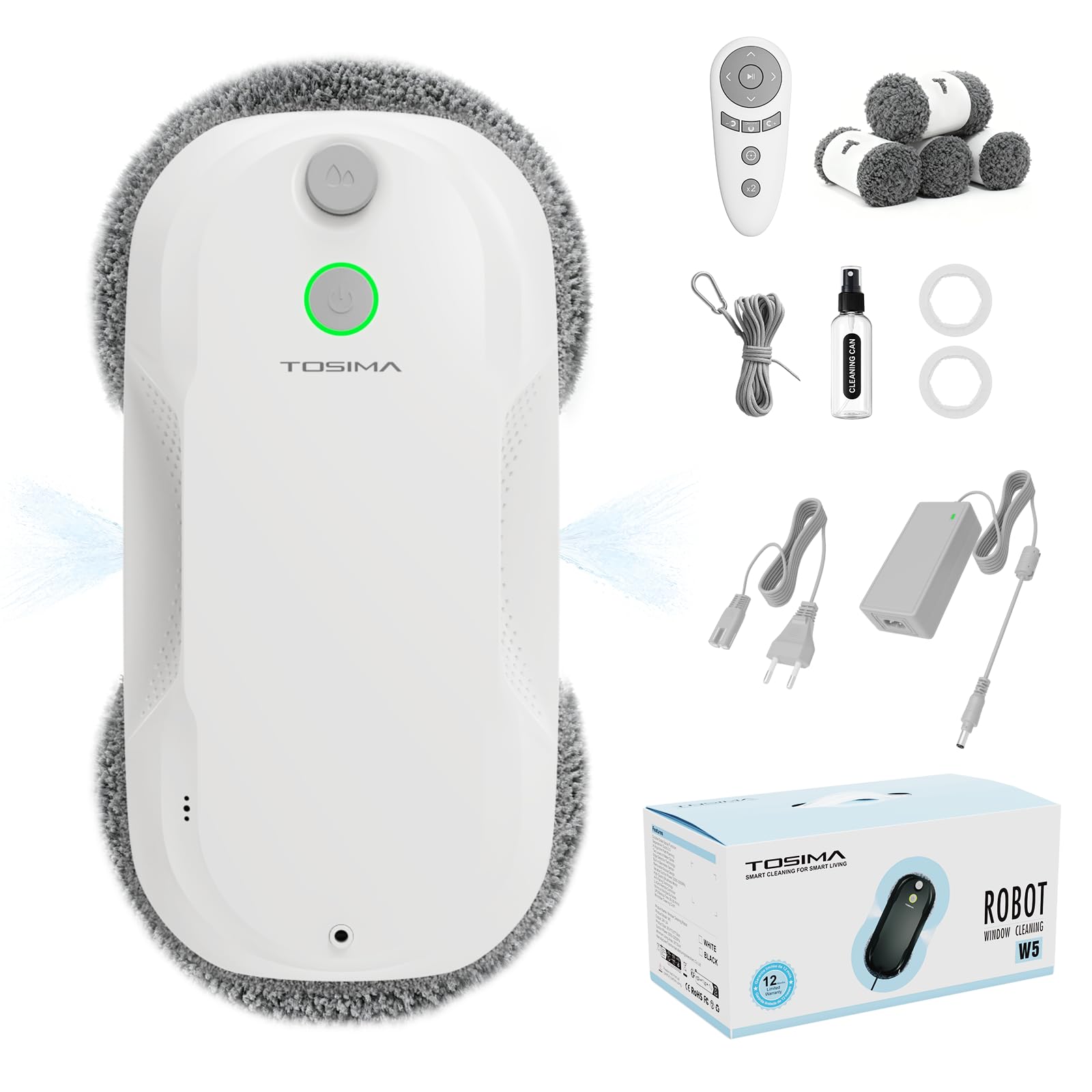
The Tosima W5 delivers a feature set that mirrors the premium HIXZAP X1 at a price that undercuts most competitors with similar suction ratings. Its variable-frequency motor adjusts suction dynamically from a lower baseline up to 6,400 Pa based on the dirt level detected, which conserves energy during light maintenance cleans. The dual-spiral cleaning design uses two rotating pads that work in opposite directions to trap dirt and prevent streaking on the way down.
The externally visible 65 ml water tank gives you a clear view of the remaining fluid, and the bidirectional ultrasonic atomizer sprays from the side for even coverage. Edge detection stops the spray before the robot reaches the frame, which is a feature often missing in cheaper units. Owners report that the robot moves quickly across the glass, clings securely, and leaves no streaks or missed spots on large continuous panes. One reviewer mentioned that the safety lanyard can get tangled with the power cord, but a simple twist of the tether solves the issue.
A handful of user reviews for this ASIN appear to reference a different Tosima floor-cleaning product, so pay attention only to the window-cleaning feedback. The included spare cloths are adequate for about two full cleaning sessions before needing a wash. If you want near-premium suction and spray technology without the premium price tag, the W5 is the mid-range champion.
Why it’s great
- Adaptive suction up to 6,400 Pa adjusts to dirt levels automatically
- External 65 ml water tank lets you see fluid level at any time
- Side ultrasonic spray plus edge detection keeps frames dry
Good to know
- Safety cord can tangle with power cord during setup
- Some listing reviews refer to a different Tosima product
- Only two spare cloths included in the box
4. HIXZAP X1
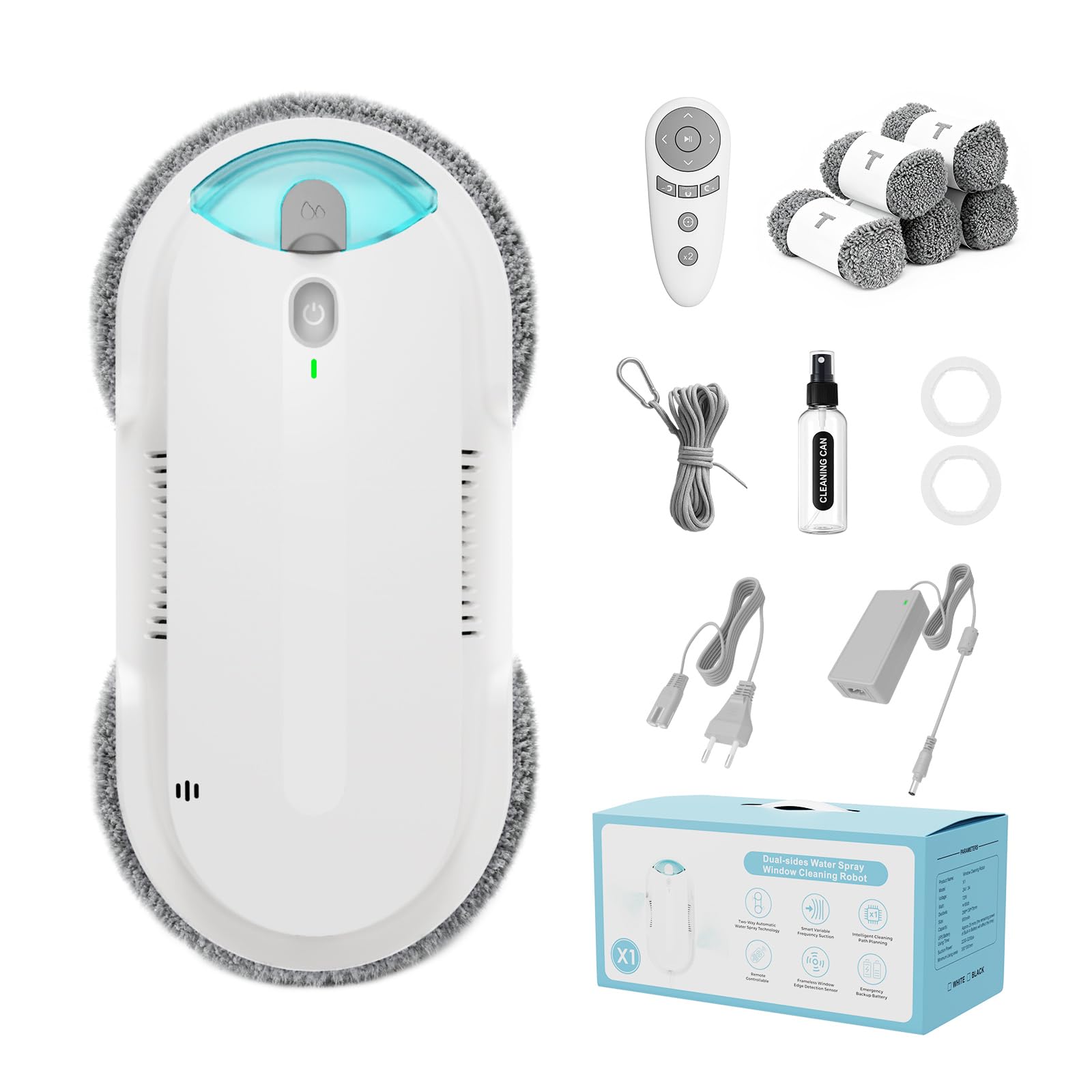
The HIXZAP X1 stands out because of its double-helix suction system that reaches a variable 4,800 to 6,400 Pa. That motor pulls the robot flush against the glass and allows the dual rotating pads to scrub without the unit drifting sideways. The bidirectional ultrasonic atomization sprays water from the side nozzles rather than from the front, which distributes the mist evenly across the pads and reduces the amount of drips that run down the glass.
The external 85 ml water tank is the largest in this lineup, and it is positioned so you can check the water level at any time without interrupting the cleaning cycle. The AI-powered edge detection is effective at halting the spray near the frame, and the air-pressure sensor engages the backup battery if suction drops suddenly. Owners consistently report that the X1 handles dust, fingerprints, and light grime in a single pass, and the machine is quiet enough to run while watching television.
One limitation is the controller type: a basic button control (remote) rather than a smartphone app. You cannot customize cleaning modes or schedule runs from a phone. For homes with large uninterrupted glass panels where you want ultrasonic precision and a big tank, the X1 is a smart investment.
Why it’s great
- Double-helix motor delivers 4,800–6,400 Pa variable suction
- 85 ml external tank is the largest among these picks
- Side ultrasonic spray provides even coverage with fewer drips
Good to know
- No smartphone app — only a basic remote control
- Only two cloths included; extra packs recommended
- Not designed for heavily stained or caked-on dirt
5. ECOVACS WINBOT Mini

The original WINBOT Mini is smaller than almost every other automatic window cleaner, measuring just 8.46 inches across. This gives it a noticeable advantage on apartment windows, divided panes, and sliding glass doors with narrow tracks. The dual-nozzle ultrasonic spray system applies a fine layer of moisture, and the 200 ml separation tank (not exactly a water tank — it holds cleaning solution) lets you run multiple sessions before refilling.
Suction is strong enough to hold the unit on vertical glass, and the nine-stage protection system covers everything from power-fail backup to anti-slip tracking. Owners praise the machine for removing dog nose prints, fingerprint smudges, and child handprints with a single pass, and the noise level is low enough that family members do not complain. The robot fits behind curtain panels and desk cutouts where larger models cannot go, making it ideal for cluttered spaces.
The trade-offs are worth noting. The safety tether is short, and the power cord may require an extension for high windows that do not open. The manual explicitly states the unit is for indoor use only, though the app sometimes suggests otherwise, creating confusion. A small number of units ship with defective sprayers that never dispense fluid. If you get a good unit, the Mini delivers premium compact performance; if you get a defective one, the return process is straightforward through Amazon.
Why it’s great
- Ultra-compact footprint fits narrow panes and tight spaces
- Quiet operation does not disturb household activity
- Nine-stage safety system inspires confidence in use
Good to know
- Sprayer defect rate is higher than average in early units
- Short power cord requires an extension for many windows
- Indoor use only despite ambiguous app labeling
6. KKI X3
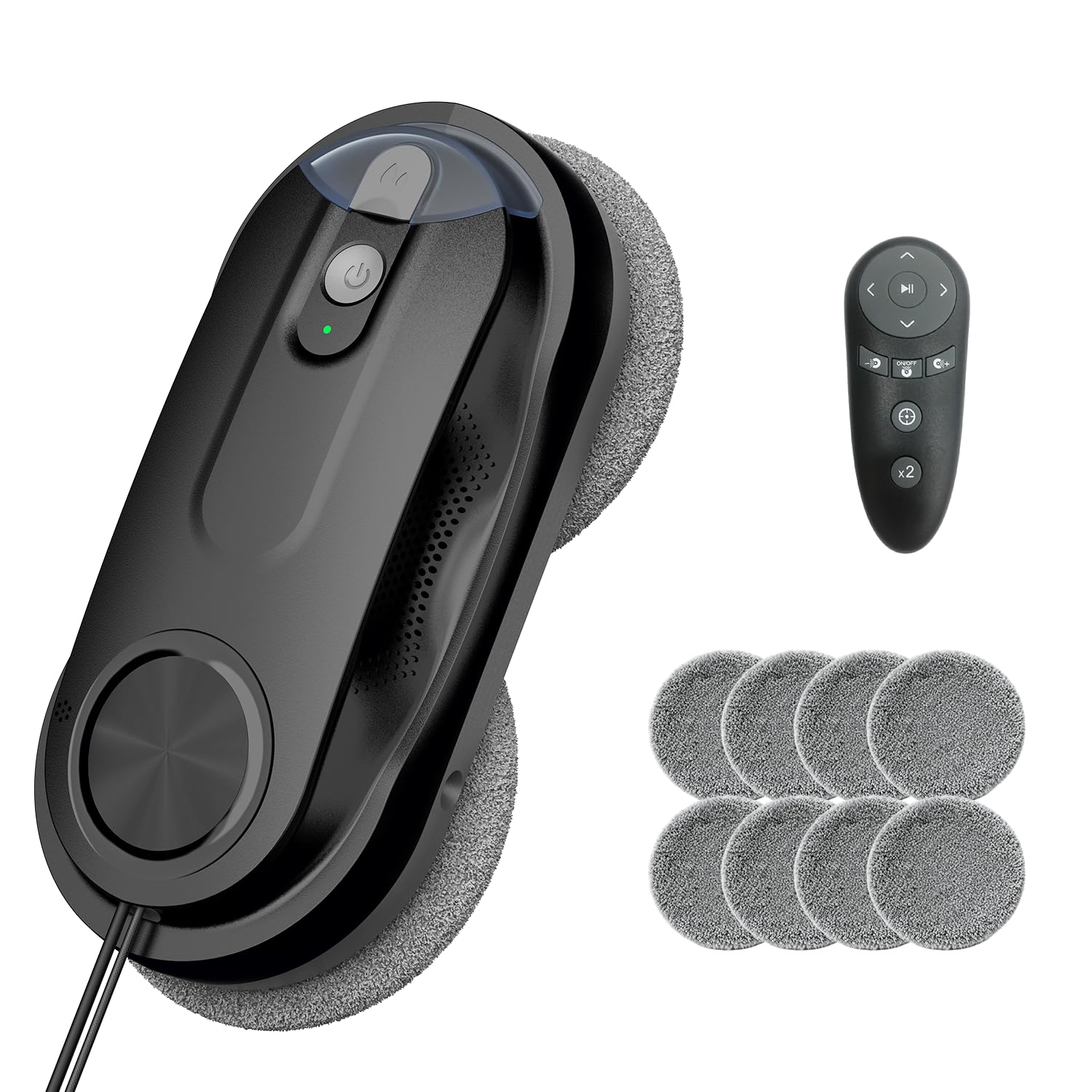
The KKI X3 fills the gap between entry-level automation and high-end suction performance. With a maximum suction of 3,200 Pa, it sits well below the 6,000+ Pa flagships, but its AI obstacle-detection system and two-speed spray settings make it a capable tool for light to moderate dirt. The unit recognizes the window frame, identifies obstacles, and traces a snake-like cleaning pattern that avoids wasted movement.
The dual-water spray technology uses atomized nozzles to prevent clogs, and each spray outputs 0.05 ml instead of the previous generation’s 0.03 ml. Owners report that the robot cleans large sliders and picture windows effectively using only plain water, and the included remote lets you manually steer the robot to specific spots. The safety tether is essential here — several users note that the robot fell off the glass when the window had thin weatherstripping that the edge sensor could not read correctly.
On standard casement windows and non-paned doors, the X3 leaves windows streak-free and shiny. But the cleaning path does not handle corners well, and thick or textured window frames cause the robot to lose suction and drop. The machine is best suited for homes with standard flat glass and a user willing to monitor the safety tether. If your windows have complex molding or slanted gaskets, step up to a model with higher suction and better edge sensing.
Why it’s great
- AI path planning and obstacle detection for efficient cleaning
- Atomized dual-spray nozzles resist clogging
- Works well on standard flat glass with plain water only
Good to know
- 3,200 Pa suction is lower than premium alternatives
- Edge sensor struggles with thin weatherstripping and textured frames
- Cleaning path misses corners on some window shapes
7. CHOVERY CL3

The CHOVERY CL3 is the budget-conscious entry point into automatic window cleaning. It offers dual-side auto spray, a 2,700 to 3,300 Pa adjustable suction range, and a triple safety system that includes a backup battery and a safety rope. The machine claims to clean up to 30 square meters of glass on a single fill, which is impressive for the price bracket. Owners with standard double-hung windows report that it leaves the glass streak-free even in direct sunlight.
Setup is straightforward: dry-mop the window first to remove loose dust, then wet-mop with the auto spray turned on. The included eco-fiber pads wash well and do not leave lint behind. The smart navigation system uses basic edge detection to change direction at the frame, though it is not as precise as the SLAM-based algorithms in more expensive models. The unit includes two extra wheels and eight cleaning pads, which is generous for a budget robot.
The CL3 has some rough edges. It is noticeably noisier than premium units, and the suction can slip if the motor overheats during extended use — you may need to let it rest after 15 to 20 minutes. The water spray resets to the default setting every time you turn the robot on, and the water reservoir is difficult to see when filling. On windows with 45-degree slanted gaskets, the robot tends to lose its grip and fall off at the bottom. If your windows are standard flat glass and you operate on a budget, the CL3 cleans well enough to justify its price.
Why it’s great
- Generous 8 cleaning pads and 2 extra wheels included
- Adjustable suction from 2,700 to 3,300 Pa covers basic needs
- Dual-side spray covers the full cleaning area evenly
Good to know
- Louder than premium models; may disturb napping children
- Suction slips if motor overheats — periodic rests needed
- Struggles with slanted window gaskets and loses grip
FAQ
Can an automatic window cleaner damage window frames or seals?
How often do I need to change or wash the cleaning pads?
Will these robots work on textured or frosted glass?
Final Thoughts: The Verdict
For most users, the best automatic window cleaner winner is the ECOVACS WINBOT MINI2 because its Win-SLAM 4.0 navigation and five cleaning modes deliver the most hands-off, reliable experience on standard residential windows. If you prioritize raw suction power for heavily soiled glass, grab the HUTT S55 Pro. And for a compact, quiet unit that fits in tight spaces, nothing beats the ECOVACS WINBOT Mini.

Mo Maruf
I created WellFizz to bridge the gap between vague wellness advice and actionable solutions. My mission is simple: to decode the research and give you practical tools you can actually use.
Beyond the data, I am a passionate traveler. I believe that stepping away from the screen to explore new environments is essential for mental clarity and physical vitality.