Our readers keep the lights on and my smoothie glass nicely filled. As an Amazon Associate, I earn from qualifying purchases.
A weightlifting belt is the single most effective tool for stabilizing your core and protecting your lower spine during heavy compound lifts. Whether you’re pulling a new deadlift PR or grinding through a heavy squat set, the right belt lets you brace harder, lift more, and walk out of the gym without that familiar twinge in your back. The difference between a good session and a great one often comes down to how well your equipment transfers force from your core to the bar.
I’m Mohammad Maruf — the founder and writer behind WellFizz. My research focuses on comparing the structural specs, materials, and real-world durability of strength training gear to identify what actually holds up under heavy loads.
This guide breaks down the seven best contenders for 2025, from budget-friendly nylon options to competition-grade leather belts. After comparing thickness, width, hardware, and user feedback, here is your definitive resource for finding the best belt for lifting.
How To Choose The Best Belt For Lifting
Not every belt is built for the same lift. A thick, stiff leather belt excels in the squat and deadlift where you need maximum intra-abdominal pressure. A thinner, tapered belt suits Olympic weightlifting where mobility through the clean and snatch is non-negotiable. Understanding the trade-offs between material, thickness, width, and hardware will tell you exactly which belt belongs in your gym bag.
Material: Leather vs Nylon
Leather belts offer the gold standard for raw support. Full-grain or genuine leather compresses minimally under load, creating a solid wall for your abs to push against. Nylon belts are more flexible, lighter, and easier to adjust between sets, but they lack the rigid bracing a heavy deadlift demands. If your primary lifts are over 80 percent of your one-rep max, go with leather. For circuit training, CrossFit, or general fitness, a nylon belt will serve you fine.
Thickness: 7mm vs 10mm vs 13mm
Thicker belts provide more resistance to bending, which translates to more support. A 10mm belt is the most common sweet spot for powerlifters and strongman athletes — stiff enough to brace against without being so rigid that it digs into your ribs when you hinge at the hip. A 7mm belt offers more flexibility, making it a favorite for Olympic lifters who need to get into a front rack position. A 13mm belt is for elite strength athletes who want every ounce of stability; it requires a longer break-in period and is rarely necessary for recreational lifters.
Width and Profile: Tapered vs Non-Tapered
A non-tapered belt (4 inches wide all the way around) provides uniform support for your entire torso and is best for squats and deadlifts where your spine stays neutral. A tapered belt starts at 4 inches in the back and narrows to 2 or 3 inches in the front, freeing up room for your rib cage during overhead pressing and Olympic movements. Choose non-tapered for strength sports; choose tapered for versatility across a wider range of exercises.
Closure System: Prong Buckle vs Lever vs Quick-Release
A prong buckle (single or double) is the classic, reliable choice. It lets you micro-adjust the fit across multiple holes, and you can remove it entirely between sets. A lever closure locks you into a ratcheted position, offering consistent tension every rep but limiting adjustability if your waist fluctuates. Quick-release nylon belts use a self-locking buckle that’s fast to remove but may slip under maximal loads. For heavy lifting, a double-prong or lever closure is the most secure option.
Sizing: Don’t Use Your Pant Size
Your belt size is not your pants size. Measure your natural waist at the belly button using a flexible tape measure. If you fall between sizes, size up — you can always use a tighter hole. A belt that is too small will not allow you to brace your core fully, defeating the entire purpose of wearing one.
Quick Comparison
On smaller screens, swipe sideways to see the full table.
| Model | Category | Best For | Key Spec | Amazon |
|---|---|---|---|---|
| Dark Iron Fitness Genuine Leather | Leather | Powerlifting / Strongman | 10mm thick, double-prong buckle | Amazon |
| Iron Bull Strength 7mm | Tapered Leather | Olympic Lifting | IPF approved, 4″ to 2″ taper | Amazon |
| Stoic Powerlifting Belt | Leather | Heavy Powerlifting | 6mm full-grain, non-tapered | Amazon |
| Arsa Fitness Lever Belt | Lever Leather | Competition Powerlifting | 10mm thick, stainless steel lever | Amazon |
| MRX Powerlifting Leather Belt | Leather | Value Powerlifting | 10mm thick, single prong buckle | Amazon |
| DMoose Fitness Auto Locking Belt | Nylon | General Gym / CrossFit | 4″ uniform, quick-release buckle | Amazon |
| THEFITGUY Dip Belt | Neoprene | Weighted Dips / Pull-Ups | 45° angle rings, 250lb capacity | Amazon |
In‑Depth Reviews
1. Dark Iron Fitness Genuine Leather Weightlifting Belt
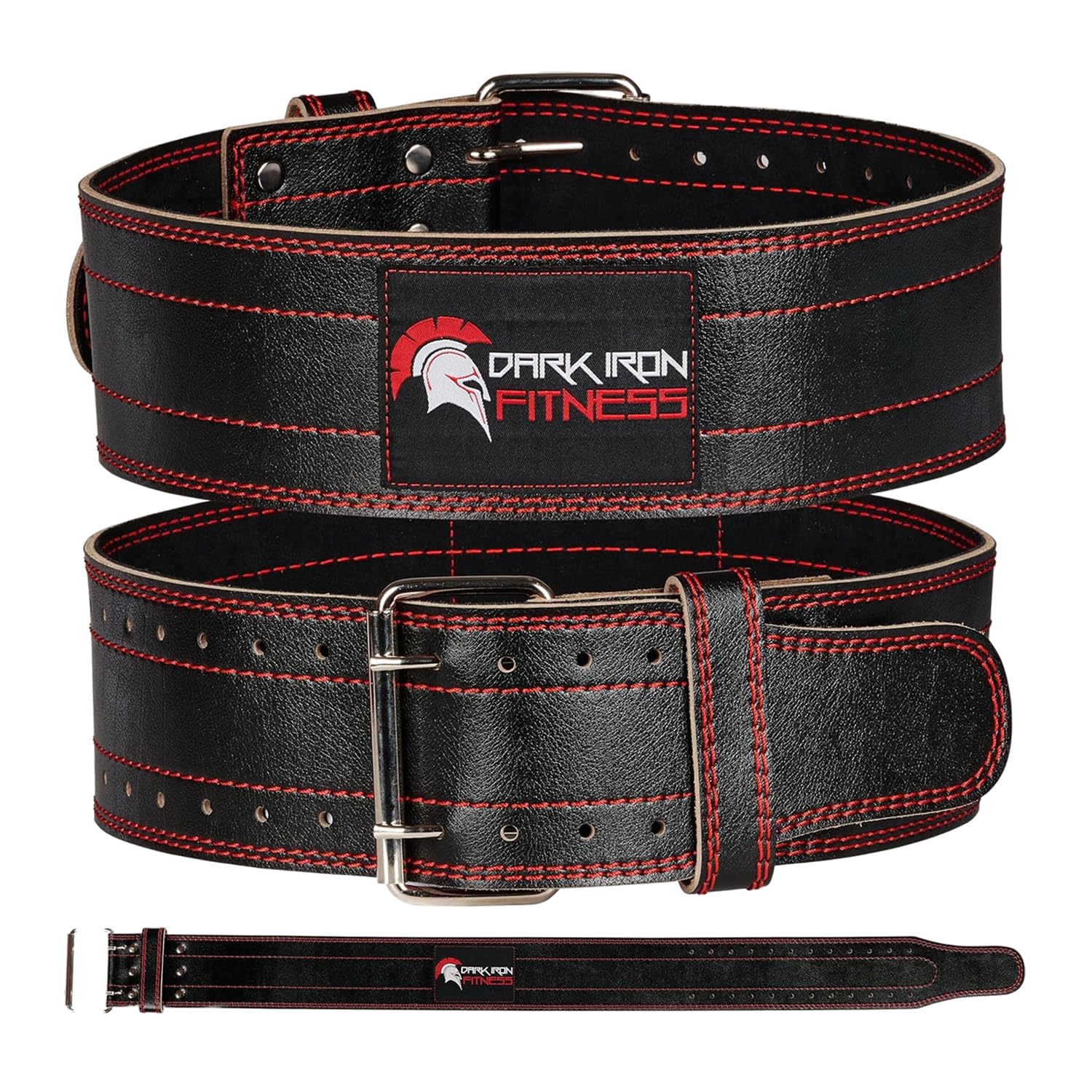
The Dark Iron Fitness belt is the standard-bearer for mid-range leather belts. At 10mm thick with a 4-inch uniform width, it provides the rigid bracing wall that powerlifters and strongman athletes rely on for squats, deadlifts, and overhead pressing. The genuine leather construction, reinforced with double-row stitching, resists stretching and maintains its shape session after session without sagging.
The double-prong metal buckle is the key differentiator here. Two prongs distribute the shear load across both holes, eliminating the risk of one prong tearing through the leather during a maximal effort grind. The keeper loop secures the excess tail so it doesn’t flap against your hip. Users report the belt holds up to 600-pound pulls without any hardware slippage.
Downsides are minor but worth noting. The unpadded top edge can dig into bare skin if you wear a crop top or low-cut singlet. The leather starts stiff and requires a week or two of regular use to break in. Once it does, it contours to your hip angle and becomes a second skin. Dark Iron also backs it with a lifetime warranty, which is rare at this price point.
Why it’s great
- Double-prong buckle stays locked under max loads
- 10mm genuine leather with reinforced stitching
- Lifetime warranty included
Good to know
- Unpadded edges can irritate bare skin
- Significant break-in period before it feels comfortable
2. Iron Bull Strength 7mm Leather Weight Lifting Belt
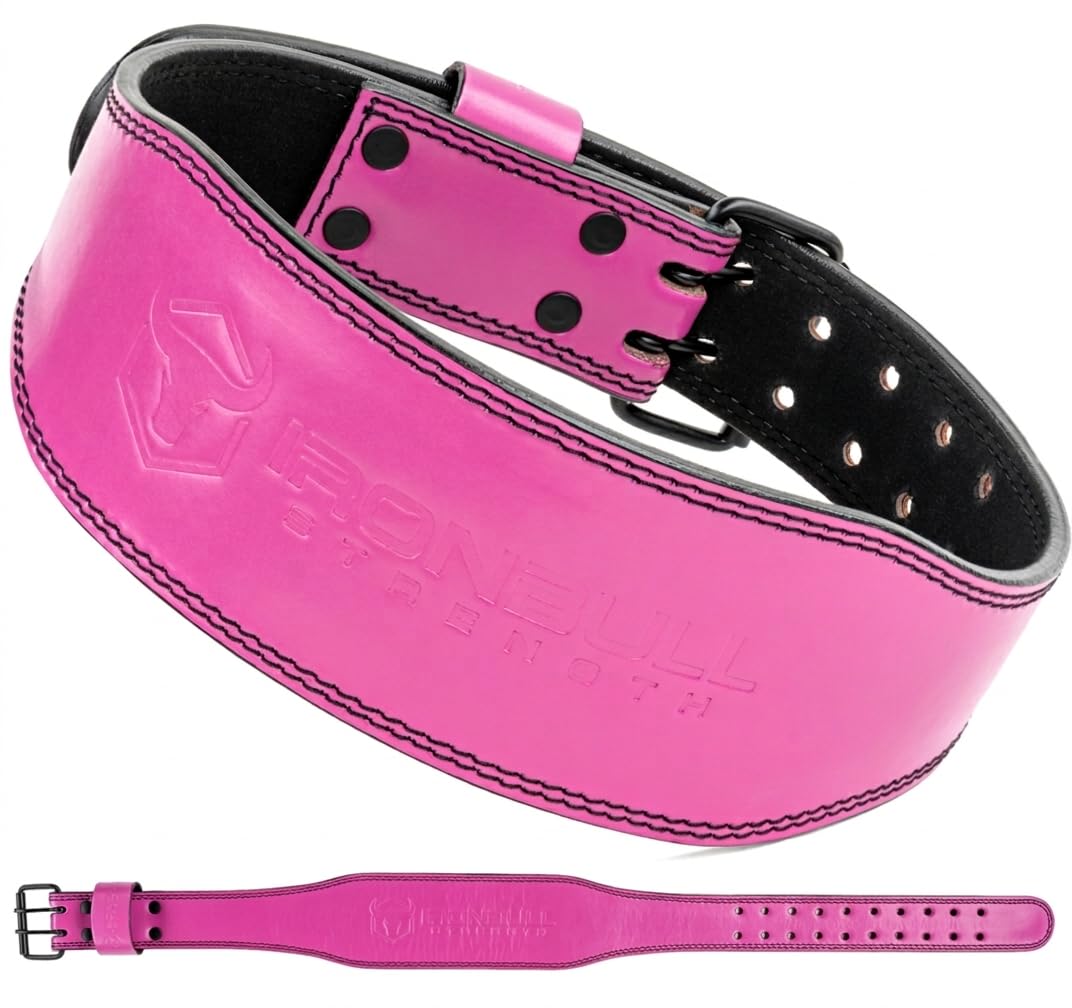
The Iron Bull Strength belt is designed for Olympic weightlifters and competition powerlifters who need IPF, USAPL, and IWF approval. The 7mm thickness is thinner than a traditional powerlifting belt, which allows greater flexion at the hip during snatches and cleans, while the 4-to-2-inch taper frees up space in the front for the rib cage when driving overhead. This is not a belt for raw maximum support — it is a belt for technical lifting where mobility can’t be compromised.
The real selling point is the A-grade leather construction. Iron Bull cuts each belt from a single piece of leather rather than gluing scraps together, ensuring a consistent 7mm thickness across the entire length. The double roller steel buckle uses precision-coated prongs that resist rust and hold tight. The suede exterior feels smooth against the skin, and the gloss finish dresses it up for the competition platform.
Some smaller-framed lifters report the medium belt fits perfectly at 5’6″ and 165 pounds, but taller athletes above 200 pounds may find the 7mm too flexible for heavy pulls. The belt comes with a small carrying case but no warranty beyond the 30-day satisfaction guarantee. If you compete raw or classic and need a federation-legal belt, this is your best bet.
Why it’s great
- IPF, USAPL, IWF certified for competition
- Tapered profile improves overhead mobility
- Cut from single-piece A-grade leather
Good to know
- 7mm thickness may feel too flexible for heavy deadlifters
- Limited warranty compared to competitors
3. Stoic Powerlifting Belt

The Stoic belt approaches support differently. Instead of using a thick 10mm core with a suede wrap, Stoic uses a 6mm full-grain leather core and eliminates the inner suede entirely. The result is a belt that is stiffer per millimeter than most competitors because it is 100 percent structural leather — no filler. The non-tapered 4-inch width provides constant surface area around the entire torso, which prevents the belt from riding up during deep squats.
The single-prong buckle is thick — a 2mm steel roller with a seamless design that glides through the holes without snagging. The raw, un-dyed edges let you see the vegetable-tanned grain without any “wet blue” tone masking lower-quality leather. Users report the belt lasts four years of consistent training without losing its shape, which is impressive for the price. It is USAPL legal.
The trade-off is a brutal break-in period. The leather is so dense that you often need to roll the belt tight and step on it to get the tail through the loop initially. The sizing also runs small — a 32.5-inch waist fits the medium belt at the tightest holes, leaving little room for weight fluctuations. This belt is for experienced lifters who know their exact waist measurement and are willing to suffer through a month of discomfort.
Why it’s great
- Full-grain sole leather with no filler layers
- Extremely durable, holds shape for years
- USAPL compliant for raw lifting
Good to know
- Long and uncomfortable break-in period
- Sizing runs small; measure carefully
4. Arsa Fitness Weightlifting Adjustable Lever Belt
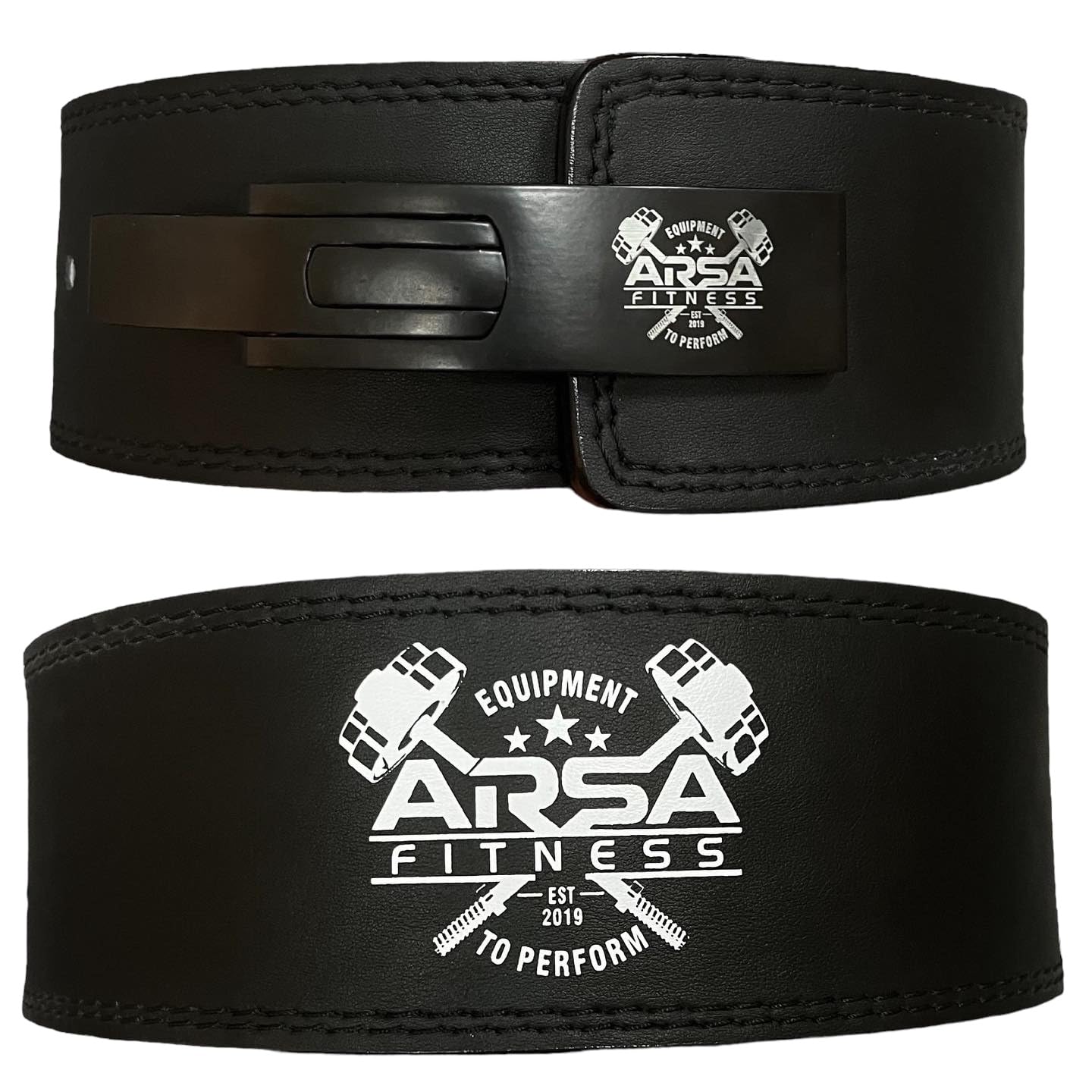
The Arsa Fitness lever belt brings competition-grade support at a surprisingly accessible price. The 10mm genuine leather core is thick enough to provide the rigid wall that powerlifters demand for heavy squats and deadlifts. The stainless steel lever mechanism locks into place with an audible click, giving you the same consistent tension on every rep without having to fumble with a prong between sets. Once you set the adjustment, the belt opens and closes with a simple lever flip.
The rustic bolt aesthetic is more than just looks — the bolts allow you to adjust the lever position to fine-tune the tightness, though the provided screws can strip if overtightened. Several users recommend replacing the hardware with aftermarket bolts for quicker adjustment. The 4-inch uniform width provides equal support across the entire midsection, which helps maintain proper spinal alignment during heavy compounds.
One potential issue is the sizing. The X-Small fits a 27- to 32-inch waist, but the belt’s true usable range is narrower than what the chart suggests — if you are at the top of a size bracket, it may feel too snug. The leather also requires conditioning to prevent drying and cracking over time. For lifters who want the speed of a lever without paying for a SBD or Inzer, this is a compelling option.
Why it’s great
- Stainless steel lever for fast, consistent tightening
- 10mm genuine leather with rustic bolt styling
- Great value for a lever belt mechanism
Good to know
- Screws can strip; replace with bolts for durability
- Leather needs regular conditioning to prevent cracking
5. MRX Powerlifting Leather Belt

The MRX belt is a no-frills 10mm leather belt designed for lifters who need maximum support on a tighter budget. The single-prong stainless steel slide bar buckle is simple but effective — it holds securely without slipping, and the keeper loop tucks the tail away cleanly. The 4-inch uniform width provides consistent bracing for squats, deadlifts, and bent-over rows, offering the same rigid support that belts costing twice as much deliver.
The leather is stiff straight out of the box — expect to spend a few sessions bending and stepping on the tail before it conforms to your body. Once broken in, the belt provides excellent core stabilization. Several powerlifting coaches have purchased these for high school teams because the construction holds up to repeated use without the hardware loosening. The sizing is accurate if you measure at the navel, but a 40-inch waist should choose a Large — an XL will be too loose and leave you with insufficient bracing.
The main compromise is the finish. The edges are not polished like the Stoic or Dark Iron belts, and the leather has a matte texture rather than a gloss. This does not affect performance, but it looks less refined on the platform. If you care more about function than aesthetics and need a 10mm belt that works immediately, the MRX delivers.
Why it’s great
- Full 10mm leather at an entry-level price
- Stainless steel side bar buckle holds securely
- Accurate sizing for dedicated powerlifting use
Good to know
- Very stiff initially; needs manual break-in
- Matte finish looks less premium than competitors
6. DMoose Fitness Auto Locking Weight Lifting Belt
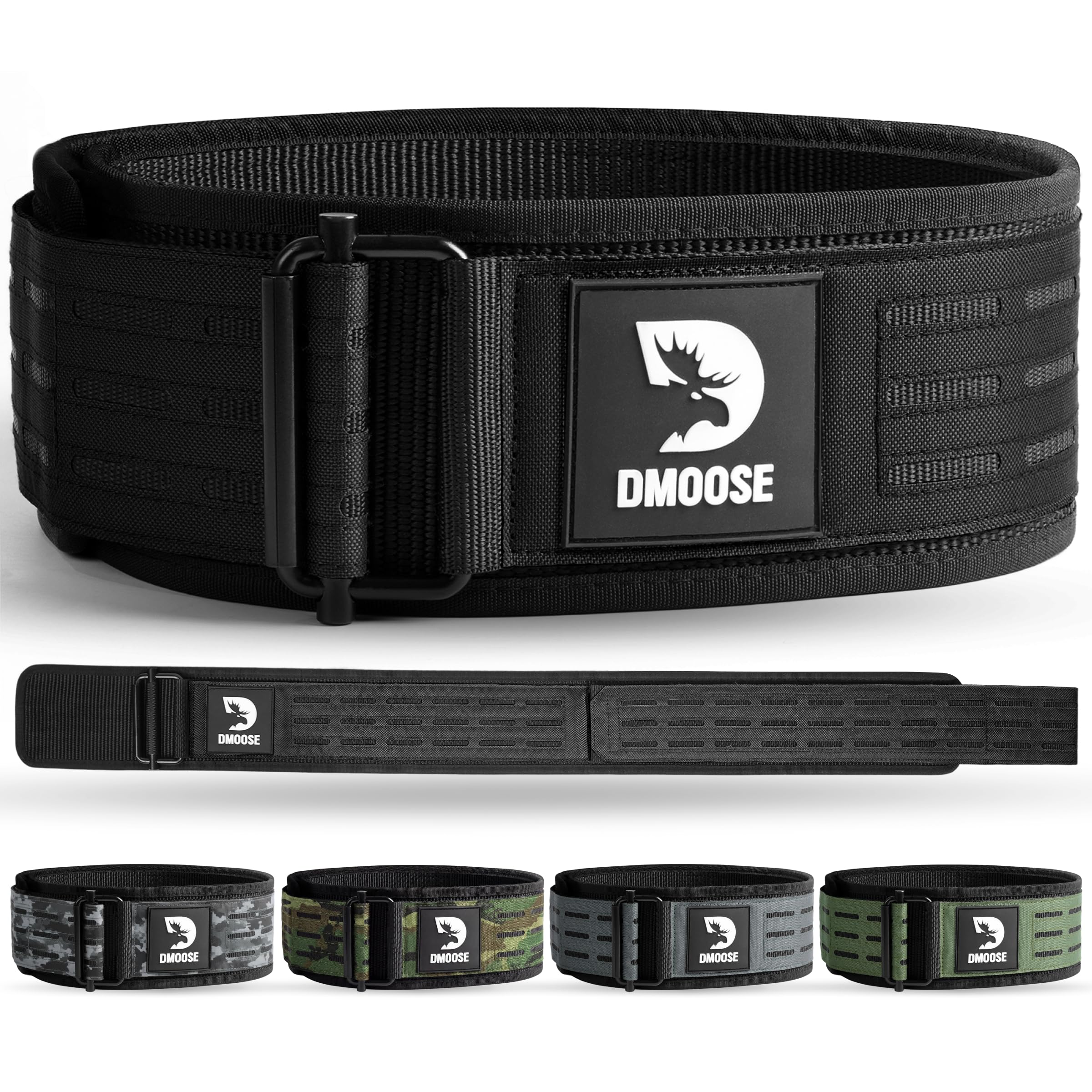
The DMoose Fitness belt is the best option for lifters who prioritize speed and comfort over raw rigidity. The 4-inch nylon construction is lightweight and flexible, making it ideal for circuit training, CrossFit WODs, and general gym sessions where you move quickly between exercises. The self-locking buckle cinches tight with a single pull and releases with a flick, allowing you to remove the belt between sets without breaking your flow.
The uniform 4-inch width distributes pressure evenly across the lower back, which helps maintain proper bracing during dynamic movements like cleans and squat variations. Unlike leather belts that require a warm-up to soften, the DMoose belt delivers consistent support from the first rep. It also fits a wide range of body types because the hook-and-loop closure provides infinite adjustability rather than discrete holes.
The trade-off is that nylon compresses under heavy loads. When you approach 80 percent of your one-rep max or higher, the belt bends rather than holding rigid, reducing the intra-abdominal pressure you can generate. For most recreational lifters training in the 60 to 80 percent range, this is acceptable, but dedicated powerlifters will want a leather belt for their top sets. DMoose includes a one-year warranty for peace of mind.
Why it’s great
- Quick-release auto-lock buckle for fast adjustments
- Comfortable nylon material requires no break-in
- Infinite adjustability through hook-and-loop closure
Good to know
- Nylon compresses under loads above 80 percent
- Not ideal for maximal-effort powerlifting
7. THEFITGUY Dip Belt with Strap
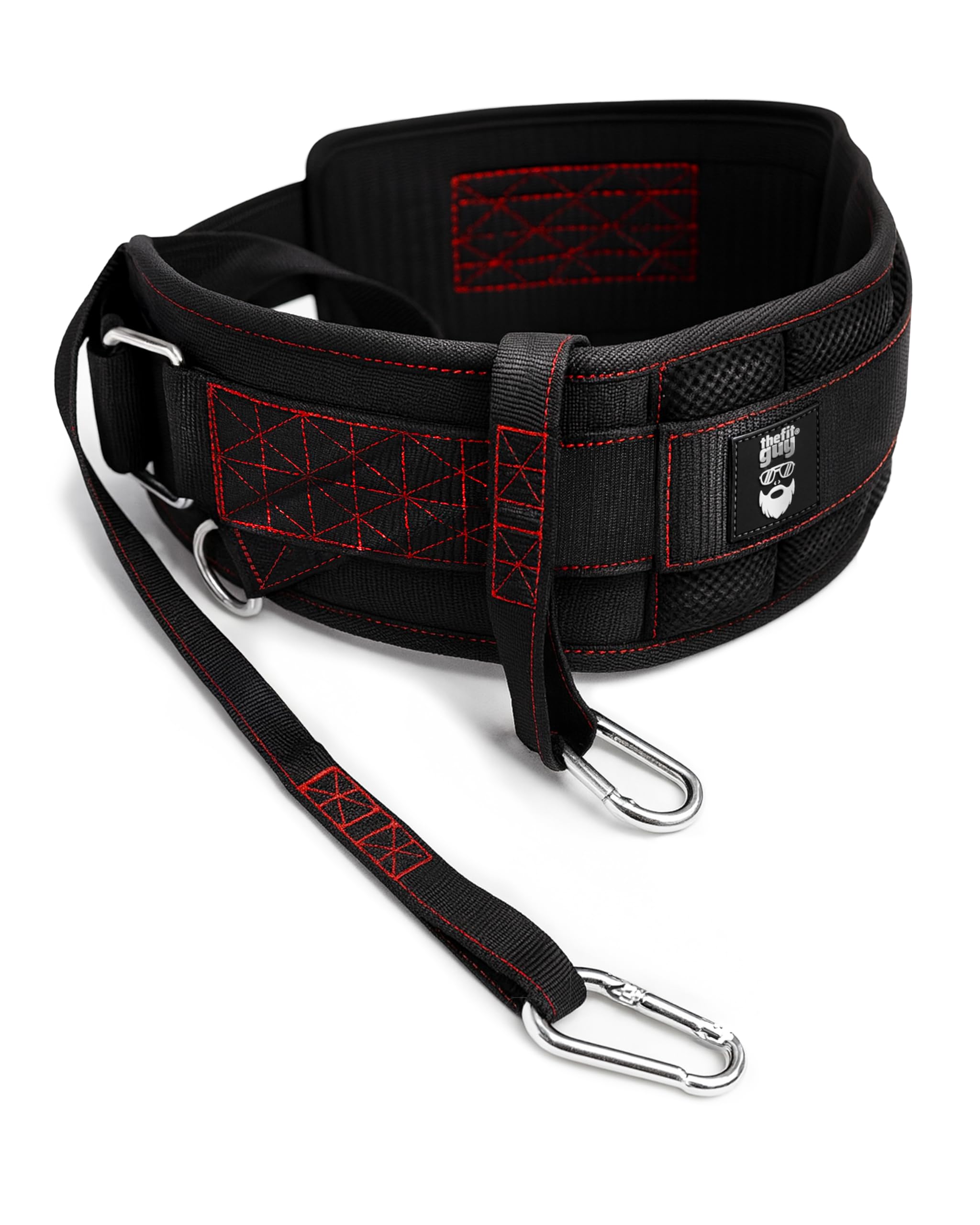
The THEFITGUY Dip Belt serves a specific purpose: adding weight to dips, pull-ups, and belt squats without the awkwardness of a chain-based system. The structured neoprene back panel provides lumbar support while the 45-degree angled steel rings keep the weight strap positioned naturally — no skin pinching or chain digging into your hips. The hook-and-loop outer belt fastens securely around your waist like a regular belt, then the weight strap threads through and tightens around the chain or plate.
The one-size-fits-most design accommodates waists from 32 to 52 inches, and the included 40-inch strap plus two snap hooks handle up to 250 pounds. Users who have run this belt for three years report the Velcro stays strong, the stitching holds, and the structure remains intact even after daily use. For weighted dips and pull-ups, this is a significant upgrade over a standard chain belt because you don’t have to simultaneously thread chain links while holding the weight.
The limitations are clear: this belt is not designed for heavy squatting or deadlifting. The neoprene compresses under load, and the hook-and-loop closure can slip if you load it to the max 250-pound capacity during belt squats. The included carabiners are basic — upgrading to welded steel rings improves security. If your primary goal is weighted calisthenics, this belt excels. For general powerlifting, look at the leather options above.
Why it’s great
- 45-degree rings eliminate skin pinching
- Easy to thread and secure compared to chain belts
- Long Velcro strap fits a wide range of waist sizes
Good to know
- Hook-and-loop closure can slip at maximum load
- Not suitable for heavy squats or deadlifts
FAQ
How tight should a lifting belt be?
What is the difference between a lever and a prong belt?
Should I buy a tapered or non-tapered belt?
Is a 10mm thick belt necessary for beginners?
Final Thoughts: The Verdict
For most users, the best belt for lifting winner is the Dark Iron Fitness Genuine Leather Belt because it delivers 10mm of rigid support with a double-prong buckle that stays locked through your heaviest sets, all backed by a lifetime warranty. If you want a competition-approved tapered belt for Olympic lifting, grab the Iron Bull Strength 7mm. And for a fast, comfortable nylon option perfect for circuit training, nothing beats the DMoose Fitness Auto Locking Belt.

Mo Maruf
I created WellFizz to bridge the gap between vague wellness advice and actionable solutions. My mission is simple: to decode the research and give you practical tools you can actually use.
Beyond the data, I am a passionate traveler. I believe that stepping away from the screen to explore new environments is essential for mental clarity and physical vitality.