Our readers keep the lights on and my smoothie glass nicely filled. As an Amazon Associate, I earn from qualifying purchases.
Posterior tibial tendonitis is a specific type of ankle pain that strikes the inside of the foot and ankle, making every step feel unstable. Unlike a simple sprain, this condition involves the tendon that supports your arch, so you need a brace that controls over-pronation and provides targeted support to the medial ankle, not just a generic wrap. The wrong brace can aggravate the tendon by failing to prevent the foot from rolling inward, which is exactly the movement that causes the pain.
I’m Mohammad Maruf — the founder and writer behind WellFizz. My focus is on analyzing the specific engineering and medical-grade materials behind braces for complex ankle conditions to cut through the marketing noise and find what actually works for posterior tibial tendonitis.
After reviewing dozens of products, I found that the best ankle brace for posterior tibial tendonitis must combine rigid stabilization with arch control and a low-profile design to fit in daily footwear without compromising support.
How To Choose The Best Ankle Brace For Posterior Tibial Tendonitis
Posterior tibial tendonitis is not a lateral ankle sprain, so generic inversion-control braces often fail. You need a brace that specifically limits the foot from collapsing inward (over-pronation) while supporting the arch and the medial malleolus area. Here are the three most critical factors to consider.
Medial Support and Arch Control
The posterior tibial tendon runs along the inside of your ankle and helps support your arch. A brace for this condition must have a rigid or semi-rigid insert, a figure-8 strap, or an integrated arch-lift that actively prevents the foot from rolling inward. Without this specific medial focus, the brace is just a sleeve.
Stabilization System: Lace-Up vs. Speed Laces vs. Figure-8 Straps
A simple pull-on sleeve provides compression but does not stop the ankle from inverting. Look for a brace with a lace-up closure that allows you to fine-tune the tension across the midfoot and ankle, combined with a figure-8 strap that wraps around the heel to lock the joint. Speed laces offer a good balance of convenience and security, but traditional laces give the most precise fit.
Fit and Footwear Compatibility
Many braces designed for high-ankle support are too bulky to fit inside a standard athletic shoe or work boot. For posterior tibial tendonitis, you will likely wear this brace for extended periods during daily activities, so a low-profile design that does not displace your foot within the shoe is critical. Also consider the brace’s material — breathable knits prevent moisture buildup during all-day wear.
Quick Comparison
On smaller screens, swipe sideways to see the full table.
| Model | Category | Best For | Key Spec | Amazon |
|---|---|---|---|---|
| BioSkin TriLok | Premium | Active recovery and arch support | Figure-8 + FootLok Arch-Lift | Amazon |
| Bauerfeind MalleoTrain | Premium | All-day medical-grade comfort | Viscoelastic massage pads | Amazon |
| DonJoy Stabilizing Speed Pro | Mid-Range | Rigid stabilization and speed lacing | Removable medial/lateral stays | Amazon |
| Med Spec ASO | Mid-Range | Secure lace-up for general activity | CoolFlex padding, figure-8 straps | Amazon |
| MUELLER The One | Mid-Range | Versatile fit for daily use | Integrated speed lacing system | Amazon |
| DonJoy POD | Mid-Range | Sport-specific ankle roll prevention | Molded TPU shell, EVA lining | Amazon |
| Neo-G Achilles | Budget | Light compression for mild tendonitis | Silicone tendon cushion | Amazon |
In‑Depth Reviews
1. BioSkin TriLok Ankle Brace

The BioSkin TriLok is specifically engineered to handle over-pronation, making it a top choice for posterior tibial tendonitis. Its FootLok strap wraps under the arch and lifts it, directly countering the foot collapse that stresses the posterior tibial tendon. The figure-8 stirrup strap adds lateral stability, creating a dual-action system that controls both the arch and the ankle joint.
Made from a breathable, hypoallergenic Lycra and polyester blend, this brace remains comfortable during extended wear, whether in a work boot or cross-trainer. The bilateral design fits either foot, and at 5.6 ounces, it is lightweight enough for daily use without feeling restrictive. Podiatrists often recommend this model for supination issues, which involve the same inward-rolling motion.
The complex strap system takes a few tries to master, but the payoff is a custom fit that significantly reduces pain. Users report a dramatic drop in pain levels within 24 hours of first use, from an 8 to a 4 on the pain scale, proving that the arch support is not just a gimmick.
Why it’s great
- Unique FootLok arch-lift directly targets over-pronation.
- Lightweight and low-profile enough for most shoes.
- Provides both ankle and arch support in one system.
Good to know
- Learning curve to figure out the strap setup.
- Sizing can be tricky; some users suggest going up half a size.
2. Bauerfeind MalleoTrain

The Bauerfeind MalleoTrain is a premium, pull-on brace that relies on medical-grade compression knitting and two anatomically contoured viscoelastic massage pads placed directly over the medial and lateral malleoli. For posterior tibial tendonitis, the pad on the inner ankle provides targeted pressure redistribution, reducing swelling and improving proprioception without the bulk of straps.
Its seamless knit design slides into any shoe easily, and the comfort zone on the instep prevents pressure points during dorsiflexion. The MalleoTrain is machine-washable, making it easy to maintain the compression level over time. As a Class 1 medical device made in Germany, it carries a higher initial investment, but users note the durability and consistent performance for conditions like tendinopathy.
This is not a rigid stabilizer — if you need extreme motion restriction, you may prefer a brace with stays. However, for daily activities and mild to moderate posterior tibial tendonitis, the MalleoTrain delivers a superior combination of support and comfort that is hard to beat.
Why it’s great
- Medical-grade compression reduces swelling effectively.
- Viscoelastic pads provide targeted pain relief.
- Extremely low-profile and comfortable for all-day wear.
Good to know
- Premium price point may be a barrier for some.
- Compression is moderate, not suitable for acute severe injuries.
3. DonJoy Stabilizing Speed Pro

When you need maximum mechanical stability, the DonJoy Stabilizing Speed Pro delivers with removable articulated medial and lateral stays. These stays enhance proprioception and provide a rigid barrier against inversion, which is crucial if your posterior tibial tendonitis is compounded by chronic ankle instability. The 800D ballistic nylon construction ensures this brace holds up under heavy use.
The speed lace system with Velcro tabs allows for a quick 10-second application, a major advantage if you need to take the brace on and off multiple times a day. The full circumferential elastic strap also provides tibia/fibula compression, adding a layer of support that goes beyond the ankle joint. Many physical therapists and surgeons specifically recommend this model for post-fracture and severe tendinopathy.
The trade-off is bulk. The shell and stays make it one of the more substantial braces on this list, so it may not fit in very tight footwear. Some users report the heel material bunching after extended use, but the overall stability is often worth the fit compromise for high-demand activities.
Why it’s great
- Removable stays offer customizable rigidity.
- Speed lace system is fast and secure.
- Durable construction for long-term use.
Good to know
- Bulky design may not fit in all shoes.
- Heel area can bunch with certain foot shapes.
4. Med Spec ASO Ankle Stabilizer
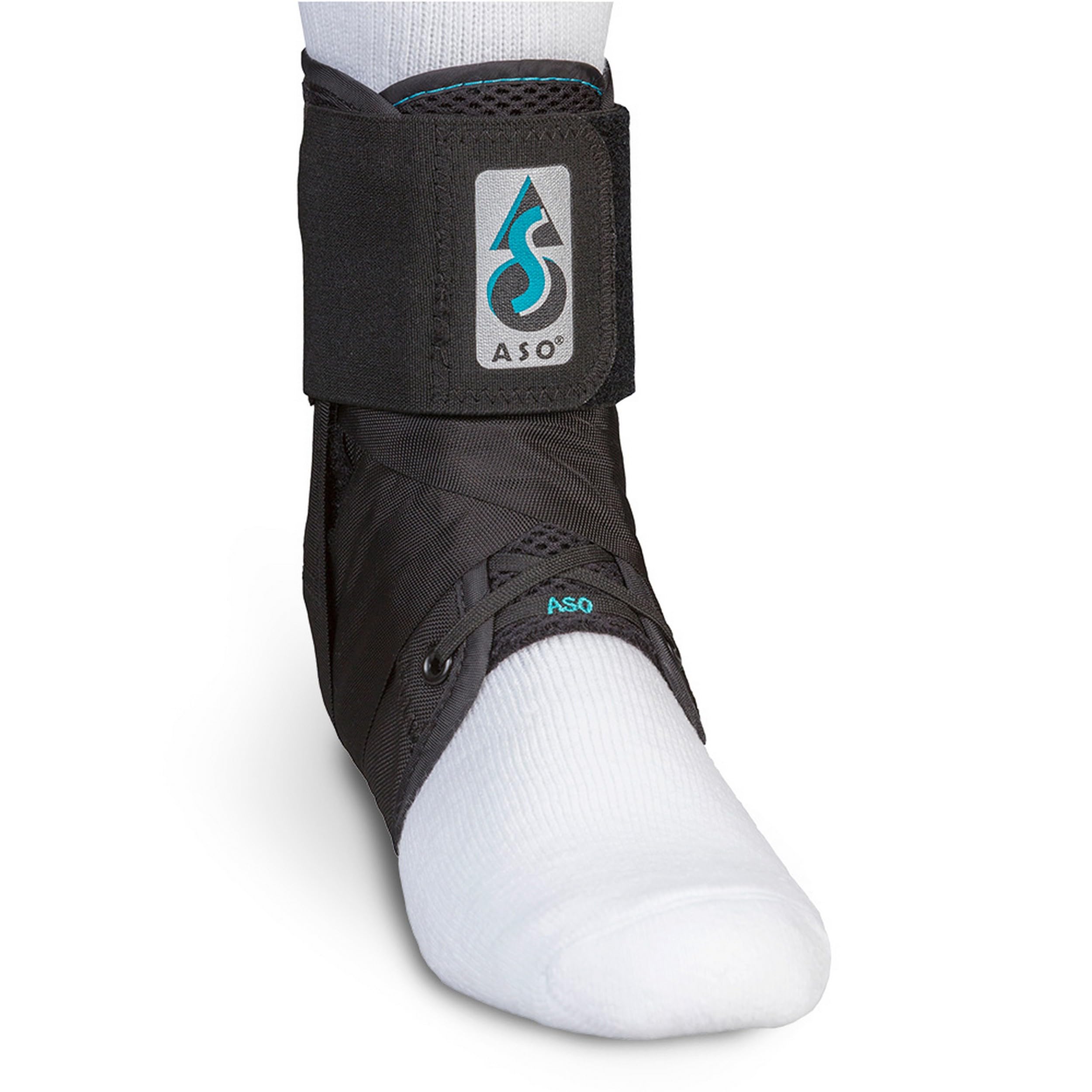
The Med Spec ASO is a staple in athletic training rooms for good reason. Its lace-up system allows you to dial in tension across the midfoot, which is essential for controlling the arch in posterior tibial tendonitis. The integrated figure-8 straps then lock the heel, preventing the inversion that aggravates this tendon.
The CoolFlex padding and breathable nylon tongue make it comfortable for all-day wear, and the bilateral design fits either foot. At a mid-range price point, the ASO offers a great balance of support and comfort without the cost of premium medical braces. Many physical therapists specifically recommend this as the only brand to carry for post-injury stabilization.
One limitation is that it is not designed with an explicit arch-lift mechanism — it relies on the lacing system to provide that support indirectly. For severe cases of adult-acquired flatfoot deformity secondary to posterior tibial tendonitis, you may need a brace with a more aggressive arch component. But for most active users, the ASO remains a reliable, well-proven option.
Why it’s great
- Lace-up system offers excellent fit control.
- Breathable and comfortable for extended wear.
- Widely recommended by medical professionals.
Good to know
- No dedicated arch-lift for severe over-pronation.
- Can be difficult to put on with one hand.
5. MUELLER Sports Medicine The One

Mueller’s “The One” ankle brace lives up to its name for many users trying on multiple braces before finding this one. It features an integrated speed lacing system with flat laces and a grip coating for a secure hold, combined with a classic figure-8 strap for heel lock. This combination provides the medial support needed for posterior tibial tendonitis without adding excessive bulk under the foot.
The brace is softer and smoother along the bottom than many competitors, which reduces discomfort during walking. It fits both right and left ankles and is available in a wide size range. Users who have tried over half a dozen braces often cite this as the best quality and fit for their foot shape.
The bottom strap can wear out after a year of daily use, and the figure-8 strap cannot be tightened as independently as a full lace-up system might allow. However, for the price point, this brace offers a remarkably good fit and solid stabilization for mild to moderate posterior tibial tendonitis.
Why it’s great
- Excellent fit with minimal bottom bulk.
- Speed laces are fast and secure.
- Versatile enough for yoga, walking, and daily wear.
Good to know
- Strap material under foot may tear after a year.
- Less rigid than braces with stays.
6. DonJoy Performance POD Ankle Support

The DonJoy POD (Performance On Demand) is designed with a molded TPU shell that adapts to the anatomy of your foot, providing a custom-like fit for active individuals. Its “On Demand” technology uses a semi-rigid structure to prohibit ankle roll while allowing natural range of motion, making it a strong candidate for those with posterior tibial tendonitis who need to remain active in sports like pickleball, running, or basketball.
The super-soft EVA underlayer lining helps with comfort during high-impact activities, and the low-profile design fits well inside most athletic shoes. It specifically targets ankle instability and inversion/eversion sprains, which are common secondary issues when the posterior tibial tendon is compromised. Users with high insteps find it tight during initial application, but the support is solid enough to eliminate pain during movements that previously caused discomfort.
For trail running or very uneven terrain, some users find the POD too flimsy to prevent rolling during aggressive cuts. Its strength lies in dynamic, controlled sports rather than extreme hiking. If your activity level is high but your ground is predictable, this is a great lightweight option.
Why it’s great
- Molded TPU shell offers a precise anatomical fit.
- Lightweight and comfortable for sports.
- Allows good range of motion while blocking dangerous motions.
Good to know
- May feel too flexible for unstable terrain.
- Not designed for significant arch support.
7. Neo-G Achilles Tendon Support

The Neo-G Achilles Support is a pull-on compression sleeve with a silicone tendon cushion sewn into the back. While it is marketed primarily for Achilles tendonitis, its targeted compression around the ankle and the silicone pad can provide light relief for the posterior tibial tendon by improving circulation and reducing swelling. It is a budget-friendly entry-level option for those with very mild symptoms or as a supplementary support.
Made from a breathable, seamless knit, this brace is extremely easy to put on and take off, and it is comfortable for all-day wear under casual or athletic shoes. It is registered as a Class 1 Medical Device and is a partner of the Chartered Society of Physiotherapy, adding a layer of credibility at this price point.
Do not expect this sleeve to stop your foot from rolling inward or to provide any significant mechanical stabilization. It lacks figure-8 straps, laces, or rigid stays. For posterior tibial tendonitis, this is best used as a compression aid during the early healing phase when the tendon is swollen but not mechanically unstable, or as a starting point before moving to a more supportive brace.
Why it’s great
- Very affordable and easy to use.
- Breathable knit is comfortable for long wear.
- Silicone cushion provides extra tendon protection.
Good to know
- No mechanical support for over-pronation.
- Not suitable for moderate to severe instability.
FAQ
Can a compression sleeve help with posterior tibial tendonitis?
Is it safe to wear an ankle brace for posterior tibial tendonitis all day?
Will an ankle brace fix my flat foot caused by posterior tibial tendonitis?
Final Thoughts: The Verdict
For most users, the ankle brace for posterior tibial tendonitis winner is the BioSkin TriLok because it directly addresses over-pronation with its FootLok arch-lift while providing robust lateral stabilization. If you want a premium, all-day comfort brace without straps, grab the Bauerfeind MalleoTrain. And for rigid mechanical stability during high-impact sports, nothing beats the DonJoy Stabilizing Speed Pro.

Mo Maruf
I created WellFizz to bridge the gap between vague wellness advice and actionable solutions. My mission is simple: to decode the research and give you practical tools you can actually use.
Beyond the data, I am a passionate traveler. I believe that stepping away from the screen to explore new environments is essential for mental clarity and physical vitality.