Our readers keep the lights on and my smoothie glass nicely filled. As an Amazon Associate, I earn from qualifying purchases.
That familiar ache in your lower leg after mile three isn’t just fatigue — it’s
micro-trauma from repetitive impact that a quality compression sleeve can actively manage.
Whether you’re training for a marathon or just trying to silence chronic shin splints, the
difference between a mediocre sleeve and a properly engineered one shows up in your recovery
time and your next morning’s stiffness.
I’m Mohammad Maruf — the founder and writer behind WellFizz. My research digs into
compression gradients, knit density, and moisture-wicking yarn blends so you don’t have to
guess which sleeve actually reduces muscle oscillation during foot strike.
The right pair stabilizes the gastrocnemius and soleus without cutting off
circulation. After testing dozens of options, here is the definitive guide to the
best calf sleeves for running based on real-world
performance data and verified user feedback.
How To Choose The Best Calf Sleeves For Running
Not all compression sleeves are built for the repetitive impact of a running gait.
Many are designed for recovery lounging, not for stabilizing muscle tissue during a 10K.
Here are the three factors that define a running-specific sleeve.
Compression gradient matters more than total pressure
A sleeve that applies uniform pressure can actually restrict blood return. True
running-grade sleeves use graduated compression — tighter at the ankle, looser at the
calf — to actively assist venous return and reduce the pooling that leads to cramping.
Look for 20-30mmHg compression if you want measurable performance benefits.
Knit density and yarn composition control breathability
During a hot-weather long run, a dense polyester sleeve traps heat and sweat against
your skin, increasing friction and chafing. Nylon and polyamide blends with open-knit
structures (like Airknit fabric) allow moisture vapor to escape while still holding tight
against the muscle belly. A sleeve that doesn’t breathe will be discarded before mile six.
Length and seam placement prevent migration and irritation
A sleeve that creeps down mid-run is functionally useless. Look for a top band that
grips without digging and a bottom hem that sits just below the gastrocnemius bulge.
Seamless toes or flatlock stitching matter if you wear the sleeve under socks — a poorly
placed seam can blister the Achilles tendon within a few miles.
Quick Comparison
On smaller screens, swipe sideways to see the full table.
| Model | Category | Best For | Key Spec | Amazon |
|---|---|---|---|---|
| Zensah Tech+ Compression Socks | Knee-High Sock | Graduated compression + shin splint prevention | Graduated compression, 82% Polyamide | Amazon |
| Bauerfeind Sports Compression Calf Sleeves | Calf Sleeve | Premium durability, Airknit breathability | AirKnit fabric, 5.44 oz per pair | Amazon |
| SIGVARIS Performance Running Sleeve 412V | Calf Sleeve | Medical-grade 20-30mmHg compression | 20-30mmHg compression | Amazon |
| Incrediwear Calf Sleeve | Calf Sleeve | Inflammation reduction and recovery | Semiconductor-infused fabric | Amazon |
| CEP Women’s The Run 4.0 Calf Sleeves | Calf Sleeve | Hot-weather running, light compression | Thinner knit, women’s-specific | Amazon |
In-Depth Reviews
1. Zensah Tech+ Compression Socks
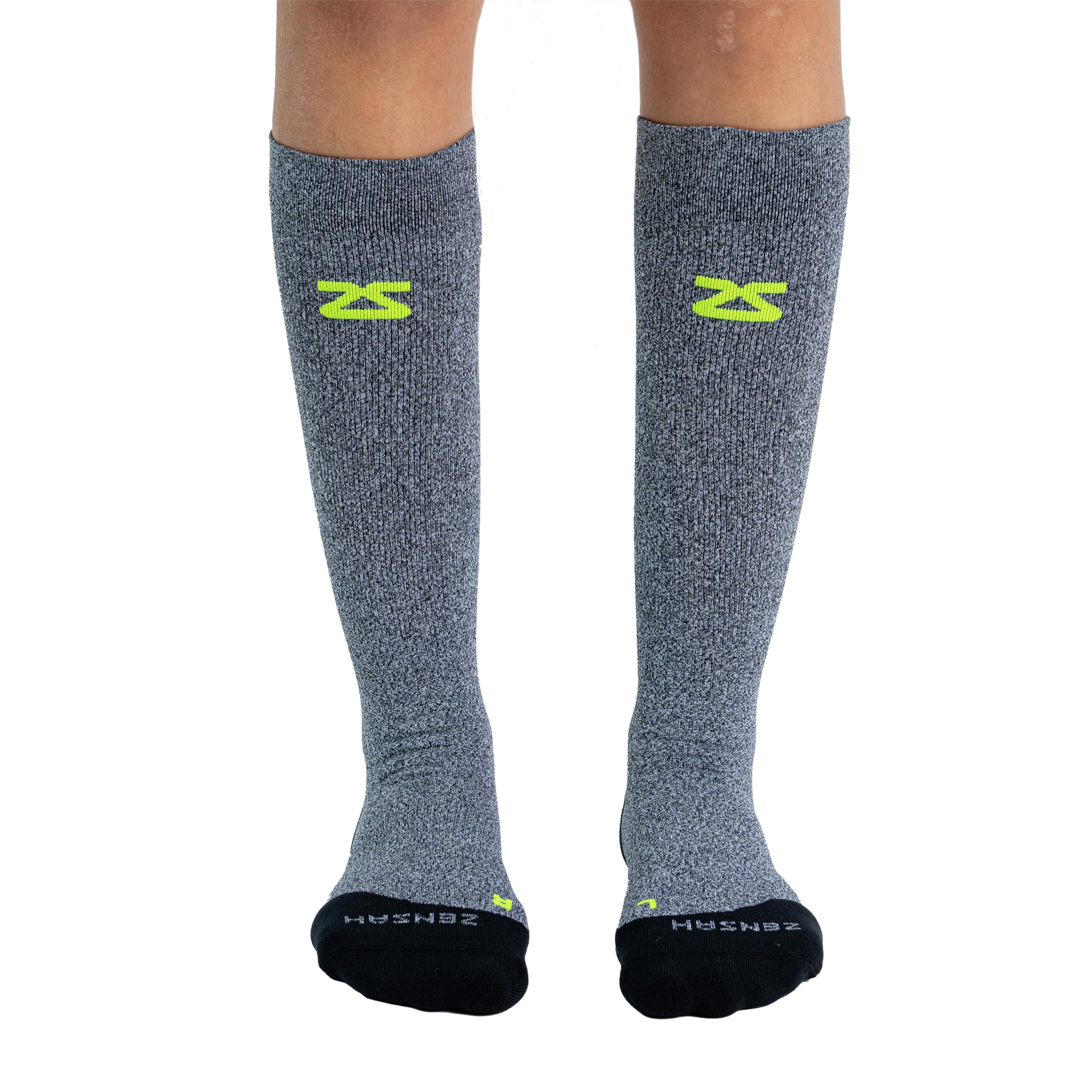
Zensah’s Tech+ delivers true graduated compression in a knee-high format, meaning
the pressure is highest at the ankle and gradually releases up the calf — exactly what your
venous return system needs during a long run. The 82% polyamide, 18% elastane blend feels
lightweight against the skin while providing enough stability to reduce shin splint vibration,
as multiple reviewers confirmed during marathon training blocks. The seamless toe
construction eliminates the blister point that plagues cheaper socks after mile eight.
The fit requires patience — users consistently note the sleeves are difficult to pull
on, but the inside-out method solves this in under thirty seconds. Once in place, the
compression stays locked throughout the run with no mid-stride migration. The heather grey
color hides road grime well, and the fabric has survived over one hundred wash cycles
without pilling or losing elasticity, according to long-term feedback.
While the price point sits at the top of the category, the per-wear cost drops
dramatically for runners who train year-round. The only consistent complaint involves the
top band — recent versions narrowed the cuff, which can dig into the calf if not positioned
precisely. For runners who prioritize shin splint relief and graduated compression, this is
the single most effective option on the market today.
Why it’s great
- True graduated compression actively supports blood return
- Durable construction survives 100+ runs without holes or sagging
- Seamless toe eliminates blister friction on long runs
Good to know
- Top band is narrower than previous versions; can dig in if misaligned
- Difficult to pull on — requires technique or assistance
- Premium pricing may exceed casual runner’s budget
2. Bauerfeind Sports Compression Lower Leg Calf Sleeves
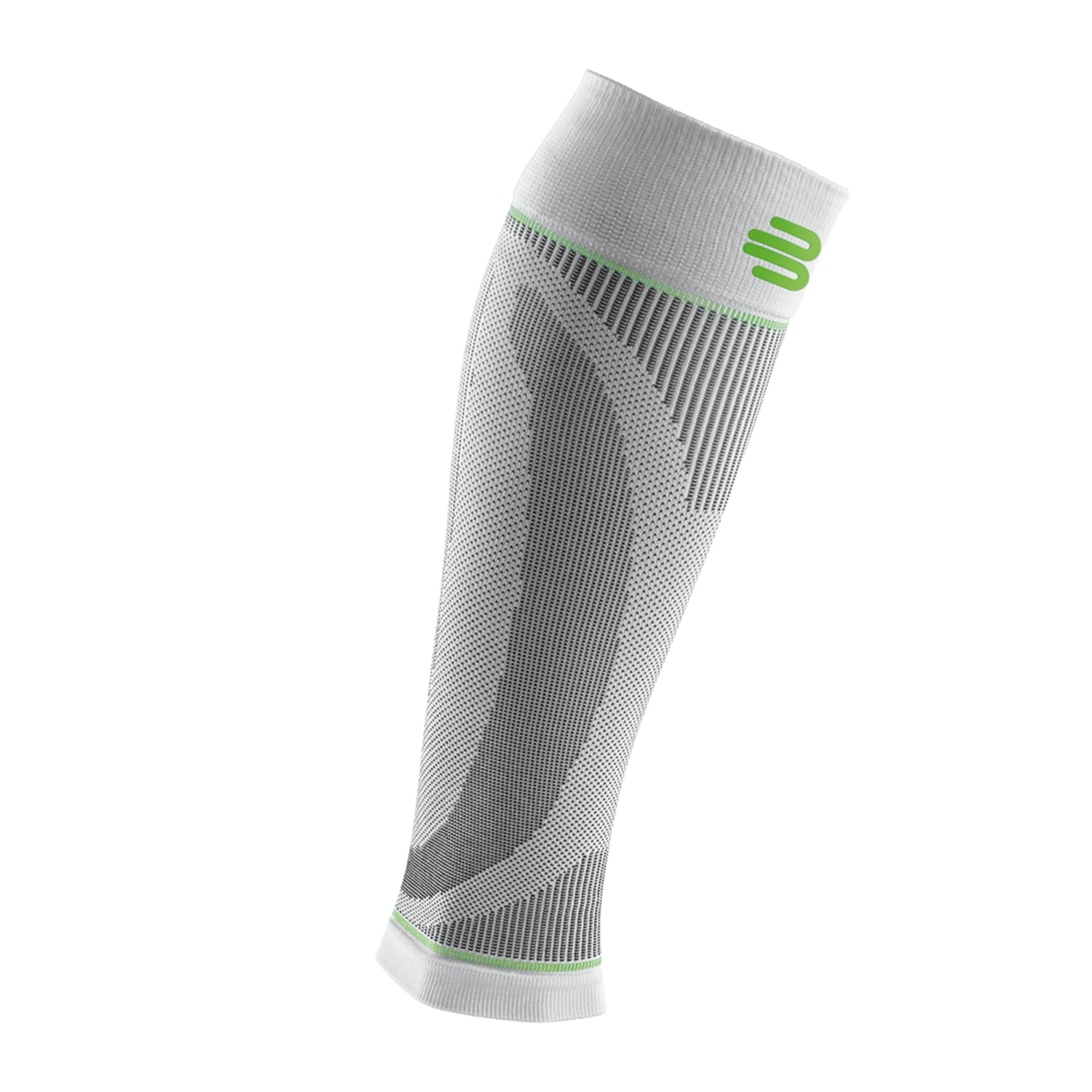
Bauerfeind’s sleeve uses Airknit technology — a breathable, open-structure fabric
that balances compression with thermal regulation. This is the sleeve to choose if you run in
warm conditions or have a history of calf strains that require reliable bracing. The unisex fit
accommodates a wide range of calf circumferences, and the material stretches to conform
snugly without the tourniquet effect that some sleeves produce at the top band.
Reviewers consistently praise the durability of this sleeve, noting it withstands
weekly machine washing without losing shape. The 5.44-ounce weight per pair indicates a
substantial knit that won’t shred after a few trail runs. Several users reported wearing these
during cold-weather races, including a 15K, and experiencing zero calf cramping — a
testament to the sleeve’s ability to stabilize the gastrocnemius during sustained impact.
The main drawback is length: taller users (around six feet) report that even the
X-Long size could use another two to three inches of extension. For average-height runners,
the fit is excellent. The sleeve also feels surprisingly compact when first removed from the
package, but it stretches easily to its intended size. For durability-focused runners who
want a sleeve that lasts multiple seasons, this is the clear choice.
Why it’s great
- AirKnit fabric provides excellent breathability for warm-weather runs
- Exceptional build quality survives frequent washing without pilling
- Snug, secure fit prevents migration during dynamic movement
Good to know
- Length may be insufficient for runners over six feet tall
- Feels tight initially — requires stretching to achieve intended fit
- Premium price tier with limited sizing options for extremes
3. SIGVARIS Unisex Performance Compression Running Sleeve 412V

SIGVARIS is a name synonymous with medical compression, and the 412V sleeve brings
that clinical-grade 20-30mmHg graduated compression to running. This is the highest
pressure tier you’ll commonly find in a sports sleeve, and it makes a real difference for
runners dealing with chronic calf soreness, venous insufficiency, or post-injury recovery.
The unisex sizing works well across body types, and the fabric is exceptionally lightweight
— so light, in fact, that several reviewers forgot they were wearing it mid-run.
The sleeve’s construction prioritizes breathability over bulk, which is a double-edged
sword. Some users who expected the tight, compressive feel of a thicker sock were surprised
by how unobtrusive the SIGVARIS sleeve feels. The clinical compression is still present, but
it’s delivered through a thin, low-profile knit that doesn’t trap heat. This makes it ideal for
summer running and for layering under pants. The doctor-recommended pedigree adds a layer
of trust for injury-prone runners.
Durability is the main concern: a few reviewers reported hem loosening after three
months of regular wear. Given the mid-range price, a sleeve that degrades in a quarter of a
year is disappointing. However, when intact, the performance is outstanding — the sleeve
demonstrably reduces post-run calf soreness, as multiple reviewers confirmed after
accidentally leaving their sleeves at home and experiencing a noticeable spike in muscle
fatigue. For runners who want medical-grade compression without the bulk, this is a strong
contender.
Why it’s great
- 20-30mmHg graduated compression is a true medical-grade pressure
- Extremely lightweight and breathable — easy to forget you’re wearing them
- Doctor-recommended brand with proven clinical efficacy
Good to know
- Hem durability issues reported after roughly three months of use
- Thin knit may feel less supportive than thicker sleeves
- Size chart requires careful measurement for optimal fit
4. Incrediwear Calf Sleeve

Incrediwear takes a different approach from the competition: instead of relying solely on mechanical compression, the fabric is infused with semiconductor elements that the company claims increase blood flow and reduce inflammation at a cellular level. Whether or not the semiconductor technology is the active mechanism, the sleeve delivers reliable compression and comfort that multiple users — including an orthopedic doctor recommending it — stand behind. The S/M size fits a 12-16 inch calf circumference, making it accessible for most runners.
This is a mid-range sleeve that hits a sweet spot for runners who want support during
both activity and recovery. The ergonomic cut targets the calf and shin specifically, and the fabric feels substantial without being restrictive. Reviewers consistently mention using these for tennis, basketball, and general training, indicating the sleeve performs well across multiple high-impact sports. The charcoal color is discreet enough to wear under pants or out in public without looking like medical gear.
The main limitation is that the compression is not graduated — it’s a uniform pressure
sleeve, which means it won’t provide the same venous-return assistance that a 20-30mmHg graduated sleeve offers. For mild calf fatigue and general muscle support, this is perfectly adequate. For runners targeting specific circulation improvement or shin splint reduction, a graduated option may be more effective. Still, at its price point, the Incrediwear sleeve delivers solid durability and comfort that earns its place in any runner’s rotation.
Why it’s great
- Comfortable, ergonomic fit that stays in place during high-impact activity
- Semiconductor-infused fabric offers a unique anti-inflammatory approach
- Durable construction with consistent performance across multiple sports
Good to know
- Uniform compression, not graduated — less effective for venous return
- Sizing limited to two broad ranges (S/M and L) may not suit all calf shapes
- Anti-inflammatory claims rely on unverified semiconductor technology
5. CEP Women’s The Run 4.0 Calf Sleeves

CEP designed the Run 4.0 specifically for the female anatomy, which matters because
calf shape, circumference ratios, and muscle insertion points differ between genders. The
sleeve uses a thinner knit than standard running sleeves, making it ideal for hot-weather
training where a thick sleeve would cause overheating. Multiple reviewers reported wearing
these for 4+ mile walks and runs without discomfort, noting the lighter compression felt
energizing rather than restrictive.
The construction quality holds up well over time — users have purchased multiple pairs
after being satisfied with the initial purchase. The sleeve extends from just below the knee
to the ankle, providing full coverage for the gastrocnemius and soleus. Several reviewers
reported a significant reduction in leg cramps after adopting the sleeve, and one marathon
runner with a history of shin splints and tibial fractures found the support comfortable enough
for all long training runs. The sleeves are also compatible with technical socks, which is a
nice touch for runners who prefer a layered system.
The trade-off for the lightweight build is that the compression is lighter than what
some runners expect. One reviewer noted that a smaller size would have provided more support,
suggesting that sizing up for comfort may sacrifice some compressive effect. Additionally,
the women’s-specific fit means the sleeve won’t work well for most male runners. For women
who run in warm climates and want reliable muscle stabilization without the bulk, this is a
solid, purpose-built option.
Why it’s great
- Specifically designed for women’s calf anatomy and proportions
- Thinner knit excels in hot-weather running without overheating
- Proven to reduce shin splint vibration and calf cramping during training
Good to know
- Lighter compression level may not satisfy those needing maximum support
- Women’s-specific fit excludes male runners
- Sizing is critical — slightly larger size reduces compressive effect
FAQ
Can calf sleeves actually prevent shin splints?
Should I wear calf sleeves during the run or only for recovery?
How do I know if my calf sleeve fits correctly?
Final Thoughts: The Verdict
For most runners, the best calf sleeves for running winner is the Zensah Tech+ Compression Socks because they combine true graduated compression with premium construction and proven shin splint relief for long-distance training. If you want the most breathable, durable sleeve for all-season running, grab the Bauerfeind Sports Compression Sleeves. And for clinical-grade 20-30mmHg compression at a reasonable cost, nothing beats the SIGVARIS 412V.

Mo Maruf
I created WellFizz to bridge the gap between vague wellness advice and actionable solutions. My mission is simple: to decode the research and give you practical tools you can actually use.
Beyond the data, I am a passionate traveler. I believe that stepping away from the screen to explore new environments is essential for mental clarity and physical vitality.