Our readers keep the lights on and my smoothie glass nicely filled. As an Amazon Associate, I earn from qualifying purchases.
Incontinence-related skin breakdown is not a minor irritation—it is a painful cycle of moisture, acidity, and friction that can leave skin raw, cracked, and vulnerable to infection within hours. A quality barrier cream is the single intervention that stops that cycle before it begins, and picking the wrong formula can mean reapplying constantly or dealing with rashes that refuse to heal.
I’m Mohammad Maruf — the founder and writer behind WellFizz. I’ve spent years analyzing the chemical composition and clinical data behind skin protectants to identify which zinc-oxide percentages, paste viscosities, and antifungal additives actually deliver measurable relief for incontinence-associated dermatitis.
Whether you are caring for a loved one or managing your own skin health, knowing which product truly seals out moisture without stinging or staining is essential. This guide breaks down the five most effective options to help you find the right best barrier cream for incontinence for your specific needs.
How To Choose The Best Barrier Cream For Incontinence
Selecting the right barrier cream is about matching the formula’s active ingredients and physical texture to the condition of the skin and the severity of exposure. The wrong choice can lock moisture in rather than sealing it out, so understanding a few key variables is essential.
Active Ingredient: Zinc Oxide Percentage
Zinc oxide is the gold standard for moisture barriers. A concentration of at least 15 to 20 percent provides reliable protection against urine and stool acidity. Higher percentages create a thicker, more durable film that requires less frequent reapplication, but they can feel heavier on the skin. Products with calamine (zinc carbonate) offer additional weeping control for skin that is already oozing or macerated.
Consistency: Paste vs. Ointment vs. Cream
Pastes (like those from Coloplast) are thick and adhere well to both intact and broken skin, making them ideal for high-exposure situations where the barrier needs to stay put for hours. Ointments (like Aquaphor) spread more easily and are gentler on raw skin but may need reapplication more often. Creams fall in between, offering easier removal but less tenacity. For bedridden or immobile individuals, a paste is typically the most effective choice.
Antifungal Protection
When a fungal infection is present or suspected (characterized by intense itching, satellite redness, or a raised border), a barrier cream with antifungal properties becomes necessary. Standard barrier creams only protect against moisture and acidity, not against Candida or other yeast overgrowths. Products labeled as antifungal barrier creams combine a protectant with a fungicidal agent to treat and prevent these infections in one step.
Skin Sensitivity and Medical Grade
For neonatal use or for adult skin that is severely compromised, look for formulas that are fragrance-free, paraben-free, and CHG-compatible. Products tested and recommended by NICU or burn units carry the highest safety pedigree. Avoid scented options if the skin is broken or if the patient has multiple allergies, as fragrance can further irritate damaged tissue.
Quick Comparison
On smaller screens, swipe sideways to see the full table.
| Model | Category | Best For | Key Spec | Amazon |
|---|---|---|---|---|
| Critic-Aid Clear Moisture Barrier Ointment | Ointment | All-day protection on intact skin | 6 oz tube, NICU-recommended | Amazon |
| Coloplast Critic-Aid Skin Paste | Paste | Broken or eroded skin | Thick zinc oxide paste | Amazon |
| Aquaphor Baby Healing Ointment | Ointment | Gentle prevention on sensitive skin | 14 oz, fragrance-free | Amazon |
| Baza Moisture Barrier Antifungal Cream | Antifungal Cream | Fungal infection treatment | 2-pack, 5 oz each | Amazon |
| Thera Calazinc Body Shield Barrier Cream | Barrier Cream | Weeping or irritated skin | 20% zinc, 3% calamine | Amazon |
In‑Depth Reviews
1. Critic-Aid Clear Moisture Barrier Ointment

The Critic-Aid Clear Moisture Barrier Ointment is a six-ounce tube from Coloplast that has earned its reputation in NICU wards for good reason. Unlike thick pastes that leave a visible white residue, this ointment goes on translucent, which makes inspection of the underlying skin much easier—a practical advantage for caregivers who need to monitor skin condition without wiping away the barrier. It is designed to adhere to intact skin and create a durable shield against urine, stool, and enzymatic drainage.
User reviews consistently highlight that this product heals existing diaper rash within 24 hours and prevents recurrence in patients with chronic GI issues. The formula is gentle enough for neonatal use, yet robust enough for adults with incontinence. A single tube lasts a remarkably long time because the spread is thin and efficient. It is also easy to remove with gentle cleansing, which reduces friction during diaper changes.
Where this product shines is in its balance of protection and visibility. The clear formula allows caregivers to see the skin without disturbing the barrier, reducing the frequency of full reapplications. For anyone managing incontinence-related skin irritation on a daily basis, this ointment offers a practical, clinically credible solution that minimizes both rash and caregiver workload.
Why it’s great
- Clear formula allows skin inspection without wiping away the barrier
- NICU-recommended for safety on the most sensitive skin
- Long-lasting; a single tube lasts weeks with daily use
Good to know
- Price per ounce is higher than basic petroleum-based ointments
- May not be thick enough for patients with heavy stool output
2. Coloplast Critic-Aid Skin Paste

When the skin is already broken, eroded, or macerated, a standard ointment will not adhere properly. The Coloplast Critic-Aid Skin Paste is formulated specifically for this scenario—its thick, zinc-oxide-rich paste clings to both intact and damaged tissue, creating a reliable moisture barrier that does not slide off during movement or when exposed to liquid stool. It is CHG-compatible, which means it can be used alongside chlorhexidine skin cleansers without compromising the antimicrobial effect.
This paste is a mainstay in hospitals and long-term care facilities because it handles the most challenging cases of incontinence-associated dermatitis. Users report that a thin pat-dry application before paste application is key to maximizing adhesion, and that one to two applications are often enough to clear a severe rash that other creams failed to resolve. It is also gentle enough for neonatal use, adding to its clinical versatility.
For caregivers dealing with bedbound patients or individuals with heavy stool incontinence, this paste is the most reliable option on this list. It stays put for hours, resists wash-off during brief cleansing, and actively protects eroded skin from further breakdown. The trade-off is that it is more difficult to remove than an ointment, requiring gentle oil-based cleansers for full cleanup.
Why it’s great
- Adheres to broken and eroded skin where ointments slide off
- CHG-compatible for use with medical-grade cleansers
- Clears severe diaper rash in one to two applications
Good to know
- Thick paste can be difficult to remove without oil-based wipes
- May leave a visible white residue on skin and clothing
3. Aquaphor Baby Healing Ointment
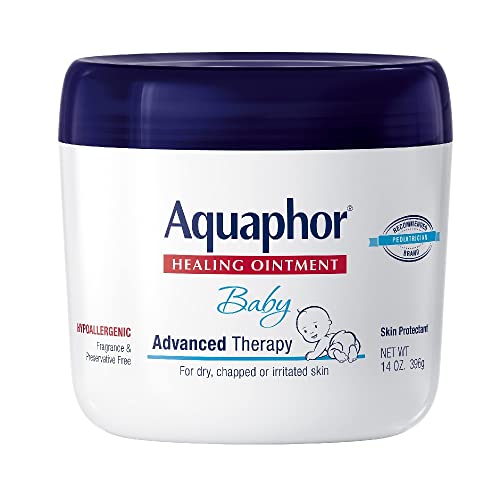
Aquaphor Baby Healing Ointment is not a traditional zinc-oxide barrier cream; it is a petrolatum-based healing ointment enriched with panthenol, glycerin, and bisabolol. These ingredients actively support skin repair while the petrolatum base creates an occlusive seal that keeps moisture out. It is specifically marketed as a preventative diaper rash ointment, meaning it is ideal for users whose skin is still intact but needs consistent protection against wetness and acidity.
Reviews consistently praise its versatility—caregivers use it for everything from diaper rash and drool rash to chapped lips and dry cuticles. The fourteen-ounce jar is the largest volume option in this comparison, offering excellent value per ounce. It is fragrance-free and preservative-free, making it suitable for the most sensitive newborns. The texture is thinner than a paste, so it spreads easily but may require more frequent reapplication during episodes of heavy incontinence.
This product is best suited for maintenance and prevention rather than acute treatment of already-broken skin. For a patient who is incontinent but whose skin is still healthy, applying Aquaphor at each change creates a reliable protective layer that reduces friction and blocks moisture. It is also the most accessible option, available widely in drugstores and grocery stores without a prescription.
Why it’s great
- Multi-purpose: works for diaper rash, dry skin, chapped lips, and minor scrapes
- Fragrance-free and preservative-free for sensitive skin
- Fourteen-ounce jar offers the best value per application
Good to know
- Not a dedicated zinc-oxide barrier; needs reapplication with heavy wetness
- Greasy texture can transfer to clothing and bedding
4. Baza Moisture Barrier Antifungal Cream

When fungal overgrowth complicates incontinence dermatitis, a standard barrier cream will only protect against moisture—it will not treat the underlying yeast infection. The Baza Moisture Barrier Antifungal Cream from Coloplast bridges that gap by combining a moisture barrier with a fungicidal agent that targets Candida and other common fungal pathogens. It comes in a two-pack of five-ounce tubes, providing a full treatment course at a mid-range price point.
Users report that this cream works quickly, often showing noticeable improvement overnight. One reviewer noted that it resolved skin breakdown around a port site where other remedies had failed. It is manufactured in the USA by Coloplast, a company with decades of expertise in ostomy and incontinence skin care, so the formulation is backed by substantial clinical experience. The cream texture is easier to spread than a paste, making it suitable for application on larger body areas.
This product is a targeted solution for a specific problem: incontinence-associated dermatitis with a confirmed or suspected fungal component. If itching, satellite redness, or raised borders are present, this cream addresses both the barrier and the infection simultaneously. For routine prevention without fungal involvement, a standard barrier cream would be a more appropriate and cost-effective choice.
Why it’s great
- Treats fungal infections while providing a moisture barrier
- Two-pack provides a full course of treatment
- Coloplast quality with proven clinical track record
Good to know
- Unnecessary for routine protection without fungal involvement
- Cream texture may require more frequent reapplication than a paste
5. Thera Calazinc Body Shield Barrier Cream
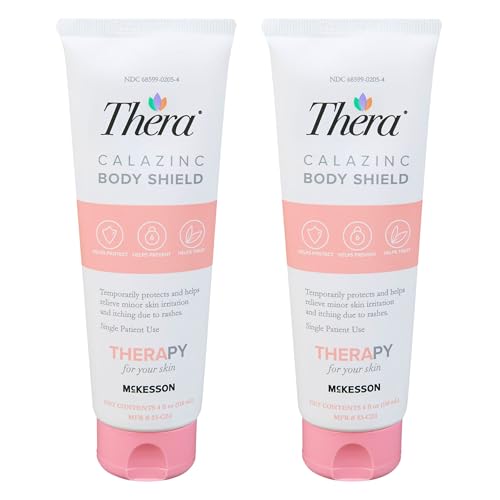
Thera Calazinc Body Shield Barrier Cream from McKesson distinguishes itself with a dual-active formulation of 20 percent zinc oxide and 3 percent calamine. Calamine provides a mild astringent effect that helps dry oozing or weeping skin, making this cream particularly effective for stages of incontinence dermatitis where the skin is already breaking down. It also includes a proprietary vitamin blend with hyaluronic acid, which supports skin integrity and hydration beneath the barrier.
Users frequently describe this cream as long-lasting and deeply soothing, with relief from burning and itching occurring within minutes of application. It is particularly effective for intertrigo (rash in skin folds), including under the breasts for menopausal women, and for neuropathy-related skin irritation. The four-ounce tube has a snap-lid that prevents spills—a small but practical detail for bedside use or travel.
This cream is thicker than a standard lotion but thinner than a paste, offering a middle ground that many caregivers find easier to apply. The mild, clean scent is a bonus for users who find unscented products too medicinal. One note: it can be difficult to wash off completely from skin folds, so barrier wipes or oil-based cleansers may be needed for full removal.
Why it’s great
- Zinc and calamine combination treats weeping and oozing skin
- Fast-acting relief from burning and itching
- Includes hyaluronic acid and vitamins for skin repair
Good to know
- Can be hard to remove completely from skin folds
- Smaller tube size (4 oz) may require frequent repurchase with daily use
FAQ
How often should I reapply barrier cream for incontinence?
Can I use baby diaper rash cream for adult incontinence?
How do I remove thick barrier paste without irritating the skin?
Final Thoughts: The Verdict
For most users, the best barrier cream for incontinence winner is the Critic-Aid Clear Moisture Barrier Ointment because it combines NICU-grade safety, a clear formula that allows skin inspection, and reliable all-day protection in a single tube. If you need a paste that adheres to broken or eroded skin, grab the Coloplast Critic-Aid Skin Paste. And for gentle, fragrance-free prevention on intact skin, nothing beats the Aquaphor Baby Healing Ointment.

Mo Maruf
I created WellFizz to bridge the gap between vague wellness advice and actionable solutions. My mission is simple: to decode the research and give you practical tools you can actually use.
Beyond the data, I am a passionate traveler. I believe that stepping away from the screen to explore new environments is essential for mental clarity and physical vitality.