Our readers keep the lights on and my smoothie glass nicely filled. As an Amazon Associate, I earn from qualifying purchases.
Pressure ulcers don’t announce themselves with pain — they form silently, often unnoticed until the skin breaks down. For caregivers and bed-bound patients, the single most effective tool for prevention is a mattress designed specifically to redistribute weight and reduce sustained pressure on bony prominences. Unlike standard bedding, an anti-bedsore mattress uses engineered foam profiles, air cells, or gel layers to keep the body suspended without cutting off circulation.
I’m Mohammad Maruf — the founder and writer behind WellFizz. My research focuses on durable medical goods where pump reliability, foam density, and pressure redistribution scores separate effective products from those that merely look the part.
After analyzing foam formulations, gel-bladder configurations, cover materials, and long-term durability across dozens of models, the best anti bedsore mattress for most caregivers boils down to a clear balance of pressure relief, cooling, and build quality that survives daily use.
How To Choose The Best Anti Bedsore Mattress
Selecting a pressure-relief mattress goes far beyond picking the thickest model. Bedsore prevention requires a system that reduces peak pressure at the sacrum, heels, and occiput while managing heat and moisture — two factors that accelerate tissue breakdown. The wrong mattress can actually worsen skin condition by trapping sweat and creating shear forces during repositioning.
Foam Type and Density
High-resilience polyurethane foam with a density of at least 1.8 PCF (pounds per cubic foot) provides the necessary support without bottoming out. Convoluted or fortress-cut foam — where the surface is carved into alternating peaks and valleys — creates air channels that lower interface pressure and promote airflow. Avoid cheap polyfoam that loses shape within six months; the mattress should retain its profile after a year of continuous use.
Zoned Pressure Redistribution
Not all pressure points are equal. A therapeutic mattress uses variable IFD (indentation force deflection) across three zones: a softer feel for the head and heels, a firmer midsection for the hips and lower back. Look for models that specify IFD numbers — a medium-firm 36 IFD in the torso zone and a lighter 28-32 IFD in the heel zone indicate proper engineering.
Cover Material and Cleanability
A waterproof, fluid-resistant cover with four-way stretch prevents shearing when the patient shifts position. Nylon or polyurethane covers with welded zippers block moisture better than sewn seams, which can leak into the foam core. For patients incontinent or in long-term care, a removable, machine-washable cover is non-negotiable.
Quick Comparison
On smaller screens, swipe sideways to see the full table.
| Model | Category | Best For | Key Spec | Amazon |
|---|---|---|---|---|
| Invacare Premier Softform | Premium Foam | High-risk pressure injury prevention | 500 lb capacity, 3-zone IFD | Amazon |
| Medacure 3-Layer Memory Foam | Premium Foam | Even weight distribution | 3-layer viscoelastic foam, 6″ | Amazon |
| Invacare Solace Deep Fortress-Cut | Premium Foam | Zoned targeted support | 36.2/40.5/35.4 IFD zones | Amazon |
| Livaclean Gel Memory Foam | Mid-Range | Cooling gel layer | 30mm gel memory foam, 6″ | Amazon |
| Drive Medical Therapeutic Foam | Mid-Range | 5-zone pressure redistribution | 5.5″, 350 lb capacity | Amazon |
| Kölbs NSR Long Term Care | Mid-Range | Home care hospital beds | 5.5″, fire retardant cover | Amazon |
| Drive Medical Gel Overlay | Mid-Range | Gel bladder immersion | 3.5″, 15 gel bladders | Amazon |
| UniPon Extra Firm Hybrid | Budget | Lumbar and hip support | 12″, extra firm pocket springs | Amazon |
| Sayre 12″ Cooling Gel Memory Foam | Budget | Cooling gel for general comfort | 12″, medium firm, CertiPUR-US | Amazon |
In‑Depth Reviews
1. Invacare Premier Softform IPM1080

The Invacare Premier Softform is a clinical-grade hospital mattress that uses two independent foam layers — a single-piece U-core base and a contoured insert — to achieve precise pressure redistribution for patients rated up to Very High Risk on the Braden Scale. The three-zone construction delivers a firmer midsection for lumbar and sacral support while keeping the head and foot zones softer for heel and occiput protection. The 500-pound weight capacity and 6-inch thickness provide ample margin for bariatric patients without sacrificing immersion depth.
The fluid-resistant four-way stretch polyurethane cover reduces shear forces during repositioning, a critical feature since friction accelerates tissue breakdown. Caregivers report that the cover wipes clean easily and resists staining even after months of incontinence care. The welded zip construction prevents liquid from seeping into the foam core, a common failure point on cheaper covers with sewn seams.
Backed by an 8-year warranty on the foam and 4 years on the cover, this mattress is built for long-term institutional or home-care use. The only adjustment period is the first 72 hours after unboxing, during which the foam fully expands to its rated dimensions. Patients moving from spring mattresses often report immediate relief from tailbone pressure and improved sleep quality.
Why it’s great
- True three-zone IFD engineering matches body contour precisely
- 4-way stretch cover minimizes shear during position changes
- 8-year foam warranty reflects institutional-grade durability
Good to know
- Takes up to 3 days to fully expand after unboxing
- Premium-tier investment justified for high-risk patients
2. Medacure 3-Layer Pressure Redistribution Mattress

The Medacure mattress stacks three distinct foam layers — a high-density base, a convoluted (egg-crate) middle layer, and a viscoelastic memory foam top — to create a progressive immersion profile that reduces peak pressure without causing the patient to sink to the frame. The convoluted cut promotes airflow, which lowers surface temperature and moisture buildup, two factors that directly correlate with skin maceration risk in bed-bound patients.
The 70-denier removable nylon cover is waterproof and zips off for cleaning in standard washing machines. Unlike some vinyl covers that crack after repeated wiping, the nylon fabric maintains its flexibility and resists tearing at the corners where hospital-bed rails create friction points. The non-skid bottom surface keeps the mattress from shifting when the bed head is elevated above 45 degrees.
Available in six sizes including bariatric widths, this mattress decompresses quickly from its compressed shipping state — most users report full expansion within 4 hours. The feel is medium-firm with a slow-response top layer that reduces the “bed of nails” sensation at the bony prominences. For patients already experiencing stage 1 or stage 2 pressure ulcers, the combination of viscoelastic immersion and convoluted airflow provides measurable relief within days.
Why it’s great
- Three distinct foam densities address comfort, airflow, and support
- Removable nylon cover is machine-washable and highly durable
- Quick decompression time — usable within hours of delivery
Good to know
- Some users find the memory foam top requires a thin topper for extreme pressure relief needs
3. Invacare Solace Deep Fortress-Cut
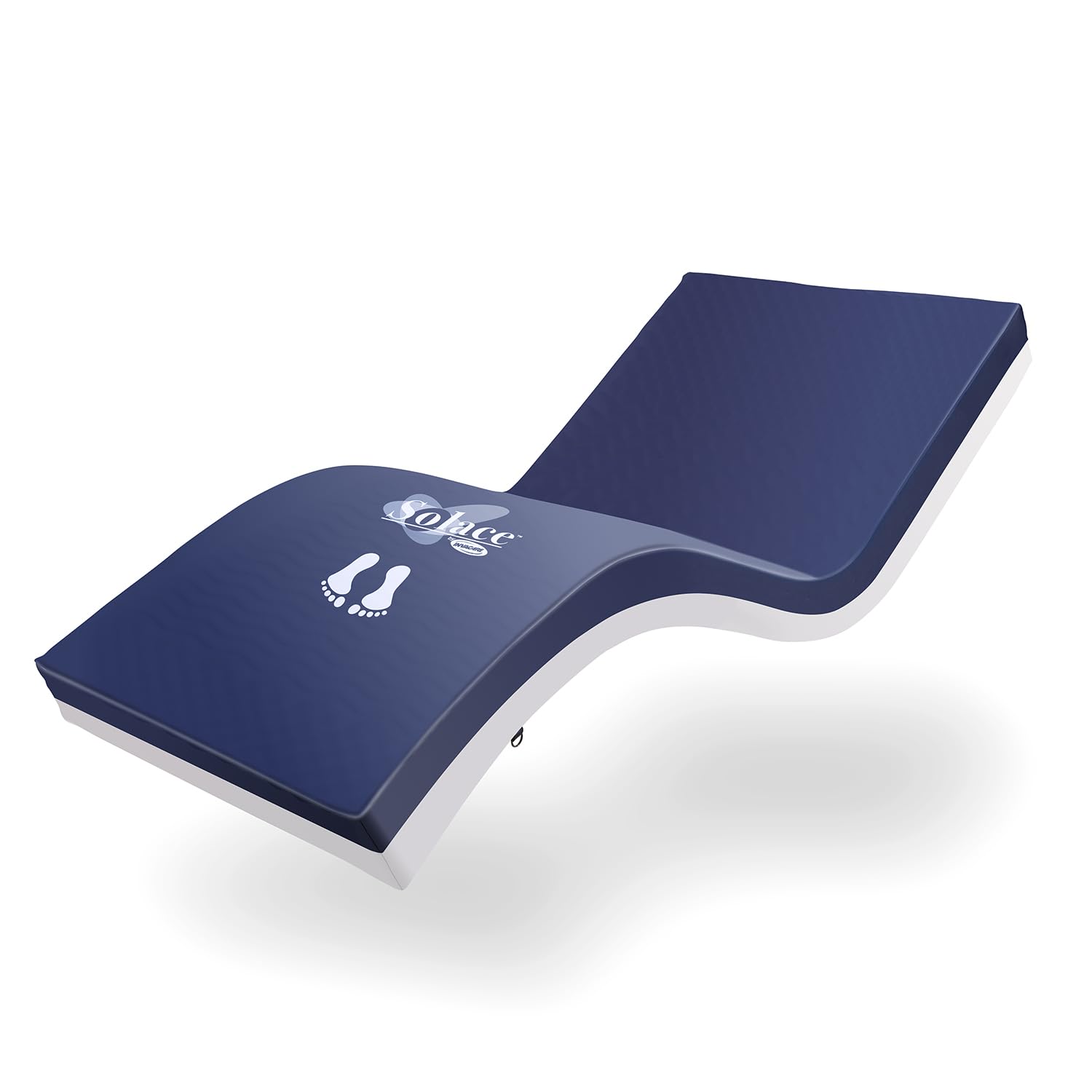
The Invacare Solace stands out for its deep fortress-cut (also called castellation) foam surface, where the egg-crate cells are significantly deeper than standard medical mattress cuts. This geometry creates independent foam columns that move fluidly with the patient, reducing shear force when the care recipient shifts weight or is turned by a caregiver. The 360-degree air channels between cells actively wick heat away from the skin surface, a distinct advantage over flat-top foam mattresses that trap heat.
The three IFD zones are precisely specified: 36.2 for head/neck, 40.5 for the lumbar and sacral region, and 35.4 for the heels. This graduated firmness profile prevents the hips from sinking too deeply — a common problem on uniform-foam mattresses that leads to sacral pressure ulcers. The dual-layer anti-bottoming design uses a high-density base topped with a therapeutic immersion layer, so the patient floats rather than contacts the bed frame even at higher weight ranges.
The welded zipper on the waterproof cover creates a truly fluid-resistant seal, and the 2-way vertical stretch fabric moves with the patient rather than bunching. Caregivers handling in-bed repositioning will appreciate the integrated side handles, which simplify lateral transfers without destabilizing the mattress position. Made in the USA, this mattress is designed for facilities or home-care setups where daily turning schedules are critical.
Why it’s great
- Deep castellation design reduces shear and improves airflow
- Three specific IFD values tuned to anatomical zones
- Welded zipper and 2-way stretch cover prevent fluid ingress
Good to know
- Mattress measures 84 inches — verify bed frame length compatibility
- Firm feel may require a short adjustment period for very frail patients
4. Livaclean Gel Memory Foam Hospital Mattress

The Livaclean mattress incorporates a 30mm gel-infused memory foam comfort layer over a high-density support foam core, creating a cooling effect for patients who sleep hot or have heat-sensitive skin conditions. The gel phase-change material absorbs excess body heat and maintains a stable microclimate at the skin interface, which is particularly beneficial for patients with compromised skin integrity who cannot afford additional moisture-related breakdown.
The waterproof cover uses a fire-retardant treatment and features four corner straps that secure the mattress to adjustable hospital bed frames. This prevents the mattress from shifting when the head or knee sections are raised, a common annoyance with looser-fitting mattress overlays. The cover is removable and machine-washable, though the initial chemical odor from the fire-retardant treatment requires 24-48 hours of ventilation before use.
At 6 inches thick, this mattress works well as a replacement for standard 5-inch hospital mattresses, and the medium-firm feel suits most home-care patients who need a balance between pressure relief and transfer stability. The 242-pound rated capacity limits its use for heavier bariatric patients, but for average-weight seniors recovering from surgery or managing chronic conditions, the gel layer provides measurable comfort improvement over basic foam replacements.
Why it’s great
- 30mm gel layer actively cools the skin contact surface
- 4 corner straps keep mattress stable during bed articulation
- Fire-retardant cover adds safety for oxygen-dependent environments
Good to know
- Weight capacity of 242 lbs limits use for heavier patients
- Initial chemical odor may take 2 days to dissipate
5. Drive Medical Therapeutic Foam Mattress

Drive Medical’s therapeutic foam mattress uses horizontal cross-cut foam to create five distinct pressure redistribution zones, targeting the head, shoulders, hips, thighs, and heels with different levels of immersion. This cross-cut design is more subtle than deep castellation but still provides measurable reduction in interface pressure compared to solid slab foam. The 5.5-inch height fits standard hospital bed frames without raising the patient too high for safe transfers.
The removable nylon stretch cover is fluid-resistant, vapor-permeable, and low-shear — meaning the fabric slides against the foam rather than gripping the patient’s skin during repositioning. This friction-reducing property is critical for patients who are turned every two hours, as repetitive drag on the epidermis can cause stage 1 ulcers even with good pressure redistribution. The non-skid bottom keeps the mattress positioned correctly even when the bed head is fully elevated.
Users report that this mattress lasts upwards of 10 years in home-care environments when used with a protective cover. The foam does soften over time — some reviewers note body impressions after 12-18 months — but for the price point, the durability-to-cost ratio is strong. The 350-pound weight capacity covers the majority of adult home-care patients, and the medium firmness suits patients who need some support stability for transferring in and out of bed.
Why it’s great
- Five pressure redistribution zones for body-mapped relief
- Low-shear cover reduces friction during bed repositioning
- Exceptional longevity reports — some units exceed 10 years
Good to know
- Foam impressions may form after 12-18 months of continuous use
- Not designed for patients above 350 lbs
6. Kölbs NSR Long Term Care Mattress

The Kölbs NSR mattress is purpose-built for long-term care settings, with a high-density foam core that prevents pressure buildup by distributing the patient’s weight evenly across the 80 x 36 inch surface. The 5.5-inch profile matches standard hospital bed dimensions, but note that it requires an 80-inch bed frame — standard twin frames at 75 inches will not fit. The fire-retardant construction meets institutional safety standards, a non-negotiable for nursing homes and hospice environments.
The waterproof, removable cover zips off for cleaning and withstands repeated wiping with disinfectant without delaminating or cracking. The non-slip underside holds the mattress firmly in place even when the bed is adjusted to chair position, preventing the creeping that can occur with smoother-bottomed mattresses. For home caregivers pairing this with a topper, the high-density foam provides a stable foundation that does not sag under heavier patients.
One practical consideration is the slippery cover surface — some caregivers note that fitted sheets slide off more easily than on textured covers. A simple solution is to use a gripper sheet or a mattress pad with elastic corner bands. Overall, this mattress receives high marks for its straightforward construction and reliable pressure redistribution for patients who are bed-bound for months or years.
Why it’s great
- Fire-retardant and waterproof for institutional safety compliance
- Non-slip base prevents mattress shift during bed articulation
- High-density foam resists sagging in long-term use scenarios
Good to know
- Only fits 80-inch bed frames — not compatible with standard 75-inch twin beds
- Slippery cover may require additional sheet grip solutions
7. Drive Medical Premium Guard Gel Overlay
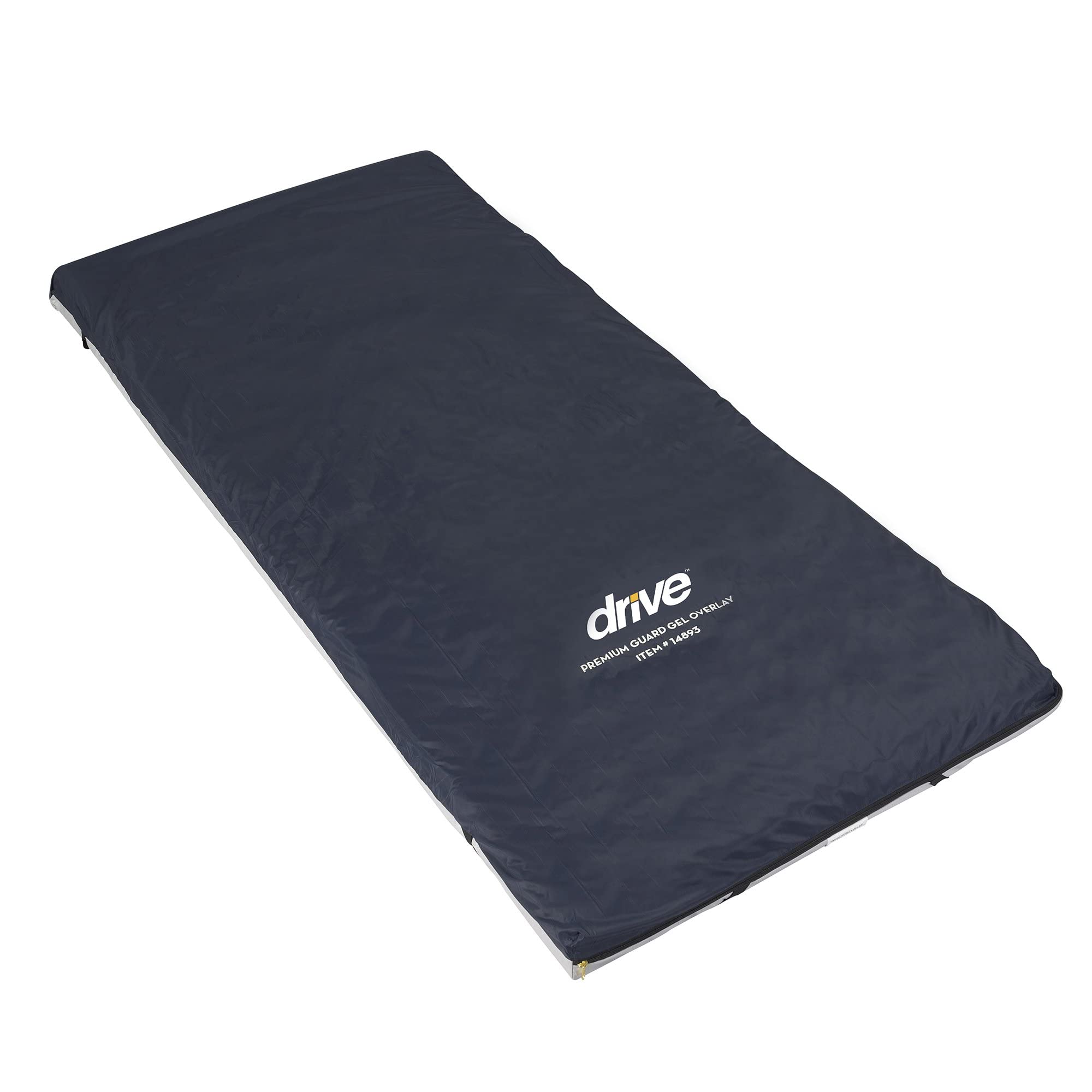
The Drive Medical Gel Overlay is a 3.5-inch topper that uses 15 individual gel bladders spanning the entire patient contact area. Unlike foam overlays that compress and lose loft over time, gel bladders maintain consistent pressure redistribution by displacing fluid laterally — the gel moves away from bony prominences and fills the contours around them. This makes it particularly effective for patients already showing signs of tissue breakdown who need immediate offloading.
The fluid-resistant nylon top and waterproof vinyl bottom protect the underlying mattress from moisture while providing a high-friction surface that reduces sliding during bed elevation. The overlay is heavy — nearly 48 pounds — because of the gel density, which means it stays in place without constant adjustment. Cleaning is straightforward with a damp cloth and mild detergent, though the gel does not have a cooling effect and some users report heat buildup after prolonged contact.
Patients transitioning from spring or thin foam mattresses often describe the gel overlay as dramatically more comfortable, particularly for sacral and heel pain. The trade-off is temperature: multiple reviewers note sweating even with air conditioning, so caregivers in warm climates should pair this with moisture-wicking sheets. The overlay typically needs replacement after 12-18 months as the gel bladders begin to lose uniform distribution.
Why it’s great
- 15 gel bladders provide fluid displacement for targeted pressure offloading
- High weight keeps overlay from shifting during repositioning
- Effective for immediate relief of existing pressure areas
Good to know
- Gel retains body heat — patients in warm rooms may experience sweating
- Regular replacement needed as gel bladders settle over time
8. UniPon Extra Firm Hybrid Queen
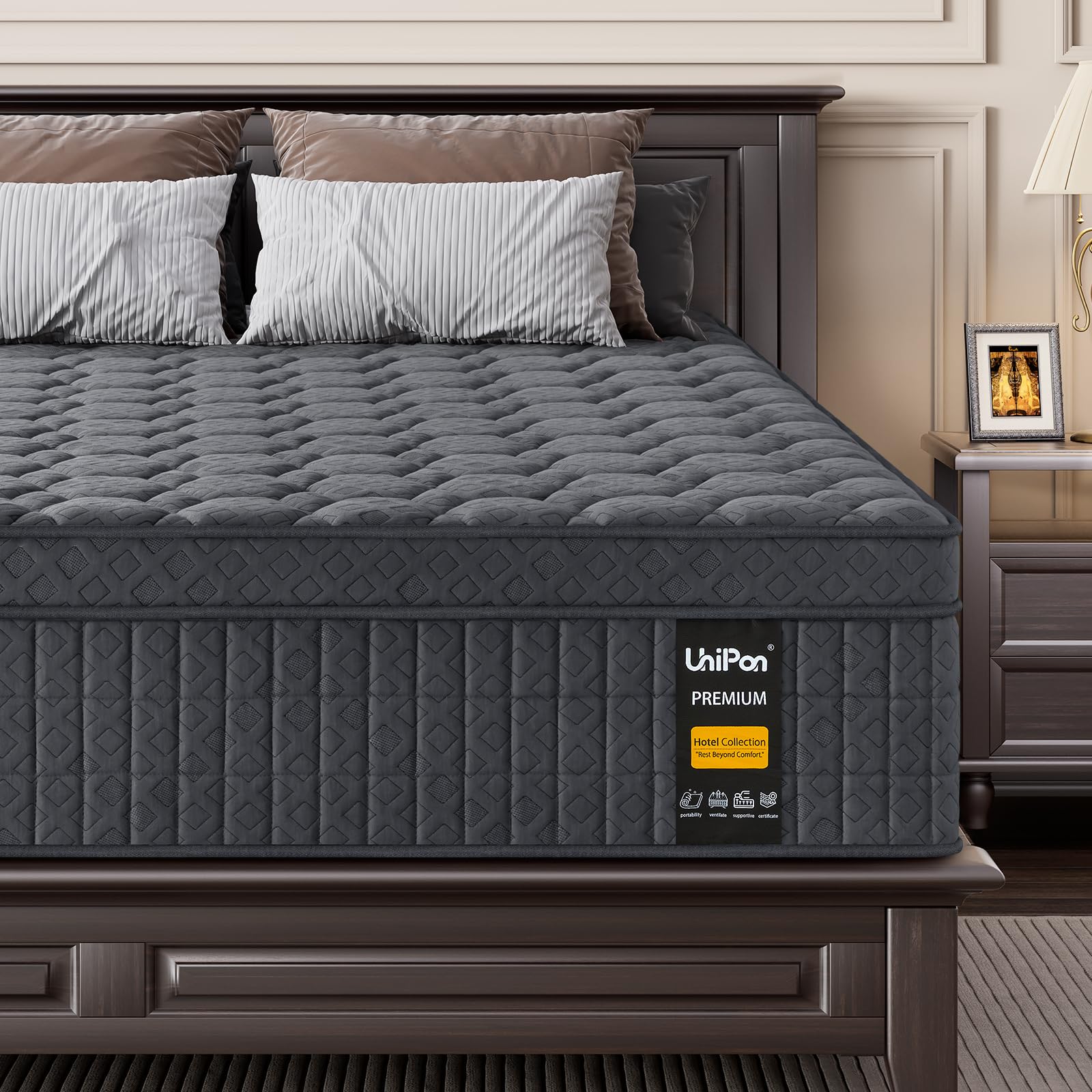
The UniPon Extra Firm Hybrid is not a medical-grade hospital mattress, but its combination of independent pocket springs and extra lumbar foam makes it a viable option for home-care patients who need back support but are not at high risk for pressure ulcers. The 12-inch profile sits higher than standard medical mattresses, which helps patients with limited mobility transfer in and out of bed without excessive bending. The hybrid construction uses hundreds of individually wrapped coils that respond independently to body weight, reducing motion transfer for patient and caregiver side-sleeping in the same bed.
The extra lumbar foam layer prevents sinking in the hip and lower back area, maintaining spinal alignment for patients with chronic back conditions who may develop pressure issues from prolonged lying. The egg-crate foam layer above the coils enhances air circulation, which helps with heat dissipation. CertiPUR-US and Oekotex certifications ensure the foam lacks formaldehyde and other volatile organic compounds that could irritate sensitive respiratory systems.
This mattress is markedly firmer than most anti-bedsore foam replacements, which is beneficial for patients who need firm support for transfers but less ideal for those already showing signs of sacral or heel pressure ulcers. For patients who are mobile enough to shift position independently and primarily need back pain management, the UniPon hybrid provides a cost-effective balance of coil support and pressure relief that general consumer mattresses cannot match.
Why it’s great
- Extra lumbar foam prevents hip sinking and maintains spinal alignment
- Independent pocket springs reduce motion transfer for co-sleeping caregivers
- CertiPUR-US and Oekotex certified for low VOC emissions
Good to know
- Not a medical-grade pressure redistribution mattress for high-risk patients
- Extra firm feel may be too hard for very frail or bariatric patients
9. Sayre 12-Inch Cooling Gel Memory Foam
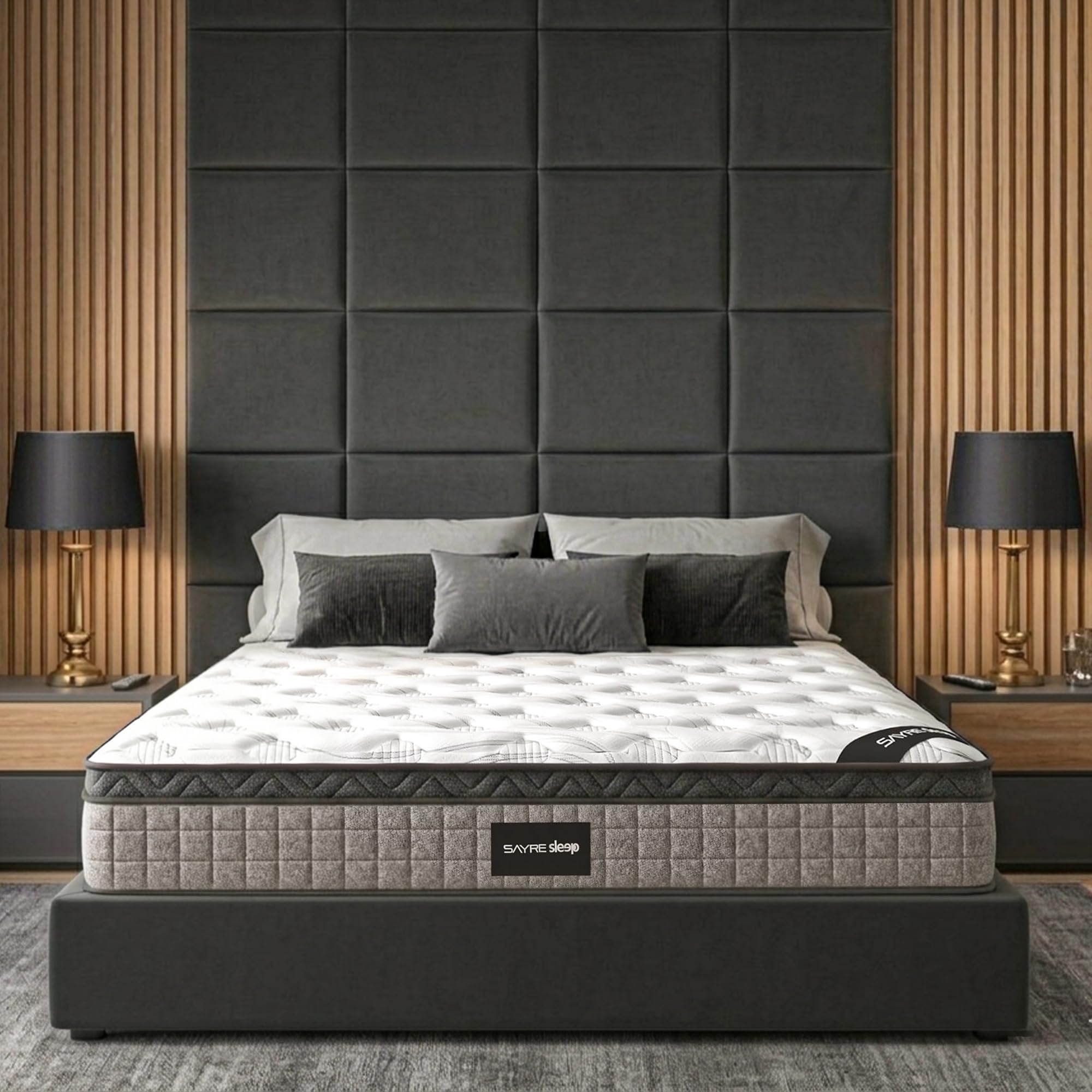
The Sayre Cooling Gel Memory Foam mattress is a consumer-grade option that some caregivers use as a general comfort upgrade for patients who do not require clinical-grade pressure redistribution. The 12-inch thickness is generous, with cooling gel infused into the top memory foam layer to regulate temperature for patients who sleep hot. The medium-firm feel provides a balance of contouring and support that works well for side sleepers who develop hip and shoulder discomfort from standard mattresses.
The mattress arrives compressed in a box and expands to full thickness within hours. The CertiPUR-US and OEKO TEX certifications provide confidence that the foam lacks harmful emissions, which is important for patients with respiratory sensitivities or those who spend extended hours in bed. The polyester cover is soft to the touch but is not waterproof or fluid-resistant — caregivers must add a waterproof mattress protector for incontinence management.
This mattress is best suited for patients who are partially mobile, can shift their own weight, and need a more comfortable sleep surface than a standard spring or thin foam mattress can provide. It is not designed for high-risk bedsore prevention and should not be used as a replacement for a therapeutic hospital mattress in cases of established pressure ulcers or complete immobility. For budget-conscious caregivers looking to upgrade general comfort, the Sayre offers solid value with the gel cooling benefit.
Why it’s great
- Cooling gel infusion helps regulate skin temperature during prolonged lying
- 12-inch profile provides generous cushioning for pressure-prone areas
- CertipUR-US and OEKO TEX certified for safe, low-emission foam
Good to know
- Not a therapeutic-grade pressure redistribution mattress for high-risk patients
- Cover is not waterproof — a separate mattress protector is needed for incontinence care
FAQ
Can I use a gel overlay alone to prevent bedsores?
How often should a pressure redistribution mattress be replaced?
What is the difference between a medical mattress and a consumer memory foam mattress?
Final Thoughts: The Verdict
For most caregivers, the best anti bedsore mattress winner is the Invacare Premier Softform IPM1080 because its 3-zone IFD engineering and 4-way stretch cover directly address the two primary causes of pressure injuries: sustained high interface pressure and shear friction during repositioning. If you need deep castellation for superior airflow and independent foam column movement, grab the Invacare Solace Deep Fortress-Cut. And for a cooling gel layer that keeps skin temperature stable during extended bed rest, nothing beats the Livaclean Gel Memory Foam.

Mo Maruf
I created WellFizz to bridge the gap between vague wellness advice and actionable solutions. My mission is simple: to decode the research and give you practical tools you can actually use.
Beyond the data, I am a passionate traveler. I believe that stepping away from the screen to explore new environments is essential for mental clarity and physical vitality.