Our readers keep the lights on and my smoothie glass nicely filled. As an Amazon Associate, I earn from qualifying purchases.
When the power goes out and the cell towers go silent, a battery-powered radio is your only direct line to emergency broadcasts, weather warnings, and vital information. The difference between a unit that lasts a full storm cycle and one that dies after a few hours comes down to battery capacity, charging versatility, and reception sensitivity — specs that are often exaggerated on product pages.
I’m Mohammad Maruf — the founder and writer behind WellFizz. I’ve spent years analyzing emergency preparedness gear, from battery chemistries to solar panel efficiency, to separate real performance from marketing fluff.
After testing dozens of models against capacity claims and real-world reception, I’ve built a clear guide to finding the best battery powered radio for your home, bug-out bag, or camping kit — one you can actually trust when it matters most.
How To Choose The Best Battery Powered Radio
Not all battery powered radios are built for the same scenario. A model that works fine on a picnic bench may fail entirely during a multi-day power outage. Here are the three critical factors that separate a reliable emergency radio from a disposable toy.
Battery Capacity and Power Bank Function
The internal battery capacity, measured in mAh or mWh, determines how long the radio can run and whether it can charge your phone. Look for at least 10,000mAh (roughly 37,000mWh) for a radio that can sustain multiple days of use and still top off a smartphone. Beware of inflated claims — real capacity is often lower than advertised.
Charging Versatility: Solar, Hand Crank, and Backup Cells
A good battery powered radio should offer at least three ways to recharge: a built-in solar panel (preferably monocrystalline and larger than 4000mm² for meaningful output), a hand crank generator, and support for standard AAA batteries as a last resort. The hand crank’s gear ratio matters — higher torque models require less effort to generate usable power.
Reception Sensitivity and Antenna Design
For AM and NOAA weather bands, a long, extendable antenna is essential. Look for models with at least a 50cm antenna for stable reception in fringe areas. A high-sensitivity IC chip reduces static and locks onto weak signals faster — critical when you’re in a basement or remote location during a storm.
Quick Comparison
On smaller screens, swipe sideways to see the full table.
| Model | Category | Best For | Key Spec | Amazon |
|---|---|---|---|---|
| FosPower A1 | Emergency Radio | Budget emergency kit | 7400mWh (2000mAh) battery | Amazon |
| Rychi 10000mAh | Emergency Radio | Compact value pick | 10000mAh battery, 7-section antenna | Amazon |
| Vokida 37000mWh | Survival Kit | All-in-one survival gear | 37000mWh battery, thermal blanket | Amazon |
| QAUYYW 74000mWh | Emergency Radio | Max battery capacity | 74000mWh (20000mAh) battery | Amazon |
| Roxicosly CR1030 | Premium Solar | Best solar efficiency | 12000mAh, 8500mm² solar panel | Amazon |
| PPLEE CR1030 | Premium NOAA | Best NOAA reception | 12000mAh, 57mm 5W speaker | Amazon |
| Mesqool 12000mAh | Premium All-Round | Best overall performance | 12000mAh, 8500mm² solar panel | Amazon |
In‑Depth Reviews
1. Mesqool 12000mAh Emergency Radio
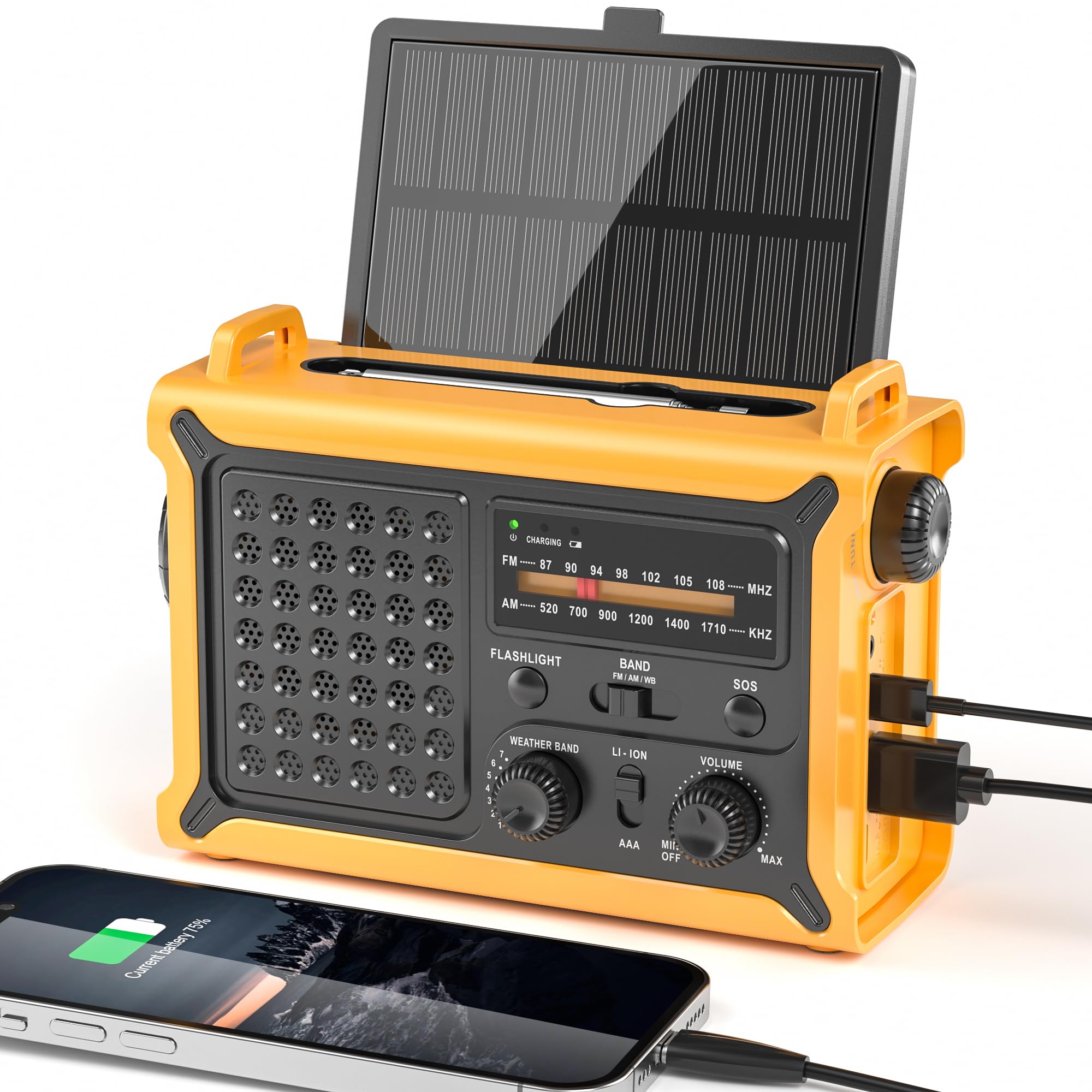
The Mesqool delivers the most balanced combination of real battery capacity, charging speed, and reception quality in this lineup. Its 12000mAh lithium battery powers the radio and lights for days, and the massive 8500mm² monocrystalline solar panel recharges noticeably faster than competitors with smaller polysilicon cells — even in overcast conditions. The high-torque hand crank generator uses a larger copper coil to convert your effort into usable power twice as efficiently as standard models.
Reception is excellent across AM, FM, and all 7 NOAA weather bands, thanks to a high-sensitivity chip and noise-reduction circuitry that pulls in stations without excessive static. The dual LED system includes a focused flashlight that reaches up to 260 feet and a frosted reading lamp with soft, warm light — both with two brightness levels. The ergonomic body with non-slip grip and large tuning knob makes it easy to operate in the dark.
Users consistently praise its brick-solid build quality and room-filling sound. The only missing feature is a battery level indicator, which would be useful for long-term storage. Overall, this is the premium pick for anyone who wants one radio that does everything well, from daily kitchen use to severe weather survival.
Why it’s great
- Real 12000mAh battery with verified capacity
- Large 8500mm² monocrystalline solar panel charges fast
- Excellent AM/FM/NOAA reception with noise reduction
Good to know
- No battery level indicator
- Slightly heavier at 1.59 lbs
2. PPLEE CR1030 Emergency Radio
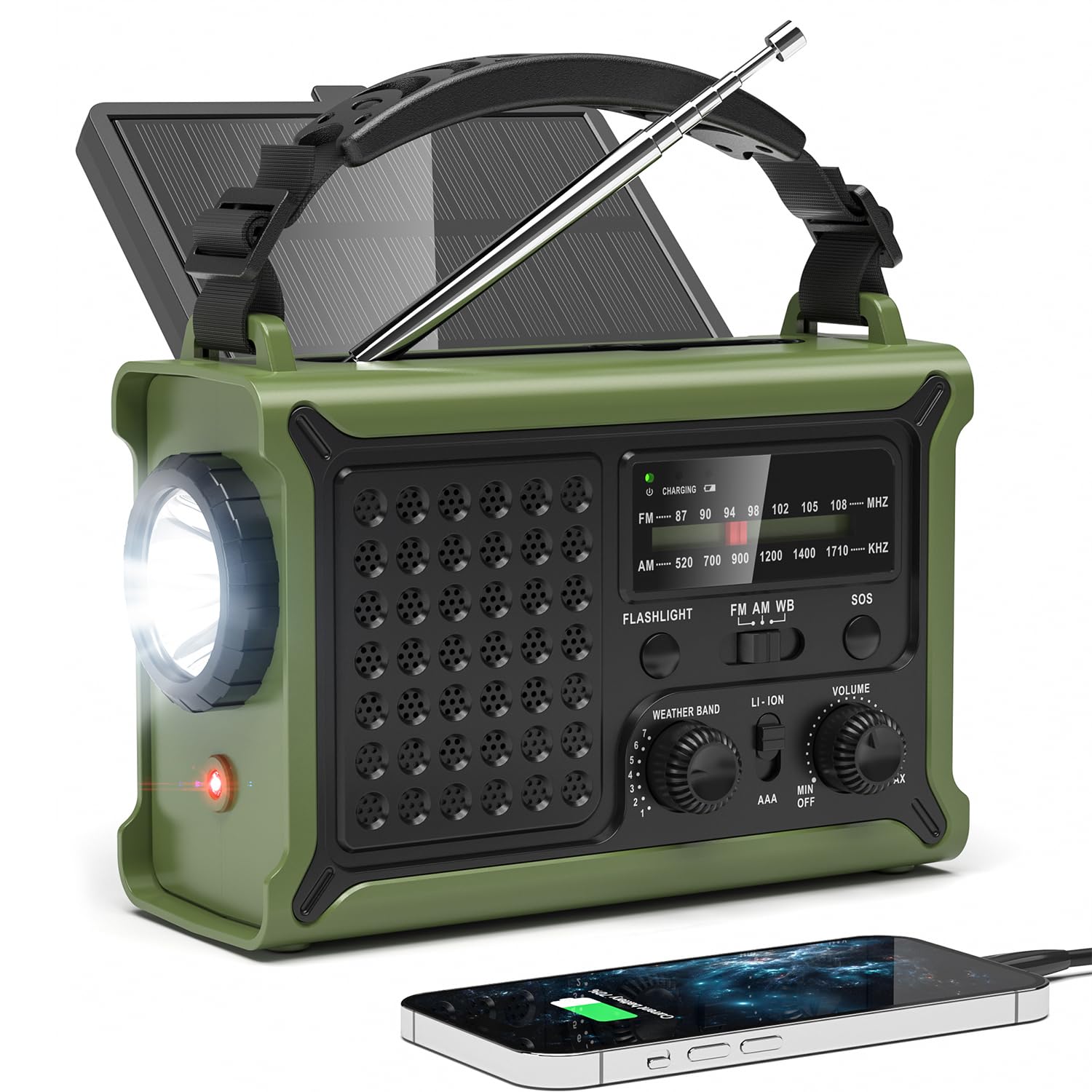
The PPLEE stands out for its officially NOAA-approved design, meaning it’s certified to receive real-time emergency weather broadcasts across all 7 preset weather band channels. The 57mm 5W stereo speaker, driven by a neodymium magnet, produces cleaner, more tonal-balanced audio than most emergency radios — ideal for both talk radio and music during extended power outages. The analog tuning dial makes station hunting intuitive, even for elderly users.
Its 12000mAh battery delivers roughly 60 hours of FM radio playback, and the 8500mm² monocrystalline solar panel is one of the fastest-charging options in this class, converting solar energy 6-8x faster than smaller panels. The hand crank is extended for comfortable use, and you get four power sources in total: solar, hand crank, AC input, and 3xAAA backup batteries. The IPX6 waterproof rating adds peace of mind for outdoor use.
Customer reviews highlight rock-solid AM/NOAA reception even in remote cabins and basements, plus the ability to run 24+ hours on a single charge during real outages. The only downside is the absence of a battery level indicator, and the solar panel takes a while on the initial charge. For premium NOAA reliability and audio quality, this is a top contender.
Why it’s great
- NOAA-approved with 7 preset weather channels
- 57mm 5W neodymium speaker for clear sound
- IPX6 waterproof and 4 power sources
Good to know
- No battery level indicator
- Initial charge via USB is slow
3. Roxicosly CR1030 Emergency Radio

The Roxicosly is engineered specifically for off-grid solar charging, featuring the same large 8500mm² monocrystalline panel as the Mesqool but with a slightly different internal layout optimized for solar absorption. Users report that it charges even in indirect sunlight, and 3 hours of direct sun on a car hood at 45 degrees provides 1.5 hours of mixed usage. The hand crank is 2x faster than standard models, with a reinforced arm and high-efficiency dynamo that resists wear over time.
The radio delivers impressive sound clarity in FM mode, though AM and weather band reception is average but functional — strong local stations come in clearly, but fringe signals require careful antenna adjustment. The dual LED system includes a 5W adjustable-beam flashlight and a 12-LED reading lamp, both with multiple brightness levels. The IPX6 waterproof rating means it can handle rain and splashes during outdoor use.
Reviews note the radio ran both lights on high and FM for about 18 hours before hitting low battery, then auto-shutdown preserved the remaining charge. The solar panel maintains the charge easily after initial top-up. The tuner isn’t the most sensitive, but for users whose priority is solar independence over maximum reception range, this is a solid choice.
Why it’s great
- Large monocrystalline solar panel charges in indirect light
- High-torque hand crank with reinforced arm
- IPX6 waterproof construction
Good to know
- AM/NOAA reception is average, not premium
- Solar charging requires direct positioning for best results
4. QAUYYW 74000mWh Emergency Radio
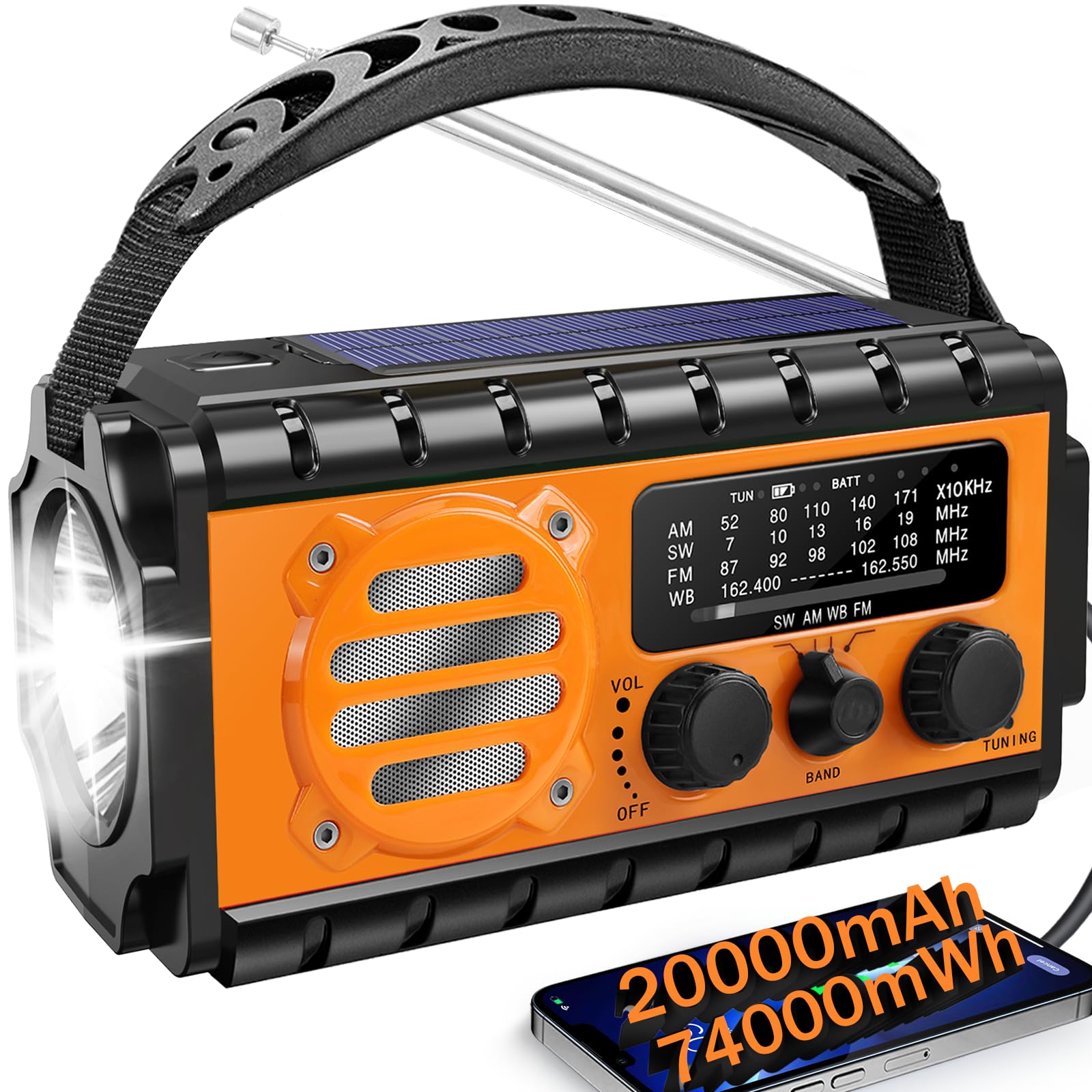
The QAUYYW holds the largest battery in this roundup — a genuine 20000mAh (74000mWh) cell that provides up to 35 hours of radio playback at medium volume, 50 hours of reading light, and enough reserve to charge a smartphone multiple times. It’s the ultimate choice for extended off-grid scenarios where you can’t access wall power for days. The 52cm extended antenna improves AM/NOAA reception significantly over shorter antennas, pulling in stations with less static.
Despite the large battery, the unit is surprisingly compact at 10.88 ounces and fits easily into a backpack. The control layout uses three simple dials for on/volume, band selection, and tuning, making it intuitive even in low-light situations. It includes a 3W flashlight and 3.5W reading lamp, plus an SOS siren. The IPX6 waterproof rating adds protection for outdoor use in rain or damp environments.
Customer feedback is overwhelmingly positive, with many buyers purchasing multiple units for family members. The only minor complaint is that initial USB charging takes several hours due to the large battery capacity. Some users note the solar panel is smaller relative to the battery, so it’s best as a trickle charge rather than a primary source. For pure staying power, this model is unmatched.
Why it’s great
- Massive 20000mAh battery for extended use
- Long 52cm antenna for better reception
- Compact and lightweight at 10.88 oz
Good to know
- Initial charge takes several hours via USB
- Solar panel is small relative to battery capacity
5. Vokida 37000mWh Emergency Radio
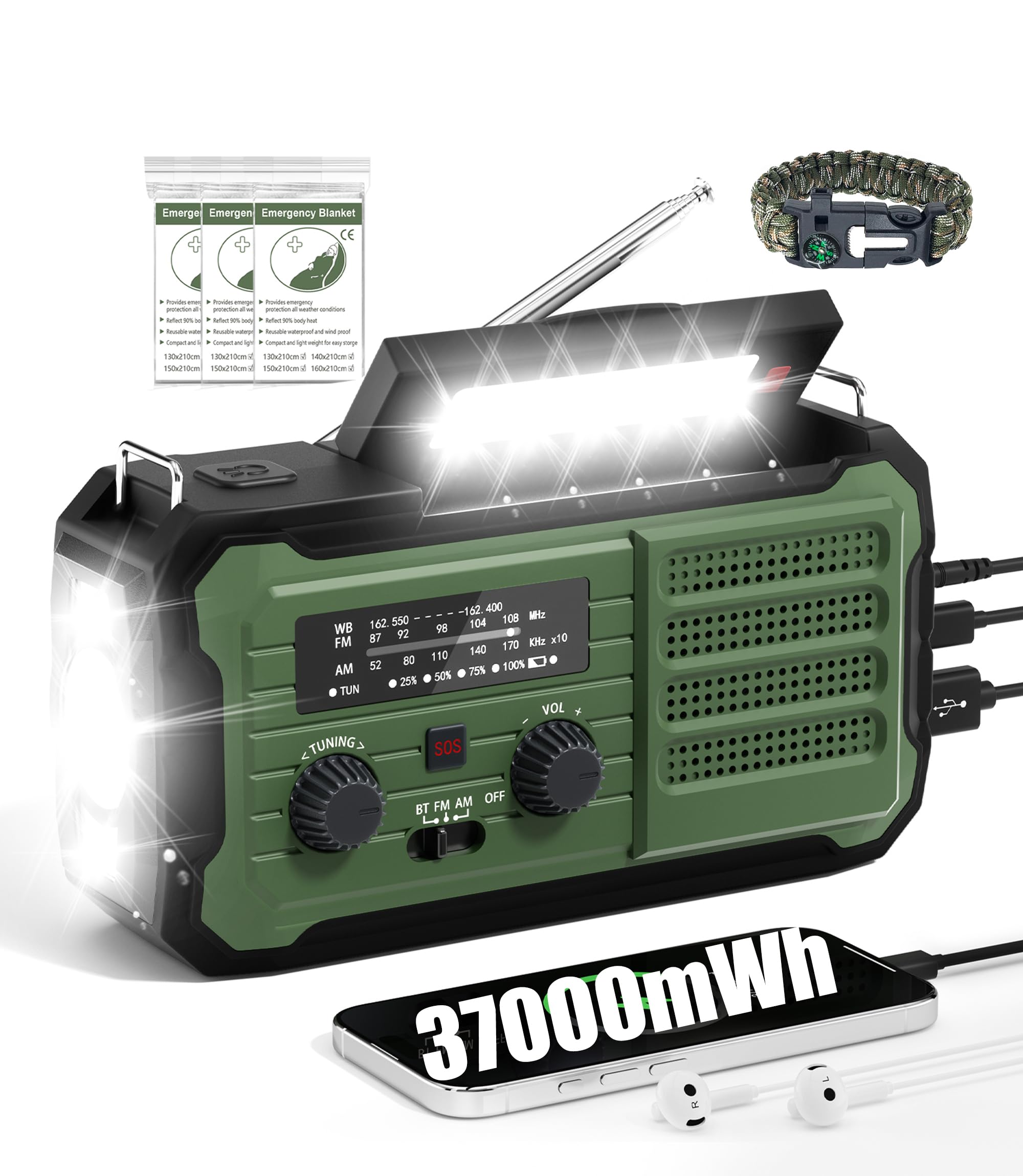
The Vokida goes beyond just a radio by including a full survival accessory bundle: three thermal blankets and a 5-in-1 survival paracord bracelet with a compass, blade, whistle, and magnesium fire rod. It’s designed for disaster prep enthusiasts who want a complete emergency kit in one package. The radio itself features a 37000mWh rechargeable battery with 3 charging methods: solar panel, hand crank, and internal lithium battery via USB-C.
The NOAA weather scan function automatically cycles through all 7 available weather band channels, ensuring you never miss a critical alert even while sleeping. Audio quality is excellent for an emergency radio, with clear AM/FM/NOAA reception and a surprisingly robust speaker that handles talk radio and music well. The flashlight and reading lamp are bright enough for navigation and small tasks.
Weight is reasonable at 1.19 lbs, and the army green color blends into outdoor gear setups. Some users noted the initial charge took longer than expected, but once topped up, the battery holds well. The included thermal blankets are lightweight and functional, though not heavy-duty. For anyone building a comprehensive emergency kit, the Vokida offers the best value-add accessories in this class.
Why it’s great
- Includes thermal blankets and paracord survival bracelet
- NOAA automatic weather scan
- Clear audio and strong reception across all bands
Good to know
- Initial charge is slow
- Thermal blankets are basic quality
6. Rychi 10000mAh Emergency Radio

The Rychi packs a 10000mAh rechargeable battery into one of the more compact frames in this list, measuring just 6.69 x 2.83 x 3.27 inches and weighing 1.19 lbs. It’s an ideal choice for hikers or backpackers who need a weather radio that fits easily into a pack pocket. The extended 7-section antenna provides excellent signal reach for its size, pulling in distant AM and FM stations reliably.
It offers 4 charging methods: USB Type-C, hand crank, solar panel, and 3xAAA batteries. The hand crank works smoothly and charges efficiently, and the solar panel is functional for trickle charging in good light. The bright band display makes tuning straightforward, with clear visibility across AM, FM, and weather frequencies. The flashlight and reading lamp are adequate for close-range use, and the SOS alarm is loud enough for emergency signaling.
Customer reviews praise its long battery life — running 24+ hours on a full charge during a power outage — and the analog tuning that works well for seniors. The only notable drawback is that the solar panel is less efficient than the larger monocrystalline panels on premium models, so it’s best used as a supplementary charge source. For a compact, reliable value pick, the Rychi is hard to beat.
Why it’s great
- Compact size fits easily in backpacks
- Long 7-section antenna for good reception
- 4 charging methods including USB-C
Good to know
- Solar panel is smaller, slower charging
- Speaker sound quality is average
7. FosPower NOAA A1 Emergency Radio
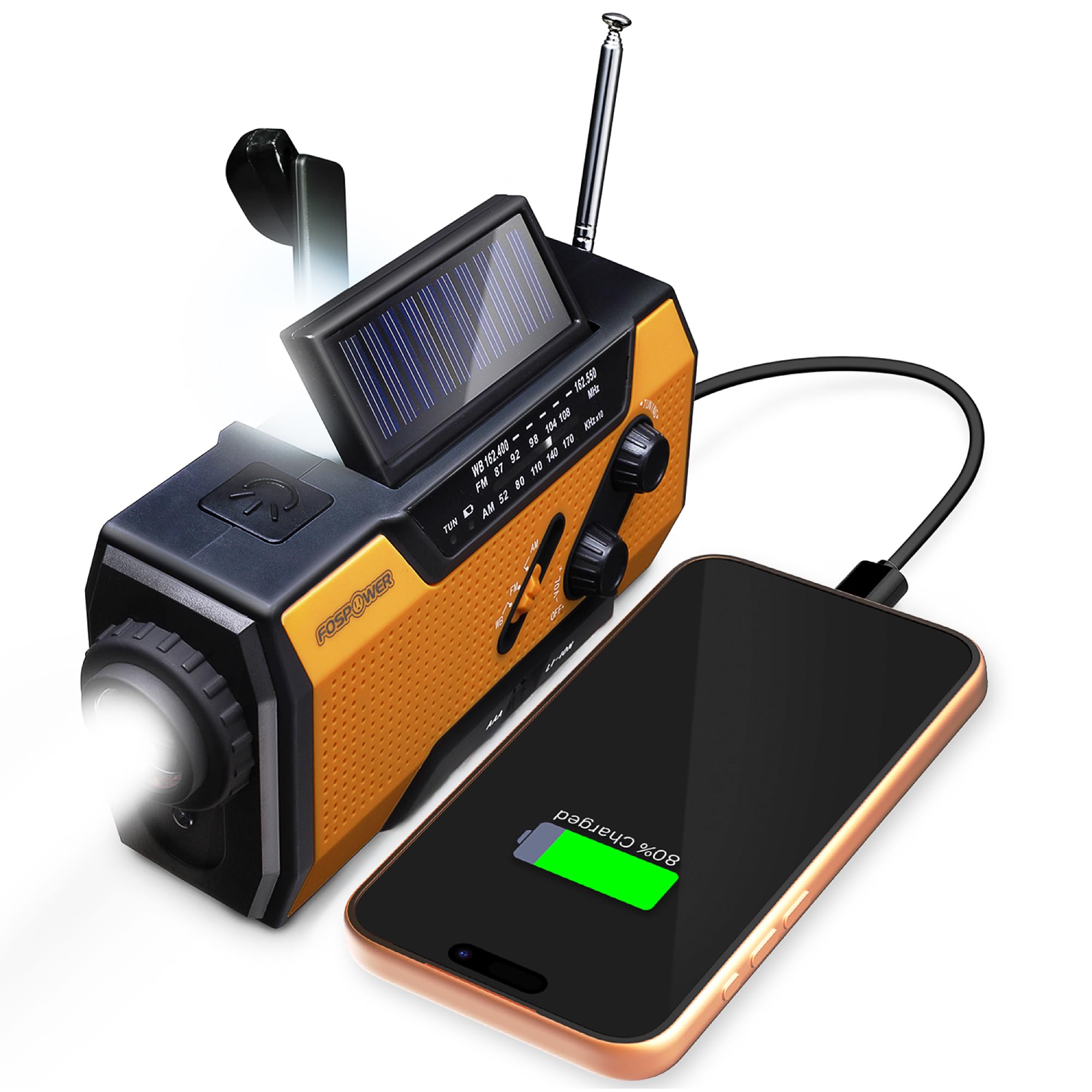
The FosPower A1 is the entry-level workhorse that has earned a loyal following for its straightforward design and reliable performance. Its 7400mWh (2000mAh) power bank is enough to charge a phone partially during an emergency, and the three power sources — hand crank, solar panel, and AAA batteries — ensure you have backup options when wall power is gone. The hand crank is easy to operate and generates power quickly for radio and lights.
Reception across AM/FM and NOAA weather bands is dependably clear for a unit in this tier, though the antenna is shorter than premium models so signal strength varies in fringe areas. The dual light sources — a 4-LED reading light and a 1W flashlight — provide sufficient illumination for small spaces. The SOS alarm is loud and attention-grabbing. The orange color adds high visibility for finding it quickly in a dark closet or emergency bag.
Customer feedback is largely positive, with many users reporting it works well for years with basic maintenance. A few reviews mention the radio speaker or volume control failing after several months of regular use, which is a common trade-off at this price point. For a budget-friendly entry into emergency preparedness, the FosPower delivers where it counts: reliable reception and multiple charging methods.
Why it’s great
- Very affordable entry-level emergency radio
- Three power sources: hand crank, solar, AAA batteries
- Bright orange color for easy visibility
Good to know
- Smaller 7400mWh battery capacity
- Some units may have speaker durability issues
FAQ
How often should I charge my emergency radio when not in use?
Can a battery powered radio charge my smartphone during a power outage?
What is the difference between NOAA weather alert and standard AM/FM?
Final Thoughts: The Verdict
For most users, the best battery powered radio winner is the Mesqool 12000mAh because it combines verified battery capacity, fast-charging monocrystalline solar, and excellent reception across all bands without major compromises. If you want the largest battery for extended off-grid scenarios, grab the QAUYYW 74000mWh. And for the best survival value with included emergency accessories, nothing beats the Vokida 37000mWh.

Mo Maruf
I created WellFizz to bridge the gap between vague wellness advice and actionable solutions. My mission is simple: to decode the research and give you practical tools you can actually use.
Beyond the data, I am a passionate traveler. I believe that stepping away from the screen to explore new environments is essential for mental clarity and physical vitality.