Our readers keep the lights on and my smoothie glass nicely filled. As an Amazon Associate, I earn from qualifying purchases.
A faint heart murmur lost in a bustling ER, a subtle wheeze masked by a running ventilator, or a barely audible blood pressure reading in a noisy ambulance — these are the daily frustrations that an ordinary acoustic stethoscope cannot solve. For medical professionals, veterinary specialists, and even mechanics, the ability to isolate and amplify specific internal sounds is the difference between accurate detection and a missed diagnosis. This guide focuses exclusively on the tools engineered to overcome ambient noise and deliver crystal-clear audio, separating true clinical-grade performers from mere sound boosters.
I’m Mohammad Maruf — the founder and writer behind WellFizz. I have spent years analyzing the hardware specifications, noise-cancellation architectures, and amplification fidelity of medical-grade auditory devices to help professionals make informed, category-specific decisions.
After evaluating nine distinct models across acoustic, digital, and specialized diagnostic categories, the most reliable best amplified stethoscope choices balance raw amplification power with active noise cancellation and durable construction to suit real-world clinical or field conditions.
How To Choose The Best Amplified Stethoscope
Selecting the right amplified stethoscope requires understanding how amplification technology interacts with your specific listening environment. A scope that excels in a quiet clinic may produce unbearable noise in a busy trauma bay. Focus on these four category-specific factors to match the tool to your workflow.
Amplification Type: Analog vs. Digital
Traditional acoustic stethoscopes rely entirely on the physical conduction of sound through a sealed tube to your ears. An “amplified” acoustic scope achieves louder sound through superior chestpiece design, thicker tubing, and tighter headset seals — this is purely passive. Digital stethoscopes, however, use a microphone and electronic circuitry to apply true gain (typically 20x to 40x) and often include active noise cancellation. For environments above 70 dB of ambient noise, digital amplification is the only reliable path to clear auscultation.
Noise Cancellation Architecture
The ability to hear internal body sounds is directly proportional to your ability to reject external noise. Premium digital models like the 3M Littmann CORE use active noise cancellation (ANC) that generates phase-inverted sound waves to cancel ambient noise before it reaches the earpiece. Some analog models achieve passive noise reduction through dual-leaf springs and tight-sealing ear tips that physically block sound. For truck mechanics, paramedics, or ER doctors, ANC is a must-have feature that justifies the jump in cost.
Chestpiece Material and Tuning
The chestpiece is the sound collector. Stainless steel is the standard for durability and acoustic clarity, but it is heavy. Titanium offers comparable sound transmission at a significantly lower weight — critical for long shifts. Aluminum is light but may produce a different frequency bias. Some scopes feature tunable diaphragms that let you adjust the diaphragm tension to favor low-frequency heart sounds or high-frequency lung sounds without swapping the head. Digital scopes bypass this entirely, using DSP filters for frequency selection.
Comfort and Ergonomics for Extended Wear
An amplified stethoscope that causes pain after 15 minutes is useless for a full shift. Look for binaurals with a 15-degree pre-angle (like the ErgonoMax on MDF ProCardial models) that align with the ear canal without requiring the head to tilt. Soft sealing ear tips are essential for both comfort and acoustic seal — silicone outlasts PVC and provides better noise rejection. Dual-lumen tubing (separate channels for each ear) provides more accurate stereo sound than single-lumen designs but is heavier and stiffer.
Quick Comparison
On smaller screens, swipe sideways to see the full table.
| Model | Category | Best For | Key Spec | Amazon |
|---|---|---|---|---|
| 3M Littmann CORE Digital | Digital | Premium clinical auscultation with digital recording | Up to 40x amplification, ANC | Amazon |
| MDF ProCardial Core (Rose Gold) | Acoustic | Cardiology-grade passive clarity, convertible pediatric | Stainless steel dual head | Amazon |
| 3M Littmann Cardiology IV | Acoustic | Distinguishing subtle respiratory sounds | Tunable AFD diaphragm | Amazon |
| MDF ProCardial Titanium | Acoustic | Lightweight cardio-grade with camo tube | Titanium chestpiece, 34-channel tubing | Amazon |
| ADC Adscope 601 | Acoustic | EMS and field use with lifelong warranty | Convertible AFD chestpiece | Amazon |
| KilaScopes Specialist K971 | Acoustic | Extended reach with anti-noise design | 32-inch medical-grade silicone tubing | Amazon |
| Williams Sound PKT D1 H26 | Personal Amplifier | Hard-of-hearing patients and small group conversations | AAA batteries, rear-wear headset | Amazon |
| Eko CORE 500 Earpiece | Digital Earpiece | Replacement/upgrade for CORE 500 stethoscope | TrueSound, 7 volume levels | Amazon |
| Steelman EngineEAR 65001 | Mechanical Diagnostic | Automotive and machinery noise localization | Aluminum probe with rubber boot | Amazon |
In‑Depth Reviews
1. 3M Littmann CORE Digital Stethoscope
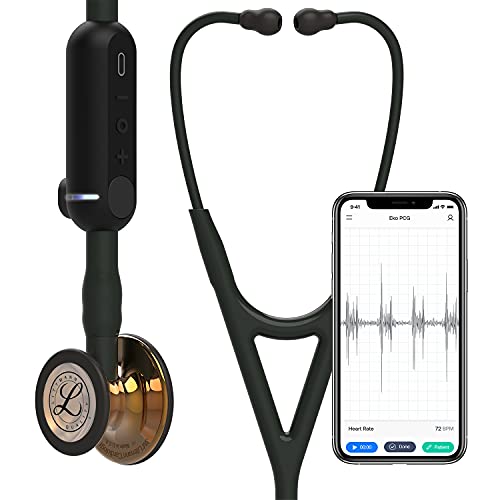
The 3M Littmann CORE represents the most advanced digital stethoscope on the market, combining Littmann’s renowned acoustic chestpiece with Eko’s digital amplification and software integration. It delivers up to 40x sound amplification at peak frequency, active noise cancellation that dramatically reduces ambient ICU or ambulance noise, and the ability to toggle between analog and amplified modes with a simple button press. The high-polish copper chestpiece is both durable and visually distinctive.
The soft sealing ear tips provide an excellent acoustic seal, and the 27-inch tube length remains standard for clinical use. Users consistently report that the CORE picks up faint heart murmurs and lung sounds that are completely inaudible through conventional analog scopes. The integration with the Eko software allows waveform visualization and recording, making it invaluable for remote consultations, student education, or tracking subtle changes over time. Hearing-impaired users find the amplification life-changing.
The CORE uses a single AAA battery that lasts roughly 20 hours of continuous use. Some features, like cloud storage and automated analysis, require a subscription to the Eko software, which adds recurring cost. The unit is slightly heavier than a standard Littmann Cardiology IV due to the digital module, and the protective hard case is sold separately. For professionals demanding the absolute best in digital auscultation, this is the benchmark.
Why it’s great
- 40x digital amplification reveals sounds inaudible on analog scopes.
- Active noise cancellation makes it effective in high-noise environments.
- Bluetooth connectivity enables recording and waveform visualization.
Good to know
- Requires AAA batteries and Eko subscription for premium cloud features.
- Digital module adds weight compared to standard acoustic models.
2. MDF Instruments ProCardial Core Stainless Steel Stethoscope
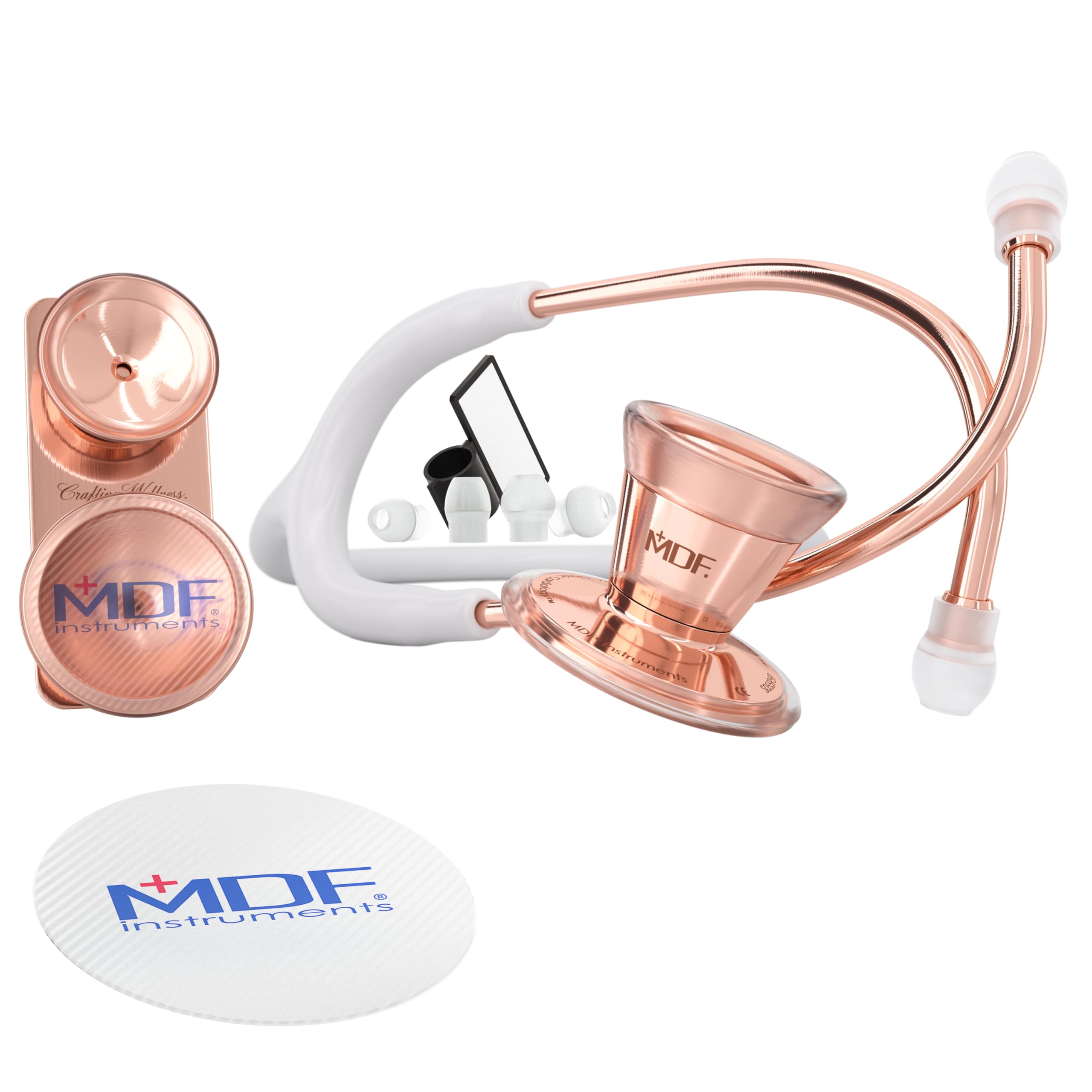
The MDF ProCardial Core is a handcrafted cardiology-grade stethoscope that competes directly with the Littmann Cardiology III in acoustic performance, often at a lower entry cost. It features a stainless steel dual-head chestpiece with a convertible pediatric diaphragm that allows you to listen to both adult and pediatric patients without swapping heads. The dual-lumen tubing provides dedicated sound channels to each ear, delivering clearer stereo separation of heart and lung sounds.
The “ErgonoMax” headset is pre-angled at 15 degrees to match the natural anatomy of the ear canal, reducing the need to tilt the head during extended listening sessions. The dual-leaf spring construction adds durability and maintains consistent tension over years of use. Physicians with over 20 years of experience have reported superior sound clarity compared to the Littmann Cardiology line, citing thicker steel tubing that transmits sound more efficiently than aluminum alternatives.
The stethoscope is notably heavier than many competitors due to its stainless steel construction, which can cause fatigue during 12-hour shifts. Some users have reported that the ear tips can unscrew with repeated use, though this is easily fixed with a touch of threadlocker. The Free-Parts-for-Life program is a genuine benefit, covering all replaceable components. This is a superb choice for cardiologists, ICU nurses, and paramedics who prioritize passive acoustic fidelity.
Why it’s great
- Superior acoustic clarity often preferred over Littmann Cardiology III by experienced users.
- Convertible pediatric diaphragm adds versatility for child exams.
- Free-Parts-for-Life program reduces long-term cost of ownership.
Good to know
- Stainless steel construction makes it heavier than aluminum or titanium scopes.
- Ear tips may loosen over time; a small amount of threadlocker is recommended.
3. 3M Littmann Cardiology IV Stethoscope
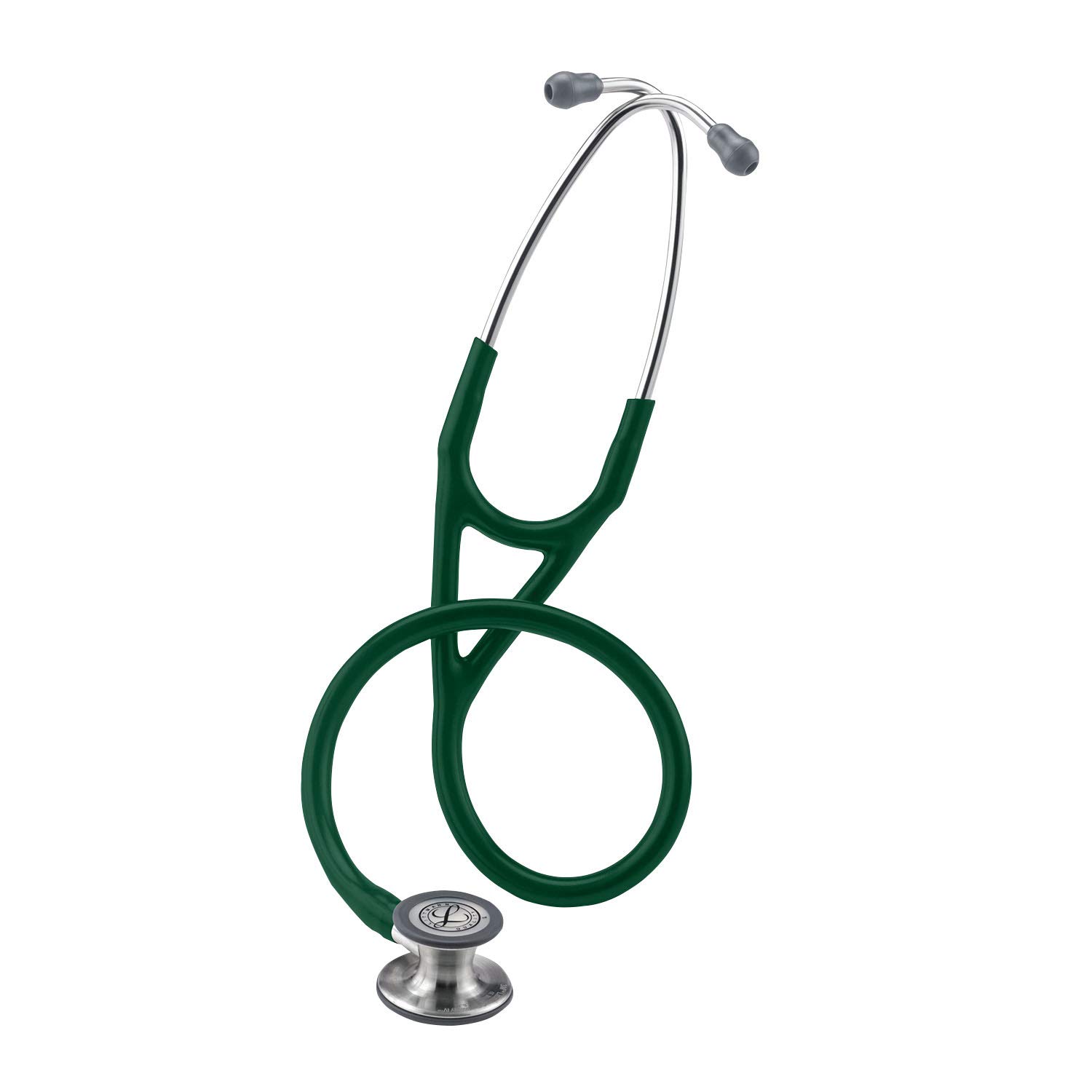
The 3M Littmann Cardiology IV is the gold standard for analog stethoscopes used in hospital cardiology and critical care settings. Its tunable AFD (Adjustable Frequency Diaphragm) technology uses a unique dual-frequency diaphragm that allows the user to hear low-frequency heart sounds with light application pressure and high-frequency lung sounds with firm pressure — all from a single chestpiece. This eliminates the need to flip the bell during an exam.
Nurses and respiratory therapists consistently report that the Cardiology IV offers superior clarity for distinguishing subtle breath sounds like crackles, pleural rubs, and wheezes compared to the lower-tier Littmann Classic III. The stainless steel chestpiece is robust and durable. The Hunter Green color option, among others, is popular for aesthetic personalization. The 27-inch dual-lumen tubing provides excellent sound separation and resists kinking and cracking.
The Cardiology IV is not a digital stethoscope, so it offers zero electronic amplification or noise cancellation. For users with hearing loss, it will not compensate for reduced auditory acuity. The ear tips, while comfortable, are standard and some users swap them out for third-party soft seals. It is the most expensive non-digital Littmann, and for many general practitioners, the Classic III provides sufficient performance at a lower investment.
Why it’s great
- Tunable AFD diaphragm allows switching between low and high frequencies without flipping the chestpiece.
- Superior acoustic clarity for distinguishing nuanced lung and heart sounds.
- Durable construction with dual-lumen tubing maintains sound quality over years.
Good to know
- No electronic amplification — purely analog sound transmission.
- High price for a non-digital stethoscope; consider the Classic III for general use.
4. MDF Instruments ProCardial Titanium Realtree Edge Stethoscope

The MDF ProCardial Titanium stethoscope is built around a lightweight titanium chestpiece that delivers acoustic performance comparable to stainless steel while weighing significantly less — a major advantage for professionals who wear a stethoscope around the neck for 10+ hour shifts. The dual-head design includes a full-sized diaphragm and a true bell, both featuring MDF’s patented Acoustic Pyramid Chamber to maximize sound transfer through the 34-channel C34 tubing.
The camo tube and titanium black chestpiece make it one of the most visually distinctive stethoscopes available. The ErgonoMax headset with dual-leaf spring construction provides a secure, comfortable fit, and the SafetyLock eartip adaptors prevent accidental ear tip loss. Three pairs of soft silicone ear tips are included in small, medium, and large sizes. The Free-Parts-for-Life program covers the entire stethoscope, from ear tips to chestpiece.
Some users comparing it directly to the Littmann Cardiology IV have noted that the sound quality, while good, does not match the highest-tier acoustic scopes in terms of clarity and frequency separation. The thin diaphragm covers can feel slightly less substantial than those on premium Littmann models. The titanium construction, while light, may feel less robust in the hand than a stainless steel scope. This is an excellent choice for long-shift users who prioritize weight reduction.
Why it’s great
- Lightweight titanium chestpiece reduces neck fatigue during long shifts.
- 34-channel C34 tubing delivers directional sound waves to each ear.
- Unique Realtree Edge camo design stands out.
Good to know
- Sound quality slightly below the best acoustic scopes like the Littmann Cardiology IV.
- Thin diaphragm covers may feel less durable than stainless steel models.
5. ADC Adscope 601 Convertible Cardiology Stethoscope

The ADC Adscope 601 is the stethoscope that proves you don’t need to pay for a Littmann badge to get Littmann-level sound. Multiple user reviews directly compare its audio quality to the Littmann Cardiology III, calling it virtually indistinguishable. The proprietary AFD (Adjustable Frequency Design) technology works exactly like Littmann’s tunable diaphragm: light pressure for low-frequency heart sounds, firm pressure for high-frequency lung sounds. The stainless steel convertible chestpiece includes a fixed adult diaphragm and a threaded pediatric diaphragm that also serves as an open bell.
The 27-inch dual-channel phthalate-free tubing is thick and flexible, and the large-bore black plated steel binaurals deliver excellent sound transmission. The Adsoft Plus snap-on silicone ear tips create a tight acoustic seal. The included accessories — two extra pairs of ear tips, an accessory case, and a scope ID tag — add value. The “complimentary refurbishment and free parts forever” warranty is the strongest in its class, significantly reducing total cost of ownership.
The chestpiece is notably heavy compared to other models, which can be fatiguing around the neck. The dual-head design requires unscrewing the pediatric diaphragm to switch to open bell mode, which is slower than a one-piece tunable chestpiece. The color options can be difficult to judge from photos, with some buyers reporting the “Iridescent Caribbean” arriving much darker than advertised. For budget-conscious clinicians who refuse to compromise on acoustic performance, this is the top contender.
Why it’s great
- Acoustic performance rivals the Littmann Cardiology III at a lower investment.
- Free parts forever and complimentary refurbishment program is industry-leading.
- Convertible chestpiece works for both adult and pediatric patients.
Good to know
- Heavy stainless steel chestpiece can cause neck strain during extended wear.
- Switching between diaphragm and bell requires unscrewing the pediatric attachment.
6. KilaScopes Specialist Single Head Cardiology K971
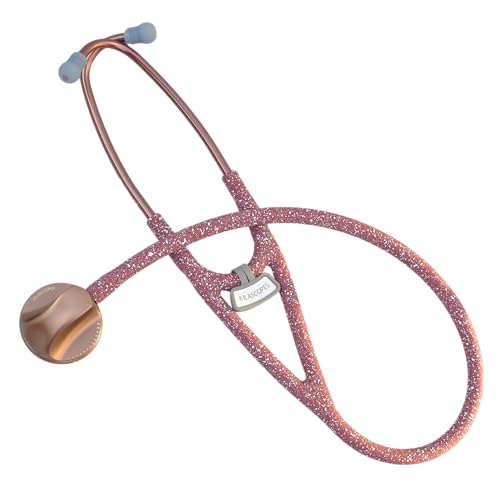
The KilaScopes Specialist K971 is built around a single-head cardiology chestpiece with a carbon fiber diaphragm, designed for maximum acoustic clarity and anti-noise performance. Its most distinguishing physical feature is the 32-inch medical-grade silicone tubing — 5 inches longer than the standard 27-inch tube. This extra reach was specifically valued by hospitalists during the COVID-19 pandemic as it allowed them to maintain a safer distance from patients while still hearing clear heart and lung sounds.
The patented noise reduction dual-frequency structure uses diaphragm tension to let the user calibrate sensitivity. The soft, matte tubing is flexible and does not stick to skin or clothing. The chest piece is well-balanced and does not feel cheap despite the lower price point. Veterinary users have reported excellent results for listening to small animals, praising the clear, pronounced sound reproduction.
The single-head design lacks a pediatric diaphragm, making it less versatile for mixed-age clinical practice. The neon orange color, while highly visible, may be too bright for some professionals seeking a more understated appearance. The longer tubing, while beneficial for reach, adds a small amount of acoustic latency compared to standard-length tubing. This is a niche but valuable option for infectious disease practitioners and vets who need extra distance without sacrificing sound.
Why it’s great
- 32-inch silicone tubing provides extra reach for safe distancing during exams.
- Carbon fiber diaphragm and noise reduction structure deliver clear acoustics.
- Flexible, non-stick matte tubing is comfortable to use.
Good to know
- Single-head design lacks a dedicated pediatric diaphragm.
- Extra-long tubing may add slight acoustic delay.
7. Williams Sound PKT D1 H26 Pocket Talker Personal Amplifier

The Williams Sound PKT D1 H26 is not a stethoscope — it is a personal sound amplifier designed for individuals with moderate to severe hearing loss in conversational settings. It is included in this guide because it frequently appears as a recommended solution for hard-of-hearing medical professionals and patients who struggle with standard stethoscopes. The unit is compact, pocket-sized, and powered by two AAA batteries, with a rear-wear headset and a plug-in microphone included.
Users consistently report that the PKT D1 H26 allows clear understanding of conversations in noisy environments like restaurants, small group meetings, and hospital rooms. Family members of dementia patients have used it to communicate more effectively without needing to shout. For medical professionals with hearing loss, it can be used as a supplementary device for listening to body sounds when paired with a sensitive microphone, though it is not designed for this purpose.
The sound quality is functional but not clinically precise — the frequency response is optimized for speech, not for subtle heart murmurs or lung sounds. The headphones are described as “cheaply made” in multiple reviews, with ear pieces that could be softer and thicker for comfort. The volume control can be touchy, making fine adjustments difficult. This device serves a specific accessibility niche but cannot replace a proper amplified stethoscope for medical auscultation.
Why it’s great
- Compact and portable personal amplifier for hard-of-hearing users.
- Effective for one-on-one conversations in noisy settings.
- Uses standard AAA batteries for easy replacement.
Good to know
- Not designed or optimized for medical auscultation of body sounds.
- Headphones feel cheap and ear pieces could be more comfortable.
- Volume control lacks fine precision.
8. Eko CORE 500 Replacement Earpiece (CAC500)

The Eko CORE 500 Earpiece is a replacement or spare part for the Eko CORE 500 Digital Stethoscope system, not a standalone stethoscope. It includes the tubing, binaural, and ear tips of the CORE 500 assembly. This is vital context: you must already own the Eko CORE 500 digital chestpiece to use this accessory. Users who have the Eko Duo head confirm that this earpiece is required for traditional acoustic listening, as the Duo head otherwise transmits sound only via Bluetooth or 3.5mm jack.
Specification-wise, the CORE 500 earpiece inherits the TrueSound technology, which minimizes artifact during auscultation, and accommodates up to 40x amplification with 7 volume levels when paired with the digital chestpiece. It also enables active noise cancellation to reduce background noise. Reviewers praise it as a genuine, well-built replacement part that maintains loud, accurate sound reproduction with effective noise cancelling.
Without the digital chestpiece, this is just a high-quality tubing assembly with no electronic function. Ordering it by mistake if you do not own a CORE 500 would be an expensive error. The silver finish is consistent with the CORE 500 aesthetic. If you already have a CORE 500 and need a backup earpiece or want to keep one set at a secondary location, this is the exact OEM part.
Why it’s great
- Genuine OEM replacement for the Eko CORE 500, maintaining sound integrity.
- Supports up to 40x amplification and noise cancellation when used with digital chestpiece.
- High-quality construction and accurate sound reproduction.
Good to know
- Only a replacement earpiece — requires the Eko CORE 500 digital chestpiece to function.
- No electronic components in this part; it does not amplify sound on its own.
9. Steelman EngineEAR 65001 Auto Diagnostic Stethoscope
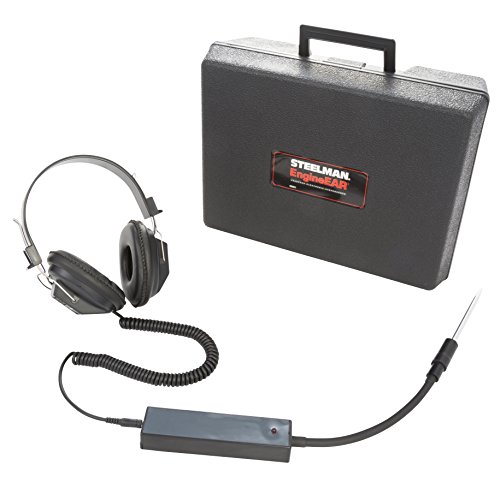
The Steelman EngineEAR 65001 is a specialized mechanical diagnostic tool designed for locating noises in cars, trucks, heavy machinery, and industrial equipment — it is not a medical device. The system consists of over-ear noise-canceling headphones connected via a cable to a flexible gooseneck probe with a solid aluminum core. The probe acts as a mechanical waveguide, transferring vibrations from metal surfaces directly to the headphone amplifier, making it ideal for identifying failing bearings, exhaust leaks, or A/C compressor irregularities.
Master technicians report it as an essential tool for isolating sounds that would be impossible to locate with a standard listening stick. The rubber-booted probe tip is non-conductive, meaning it will not short out sensitive electronics. The flexible gooseneck allows access to tight engine bays. The included 9-volt battery powers a built-in amplifier, and a carrying case is included for storage.
The electronic amplifier in the headphone unit has been criticized by one technically-minded reviewer for using a noisy LM386 chip that introduces background hiss, particularly in quiet environments. The sound quality is adequate for mechanical diagnosis but would be unsuitable for medical auscultation where subtle body sounds are the target. For automotive technicians, diesel mechanics, and HVAC specialists, this tool fills a critical diagnostic niche. For medical use, it is the wrong tool entirely.
Why it’s great
- Effectively pinpoints internal mechanical noises in vehicles and machinery.
- Non-conductive rubber boot on the probe protects sensitive electronics.
- Flexible gooseneck allows access to tight engine compartments.
Good to know
- Designed for mechanical diagnosis, not for medical auscultation of body sounds.
- Amplifier has a noticeable noise floor (electronic hiss) in quiet settings.
FAQ
Can I use a personal sound amplifier like the Williams Sound PKT D1 H26 for medical auscultation?
How much amplification is actually useful in a busy ER or ambulance environment?
What is the difference between a “digital” stethoscope and an “amplified” acoustic stethoscope?
Final Thoughts: The Verdict
For most users, the best amplified stethoscope winner is the 3M Littmann CORE Digital Stethoscope because it combines 40x digital amplification with active noise cancellation and Bluetooth connectivity, making it the most versatile tool for demanding clinical environments. If you want superior passive acoustic clarity without battery dependence, grab the MDF ProCardial Core for its robust stainless steel chestpiece and free lifetime parts program. And for budget-conscious clinicians who refuse to compromise on sound quality, nothing beats the ADC Adscope 601 with its impressive sound performance and industry-leading warranty.

Mo Maruf
I created WellFizz to bridge the gap between vague wellness advice and actionable solutions. My mission is simple: to decode the research and give you practical tools you can actually use.
Beyond the data, I am a passionate traveler. I believe that stepping away from the screen to explore new environments is essential for mental clarity and physical vitality.