Our readers keep the lights on and my smoothie glass nicely filled. As an Amazon Associate, I earn from qualifying purchases.
The gritty lumpiness of cheap fiber powders and the sugar-laden “superfood” mixes lining store shelves have no place in a clean daily wellness ritual. Baobab powder—the sun-dried pulp of the African baobab fruit—offers a rare trifecta: a tangy, citrus-like flavor that actually complements food, a formidable wall of prebiotic fiber that supports regularity without bloating, and a naturally high dose of vitamin C and polyphenols that back immune function. But the category is polluted with products cut with fillers, stripped of their pulp integrity, or sourced from unsustainable harvests.
I’m Mohammad Maruf — the founder and writer behind WellFizz. I have spent years analyzing the nutritional supplement supply chain, cross-referencing organic certifications and third-party testing data to separate whole-food powders from overpriced dust.
After reviewing dozens of labels and filtering for purity, fiber density, and sourcing transparency, I landed on a shortlist of powders that deliver genuine value. This guide covers the best baobab powder options for anyone who wants a clean, effective superfood that tastes good enough to use every day.
How To Choose The Best Baobab Powder
Not all baobab powders are created equal. The fruit pulp’s delicate nutrient profile—especially its vitamin C and polyphenol content—is highly sensitive to heat and processing. The way the fruit is dried, milled, and packaged determines whether you get a potent superfood or a jar of inert dust.
Single Ingredient vs. Blends
The most honest product on the shelf contains exactly one ingredient: organic baobab fruit powder. Many brands add fillers, natural flavors, or other superfood powders to mask taste or stretch supply. A single-ingredient label guarantees you are getting pure baobab pulp with its full fiber and polyphenol array intact.
Fiber Density Per Serving
Baobab earns its reputation as a gut-health powerhouse through its high ratio of soluble to insoluble fiber. A quality powder delivers around 4 to 5 grams of dietary fiber per 10-gram serving. Lower fiber density usually indicates the powder includes the fruit’s outer shell or seeds rather than just the pulp, diluting the prebiotic benefit.
Organic Certification and Sourcing
Baobab trees grow in arid regions across Africa, and ethical harvesting supports local communities and biodiversity. USDA Organic certification ensures the fruit has been grown without synthetic pesticides or fertilizers. Wild-harvested baobab, in particular, supports the natural ecosystem and often yields a more nutrient-dense powder because the trees are mature and deeply rooted.
Quick Comparison
On smaller screens, swipe sideways to see the full table.
| Model | Category | Best For | Key Spec | Amazon |
|---|---|---|---|---|
| MRM Organic Baobab Powder | Mid-Range | Daily smoothie nutrition | 40 servings per bag | Amazon |
| KAIBAE Premium Organic Baobab | Mid-Range | Gut health & regularity | 4g fiber per serving | Amazon |
| Terrasoul Superfoods Organic Baobab | Premium | Long-term value & bulk use | 1.5-pound bulk bag | Amazon |
| NAKED Fiber Organic Baobab | Mid-Range | Fiber supplement replacement | 5g dietary fiber per serving | Amazon |
| Yupik Organic Baobab Powder | Premium | Budget-friendly two-pack | 8.8 oz per pack (two-pack) | Amazon |
In‑Depth Reviews
1. MRM Organic Baobab Powder
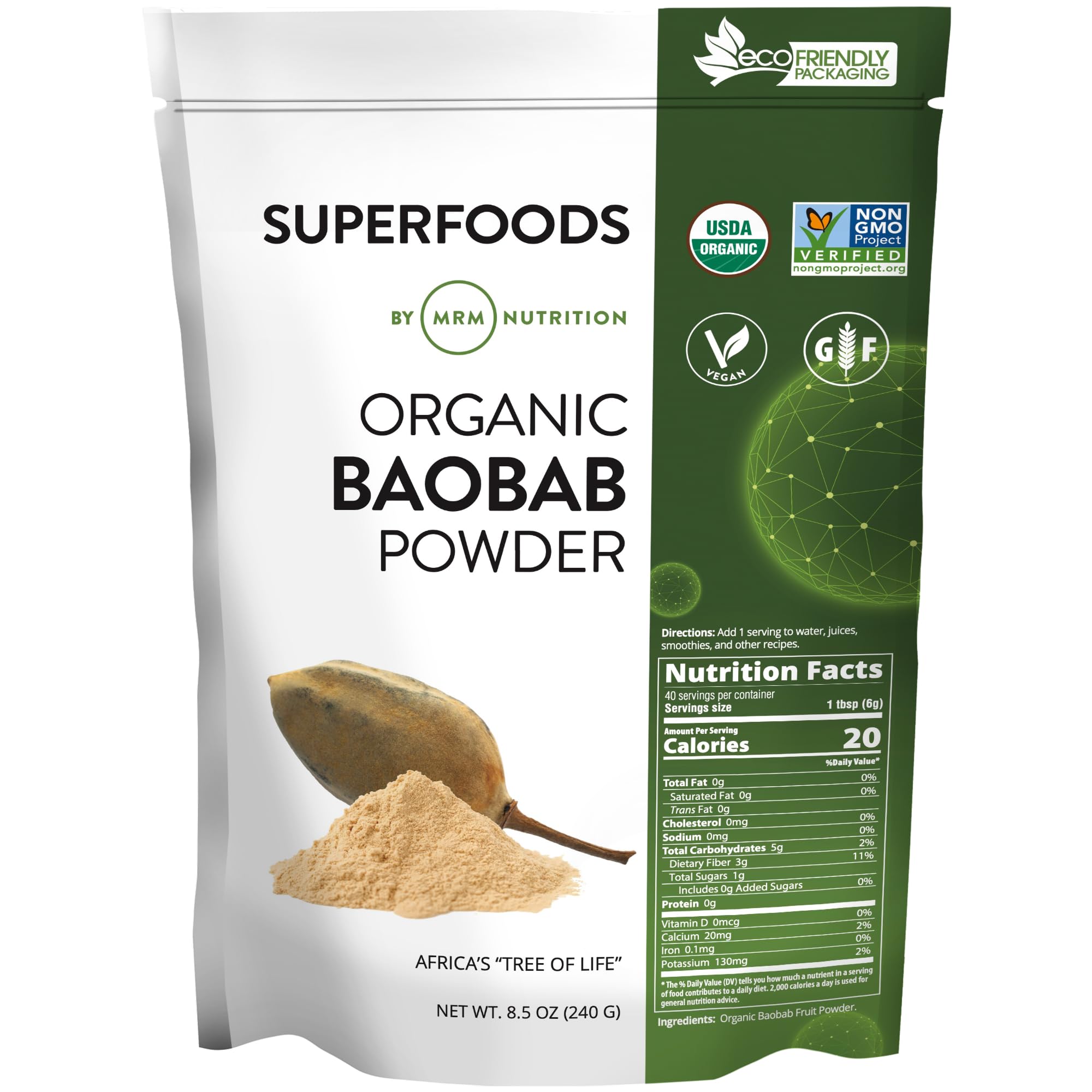
MRM delivers a clean, single-ingredient baobab powder with USDA Organic certification that has been on the market since 2015—a strong signal of formulation stability and customer trust. Each 8.5-ounce bag provides 40 servings, making it one of the most efficient options in this segment for anyone adding baobab to a daily smoothie or morning coffee. The powder mixes smoothly with minimal clumping, and the tangy citrus note blends naturally without overpowering other ingredients.
The fiber and nutrient profile is backed by the brand’s long-standing reputation in the supplement space. MRM is owned by a clinical dietitian and biochemist, which adds a layer of formulation rigor that many smaller superfood brands lack. The product also contains naturally occurring calcium, magnesium, and potassium—electrolytes that support hydration and muscle function.
Users consistently highlight the clean taste and easy digestibility. The powder works particularly well in hot beverages like coffee or tea, where its tang cuts through the bitterness without requiring added sweeteners. For a first-time baobab buyer, this is the easiest product to integrate into an existing routine.
Why it’s great
- Clean single-ingredient formula with organic certification
- High serving count per bag (40 servings)
- Blends smoothly into coffee, smoothies, and water
Good to know
- Not the highest fiber density compared to some competitors
- Bag resealability could be improved for long-term storage
2. KAIBAE Premium Organic Baobab Powder
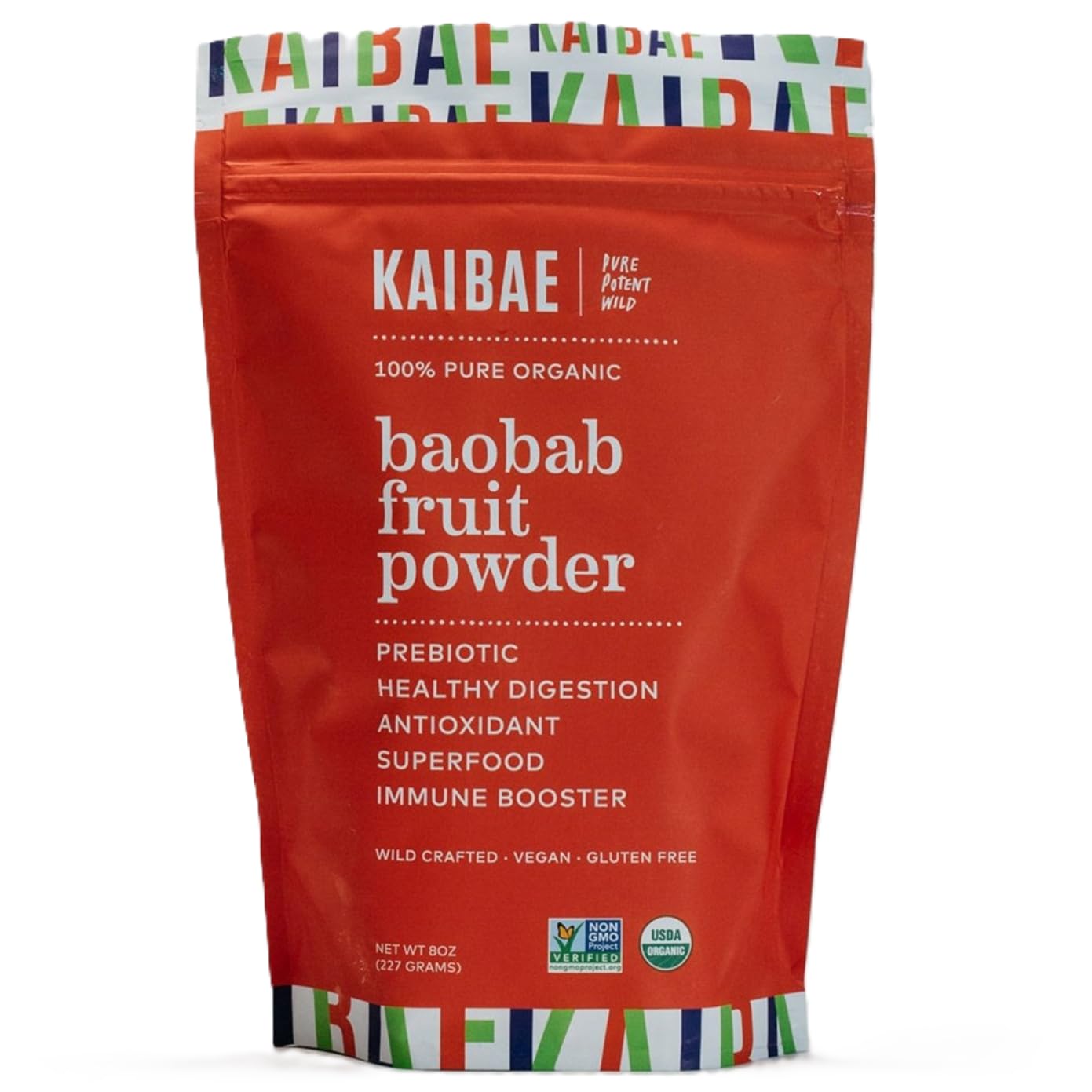
KAIBAE positions itself as a gut-centric baobab powder, and the formulation backs that claim with more than 4 grams of fiber per serving and a Low-FODMAP certification that makes it safe for individuals with IBS or sensitive digestion. The fruit is wild-harvested in Ghana through community partnerships that prioritize biodiversity and fair trade, so you get a product that supports both digestive regularity and ethical sourcing.
The powder delivers a reliable prebiotic effect that helps nourish beneficial gut bacteria without the bloating commonly associated with psyllium husk or other fiber supplements. Users who replaced psyllium with KAIBAE report feeling lighter and more comfortable after meals. The blend of soluble and insoluble fiber promotes smooth digestion and helps maintain satiety between meals, making it a strong ally for intermittent fasting routines.
Despite the premium positioning, the powder mixes with a bit of persistence—some users note it requires extra stirring to fully dissolve. The tangy flavor is more pronounced than some other brands, which may be a pro or con depending on your palate. But for anyone prioritizing gut health, this is the most targeted option on the list.
Why it’s great
- Low-FODMAP certified and safe for sensitive digestion
- Wild-harvested with strong ethical sourcing story
- Supports satiety and reduces cravings between meals
Good to know
- Requires more stirring to fully dissolve in cold liquids
- Tangy flavor may be too strong for some users
3. Terrasoul Superfoods Organic Baobab Fruit Powder
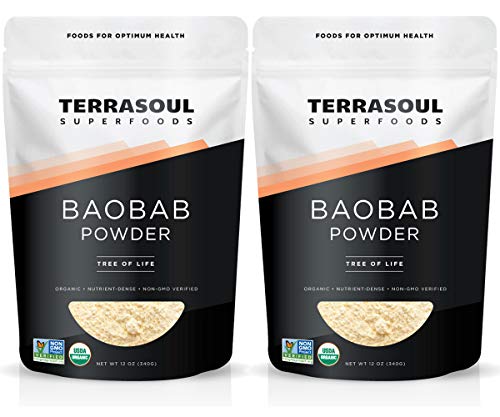
Terrasoul offers the largest quantity in this lineup—a 1.5-pound bag that provides roughly 68 servings of organic baobab powder. The fruit pulp is low-temperature dehydrated to preserve the vitamin C and polyphenol content, which is critical because high heat degrades baobab’s most valuable nutrients. For households using baobab daily in smoothies, oatmeal, or baking, this is the most cost-efficient way to keep the pantry stocked.
The flavor is described as relatively mild compared to more tangy brands, which makes it a versatile base for recipes that don’t want a strong citrus note. Users report it mixes easily into water or juice without excessive clumping. The brand’s 30-day money-back guarantee provides a safety net for first-time bulk buyers who might be unsure about their tolerance for the taste.
One caveat: the bag packaging is less convenient for daily scooping compared to a jar or a resealable pouch. Some users noted that the resealable zipper on newer bags can be finicky, so you may want to transfer the powder to an airtight container for long-term storage. For the price per ounce, however, this remains the best bulk option.
Why it’s great
- Largest quantity at a low per-ounce value
- Low-temperature dehydration preserves nutrient integrity
- Mild flavor works well in a variety of recipes
Good to know
- Bag packaging can be difficult to reseal properly
- Mild flavor may lack the tangy punch some users prefer
4. NAKED Fiber Organic Baobab Powder

NAKED Fiber strips the formulation down to a single ingredient—organic baobab fruit powder—with no additives, sweeteners, or fillers. Each serving delivers 5 grams of dietary fiber, which makes it one of the highest fiber-density options in this comparison. The powder comes from trees grown in Southern Africa, and the brand’s transparent ingredient list appeals to purists who want nothing but the fruit pulp.
The taste is where NAKED Fiber divides opinion. Some users appreciate the strong citrus tang and compare it favorably to other fiber supplements, noting that it blends well into smoothies and works as a Metamucil alternative. Others describe the flavor as intensely sour or even bile-like, which can trigger the gag reflex when mixed with plain water. This product rewards creative mixing—try it with a splash of honey and hot water as a tea, or blend it into a fruit smoothie to mask the acidity.
The fiber effect is consistent and fast-acting, with many users reporting improved regularity and reduced bloating within the first week. If you can tolerate or even enjoy the tangy profile, this is a potent fiber supplement that outperforms many psyllium-based options.
Why it’s great
- Highest fiber density at 5g per serving
- Single-ingredient formula with no additives
- Fast-acting digestive support
Good to know
- Strong sour taste that some users find unpleasant
- Best mixed with other ingredients rather than plain water
5. Yupik Organic Baobab Powder (Pack of 2)
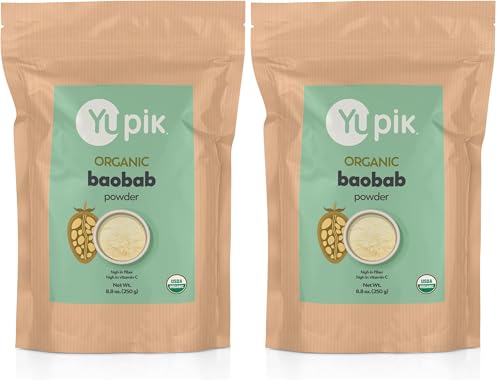
Yupik’s two-pack format delivers two 8.8-ounce pouches, each certified organic and Kosher, with a tangy citrusy profile that works well in both sweet and savory applications. The powder dissolves readily in oat milk or water, and users have used it to make traditional West African bouye, a refreshing drink made with baobab pulp, water, and sweetener. The two-pack format gives you a backup pouch to keep at the office or in a travel bag.
The flavor is described as tart and slightly unusual—reminiscent of lemon zest or tamarind—which makes it a versatile ingredient for culinary experimentation beyond just smoothies. Some users enjoyed it mixed with tart cherry juice, while others found the distinct taste hard to adjust to when added to plain water. The fiber content supports digestive regularity, and the vitamin C punch gives the immune system a natural boost.
One limitation is the smaller individual pouch size compared to other options on this list. If you plan to use baobab powder daily, you will go through each pouch relatively quickly, making this a better choice for occasional use or as a flavoring agent rather than a primary fiber source. For travelers or those who want a compact backup supply, the two-pack format is a nice convenience.
Why it’s great
- Two-pouch format offers portability and backup supply
- Kosher and organic certified
- Versatile citrusy flavor for cooking and beverages
Good to know
- Smaller pouch size means less value per ounce for daily use
- Distinctive tart taste may not appeal to all palates
FAQ
How much baobab powder should I take daily?
Does baobab powder taste good in water?
Can baobab powder replace psyllium husk for fiber?
Final Thoughts: The Verdict
For most users, the best baobab powder winner is the MRM Organic Baobab Powder because it combines organic certification, a high serving count, and a smooth flavor that integrates seamlessly into daily smoothies and coffee. If you want targeted gut health support with Low-FODMAP certification, grab the KAIBAE Premium Organic Baobab Powder. And for bulk value and mild flavor that stretches across weeks of daily use, nothing beats the Terrasoul Superfoods Organic Baobab Fruit Powder.

Mo Maruf
I created WellFizz to bridge the gap between vague wellness advice and actionable solutions. My mission is simple: to decode the research and give you practical tools you can actually use.
Beyond the data, I am a passionate traveler. I believe that stepping away from the screen to explore new environments is essential for mental clarity and physical vitality.