Our readers keep the lights on and my smoothie glass nicely filled. As an Amazon Associate, I earn from qualifying purchases.
A backpacking blanket is the difference between a restless shiver in your tent and a deep, restorative sleep under the stars. It is a targeted layer of insulation that weighs ounces, compresses to pocket-size, and rescues you from a cold ground or a chilly campfire. The right one handles dew, dirt, and wind while trapping your body heat — and it must earn its spot in your pack, not waste it.
I’m Mohammad Maruf — the founder and writer behind WellFizz. I have spent over a decade analyzing outdoor gear specifications, from denier ratings and fill power to DWR coatings and stuff-sack compression ratios, to help you find the piece that actually performs.
Whether you are a weekend car-camper or a thru-hiker counting grams, finding the best backpacking blanket means balancing warmth, packed size, weight, and durability for your specific trail conditions.
How To Choose The Best Backpacking Blanket
Backpacking blankets are not all created equal. The one that shines at a car campground can be dead weight on a 20-mile day. Focus on these three factors to match the blanket to your exact trip profile.
Fill Material: Down Versus Synthetic
Down insulation offers the highest warmth-to-weight ratio and compresses the smallest — a 650-fill or higher down blanket can pack down to the size of a Nalgene bottle. The tradeoff is catastrophic performance when wet: wet down clumps and loses all insulating loft. Synthetic fills like Thinsulate, CloudLoft, or 100% recycled polyester hold up in damp conditions, retain warmth even when wet, and dry quickly, but they weigh more and pack larger for the same warmth level. Choose down for dry, weight-conscious trips; choose synthetic for humid environments or coastal treks.
Shell Fabric and Water Resistance
A 20D to 70D ripstop nylon shell with a durable water repellent (DWR) finish is the standard. Lower denier fabrics (20D) are ultralight and pack smaller but tear more easily on rough ground. Higher denier (70D) is tougher but heavier. A DWR coating lets dew, light rain, and spilled coffee bead up and roll off instead of soaking in. For beach or grassy use, sand-proof and dirt-repellent treatments save you from shaking out debris every time you stand up.
Packed Size and Weight
For a true backpacking blanket, target under 1.5 pounds and a packed size that fits inside a 3-liter stuff sack or smaller. Many blankets include a built-in pocket or attached stuff sack that doubles as a compression bag. A blanket that takes up half your pack volume defeats the purpose. Test the compression by reading the packed dimensions — anything larger than 8 x 16 inches when compressed is likely too bulky for a multi-day pack.
Quick Comparison
On smaller screens, swipe sideways to see the full table.
| Model | Category | Best For | Key Spec | Amazon |
|---|---|---|---|---|
| 4Monster Down Camping Blanket | Down | Weight-conscious backpackers | 650-fill down, 1.25 lbs | Amazon |
| Rumpl Original Puffy 1-Person | Synthetic Puffy | Versatile camp-to-home use | 240 gsm recycled polyester fill | Amazon |
| Rumpl Original Puffy Yosemite | Synthetic Puffy | National park enthusiasts | 100% recycled insulation | Amazon |
| Kelty Biggie Blanket | Insulated Ground | Two-person campsite lounging | 82 x 80 inches, CloudLoft fill | Amazon |
| iClimb 3M Thinsulate | Synthetic | Ultralight insulation on a budget | 3M Thinsulate M80, 16 oz | Amazon |
| Farm Blue OD Green Woobie | Poncho Liner | Multipurpose emergency warmth | 82 x 57 inches, fiberfill | Amazon |
| Matador Pocket Blanket 4.0 | Ground Sheet | Ultra-compact day trips | 4.23 oz, palm-sized pack | Amazon |
In‑Depth Reviews
1. 4Monster Down Camping Blanket

The 4Monster Down Camping Blanket delivers a 650-fill power down core inside a durable nylon shell, achieving a warmth-to-weight ratio that synthetic blankets struggle to match. At 1.25 pounds, it compresses into a surprisingly small carry bag, making it a genuine packable option for multi-day treks where every ounce counts. The 88 x 84-inch dimensions offer generous coverage for one person to wrap fully or for two to share as a ground quilt.
The 80/20 down-to-feather blend provides substantial loft that traps heat efficiently in dry conditions, and the water-resistant shell handles light moisture and wind without soaking through. Multiple reviewers note that the stuff sack can be challenging to repack tightly after the first use, but the blanket itself fluffs back up quickly once removed from compression. It functions well as a standalone summer quilt or a sleeping bag liner for colder shoulder-season trips.
For backpackers who prioritize low weight and small pack volume and can manage down’s vulnerability to wet weather, this blanket is a top-tier performer. The 12-month warranty and responsive customer support add peace of mind for long-term trail use. It is the best balance of premium insulation and practical packability for the weight-conscious hiker.
Why it’s great
- 650-fill down provides excellent warmth at only 1.25 pounds
- Generous 88 x 84-inch size works as a quilt or two-person blanket
- Compresses small enough for a multi-day backpack
Good to know
- Stuff sack can be difficult to repack tightly
- Down loses insulation value when wet; not for damp climates
- Not breathable enough for high-exertion sleep systems
2. Rumpl Original Puffy 1-Person Blanket
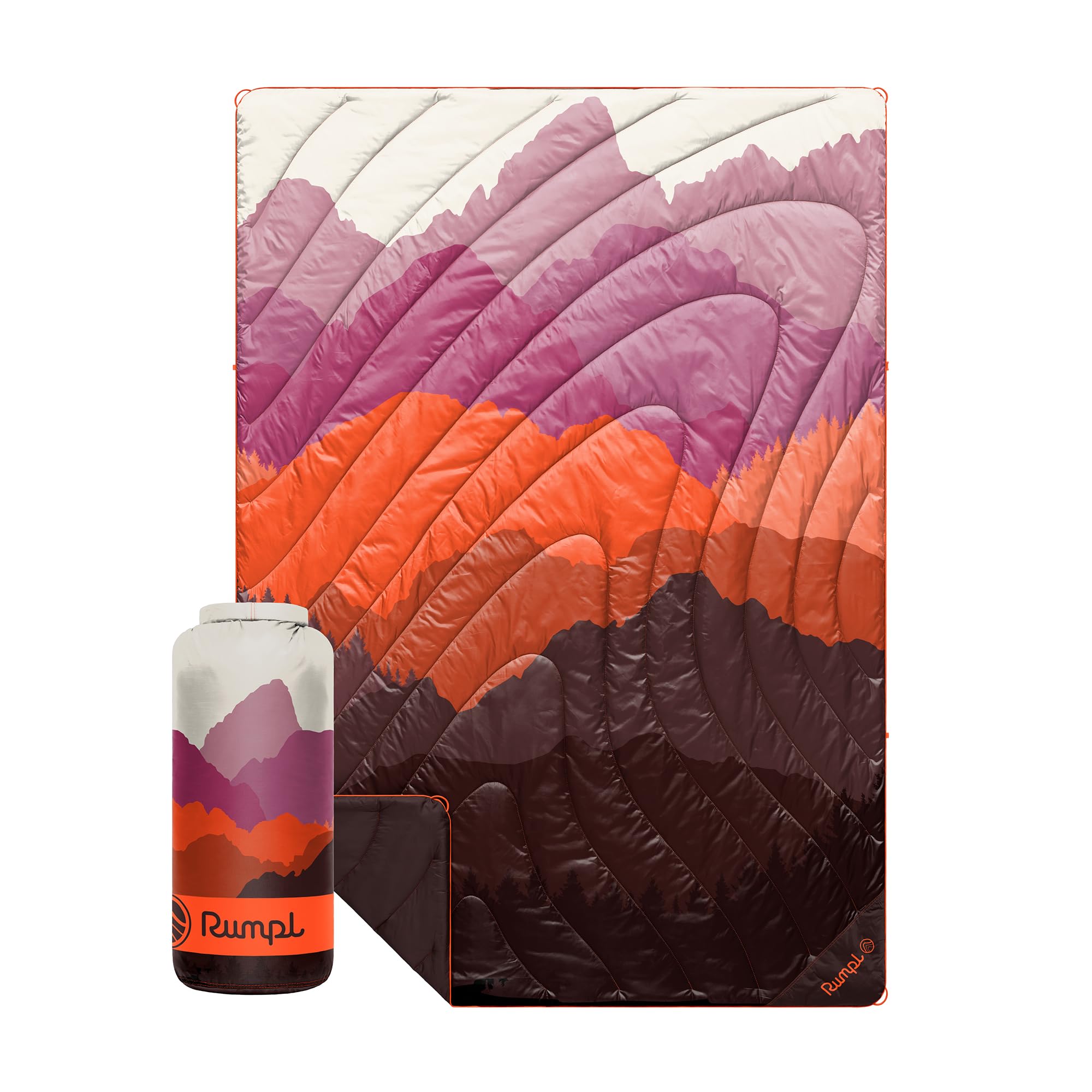
The Rumpl Original Puffy 1-Person Blanket takes the technical construction of a premium sleeping bag and turns it into a packable camp blanket. Its ripstop polyester shell features a PFAS-free DWR finish that repels water, stains, and dirt effectively, and the 240 gsm RenewaLoft recycled synthetic insulation delivers consistent warmth without the moisture anxiety of down. The 52 x 75-inch size is perfect for wrapping around one person, and the integrated Cape Clip allows hands-free wear around the campsite.
Paracord corner loops let you stake the blanket to the ground for picnics or integrate it with Rumpl’s Everywhere Mat for a full lounging setup. It packs down to 7 x 16 inches, which is reasonable for its insulation density, though the 2.2-pound weight makes it more suited to car camping, base camping, or short backpacking trips where weight is less critical. The roll-top stuff sack is easy to use and compresses the blanket reliably.
Customer reviews consistently praise its durability, warmth, and versatility — many owners use it as a primary bed blanket at home or in a camper van. The three-year warranty and B Corp certification add credibility for environmentally conscious buyers. It is the most versatile premium blanket on this list, blending indoors comfort with outdoor toughness.
Why it’s great
- DWR finish repels water, stains, and pet hair effectively
- Cape Clip enables hands-free wearable warmth
- Durable 3-year warranty and recycled insulation
Good to know
- 2.2-pound weight is heavy for ultralight backpacking
- Fabric may slide on smooth surfaces when used as a ground cover
- Price point is higher than comparable synthetic options
3. Rumpl Original Puffy National Park Blanket, Yosemite
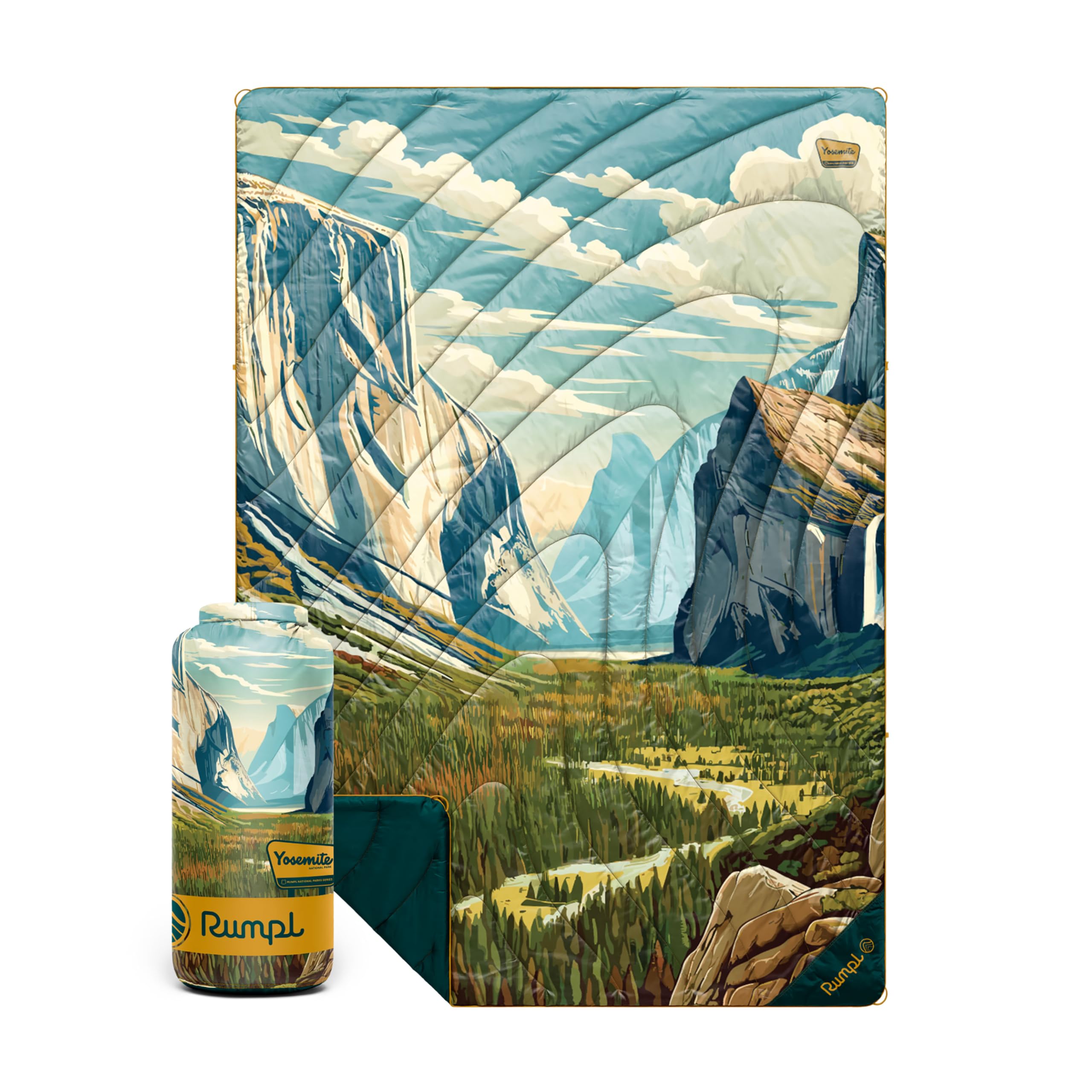
The Rumpl Original Puffy National Park Blanket in the Yosemite edition matches the same technical build as the standard Original Puffy but adds a distinctive park-inspired print that doubles as a meaningful souvenir. It uses 100% recycled polyester insulation — repurposing over 60 plastic water bottles per blanket — and the same PFAS-free DWR ripstop shell that sheds moisture and dirt. The Cape Clip and paracord corner loops carry over, making it fully functional for campsite lounging, stargazing, or impromptu picnics.
At 2.2 pounds and a packed size of 7 x 16 inches, it occupies the same weight class as the standard Puffy, making it best for car camping, cabin trips, or as a luxury layer in a base camp. The printed pattern does not affect performance, and users report the colors stay vibrant after multiple machine washes. It is also B Corp certified and supports the Conservation Alliance, so your purchase contributes to public land protection.
Long-term reviews highlight solid stitching, no fading, and consistent warmth retention after years of use. It is a premium product that feels purposeful both on the trail and as a living-room throw. For anyone who values both gear performance and a connection to iconic landscapes, this blanket delivers on both fronts.
Why it’s great
- Unique national park print with the same technical build as the standard Puffy
- 100% recycled polyester insulation supports sustainability
- Holds up to years of machine washing without fading or fraying
Good to know
- Heavier than down alternatives at 2.2 pounds
- Premium price point reflects the branded park edition
- Not insulated enough for below-freezing standalone use
4. Kelty Biggie Blanket, 2 Person

The Kelty Biggie Blanket is built for two — its 82 x 80-inch footprint comfortably covers a couple on a campsite bench, a picnic blanket for a small group, or a single person who wants to burrito-wrap. It uses CloudLoft ECO insulation, a synthetic fill that provides warmth without the bulk of traditional sleeping bag insulation, and the face fabric is 68D recycled polyester taffeta with a PFAS-free DWR treatment for light moisture resistance. The reverse side is a 75D recycled polyester pongee that feels soft and flannel-like against skin.
Weighing 3.35 pounds, this is not a backpacking blanket for weight-conscious hikers, but it excels as a car-camping companion, a van-life quilt, or a stadium blanket that doubles as a ground cover. The included stuff sack is functional, though getting the blanket back inside requires a tight roll or some cramming. Owners consistently report that it washes well without pilling and that the DWR finish handles light drizzle and spilled drinks effectively.
The Kelty Limited Lifetime warranty adds significant value for a blanket at this tier. It is the best option for couples, families, or anyone who prioritizes generous coverage and multi-surface use over ultralight portability. If your trips involve more car access than trail miles, this is a smart buy.
Why it’s great
- Extra-large 82 x 80-inch size fits two people comfortably
- CloudLoft ECO synthetic insulation provides warmth without heavy weight
- Soft pongee lining feels comfortable against skin
Good to know
- 3.35-pound weight is too heavy for backpacking
- Repacking into the stuff sack requires effort
- Nylon side can slide on smooth surfaces
5. iClimb 3M Thinsulate Insulation Warm Camping Blanket

The iClimb 3M Thinsulate Camping Blanket proves that synthetic insulation can be both warm and lightweight. The 3M Thinsulate M80 layer traps body heat effectively while allowing moisture vapor to escape, and the 20D nylon shell is soft, windproof, and water-resistant. The entire blanket weighs just 16 ounces — lighter than many down options — and packs down to 10.2 x 7.5 x 3.1 inches, making it a genuine ultralight contender for backpacking.
Integrated buttons and elastic straps let you convert the blanket into a poncho, shawl, or temporary sleeping bag. The cinch tie at the bottom transforms it into a foot box, and two blankets can be snapped together to create a two-person sleeping bag. The attached carry bag prevents loss, and the blanket is machine-washable for easy trail maintenance. Some users report that the stuff sack stitching split after repeated use, though the blanket itself remained durable.
Customer feedback highlights surprising warmth for its thin profile, with several owners using it comfortably in the 39-40°F range with extra clothing layers. The lifetime warranty against manufacturer defects adds confidence. For ultralight backpackers who want synthetic reassurance without down’s wet-weather risks, this is the best value option on the list.
Why it’s great
- Only 16 ounces with genuine 3M Thinsulate insulation
- Converts into a poncho, sleeping bag, or two-person quilt
- Lifetime warranty against manufacturer defects
Good to know
- Stuff sack stitching can split with heavy use
- Not warm enough below 35°F as a standalone blanket
- Size (72.8 x 55 inches) is snug for taller users in sleeping bag mode
6. Farm Blue OD Green Army Camping Blanket

The Farm Blue OD Green Army Camping Blanket replicates the classic military poncho liner — affectionately called a “woobie” — that has kept service members warm for decades. It uses a 100% polyester shell and fiberfill insulation in a generous 82 x 57-inch format that can be used as a blanket, a poncho with the center slit, or a makeshift sleeping bag via the corner tie-cords. The Olive Drab color gives it an authentic tactical look that appeals to outdoorsmen preppers and military veterans.
This blanket is not as compressible as a down puffy or a Thinsulate option, but it is lightweight and packs into the included drawstring bag without much fuss. The polyester shell is water-resistant enough to handle morning dew and light mist, and the material dries quickly when wet. Customer reviews consistently note that it feels identical to genuine Army-issue poncho liners and holds up well to car camping, emergency car kits, and backyard use.
It is the most affordable tier on this list, and the tradeoffs are clear: lower warmth-to-weight ratio compared to modern insulated blankets, and a larger packed size. However, its legendary simplicity, quick-drying polyester, and versatile poncho functionality make it a smart choice for budget-conscious campers and anyone building a survival kit. It works best as a warm-weather blanket or a mid-layer inside a sleeping bag.
Why it’s great
- Authentic military-style woobie with versatile poncho and tie-cord uses
- Lightweight and quick-drying polyester shell
- Excellent value for budget-conscious buyers
Good to know
- Not as compressible or warm as down or Thinsulate options
- Packed size is larger than dedicated backpacking blankets
- Lacks a DWR coating for heavy rain resistance
7. Matador Pocket Blanket 4.0, Charcoal

The Matador Pocket Blanket 4.0 redefines portability — it weighs only 4.23 ounces and packs down to 4.5 x 2.7 x 1.1 inches, roughly the size of a smartphone in its attached storage pouch. This is not an insulated blanket; it is a waterproof ground sheet designed to keep you dry on grass, sand, or damp surfaces. The ripstop nylon shell has an enhanced waterproof coating that blocks moisture from seeping through, making it ideal for beach days, park picnics, and concert lawns.
Integrated stakes at each corner and sand pockets along the edges keep the blanket anchored on breezy days, which is a thoughtful addition for windy beach or hillside use. The Easy Pack Pattern printed on the fabric guides you through folding it back into its pouch — a feature that prevents the common frustration of stuffing a loose tarp into a bag. The 63 x 44-inch size comfortably seats two people or accommodates four sitting tightly.
It does not provide any insulation or warmth, so it is not a replacement for a traditional backpacking blanket for cold nights. But for day hikes, summit lunches, and ultralight trips where every gram matters, it is an invaluable accessory. It excels in its narrow niche: keeping you clean and dry when the ground is wet, sandy, or tick-infested, all while taking up virtually no pack space.
Why it’s great
- Weighs only 4.23 ounces, packs to palm-sized dimensions
- Waterproof ripstop nylon blocks ground moisture effectively
- Integrated stakes and sand pockets for wind resistance
Good to know
- Provides no insulation — not for cold-weather warmth
- 63 x 44-inch size is tight for more than two people
- Thin material can puncture on sharp rocks without a ground cloth underneath
FAQ
Can I use a backpacking blanket instead of a sleeping bag?
How do I clean a down backpacking blanket without ruining the loft?
What is the difference between a poncho liner and a backpacking blanket?
Final Thoughts: The Verdict
For most users, the best backpacking blanket winner is the 4Monster Down Camping Blanket because it delivers 650-fill down warmth at 1.25 pounds with enough coverage for sprawling out. If you want synthetic performance and hands-free wearability, grab the Rumpl Original Puffy 1-Person. And for ultralight day trips where every gram matters, nothing beats the Matador Pocket Blanket 4.0.

Mo Maruf
I created WellFizz to bridge the gap between vague wellness advice and actionable solutions. My mission is simple: to decode the research and give you practical tools you can actually use.
Beyond the data, I am a passionate traveler. I believe that stepping away from the screen to explore new environments is essential for mental clarity and physical vitality.