Our readers keep the lights on and my smoothie glass nicely filled. As an Amazon Associate, I earn from qualifying purchases.
Transitioning your baby from bottle to cup is one of the messiest milestones. The wrong cup means soaked onesies, frustrated babies, and extra laundry. A good baby cup solves one core problem: it lets your child sip independently without flooding the high chair tray.
I’m Mohammad Maruf — the founder and writer behind WellFizz. I’ve spent years analyzing baby product specifications, comparing material safety certifications, and studying real parent feedback to identify which drinking vessels actually survive the 6- to 18-month gauntlet.
After sifting through dozens of options and thousands of verified reviews, this guide breaks down the top five designs that nail the balance of spill resistance, gum safety, and easy cleanup. Whether you need a weighted straw cup or a silicone open trainer, finding the best baby cups starts with knowing which features matter for your child’s specific stage.
How To Choose The Best Baby Cups
Baby cups look simple, but small design differences determine whether your child takes to them or rejects them outright. The wrong straw angle or a hard spout can turn drinking practice into a daily battle. Focus on three factors: the valve system that controls liquid flow, the material that touches your baby’s gums, and the handle shape that determines whether little fingers can maintain a grip. A weighted straw base, for instance, lets a baby drink from any angle — a feature that matters once the cup gets tossed sideways. A free-flow spout, on the other hand, requires less suction but spills more readily. Match the cup’s mechanics to your child’s drinking skill level, not their age sticker.
Material Safety and Heat Resistance
Babies chew everything, including cup spouts and straws. Food-grade silicone offers the softest, most forgiving surface for tender gums, and it withstands boiling water for sterilization without degrading. PPSU plastic is harder and more resistant to cracking if dropped repeatedly, and it handles high-temperature dishwashing cycles. Standard polypropylene (PP) cups are lighter and cheaper but may develop stress fractures over time. Always look for BPA-free, phthalate-free, and PVC-free certifications printed on the packaging. A silicone cup with a one-piece lid reduces hidden crevices where mold can grow.
Spill-Proofing: Valve Type vs. Free Flow
Not all spill-proof claims are equal. A four-layer anti-leak design with a silicone gasket and a V-shaped slit valve stops liquid even when the cup is upside down, but the baby must bite and suck simultaneously to release water — this is harder for beginners under eight months. Free-flow spout lids release liquid with gentle pressure, making them easier for younger babies but messier in the hands of a thrower. Weighted straw cups add another variable: the straw tip follows the liquid level, so the baby can drink from any position without tilting. Test the flow rate yourself: if the valve requires too much suction, your baby may give up in frustration.
Handle Design and Grip Texture
A cup with poorly placed handles forces the baby to hold the body directly, which is slippery with wet hands. Look for double handles mounted low on the cup body — this positions the baby’s hands closer to the center of gravity, reducing tipping. Silicone or textured rubber overmolding improves grip compared to smooth hard plastic. The handle opening should be wide enough for a chubby hand to pass through but narrow enough to prevent the cup from sliding out during a throw. Some cups also work without the lid as an open cup for advanced practice, so a lid that doubles as a snack container adds bonus utility.
Quick Comparison
On smaller screens, swipe sideways to see the full table.
| Model | Category | Best For | Key Spec | Amazon |
|---|---|---|---|---|
| KIDSco. Silicone Sippy Cups (2 Pack) | Silicone Spout | Leak resistance + two-piece cleaning | 5 oz capacity, 100% silicone | Amazon |
| Joypony Weighted Straw Cup | PPSU Straw | Spill-proof straw with gravity ball | 9 oz capacity, PPSU body | Amazon |
| Moonkie Training Cup Set (2 Pack) | Silicone Set | Transition from sippy to open cup | 2 oz each, 100% silicone | Amazon |
| mushie Trainer Sippy Cup | Plastic Spout | Ergonomic handles for 6+ months | 230 ml capacity, plastic body | Amazon |
| Olababy Feeding Set | Silicone Bowl Set | Parent-led and baby-led weaning | Suction bowl with lid, silicone | Amazon |
In‑Depth Reviews
1. KIDSco. Silicone Sippy Cups (2 Pack)

The KIDSco. sippy cups solve the two biggest parent frustrations: stubborn leaks and tedious cleaning. The one-piece silicone lid eliminates the tiny crevices where milk residue hides, so there are no straw brushes or valve wrenches required — just toss both parts in the dishwasher. At 5 ounces, the size fits small hands without being bulky, and the soft spout allows easy suction without excessive biting force. Parents report that even aggressive throwing and upside-down handling result in zero spills, thanks to the secure lid seal and free-flowing spout design that doesn’t rely on a complex valve.
The double handles are mounted low on the cup body, which gives babies a natural grip point close to the cup’s center of gravity. The matte silicone surface provides tactile friction even when wet — a detail that prevents the cup from slipping out of a six-month-old’s grasp. The set includes two gender-neutral colors (green and sandy shore), making it practical for households with siblings or rotation between daycare and home.
Because the cups are made entirely from food-grade silicone, they are unbreakable and gentle on emerging teeth and gums. The lids also fit snugly enough to make the cups leak-resistant during travel, though some users note that the spout can dribble if the cup is shaken vigorously without being sucked. For most daily use — high chair, stroller, car seat — the KIDSco. cups deliver reliable performance with minimal parent effort.
Why it’s great
- Two-piece design is the easiest to clean of any sippy cup on this list
- Full silicone construction is gentle on gums and withstands throws without cracking
- Spill-resistant lid stays secure even when inverted
Good to know
- Spout is free-flow, so very aggressive shaking may produce small drips
- Lid seam can be tricky to reseat if removed frequently
2. Joypony Weighted Straw Cup

The Joypony straw cup punches above its price point with a PPSU body that survives repeated drops without cracking — a meaningful advantage over standard polypropylene cups that develop hairline fractures after a few falls. The four-layer anti-leak system lives up to its claim: babies can hold the cup upside down, toss it across the room, or shake it, and the liquid stays inside. The gravity ball at the end of the straw follows the water level, so toddlers can drink from any angle without tilting their head back, which makes it ideal for car seats and stroller rides.
One design nuance that real users flag is the V-shaped straw valve: it requires a combination of biting and sucking to release liquid, which works well for babies who have already mastered the straw-drinking concept but frustrates absolute beginners under eight months. The included extra silicone straw adds long-term hygiene value, and the 180-degree folding lid locks into place without touching the baby’s face. The green dinosaur pattern appeals to toddlers who are starting to assert preferences, which helps with compliance during meals.
Cleaning requires some effort because the straw must be removed from the lid (which takes a bit of practice), and the narrow straw interior needs a brush for thorough cleaning. The wide neck helps, but the straw is harder to dry completely than the spout-style cups. Still, for parents who prioritize true spill-proof performance and a robust material that can survive a two-year-old’s daily abuse, the Joypony is a strong bet.
Why it’s great
- Genuinely spill-proof even when upside down or thrown
- PPSU body withstands high heat sterilization and repeated drops
- Weighted straw allows drinking from any position
Good to know
- Straw valve requires biting force — not ideal for very young beginners
- Threads can be difficult to twist open when wet
3. Moonkie Baby Training Cup & Sippy Cup Set (2 Pack)
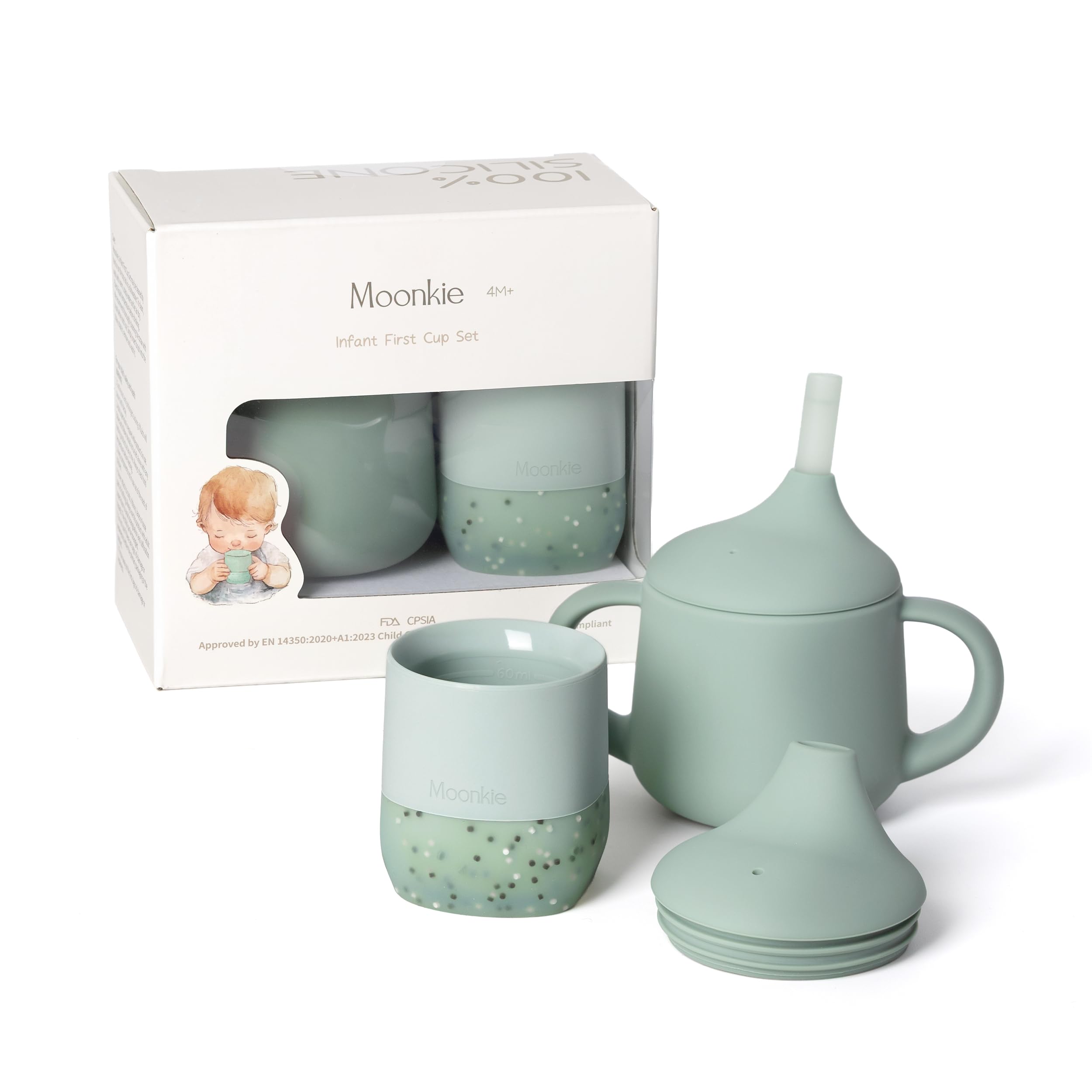
The Moonkie set includes both a sippy cup and an open cup in one package, giving parents a two-stage system without buying separate products. Each cup holds only 2 ounces, which is deliberately small — it forces small sips and reduces the volume of a potential spill. The 100% silicone construction is free of BPA, PVC, lead, and phthalates, and the soft spout and straw are gentle enough that babies often use the cups as teethers between drinks. The set is specifically marketed for baby-led weaning, and the open cup’s wide base adds stability for early self-feeding attempts.
Parents report that the sippy cup lid stays secure even when tossed, though a small aeration hole on the side can produce slow drips if the cup is held sideways. The straw provides a smooth flow without requiring excessive suction, which makes it accessible for babies as young as four months. The silicone material is soft enough that the open cup can be squeezed slightly, helping babies control the tilt angle as they learn. Both cups nest together for storage, and the included packaging box doubles as a gifting presentation.
The 2-ounce capacity is a double-edged sword: it works well for small servings at the beginning of weaning, but older toddlers will outgrow the volume quickly and need refills during meals. The cups are also slightly slippery when wet — a common trade-off with smooth silicone surfaces. Cleaning is straightforward by hand or dishwasher, and the lack of complex valves means no hidden mold zones. For the crucial 4- to 10-month window, the Moonkie set offers the most versatile learning platform at a budget-friendly price.
Why it’s great
- Two-cup set covers both sippy and open cup stages in one purchase
- Soft silicone is safe for teething babies to chew on
- Easy to clean with no hidden crevices or valves
Good to know
- 2 oz capacity requires frequent refills for older babies
- Smooth silicone becomes slippery when hands are wet
4. mushie Trainer Sippy Cup
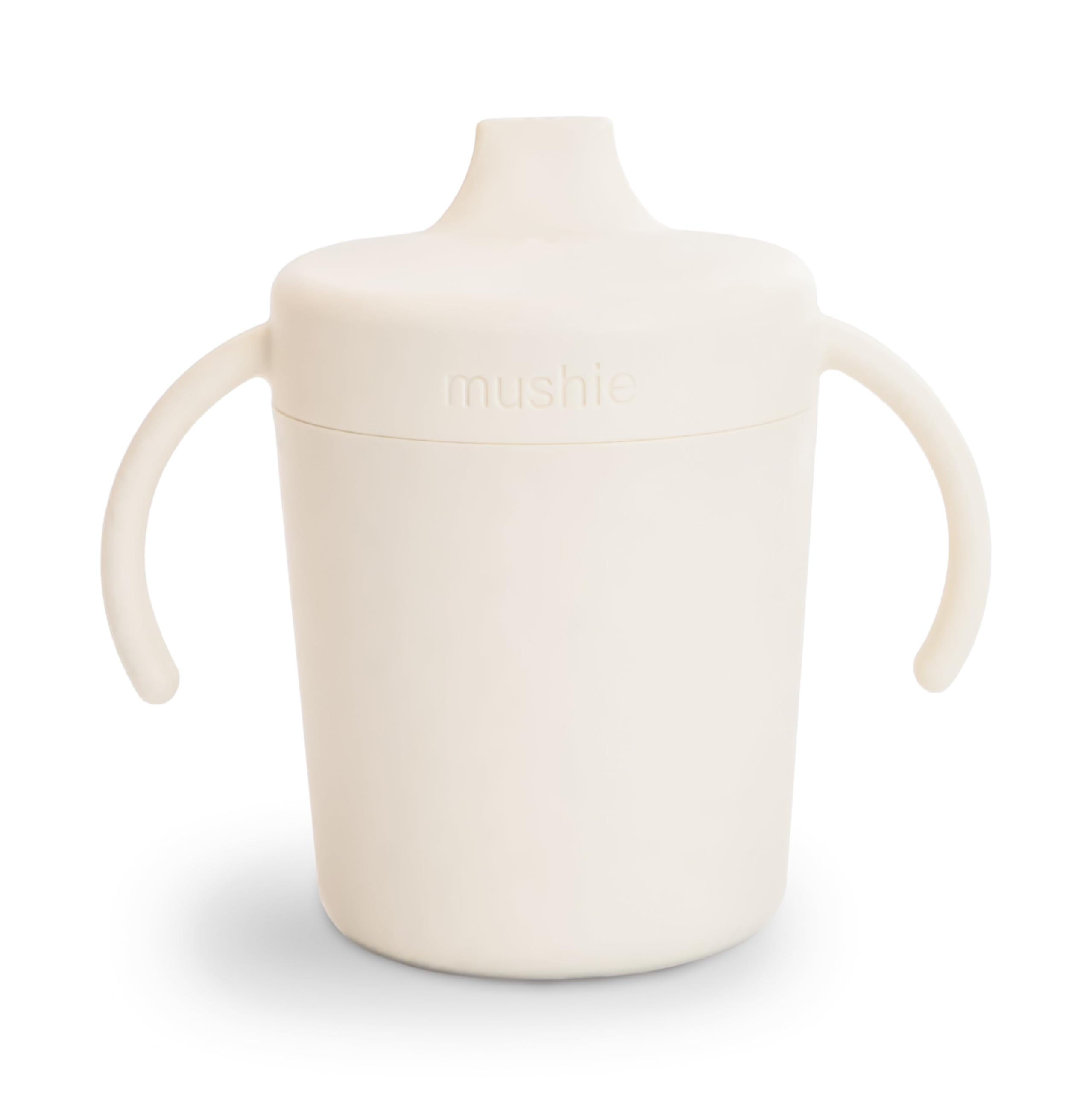
The mushie Trainer Sippy Cup brings a minimalist Scandinavian aesthetic to the baby cup category, with a smooth ivory finish and curved handles that look more like a design object than a feeding accessory. The cup is made from durable, non-toxic plastic that holds up to the dishwasher’s top rack without warping, and the twist-off lid makes refilling straightforward. The 230-milliliter capacity hits a sweet spot between the tiny training cups and full-size toddler cups, offering enough volume for a full serving without being too heavy for a one-year-old to lift.
The handle geometry is the standout feature here: the handles are positioned low and curve outward, which gives babies a natural wrist angle for lifting the cup to their mouth. Real user feedback consistently praises the lightweight feel and the ease with which babies take to the cup — many parents report that this was the only cup their child would accept after rejecting several others. However, the sippy spout is not truly leak-proof.
Multiple verified reviews note that the twist-off lid and the silicone gasket need to be aligned carefully to prevent drips, and the cup works best when used in an upright seated position rather than in a stroller or car seat. For parents who prioritize an attractive, lightweight cup that encourages independent sipping during supervised mealtimes — and who don’t need absolute spill-proof performance — the mushie remains a stylish and functional choice.
Why it’s great
- Lightweight plastic body is easy for small hands to lift and tilt
- Ergonomic handle placement reduces wrist strain during self-feeding
- Elegant design available in neutral colors that match modern nurseries
Good to know
- Spout is leak-resistant, not leak-proof — liquid escapes when held upside down
- Silicone gasket needs periodic realignment to maintain seal
5. Olababy 3 Piece Feeding Set
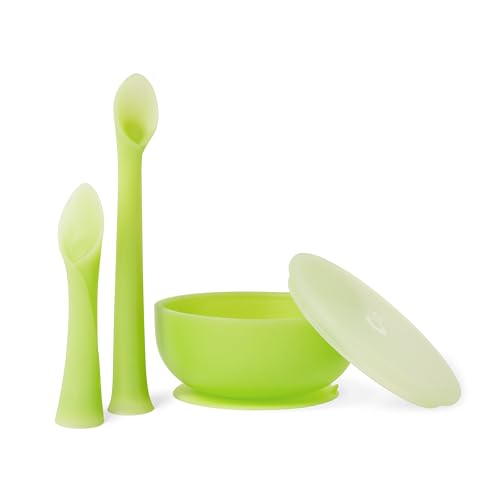
The Olababy set is not a drinking cup in the traditional sense — it is a three-piece weaning system that includes a suction bowl with a lid, a parent feeding spoon, and a training spoon designed for baby-led self-feeding. The bowl’s suction base sticks securely to high chair trays and tables, preventing the food from sliding away during scoop attempts. The smart lip on the bowl edge allows babies to scrape food off the spoon without pushing the bowl around, which reduces frustration during early self-feeding sessions.
The training spoon is the set’s standout component: it is made from flexible silicone that can scoop food at any angle, and the material is soft enough to protect newly erupted teeth and sensitive gums. The parent spoon has a longer, ergonomic handle for adult grip and a slightly firmer head for scooping thicker purees. Both spoons are gentle on the mouth, and the entire set is 100% food-grade silicone, making it dishwasher-safe and free of BPA, PVC, and phthalates. The bowl lid converts into a steaming tray for warming food in the microwave — a feature that adds surprising versatility.
Some users note that the suction base loses its grip once the bowl is lifted or tilted repeatedly, so it works best when placed on a clean, dry surface. The bowl’s 8-ounce capacity is adequate for single servings but may feel small for older toddlers with larger appetites. The Olababy set is ideal for families who want a coordinated weaning bundle that supports both parent-led feeding and baby-led exploration, though it covers feeding rather than drinking independently.
Why it’s great
- Suction bowl stays anchored to high chairs, reducing mealtime mess
- Training spoon’s flexible material protects gums and helps scoop at awkward angles
- Lid doubles as a steamer for warming food safely
Good to know
- Suction base weakens on textured or damp surfaces
- Set is optimized for food, not for drinking liquids
FAQ
At what age should I introduce a baby cup?
Should I choose a straw cup or a spout cup for my baby?
How do I prevent mold from growing in the straw or valve?
What does BPA-free mean for a baby cup, and is it enough?
Final Thoughts: The Verdict
For most users, the best baby cups winner is the KIDSco. Silicone Sippy Cups (2 Pack) because the two-piece design is the easiest to clean while delivering reliable spill resistance and gentle gum-safe material. If you want a leak-proof straw cup that survives toddler abuse, grab the Joypony Weighted Straw Cup. And for the early transition from bottle to cup, nothing beats the versatility of the Moonkie Training Cup Set.

Mo Maruf
I created WellFizz to bridge the gap between vague wellness advice and actionable solutions. My mission is simple: to decode the research and give you practical tools you can actually use.
Beyond the data, I am a passionate traveler. I believe that stepping away from the screen to explore new environments is essential for mental clarity and physical vitality.