Our readers keep the lights on and my smoothie glass nicely filled. As an Amazon Associate, I earn from qualifying purchases.
The moment your little one takes their first splash, the line between fun and fear is held by a single piece of gear: a properly fitted infant life jacket. Unlike adult PFDs that simply keep you afloat, a baby life jacket must manage a drastically different center of gravity, a higher head-to-body ratio, and a complete inability to self-correct if they roll forward. One wrong design—an over-sized armhole, a missing crotch strap, foam that lifts the chin too high or not high enough—and the whole purpose is compromised. That pressure to choose correctly, often before the first boating trip or beach day, is why this guide exists.
I’m Mohammad Maruf — the founder and writer behind WellFizz. I’ve spent years poring over Coast Guard certification documents, foam density reports, and customer safety feedback to separate genuine flotation engineering from marketing fluff in the infant safety category.
After cross-referencing dozens of models by weight range, certification type, closure security, and real-world buoyancy performance, these picks represent the clearest intersection of safety, comfort, and practicality for the youngest swimmers. This is the best baby life jacket advice you will find shaped around real specs, not generic recommendations.
How To Choose The Best Baby Life Jacket
Selecting a flotation device for a baby is fundamentally different than buying one for an adult or an older child. The physics of buoyancy, the fit tolerances, and the failure modes are all unique to the infant body. Here is what to prioritize.
Certification First: USCG Type II vs Type III
A baby life jacket must be approved by the U.S. Coast Guard. Type II vests are designed to turn an unconscious wearer face-up, which is the higher safety floor for infants who cannot right themselves. Type III vests offer more mobility for active toddlers but require the wearer to tilt their head back to keep the airway clear. For a baby under 30 pounds who cannot swim, Type II is the safer choice; for a confident toddler in a supervised pool, a Type III provides the freedom to paddle.
Fit Security: Crotch Straps and Headrests
The most dangerous scenario is a life jacket that rides up over a baby’s face. A crotch strap prevents the vest from lifting, while a padded headrest keeps the neck from slipping backward. Without both features, the jacket’s flotation panels can push against the chin and obscure breathing. Always check that the leg strap is adjustable and that the headrest has enough loft to support the head when the body is submerged.
Weight Range, Not Age Range
Age labels are a marketing convenience; weight range is the engineering reality. A 22-pound one-year-old needs a different foam volume than a 30-pound two-year-old. Measure your child’s actual weight and chest circumference, then cross-check against the manufacturer’s specified weight window. A jacket that is too large can slip off; one that is too small compresses the foam and reduces buoyancy. The sweet spot is a model that places your child in the middle of its weight range.
Quick Comparison
On smaller screens, swipe sideways to see the full table.
| Model | Category | Best For | Key Spec | Amazon |
|---|---|---|---|---|
| Body Glove Paddle Pals | Mid-Range | Active toddlers who resist wearing a vest | USCG Type V/III, 33-55 lbs | Amazon |
| O’Neill Child Superlite | Mid-Range | Boating and watersports with limited bulk | USCG Type II, 30-50 lbs | Amazon |
| TRC Super Soft | Premium | Sensory-sensitive children needing a soft shell | Vinyl-coated foam, 23-24 in chest | Amazon |
| SwimWays Bluey Life Jacket | Mid-Range | Preschoolers learning pool independence | USCG Type III, 33-55 lbs | Amazon |
| Dark Lightning Infant Vest | Budget | Infants under 30 lbs needing head support | USCG approved, 0-30 lbs | Amazon |
| GOSEN Swim Vest (Purple) | Budget | All-day pool play for 24-40 lb toddlers | Neoprene shell, 24-40 lbs | Amazon |
| GOSEN Swim Vest (Superhero) | Budget | Kids who want a character vest with arm floats | Nylon shell, 22-66 lbs | Amazon |
In‑Depth Reviews
1. Body Glove Paddle Pals
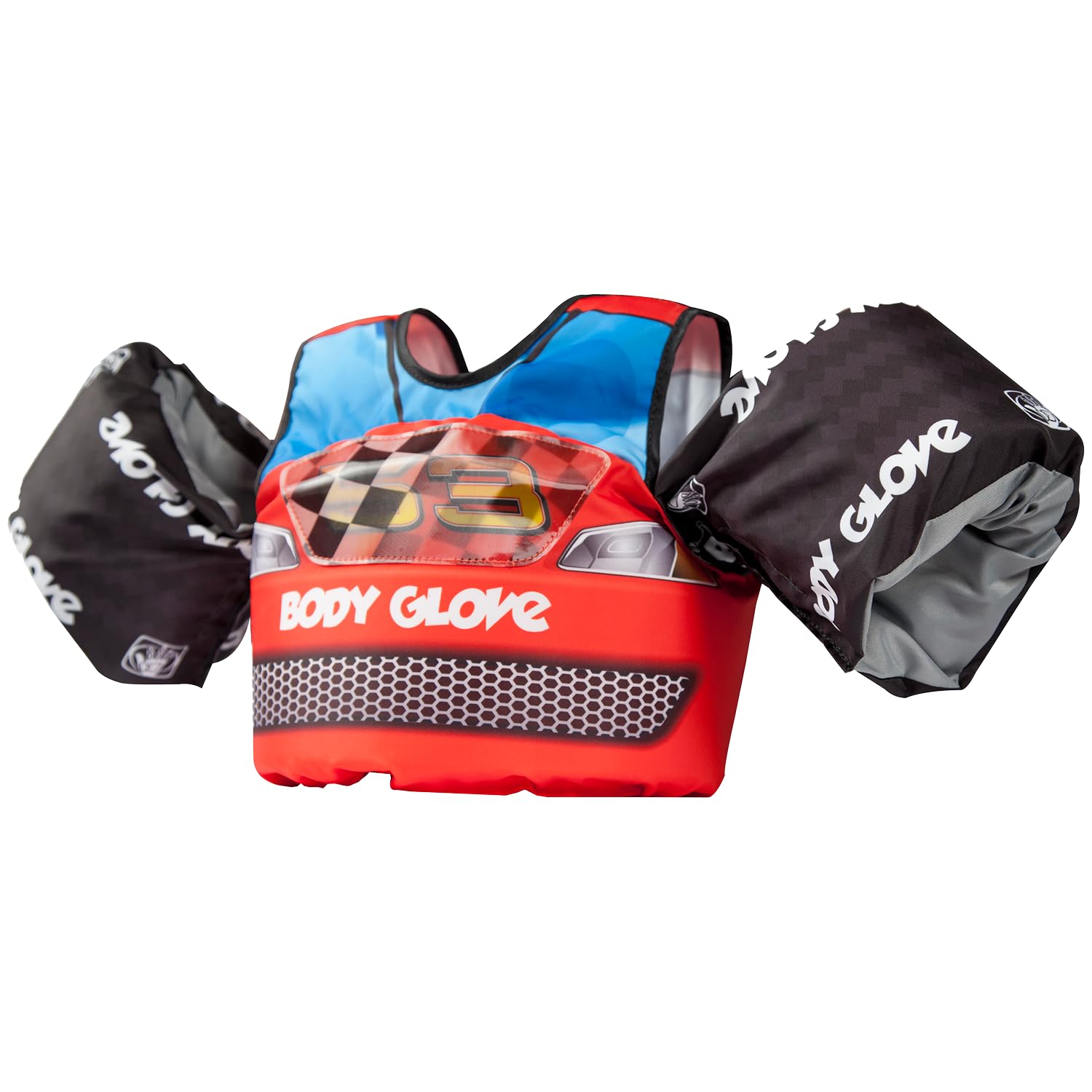
The Body Glove Paddle Pals is the rare life jacket that solves the two biggest problems with toddler flotation: keeping the vest correctly positioned and convincing the child to actually wear it. The patented shoulder harness system anchors the foam panels so they cannot ride up, and the holographic motion graphics give kids a genuine reason to strap it on without a fight. For a parent managing a squirmy two-year-old at the lake, that combination is worth its weight in gear.
Weighing just 250 grams, this vest is lightweight enough for a 33-pound toddler to move freely while still providing USCG Level 70 (Type V/III) flotation. The adjustable back buckle is deliberately designed for adult-only removal, and the multi-panel polyester shell resists chafing even after hours in the water. Customer reports consistently note that the vest flips a child onto their back if they fall forward—a safety feature that cheap swim aids simply cannot replicate.
The only compromise is the weight range ceiling at 55 pounds, which means most kids will outgrow it before they outgrow the need for supervision. But for the critical 2-to-6-year window, this is the most thoughtfully engineered baby life jacket on the list. The bright race-car design also makes visual tracking in murky water notably easier.
Why it’s great
- Patented shoulder harness prevents ride-up and keeps airway clear
- Holographic panels encourage consistent wear without resistance
- USCG and Transport Canada approved for multiple water environments
Good to know
- Only available in specific character-themed colorways
- Maximum weight of 55 pounds limits long-term use
2. O’Neill Child Superlite

O’Neill is a heavyweight in wetsuit and water-sports engineering, and the Child Superlite brings that same low-bulk, high-mobility philosophy to kids’ flotation. Anatomically cut polyethylene foam wrapped in a coated polyester shell delivers a snug fit without the oversized, pillow-like profile common in standard infant vests. This matters when a child is wakeboarding, kneeboarding, or even just trying to paddle with their arms free.
Rated as a USCG Type II device for children 30 to 50 pounds, the Superlite is designed to turn an unconscious child face-up—a critical safety margin for younger or non-swimming kids. The heavy-duty one-inch webbing belts with quick-release buckles provide a customizable fit, and the included crotch strap ensures the vest stays seated during active play. Many parents report this vest fitting a 27-pound toddler snugly while still accommodating a 45-pound older sibling with strap adjustment.
The trade-off is that the Superlite runs small relative to its weight rating. Parents should measure chest circumference (up to 24 inches recommended) before purchasing. Some users note the arm mobility is slightly restricted at the upper end of the weight range, though most agree the security trade is worthwhile. For boating families who want a transferable vest that lasts multiple seasons, this is the most versatile option.
Why it’s great
- Type II rating provides automatic face-up flotation for unconscious children
- Anatomically cut foam minimizes bulk for unrestricted arm movement
- Adjustable straps and crotch belt accommodate rapid growth
Good to know
- Tends to run small; measure chest before ordering
- Lighter-weight toddlers may feel the vest is slightly loose at lower end of range
3. TRC Recreation Super Soft
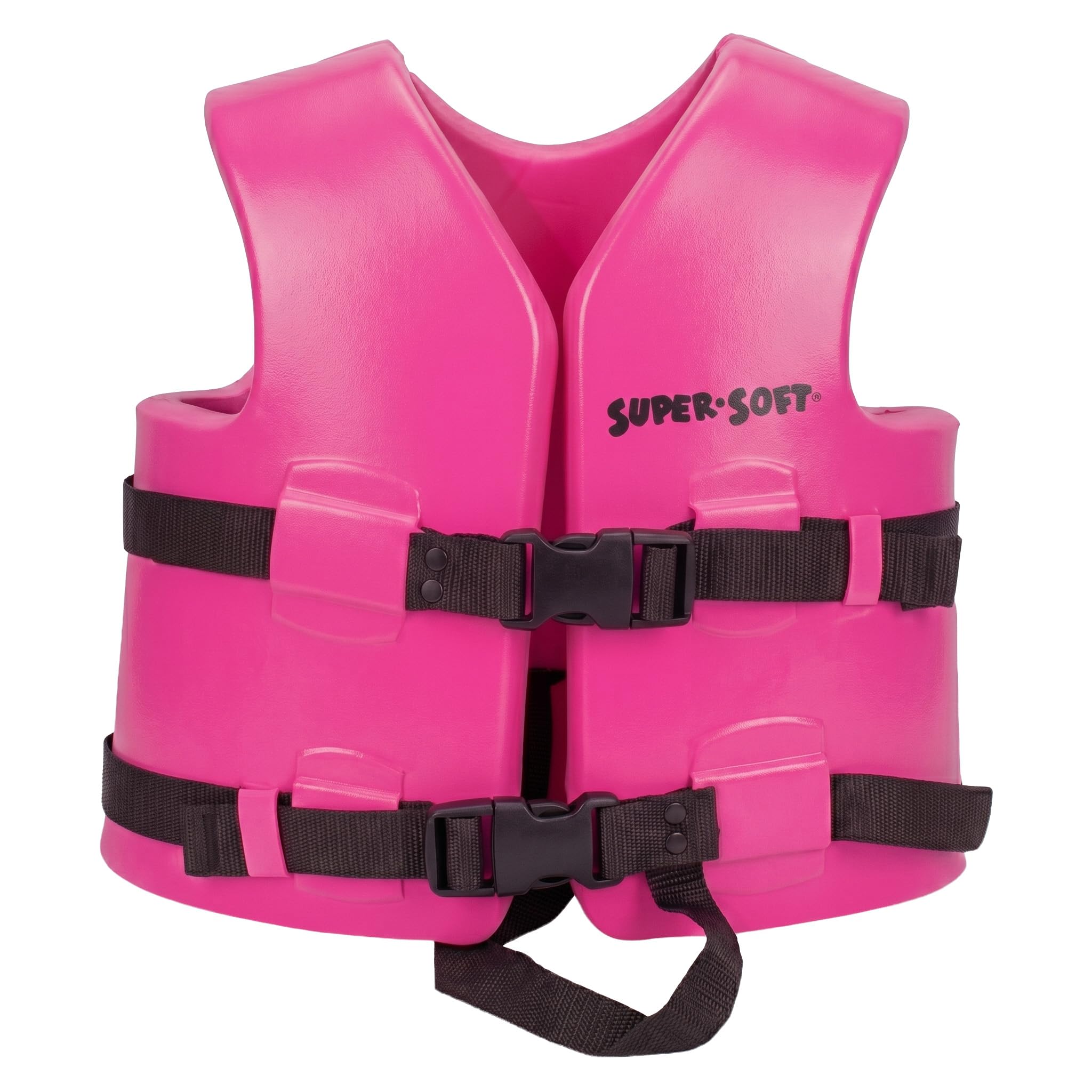
The TRC Recreation Super Soft is the quiet specialist of this group, built for one specific type of child: the sensory-sensitive kid who refuses anything stiff, scratchy, or bulky. Instead of a nylon or polyester shell, this vest uses a vinyl-coated foam that feels more like a soft flotation toy than a piece of safety gear. That texture is exactly why parents of children with autism or tactile aversions report it as the only jacket their child tolerates for extended periods.
As a USCG Type III device, it is designed for supervised swimming, snorkeling, and boating use where the child is conscious and active. The chest sizing (23 to 24 inches) targets a narrow range, which means the fit is intentionally snug rather than adjustable across multiple seasons. The extra bottom strap included on small sizes secures the vest against ride-up, and the 1.15-pound weight keeps it light enough for preschool-aged swimmers to stay upright without fighting the foam.
The narrowest limitation here is the size ceiling. This is not a grow-with-me purchase—once a child’s chest exceeds 24 inches, the fit becomes unsafe. But for that precise window, the Super Soft’s combination of compliance and comfort is unmatched. Several long-term customers mention using this same brand across two generations, a testament to its durable construction and resistance to peeling or foam breakdown.
Why it’s great
- Vinyl-coated shell is exceptionally soft against sensitive skin
- USCG Type III approval with secure bottom strap prevents ride-up
- Durable construction that holds up over years of pool and beach use
Good to know
- Narrow chest range (23-24 inches) means a short usage window per size
- Inflatable feature listed is a label error; this is a solid foam vest
4. SwimWays Bluey Life Jacket

For the preschooler who lives and breathes the hit TV series Bluey, this jacket turns a safety chore into a costume moment. The SwimWays Bluey Life Jacket is a USCG Type III vest that doubles as a learn-to-swim aid, combining a traditional foam torso with integrated arm floaties. The Bluey print is bright, the material is soft polyester, and the adjustable back buckle is deliberately placed out of reach for small fingers, so the jacket stays on until an adult removes it.
Rated for 33 to 55 pounds, this jacket fits the typical four- to six-year-old range comfortably. The 2-in-1 design reduces the friction of pulling on a separate swim aid, and the non-thick profile means it packs easily for travel. Customer feedback consistently highlights how the vest gives independent-minded toddlers the confidence to kick off from the wall and paddle on their own, while the snug fit prevents the jacket from riding up during active splashing.
Some parents note that the arm floatie sections are less buoyant than the torso panels, which can create a slightly tilted float posture for some kids. This is by design—it encourages the child to engage their core rather than rely entirely on passive flotation. For pool and calm lake use under supervision, it is an excellent transition vest. Just note that the weight floor of 33 pounds excludes smaller infants.
Why it’s great
- Bluey character design eliminates resistance from picky preschoolers
- 2-in-1 construction combines torso vest and arm floaties for a complete system
- Back buckle prevents child self-removal during water play
Good to know
- Not suitable for infants under 33 pounds
- Arm floatie sections provide less lift than the torso panels
5. Dark Lightning Infant Life Jacket
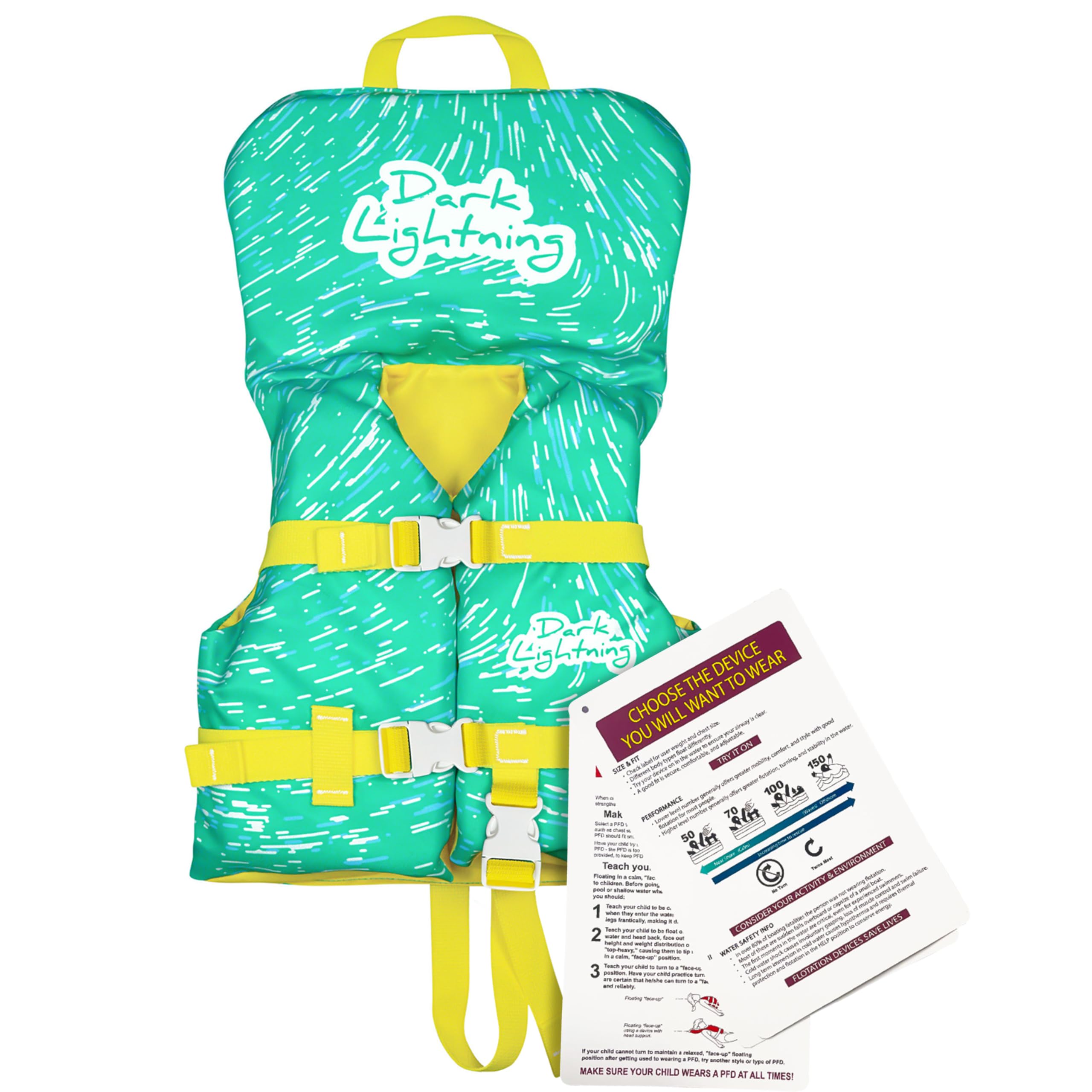
The Dark Lightning Infant Life Jacket is built for the most vulnerable age group: babies and toddlers under 30 pounds who cannot yet hold their heads steady in the water. It earns its place on this list with three features that are non-negotiable at this weight floor—a supportive headrest, a secure leg strap, and a top grab handle for parents. The headrest prevents the neck from drooping backward, the leg strap stops the jacket from riding up over the face, and the grab handle gives an adult immediate control without having to reach under the child.
As a USCG-approved Type III device for the 0-30 pound range, it uses non-inflatable foam buoyancy distributed evenly around the torso. The green color offers high visibility in open water, and the adjustable straps allow a custom fit as the baby grows through the 20-30 pound sweet spot. Customer reports from lake and pool use confirm that the vest keeps a one-year-old floating face-up without rolling, and the 160-gram weight is light enough that toddlers do not complain of being weighed down.
The vest does not include arm floaties or a 2-in-1 swim trainer function, so it is purely a safety flotation device rather than a learn-to-swim tool. The material is foam, meaning it will not puncture or deflate, but it also lacks the soft fabric lining that some children prefer against their skin. For the entry-level price, however, it delivers the essential safety architecture that cheaper vests skip entirely.
Why it’s great
- Integrated headrest supports infant neck in the water
- Leg strap and grab handle provide dual security and control
- Non-inflatable foam construction eliminates deflation risk
Good to know
- Lacks soft fabric lining, which may feel less comfortable for some babies
- Not designed as a learn-to-swim aid; pure flotation only
6. GOSEN Swim Vest (Purple)

The GOSEN Swim Vest in the small size (24 to 40 pounds) is a no-nonsense buoyancy aid built for hours of pool, beach, and water park endurance. Its core construction is neoprene over EPE polyethylene foam, which gives it a soft, wetsuit-like feel against the skin while keeping the float panels firmly in place. The front zipper with double waist buckles and a padded crotch strap ensures the vest stays seated even when a toddler is jumping in from the side of the pool.
Unlike USCG-approved life jackets, this is classified as a buoyancy aid, meaning it is intended for supervised swimming and learn-to-swim practice rather than open-water boating. The design emphasizes freedom of movement—the armholes are cut generously, and the adjustable torso straps allow for growth. The attached emergency whistle is a small but welcome addition for parents who want an extra layer of audible tracking during public pool days.
One consideration: because it is not USCG-rated, it should not be relied upon for boating, kayaking, or any scenario where the child could be unconscious in the water. Within its intended use case—calm, supervised water—it performs admirably. The neoprene shell is durable and resists chlorine damage, and the bright purple color makes visual tracking easy. For the price, it is a solid learn-to-swim companion.
Why it’s great
- Neoprene shell is soft against skin and resists chlorine damage
- Widened padded crotch strap prevents chafing and ride-up
- Includes emergency whistle for extra auditory tracking
Good to know
- Not USCG approved; not suitable for boating or open water
- Buoyancy aid design means less passive flotation than true life jackets
7. GOSEN Swim Vest (Superhero)

Sometimes the fastest way to get a toddler into the water is a Spider-Man print, and the GOSEN Swim Vest in its Superhero colorway leans fully into that motivational strategy. The vest features a shoulder harness and arm-wing floaties that hold the child in an upright position, with a double-safety buckle system on the back that is difficult for little fingers to manipulate independently. The nylon twill fabric with EPE foam core provides a durable, non-absorbent float that does not require inflation.
Rated for 22 to 66 pounds, this is one of the widest weight ranges in the budget tier, meaning it can serve a family with multiple young children or span several seasons for one child. The shoulder straps are the standout feature—they prevent the arm wings from sliding down toward the elbow, a common frustration with simpler floatie designs. Customer feedback highlights that the vest gives even two-year-olds the confidence to paddle independently while keeping their head well above the waterline.
The trade-off for the character appeal and wide range is the same classification limitation as the purple GOSEN model: this is a buoyancy aid, not a USCG-approved life jacket. It is ideal for pool swimming and shallow lake play under constant supervision, but it should not replace a certified PFD for boating. The adjustable waist strap is somewhat narrow, so larger toddlers may need the buckle cinched to its tightest setting to prevent rotation.
Why it’s great
- Spider-Man design dramatically reduces toddler resistance to wearing the vest
- Shoulder harness keeps arm floaties properly positioned
- Wide 22-66 pound range fits multiple children or seasons of growth
Good to know
- Not USCG approved; use only in supervised swimming environments
- Waist strap may need maximum cinching for children near 60 pounds
FAQ
Can my 6-month-old wear this type of life jacket?
What is the difference between a swim vest and a life jacket?
How tight should my baby’s life jacket fit?
Final Thoughts: The Verdict
For most parents, the best baby life jacket winner is the Body Glove Paddle Pals because its patented shoulder harness and holographic design solve the two hardest problems in infant flotation: keeping the vest correctly positioned and getting the child to wear it without a daily negotiation. If you want a low-bulk vest for active water sports, grab the O’Neill Child Superlite for its Type II rating and anatomical cut. And for sensory-sensitive children who need a soft-shell option, nothing beats the TRC Recreation Super Soft.

Mo Maruf
I created WellFizz to bridge the gap between vague wellness advice and actionable solutions. My mission is simple: to decode the research and give you practical tools you can actually use.
Beyond the data, I am a passionate traveler. I believe that stepping away from the screen to explore new environments is essential for mental clarity and physical vitality.