Our readers keep the lights on and my smoothie glass nicely filled. As an Amazon Associate, I earn from qualifying purchases.
When a hairbrush tears through a knot instead of releasing it, the result is snapped strands, split ends, and a head of hair that just won’t grow past a certain length. For anyone with fine, fragile, color-treated, or naturally curly hair, the wrong brush can undo weeks of careful conditioning in a single stroke. The difference between a brush that damages and one that protects comes down to the specific bristle flexibility, spacing, and pad design—details that marketing often glosses over.
I’m Mohammad Maruf — the founder and writer behind WellFizz. I have spent hundreds of hours analyzing hairbrush ergonomics, bristle materials, and breakage-reduction data to understand which mechanical designs genuinely minimize tensile stress on the hair shaft during detangling.
Whether you are dealing with postpartum shedding, chemical damage from coloring, or simply have strands that snap at the slightest tension, finding the right tool is critical. This guide breaks down the five best options on the market to help you pick the brushes to prevent breakage that match your specific hair type and daily routine.
How To Choose The Best Brushes To Prevent Breakage
Not all brushes labeled “detangling” or “gentle” actually protect fragile strands. The key lies in three mechanical attributes: bristle flexibility, bristle tip design, and the cushion’s ability to absorb pressure rather than transfer it directly to the hair root.
Bristle Material and Flexibility Grade
Nylon bristles with a lower durometer rating (meaning softer flexibility) are essential for fine or chemically treated hair. So-called “IntelliFlex” and proprietary soft-flex teeth bend under the resistance of a knot, allowing the knot to slip through without snapping the hair. Boar bristles serve a different purpose—they are stiffer and better at distributing natural oils, but they can pull on wet or tangled hair if used aggressively.
Tooth Spacing and Pattern
Wide-spaced bristles reduce the number of contact points per stroke, lowering friction and tension, especially on curly or coily textures. The patented two-tiered tooth technology used by Tangle Teezer places longer teeth that detangle ahead of shorter teeth that smooth the hair shaft, minimizing the pull that causes breakage.
Cushion and Pad Design
A soft, spring-loaded cushion pad allows the bristles to flex independently as they pass over tangles. Rigid brushes transfer all the force to the tangled area, increasing the likelihood of breakage. Look for removable cushions that can be cleaned, as product buildup in the pad can stiffen the bristles over time.
Quick Comparison
On smaller screens, swipe sideways to see the full table.
| Model | Category | Best For | Key Spec | Amazon |
|---|---|---|---|---|
| Wet Brush Original Detangler | Detangler | All hair types wet & dry | IntelliFlex bristles with 55% less breakage | Amazon |
| Tangle Teezer Extra Gentle | Extra Gentle | Fine, delicate hair prone to shedding | Wide-spaced bristles; 77% less breakage | Amazon |
| Tangle Teezer Plant-Based Ultimate | Eco Detangler | Color-treated & fragile hair | Soft-flex, two-tiered teeth; plant-based plastic | Amazon |
| Olivia Garden Aurora Detangler | Comfort Brush | Fine to medium hair with sensitive scalp | Scalp-hugging cushion with removable pad | Amazon |
| Norsewood Boar Bristle Set | Boar Bristle | Dry styling & shine enhancement | Mixed boar/nylon bristles with rubber cushion | Amazon |
In‑Depth Reviews
1. Wet Brush Original Detangler Hair Brush
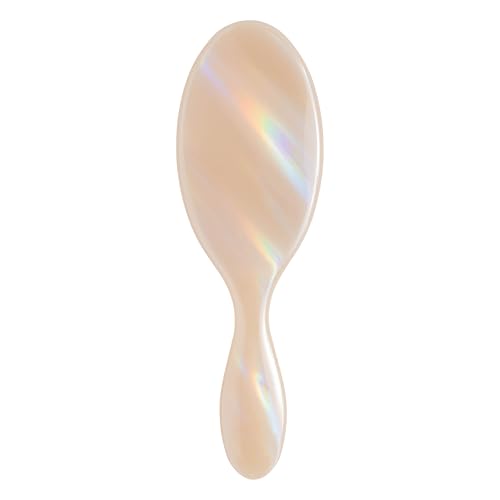
The Wet Brush Original Detangler is the benchmark that other detangling brushes are measured against. Its Ultra-Soft IntelliFlex bristles are engineered with an optimized flex point that allows each bristle to bend as it encounters a tangle, reducing the tensile force transmitted to the hair shaft by a claimed 55 percent. For anyone who has ever felt a brush yank at a knot, this mechanical give makes a tangible difference, especially on wet hair where the hair’s hydrogen bonds are temporarily broken and it is most vulnerable to stretch-induced breakage.
In practice, the brush glides through straight, wavy, and curly textures without snagging. The open cushion design prevents hair from wrapping around the base of the bristles—a common cause of hair being ripped out at the root. The handle is lightweight at just 0.64 ounces, making it easy to maneuver during shower detangling sessions. Users with weft hair extensions report that the brush does not pull at bonds or adhesive, which is a strong test of its gentleness.
The limited edition iridescent cream finish adds aesthetic appeal, but the core performance is what secures its position as the top pick. It works across all hair types (wet and dry) and is suitable for both men and women. The only real knock is that the brush frame is made of plastic that can crack if dropped on a hard tile floor—something to keep in mind if your grooming routine involves a lot of drops.
Why it’s great
- IntelliFlex bristles provide controlled flex that minimizes hair snapping
- Works equally well on wet and dry hair, including curly and textured types
- Ultra-lightweight design reduces hand fatigue during long detangling sessions
Good to know
- Plastic frame is prone to cracking if dropped on a hard surface
- Limited edition color may show wear after several months of daily use
2. Tangle Teezer Extra Gentle Detangler
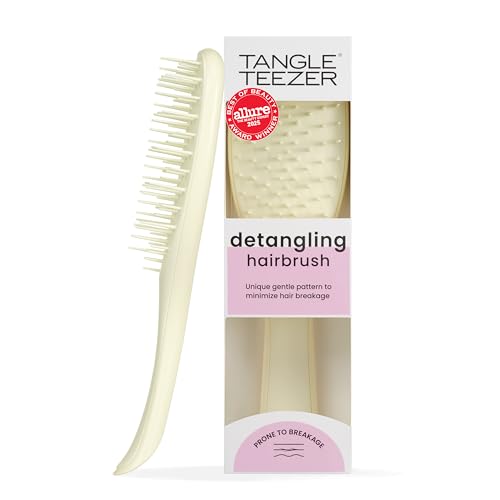
Where most detanglers try to increase bristle density for faster brushing, the Tangle Teezer Extra Gentle takes the opposite approach: fewer bristles, spaced wider apart. The logic is sound—fewer contact points per stroke means less cumulative friction on fragile strands, and the concentrated middle bristle pattern delivers most of the detangling force where it is needed while the widely spaced edge bristles minimize tension around the perimeter of the stroke. This makes it a specialist tool for fine, shedding-prone, or chemically compromised hair.
The one-piece construction eliminates the crevices where hair and product typically accumulate, and the entire brush can be rinsed clean under running water. At 2.22 ounces, it is slightly heavier than the Wet Brush but still comfortable for extended use. Users with type 4 hair and those experiencing hormonal shedding or telogen effluvium report significantly reduced hair loss on the brush after switching to this model, a real-world indicator that the wider spacing reduces the force needed to pass through dense tangles.
Anecdotally, the brush also performs well on children with sensitive scalps. The chamomile yellow color is easy to spot in a bathroom drawer. The main limitation is that the extra-gentle bristles can bend under the weight of very thick or coarse hair, making it less effective for dense or heavy coiled textures.
Why it’s great
- Wider bristle spacing reduces friction on fragile and shedding hair
- One-piece design is easy to clean and prevents hair buildup
- Clinical data referenced: 77% of users reported less hair fall
Good to know
- Bristles may not be rigid enough for thick or very curly hair
- Not a comprehensive styling brush; limited to detangling duty
3. Tangle Teezer Plant-Based Ultimate Detangler
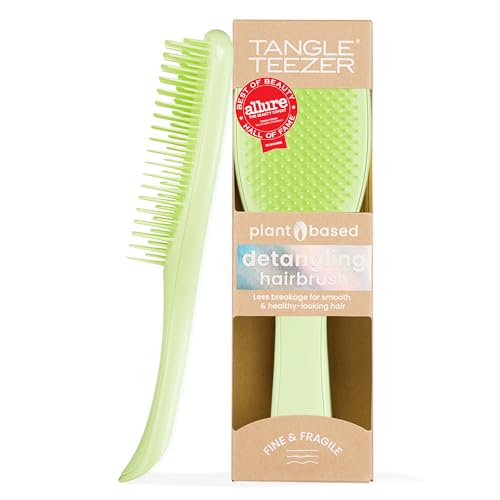
This brush takes the core Tangle Teezer technology and refines it for the most vulnerable hair types: color-treated, thin, fine, and fragile strands. The two-tiered teeth system features longer, flexible teeth that detangle knots from underneath while shorter teeth smooth the cuticle layer, reducing the friction that leads to frizz and breakage. The teeth in this plant-based variant are a full grade softer than those in the original Ultimate Detangler, specifically calibrated for hair that snaps under normal brushing pressure.
The matcha green color comes from 85% sustainably sourced castor bean plastic, making it a rare genuinely eco-conscious option in the hairbrush aisle. It is dishwasher-safe (top rack) for deep cleaning, and the open-backed design prevents water from pooling inside the brush head. Users with color-treated hair report that the softer teeth do not strip recently applied toner or semi-permanent color, which aligns with the lower friction profile.
The ergonomic handle has a wider grip base than the Extra Gentle model, which users with arthritis or limited hand mobility find easier to hold. The brush performs well on wet hair for distributing conditioning masks evenly. On the downside, the very soft teeth can flex too much under dense or thick hair, making detangling slower than with a stiffer brush. It is designed for precision gentleness, not speed.
Why it’s great
- Softer two-tiered teeth ideal for color-treated and fragile hair
- 85% plant-based plastic with low environmental impact
- Dishwasher-safe and easy to keep hygienic
Good to know
- Soft teeth struggle with thick or densely curly hair
- Detangling is slower compared to standard bristle brushes
4. Olivia Garden Aurora Detangler Brush
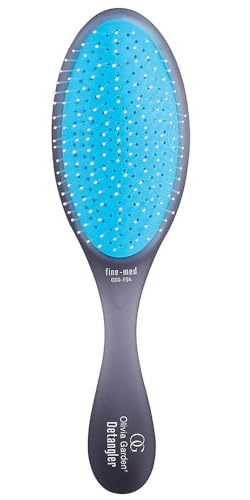
The Olivia Garden Aurora brings a scalp-hugging cushion design that physically conforms to the contours of the head, distributing bristle pressure evenly across the hair root area. This reduces the focused tension that occurs when a flat brush pad hits a curved scalp surface—a subtle mechanical advantage that makes a difference for sensitive scalps prone to tenderness after brushing. The bristles themselves are custom-tuned for fine to medium hair, with a stiffness that manages knots without digging into the scalp.
One of the strongest features is the removable cushion pad. A simple squeeze at the edges releases the pad for cleaning, and this is important because product buildup (old conditioner, dry shampoo, sebum) can cause bristles to lose their independent flexibility. With regular cleaning, the cushion maintains its bounce across months of daily use. The brush weighs just 2.4 ounces and has a 9.4-inch length that fits comfortably in a handbag or travel kit.
Users with fine, straight, medium-length hair describe it as a daily workhorse that reduces hair loss during brushing compared to standard paddle brushes. The scalp massage feel is a bonus that encourages more regular brushing. It is less suited for very wet detangling sessions because the cushion can hold moisture if not dried properly, and the bristles are not as flexible as the IntelliFlex or Tangle Teezer options for navigating dense tangles.
Why it’s great
- Scalp-hugging cushion reduces root tension during brushing
- Removable pad allows thorough cleaning to maintain bristle performance
- Lightweight and compact for travel use
Good to know
- Not ideal for heavy wet detangling; cushion can retain moisture
- Best suited for fine to medium hair, not thick or coarse textures
5. Norsewood Boar Bristle Hair Brush Set
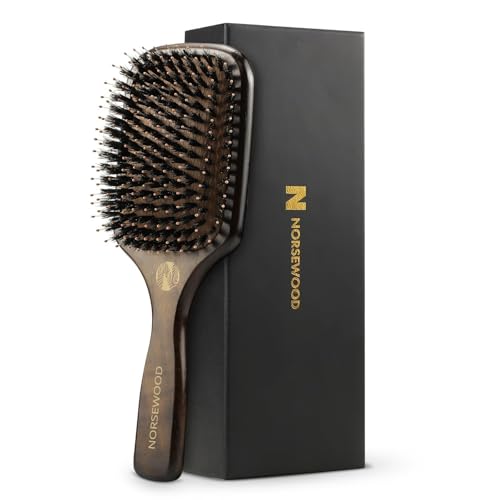
The Norsewood brush set takes a fundamentally different approach to breakage prevention: rather than relying solely on flexible bristles, it uses a combination of boar bristles and nylon pins to redistribute natural sebum from the scalp down the hair shaft. The logic is that well-moisturized hair is more elastic and less prone to snapping under tension. The boar bristles are stiffer than the nylon alternatives, so the brush works best on dry hair where the cuticle is closed and the natural oil barrier provides slip.
The rubber cushion pad adds a layer of shock absorption that prevents the boar bristles from scraping the scalp, which can cause irritation. The set includes a mini-cleaning rake and a travel pouch, adding practical value for daily users. At 7.83 ounces, it has a satisfying heft that feels more substantial than the plastic detanglers, and the wooden handle offers a warm, natural grip even when hands are damp.
Users with wavy or straight hair report a noticeable increase in shine after switching to boar bristle brushing. Those with thick or coarse hair find that the nylon pins help the brush penetrate the top layer of hair to reach the scalp effectively. However, this is not the right tool for detangling wet hair—the boar bristles will grab and pull on damp, swollen strands, potentially causing breakage. It works best as a finishing brush for dry styling and sebum distribution.
Why it’s great
- Boar bristles distribute natural oils for increased hair elasticity and shine
- Includes cleaning tools and travel pouch for long-term maintenance
- Solid wood handle and rubber cushion offer premium feel and scalp comfort
Good to know
- Do not use on wet hair—boar bristles can cause snapping
- Not designed for aggressive detangling; best for dry styling only
FAQ
Should I brush my hair wet or dry to prevent breakage?
What bristle material is safest for fine or chemically treated hair?
How often should I clean my hairbrush to maintain breakage prevention?
Final Thoughts: The Verdict
For most users, the brushes to prevent breakage winner is the Wet Brush Original Detangler because it combines the highest universal compatibility (works on wet and dry hair across all textures) with a proven mechanical design that reduces breakage by over half. If you have extremely fine hair that sheds easily, grab the Tangle Teezer Extra Gentle for its wide-spaced teeth and clinically referenced 77% breakage reduction. And for adding natural shine and conditioning your hair through sebum distribution during dry styling, nothing beats the Norsewood Boar Bristle Set.

Mo Maruf
I created WellFizz to bridge the gap between vague wellness advice and actionable solutions. My mission is simple: to decode the research and give you practical tools you can actually use.
Beyond the data, I am a passionate traveler. I believe that stepping away from the screen to explore new environments is essential for mental clarity and physical vitality.