Our readers keep the lights on and my smoothie glass nicely filled. As an Amazon Associate, I earn from qualifying purchases.
Nothing ruins a morning garden check faster than finding a torn net draped over a bush, with birds already pecking at your blueberries. The constant cycle of untangling, patching, and re-securing a flimsy mesh is a frustration every fruit grower knows well. A proper bird barrier should be invisible in function — never in maintenance — stopping pests while letting sun and rain through without snagging or fraying.
I’m Mohammad Maruf — the founder and writer behind WellFizz. I’ve spent years analyzing garden supply specs, from mesh density and material tensile strength to UV stabilizer ratings, to separate durable netting from disposable rolls that barely last a season.
After comparing dozens of options across mesh sizes, material grades, and real-world use cases, I’ve narrowed the field to the five models that deliver reliable protection without the headache. Here is my curated guide to the best bird netting for keeping your crops safe and your sanity intact.
How To Choose The Best Bird Netting
Choosing the right netting is about matching the mesh size, material, and coverage to the specific pests and crops in your yard. A net that works for a cherry tree will struggle on a raised vegetable bed, and a flimsy polypropylene sheet will tear before the first frost. Here are the three critical factors to evaluate before buying.
Mesh Size: The Gatekeeper
Mesh size determines exactly which pests you block. A 1-inch square mesh stops larger birds and squirrels but lets small finches and chipmunks slip through easily. A ½-inch or 5/8-inch mesh is the sweet spot for most gardens — it excludes typical fruit thieves without blocking sunlight or rain. Ultra-fine mesh (0.04 inches or smaller) adds insect protection but can block bees from pollinating, requiring manual lifting during bloom.
Material Grade: The Longevity Factor
Standard lightweight netting (0.2–0.4 oz/ft²) is cheap but degrades in a single season under UV exposure. Premium woven HDPE netting at 0.9 oz/m² or higher resists tearing, tangling, and weathering across multiple seasons. Nylon offers excellent tear resistance but can stretch under load, while stabilized PE is lightweight and good for insect barriers but vulnerable to squirrels. Always check the weight-per-area spec — it directly correlates with durability.
Coverage and Installation
Measure your actual garden area before buying, remembering that the netting will sag when draped. Look for rolls larger than your footprint to allow for secure anchoring. The best netting includes ties, staples, or a drawstring for quick fastening. Avoid netting that arrives folded into a tangled bird’s nest — well-packed, flat-folded rolls save you twenty minutes of swearing before installation even begins.
Quick Comparison
On smaller screens, swipe sideways to see the full table.
| Model | Category | Best For | Key Spec | Amazon |
|---|---|---|---|---|
| RIFNY 13×40 FT HDPE | Premium | Large orchards & harsh weather | 5/8″ mesh, HDPE, 0.65 oz/yd² | Amazon |
| Vocray 15×15 FT | Mid-Range | Chicken coops & standard gardens | ½″ mesh, HDPE, 0.9 oz/m² | Amazon |
| RIFNY 2 Pack 10×33 FT | Premium | Insect & bird protection | 0.04″ ultra-fine mesh, PE | Amazon |
| GWHOLE 33×13 FT | Mid-Range | Large coverage on a budget | 1″ mesh, Nylon monofilament | Amazon |
| GonLei 4 Pack Bags | Entry-Level | Individual bushes & small plants | Drawstring bags, Nylon | Amazon |
In‑Depth Reviews
1. RIFNY 13 x 40 FT Heavy Duty Bird Netting
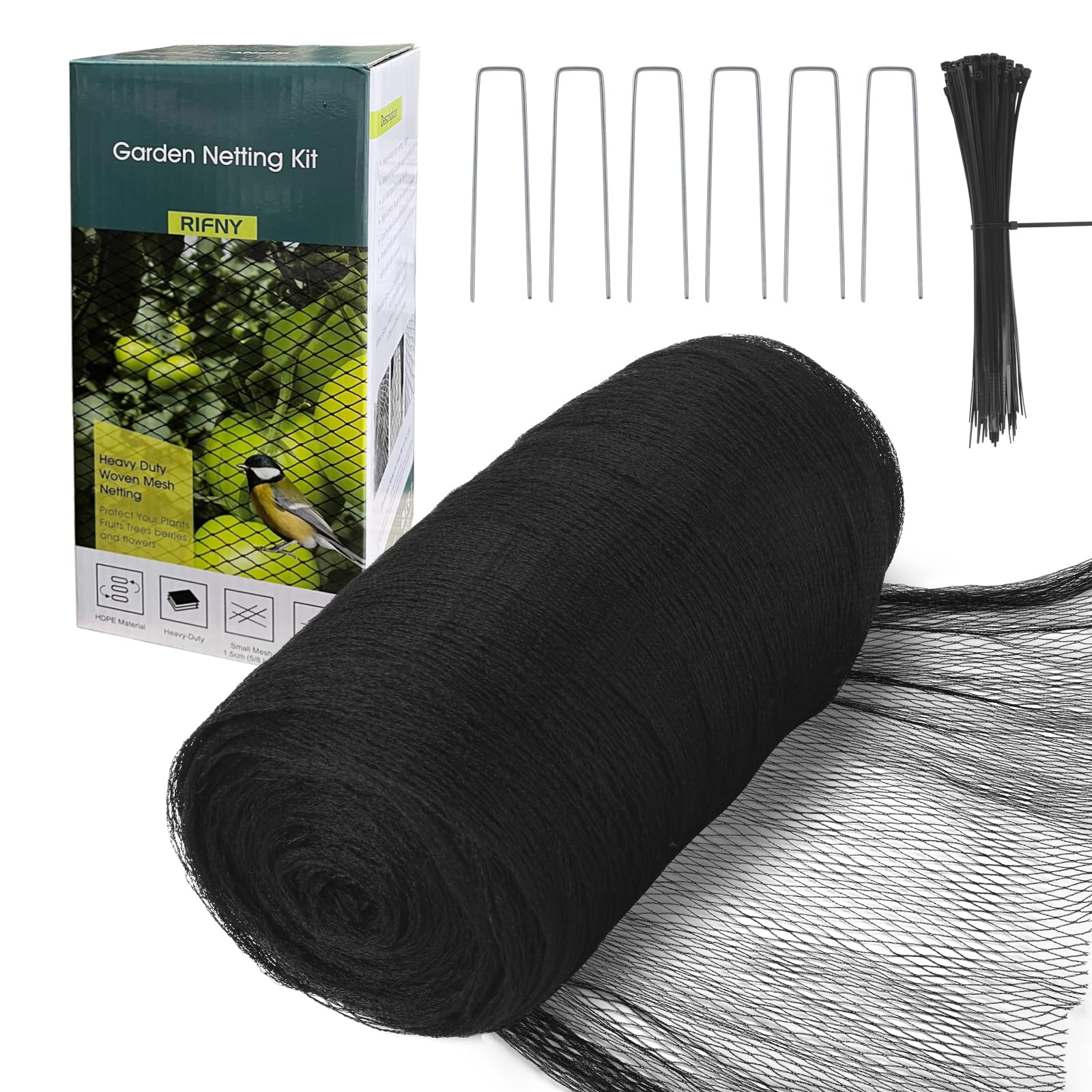
This RIFNY netting uses high-density polypropylene (HDPE) rather than standard nylon or PP blends, giving it a noticeably stiffer, more tear-resistant feel. The 5/8-inch mesh sits in the ideal middle ground — small enough to block finches and chipmunks, large enough to avoid interfering with pollination or blocking significant sunlight. The 13×40-foot coverage is generous for medium to large orchards, and at 0.65 oz/yd² it strikes a strong balance between weight and durability.
Included landscape staples and twist ties simplify anchoring, especially over raised beds or fruit trees. Multiple reviewers highlight that this netting does not tangle during installation — it unrolls flat and stays manageable even when working solo on a trellis arch. The material remains flexible in extreme cold (rated down to -58°F) and resists UV degradation through multiple seasons of full-sun exposure.
The main trade-off: the HDPE weave is slightly coarse, so it may snag on rough wood edges if not secured carefully. Some users recommend pairing it with a smoother framing material for delicate vines. Overall, this is the most durable, versatile option for anyone who wants to set up netting once and forget it for several years.
Why it’s great
- HDPE material resists tears, UV, and extreme temperatures from -58°F to 212°F
- 5/8-inch mesh blocks birds and small animals without preventing pollination
- Comes with staples and twist ties for immediate installation
Good to know
- Coarse weave can snag on untreated wood or rough frames
- Large 13×40 ft roll may be oversized for small garden beds
2. Vocray Bird Netting 15×15 FT

The Vocray 15×15 FT netting is woven from HDPE at a weight of 0.9 oz/m² — nearly three times heavier than typical deer netting. That density translates directly into resistance: the mesh holds up against wind, snow, and the weight of a chicken leaning against it without tearing. The ½-inch mesh is tight enough to exclude even small hummingbirds while still allowing full light and water penetration for vegetables and fruit bushes.
Users consistently praise the lack of tangling during setup, a nightmare with cheaper extruded nets. The square shape (15×15) works perfectly for covering blueberry bushes, chicken runs, or pond surfaces. Over five months of continuous desert-sun exposure, reviewers report no visible wear or fraying. The black color blends naturally into garden and chicken coop environments without looking obtrusive.
One caution: a small number of units arrive with a repaired tear, though the manufacturer addresses this promptly. The 15×15 dimension is ideal for a single large bush or chicken run but may be too small for covering multiple fruit trees. For the price point, this netting punches well above its weight in material quality and real-world longevity.
Why it’s great
- Heavy HDPE weave at 0.9 oz/m² resists tearing through multiple seasons
- ½-inch mesh excludes even tiny birds while letting light and rain through
- Easy, tangle-free installation and strong load-bearing capacity over 100 lbs
Good to know
- 15×15 ft size is limited to smaller gardens or single trees
- Minor risk of arriving with a small repair, though customer service responds quickly
3. RIFNY 2 Pack 10×33 FT Ultra Fine Mesh

This RIFNY pack includes two massive 10×33-foot rolls of ultra-fine mesh netting with 0.04-inch oblong holes — a mesh density that blocks not just birds but also insects, mosquitoes, and even some dust. The polyethylene material is lighter than HDPE but sufficiently durable for seasonal use, especially on greenhouse rows and raised beds. The oblong hole design improves airflow compared to traditional square meshes of similar density, reducing heat buildup under the cover.
Because the mesh is so fine, water and liquid fertilizer pass through directly without removal, saving significant labor during the growing season. White color reflects sunlight slightly, keeping the temperature under the net a few degrees cooler than black alternatives. Reviewers report easy installation over existing frames, with simple pinning into the soil using stones or stakes.
The critical downside is that the fine mesh blocks bees from pollinating. If you are growing fruiting crops like tomatoes or squash, you will need to lift the net manually during bloom, or accept reduced yields. Some users also note that squirrels can rip the PE material relatively easily — this netting is best for bird and insect pressure, not rodent protection.
Why it’s great
- Ultra-fine 0.04-inch mesh blocks birds, insects, and even dust effectively
- Oblong hole design allows excellent airflow and direct watering through the net
- Two large rolls (10×33 ft each) provide massive coverage for multiple garden beds
Good to know
- Blocks bees from pollinating — must be lifted manually during bloom season
- PE material is vulnerable to tearing by squirrels and determined rodents
4. GWHOLE 33 x 13 FT Bird Netting

GWHOLE’s netting uses nylon monofilament, a material that stretches under load without snapping — a useful property for vertical applications like balcony railings or cat-proof barriers. The 1-inch square mesh is larger than what we recommend for small fruit bushes, but it works well for keeping larger birds, deer, and poultry out of vegetable patches and patios. At 33×13 feet, the coverage per dollar is among the highest in this group.
The white color is nearly invisible from a few feet away, which users installing balcony barriers or chicken runs appreciate for aesthetic reasons. Reviewers report it holds up well against rain and sun for at least two seasons, though the nylon will eventually degrade faster than HDPE under constant UV exposure. Installation is straightforward: the mesh cuts easily with scissors and does not unravel at the edges.
The trade-off is clear: 1-inch mesh will not stop small finches or chipmunks, and the nylon composition is less tear-resistant than woven HDPE. For users who need a large, affordable barrier for pigeons, squirrels, and deer — and who do not have tiny berry bushes — this is a solid, workable option. It is also an excellent choice for non-garden uses like cat-proofing balconies or guinea pig enclosures.
Why it’s great
- Large 33×13 ft roll offers generous coverage for a low entry cost
- Nylon monofilament stretches without snapping under load, good for vertical use
- Nearly invisible white mesh blends into balcony and garden settings
Good to know
- 1-inch mesh allows small birds and chipmunks to pass through
- Nylon degrades faster than HDPE under prolonged UV exposure (2-3 seasons)
5. GonLei 4 Pack Garden Mesh Netting Bags
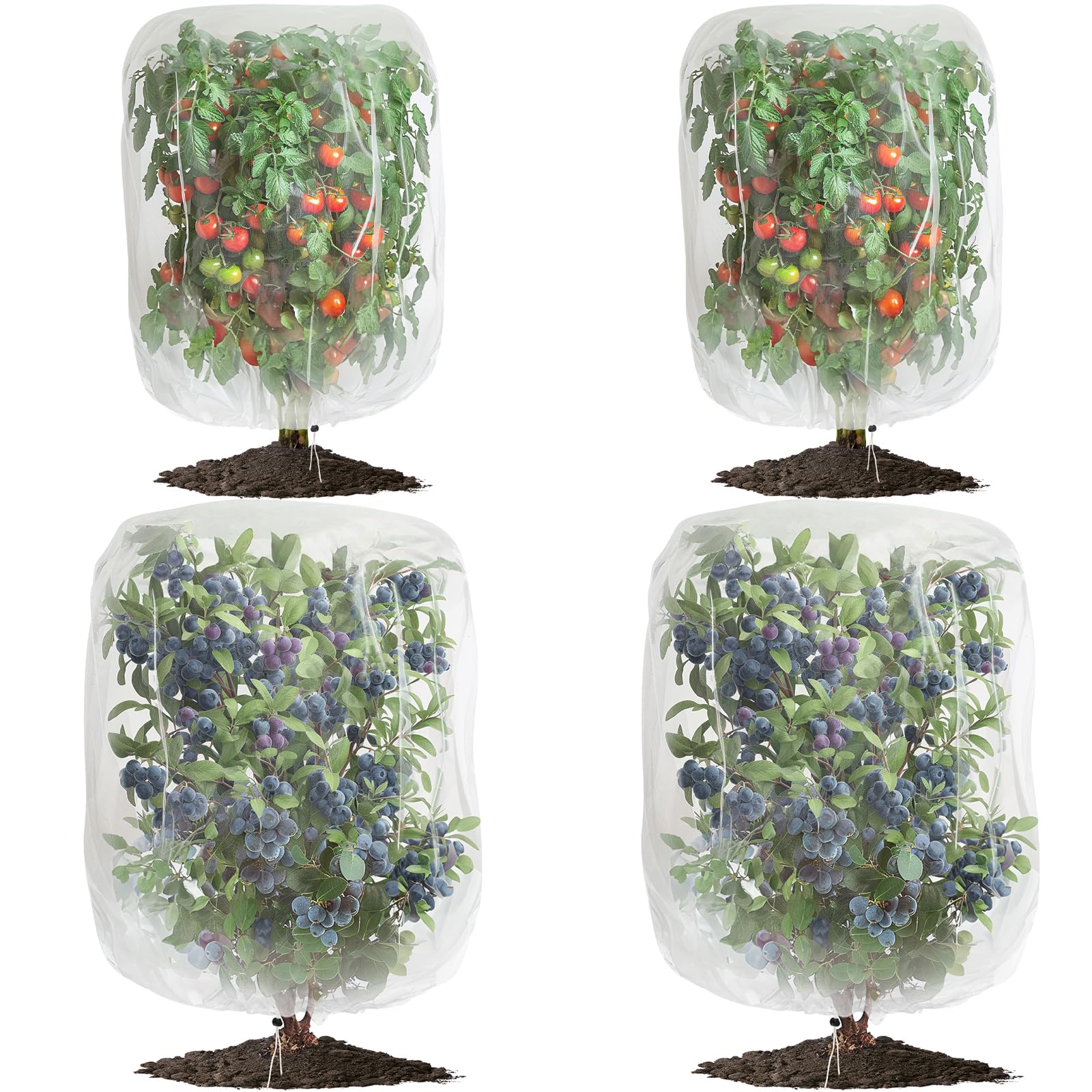
The GonLei pack provides four netting bags in two sizes — two at 2.6×3.3 feet and two at 3.3×4.9 feet — each with a drawstring closure. This bag-based design is fundamentally different from roll netting: you slip the bag over an entire bush or shrub and cinch it tight around the trunk. The ultra-dense nylon mesh excludes birds, cicadas, and squirrels while maintaining good ventilation and moisture retention for the plant.
Each bag is lightweight and reusable; reviewers report effective protection for blueberry bushes and blackberry canes with simple zip-tie or ribbon supplementation. The drawstring design solves the bottom-entry problem that plagues loose netting — animals cannot push under the edge because it is cinched closed. The set covers two medium bushes and two smaller plants out of the box, making it ideal for gardeners with a handful of high-value shrubs rather than rows of crops.
The included drawstrings are synthetic and may degrade within a season outdoors; users recommend replacing them with a ¼-inch ribbon or nylon cord for long-term use. The bags require some kind of structural support (a stake or PVC frame) to hold them off the foliage of taller plants. For targeted, small-scale protection of individual bushes, this bag system is more convenient and effective than draping and anchoring a net.
Why it’s great
- Drawstring closure seals the bottom to prevent animals from entering underneath
- Includes two sizes in one pack covering both medium and small bushes
- Nylon mesh is soft, elastic, and reusable across multiple seasons
Good to know
- Drawstrings included are cheap synthetic cord that degrades in UV; replace immediately
- Requires stakes or a frame to support the bag off tall plants
FAQ
Does bird netting trap or hurt birds if they fly into it?
Can I leave bird netting up during winter storms and snow?
Why does my netting always tangle into a mess when I try to install it?
Final Thoughts: The Verdict
For most users, the best bird netting winner is the RIFNY 13 x 40 FT Heavy Duty Net because its HDPE construction, 5/8-inch mesh, and included installation hardware provide the best balance of durability, coverage, and ease of use for demanding gardens. If you need a compact, tangle-free solution for a single blueberry bush or chicken run, grab the Vocray 15×15 FT Net. And for targeted insect-proofing of individual shrubs without the hassle of draping a whole roll, nothing beats the GonLei 4 Pack Drawstring Bags.

Mo Maruf
I created WellFizz to bridge the gap between vague wellness advice and actionable solutions. My mission is simple: to decode the research and give you practical tools you can actually use.
Beyond the data, I am a passionate traveler. I believe that stepping away from the screen to explore new environments is essential for mental clarity and physical vitality.