Our readers keep the lights on and my smoothie glass nicely filled. As an Amazon Associate, I earn from qualifying purchases.
Carrying 50 pounds on your back for a ten-mile approach isn’t about padding or pocket count — it’s about how the frame transfers load from your shoulders to your hips. Most “heavy duty” backpacks collapse under 40 lbs; the ones that survive push the stitch count, frame alloy, and hip belt density to a different engineering standard.
I’m Mohammad Maruf — the founder and writer behind WellFizz. I’ve spent hundreds of hours cross-referencing internal frame torsion specs, seat belt-grade hardware, and return rates on military-spec packs to separate legit load haulers from marketing fluff.
Choosing the wrong pack here means a blown seam, a chafed hip, or a frame that buckles mid-stride. This guide is built around tensile strength, frame material, and load distribution geometry so you land on a backpack for heavy loads that actually delivers mile after mile.
How To Choose The Best Backpack For Heavy Loads
The difference between a pack that hurts and a pack that carries begins with the frame, the hip belt, and the fabric weave. These three elements determine whether 50+ pounds feels like a manageable weight or a spinal injury waiting to happen.
Frame Type: Aluminum Stay vs Wire Frame vs External Frame
An internal aluminum stay or a LightWire frame is the gold standard for load transfer. These structures channel weight straight into the hip belt, bypassing your shoulders. External frames — like the classic ALICE design — offer extreme durability and easy gear lashing but sit farther off your back, shifting your center of gravity. For pure weight carriage, a stiff internal frame with adjustable torso length wins every time.
Hip Belt Density and Geometry
Wide hip belts are useless if they lack high-density foam. A quality hip belt should feel firm, not plush, and wrap around your iliac crest without sagging. Look for belts that use multi-layer foam or molded EVA — these resist compression under 50+ pounds and prevent the chafing that kills multi-day trips.
Fabric Denier and Stitch Quality
500D nylon is fine for a school bag. For heavy loads you need 900D to 1050D Cordura or equivalent. Denier alone isn’t enough — bar-tack stitching at stress points and double-stitched seams matter. A 1000D pack with loose stitching will split before a 600D pack with triple-stitched seams. Inspect the hip belt attachment and shoulder strap connection points.
Volume vs Load Capacity
Volume (liters) and load capacity (pounds) are not directly correlated. A 75L pack may only carry 50 lbs safely if the frame is lightweight. Conversely, a 50L pack with a robust frame can handle 70+ lbs. Prioritize load capacity over sheer volume unless you need to carry bulky but light gear like sleeping bags and tents.
Quick Comparison
On smaller screens, swipe sideways to see the full table.
| Model | Category | Best For | Key Spec | Amazon |
|---|---|---|---|---|
| Osprey Rook 65L | Premium | Multi-day backpacking, 30-50 lb loads | LightWire frame, 3.7 lb weight | Amazon |
| 5.11 RUSH 24 2.0 | Mid-Range | Tactical/travel, 37L daily + gear | 1050D nylon, contoured yoke | Amazon |
| LA Police Gear Atlas 72Hr | Mid-Range | Bug-out/emergency, 50+ lb capacity | 900D polyester, laser MOLLE | Amazon |
| Kelty Redwing Tactical 50L | Mid-Range | Military/police, moderate on-trail loads | Aluminum stays, dynamic airflow panel | Amazon |
| MT ALICE Pack Large | Premium | Survival/long-haul, 50+ lbs external frame | 1000D coated Oxford, aluminum/iron frame | Amazon |
| Mardingtop 75L Cordura | Mid-Range | Snowboarding/hiking, 60+ lbs, 75L | 915D Cordura, YKK zippers | Amazon |
| Mardingtop 60L Military | Budget | Entry-level rucking, moderate trails | Internal frame, expandable to 75L | Amazon |
In‑Depth Reviews
1. Osprey Rook 65L Men’s Backpacking Backpack

Osprey’s Rook 65L sets the standard for medium-to-heavy backpacking loads. Its LightWire frame — a single-piece alloy perimeter — actively transfers weight to the hip belt, keeping the shoulders free even when the pack is packed to its 50 lb sweet spot. The AirSpeed suspension uses a tensioned mesh backpanel that creates airflow, reducing sweat accumulation during high-output approaches.
The hip belt uses dense multi-density foam that resists flattening under sustained weight. Two angled water bottle pockets let you grab a bottle mid-stride without removing the pack, and the floating top lid compresses down for smaller loads. The built-in rain cover stows in its own zippered pocket so you’re never caught off guard in a downpour.
No external mesh pocket for wet gear, and the 3.7 lb weight isn’t ultralight territory, but the trade-off for frame rigidity and load stability favors anyone who values spine protection over ounce counting. For 1–5 day treks with loads up to 35 lbs this pack is near flawless.
Why it’s great
- LightWire frame transfers weight cleanly to hips
- Integrated rain cover hides in its own pocket
- Adjustable torso length fits various body types
Good to know
- No large outer mesh pocket for damp gear
- Not designed for loads above 50 lbs
2. 5.11 RUSH 24 2.0 Tactical Backpack

The RUSH 24 2.0 is built from 1050D water-repellent nylon — one of the most abrasion-resistant fabrics in consumer tactical gear. It uses a contoured yoke shoulder system with back panel ventilation channels that keep the load hugging your spine rather than sagging outward. The sternum strap quick-detaches, and the MOLLE web platform covers the exterior, allowing modular pouch attachment.
Inside, the main compartment fits a 15-inch laptop in a padded sleeve, with dual mesh pockets and an admin panel that organizes electronics, tools, and daily carry items. The hidden pocket behind the back panel works for a water bladder or secure valuables. The 37L volume is modest compared to expedition packs, but the 1050D fabric and double-stitched seams mean this bag handles repeated overloads without fraying.
The shoulder straps are adequately padded but not plush — they’re designed for load stability, not luxury. This pack shines as a heavy daily driver, range bag, or a minimal weekend pack where you need bulletproof construction over raw volume.
Why it’s great
- 1050D nylon is near indestructible
- MOLLE platform for custom modular expansion
- Contoured yoke distributes weight evenly
Good to know
- 37L is small for multi-day expeditions
- Strap padding could be thicker for 50+ lb loads
3. LA Police Gear Atlas 72 Hour Tactical Backpack
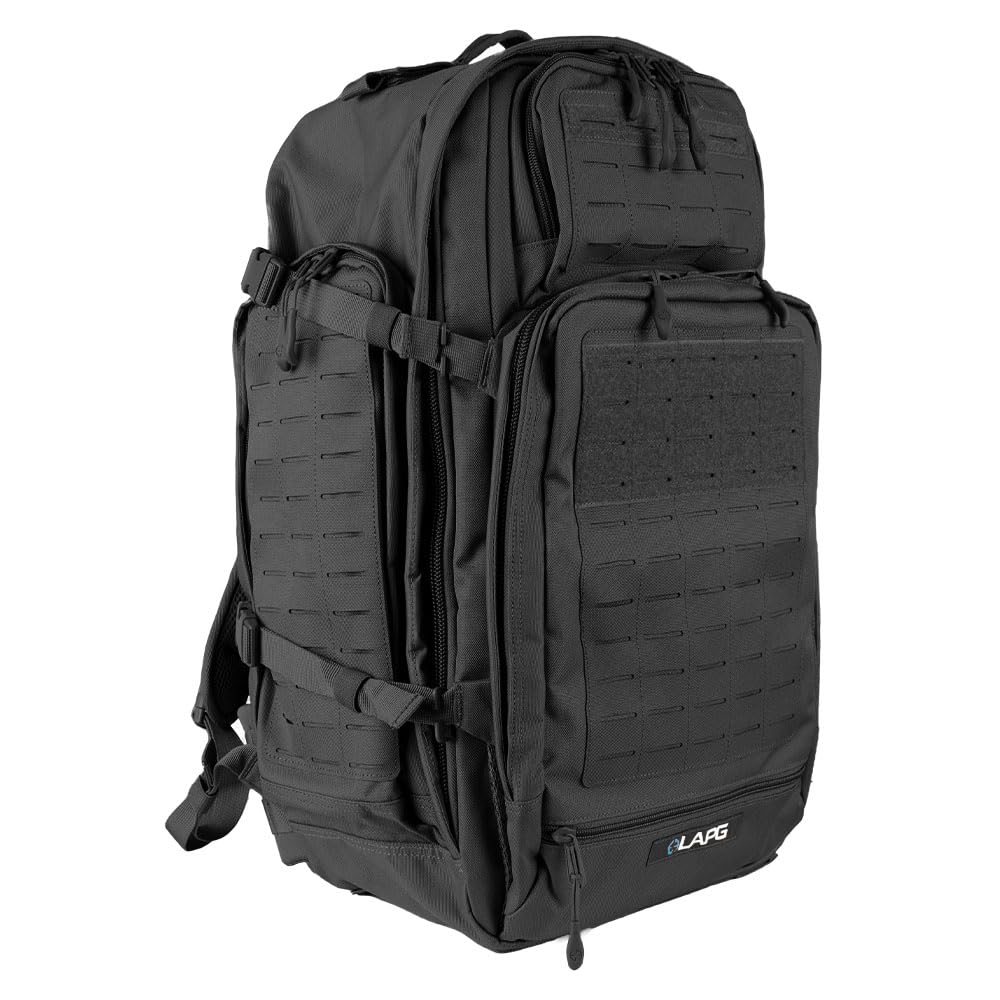
LA Police Gear’s Atlas 72 Hour is a large bug-out bag that punches above its price tier. The 900D polyester body resists tearing, and the laser-cut MOLLE paneling provides a cleaner, lower-profile attachment surface than traditional webbing. The shoulder strap system includes an adjustable chest strap that integrates with a separate tactical chest pack for front-of-body access.
Users report carrying up to 53 lbs without failure, and the removable backplate keeps the frame structure intact even on rough terrain. The main compartment is cavernous — easily swallowing a full bug-out loadout including medical kit, radio, solar charger, and food. The front fleece-lined pocket protects glasses or electronics without scratching.
The hydration tube routing conflicts with the glasses pocket, and the zipper water resistance fails in prolonged rain. Compression straps help cinch the pack down when not fully loaded, preventing the sway that oversized bags exhibit. For the price, this is the most load-capable bag under the premium tier.
Why it’s great
- Carries over 50 lbs reliably
- Laser MOLLE is sleek and functional
- Removable backplate adds structural integrity
Good to know
- Waterproofing fails at zipper seams
- Hydration tube placement conflicts with glasses pocket
4. Kelty Redwing Tactical 50L Backpack
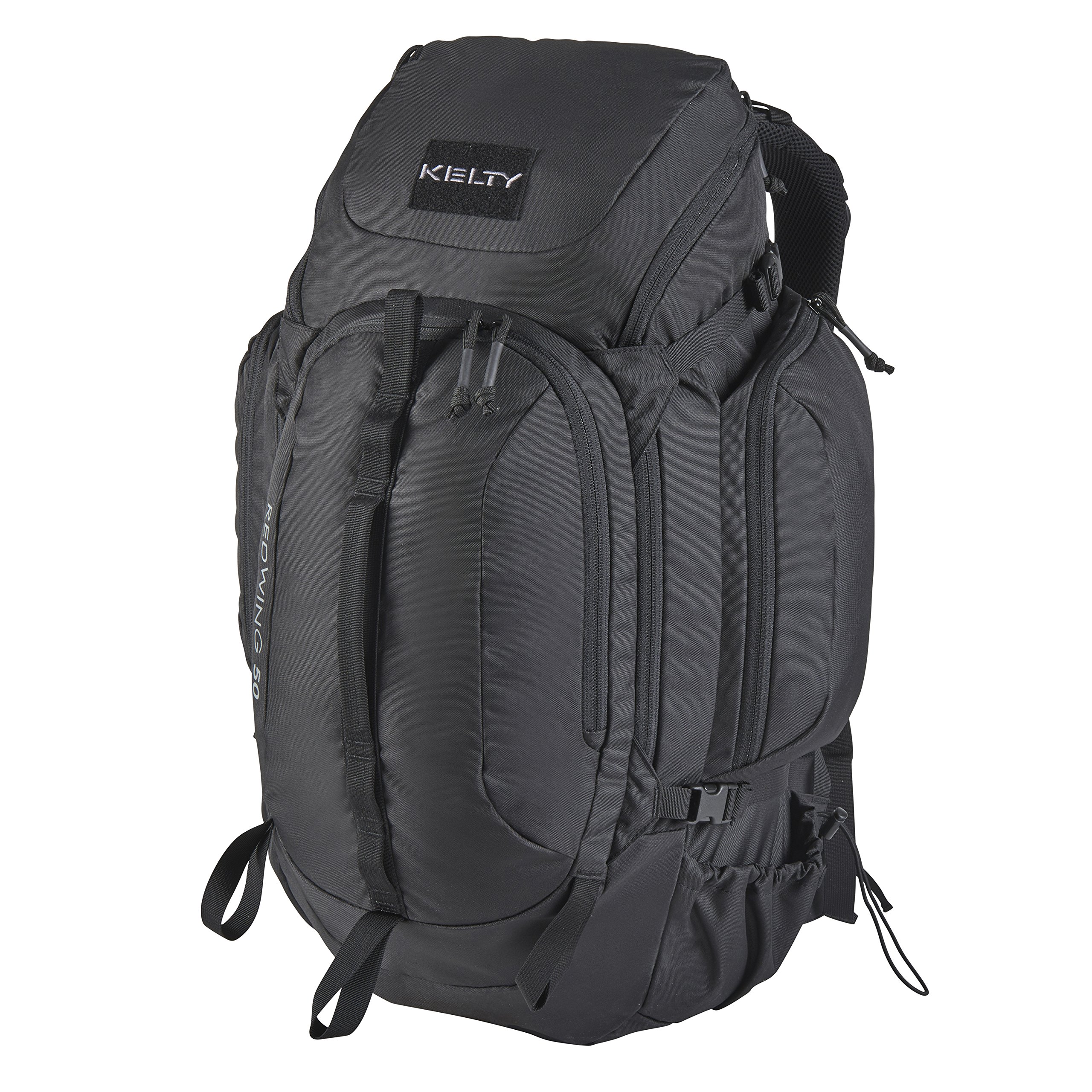
The Kelty Redwing Tactical blends MIL-SPEC durability with civilian carry comfort. Its standout feature is the hybrid-loading U-zipper design that opens the main compartment like a suitcase, making packing and unpacking a full load much faster than top-loaders. The aluminum stays inside the back panel provide a rigid structure that transfers weight down to a removable waist belt.
Side compression straps cinch the load tight against your back, and the pass-through side pockets accommodate trekking poles or an axe shaft. The Dynamic AirFlow back panel uses a mesh-covered channel system that separates your back from the pack surface, reducing sweat soak. Water bottle pockets and a top stash pocket round out the organization without overcomplicating the layout.
The 50L capacity is ideal for 2–4 day trips, and the bag handles 30+ lbs comfortably. Some users note the grab handle is poorly designed for heavy lifts, and the internal velcro wall isn’t pre-configured for gear panels. Zippers are robust but not YKK #10 — adequate for moderate loads, not pro-grade abuse.
Why it’s great
- Aluminum stays create a strong internal frame
- U-zipper design simplifies packing and access
- Removable waist belt for urban/non-tactical use
Good to know
- Zippers not rated for extreme abuse
- Grab handle lacks ergonomic shape for heavy lifts
5. MT Military ALICE Pack Large 55L

The ALICE pack design has served the U.S. military for decades, and MT’s modern reproduction honors that legacy with upgraded materials. The pack body uses high-density 1000D Oxford fabric with a two-layer PU coating for waterproofing — sturdier than the originals. The external frame is a mix of aluminum and iron, delivering both lightweight carry and the ability to lash bulky gear like bedrolls or a rucksack frame.
The large main compartment closes with a draw cord and folds under a top flap with buckles, providing a weather-tight seal. Three external lower pockets are tunneled to the main pack body so long items (tent poles, shovels) can slide between the pocket and the pack wall. The kidney pad strap on the frame helps center heavy loads against your lower back, and the quick-release buckle lets you drop the entire pack instantly in an emergency.
The top flap pocket is poorly shaped for water shedding, and the frame, while sturdy, weighs more than modern internal frame packs. This is a specialist choice for survivalists and long-haul ruckers who prefer the external frame’s gear lashing versatility and bomber construction over sleek ergonomics.
Why it’s great
- External frame allows lashing oversized gear
- 1000D Oxford + PU coating is highly water resistant
- Quick-release buckle for emergency drop
Good to know
- Top flap shape doesn’t shed rain effectively
- Frame is heavier than modern internal frame designs
6. Mardingtop 75L Cordura Internal Frame Backpack
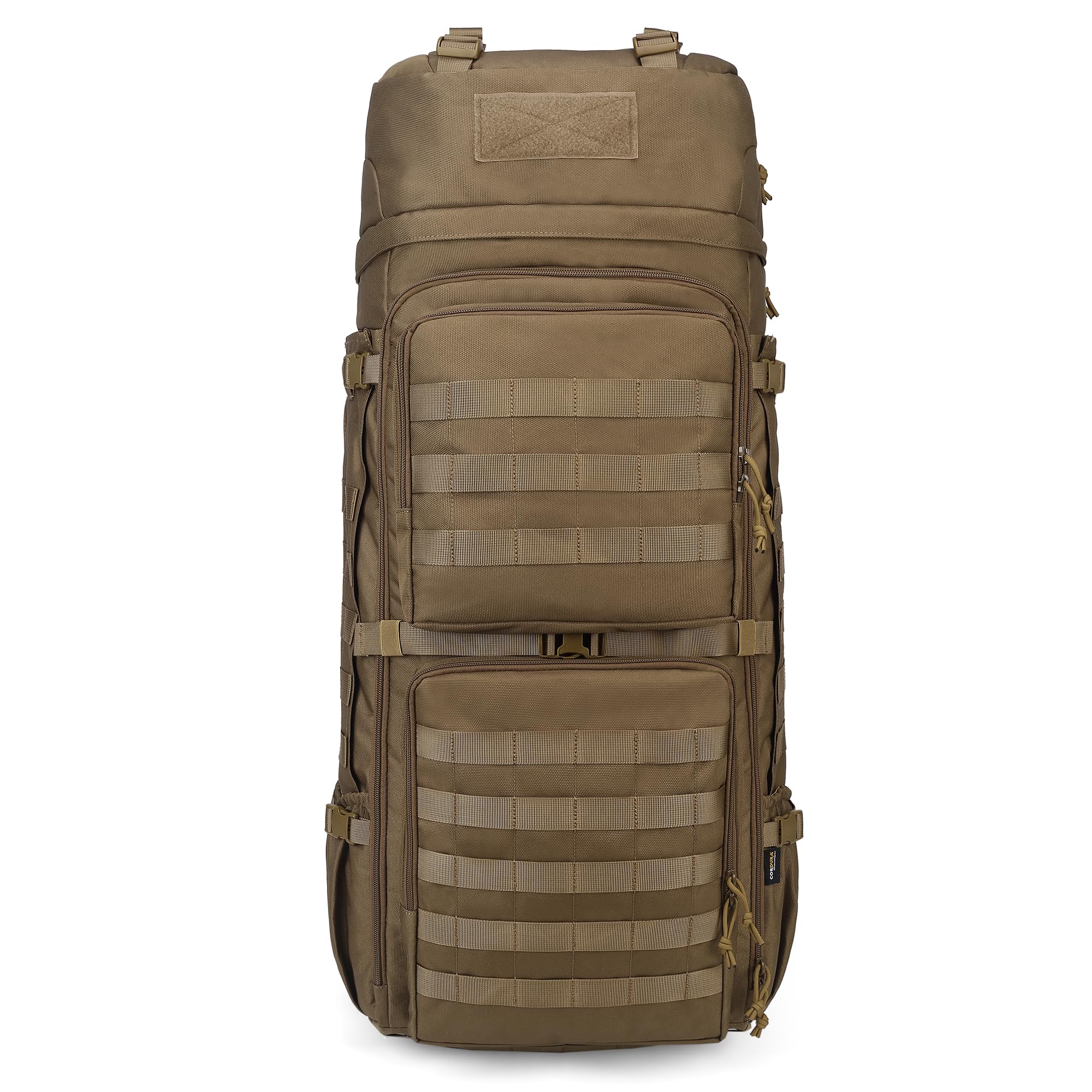
This 75L pack is the largest on this list, built for extended trips where carrying bulk is as important as carrying weight. The 915D Cordura polyester body is tough, and the YKK zippers resist snagging and failure even when the main compartment is stuffed to capacity. A RECCO rescue reflector is sewn into the pack shell — a passive device that aids avalanche and mountain rescuers — making this a smart pick for backcountry skiers and snowboarders.
The internal frame uses a plastic frame sheet plus an aluminum stay, providing enough rigidity to transfer 60+ lbs to the waist belt. The hydration compartment fits a 3-liter bladder, and the tube routing exits near the top handle. The front zipper opens the main compartment like a suitcase for quick packing, and the MOLLE system on the front panel supports additional pouches.
At 3.2 kg empty, this pack is heavier than the Osprey Rook, but the 75L volume and 60+ lb capacity justify the weight for extended trips. The waist belt padding is adequate but not premium — users who load above 60 lbs for 15+ mile days may want to add supplemental padding. A strong mid-range option for big volume needs.
Why it’s great
- 75L capacity with internal frame for heavy loads
- RECCO reflector adds backcountry safety
- YKK zippers and Cordura fabric handle abuse
Good to know
- Waist belt padding could be thicker for 60+ lbs
- Heavier than expedition-focused packs of similar volume
7. Mardingtop 60L Military Internal Frame Backpack
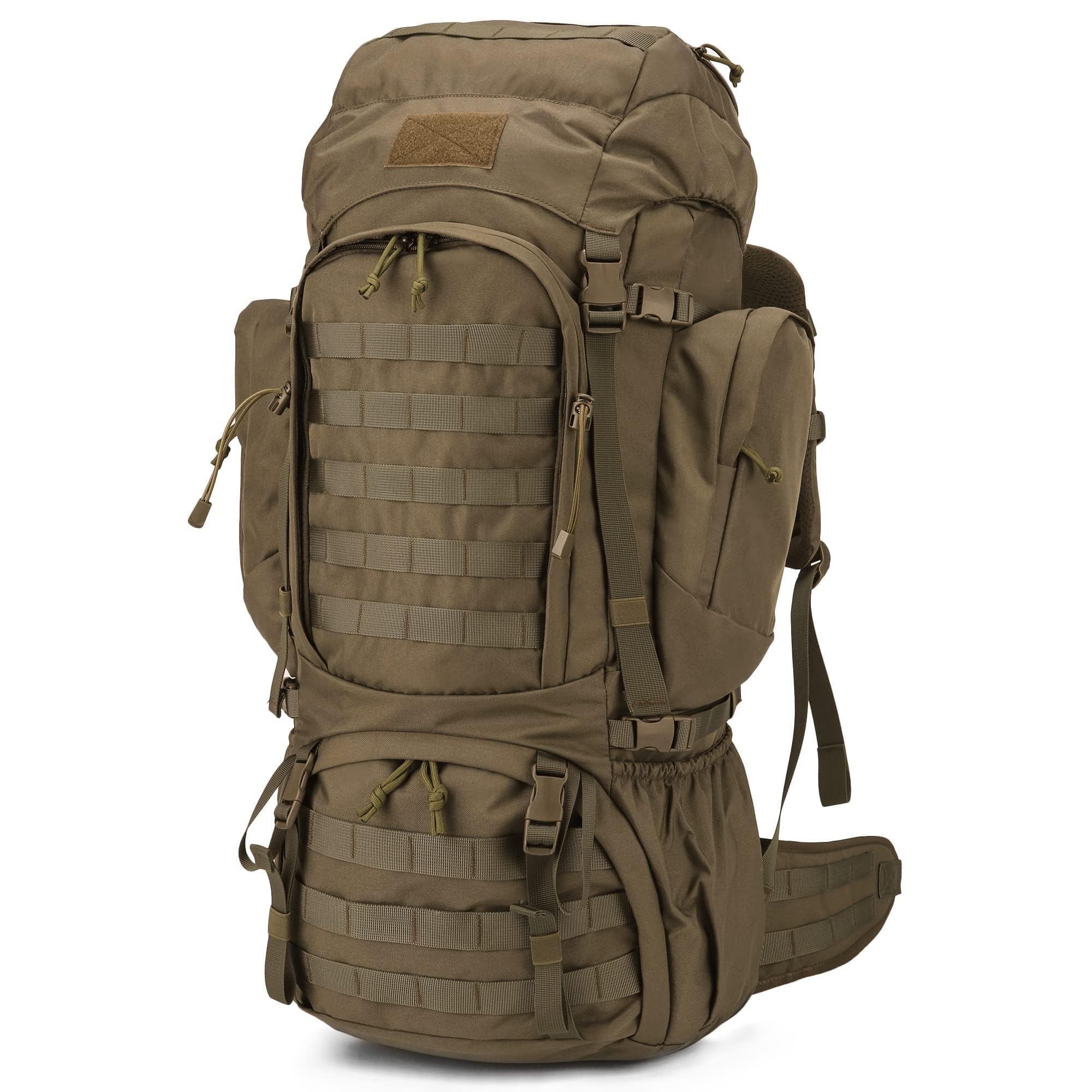
This 60L internal frame backpack is the most affordable entry point for anyone testing the heavy-load rucking waters. It uses YKK zippers, a solid material blend, and a clever expandable collar that pushes usable volume to 75L when opened. The MOLLE webbing on the front and sides lets you attach extra pouches without sewing or glue.
Users confirm it can carry up to 90 lbs over short ruck runs (1–3 miles) without tearing, though the hip belt padding is thin and can cause chafing on longer distances. The shoulder straps feel narrow for larger torsos, and the cinch straps tend to loosen under sustained heavy load. For loads under 50 lbs and distances under 10 miles, this pack provides surprising value.
The main compartment is roomy and tall — reviewers 6’2″ report good head clearance — and the internal sleeve fits a water bladder. A rain cover is included but the elastic edge is fragile. This is a budget-friendly pack ideal for beginners or as a dedicated survival kit bag that doesn’t need daily abuse.
Why it’s great
- Expandable from 60L to 75L for extra volume
- YKK zippers at a budget price point
- MOLLE system allows modular add-ons
Good to know
- Hip belt padding causes chafing on long distances
- Shoulder straps narrow for broad shoulders
FAQ
What is the maximum weight an internal frame backpack can safely carry?
Should I choose an external frame pack for heavy loads over an internal frame?
What hip belt features prevent chafing under heavy loads?
How important is torso length adjustability for a heavy pack?
Final Thoughts: The Verdict
For most users, the backpack for heavy loads winner is the Osprey Rook 65L because its LightWire frame and ventilated backpanel provide the best balance of weight transfer, comfort, and durability for 30–50 lb multi-day trips. If you need tactical toughness with modular expansion, grab the 5.11 RUSH 24 2.0. And for max volume at a mid-range price, nothing beats the Mardingtop 75L Cordura for hauling 60+ lbs of gear into the backcountry.

Mo Maruf
I created WellFizz to bridge the gap between vague wellness advice and actionable solutions. My mission is simple: to decode the research and give you practical tools you can actually use.
Beyond the data, I am a passionate traveler. I believe that stepping away from the screen to explore new environments is essential for mental clarity and physical vitality.