Our readers keep the lights on and my smoothie glass nicely filled. As an Amazon Associate, I earn from qualifying purchases.
The ultralight tent market has a dirty secret: the cheapest options shed ounces by cutting corners on fabric denier, waterproof coatings, and pole strength, leaving you with a damp, flimsy shelter that fails in a real storm. Finding a genuine budget ultralight tent that balances true trail weight with reliable weather protection is a minefield of marketing hype and deceptive specs.
I’m Mohammad Maruf — the founder and writer behind WellFizz. I’ve spent years analyzing gear specifications, comparing fabric hydrostatic head ratings, and cross-referencing real-world durability reports to separate legitimate value from disposable junk.
After meticulously evaluating over 30 models on price-to-performance ratios, packed weight, and livability features, I’ve curated a definitive guide to help you find the very best budget ultralight tent that won’t let you down when you’re miles from the trailhead.
How To Choose The Best Budget Ultralight Tent
Buying a budget ultralight tent means you’re at the intersection of weight, durability, and cost. Every ounce shaved adds dollars, so you need to know exactly which specs matter most for your terrain and season. Let’s break down the critical decisions you’ll face.
Trail Weight vs. Packaged Weight
Manufacturers love to advertise “minimum trail weight” that excludes the stuff sack, footprint, stakes, and even the rainfly. For a true ultralight experience under 3 pounds, focus on the “packaged weight” or “total weight,” which includes everything you actually carry. A tent listed at 2.2 pounds minimum weight might easily hit 3.5 pounds with stakes and groundsheet — a massive difference for your back.
Fabric Denier and Waterproof Rating
Budget tents often use 10D or 15D nylon for the fly to shave grams, but this fabric is delicate and prone to tearing against sharp rocks or pine needles. Look for a 20D floor with a minimum PU3000mm hydrostatic head rating to avoid waking up in a puddle. The rainfly should have a PU1500mm+ coating, with seam-taped construction being non-negotiable for wet weather.
Freestanding vs. Trekking Pole Design
Freestanding dome tents using aluminum poles are heavier but offer unmatched convenience — you can pitch them on dirt, sand, or wooden platforms without needing stakes. Trekking-pole tents can weigh under 2 pounds for a 2-person shelter but require properly set guylines and hard ground for stakes. If you hike with poles anyway, the weight savings are massive; if you don’t, you’ll be looking for sticks in the dark.
Quick Comparison
On smaller screens, swipe sideways to see the full table.
| Model | Category | Best For | Key Spec | Amazon |
|---|---|---|---|---|
| Kelty Grand Mesa 2P | Freestanding Dome | Reliable 3-season backpacking | 4 lbs 1 oz trail weight, 68D Polyester | Amazon |
| Naturehike Mongar Upgraded 2P | Freestanding Dome | Couples seeking roomy, feature-packed shelter | 4.19 lb packed weight, dual doors + awning | Amazon |
| OneTigris COSMITTO 2P | Freestanding Dome | Solid all-weather protection for two | 20D Ripstop Polyester, 1500mm HH | Amazon |
| Featherstone Backbone 1P | Trekking Pole | Solo thru-hikers minimizing pack weight | 2 lb 6 oz trail weight, Sil-Nylon | Amazon |
| MIER LANSHAN 1P | Trekking Pole | Ultralight solo adventurers on a lean budget | 2.1 lb trail weight, 5000mm HH fly | Amazon |
| Kelty Discovery Trail 2P | Freestanding Dome | First-time backpackers needing easy setup | 4 lb 5 oz trail weight, pressfit aluminum poles | Amazon |
| Nature Link Altair Two 2P | Trekking Pole | Budget-conscious pairs wanting a real ultralight | 2.73 lb packed weight, 20D Sil-Nylon | Amazon |
| Naturehike Star Trail 1P | Freestanding Dome | Solo hikers wanting a sub-2.5-pound pole tent | 2.3 lb total weight, 10D/20D Nylon | Amazon |
| MC TOMOUNT 1-2P | Freestanding Dome | Tall campers wanting affordable floor space | 4.4 lb packed weight, 86.6″ floor length | Amazon |
In‑Depth Reviews
1. Kelty Grand Mesa 2P

The Kelty Grand Mesa 2P hits the sweet spot where weight, durability, and price converge. With a trail weight of just over 4 pounds and a 68D polyester rainfly, it offers noticeably thicker fabric than the flimsy 10D or 15D nylon found on many ultra-budget competitors. The freestanding dome design uses two pressfit aluminum poles with Kelty’s Quick Corners, allowing a single person to get the tent fully pitched in under five minutes without crawling around on hands and knees.
This is a proven 3-season shelter that has logged serious miles on the Appalachian Trail and through rainy Pacific Northwest weekends. Reviewers consistently report it staying bone-dry during sideways rain with no condensation issues, thanks to the well-ventilated vestibule design. The 30-square-foot interior is tight for two adults with gear but genuinely comfortable for a solo camper, and the 44-inch peak height allows for easy sitting up to change clothes.
The only real trade-off is the packed size — it’s bulkier than a trekking-pole tent, measuring 16 x 7 x 7 inches. But for pure reliability and ease of use at a very accessible price point, the Grand Mesa 2P is the tent that should be on every budget backpacker’s shortlist. It’s the kind of shelter you can trust for a whole season without worrying about seam failures or snapped poles.
Why it’s great
- Thick 68D polyester fabric resists tears and UV damage better than ultralight nylons
- Color-coded clips and Quick Corners make solo setup genuinely fast — under 5 minutes
- Battened down in heavy rain with no leaks and minimal interior condensation
Good to know
- Packed size is on the larger side for true ultralight packs — 16 x 7 x 7 inches
- 2-person rating is snug for two with gear; best used as a very roomy 1-person shelter
2. Naturehike Mongar Upgraded 2P
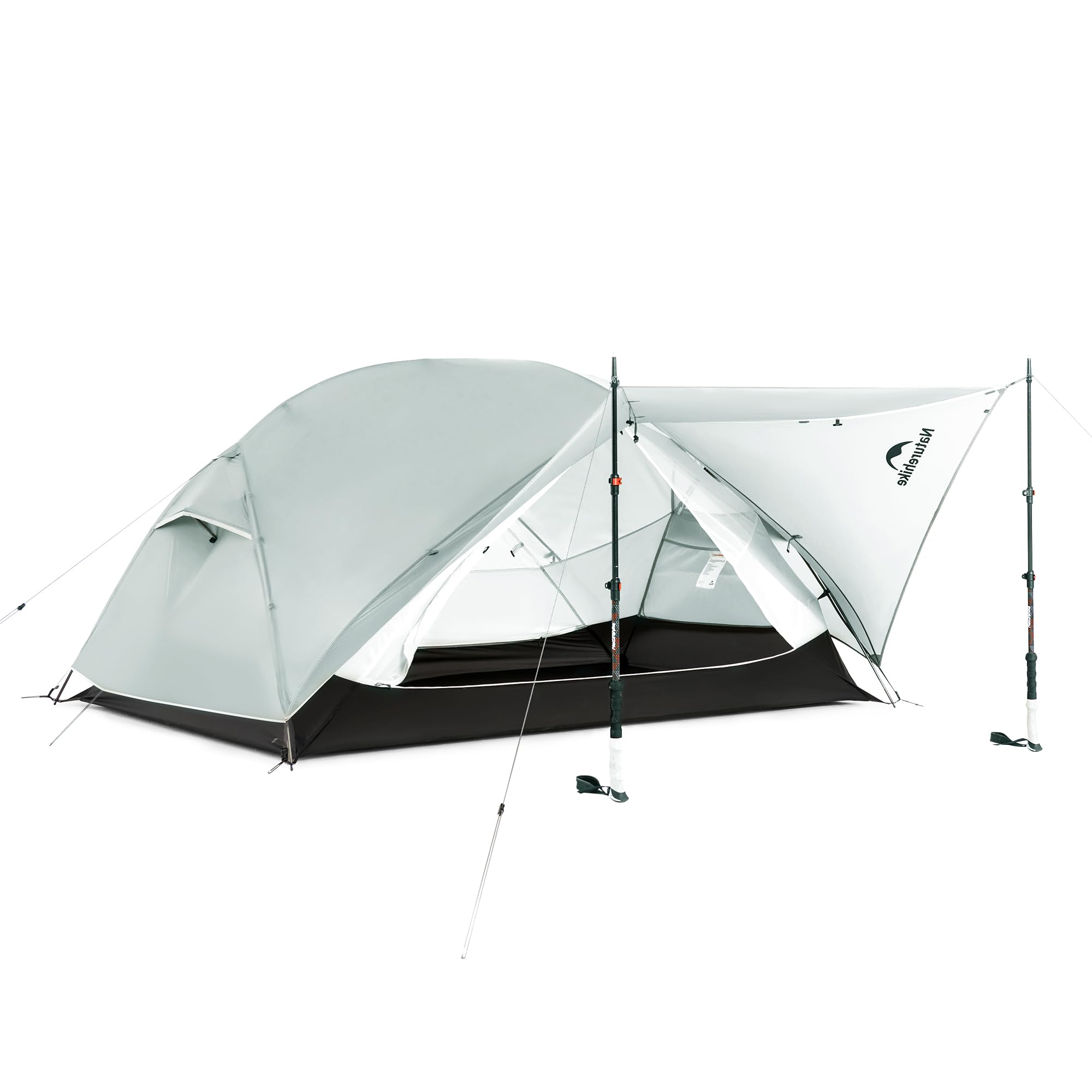
The Naturehike Mongar Upgraded 2P is one of those rare budget tents that actually feels premium in hand. The 15D nylon rainfly with a silicone coating feels supple yet strong, and the 20D floor with a PU3000mm rating gives you confidence when pitching on uneven, damp ground. The standout feature here is the expandable awning — a clever extension of the vestibule that creates a shaded cooking or sitting area when propped up with trekking poles, adding genuine campsite livability.
Inside, the 82.7 x 51.2-inch floor and 41.3-inch peak height provide ample room for two average-sized adults, plus generous headroom for sitting upright. The tent is packed with storage: dual long end pockets, triangular ceiling pockets, a clothesline, and a hook for a lantern. The double-door, double-vestibule layout means each occupant has their own entry and gear storage, which is a rarity at this price tier. Setup takes about three minutes once you learn the pole sequence.
At 4.19 pounds packed, it’s on the heavier end for a true ultralight rig, but the feature-to-weight ratio is exceptional. The non-elastic stakeout cords can be slightly fussy on uneven ground, and the zippers on the awning can snag occasionally. But for the price, this tent competes with models costing significantly more, offering an excellent balance of weather protection, space, and thoughtful design.
Why it’s great
- Expandable awning provides real camp shelter from sun and rain
- Superior stash management with multiple pockets, hook, and clothesline
- Bomber PU3000mm floor and silicone-coated fly handle heavy downpours
Good to know
- Packed weight of 4.19 lbs is heavy for dedicated gram-counters
- Awning zippers can snag the fabric; requires a patient hand
3. OneTigris COSMITTO 2P

The OneTigris COSMITTO 2P has built a strong reputation among budget-conscious backpackers who refuse to compromise on weather protection. The 20D plaid ripstop polyester rainfly with a 1500mm HH coating is paired with a 75D nylon floor that feels substantial underfoot. Real-world testing shows zero leaks after two straight weeks of rain and wind, and the hexagon-shaped outer tent provides impressive cross-wind stability that keeps the walls from flapping against the inner mesh.
Setup is genuinely a one-person job in under five minutes thanks to the three-pole architecture and thoughtful details like one-hand fly attachment clips and Line Loc 3 tensioners on the four included guy lines. The interior is 360-degree mesh, which promotes excellent airflow and almost eliminates condensation in temperate conditions. Two large internal vestibules and dual gear organizer pockets keep your sleeping area clutter-free.
The trade-off for this rugged durability is a packed weight that sits around 4.5 pounds — noticeably heavier than dedicated ultralight shelters. The zippers are also prone to snagging on the rainfly fabric if you’re not careful. However, considering the build quality, the included heavy-duty stakes, and the proven storm resistance, this tent offers outstanding value for anyone who values reliability over hitting a specific gram target.
Why it’s great
- 75D nylon floor is far more puncture-resistant than standard budget tent floors
- Line Loc 3 tensioners and reflective guylines make storm pitching fast and secure
- Hexagon dome sheds wind exceptionally well with minimal fabric flutter
Good to know
- Packed weight is closer to a heavy-duty car camping tent than a true ultralight shelter
- Rainfly zippers have a tendency to catch on the mesh; zip slowly
4. Featherstone Backbone 1P

The Featherstone Backbone 1P is a direct challenge to the notion that decent ultralight shelters must cost a fortune. Weighing just 2 pounds 6 ounces on the trail, it’s a single-wall Sil-Nylon trekking pole tent that packs down to roughly the size of a Nalgene bottle. The design uses a 40/60 pole placement that creates a generous vestibule at the head end while the tapered foot end keeps the overall footprint compact — a smart layout for solo hikers who want living space without wasted fabric.
The seam-taped construction and TPU waterproof zippers genuinely keep water out during sustained rain, though this is a single-wall shelter, so condensation is a real issue in high-humidity environments. Reviewers consistently note that the interior gets damp in cold, wet conditions unless you camp with the vents fully open. The interior is snug but functional: it accommodates a 25-inch wide sleeping pad and a 30-50 liter pack in the vestibule, and a 6-foot-4 occupant can sit upright comfortably.
This tent demands trekking poles; there’s no freestanding option. The setup is straightforward — stake the four corners, insert poles, and tension guy lines — but you need firm ground for the stakes to hold. The included Y-stakes and J-stakes are decent, but many users swap them for MSR Groundhog Minis for better holding power in loose soil. For the weight savings and price, this is one of the most compelling solo ultralight options available right now.
Why it’s great
- Sub-2.5 pound trail weight is genuinely competitive with shelters costing double
- 40/60 pole placement provides a spacious vestibule for gear storage
- Seam-taped and TPU-zippered construction keeps water out effectively
Good to know
- Single-wall design leads to significant interior condensation in humid or cold weather
- Requires trekking poles and firm ground for a stable pitch
5. MIER LANSHAN 1P
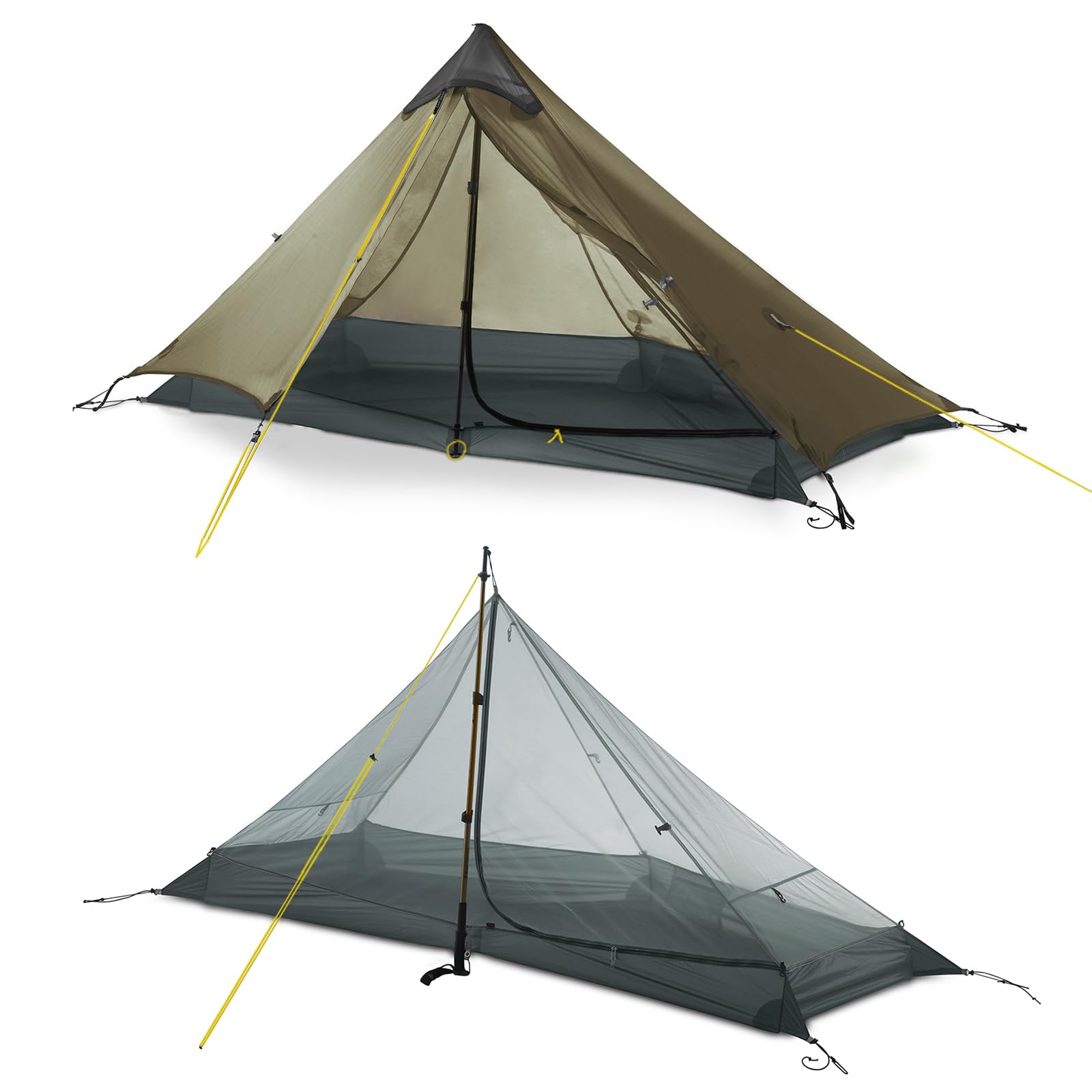
The MIER LANSHAN 1P has become something of a cult classic in the budget ultralight community, and for good reason. At just 2.1 pounds, it’s one of the lightest trekking-pole shelters available at an entry-level price. The rainfly uses 15D nylon with an impressive 5000mm HH waterproof rating — a spec you’d normally see on shelters costing much more. The bathtub floor is equally stout at 6000mm HH, meaning this tent can handle sustained downpours without a drop getting through, provided the seam sealing is done correctly.
Setup requires a bit of practice, but experienced users report getting it dialed in within 5 to 10 minutes. The full high-density mesh inner tent promotes exceptional airflow and virtually eliminates condensation in dry conditions. The peak height of 49 inches gives you room to sit up fully, and the 90-inch floor length accommodates tall sleepers up to about 6 feet 2 inches. The 1-person version is strictly solo — there’s no room for a second person — but it works well for one hiker plus a small pile of gear.
The most common complaint is that the inner tent corners use static cord instead of bungee, which makes getting a taut pitch trickier. Some units also arrive with poorly sealed stitching at the end tie-out points, requiring a dab of silicone seam sealer before the first trip. That minor DIY fix aside, the LANSHAN offers exceptional value for thru-hikers and fastpackers who want a genuinely ultralight shelter without the boutique-brand markup.
Why it’s great
- Industry-leading waterproof ratings — 5000mm HH fly and 6000mm HH floor
- Full mesh inner tent provides exceptional airflow and condensation management
- Under 2.2 pounds trail weight is genuinely competitive with premium ultralight models
Good to know
- Static cord corners mean achieving a perfect pitch requires more patience than bungee-cord designs
- Some units need aftermarket seam sealing at the fly end tie-outs to prevent water ingress
6. Kelty Discovery Trail 2P

Kelty’s Discovery Trail series is designed specifically for first-time backpackers, and the 2P model accomplishes that mission with refreshing simplicity. The pressfit aluminum poles and Quick Corner connectors make setup almost intuitive — you literally unfold the poles, clip them into the corners, and the tent stands up. The pre-attached guylines and shark-mouth stuff sack further reduce fumbling, getting you from unpacked to sleeping in under three minutes. The 33-square-foot floor is generous for one person plus gear, or cozy for two close companions.
The polyester fly is seam-taped and includes a fly vent to manage condensation. Although many budget tents in this range use a flimsy 10D or 15D fabric, Kelty opts for a more substantial woven polyester that feels less likely to tear when rubbing against branches. The 42-inch peak height is okay for sitting but not for changing clothes standing up. A 6-foot-1 camper can sleep flat without their head or feet hitting the walls, though just barely.
Customer feedback highlights the included stakes as a weak point — they bend easily in rocky or hard-packed ground and most users upgrade to aftermarket aluminum shepherd hooks. The rainfly’s internal guy lines have also been reported to rip out in sustained 40+ mph wind gusts, though the tent itself stayed anchored. For mellow 3-season trips with fair weather forecasts, this tent is a perfectly serviceable and affordable starting point.
Why it’s great
- Quick Corner system makes first-timer setup genuinely idiot-proof
- 33 sq ft floor is roomy for solo camping with gear inside
- DWR/PFC free fabric finishes align with eco-conscious values
Good to know
- Included aluminum stakes bend easily in hard ground — budget for a stake upgrade
- Rainfly guy line attachments can tear out in high winds
7. Nature Link Altair Two 2P

The Nature Link Altair Two 2P is a heavyweight contender in the budget ultralight space for pairs. Weighing in at just 2.73 pounds for a full 2-person shelter, it’s one of the most weight-efficient trekking-pole tents at this price point. The 20D ripstop Sil-Nylon fly carries a 3000mm HH waterproof coating, and the bathtub floor is seam-sealed to prevent leaks. The full-coverage removable fly combined with two large high vents does an admirable job of managing moisture while keeping the interior protected from sideways rain.
The floor measures 86.6 x 50 inches, which accommodates two full-sized sleeping pads with almost no wasted space — but expect to be lying shoulder-to-shoulder. The 47-inch peak height offers genuine sitting room for both occupants. The dual vestibules provide enough space for two backpacks and boots to stay dry while not crowding the sleeping area. Setup, once you get the hang of it, takes about 10 minutes with two trekking poles set to 47 inches.
The biggest letdown is the supplied stakes — they bend or break easily, which is a common theme among budget tents. A few users have also mentioned that the single interior ridgeline loop limits gear hanging options. The quality of the Sil-Nylon and the seam taping is impressive for the price, and the tent has survived near-tornado conditions in Wyoming according to one reviewer. For pairs who already hike with trekking poles, this is an exceptional weight-saving choice.
Why it’s great
- Sub-3-pound total weight for a true 2-person shelter is remarkable at this price
- 3000mm HH Sil-Nylon fly and seam-sealed floor offer robust weather protection
- Two large high vents effectively manage condensation in humid conditions
Good to know
- Included stakes are borderline useless — plan to swap for Groundhogs or equivalent
- Only one interior ridgeline loop limits lantern and gear hanging flexibility
8. Naturehike Star Trail 1P
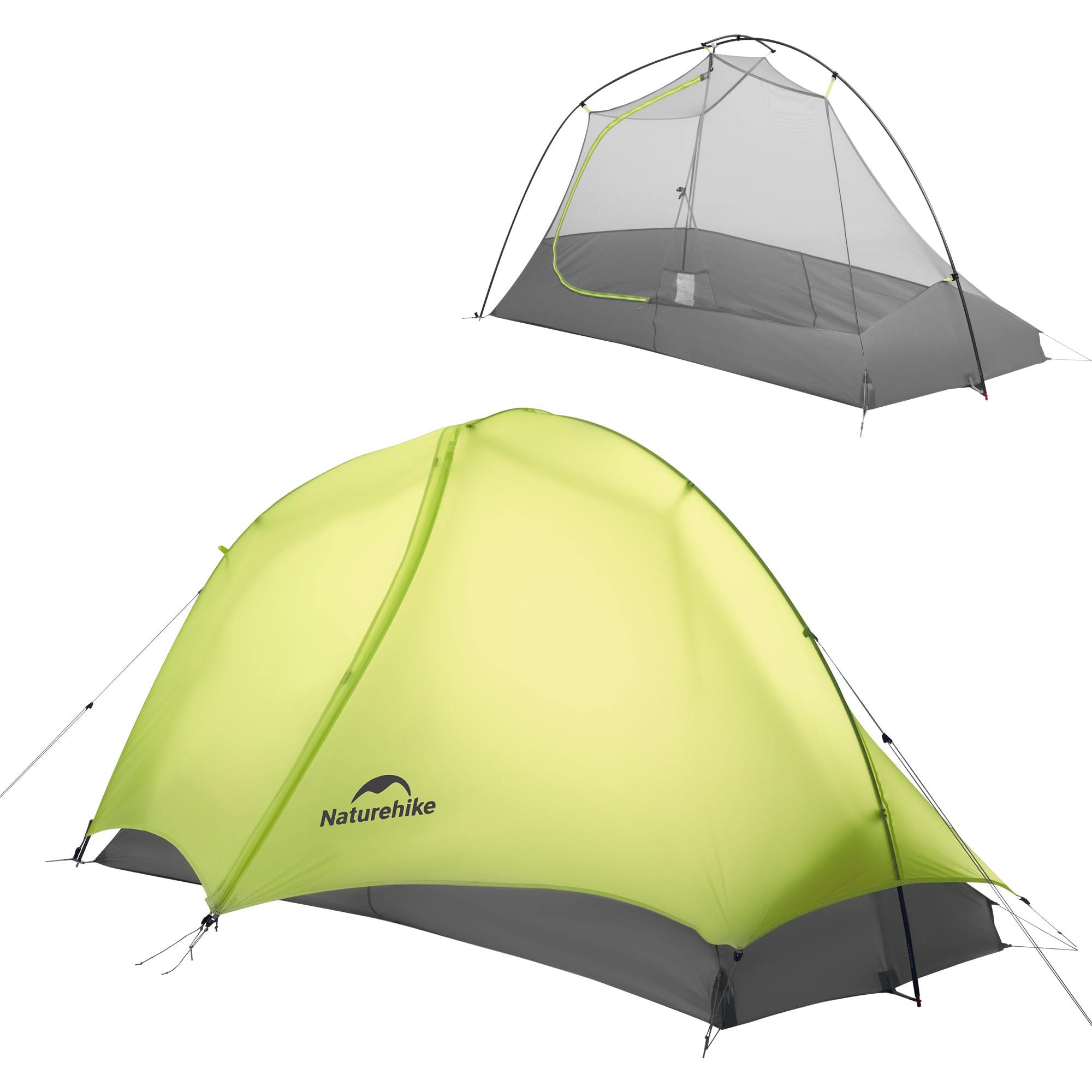
The Naturehike Star Trail 1P is built for the solo backpacker who wants a freestanding dome tent that weighs almost nothing but doesn’t break the bank. Tipping the scales at just 2.3 pounds — including poles, stakes, and stuff sack — it’s one of the rare sub-2.5-pound freestanding models at a very accessible price point. The fly is made from 10D nylon with a PU1500mm waterproof coating, while the floor uses 20D nylon with a much more reassuring PU3000mm rating. A footprint is included in the package, which is a nice bonus that saves you an extra purchase.
The full-coverage mesh inner tent provides excellent bug protection and airflow, making it a great choice for warm-weather hikes and summer camping. The elevated clearance design keeps the mesh off the ground, reducing the chance of mud splatter. Setup is fast — about 3 minutes — thanks to a nearly standard cross-pole dome architecture. The interior is spacious for one person, with enough room for a sleeping pad and a small bag of gear.
Where the Star Trail shows its budget roots is in the fabric’s durability. The 10D nylon fly is very thin — it demands careful site selection and handling to avoid tears. The stuff sack and pole sack also tore on some users’ first trips, which raises concerns about long-term longevity. The bright yellow color also draws insects, according to one reviewer. For the ultra-light gram counter who treats their gear gently, this tent is a fantastic deal; for rough-and-tumble bushwhackers, a heavier fabric might be a smarter investment.
Why it’s great
- Freestanding dome under 2.5 pounds total weight is very rare at this price
- Full-coverage mesh inner tent delivers excellent ventilation for humid summer trips
- Includes a footprint and compression strap in the package — no extra purchase needed
Good to know
- 10D nylon fly is fragile; requires careful handling and site selection
- Stuff sack and pole sack can tear with regular use, reducing packability
9. MC TOMOUNT 1-2P

The MC TOMOUNT 1-2P is a freestanding dome tent that prioritizes floor space over pack weight, making it a compelling option for taller campers who feel cramped in typical ultralight shelters. The 86.6-inch floor length comfortably accommodates sleepers up to 6 feet 4 inches, and the 53-inch width is generous enough for two average-sized adults or a single camper plus a large dog. The 45-inch peak height allows for comfortable sitting, though not standing.
The 20D nylon fabric with PU3000mm coating on the floor offers solid waterproofing for the price, and the cross-pole aluminum frame provides good wind resistance. The inclusion of extended vestibule space at both doors is a welcome feature, giving you storage for muddy boots and a backpack without crowding the sleeping area. Setup is simple: cross two poles, clip the inner tent, and throw on the fly — a process that takes under 5 minutes even for a first-timer.
The trade-offs are clear: at 4.4 pounds, this is not a tent for gram-counting thru-hikers. The packed size is also chunky at 17.3 x 7.5 inches, making it better suited for motorcycle camping or short backpacking trips where weight isn’t the primary constraint. The included storage bag is generously sized, which helps with packing but adds bulk. For its target audience — solo hikers who value space over ounces or budget-conscious couples wanting a roomy shelter — the MC TOMOUNT delivers strong value.
Why it’s great
- 86.6-inch floor length comfortably fits very tall sleepers up to 6’4″
- Extended vestibule space at both doors keeps gear dry and organized
- Simple cross-pole design sets up fast with minimal fuss
Good to know
- 4.4-pound packed weight is heavy for genuine ultralight backpacking
- Packed size is relatively bulky; best for motorcycle or car-accessible camps
FAQ
Is a 10D nylon rainfly durable enough for a budget ultralight tent?
How do I fix condensation in a single-wall budget tre king pole tent?
Can I use a budget ultralight tent in winter snow conditions?
What’s the best way to seal seams on a budget tent that leaks?
Final Thoughts: The Verdict
For most users, the budget ultralight tent winner is the Kelty Grand Mesa 2P because it delivers a proven, durable freestanding design that balances weight, ease of setup, and weather protection. If you prioritize the lightest possible shelter and already carry trekking poles, grab the Featherstone Backbone 1P for its sub-2.5-pound trail weight. And for pairs wanting to split the load without splitting up, the Nature Link Altair Two 2P offers the best weight-to-space ratio for two hikers on a tight budget.

Mo Maruf
I created WellFizz to bridge the gap between vague wellness advice and actionable solutions. My mission is simple: to decode the research and give you practical tools you can actually use.
Beyond the data, I am a passionate traveler. I believe that stepping away from the screen to explore new environments is essential for mental clarity and physical vitality.