Our readers keep the lights on and my smoothie glass nicely filled. As an Amazon Associate, I earn from qualifying purchases.
The VR headset market is littered with overpriced promises, but finding a capable device that doesn’t demand a second mortgage is a skill. The real trick isn’t finding a cheap headset—it’s finding one with the right display resolution, processor, and ecosystem support that won’t leave you with a paperweight after the first week.
I’m Mohammad Maruf — the founder and writer behind WellFizz. I’ve spent years analyzing the hardware specifications that actually matter in consumer electronics, from lens types and field of view to tracking cameras and refresh rates.
After dissecting display panels, processor performance, and controller ecosystems across dozens of models, I’ve identified the ones that deliver genuine value without cutting corners that ruin the experience. This guide to the best budget vr headset separates the worthwhile options from the ones that will collect dust.
How To Choose The Best Budget VR Headset
A budget VR headset isn’t just about the lowest sticker price—it’s about finding the sweet spot where cost meets critical performance. You need to weigh the platform (standalone vs. PC-powered), the visual fidelity (resolution and refresh rate), and the tracking system without paying for unnecessary frills.
Standalone vs. PC-Tethered: The Real Cost of Entry
Standalone headsets like the Meta Quest series contain the processor and battery inside the device, meaning you pay one price and you’re done—no expensive gaming PC required. PC-tethered headsets like the PSVR2 or HTC Vive series offload processing to a console or computer, which often delivers higher graphical fidelity but demands you already own (or buy) a powerful PS5 or gaming PC. For a true budget entry, standalone is almost always the smarter financial move.
Resolution, Refresh Rate, and Panel Type
Display resolution per eye determines how sharp text and objects appear—look for at least 1832 x 1920 per eye. Refresh rate (measured in Hz) affects smoothness and comfort; 90Hz is the baseline for minimizing motion sickness. Panel type matters too: OLED panels like those in the PSVR2 deliver deep blacks and vibrant colors, while LCD panels in many budget headsets are generally brighter and more resistant to burn-in, though with less contrast.
Tracking: Inside-Out vs. External Sensors
Inside-out tracking uses cameras on the headset itself to map your room and track controller positions—no external base stations needed. This is the standard for budget headsets because it simplifies setup and reduces total cost. External sensor tracking (like with older PC VR setups) offers higher precision but requires mounting hardware and dedicated space, which adds both cost and complexity that a budget-focused buyer should typically avoid.
Quick Comparison
On smaller screens, swipe sideways to see the full table.
| Model | Category | Best For | Key Spec | Amazon |
|---|---|---|---|---|
| Meta Quest 3S 128GB | Standalone | All-around wireless VR | 2064 x 2208 per eye | Amazon |
| Meta Quest 2 (128GB) | Standalone | Entry-level standalone VR | 1832 x 1920 per eye | Amazon |
| Meta Quest 2 256GB Bundle | Standalone | Extended storage & accessories | 1832 x 1920 per eye | Amazon |
| PlayStation VR2 Headset | Console-tethered | PS5 owners wanting high fidelity | 2000 x 2040 per eye | Amazon |
| PSVR Horizon Bundle | Console-tethered | PS5 immersive gaming bundle | 2000 x 2040 per eye | Amazon |
| HTC Vive XR Elite | Mixed Reality/PC | Premium MR & PC VR | 1920 x 1920 per eye | Amazon |
| HTC Vive Focus Vision | Mixed Reality/PC | High-end standalone & PC VR | 2448 x 2448 per eye | Amazon |
| PlayStation VR Headset Bundle | Console-tethered | PS4 legacy VR gaming | 960 x 1080 per eye | Amazon |
| Oculus Rift S | PC-tethered | PC VR sim racing & flight | 1280 x 1440 per eye | Amazon |
In‑Depth Reviews
1. Meta Quest 3S 128GB
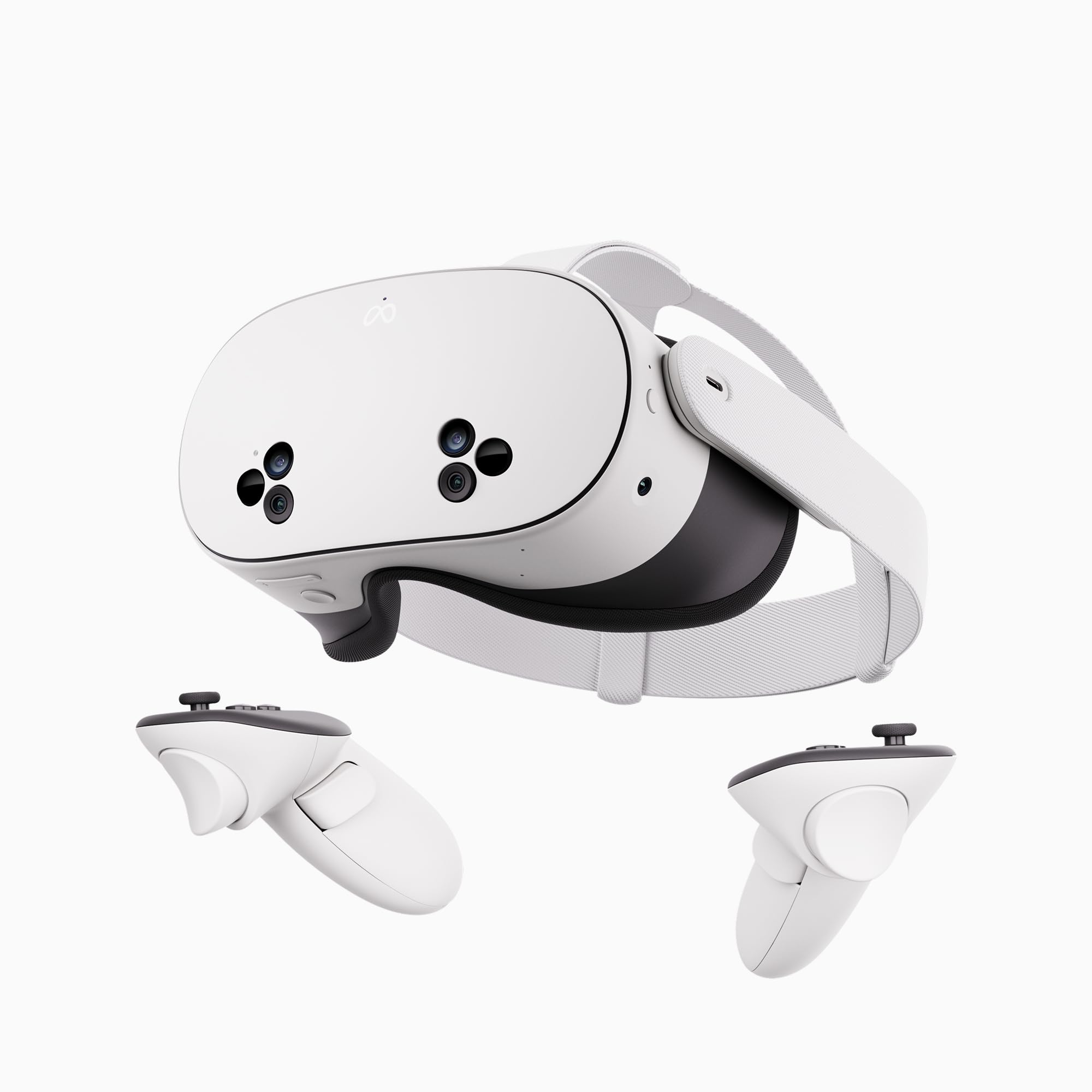
The Meta Quest 3S delivers a stunning 2064 x 2208 pixels per eye resolution, powered by the Snapdragon XR2 Gen 2 processor that handles high-fidelity gaming without breaking a sweat. Its dual RGB passthrough cameras enable mixed reality experiences that blend digital objects with your physical space, making it a true all-in-one device for both gaming and productivity. The 128GB storage is ample for a solid library of titles, and the wireless freedom eliminates the tripping hazard of cords.
Battery life stretches past two hours for continuous play, and the 90Hz refresh rate keeps motion smooth enough to stave off nausea during fast-paced action games. The controller tracking is responsive and accurate, with no external sensors required thanks to the inside-out tracking system. Setup is straightforward—charge, pair, and download games from the Meta store within minutes.
This renewed unit offers a significant discount over retail while maintaining premium performance. The only real compromise is that you are buying a refurbished unit, but the condition reported by buyers is consistently excellent. For a budget-conscious buyer who refuses to sacrifice modern VR features like color passthrough and high-resolution displays, this is the headset to beat.
Why it’s great
- High resolution (2064 x 2208 per eye) with sharp clarity
- Wireless standalone design with inside-out tracking
- Full-color passthrough mixed reality support
Good to know
- Renewed unit may show minor cosmetic wear
- Requires Meta/Facebook account for use
2. Meta Quest 2 128GB

The Meta Quest 2 remains the benchmark for entry-level standalone VR, offering a 1832 x 1920 resolution per eye through a fast-switch LCD panel with a 90Hz refresh rate. It’s powered by the Qualcomm Snapdragon XR2 Gen 1 processor, which still handles the vast majority of the Quest library without stutter, including titles like Beat Saber and Resident Evil 4 VR. The 128GB storage is a practical size for most users, and the wireless freedom is a core feature that many PC-tethered competitors lack.
The inside-out tracking system uses four IR cameras on the headset to map your play space and track the Touch controllers with impressive precision. The Guardian system is intuitive, alerting you when you approach the boundaries of your designated play area. The headset is lightweight but the stock strap can feel front-heavy during extended sessions, so a third-party head strap is a common upgrade worth considering.
Battery life hovers around two to three hours depending on the intensity of the app, and the USB-C charging is convenient. The main downside is the requirement for a Meta account login, which has been a privacy concern for some users. Still, at this price point, the Quest 2 delivers a complete VR ecosystem that is hard to beat for pure value.
Why it’s great
- Excellent standalone performance for the price
- Large game library with over 500 titles
- Wireless with inside-out tracking, no PC needed
Good to know
- Stock strap can be uncomfortable for long sessions
- Requires Meta account to operate
3. HTC Vive Focus Vision
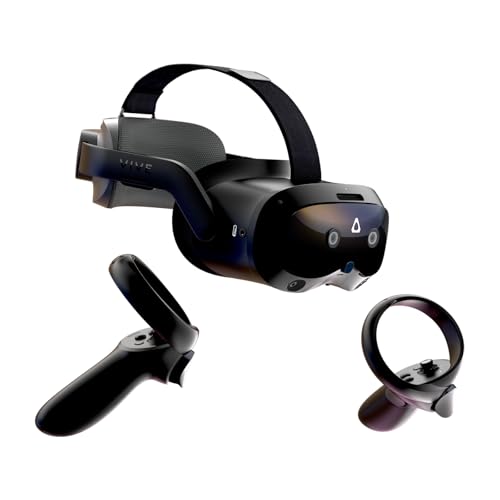
The HTC Vive Focus Vision steps in as a premium all-in-one headset with a 5K combined resolution (2448 x 2448 pixels per eye) and a 120-degree field of view that rivals desktop VR setups. Its LCD panel runs at 90Hz, and the inclusion of auto-IPD adjustment ensures the lenses align perfectly with your pupils for the clearest possible image. The device also supports DisplayPort mode for low-latency PC VR gaming, giving you the flexibility of both standalone and tethered use.
Built-in eye tracking and a depth sensor enable advanced mixed reality interactions, and the hot-swappable battery design means you can keep playing by swapping batteries without powering down the headset. The controllers are responsive, and the 3D spatial audio with open-back drivers provides an immersive soundstage. The device also comes with 10 free games included in the box, which adds immediate value.
On the downside, the setup process is more complex than the Quest series, and some users have reported inconsistencies with the PC connection cable and auto-IPD calibration. The price is significantly higher than other budget options, but for buyers who want high-end specs like auto-IPD, eye tracking, and a wide FOV in a standalone package, the Focus Vision delivers where others cannot.
Why it’s great
- 5K resolution with exceptional clarity (2448 x 2448 per eye)
- Auto-IPD adjustment and built-in eye tracking
- Hot-swappable battery for extended play sessions
Good to know
- High price relative to other standalone headsets
- PC connection via DisplayPort can be finicky
4. Sony PlayStation VR2 Headset (Renewed)

The PlayStation VR2 brings console-grade virtual reality to the PS5, featuring an OLED display delivering 2000 x 2040 pixels per eye with a 90/120Hz refresh rate and a 110-degree field of view. The HDR support on the OLED panel provides deep blacks and vibrant colors that LCD-based headsets struggle to match, making horror games and atmospheric titles truly immersive. The headset includes haptic feedback and eye tracking, which adds a layer of interactivity that is unique to this platform.
Setup is plug-and-play for PS5 owners—connect the single USB-C cable and you’re ready to go. The controllers feature adaptive triggers and finger-touch detection, similar to the DualSense controller, which makes interactions feel more physical. The library includes exclusives like Horizon Call of the Mountain and Gran Turismo 7, which are optimized to take full advantage of the hardware.
As a renewed unit, the value proposition is strong, but buyers should verify the unit is fully functional upon arrival, as refurbished items can occasionally have quirks. The headset is tethered to the PS5, so it lacks the portability of standalone headsets. For PS5 owners seeking the best visual fidelity without buying a gaming PC, the PSVR2 is a compelling choice.
Why it’s great
- OLED HDR display with deep blacks and vibrant colors
- Eye tracking and haptic headset feedback
- Seamless integration with PS5 console
Good to know
- Requires a PS5—no standalone or PC compatibility
- Renewed unit quality can vary; verify firmware updates
5. Meta Quest 2 256GB Bundle
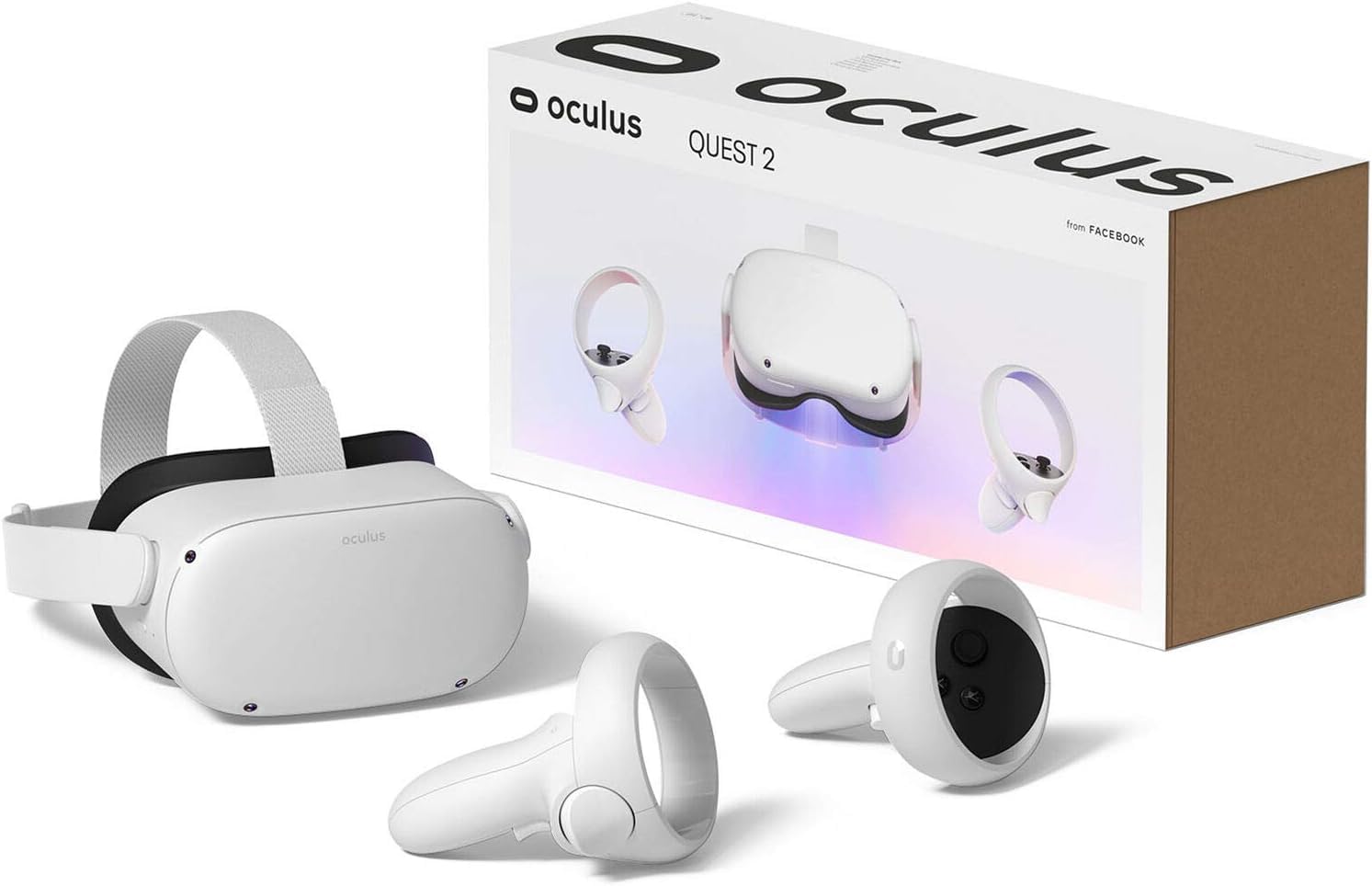
This bundle takes the tried-and-true Meta Quest 2 platform and adds double the storage at 256GB, plus four microfiber cleaning cloths for lens maintenance. The 1832 x 1920 per eye LCD display and 90Hz refresh rate remain competitive, and the Snapdragon XR2 Gen 1 processor ensures smooth performance across the entire Quest library. The extra storage is a practical upgrade for users who intend to download many games and media files without constantly managing space.
The bundle includes the standard Quest 2 accessories: two Touch controllers, a charging cable, a power adapter, and a glasses spacer. The inclusion of cleaning cloths is a minor but welcome addition, as lens smudges are a common annoyance in VR. The headset supports wireless PC streaming via Oculus AirLink for those who want to access SteamVR titles on a capable gaming computer.
Downsides mirror the standard Quest 2—the stock strap causes discomfort during long sessions, and a Meta account is mandatory. Some buyers have reported units arriving with charging issues, so testing immediately upon receipt is advised. For families or heavy downloaders, the 256GB capacity and bundled extras make this a practical value play.
Why it’s great
- 256GB storage for extensive game libraries
- Includes microfiber cleaning cloths for lens care
- Same proven Quest 2 performance and ecosystem
Good to know
- Stock head strap can cause discomfort over time
- Requires Meta account; some units have had charging issues
6. HTC Vive XR Elite with Deluxe Pack

The HTC Vive XR Elite is a premium mixed reality headset that combines standalone VR with PC VR capabilities, featuring dual 1920 x 1920 LCD displays running at 90Hz. Its standout feature is the stepless diopter adjustment, which allows users to tune the lenses to their vision without requiring glasses, a significant ergonomic advantage. The Deluxe Pack adds a face gasket, a deluxe strap, temple clips, and an MR gasket, improving comfort and light blocking.
With four wide FOV tracking cameras, the headset offers base-station-free inside-out tracking, and the hot-swappable battery provides up to two hours of continuous use. The full-color passthrough camera with depth sensor enables convincing mixed reality experiences. The device is remarkably compact and lightweight, making it one of the most comfortable headsets for extended use in this class.
The price is a significant step up from entry-level options, and some users have reported that the standalone performance lags behind the Meta Quest 3. Additionally, the battery life is average, and the face tracking option requires an additional module. For buyers prioritizing comfort, diopter adjustment, and high-quality mixed reality over raw gaming performance, the Vive XR Elite is a focused tool.
Why it’s great
- Diopter adjustment eliminates need for glasses inside headset
- Compact, lightweight design for comfortable extended wear
- High-quality color passthrough mixed reality
Good to know
- Higher price than comparable standalone headsets
- Standalone performance not as strong as Meta Quest 3
7. Oculus Rift S

The Oculus Rift S is a PC-tethered VR headset that served as the bridge between the original Rift and the Quest series, featuring dual 1280 x 1440 LCD panels with an 80Hz refresh rate. It uses inside-out tracking through five cameras on the headset, eliminating the need for external sensors while still delivering reliable six-degree-of-freedom positional tracking. The display is a step down in resolution from modern standalone headsets, but for PC VR gaming, it remains functional.
Setup requires a VR-ready PC with a DisplayPort output and a USB 3.0 port. The integrated audio solution is adequate, and the halo-style headband provides decent weight distribution. The Rift S is best suited for sim racing and flight simulator enthusiasts who want a wired connection for zero latency and prefer using a PC over a console.
Tracking can be finicky—some users report occasional disconnects requiring a USB 3.0 PCIe card, and the controller battery life is short compared to modern standards. The Rift S is discontinued, and the Meta software ecosystem has shifted focus to the Quest line, meaning future support may be limited. For budget buyers with a VR-ready PC who want a dedicated PC VR headset, this is a niche option worth considering only at a deep discount.
Why it’s great
- No external base stations needed for room-scale tracking
- Wired connection eliminates latency for PC VR gaming
- Comfortable halo-style headband design
Good to know
- Low resolution (1280 x 1440 per eye) by modern standards
- Requires VR-ready PC with DisplayPort; may need USB PCIe card
8. PlayStation VR Headset + Camera Bundle (Renewed)

The original PlayStation VR (PSVR) is a legacy VR headset designed for the PS4, featuring an OLED display with a 960 x 1080 resolution per eye and a 100/120Hz refresh rate. The included PlayStation Camera is required for tracking, and the bundle includes the headset, camera, and demo disc for a complete starter package. The OLED panel delivers rich colors and deep blacks that surpass many LCD-based budget headsets, despite the low resolution.
Setup is straightforward for PS4 and PS5 users—connect the camera to the console, plug the headset into the processor unit, and connect the processor unit to the console via HDMI and USB. The lightweight design means it can be worn comfortably for longer sessions, and the 110-degree field of view is respectable for its generation. The game library includes iconic titles like Astro Bot Rescue Mission and Blood & Truth.
The resolution is a major drawback—text appears blurry, and fine details are lost compared to modern headsets. The PSVR also requires the processor unit box, which adds cable clutter. Additionally, the renewed unit may come with cosmetic wear and is not compatible with PS5 games designed for the PSVR2. This headset is best for PS4 owners wanting an inexpensive entry into VR without upgrading their console.
Why it’s great
- OLED panel with good contrast and colors for a legacy headset
- Lightweight and comfortable for extended sessions
- Great entry price for PS4 VR gaming
Good to know
- Low resolution (960 x 1080 per eye) results in blurry visuals
- Requires PS4 or PS5 with adapter; processor unit adds cables
9. PlayStation VR2 Horizon Call of The Mountain Bundle

The PlayStation VR2 Horizon Call of The Mountain Bundle pairs Sony’s latest VR headset with the flagship launch title, offering a complete PS5 VR experience out of the box. The headset features the same 2000 x 2040 per eye OLED display with HDR support and a 110-degree field of view, capable of running at 90Hz or 120Hz. The bundle includes the Horizon game code, making it a simple buy-and-play package for new users.
Eye tracking is integrated into the headset, enabling foveated rendering that improves performance by reducing rendering detail where you aren’t looking. The haptic feedback in the headset and the adaptive triggers in the controllers add a tactile layer to gameplay that is absent in most other headsets. Horizon Call of the Mountain showcases these features with climbing mechanics and combat that leverage the controller’s finger-touch detection.
The downside remains the dependency on a PS5, and the price is higher than the base PSVR2 bundle. Some users have reported issues with controller tracking in specific games, and the Fresnel lenses can cause some glare and god rays in high-contrast scenes. For PS5 owners who want the best exclusive VR content and the highest visual fidelity available on console, this bundle is the most straightforward path.
Why it’s great
- Includes Horizon Call of the Mountain game code
- OLED HDR display with 2000 x 2040 per eye resolution
- Eye tracking with foveated rendering and haptic feedback
Good to know
- Requires PS5—not compatible with PS4 or PC
- Fresnel lenses can produce glare in bright scenes
FAQ
Can I use a budget VR headset without a PC or console?
How much storage do I need in a budget VR headset?
Will a budget VR headset work with my eyeglasses?
Do I need a Facebook or Meta account to use a budget VR headset?
Final Thoughts: The Verdict
For most users, the best budget vr headset winner is the Meta Quest 3S because it delivers a high-resolution 2064 x 2208 per eye display, the latest Snapdragon XR2 Gen 2 processor, and wireless standalone freedom at a price that undercuts premium competitors. If you want the proven ecosystem and massive game library at the lowest entry cost, grab the Meta Quest 2. And for PS5 owners who prioritize console-driven fidelity with OLED HDR visuals, nothing beats the PlayStation VR2 Horizon Bundle.

Mo Maruf
I created WellFizz to bridge the gap between vague wellness advice and actionable solutions. My mission is simple: to decode the research and give you practical tools you can actually use.
Beyond the data, I am a passionate traveler. I believe that stepping away from the screen to explore new environments is essential for mental clarity and physical vitality.