Our readers keep the lights on and my smoothie glass nicely filled. As an Amazon Associate, I earn from qualifying purchases.
The moment your baby takes those first wobbly steps, the wrong shoe can actually hinder their natural gait. The tiny footwear market is flooded with stiff, narrow designs that look cute but restrict the foot’s ability to grip, flex, and sense the ground — the exact opposite of what a new walker needs. Choosing a pair that mimics barefoot movement isn’t a trend; it’s a developmental necessity that affects balance, arch strength, and confidence on every surface.
I’m Mohammad Maruf — the founder and writer behind WellFizz. I’ve spent years analyzing how product design impacts early childhood motor development, breaking down the foam densities, sole flexibility ratings, and toe-box shapes that separate genuine barefoot shoes from fashion accessories.
After reviewing dozens of models based on sole thinness, width-to-length ratios, and real parent feedback, these five picks stand out as the most reliable options for protecting developing feet. This is your guide to finding the best baby shoes that support natural movement without compromising on safety or durability.
How To Choose The Best Baby Shoes
Selecting the right shoe for a beginning walker is more about what you take away than what you add. Stiff soles, narrow toe boxes, and heavy cushioning prevent the foot from moving naturally. Focus on three core principles: room for toe splay, a flexible zero-drop base, and a secure but gentle closure system. Each factor directly affects a child’s stability and willingness to explore.
Toe Box Width and Shape
A shoe that tapers at the toes compresses the metatarsals and restricts the natural spreading motion that provides balance. Look for designs described as “wide toe box” or “barefoot” style — these allow toes to splay outward when bearing weight. Measure the widest part of your child’s foot and compare it to the shoe’s internal width; a thumb’s width of extra space at the front is ideal.
Sole Flexibility and Drop Height
The sole should bend easily at the ball of the foot, not at the arch. A zero-drop heel (flat from heel to toe) maintains the foot in its natural walking posture. Thin, textured rubber outsoles provide grip without elevating the foot too far from the ground, preserving sensory feedback that helps toddlers adjust their stride on uneven surfaces.
Closure and Material
Velcro straps offer the best adjustability for chubby or high-instep feet, but the hook-and-loop quality varies widely. Strong, wide straps with multiple attachment points prevent the shoe from twisting during active play. Breathable canvas or knit mesh uppers reduce sweat and blisters, while machine-washable construction saves time when inevitable dirt and food stains accumulate.
Quick Comparison
On smaller screens, swipe sideways to see the full table.
| Model | Category | Best For | Key Spec | Amazon |
|---|---|---|---|---|
| STQ KIDS Wide Toe Box Zero Drop | Barefoot | Natural gait development | Zero-drop TPR outsole | Amazon |
| Stride Rite Nick | Classic | PT-recommended support | Removable insole | Amazon |
| MORENDL Walking Socks | Sock-Shoe | Machine-washable durability | Knit upper, washable | Amazon |
| Baby Boy Girl Infant Sneaker | First Walker | Wide fit on a budget | Swishy insole cushion | Amazon |
| STQ KIDS Canvas Barefoot | Budget Barefoot | Affordable wide-toe option | Canvas upper, non-slip | Amazon |
In‑Depth Reviews
1. STQ KIDS Wide Toe Box Zero Drop (Toddler Barefoot)
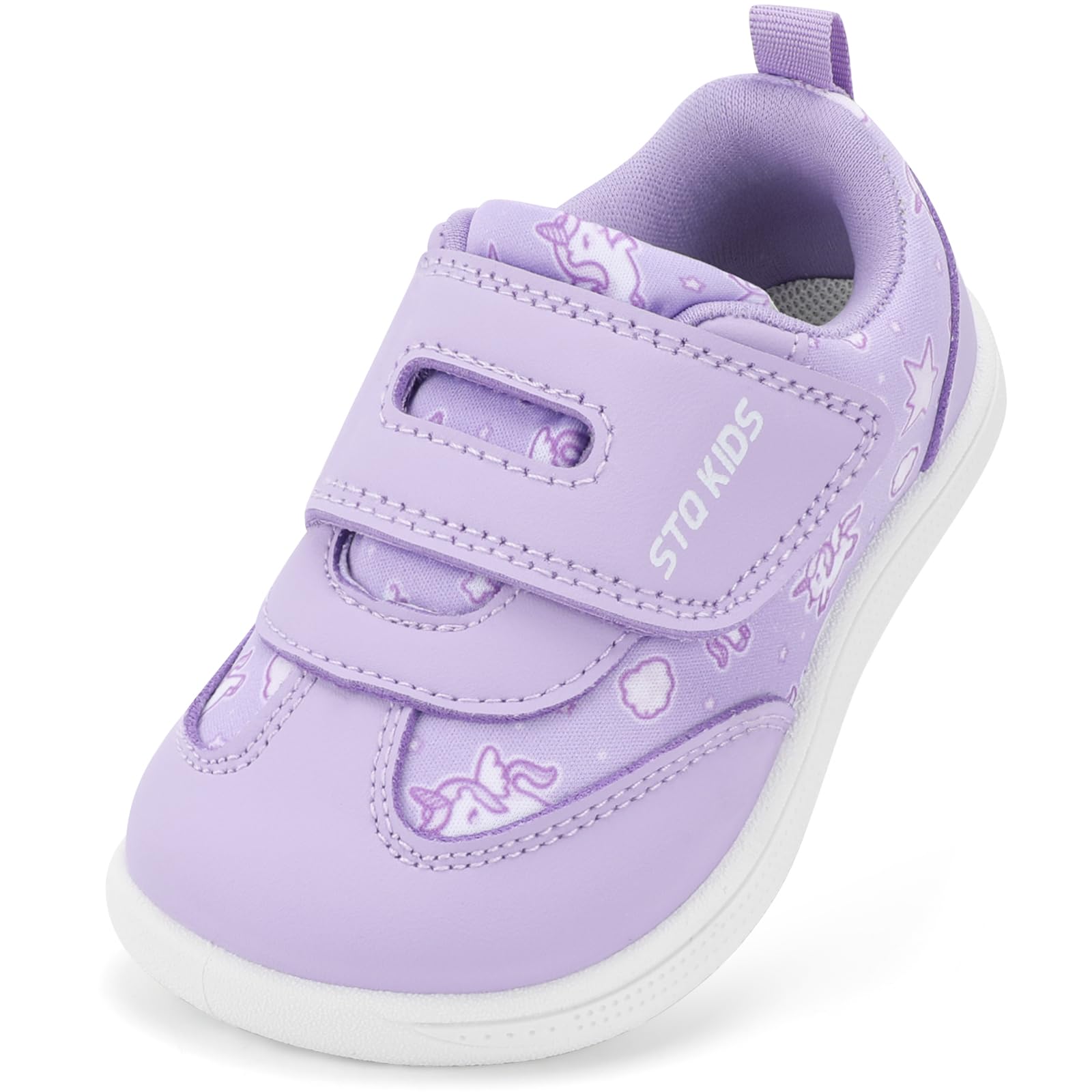
The STQ KIDS Wide Toe Box model is engineered around the principle that toddlers need to feel the ground to walk confidently. Its zero-drop sole keeps the foot perfectly flat, while the wide toe box allows toes to splay naturally with every step — a critical detail that most mass-market sneakers ignore. The flexible TPR outsole provides just enough traction without adding stiffness.
Parents consistently praise how the velcro straps offer multiple attachment points, making it difficult for toddlers to kick them off mid-walk. The lightweight construction (noticeably lighter than standard crib shoes) means less fatigue during extended play sessions. Reviewers also note that natural foot spread has visibly improved after switching to this style from narrower brands.
Durability holds up well against daily use on grass, pavement, and indoor surfaces. The sole shows minimal wear even after several weeks of active crawling and walking. One minor consideration is that the sizing runs slightly short for kids with very long, narrow feet — measure carefully using the removable insole as a guide before ordering.
Why it’s great
- Genuine zero-drop base encourages natural walking posture
- Wide toe box with room for toe splay and balance
- Easy velcro closure with strong grip, hard to remove by child
Good to know
- Sizing may be short for very narrow feet
- Limited color options compared to mainstream brands
2. Stride Rite Baby Boys’ Nick (Infant/Toddler)
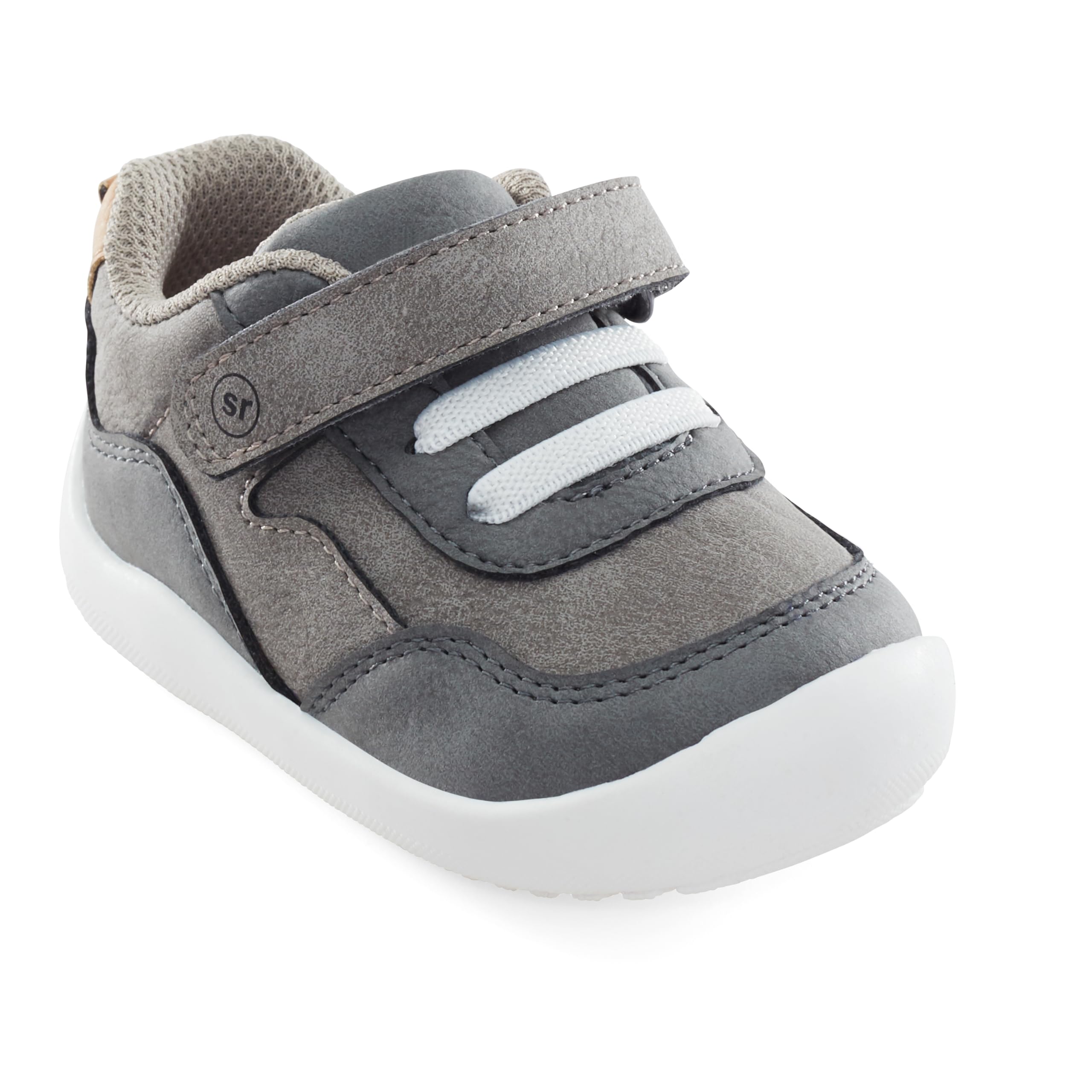
The Stride Rite Nick has earned a strong reputation among pediatric physical therapists for good reason. Its flexible sole bends precisely where the foot naturally folds, and the wide toe box offers ample space for toe spread without being baggy. The removable insole is a standout feature — it allows parents to check how much growing room remains and can be taken out entirely to accommodate a wider foot.
Build quality is noticeably higher than typical budget options, with stitched panels that resist fraying even after five months of daily wear. The sturdy heel counter provides gentle rear-foot stability without forcing the foot into an unnatural position. Parents report that toddlers who tripped frequently in other shoes gained confidence within days of switching to the Nick.
The main trade-off is that the Stride Rite line does not produce larger toddler sizes, making this a short-term investment. Some buyers also note that the gray color, while versatile, shows scuff marks more readily than darker alternatives. For early walkers needing structured support, however, this shoe delivers unmatched fit consistency.
Why it’s great
- Removable insole simplifies fit checks and width adjustment
- Physical therapist recommended for gait development
- Exceptional durability with minimal wear after months of use
Good to know
- Not available in larger toddler sizes
- Light color may show scuffs more easily
3. MORENDL Baby Toddler Walking Socks

The MORENDL Walking Socks merge the convenience of a sock with the protection of a shoe, creating a hybrid that solves the “shoes that won’t stay on” problem for good. The stretchy knit upper conforms to chubby toddler feet without pressure points, while the non-slip printed sole provides grip on hardwood and tile. Parents who own this model report that their toddlers stop trying to remove them within minutes.
True to its sock-shoe design, this model survives the washing machine repeatedly without losing shape or elasticity. The breathable knit prevents sweat accumulation, which is a common complaint with leather or synthetic baby shoes. Reviewers also highlight the wide base — the shoe flares slightly at the bottom, offering a stable platform that reduces tripping compared to narrower styles.
The lack of a structured heel cup means this shoe offers less lateral support than a traditional sneaker, so it’s best for indoor use and supervised outdoor play. Some parents wish the rubber dots on the sole were thicker for better grip on wet surfaces. For active toddlers who need a shoe that stays put and cleans easily, this is a top-tier lightweight option.
Why it’s great
- Machine-washable without losing shape or grip
- Stretchy knit perfect for chubby, wide feet
- Soft, breathable material reduces sweat and irritation
Good to know
- Minimal heel support for unstructured outdoor use
- Rubber grip dots wear faster on rough pavement
4. STQ KIDS Canvas Barefoot Shoes
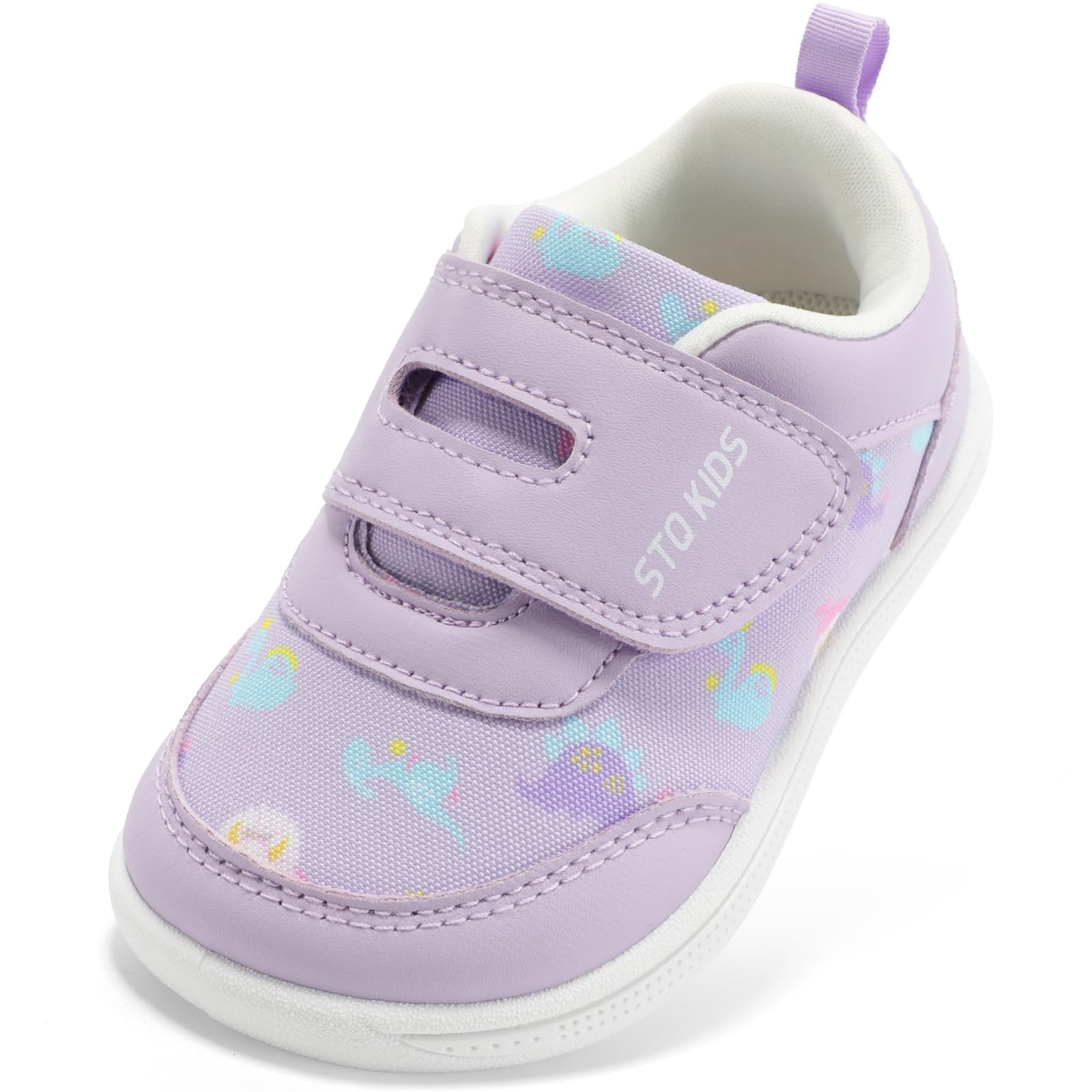
The STQ KIDS Canvas Barefoot shoes bring barefoot design principles to a price point that makes experimentation easy for budget-conscious parents. The canvas upper is lightweight and breathable, while the thin non-slip rubber outsole offers just enough protection for indoor and light outdoor walking. The wide toe room accommodates chunky toddler feet without squeezing the sides.
Reviewers consistently mention that these shoes stay put during active play, a rarity in the budget segment where cheap velcro often fails. The strong hook-and-loop closure uses a wide strap that anchors securely across the instep. One buyer with a 5.5-inch foot confirmed that the size 7 wide option provided a comfortable fit without heel slipping.
The velcro is notably stiff, which makes it harder for a three-year-old to open independently — a plus for parents wanting to prevent shoe removal, but a drawback for kids learning self-dressing. The canvas material picks up stains more easily than synthetic blends, though a quick wipe usually removes surface dirt. For an entry-level barefoot shoe that actually fits wide feet, this is a surprisingly capable option.
Why it’s great
- Affordable entry into wide-toe barefoot design
- Strong velcro strap prevents shoe loss during play
- Lightweight canvas construction for natural foot movement
Good to know
- Velcro is difficult for toddlers to open independently
- Canvas exterior shows stains more readily
5. Baby Boy Girl Infant Non Slip Sneakers

This infant sneaker strikes a practical balance between a traditional crib shoe and a modern barefoot design. The wide toe box and highly flexible sole allow natural foot movement, while the swishy insole adds a subtle cushion that some new walkers find reassuring. The stretchy elastic laces combined with a velcro strap make on-and-off quick for parents without sacrificing security.
What makes this model stand out among first-walker options is its ability to stay on feet that other shoes slip right off. The heel cup is shaped to grip without pressure, and the overall fit is snug without being restrictive. Parents of 12-month-olds who have tried multiple brands often report that this is the first shoe their child did not immediately remove.
Long-term durability is the main unknown with this model — early review data focuses on initial comfort and fit, with limited feedback on how the sole holds up after heavy use. The sizing also runs slightly small; the 18-24 month option aligns more closely with a standard toddler size 6, so ordering up is advisable. For the price, it delivers excellent comfort and fit for cautious walkers.
Why it’s great
- Stays securely on feet better than most first-walker shoes
- Wide toe box combined with flexible sole for natural gait
- Swishy insole offers gentle cushion for new walkers
Good to know
- Sizing runs small — order one size up
- Long-term sole durability still unconfirmed by reviews
FAQ
How much toe room should a baby shoe have?
When should I switch from soft-soled shoes to structured ones?
Are barefoot-style baby shoes safe for outdoor use?
Final Thoughts: The Verdict
For most families, the best baby shoes winner is the STQ KIDS Wide Toe Box Zero Drop because it combines genuine barefoot design with easy velcro closure and a lightweight TPR outsole at a mid-range price. If your child needs a physical therapist-recommended model with a removable insole for precise fit checks, grab the Stride Rite Nick. And for a machine-washable shoe that stays on the active toddler who hates footwear, nothing beats the MORENDL Walking Socks.

Mo Maruf
I created WellFizz to bridge the gap between vague wellness advice and actionable solutions. My mission is simple: to decode the research and give you practical tools you can actually use.
Beyond the data, I am a passionate traveler. I believe that stepping away from the screen to explore new environments is essential for mental clarity and physical vitality.