Our readers keep the lights on and my smoothie glass nicely filled. As an Amazon Associate, I earn from qualifying purchases.
A flickering grid, a silent refrigerator, and the sudden realization that your home’s dependence on utility power leaves you vulnerable during every storm, heatwave, or grid failure. Home backup isn’t about convenience—it’s about maintaining normalcy when the world outside goes dark. The right battery system bridges that gap, shifting from silent sentinel to active power source in milliseconds, keeping your lights on, your food cold, and your life uninterrupted without the fumes, noise, or maintenance of a gas generator.
I’m Mohammad Maruf — the founder and writer behind WellFizz. I’ve spent over a decade analyzing residential energy storage systems, inverter topologies, battery chemistries, and real-world backup scenarios to help homeowners separate marketing wattage from usable capacity.
Whether you need whole-house coverage or essential circuit support, choosing the right battery for home backup means matching chemistry, capacity, voltage, and recharge speed to your actual outage risks.
How To Choose The Best Battery For Home Backup
Not all kilowatt-hours are created equal. A battery that works for a weekend camper may fail catastrophically during a multi-day winter outage. Focus on these four factors to match a system to your home’s actual load profile.
Capacity and Expandability
Capacity is measured in watt-hours (Wh) or kilowatt-hours (kWh). A 3,000Wh (3kWh) unit might run a refrigerator for 8–12 hours, while a 10kWh+ system can cover critical loads for days. Expandability matters: some systems allow daisy-chaining extra battery packs to scale from 3.6kWh to 48kWh or more, letting you start modestly and grow as needs or budget allow. Fixed-capacity units offer simplicity but no upgrade path.
Output Power: Continuous vs. Surge
Continuous wattage is what the inverter can sustain indefinitely. Surge wattage handles motor startups—refrigerator compressors, well pumps, and AC units all draw 2–5x their running power for a split second. A battery rated 3,600W continuous may need 7,200W surge to start a 1HP pump. Check both numbers. For 240V appliances like a dryer or central AC, confirm the battery supports split-phase output (120V/240V) rather than just 120V.
Chemistry and Cycle Life
LiFePO₄ (lithium iron phosphate) is the gold standard for home backup, offering 3,500–6,000 cycles before degrading to 80% capacity—roughly 10 years of daily use. Older NMC (nickel manganese cobalt) chemistries offer higher density but shorter cycle life and greater thermal risk. Lead-acid remains cheapest upfront but dies within 300–500 cycles and loses capacity in cold weather. Avoid any system that doesn’t specify chemistry or cycle rating.
Recharge Speed and Solar Compatibility
A battery that takes 12 hours to recharge is useless for back-to-back outages. Look for systems that accept both AC wall charging (1,800W–3,000W) and solar input (1,000W–4,000W). Hybrid charging—simultaneous AC + solar—cuts recharge time to under two hours on premium models. Verify the solar input voltage range matches your panels; high-voltage strings (120V–450V) are more efficient than low-voltage 12V/24V inputs.
Quick Comparison
On smaller screens, swipe sideways to see the full table.
| Model | Category | Best For | Key Spec | Amazon |
|---|---|---|---|---|
| Jackery HomePower 3600 Plus | Mid-Range | Easy rolling around home | 3,584Wh LFP, 3,600W | Amazon |
| EF ECOFLOW DELTA Pro | Mid-Range | Expandable home + work | 3,600Wh, 3,600W, 25kWh max | Amazon |
| Jackery HomePower 3000 + Panels | Mid-Range | Solar-ready compact backup | 3,072Wh, 3,600W / 7,200W surge | Amazon |
| OUPES Guardian 6000 | Mid-Range | 240V whole-house ready | 4,608Wh, 6,000W, 41kWh max | Amazon |
| Anker SOLIX F3800 | Mid-Range | High-power 240V + EV charge | 3,840Wh, 6,000W, 26.9kWh max | Amazon |
| EF ECOFLOW DELTA Pro 3 | Mid-Range | Silent whole-home + solar | 4,096Wh, 4,000W, 48kWh max | Amazon |
| Jackery 5000 Plus | Premium | Extended 13-day backup | 5,040Wh, 7,200W, 60kWh max | Amazon |
| OSCAL PowerMax 6000 | Premium | Fast solar + 240V woodshop | 3,600Wh, 6,000W, 2,400W solar in | Amazon |
| GROWATT HELIOS 3600 x2 | Premium | Dual-unit 240V whole-home | 7,200Wh total, 7,200W, 36kWh max | Amazon |
| Westinghouse 28kW Tri-Fuel | Premium | High-wattage 240V whole-house | 28,000W peak, 20,000W running | Amazon |
| EF ECOFLOW DELTA Pro Ultra | Premium | Massive 90kWh expandability | 6,144Wh base, 7,200W, 90kWh max | Amazon |
| Generac Guardian 10kW | Premium | Permanent propane/NG backup | 10,000W running, 100A switch | Amazon |
| ECO-WORTHY Cubix100 6-Pack | Budget-Friendly | Off-grid whole-home server rack | 30.72kWh, 48V, 600Ah total | Amazon |
In‑Depth Reviews
1. Jackery HomePower 3600 Plus

Jackery’s HomePower 3600 Plus hits the sweet spot for most homeowners seeking a first battery backup. Its 3,584Wh LiFePO₄ pack is rated for 6,000 cycles—good for a decade of daily use—and the 3,600W continuous output handles a fridge, freezer, lights, and a CPAP simultaneously. The luggage-style design with telescoping handle and wheels makes it the most portable 3.6kWh unit on the market, weighing 34% less than comparable models.
Recharge flexibility sets this apart: hybrid AC+DC fills the battery from empty in two hours, while solar input at 1,200W works with standard panels. Real-world testing shows it powers a fridge for 1–2 days and a full household load for 15+ hours. The ≤20ms UPS transfer keeps sensitive electronics like medical devices and network gear running without a glitch during the switch from grid to battery.
At 77 pounds, it’s manageable for rolling from garage to kitchen, though lifting into a truck bed is a two-person job. The lack of 240V output means you can’t run a well pump or central AC, but for 120V essential circuits, this is the most refined portable solution available today.
Why it’s great
- Industry-leading portability with integrated hand truck
- Fast 2-hour hybrid recharge
- 6,000-cycle LFP battery for 10-year lifespan
Good to know
- No 240V output for well pumps or ACs
- Heavy enough to require care when lifting
- Expansion limited to 21kWh, not as scalable as competitors
2. EF ECOFLOW DELTA Pro
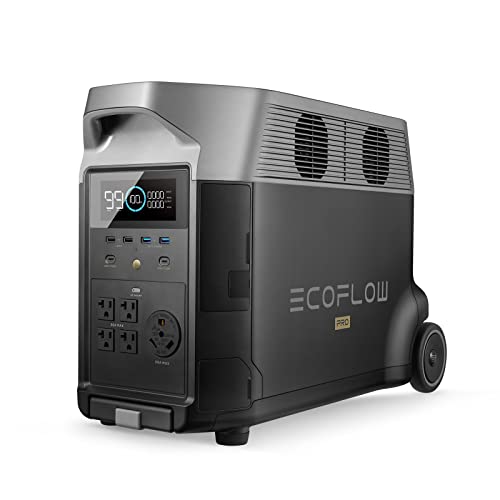
The original DELTA Pro remains a benchmark for modular home backup. Its 3,600Wh base expands to 25kWh with extra batteries, and X-Boost technology pushes AC output to 4,500W—enough to start a 1HP sump pump or run a large window AC. Five 120V outlets plus USB-C 100W, USB-A, and Anderson ports cover every device in the house simultaneously.
X-Stream fast charging refills the battery in 2.7 hours via a standard wall outlet, and solar input up to 1,600W pairs with four 400W panels for off-grid recharging. The app gives granular control over charge limits, discharge schedules, and load monitoring. Real-world users report running an oxygen concentrator for 7 hours or a fridge-freezer combo for 24+ hours without issue.
At 99 pounds, it’s substantially heavier than the Jackery, and the lack of 240V output limits high-draw appliance support. The battery management system is robust but the fan noise, while quiet, is noticeable in a bedroom. For users who want the most expandable 120V ecosystem, this is the proven workhorse.
Why it’s great
- Expandable from 3.6kWh to 25kWh
- X-Boost handles motor startup surges
- Fast 2.7-hour wall recharge
Good to know
- Heavy at 99 pounds; no integrated wheels
- No 240V output
- Older NMC chemistry in some batches; confirm LFP
3. Jackery HomePower 3000 + 2x 200W Panels
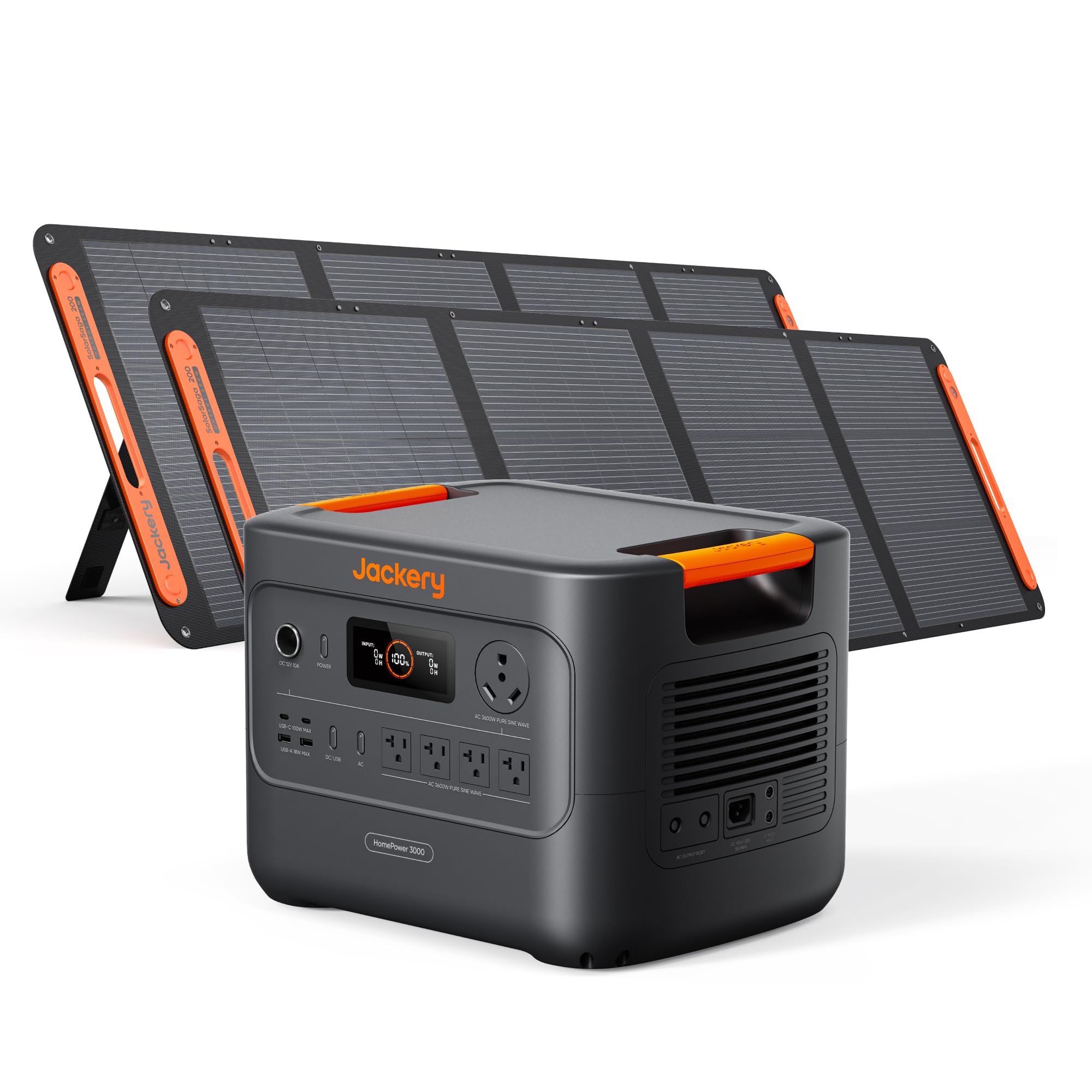
The HomePower 3000 bundle includes two SolarSaga 200W panels, making it the simplest turnkey solar backup for homeowners who want to ditch fuel entirely. The 3,072Wh LFP battery handles 3,600W continuous with a 7,200W surge—plenty for a fridge, TV, router, lights, and phone charging for up to 15 hours. CTB (cell-to-body) technology shrinks the footprint 47% compared to earlier models.
ChargeShield 2.0 AI algorithms optimize charging speed and battery health, delivering 4,000 cycles to 70% capacity. Solar recharge from the two 200W panels hits 80% in about 9 hours on a sunny day, while AC charging fills in 2.2 hours. The dual 100W USB-C PD ports fast-charge laptops and tablets simultaneously, and the built-in TT-30 RV port connects directly to travel trailers.
Weight is 59.5 pounds—manageable for one person—but the rectangular shape makes it awkward to carry without a dolly. Some users note the battery can’t be expanded beyond its fixed 3kWh, limiting long-outage capability. For a balanced, panel-included package that works out of the box, this is the most accessible entry point.
Why it’s great
- Includes two 200W solar panels
- World’s lightest 3kWh LFP station
- 7,200W surge handles motor loads
Good to know
- Battery capacity is fixed; no expansion
- Solar panels shipped separately
- No 240V output
4. OUPES Guardian 6000
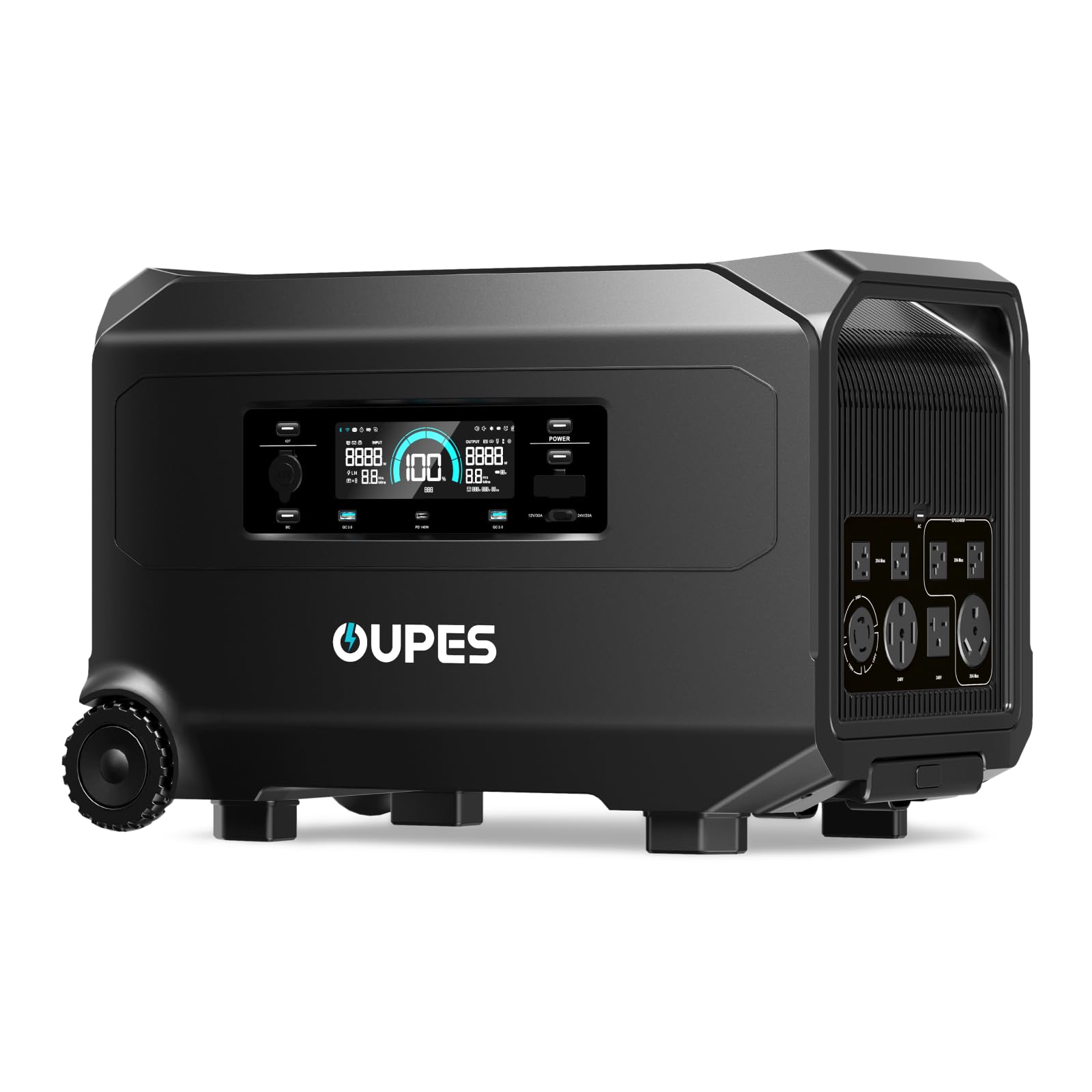
OUPES breaks the portable-battery ceiling with the Guardian 6000, delivering dual-voltage 120V/240V output at 6,000W continuous (9,000W surge). Its 4,608Wh base expands to 41kWh with G5 extra batteries, making it a serious contender for whole-home backup without permanent installation. The NEMA 14-50R, L14-30R, TT-30R, and 6-20R outlets cover everything from EV charging to RV hookups and well pumps.
Rapid-recharge technology fills the battery in 90 minutes using combined 240V AC and solar inputs—5x faster than typical 120V-only stations. Solar input up to 2,100W (12–140V range) provides off-grid freedom for remote cabins. The OUPES app monitors energy usage and adjusts settings remotely, though some users report connectivity hiccups. At 111 pounds with integrated wheels and handle, it rolls easily but isn’t portable in the traditional sense.
The military-grade LFP cells are rated for 4,000+ cycles, and the 5-year warranty with US-based support adds confidence. Early units had app stability issues, but firmware updates have resolved most complaints. For homeowners needing 240V backup without a gas generator, this is the most compelling value in the mid-range tier.
Why it’s great
- True 120V/240V split-phase output
- 90-minute full recharge
- Expandable to 41kWh
Good to know
- Heavy at 111 pounds; requires rolling
- Solar input specs are challenging to meet
- App connectivity can be inconsistent
5. Anker SOLIX F3800

Anker’s SOLIX F3800 pushes the boundaries of portable power with a 3,840Wh LFP battery and 6,000W AC output at both 120V and 240V. The NEMA 14-50 port directly charges an EV at 6,000W, turning the battery into an emergency road-trip charger. Expansion batteries scale the system to 26.9kWh, and pairing two F3800 units doubles output to 12,000W for extreme loads.
InfiniPower technology combines EV-class LFP cells, a smart thermal management system, and impact-resistant casing for a rated 10-year lifespan. The Anker app enables remote monitoring and time-of-use scheduling, though some users report the software lacks historical power tracking. Solar input is limited to 2,400W, and the MPPT optimization works best with Anker’s own panels—third-party arrays may underperform.
At 132 pounds, this is a beast. It ships with integrated casters, but stair navigation is impractical. Real-world tests show it powers a 3-ton AC for several hours or runs critical home loads for days. The 5-year warranty is solid, but firmware update dependency has been a pain point for some early adopters. For max output in a single-unit portable, the F3800 is unmatched.
Why it’s great
- 6,000W 120V/240V output
- Direct EV charging via NEMA 14-50
- Expandable to 26.9kWh
Good to know
- Very heavy at 132 pounds
- Solar MPPT optimized for Anker panels
- Firmware updates required; app limitations
6. EF ECOFLOW DELTA Pro 3

The DELTA Pro 3 refines EcoFlow’s flagship formula with a 4,096Wh LFP battery, 4,000W AC output (6,000W X-Boost), and genuine 120V/240V split-phase from a single unit. Three units can be paralleled for 12,000W—enough to run a 3-ton central AC. X-Quiet technology drops fan noise to 30 dB, making it bedroom-safe even during overnight use.
IP65-rated CTC battery pack technology provides dust and water resistance, and the <10ms UPS switchover protects NAS systems and medical devices. Solar input reaches 2,600W via two independent MPPT ports, enabling a full recharge in under 2 hours in good sun. AC charging at 1,800W fills in 2.5 hours, and the app controls charge limits, output, and load prioritization.
Downsides include the absence of a built-in 12V port (requires adapter) and a display that’s hard to read in direct sunlight. At 115 pounds with integrated handles, it’s easier to maneuver than the F3800 but still not a carry-on. Some users report the app requires internet for full configuration, which is problematic during outages without cell service.
Why it’s great
- Whisper-quiet 30 dB operation
- 120V/240V split-phase built in
- IP65-rated for dust/water resistance
Good to know
- No built-in 12V port
- Display visibility issues in direct sun
- App requires internet for full setup
7. Jackery Solar Generator 5000 Plus
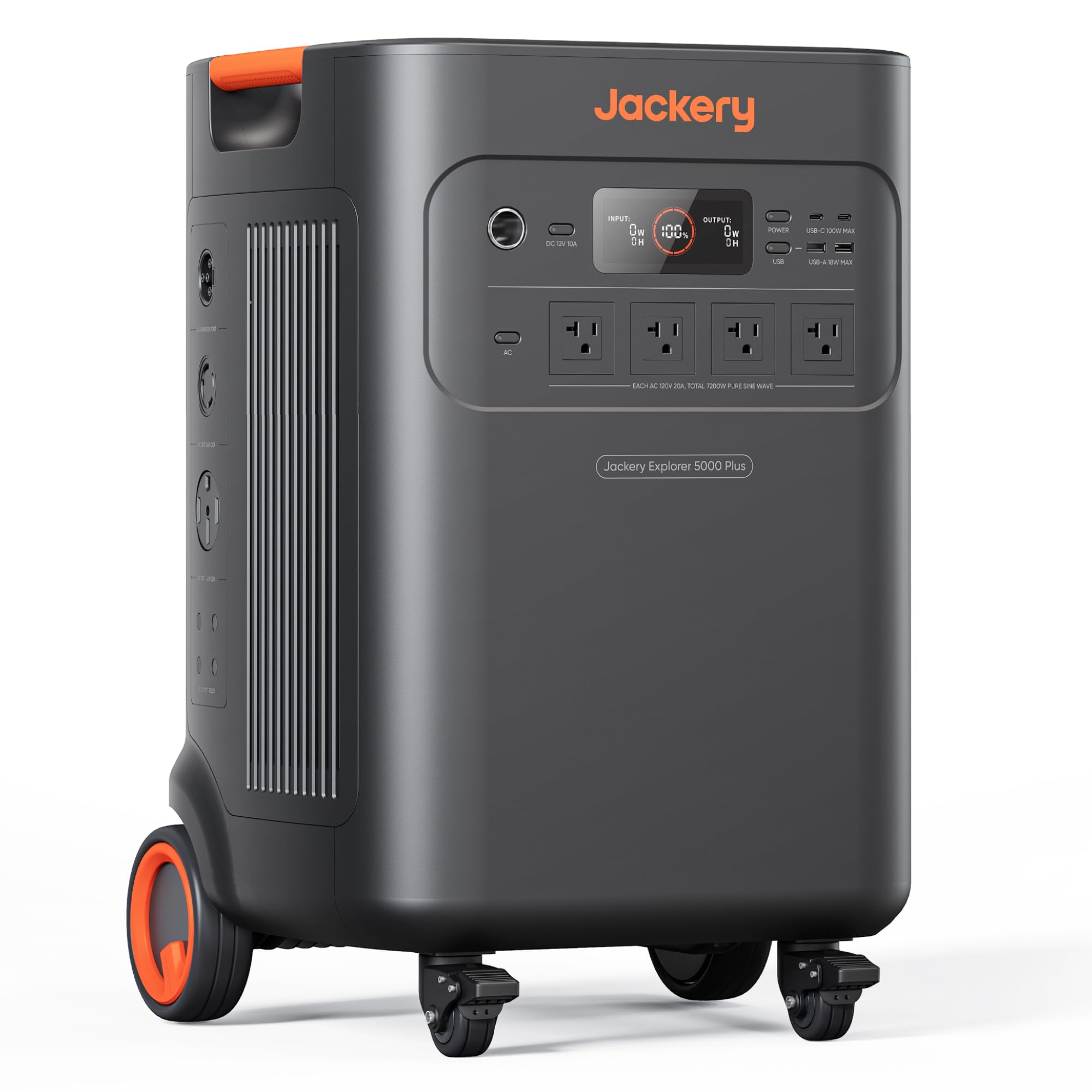
Jackery’s largest portable station packs 5,040Wh and 7,200W output (14,400W surge) with both 120V and 240V capability, enough to run a 5-ton AC unit or an electric water heater. Expandable to 60kWh, it provides up to 13 days of essential home backup. The 60A Smart Transfer Switch integrates with up to 12 circuits at 120V or 6 at 240V for semi-permanent whole-home installation.
ChargeShield 2.0 technology and LiFePO₄ cells deliver 11 years of daily-use lifespan. Solar input up to 4,000W supports both high and low-voltage panels, recharging in about 2 hours in optimal conditions. The modular design lets you add extra battery packs without tools, scaling capacity as your energy needs grow.
At 134.5 pounds, it’s the heaviest portable in Jackery’s lineup, but integrated handles and a stable base make garage-to-house movement feasible. Some users report the UPS mode has a 5-second transfer delay, which is too slow for sensitive electronics—a firmware fix is reportedly in development. Customer support quality varies, but the hardware build is robust and reliable for extended outages.
Why it’s great
- Massive 5,040Wh base capacity
- 7,200W 120/240V output
- Expands to 60kWh for multi-day backup
Good to know
- Heavy at 134.5 pounds
- UPS transfer delay ~5 seconds
- Battery loses ~30% charge daily in UPS mode
8. OSCAL PowerMax 6000
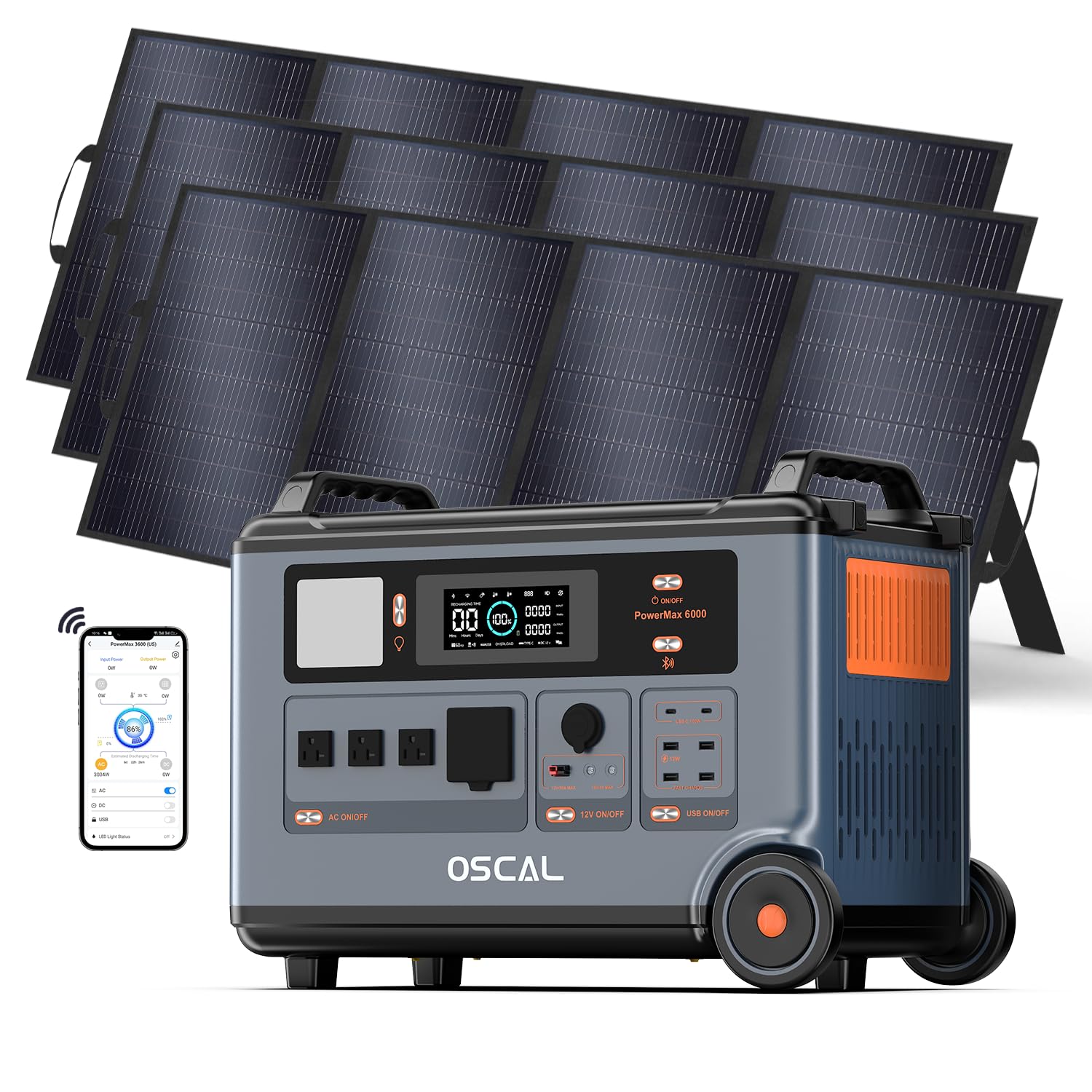
OSCAL (ECOGREAT) targets the high-speed solar market with the PowerMax 6000, featuring a 2,200W bi-directional inverter that recharges from AC in 1.44 hours. Solar input reaches 2,400W, and the included three 400W panels provide a complete off-grid kit out of the box. The 3,600Wh LFP battery delivers 6,000W continuous output at both 120V and 240V with a 9,000W surge.
EPS switchover at 5–8ms is fast enough for computers and network equipment, though not as instantaneous as true UPS units. The 14 output ports include NEMA 5-20R, USB-C, and USB-A QC3.0, covering everything from power tools to smartphones. The OSCAL app enables remote monitoring and power scheduling.
Some users report the battery drains faster than expected at low loads, and the 240V split-phase functionality is best suited for woodworking tools rather than whole-home AC backup. At 100 pounds, it’s manageable but bulky. The 2-year warranty is shorter than competitors, but the bundled panel kit adds significant value for solar-first users.
Why it’s great
- 1.44-hour AC recharge time
- Includes three 400W solar panels
- 120V/240V dual voltage output
Good to know
- Battery may drain faster than rated at low loads
- 2-year warranty is shorter than competitors
- 240V output optimized for tools, not whole-home AC
9. GROWATT HELIOS 3600 x2
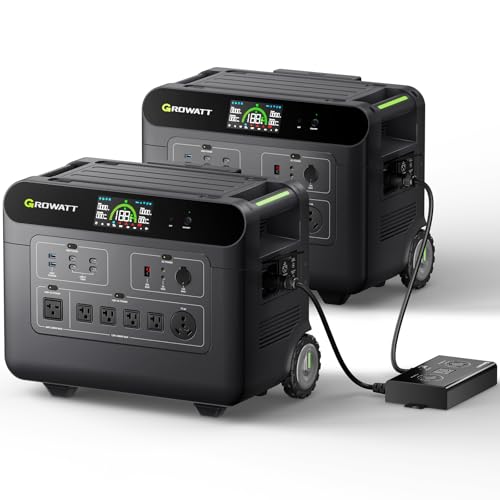
GROWATT’s HELIOS 3600 twin-pack delivers 7,200Wh of LFP capacity and 7,200W output at 120/240V through a parallel connection hub. This configuration covers 99% of home appliances, including 3-ton ACs, dryers, and water pumps. Each unit accepts 2,000W solar input, and dual-unit simultaneous charging means full recovery in about 1.5 hours via hybrid AC+DC.
Built on EV-grade LFP cells with a 4,000-cycle lifespan (80% capacity retention after 10 years), the system includes <15ms EPS switchover for uninterrupted critical loads. Cold-start technology operates down to -22°F—essential for winter outages. The GROWATT app provides smart energy management, including time-of-use optimization for solar self-consumption.
The combined weight of 250 pounds across two units makes this a semi-permanent installation rather than a portable device. Some users report Bluetooth connectivity issues with the app, and the EPS mode stays active when plugged into grid power, which can confuse the load management. For homeowners willing to dedicate floor space, this dual-unit system offers premium whole-home capability at a mid-range price point.
Why it’s great
- True 240V split-phase whole-home backup
- Cold-start operation to -22°F
- 1.5-hour hybrid recharge
Good to know
- 250 pounds total weight
- Both units required for 240V output
- Bluetooth/app connectivity can be spotty
10. Westinghouse 28kW Tri-Fuel Generator
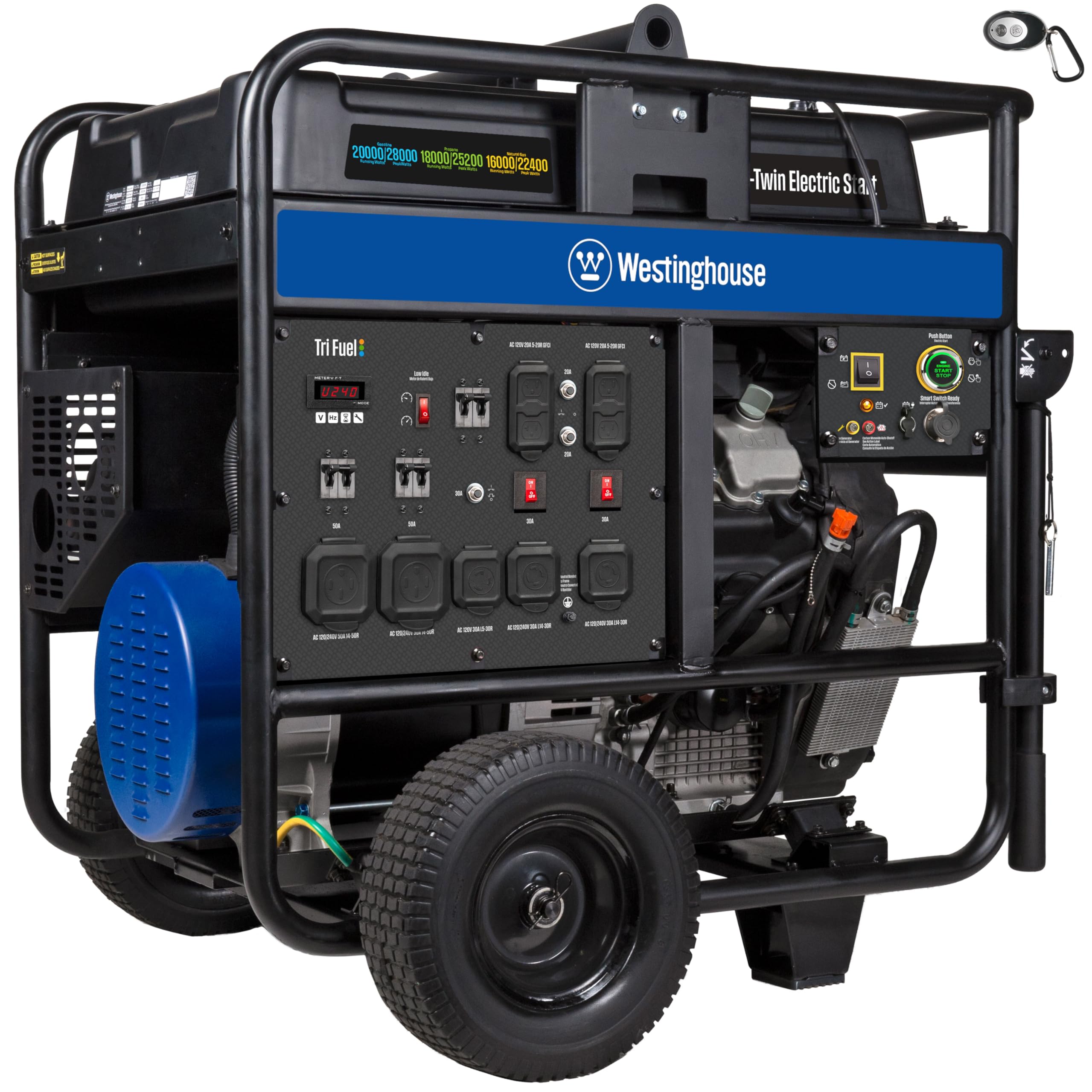
When battery capacity isn’t enough, Westinghouse’s 28,000W peak (20,000W running) tri-fuel generator provides brute-force backup for the largest homes. Running on gasoline, propane, or natural gas, the 999cc V-Twin OHV engine powers everything from central ACs to electric furnaces. The 125A 240V terminal block allows direct hardwiring by a licensed electrician for full whole-home delivery without outlet limits.
True Power Technology maintains under 5% total harmonic distortion (THD), making this safe for sensitive electronics. Remote electric start with key fob, automatic low-oil shutdown, and low-idle mode reduce fuel consumption during light loads. At 25% load on the 17.2-gallon gas tank, run time extends to 15 hours—enough for overnight coverage without refueling.
The downside is noise: 85 dB at 10 feet, comparable to a lawn mower. At 557 pounds, it requires heavy equipment to unload (Ceva logistics typically delivers curbside). Natural gas hookup requires a plumber, and propane consumption is high. This is a fuel-burning solution for those who need massive continuous power and have the property to handle it.
Why it’s great
- 28,000W peak powers an entire home
- Tri-fuel flexibility (gas/propane/NG)
- Under 5% THD for electronics safety
Good to know
- Very heavy and loud (85 dB)
- Requires professional installation for NG
- High fuel consumption; refills needed
11. EF ECOFLOW DELTA Pro Ultra

The DELTA Pro Ultra is a modular whole-home system disguised as a portable station. Each inverter delivers 7,200W at 120/240V, and up to three inverters can be paralleled for 21.6kW output. A single battery holds 6,144Wh (6kWh), scaling to 15 batteries for a staggering 90kWh—enough for over 30 days of essential power for an average North American home.
Online UPS with 0ms transfer time provides true 24/7 protection for sensitive electronics against grid disturbances. All fans stay off during the first 30 minutes of output under 2,000W, delivering absolute silence for normal home loads. Recharge from EV charging stations, solar, wall outlets, or gas generators—the system matches the fastest 6kWh recharge in 2 hours.
The 186-pound unit (battery + inverter) is the heaviest in this guide, and the separate inverter and battery modules require stacking. Real-world users pair it with the EcoFlow Smart Home Panel to prioritize specific circuits and offset peak rates. The cost is significant, but the capability rivals installed whole-home systems like Tesla Powerwall at a lower all-in price for DIY installers.
Why it’s great
- Scalable to 90kWh for extreme backup
- 0ms UPS transfer for sensitive gear
- 21.6kW max output with 3 inverters
Good to know
- Heavy modular design (186 lbs)
- Complex setup for full 240V integration
- High upfront investment
12. Generac Guardian 10kW

Generac’s Guardian 10kW is the gold standard for permanent automatic home standby. Running on natural gas or liquid propane, it activates within seconds of a grid failure without any user action. The included 100-amp 16-circuit transfer switch provides seamless whole-house coverage for essential circuits. True Power Technology delivers under 5% harmonic distortion for clean power to sensitive electronics.
The G-Force 400 Series engine is purpose-built for generator use, with low-maintenance overhead valves and a cast-iron sleeve for durability. Mobile Link Wi-Fi enables remote monitoring of generator status, maintenance alerts, and runtime from anywhere. Sound levels are comparable to a power mower from 10 feet, but the permanent outdoor installation keeps noise outside the home.
Professional installation by a certified electrician and plumber is required, adding to the total cost. The 10kW output (8.5kW on propane) is sufficient for a mid-sized home but won’t power a large AC and electric oven simultaneously. The 5-year limited warranty is industry-leading. For homeowners who want true “set it and forget it” backup without refueling or manual switching, this is the definitive solution.
Why it’s great
- Fully automatic operation on NG/LP
- 100-amp transfer switch included
- Under 5% THD for clean power
Good to know
- Professional installation required
- 10kW may not cover large AC + electric oven
- Fuel cost depends on NG/propane rates
13. ECO-WORTHY Cubix100 6-Pack
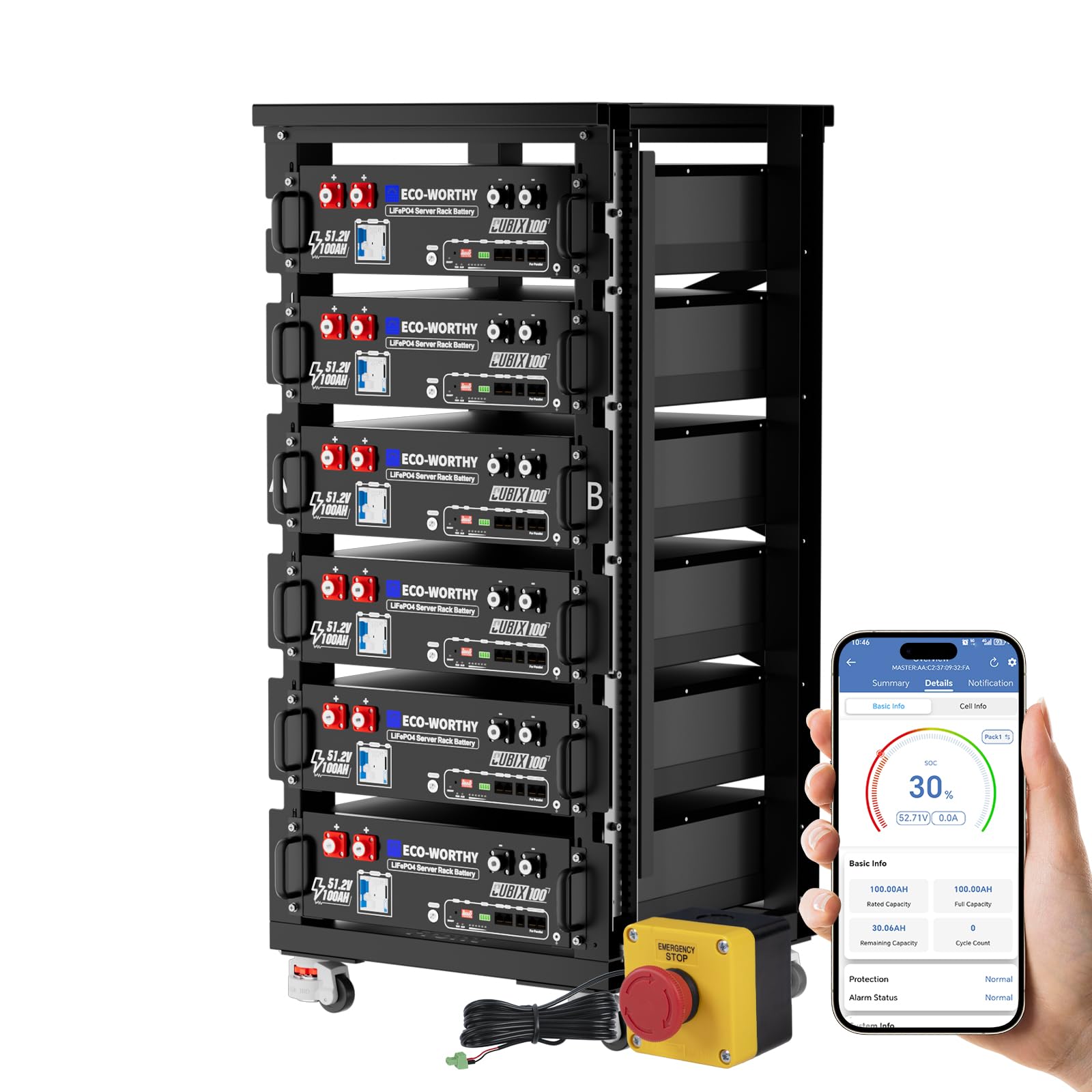
The ECO-WORTHY Cubix100 6-pack delivers 30.72kWh of UL1973 and UL9540A-certified LFP storage at a cost per kilowatt-hour that undercuts any portable station. This server-rack battery system is designed for permanent integration with a solar inverter—it requires external inverter and charge controller hardware, unlike all-in-one portables. The 48V 600Ah configuration provides enough capacity for a full day of off-grid living.
Closed-loop communication via CAN/RS485 works with leading inverters (EG4, Growatt, Schneider) for intelligent battery management. Built-in Bluetooth and WiFi allow monitoring through the ECO-WORTHY app, including SOC, voltage, and temperature. The system is expandable to 32 units (163.8kWh), making it a future-proof foundation for an off-grid homestead.
The 6-pack weighs 600 pounds total—this is a permanent installation, not portable. The included 6-layer rack, 600A busbar, and RSD button simplify setup, but wiring knowledge is essential. Some early units had reversed terminal polarity (since corrected). For DIY solar enthusiasts who want maximum capacity per dollar and don’t need portability, this is the ultimate value play.
Why it’s great
- Best cost per kWh of any option here
- UL1973 and UL9540A certified for safety
- Expandable to 163.8kWh
Good to know
- Requires external inverter and wiring knowledge
- 600 pounds; permanent installation only
- No built-in AC outlets or UPS functionality
FAQ
How many watt-hours do I need for a typical home backup?
Can I connect a portable battery to my home’s electrical panel?
What is the difference between LiFePO₄ and NMC batteries for home backup?
Final Thoughts: The Verdict
For most users, the battery for home backup winner is the Jackery HomePower 3600 Plus because it combines best-in-class portability, fast hybrid charging, a 6,000-cycle LFP battery, and a price point that doesn’t require a second mortgage. If your home runs on 240V appliances like a well pump or central AC, grab the OUPES Guardian 6000 for true split-phase output at a mid-range cost. And for off-grid enthusiasts building a permanent solar storage system, nothing beats the ECO-WORTHY Cubix100 6-Pack for sheer capacity per dollar.

Mo Maruf
I created WellFizz to bridge the gap between vague wellness advice and actionable solutions. My mission is simple: to decode the research and give you practical tools you can actually use.
Beyond the data, I am a passionate traveler. I believe that stepping away from the screen to explore new environments is essential for mental clarity and physical vitality.