Our readers keep the lights on and my smoothie glass nicely filled. As an Amazon Associate, I earn from qualifying purchases.
For a plant famous for its explosive, papery color, the bougainvillea is surprisingly easy to starve. Its roots crave specific nutrients to push out those brilliant bracts, and a generic all-purpose feed often leaves it leafy but bloomless. The real trouble begins when a well-meaning gardener applies a high-nitrogen fertilizer, pushing deep green foliage at the expense of those electric pink, orange, and purple flowers.
I’m Mohammad Maruf — the founder and writer behind WellFizz. I’ve spent years analyzing horticultural product data, sifting through soil science reports, and cross-referencing formulation ratios to separate marketing fluff from what actually triggers flowering in acid-loving and tropical plants.
This guide distills that research into a clear, actionable shortlist to help you choose the best bougainvillea fertilizer that delivers the riot of color your garden deserves.
How To Choose The Best Bougainvillea Fertilizer
Bougainvillea is a heavy feeder when blooming, but it demands a specific nutritional profile. A balanced 10-10-10 formula will keep the plant alive, but a formula higher in phosphorus and potassium (the middle and last numbers in the NPK ratio) is what coaxes out those vibrant bracts. Low nitrogen is key — too much and you get a sprawling green vine with minimal flowers.
NPK Ratio — The Bloom Trigger
Look for a ratio where phosphorus (P) is equal to or slightly greater than nitrogen (N). A formula like 4-3-4 or 2-4-2 provides enough nitrogen for healthy foliage while pushing energy into flower formation. Avoid high-nitrogen lawn fertilizers, which will sabotage your bloom cycle.
Granular vs. Liquid Application
Granular, slow-release options, like the Espoma and Dr. Earth products listed here, are ideal for established in-ground plants. You apply them every few weeks during the growing season. Liquid feeds, such as the TPS Nutrients formula, work faster and are excellent for container plants or giving a struggling vine an immediate nitrogen-phosphorus boost, but they require more frequent application.
Organic Certification and Pet Safety
If you have pets or children who play in the garden, organic formulas like those from Dr. Earth and Espoma are the safer bet. They are derived from natural ingredients and are free from synthetic chemicals. Non-GMO Project Verified and OMRI-listed options confirm that the product meets strict organic standards, which also helps build long-term soil health.
Quick Comparison
On smaller screens, swipe sideways to see the full table.
| Model | Category | Best For | Key Spec | Amazon |
|---|---|---|---|---|
| Dr. Earth Acid Lovers | Granules | Organic gardens & pets | 0.3-0.4-3 NPK | Amazon |
| Miracle-Gro Water Soluble | Powder | Immediate feeding | 1:144 indoor mix | Amazon |
| Espoma Holly-Tone | Granules | Evergreens & shrubs | 4-3-4 analysis | Amazon |
| Espoma Rose-Tone | Granules | Bougainvillea & roses | 4-3-2 analysis | Amazon |
| TPS Bougainvillea | Liquid | Container & recovery | 32 oz bottle | Amazon |
In‑Depth Reviews
1. Dr. Earth Acid Lovers Azalea, Camellia, Rhododendron & Maple Fertilizer 4 lb

Dr. Earth’s Acid Lovers formula is the only Non-GMO Project Verified fertilizer in the U.S., setting a high bar for purity. Its NPK ratio of 0.3-0.4-3 is extremely low in nitrogen, making it an ideal choice for forcing bougainvillea into producing bracts rather than excessive foliage. The formula includes humic acids, multi-minerals, and trace elements that directly improve soil biology.
This is a granular, slow-release feed that works dusted into the top inch of soil around the drip line and then watered in. Customer reports show it reviving sad camellias and pushing gardenias into their best bloom ever — a strong signal for acid-loving bougainvilleas. The organic transparency with OMRI and CCOF certification adds real assurance for organic growers.
One 4-pound bag covers a decent number of medium to large shrubs. It is sustainably made in the USA and safe for people and pets when used as directed, which is a major plus for families who spend time in the garden.
Why it’s great
- Verified non-GMO and OMRI-listed organic
- Extremely low nitrogen (0.3) pushes bloom energy
- Pet and child safe when applied per instructions
Good to know
- 4 lb bag may be small for large or multiple plants
- Slow-release action needs a couple of weeks to show results
2. Miracle-Gro Water Soluble Azalea, Camellia, Rhododendron Plant Food, 5 lb

Miracle-Gro’s water-soluble formula is the fastest route to feeding a bougainvillea that is already in active growth. The powder dissolves instantly in water and is absorbed immediately by the roots, making it perfect for a mid-season boost or container plants where granular feeds can be less effective. It is designed for acid-loving plants including azaleas, gardenias, and hibiscus — all close relatives in terms of soil preference.
The mixing ratio varies by use: 1:144 for indoor plants and 1:18 for outdoor feeding. This flexibility lets you adjust the strength based on the size of your bougainvillea. Customer reports note that it greened up rhododendrons and camellias within a week, and the same speed can be expected on bougainvillea. It will not burn foliage when used as directed, which is a common concern with synthetic soluble feeds.
One notable weakness is the bag resealability — multiple reviews complain the closure fails, forcing you to store powder in a separate container. For the price and ease of use, it remains a staple for gardeners who need immediate results without waiting on microbial breakdown.
Why it’s great
- Instant absorption for rapid recovery or growth
- Versatile indoor and outdoor mixing ratios
- 5 lb bag offers strong value per use
Good to know
- Bag closure is unreliable; store in a sealed container
- Synthetic formula is not organic certified
3. Espoma Organic Holly-Tone 4-3-4 Evergreen & Azalea Plant Food, Pack of 2
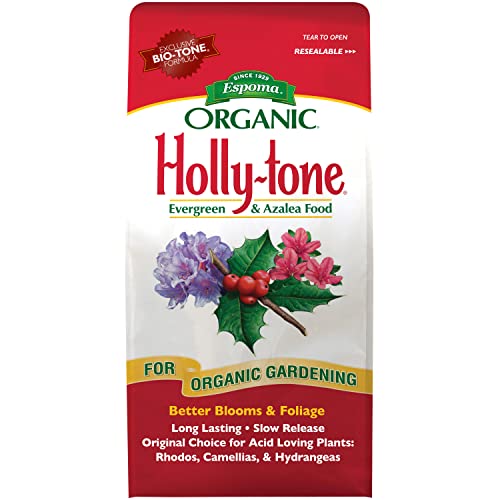
Holly-Tone is the original organic fertilizer for acid-loving plants, and its 4-3-4 analysis is a near-perfect match for bougainvillea’s moderate nitrogen needs. The slow-release granules rely on natural organic ingredients enhanced by Espoma’s exclusive Bio-tone formula, which feeds the soil microbes that in turn feed the plant. This pack of two 4-pound bags gives you 8 total pounds, enough to cover a large planting area or multiple containers.
Application is simple — no mixing required. You sprinkle the granules around the drip line of the plant and water them in. The slow-release nature means you apply in spring and again in late summer for consistent feeding through the growing season. Customer reports confirm excellent results on arborvitae, shrubs, and evergreens, indicating it builds strong root systems and lush foliage.
While the 4-3-4 ratio is solid, it is slightly higher in nitrogen than some bougainvillea-specific options. This means it is better suited for established vines that need balanced support rather than a push into extreme blooming. The organic certification and allergen-free ingredients make it safe for edible gardens nearby.
Why it’s great
- 8 lbs total in this two-pack for extended coverage
- Bio-tone formula improves long-term soil health
- No mixing or measuring — just sprinkle and water
Good to know
- 4-3-4 ratio is slightly higher in nitrogen than bloom-max formulas
- Slow release means it cannot fix acute deficiencies quickly
4. Espoma Organic Rose-Tone 4-3-2 Organic Fertilizer, Pack of 2

Espoma’s Rose-Tone is specifically formulated for flowering plants, including viburnum, bougainvillea, and clematis, as stated directly on the label. With a 4-3-2 NPK ratio, it provides a slightly higher phosphorus load compared to nitrogen and potassium, pushing energy into bud formation and root development. This makes it a strong specialist choice for bougainvillea growers who prioritize abundant, long-lasting blooms.
The granules contain 5% calcium, which helps strengthen cell walls and supports disease resistance — a hidden benefit for bougainvillea grown in humid climates. Like the Holly-Tone, it is approved for organic gardening and is safe for kids and pets. Application is the same: sprinkle at the drip line every month during the growing season and water in. The two-pack gives you 8 lbs of food, which will cover a substantial number of vines.
Customer testimonials highlight vigorous leaf growth and exceptional flower production on roses and flowering plants. The phosphorus dominance in the ratio is exactly what a bougainvillea needs when you want color, not just green growth. The organic Bio-tone microbes also ensure the nutrients remain available to the roots over time.
Why it’s great
- Phosphorus-forward ratio (4-3-2) drives bloom production
- Calcium additive strengthens plant tissue
- Two 4 lb bags provide excellent overall value
Good to know
- Listed for roses & flowering plants — not a dedicated bougainvillea feed
- Granules can cake if stored in humid conditions
5. Bougainvillea Fertilizer – Liquid Plant Food, 32 oz (TPS Nutrients)
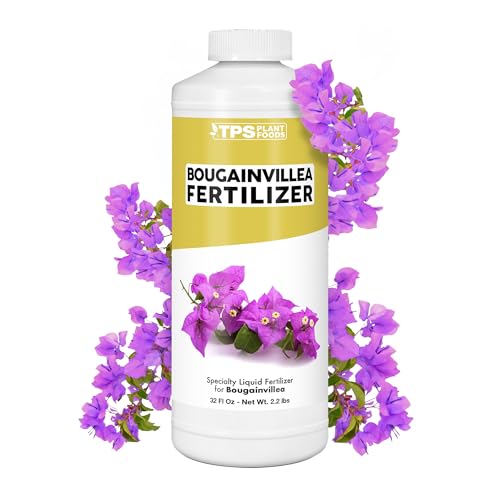
This is the only dedicated bougainvillea fertilizer in the lineup, made by TPS Nutrients specifically for tropical vines. It is a liquid concentrate that you dilute with water and apply during every watering session, making it the most practical option for container-grown bougainvilleas or planters that drain quickly. The liquid form delivers nutrients directly to the root zone without the waiting period of granular breakdown.
Customer reports show dramatic recovery stories: a bougainvillea tree hit by a 28°F frost went from brown and near-dead to green new growth and flowers after just three treatments over six weeks. Another user in zone 9a uses it with every watering to keep four potted plants blooming consistently through the hot tropical summer. The liquid is made in the USA and the 32 oz bottle lasts roughly a month for multiple plants.
The main trade-off is the concentrated liquid requires frequent application, which means you need to be consistent. For gardeners who prefer a set-it-and-forget-it approach, this involves more work. But for active gardeners who enjoy the daily ritual, it offers the fastest route to visible flower production and root health.
Why it’s great
- Dedicated bougainvillea formula optimized for blooming
- Rapid liquid uptake — noticeable recovery in days
- Ideal for containers, trellises, and patio planters
Good to know
- Requires consistent weekly or bi-weekly application
- Small bottle may need frequent repurchasing for many plants
FAQ
How often should I feed my bougainvillea during the growing season?
Can I use a general all-purpose fertilizer on bougainvillea?
Why are my bougainvillea leaves turning yellow despite fertilizing?
Final Thoughts: The Verdict
For most users, the best bougainvillea fertilizer winner is the Dr. Earth Acid Lovers because its extremely low nitrogen ratio perfectly forces the plant to push out bracts rather than leaves, and its organic certification makes it the safest choice for family gardens. If you want an instant boost for a struggling container plant, grab the TPS Nutrients Bougainvillea Liquid. And for the best overall value with long-lasting organic nutrition, nothing beats the Espoma Rose-Tone two-pack.

Mo Maruf
I created WellFizz to bridge the gap between vague wellness advice and actionable solutions. My mission is simple: to decode the research and give you practical tools you can actually use.
Beyond the data, I am a passionate traveler. I believe that stepping away from the screen to explore new environments is essential for mental clarity and physical vitality.