Our readers keep the lights on and my smoothie glass nicely filled. As an Amazon Associate, I earn from qualifying purchases.
When cable internet fails to reach your rural property, or you need a failover that actually kicks in before you notice the outage, a 4G router becomes the backbone of your connectivity. The difference between a unit that works and one that frustrates comes down to carrier certification, antenna design, and the quality of the failover logic baked into the firmware.
I’m Mohammad Maruf — the founder and writer behind WellFizz. My analysis of 4G routers focuses on real-world signal locking, multi-WAN stability, and the trade-offs between portable hotspots and permanent gateways.
After researching over a dozen models and filtering by certified carrier compatibility, modem category, and practical throughput, the field narrows to a few standout units that define the best 4g router tier for reliable home and on-the-go internet.
How To Choose The Best 4G Router
Buying a 4G router is less about raw speed and more about consistent connectivity. The three factors that separate a useful unit from a paperweight are carrier certification, modem speed grade, and failover intelligence.
Carrier Certification and SIM Lock
Not all routers work with every carrier. AT&T and Verizon maintain whitelists of approved IMEI numbers; if your router isn’t certified, the carrier may throttle or block the connection entirely. T-Mobile is more lenient, but certification still ensures you get the best band support. Look for routers explicitly marked “AT&T IoT Certified” or “T-Mobile Certified” if you plan to use those networks.
Modem Category: Cat 4 vs Cat 6 vs Cat 12
The modem’s category determines the maximum theoretical throughput. Cat 4 modems (150 Mbps down) are sufficient for streaming and light work. Cat 6 (300 Mbps) adds carrier aggregation for better performance in congested areas. Cat 12 (600 Mbps) provides headroom for multiple users and heavy use. For a primary home connection, aim for Cat 6 or higher.
Failover and Multi-WAN Logic
If you are buying a 4G router as a backup to wired internet, pay close attention to failover behavior. Some routers take minutes to detect the outage and switch, while others fail over in seconds. The best units allow you to set failover priorities between Ethernet, cellular, and Wi-Fi repeater modes.
Quick Comparison
On smaller screens, swipe sideways to see the full table.
| Model | Category | Best For | Key Spec | Amazon |
|---|---|---|---|---|
| Netgear Orbi LBR20 | Premium | Whole-home failover | Cat 18 modem, 2.2 Gbps Wi-Fi | Amazon |
| GL-X2000 Spitz Plus | Mid-Range | RV and multi-WAN home | Cat 12 modem, Wi-Fi 6 | Amazon |
| GL-E750V2 Mudi | Premium | Travel and portable hotspot | Cat 6 modem, 7000mAh battery | Amazon |
| Cudy LT500 Outdoor | Mid-Range | Outdoor and remote camera | Cat 4 modem, IP65 housing | Amazon |
| GL-X750V2 Spitz | Budget | Secondary failover | Cat 4 modem, OpenWrt | Amazon |
| GL-X3000 Spitz AX | Premium | Future-proof 5G readiness | 5G modem, Wi-Fi 6 | Amazon |
| eero Max 7 | Premium | Multi-gig wired failover | Wi-Fi 7, 10 GbE ports | Amazon |
In‑Depth Reviews
1. Netgear Orbi 4G LTE Mesh WiFi Router (LBR20)

The Netgear Orbi LBR20 is the rare 4G router that can serve as the primary internet source for an entire home. Its Cat 18 modem supports download speeds up to 1.2 Gbps, and the mesh system covers up to 2,000 square feet out of the box. This unit is certified with AT&T, T-Mobile, and Verizon, which means you can move between carriers without worrying about IMEI blocks.
Setup is managed through the Orbi app, and while some users report that failover detection is not instant — it can take three minutes to switch from wired to cellular — the connection once established is stable. The built-in 2×1 Gigabit Ethernet ports allow you to plug in a console or desktop directly, and the MU-MIMO antenna array handles up to 25 devices simultaneously.
Where this router really shines is in rural areas with weak signal. Users have reported streaming 4K video on a single bar of LTE after adding an external antenna. The Netgear Armor security suite and parental controls come with a 30-day trial, and the one-year warranty is standard for the category.
Why it’s great
- Tri-carrier certified with no carrier lock
- Mesh expandability with Orbi satellites
- Strong app-based management
Good to know
- Failover can be slow (up to 3 minutes)
- No built-in battery for portable use
2. GL-X2000 (Spitz Plus) Cellular Gateway
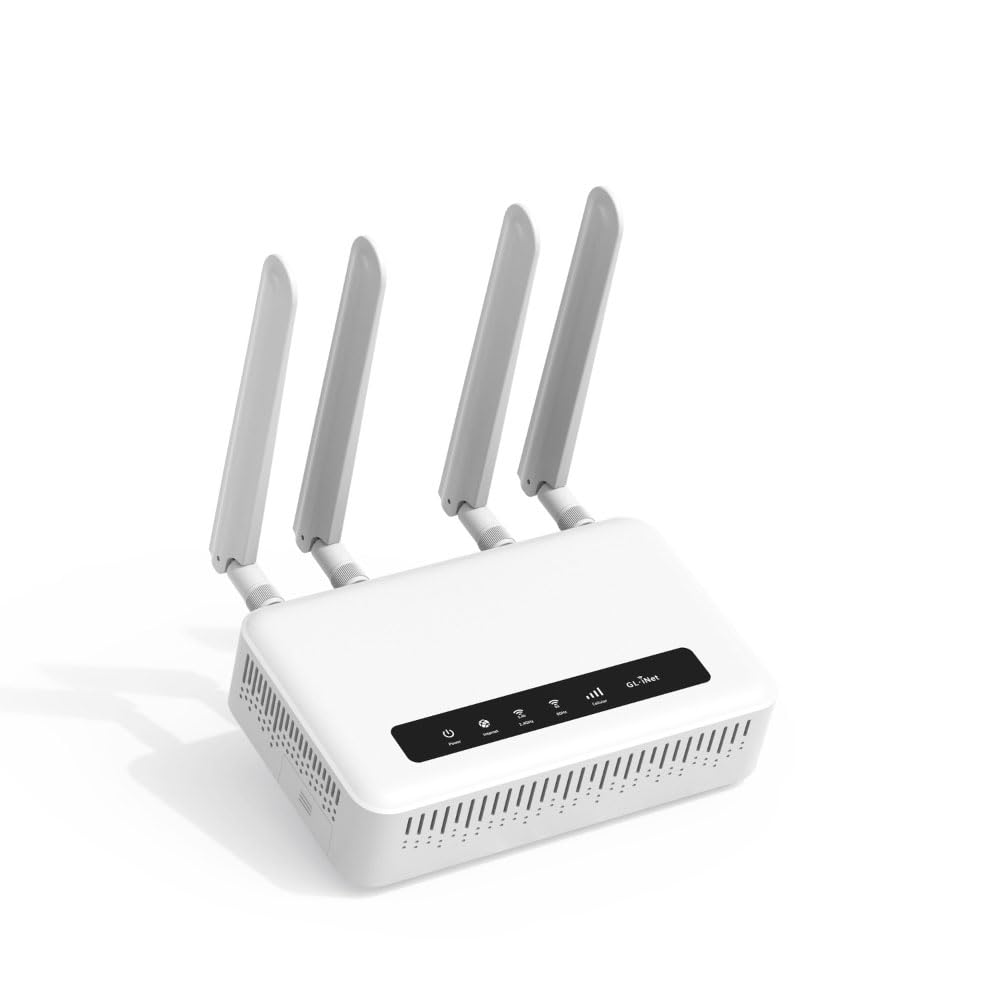
The GL-X2000 Spitz Plus bridges the gap between a consumer gateway and an enthusiast’s playground. Its Cat 12 modem with three-carrier aggregation (DL 3CA) delivers download speeds that comfortably support multiple HD streams and video conferencing. The Wi-Fi 6 radio is a significant upgrade over older AC standards, offering up to 574 Mbps on 2.4 GHz and 2402 Mbps on 5 GHz.
Dual-SIM support with single standby allows you to insert two carrier SIMs and configure automatic failover priorities. AT&T and T-Mobile IoT certification ensures compatibility, though some users in specific regions report AT&T denial — it is worth checking your local carrier’s stance before purchase. The four SMA connectors let you attach external high-gain antennas, which dramatically improves signal in fringe areas.
Running OpenWrt-based firmware, this unit supports WireGuard at up to 190 Mbps and OpenVPN at 30 Mbps. The web interface gives you full control over firewall rules, DNS encryption, and load balancing between Ethernet, cellular, and Wi-Fi repeater. RV owners particularly appreciate the ability to treat this as a multi-WAN hub for Starlink, cellular, and campground Wi-Fi.
Why it’s great
- Dual-SIM with automatic failover
- Cat 12 modem with carrier aggregation
- Full OpenWrt customization
Good to know
- AT&T compatibility not universal across regions
- Requires some technical comfort for advanced features
3. GL.iNet GL-E750V2 (Mudi) Portable Wi-Fi Hotspot

The Mudi is not a home gateway attempting to be portable — it is a purpose-built travel router that integrates a Cat 6 4G module with a 7000mAh battery. Weighing 285 grams and measuring 5.7 by 3.1 by 0.9 inches, it fits in a jacket pocket. The battery delivers up to 8 hours of continuous operation, making it a viable alternative to carrier jetpacks for road trips and hotel stays.
The cellular performance depends heavily on the carrier and location, but users report consistent speeds of 20–60 Mbps on Verizon and T-Mobile networks. The Wi-Fi is dual-band AC (300 Mbps on 2.4 GHz + 433 Mbps on 5 GHz), which is adequate for a few devices but not a full household. The USB-C port supports charging while in use, and the device can also act as a Wi-Fi repeater or wired Ethernet client.
On the software side, OpenWrt runs the show. WireGuard speeds reach 50 Mbps, and OpenVPN tops out at 10 Mbps — good enough for secure browsing on public Wi-Fi but not for heavy VPN use. The OLED display shows signal strength and data usage, though some users describe the interface as basic. The global version includes multi-region power adapters and supports physical eSIM cards for flexible carrier switching.
Why it’s great
- Long-lasting 7000mAh battery
- Compact and truly travel-ready
- OpenWrt with WireGuard support
Good to know
- Not a replacement for a home router
- Cold boot is slow; runs warm on standby
4. Cudy Unlocked Outdoor 4G LTE Cat 4 Modem Router LT500

For installations where the router must live outside — a farm, a workshop, or a remote camera post — the Cudy LT500 is built for the elements. The IP65 waterproof housing and 4 kV lightning protection mean it can survive rain, dust, and temperature swings. Power is delivered via 24V passive PoE, so a single Ethernet cable runs power and data up to 50 feet from the indoor power adapter.
The Cat 4 modem delivers download speeds up to 150 Mbps, which is enough for surveillance footage, basic browsing, and streaming. The detachable 5 dBi cellular antennas improve RSRP by over 20 dB compared to a phone’s internal antenna, and the SMA connectors allow swapping for higher-gain antennas if the signal is marginal. The dual-band AC1200 Wi-Fi covers roughly 100 meters of outdoor area.
Setup is straightforward: insert a BYOD SIM, mount the unit on a pole or wall, and power it over Ethernet. The management interface supports DNS encryption via Cloudflare or NextDNS, and VPN passthrough is available. Some users report that the included Ethernet cable is short and the wall mount hardware feels basic, but the core connectivity is reliable once properly installed.
Why it’s great
- IP65 weatherproof outdoor housing
- PoE simplifies installation
- Detachable antennas for signal optimization
Good to know
- Cat 4 modem limits maximum throughput
- Weatherproofing requires sealing connectors yourself
5. GL-X750V2 (Spitz) 4G LTE VPN Router

The original Spitz remains a solid entry-level 4G router for users who need a secondary failover connection without spending on premium features. Its Cat 4 EC25-AFFA modem is AT&T certified and works reliably with T-Mobile, delivering average speeds of 15–20 Mbps — fine for email, light browsing, and single-stream video. The dual-band Wi-Fi (300 Mbps on 2.4 GHz + 433 Mbps on 5 GHz) covers a small home or apartment.
One of the strongest arguments for this router is OpenWrt support. The 128 MB RAM and 16 MB NOR flash are modest, but the MicroSD slot allows up to 128 GB of local storage. Pre-installed OpenVPN and WireGuard make it easy to route all traffic through a VPN provider, and the USB 2.0 port can host a secondary modem or storage drive.
There are caveats. The Ethernet ports are limited to 10/100 Mbps, which creates a bottleneck if your cellular connection exceeds 100 Mbps. Some users have reported serious firmware upgrade issues — the stock firmware on certain Amazon batches cannot be updated without risking a bricked unit. If you are comfortable with OpenWrt and do not plan to upgrade firmware, this is a capable budget option.
Why it’s great
- AT&T certified for reliable connectivity
- OpenWrt with VPN pre-installed
- Expandable storage via MicroSD
Good to know
- Ethernet ports limited to 100 Mbps
- Firmware upgrade path can be problematic
6. GL.iNet GL-X3000 (Spitz AX) 5G Cellular Gateway

The Spitz AX is a 5G gateway that also runs 4G LTE with full backward compatibility, making it a future-proof investment if you plan to upgrade your data plan later. Its 5G modem supports both NSA and SA standards, and the dual-SIM slots allow you to keep a 4G backup SIM active while the primary 5G line handles high-speed data. Wi-Fi 6 delivers up to 574 Mbps on 2.4 GHz and 2402 Mbps on 5 GHz, with MU-MIMO for simultaneous device connections.
Real-world performance from user reports shows download speeds of 230 Mbps on T-Mobile 5G, dropping to around 70 Mbps upload. The device supports WireGuard at up to 300 Mbps, which is fast enough to run a VPN without noticing the overhead. The six detachable antennas — two for cellular and four for Wi-Fi — give you flexibility to position for best signal, and the wall-mount kit makes installation clean.
OpenWrt v21.02 powers the backend, offering over 5,000 plugins for advanced routing, ad blocking, and network segmentation. Some users note that the router has trouble maintaining long uptime without a latency creep, requiring periodic reboots. Customer support from GL.iNet is generally responsive, with several users reporting quick replacement units when hardware failed.
Why it’s great
- 5G ready with dual-SIM flexibility
- Very fast VPN throughput
- Comprehensive OpenWrt ecosystem
Good to know
- Long uptime can cause latency degradation
- Premium price point
7. Amazon eero Max 7 Mesh WiFi Router (1-pack)
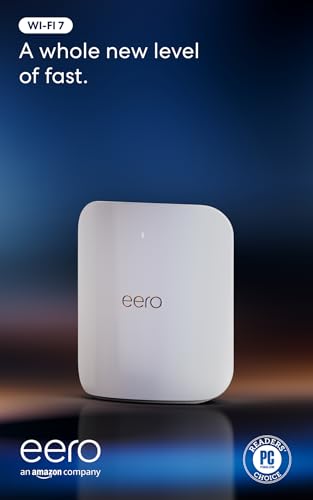
The eero Max 7 is not a cellular router, but it earns a place in this guide as a wired failover solution for users who have a 4G modem and need to distribute that connection over a massive mesh. Its two 10 Gigabit Ethernet ports can connect to a separate 4G gateway and deliver wired speeds up to 9.4 Gbps between nodes. The Wi-Fi 7 radio provides over 4 Gbps of wireless bandwidth to connected devices.
Coverage per node is rated at 2,500 square feet, and the mesh supports over 250 devices simultaneously. The TrueMesh intelligence dynamically routes traffic to avoid interference, which is especially useful when the upstream connection is a variable-speed cellular link. The eero app handles setup, management, and optional security subscriptions through eero Plus.
This is not a standalone 4G router — it requires a separate modem to pull the cellular signal. However, for users who already own a 4G gateway and need to blanket a large home or office with reliable Wi-Fi, the eero Max 7 is the best mesh companion available. The three-year warranty is the longest in this group, and the Thread/Matter support makes it a smart home hub as well.
Why it’s great
- True 10 GbE wired backhaul
- Wi-Fi 7 for future speed
- Excellent mesh coverage and stability
Good to know
- Not a cellular router — requires separate 4G modem
- Some video call issues reported on congested networks
FAQ
Can I use any SIM card in a 4G router?
What is the practical difference between a Cat 4 and Cat 12 modem?
Does an outdoor 4G router need additional weatherproofing?
Final Thoughts: The Verdict
For most users, the best 4g router winner is the GL-X2000 Spitz Plus because it balances a Cat 12 modem, dual-SIM failover, and Wi-Fi 6 at a price that undercuts the premium tier. If you want whole-home mesh with carrier flexibility, grab the Netgear Orbi LBR20. And for a portable travel companion that keeps you connected on the road, nothing beats the GL-E750V2 Mudi.

Mo Maruf
I created WellFizz to bridge the gap between vague wellness advice and actionable solutions. My mission is simple: to decode the research and give you practical tools you can actually use.
Beyond the data, I am a passionate traveler. I believe that stepping away from the screen to explore new environments is essential for mental clarity and physical vitality.