Our readers keep the lights on and my smoothie glass nicely filled. As an Amazon Associate, I earn from qualifying purchases.
Nothing ruins a handmade card faster than flimsy paper that buckles under ink, tears at the fold, or reveals a white core when you score it. The difference between a card that looks store-bought and one that screams “craft project” often comes down to a single, measurable spec: the weight and construction of the sheet you build on.
I’m Mohammad Maruf — the founder and writer behind WellFizz. I’ve spent years analyzing substrate specifications, comparing GSM and point thicknesses, and cross-referencing user feedback on how different card stocks perform under real home-printer, die-cutter, and wet-media conditions.
Whether you are stamping intricate floral motifs, feeding sheets through a Cricut, or simply want a sturdy base that holds its shape in a standard envelope, finding the right card stock for card making makes every project feel polished and professional from the first fold.
How To Choose The Best Card Stock For Card Making
The card stock you choose determines how your card feels in hand, how well it takes ink or embossing powder, and whether it survives the mail without bending. Two priorities dominate: weight and core construction.
GSM / Pound Weight: The Foundation Of Structure
For a standard card base that stands upright, look for 176 GSM to 250 GSM (roughly 65 lb to 92 lb cover). Lighter sheets (under 160 GSM) feel like heavy copy paper — fine for inserts or layers, but too limp for the front cover. Heavier sheets (over 300 GSM) approach chipboard density; they require scoring before folding and often jam in home inkjet printers. Most card makers settle on a 200–250 GSM sweet spot for the base and use lighter stock for internal mats.
Solid Core vs. White Core: The Edge Test
Cut a scrap in half and look at the exposed edge. If the interior is pure white while the surface is colored, you have a white-core sheet. When you fold, score, or trim, those white edges show — especially on dark or vibrant sheets. Solid-core (or full-core dyed) paper is colored all the way through. The cut edge matches the surface color, giving your folds and punches a clean, professional finish. For card making, solid-core dyeing is the standard for colored stock.
Finish: Smooth vs. Textured
Smooth card stock gives the sharpest printed text and photographs, and it lays flat under stamps for crisp impressions. Textured or felt-finish stock hides fingerprints and adds tactile interest, but it can leave tiny voids in dense ink coverage. For layered cards with stamping and die-cutting, smooth matte typically yields the most reliable results. For rustic or handmade looks, subtle texture adds character — just test your ink adhesion on a scrap first.
Quick Comparison
On smaller screens, swipe sideways to see the full table.
| Model | Category | Best For | Key Spec | Amazon |
|---|---|---|---|---|
| CREGEAR White | Mid-Range | Sturdy card bases & die-cutting | 250 GSM / 92 lb cover | Amazon |
| Astrobrights Pastel | Premium | Vibrant layers & bulk projects | 176 GSM / 65 lb, 320 sheets | Amazon |
| Desktop Pub 120lb | Premium | Extra-thick bases & business cards | 325 GSM / 120 lb cover | Amazon |
| Cranium Press White | Mid-Range | Everyday prints & invitations | 176 GSM / 80 lb, smooth | Amazon |
| TUXIYA Colored | Budget | Color variety & school crafts | 180 GSM / 65 lb, solid core | Amazon |
In‑Depth Reviews
1. CREGEAR White Cardstock 100 Sheets (92 lb / 250 GSM)

This 250 GSM (92 lb) white sheet hits the ideal density for card bases — rigid enough to stand upright in a tent-fold, yet thin enough to feed through most inkjet and laser printers without jamming. The smooth matte finish grips pigment inks and toner without bleeding, which means stamped sentiments stay sharp and printed photographs retain contrast. Die-cut lovers will appreciate how cleanly the Cricut slices through this weight; edges come out lint-free, with no fraying.
Crafted from acid-free and lignin-free pulp, the paper resists yellowing over time, making it suitable for archival-quality greeting cards and invitations. The double-sided matte coating prevents show-through on both sides, so you can print or stamp on the interior without ghosting ruining the exterior design. Users consistently report that five sheets feed through a standard inkjet tray at once, cutting down on refill time during bulk production.
At 100 sheets per pack, this is a workhorse quantity for card makers who produce in volume or test multiple designs. The weight is heavy enough to feel substantial when handed to a recipient, but not so thick that you need a specialty bone folder with every fold. If you want one white card stock that does bases, layers, and die-cut toppers equally well, this is the pack to buy.
Why it’s great
- Premium 250 GSM weight provides a sturdy yet foldable base
- Acid-free and lignin-free construction prevents yellowing
- Printer-friendly — feeds smoothly and resists ink bleed
Good to know
- Only available in white — no color options in this listing
- Some users report a slightly off-white hue compared to ultra-bright brands
2. Astrobrights Mega Collection Punchy Pastel (65 lb / 176 GSM, 320 Sheets)

The Astrobrights Mega Collection delivers a massive 320 sheets across five pastel shades — Mint Twist, Blue Bliss, Lemon Twirl, Peach Pop, and Rose Rush — making it the highest sheet count in this roundup. At 176 GSM (65 lb), this is a mid-weight card stock ideal for card layers, matting, toppers, and inserts rather than primary card bases. The weight keeps the colors vibrant and the sheets rigid enough to hold an envelope shape without adding bulk to a standard A2 mailer.
Each sheet is fully dyed through the core, meaning folds, die-cuts, and punches never expose a white edge. This is a critical feature for colored card stock in card making — without solid-core dyeing, every scored fold line looks unfinished. The paper runs reliably through inkjet and laser printers, and it works seamlessly with electronic cutting machines like Cricut and Silhouette for intricate lettering and shapes.
Because the paper is acid-free and lignin-free, projects remain archivally safe — no yellowing or brittleness years later. For card makers who produce sets of themed cards, the five-color assortment provides built-in coordination without buying five separate packs. At 64 sheets per color, you have enough volume to make multiple batches or share with a crafting group.
Why it’s great
- Highest sheet count — 320 sheets for extensive crafting projects
- Fully dyed solid-core prevents white edges on folds and cuts
- Vibrant pastels coordinate nicely for layered card designs
Good to know
- At 176 GSM, it is lighter than ideal for a single-layer card base
- Color selection is limited to the pastel palette — no brights or darks
3. Desktop Publishing Supplies 120lb Cover Cardstock (325 GSM, 50 Sheets)
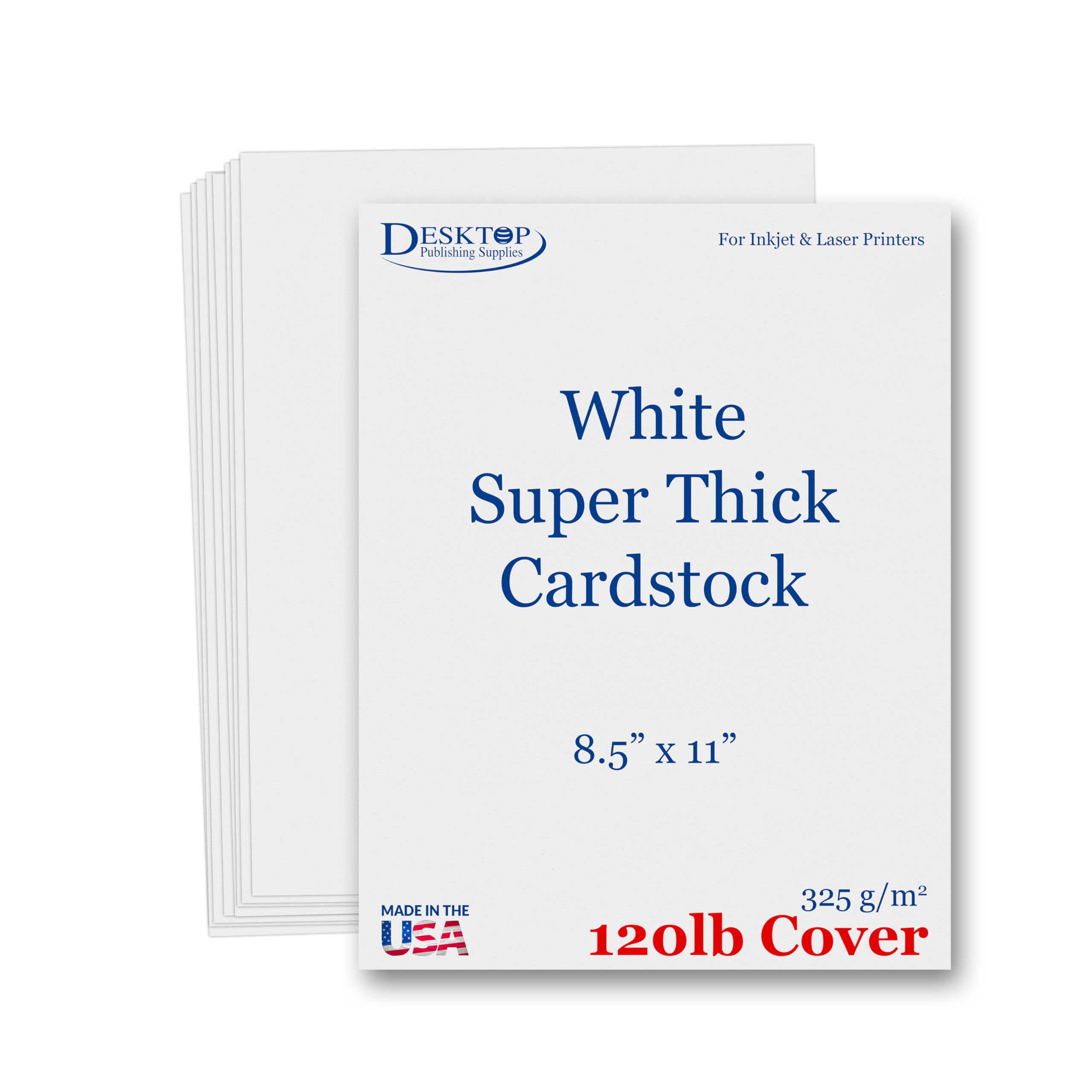
At 325 GSM (120 lb cover), this is the heaviest sheet in the lineup and it genuinely feels like thin chipboard. It is not intended for everyday home printers — most inkjet and laser models cannot handle the thickness, and the product page explicitly warns you to consult your printer manual. However, for card makers who use these sheets as card bases for high-end wedding invitations, postcards, or business cards, the rigidity is unmatched. The sheet holds its shape with zero droop, even in a large format.
The smooth matte finish provides excellent ink and toner adhesion, which matters when you are printing fine text or detailed graphics. This stock will NOT fold cleanly without being scored first — attempting a raw fold leads to a cracked surface. With a proper bone folder and scoring board, the crease is crisp and professional. Users who blend ink directly onto the surface (oxides, distress inks) report good blending with minimal pilling.
The 50-sheet count reflects the niche use case — this is a specialty product for projects where structural integrity is the primary concern. The packaging is minimal (thin poly bag), so sheets can arrive with dinged corners if shipped loosely. Order with confidence if you need an absolute tank of a base, but plan to score every fold and verify printer clearance ahead of time.
Why it’s great
- Exceptional 325 GSM thickness for ultra-rigid card bases and business cards
- Smooth matte surface takes ink toner and blended oxides well
- Made in the USA from quality stock
Good to know
- Will not feed through most home printers — verify compatibility first
- Requires scoring before every fold to prevent cracking
- Thin packaging can lead to damaged edges during shipping
4. Cranium Press White Cardstock 80 lb (176 GSM, 50 Sheets)

This 176 GSM (80 lb) white card stock from Cranium Press splits the difference between standard printer paper and heavy cover stock. It is a comfortable weight for everyday card making — substantial enough for a single-layer invitation or a menu card, yet light enough to feed through virtually any home printer without a second thought. The high bright-white shade gives printed colors a vivid pop, and the smooth finish holds crisp detail for both text and photographic images.
Users consistently note that the paper scores and folds cleanly without cracking, making it a reliable choice for die-cutting and scoring projects. Because the stock is 100% made in the USA and FSC certified, it appeals to card makers who prioritize sustainable sourcing. The 50-sheet count is ideal for sampling the quality before committing to a larger pack, or for smaller batch projects like holiday card sets.
Where this sheet shines is versatility: it handles inkjet, laser, die-cut, and scoring tools equally well. However, for thick, multi-layer card bases that require structural rigidity, some card makers prefer 200 GSM or higher. If your primary use is invitations, flyers, and simple folded cards that need to look crisp without feeling like cardboard, this is a strong mid-range pick.
Why it’s great
- Versatile 176 GSM weight works for printing, scoring, and die-cutting
- High bright-white shade produces vivid, accurate color reproduction
- FSC certified and made in the USA from sustainable sources
Good to know
- At 50 sheets, the quantity is lower than most value packs
- 80 lb weight may feel too light for a primary card base when mailing
5. TUXIYA Colored Cardstock 65 lb (180 GSM, 100 Sheets, 50 Colors)
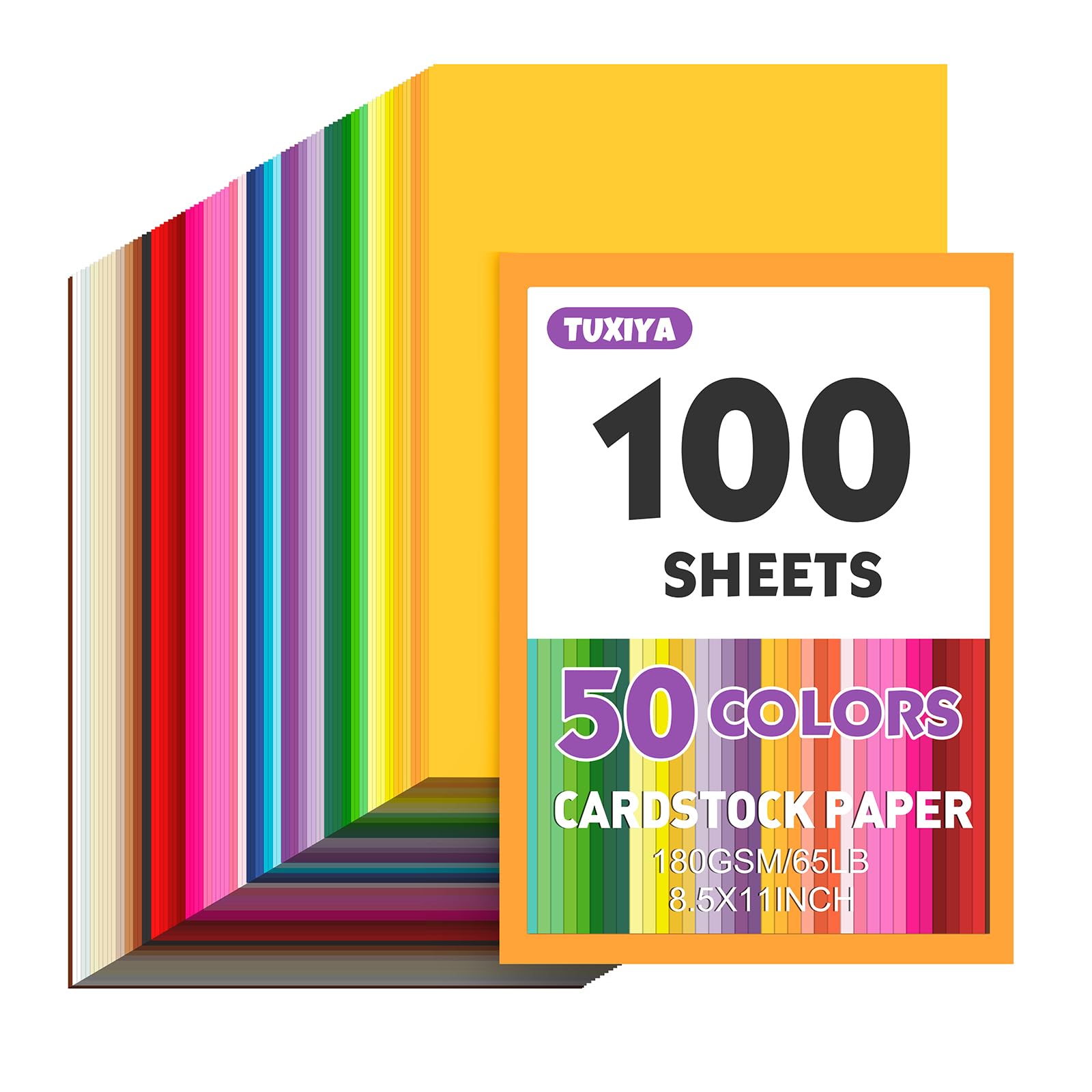
The TUXIYA Colored Cardstock pack offers 50 different colors with two sheets each, covering a wide spectrum from pastels to brights to deep jewel tones. At 180 GSM (65 lb), the weight sits comfortably in the mid-range for card making — suitable for layering, toppers, and mats, though slightly light for a structural card base that must stand upright unsupported. The paper is solid-core dyed, so cuts and folds reveal matching color rather than a white edge, which is unusual at this price tier.
Made from high-grade virgin wood pulp, the sheets are acid-free to prevent yellowing and fading over time. Users report that the paper handles markers, gel pens, and stamping well, with minimal bleeding through the surface. The primary use cases in reviews lean toward school projects, scrapbooking, and party decorations, but card makers on a budget will find the color variety invaluable for layering accents and creating dimensional card fronts.
Because this pack includes only two sheets per color, it functions best as a discovery set or a supplement for accent layers. If you need bulk quantities of a specific hue for a large card run, you will run out quickly. The light-weight feel (relative to 250 GSM stock) means folded cards may not hold a rigid shape, but for multi-layer card designs where each layer is glued to a heavy white base, these sheets add rich color without adding weight.
Why it’s great
- 50 unique colors in one pack — exceptional variety for layered card designs
- Solid-core dyeing prevents white edges on cuts and folds
- Acid-free construction protects against long-term yellowing
Good to know
- Only two sheets per color, limiting bulk use of any single shade
- 180 GSM is too light for a standalone card base that must stand upright
FAQ
What is the best GSM for a card base that will stand upright in a tent fold?
Can I use 120 lb card stock in my home inkjet printer?
Why does my colored card stock show white lines when I fold it?
Final Thoughts: The Verdict
For most users, the card stock for card making winner is the CREGEAR White Cardstock because the 250 GSM weight delivers the ideal balance of structural rigidity, printer compatibility, and clean die-cutting performance. If you want vibrant pastel colors for layered projects with maximum sheet count, grab the Astrobrights Mega Collection. And for extra-thick bases where rigidity is the priority, nothing beats the Desktop Publishing Supplies 120lb Cover — just verify your printer can handle it.

Mo Maruf
I created WellFizz to bridge the gap between vague wellness advice and actionable solutions. My mission is simple: to decode the research and give you practical tools you can actually use.
Beyond the data, I am a passionate traveler. I believe that stepping away from the screen to explore new environments is essential for mental clarity and physical vitality.