Our readers keep the lights on and my smoothie glass nicely filled. As an Amazon Associate, I earn from qualifying purchases.
If your arches collapse mid-stride, every mile becomes a battle against knee strain, shin splints, and plantar fascia pain. Arch support running shoes are engineered with medial posts, guide rails, or structured foam beds that resist overpronation and keep your foot aligned through the gait cycle. The wrong shoe can undo weeks of training; the right one makes every step feel stable and pain-free.
I’m Mohammad Maruf — the founder and writer behind WellFizz. I’ve spent years analyzing running shoe biomechanics, digging into foam density specs, heel-to-toe drop measurements, and stability architecture across dozens of brands to separate real support from marketing fluff.
Whether you’re logging daily miles or battling chronic foot pain, this guide cuts through the noise to find the best arch support running shoes for men based on build quality, support structure, and real-world durability.
How To Choose The Best Arch Support Running Shoes For Men
Not every shoe labeled “stability” delivers meaningful arch support. The real test is how the shoe controls your foot’s natural collapse without forcing your gait into an unnatural position. Here’s what separates a truly supportive running shoe from a cushioned neutral trainer.
Stability Architecture: Posts, GuideRails, or Bathtub Foam
Traditional stability shoes use a dual-density medial post — a firmer slab of foam under the arch side that resists flattening. Newer systems like Brooks’ GuideRails use raised sidewalls that gently correct alignment without a hard medial wedge. Saucony’s Hurricane and Guide models use a “bathtub” foam construction that wraps around the heel and midfoot for cradle-like support. Each approach feels different: medial posts feel firmer, GuideRails feel less intrusive, and bathtub foam gives a plush but structured ride.
Heel-to-Toe Drop and Arch Height
Drop indicates the height difference between the heel and forefoot. A 10-12mm drop shifts impact toward the heel and benefits runners with tight calves or Achilles issues, but can aggravate plantar fasciitis if the arch is already collapsing. Lower drops (4-6mm) encourage a midfoot strike and put more load on the arch itself. Runners with high arches often prefer a 8-10mm drop with additional cushion, while flat-footed runners should consider a 6-8mm drop with firmer midsole support.
Removable Insoles and Orthotic Compatibility
If you rely on custom orthotics or aftermarket arch supports, the shoe must have a fully removable insole with a flat stitch bed underneath. Many modern running shoes glue the insole down or have deep molded contours that don’t sit flush with a third-party insert. Shoe models that podiatrists commonly recommend — like the Brooks Adrenaline GTS or New Balance Fresh Foam X Vongo — typically feature removable sockliners that accommodate orthotics without raising your heel too high inside the heel cup.
Quick Comparison
On smaller screens, swipe sideways to see the full table.
| Model | Category | Best For | Key Spec | Amazon |
|---|---|---|---|---|
| Hoka Bondi 9 | Premium Max Cushion | Maximum shock absorption & arch relief | 35mm stack; 4mm drop | Amazon |
| Brooks Adrenaline GTS 23 | Stability GuideRails | Overpronation control & daily training | GuideRails; 12mm drop | Amazon |
| New Balance 880v15 | Premium Neutral | Wide toe box & plush cushioning | Fresh Foam X; 8mm drop | Amazon |
| Mizuno Wave Sky 8 | Premium Neutral | Joint pain reduction & shock absorption | Mizuno Wave; 10mm drop | Amazon |
| Brooks Adrenaline GTS 22 | Stability GuideRails | HIIT, gym & daily wear support | GuideRails; 12mm drop | Amazon |
| New Balance Vongo V6 | Stability Fresh Foam | Wide feet & plantar fasciitis | Fresh Foam X; 8mm drop | Amazon |
| Saucony Hurricane 24 | Max Stability | Distance runs & heavy runners | PWRRUN PB; 6mm drop | Amazon |
| Saucony Guide 18 | Lightweight Stability | Gym work & daily walking | PWRRUN; 6mm drop | Amazon |
| ASICS GT-1000 14 | Entry-Level Stability | Budget-friendly overpronation control | LITETRUSS; 8mm drop | Amazon |
In‑Depth Reviews
1. Hoka Men’s Bondi 9

The Hoka Bondi 9 delivers the tallest stack height in this lineup at 35mm, paired with an Active Foot Frame that sinks your foot into the foam rather than sitting on top of it. This design keeps the arch supported even under heavy pronation forces. The 4mm drop shifts loading toward the midfoot, reducing heel-strike impact that aggravates plantar fasciitis and hammertoe pain. Reviewers consistently note that the Bondi 9 eliminated chronic foot pain during long walks and daily standing.
The outsole uses durable rubber in high-wear zones, but the massive foam block means the shoe feels slightly bulky on uneven terrain — it’s best for road running, treadmill sessions, and long periods on hard floors. The engineered mesh upper breathes well but runs true to size. Users with wide feet appreciated the available wide widths that don’t pinch the midfoot.
Where the Bondi 9 truly stands apart is in its ability to absorb shock without wobbling. The wide platform and meta-rocker geometry create a smooth heel-to-toe transition that feels stable despite the extreme cushioning. Users reported resolving plantar fasciitis within three months when paired with basic stretching.
Why it’s great
- Maximum stack height with stable platform for arch relief
- Meta-rocker promotes smooth, efficient stride
- Available in wide widths without midfoot pinch
- Lightweight for a max-cushion trainer (~10.9 oz)
Good to know
- Not ideal for trail or uneven pavement
- High stack may feel unstable for runners new to max-cushion shoes
2. Brooks Men’s Adrenaline GTS 23

The Adrenaline GTS 23 is the most recommended stability shoe by podiatrists for a reason — Brooks’ GuideRails system uses raised foam sidewalls around the heel to correct overpronation without jamming a hard medial post into your arch. The 12mm drop provides generous heel cushioning that runners with tight calves and Achilles issues rely on for pain-free miles. Reviewers report 500-600 miles of usable support before the midsole noticeably compresses.
DNA Loft v2 foam strikes a balance between plushness and responsiveness — it’s soft enough for recovery runs but firm enough for daily training. The engineered mesh upper is flexible but held some users’ feet securely without pressure points. Gore-Tex versions kept feet dry through snow and heavy rain, making this a true all-weather mileage eater.
One caveat: the mesh is drafty in cold wind and lets snowmelt through in winter if you don’t spring for Gore-Tex. The colorways tend toward bold, but the support construction remains consistent across all options. The roomy toe box accommodates minor foot swelling during long runs without causing blisters.
Why it’s great
- GuideRails correct overpronation without hard medial post
- Proven durability — many users get 500+ miles
- Gore-Tex option for wet-weather running
- Removable insole for custom orthotics
Good to know
- Mesh upper is drafty in cold/wet conditions (non-GTX)
- Initial toe box may feel snug until broken in
3. New Balance Men’s Fresh Foam X 880v15
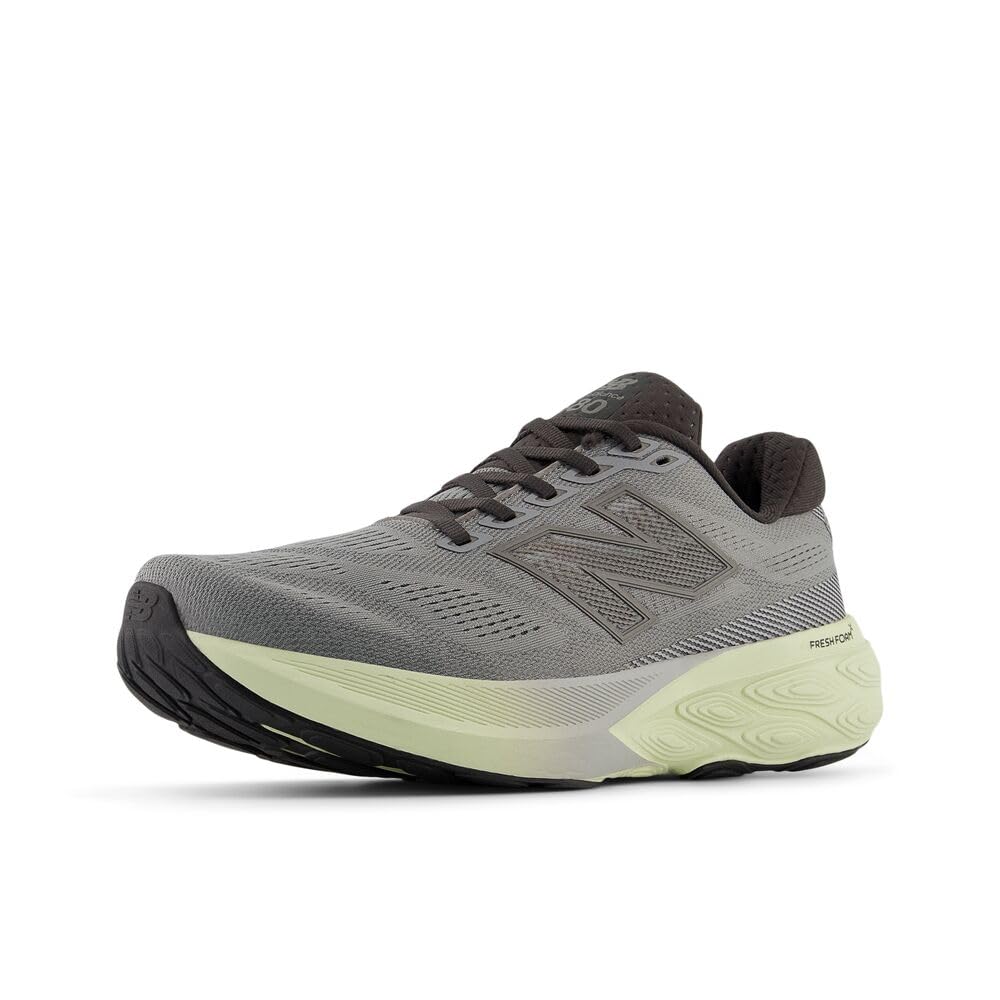
The Fresh Foam X 880v15 is New Balance’s premium neutral daily trainer, but its generous platform and padded upper provide enough inherent structure to support moderate arches without aggressive posting. The Fresh Foam X compound is softer than standard Fresh Foam, delivering a cloud-like landing that reviewers describe as “walking on air.” The 8mm drop sits in the Goldilocks zone — low enough for midfoot strikers but high enough to take pressure off the Achilles.
The knit upper has a padded collar and tongue that lock the heel in place, though one reviewer noted heel slippage if not tied tightly. The wide toe box is a standout feature for runners with bunions or splay feet — the shoe doesn’t pinch at the widest part of the foot. A half-size up is recommended if you prefer a looser fit or plan to use thick orthotics.
Some users reported that the wide version looks slightly clownish due to its broad base, and the colorway options were described as uninspiring. The shoe also leans slightly soft for walking, causing an inward lean that was fixed with firm insoles. For running, the cushioning feels balanced and responsive through 10-mile sessions.
Why it’s great
- Extremely plush Fresh Foam X midsole for shock absorption
- Wide toe box accommodates bunions and orthotics
- Lightweight feel despite generous cushioning
- True to size with good heel lock
Good to know
- Runs short; consider half-size up
- Wide version may look bulky; limited colorways
4. Mizuno Men’s Wave Sky 8
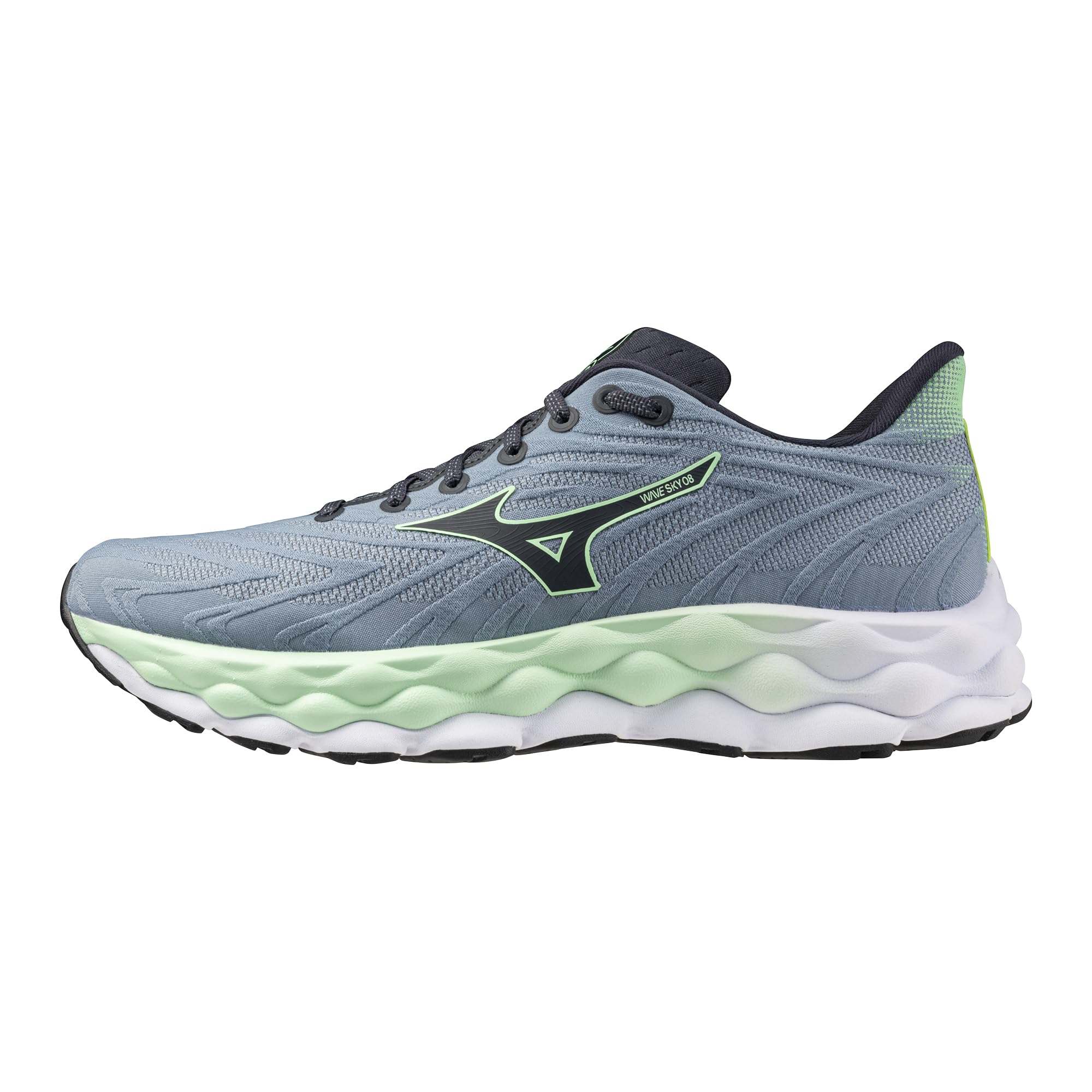
The Mizuno Wave Sky 8 uses a unique Wave plate — a corrugated thermoplastic sheet embedded in the midsole that disperses impact forces across a wider area while adding torsional rigidity. This creates a stable platform that supports the arch without needing a medial post or GuideRail. The 10mm drop provides plenty of heel cushioning for heel-strikers, and the U4icX foam delivers a plush, airy feel that one reviewer described as “a cushion of air.”
Several users reported dramatic reductions in joint pain — one saw a 90% decrease in body aches within a week of switching to the Wave Sky 8. The shoe is exceptionally lightweight for its cushioning level, making it a strong choice for recovery runs and long walks on pavement. The mesh upper is breathable and flexible with a secure heel counter.
Where the Wave Sky 8 falls short is stability on uneven pavement for heavier runners. The cushioning bottoms out faster on longer road runs if you’re over 200 lbs, and the shoe is better suited for treadmill or flat terrain. Some users needed custom orthotics to fix a slight inward lean, but the removable insole makes that straightforward.
Why it’s great
- Wave plate technology distributes impact for joint protection
- Lightweight construction with plush cushioning
- Removable insole accommodates orthotics
- True-to-size fit with secure heel lock
Good to know
- Not ideal for heavy runners on uneven pavement
- Cushioning bottoms out on longer outdoor runs
5. Brooks Men’s Adrenaline GTS 22

The Adrenaline GTS 22 is the previous-generation model that shares the same GuideRails stability architecture as the GTS 23, but at a more accessible price point. The DNA Loft foam is slightly firmer than the v23’s DNA Loft v2, providing a more responsive feel that reviewers preferred for HIIT workouts at Orange Theory and gym sessions. The GuideRails offer lateral stability during agility drills without restricting natural foot motion.
Podiatrists consistently recommend this shoe for patients with flat feet, arthritis, and overpronation. An active 71-year-old reviewer with wide flat feet reported that the GTS 22 eliminated foot pain entirely. The shoe is machine washable, which is a practical bonus for runners who hit muddy trails or sweaty gym floors. The wide toe box accommodates foot swelling during long shifts for nurses and retail workers.
The trade-off is that the EVA foam breaks down faster than modern nitrogen-infused foams — users noticed compression after 300-400 miles of running. The outsole tread also wears more quickly than the GTS 23’s rubber, with some reviewers reporting chunks missing after two months of outdoor use. This is best treated as a gym/indoor trainer rather than a high-mileage road shoe.
Why it’s great
- Firmer GuideRails stability ideal for HIIT and gym work
- Podiatrist-recommended for flat feet and arthritis
- Machine washable for easy maintenance
- Available in wide widths with roomy toe box
Good to know
- EVA foam wears faster than modern foams
- Outsole durability is average; avoid rough pavement
6. New Balance Men’s Fresh Foam X Vongo V6

The Fresh Foam X Vongo V6 is New Balance’s dedicated stability model, using a medial post embedded in the Fresh Foam X to resist overpronation while maintaining plush cushioning. The 8mm drop and wide platform provide a stable base for runners with high arches and plantar fasciitis. Podiatrists frequently recommend it as an alternative to the Brooks Adrenaline for patients who need a roomier toe box.
Reviewers with wide feet praised the generous forefoot volume — the shoe doesn’t squeeze the widest part of the foot even during long runs. The removable insole is a standout feature for orthotic users; several reviewers swapped the stock insole for affordable aftermarket arch supports without raising the heel too high. The Fresh Foam X compound delivers a smooth, soft ride that absorbs impact without feeling mushy.
Some users reported heel slippage if the laces aren’t cinched tightly, likely due to the plush heel collar letting the foot shift slightly. The upper is breathable and lightweight, but the mesh doesn’t offer much water resistance. The outsole rubber is adequate for road and track use but wears faster on abrasive asphalt.
Why it’s great
- Medial post stability with plush Fresh Foam X cushioning
- Removable insole for custom orthotics
- Wide toe box ideal for high arches and plantar fasciitis
- Podiatrist-recommended for wide feet
Good to know
- Heel slippage possible without tight lacing
- Outsole wears faster on coarse asphalt
7. Saucony Men’s Hurricane 24
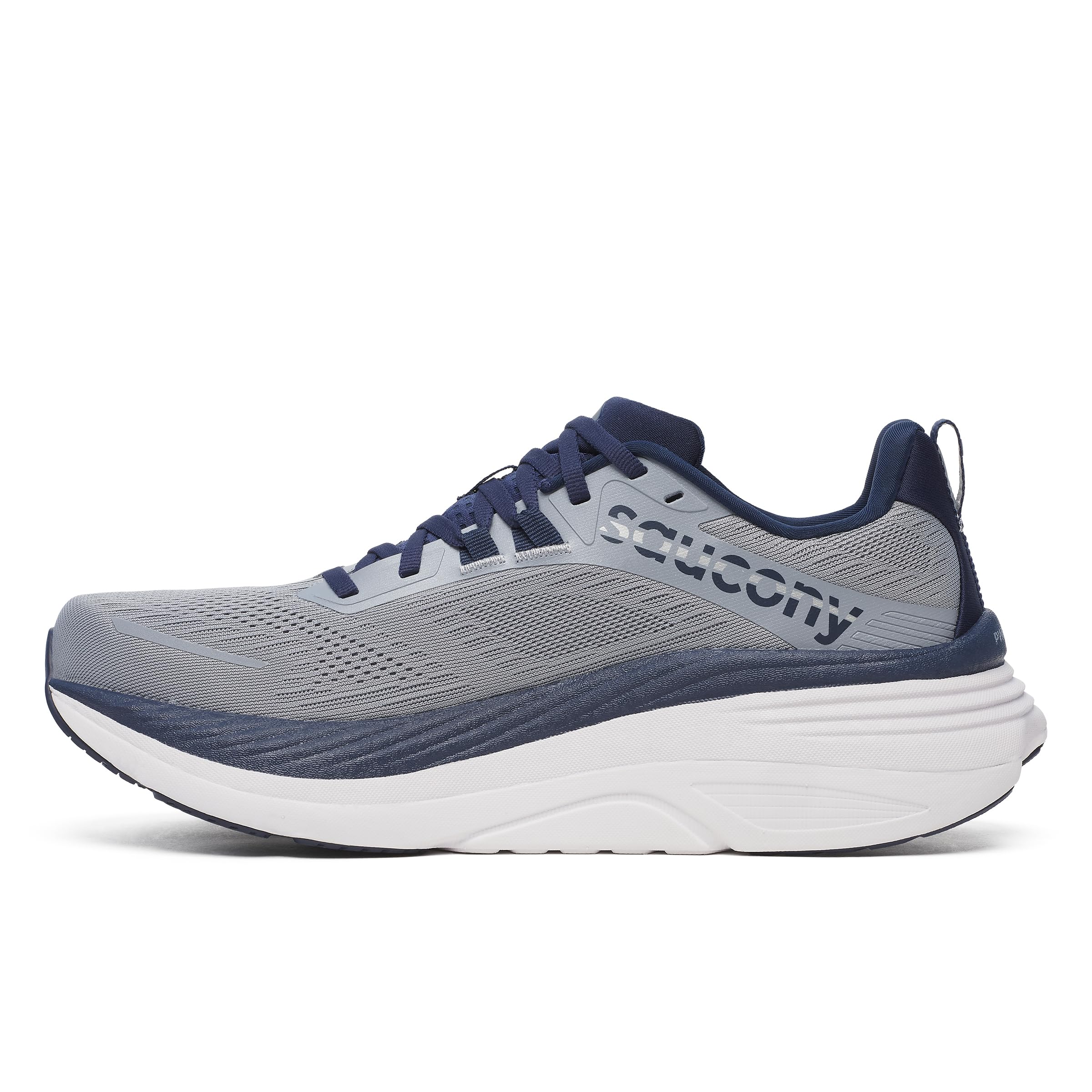
The Saucony Hurricane 24 uses a “bathtub” foam construction — the PWRRUN PB midsole wraps up around the heel and midfoot to cradle the foot in a structured pocket. This design provides excellent arch support without the firmer feel of a traditional medial post. The 6mm drop suits midfoot strikers and flat-footed runners who need a low-drop stability option that doesn’t aggravate the arch.
Users with patellar tendonitis and flat feet reported cloud-like comfort during 20+ mile runs and 2-hour zone 2 sessions. The shoe is heavier than neutral trainers (around 11.5 oz), so it’s not built for speed work or 5K PR attempts — but for long, slow distance and recovery runs, it’s among the most supportive options available. The PWRRUN PB foam (a Pebax-based material) retains its bounce longer than standard EVA, maintaining support for about a year of regular use.
Build quality inconsistency was noted: pairs made in Vietnam were narrower and more comfortable, while China-assembled pairs were wider and firmer. The soft, non-intrusive feel of the guide system means some runners accustomed to a firm medial post may feel it lacks active pronation control. Great for walking and standing all day as well.
Why it’s great
- Bathtub foam construction cradles the arch naturally
- PWRRUN PB foam retains bounce for ~1 year of heavy use
- Excellent for long-distance and recovery runs
- Cloud-like comfort for flat feet and knee pain
Good to know
- Heavier than stability competitors
- Inconsistent fit across manufacturing locations
8. Saucony Men’s Guide 18
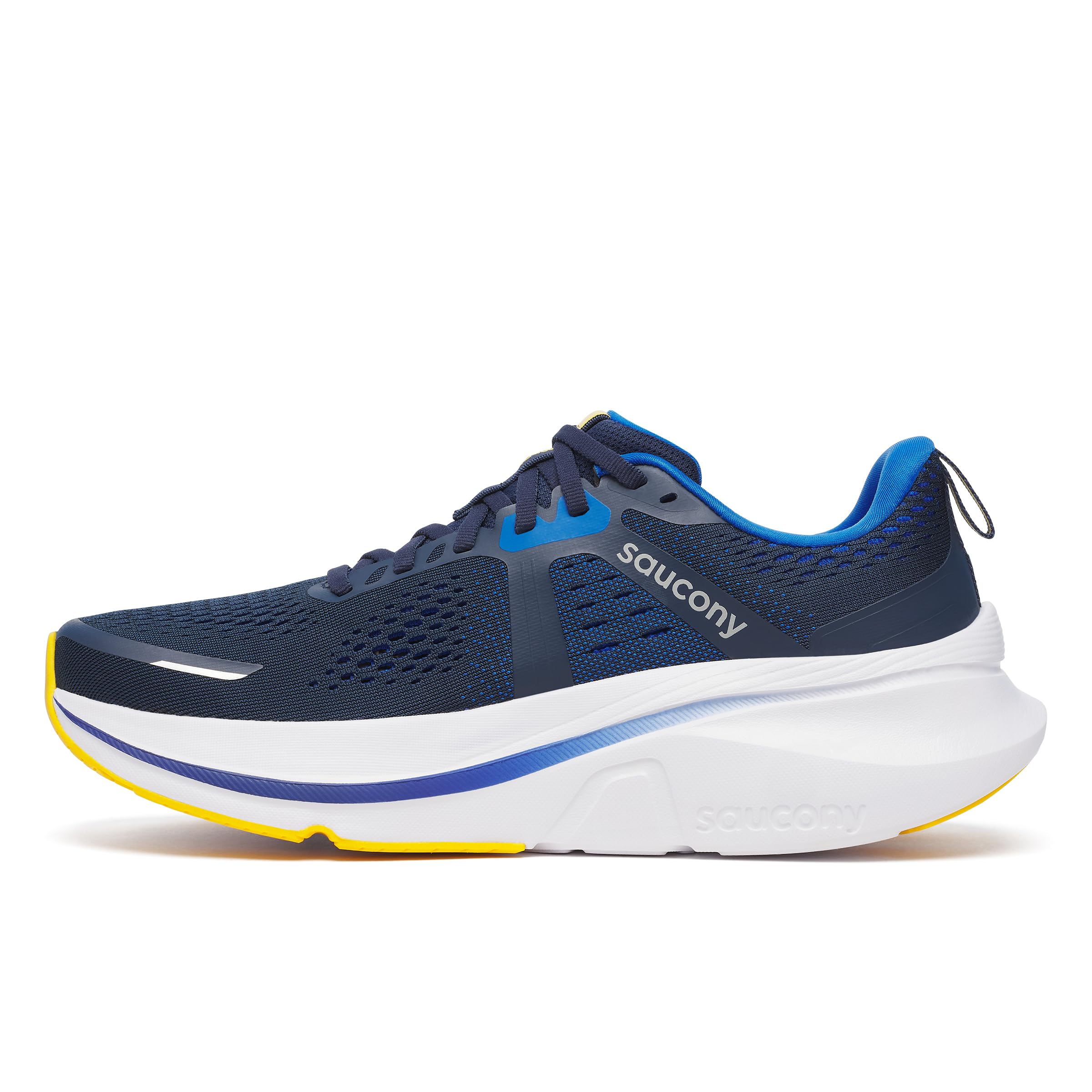
The Guide 18 is Saucony’s lighter stability offering, using a medial post in the PWRRUN foam to deliver arch support without the bulk of the Hurricane line. The 6mm drop and flexible upper create a natural feel that reviewers described as “light as old racing flats” yet with cloud-like cushioning. The shoe evenly distributed wear patterns even on heavy heel strikers, suggesting good gait alignment.
Users with flat feet and wider builds praised the decent arch support and generous midsole volume. The shoe resolved foot pain and numbness caused by higher-drop, narrower shoes. The 4E wide version features a flexible upper that doesn’t restrict the toes, making it a solid choice for gym work and daily walking on hard surfaces. The outsole rubber holds up well over time.
Compared to the Guide 14/15, the 18 is narrower with a smaller toe box — not ideal for runners with very wide forefeet. The mesh upper developed a hole at the big toe after five months for one non-runner who wore socks daily, suggesting the upper durability is average. The white midsole shows dirt quickly, so if aesthetics matter, consider darker colorways.
Why it’s great
- Lighter weight with effective medial post support
- Even wear distribution on heavy heel strikers
- Good for flat feet, gym work, and daily walking
- Flexible upper accommodates 4E wide
Good to know
- Narrower toe box than earlier Guide versions
- Mesh upper durability is average for daily use
9. ASICS Men’s GT-1000 14
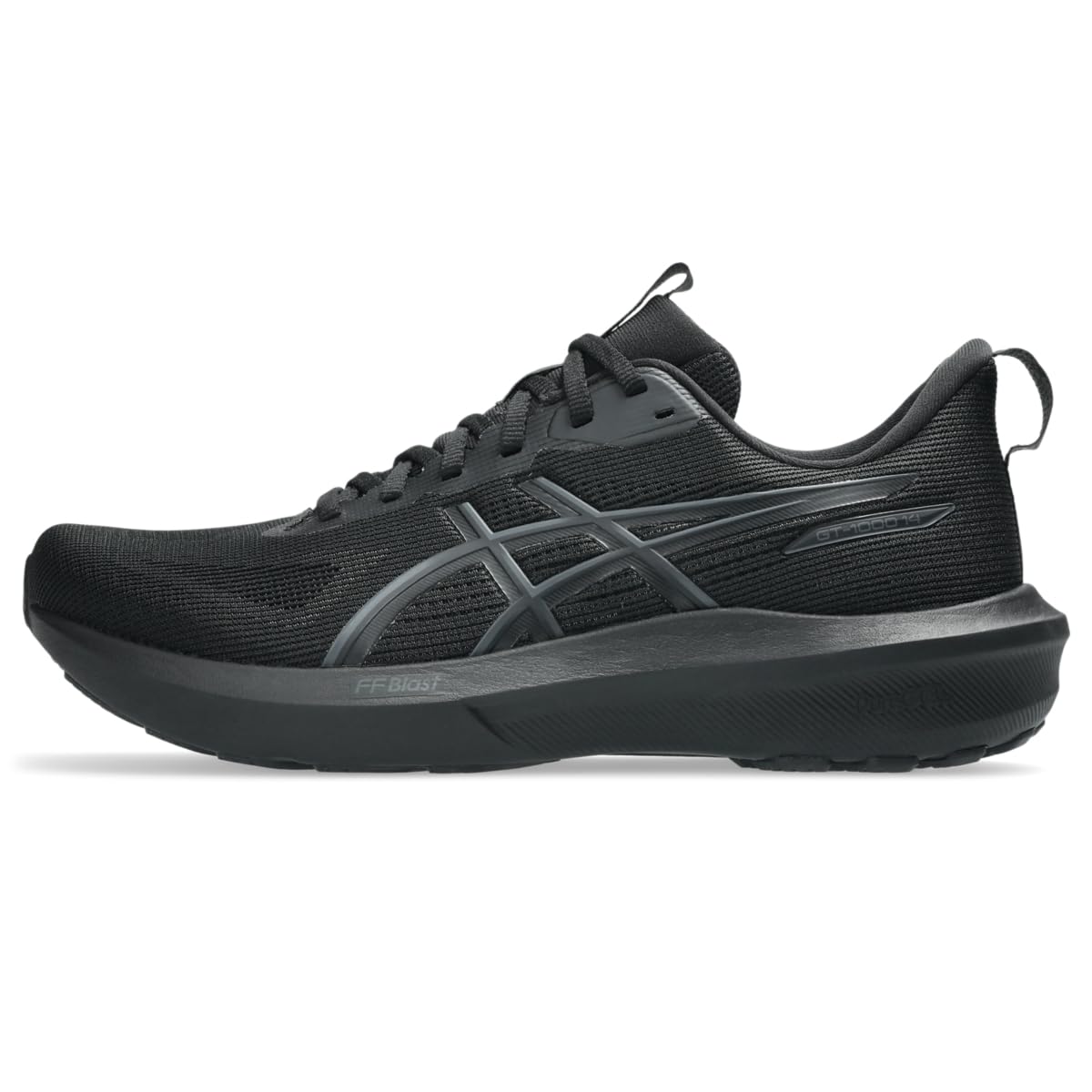
The GT-1000 14 is the most accessible entry in this list, using ASICS’ LITETRUSS technology — a dense foam block on the medial side that resists overpronation without adding significant weight. The 8mm drop and Flight Foam midsole provide adequate cushioning for daily training and cross-country use. Reviewers with overpronation and fallen arches found it corrected their gait effectively at a fraction of the cost of premium stability shoes.
The X-wide option received consistent praise for accommodating bunions and wide feet without pinching the toes. Multiple reviewers mentioned reduced foot pain during long walking shifts and general daily wear. The padded heel box provides solid Achilles support, which one reviewer with a calcified tendon found comfortable. The outsole is durable enough for both road and light trail use.
The midsole is noticeably less plush than premium options like the Hoka Bondi or New Balance Fresh Foam X. Some users described the ride as “a bit flat” when walking, though it softens up during running. The upper is breathable but lacks the premium feel of higher-end ASICS models. This is a solid pick for budget-conscious runners who need genuine arch support without sacrificing fit.
Why it’s great
- LITETRUSS provides effective overpronation control
- X-wide option fits bunions without pinching
- Durable outsole for road and light trail
- Significantly lighter than similar stability shoes
Good to know
- Midsole feels firmer and less cushioned than premium competitors
- Upper materials feel less premium than higher-priced ASICS models
FAQ
Can I use custom orthotics in arch support running shoes?
How do I know if I need stability shoes or neutral shoes for arch support?
Will arch support running shoes cure my plantar fasciitis?
How often should I replace arch support running shoes?
Final Thoughts: The Verdict
For most users, the best arch support running shoes for men winner is the Hoka Bondi 9 because its max-cushion stack and Active Foot Frame provide the most dramatic arch relief and shock absorption for runners of all sizes. If you want GuideRails stability that corrects overpronation without a hard medial post, grab the Brooks Adrenaline GTS 23. And for a budget-friendly entry that still delivers LITETRUSS overpronation control, nothing beats the ASICS GT-1000 14.

Mo Maruf
I created WellFizz to bridge the gap between vague wellness advice and actionable solutions. My mission is simple: to decode the research and give you practical tools you can actually use.
Beyond the data, I am a passionate traveler. I believe that stepping away from the screen to explore new environments is essential for mental clarity and physical vitality.