Our readers keep the lights on and my smoothie glass nicely filled. As an Amazon Associate, I earn from qualifying purchases.
Your ten-year-old has graduated from candy-colored luck-fests. They crave real strategy, complex rule sets, and the thrill of outsmarting an opponent—but the shelf is stuffed with either babyish spinner games or complex war simulations that take three hours to set up. The sweet spot is a game that flexes their cognitive muscles without requiring a law degree to understand the rules.
I’m Mohammad Maruf — the founder and writer behind WellFizz. I’ve spent over a decade analyzing children’s gaming hardware, from component durability to age-appropriate mechanic complexity, ensuring each pick here actually delivers on its educational and entertainment promises.
This guide focuses exclusively on titles that balance critical thinking, social interaction, and replayability. Whether you are looking for a cooperative team builder or a competitive head-to-head puzzle, finding the absolute best board games for 10 year olds means filtering by real play-test data, not flashy box art.
How To Choose The Best Board Games For 10 Year Olds
Ten-year-olds are in a cognitive sweet spot: they can handle multi-step strategies and abstract thinking but still need clear, digestible rules. The wrong game leads to frustration in under ten minutes. The right one creates family memories and sharpens planning skills.
Match Mechanic to Temperament
Does your child love building and tinkering? Prioritize games with spatial reasoning components like marble runs or grid construction. If they thrive on language and deduction, word-association games with hidden roles will click. For kids who hate losing, cooperative games where everyone wins or loses together remove the sting of elimination.
Check the True Play Time
A game that claims “20 minutes” but takes 45 to teach erodes enthusiasm. Look for estimated play times under 45 minutes—long enough for strategic depth, short enough to fit a weeknight. The best entries here clock between 20 and 40 minutes once the rules are internalized.
Component Durability Matters
Cards that warp, boards that crease, and tokens that snap after three uses kill replay value. Examine customer feedback about cardboard thickness, card stock quality, and whether the box insert actually stores pieces without a mess. A game that survives a dozen sessions justifies its shelf space.
Quick Comparison
On smaller screens, swipe sideways to see the full table.
| Model | Category | Best For | Key Spec | Amazon |
|---|---|---|---|---|
| Gravity Maze | STEM Logic | Independent puzzle solving | 60 progressive challenges | Amazon |
| Codenames 2nd Edition | Word Association | Large group party play | 400 codenames on 200 cards | Amazon |
| Exploding Kittens Board Game | Party Strategy | High-energy family night | Transformable flip board | Amazon |
| Space Escape | Cooperative | Teamwork without conflict | 2-4 players, no reading | Amazon |
| Tetris: The Board Game | Puzzle Duel | Competitive spatial strategy | 128 Tetrimino pieces | Amazon |
In‑Depth Reviews
1. ThinkFun Gravity Maze

Gravity Maze sits at the rare intersection of pure logic and tactile fun. The premise is deceptively simple: build a path using translucent towers so that a marble drops from a start point to a target piece. What makes it ideal for a ten-year-old is the graduated challenge deck—60 cards ranging from beginner to expert. Early puzzles take under a minute; later ones demand multi-step planning and spatial rotation skills that will stump most adults on the first try.
The component quality justifies its mid-range position in any collection. The plastic towers snap together firmly without wobbling, the marbles roll cleanly through each chute, and the grid base holds everything in place during play. Unlike fragile cardboard puzzles, this is a build-and-test system that survives repeated assembly and disassembly without wear. The instant feedback—did the marble reach the target or fly off the edge—keeps kids engaged in trial-and-error without needing a parent to referee.
Where Gravity Maze truly excels is its solo-play viability. Many board games for this age group require at least two players, leaving an only child or a kid with a busy sibling schedule stuck. This game works as a self-directed brain-teaser, making it an excellent screen-time alternative for independent afternoons. The only shortcoming is that advanced solvers may blow through the 60-card deck faster than expected, though creative kids often start designing their own tower configurations once the official challenges are exhausted.
Why it’s great
- Progressive difficulty keeps kids challenged for weeks
- No reading required—pure spatial reasoning
- Durable plastic components survive repeated assembly
Good to know
- Limited to single-player unless taking turns
- Advanced players may finish all 60 cards quickly
2. CGE Codenames Board Game (2nd Edition)
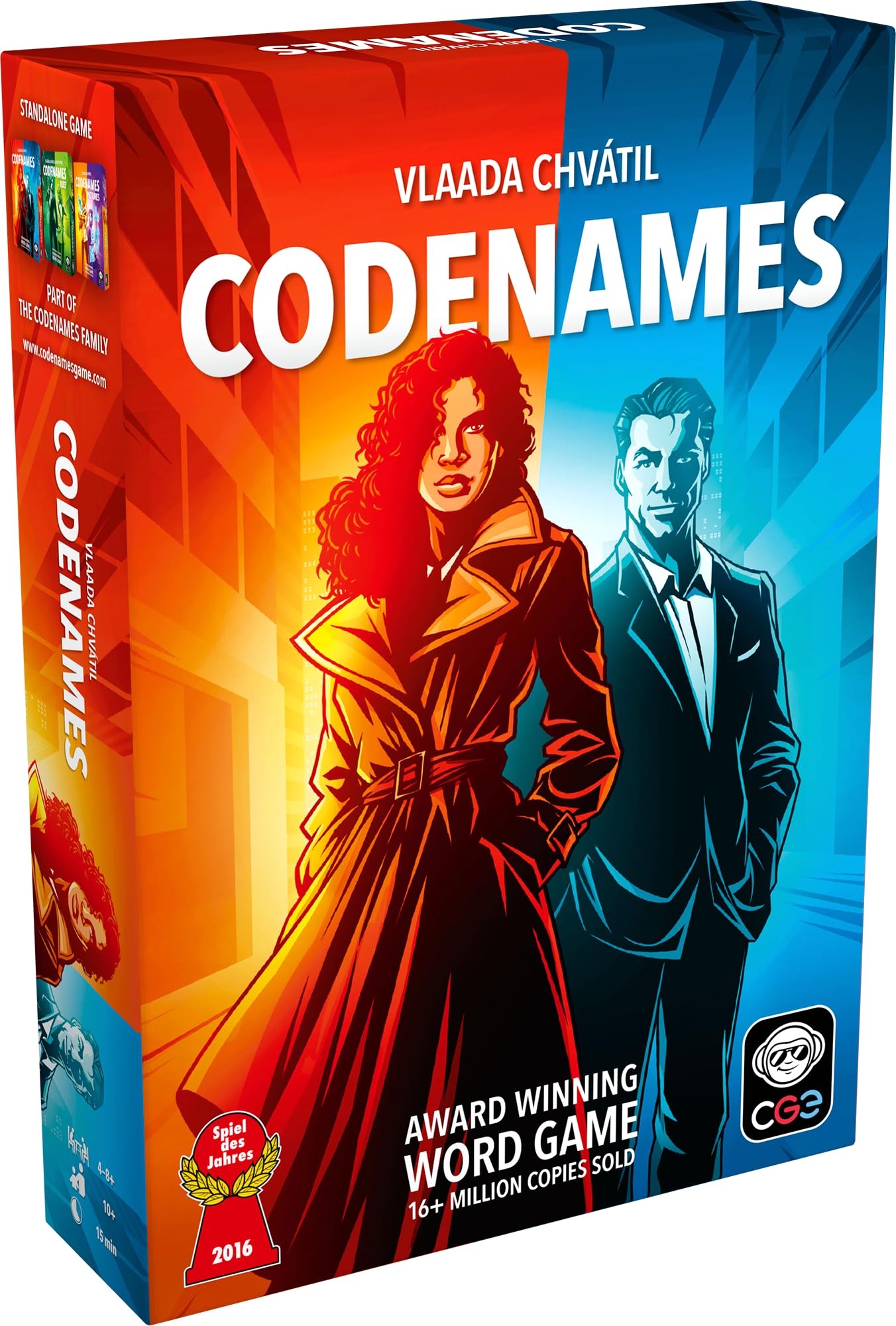
Codenames has earned its place as a modern classic for a reason: it scales effortlessly from four to eight-plus players without losing tension or devolving into chaos. The 2nd Edition refreshes the word list and artwork while keeping the core mechanic identical—a spymaster gives a one-word clue linking multiple codenames on a 5×5 grid, while their teammates guess which tiles belong to their agents. The assassin tile is a brilliantly cruel twist: one wrong guess ends the game instantly.
For ten-year-olds, the game builds vocabulary, lateral thinking, and team communication in a way that feels like a secret mission rather than homework. The key is that the spymaster role rotates every round, so every player gets a turn at both giving and receiving clues. The 400 codenames on 200 cards provide enormous replay variety—even after a dozen sessions, you rarely see the same grid arrangement twice. The box is compact, making it an easy travel companion for sleepovers or family vacations.
On the downside, the game lives or dies on reading fluency. A ten-year-old who is still building literacy may struggle as spymaster, though they can still participate as a guesser. The game also suffers from occasional downtime while the spymaster thinks of a clue, but this is a feature rather than a bug—it teaches kids to weigh precision against risk. The card stock and tile quality are solid, though the cardboard insert could be better organized for quick setup and teardown.
Why it’s great
- Scales seamlessly from 4 to 8+ players
- High replayability with 400 unique codenames
- Encourages creative thinking and teamwork
Good to know
- Requires confident reading skills for spymaster role
- Downtime during clue-giving may slow pace
3. Exploding Kittens: The Board Game
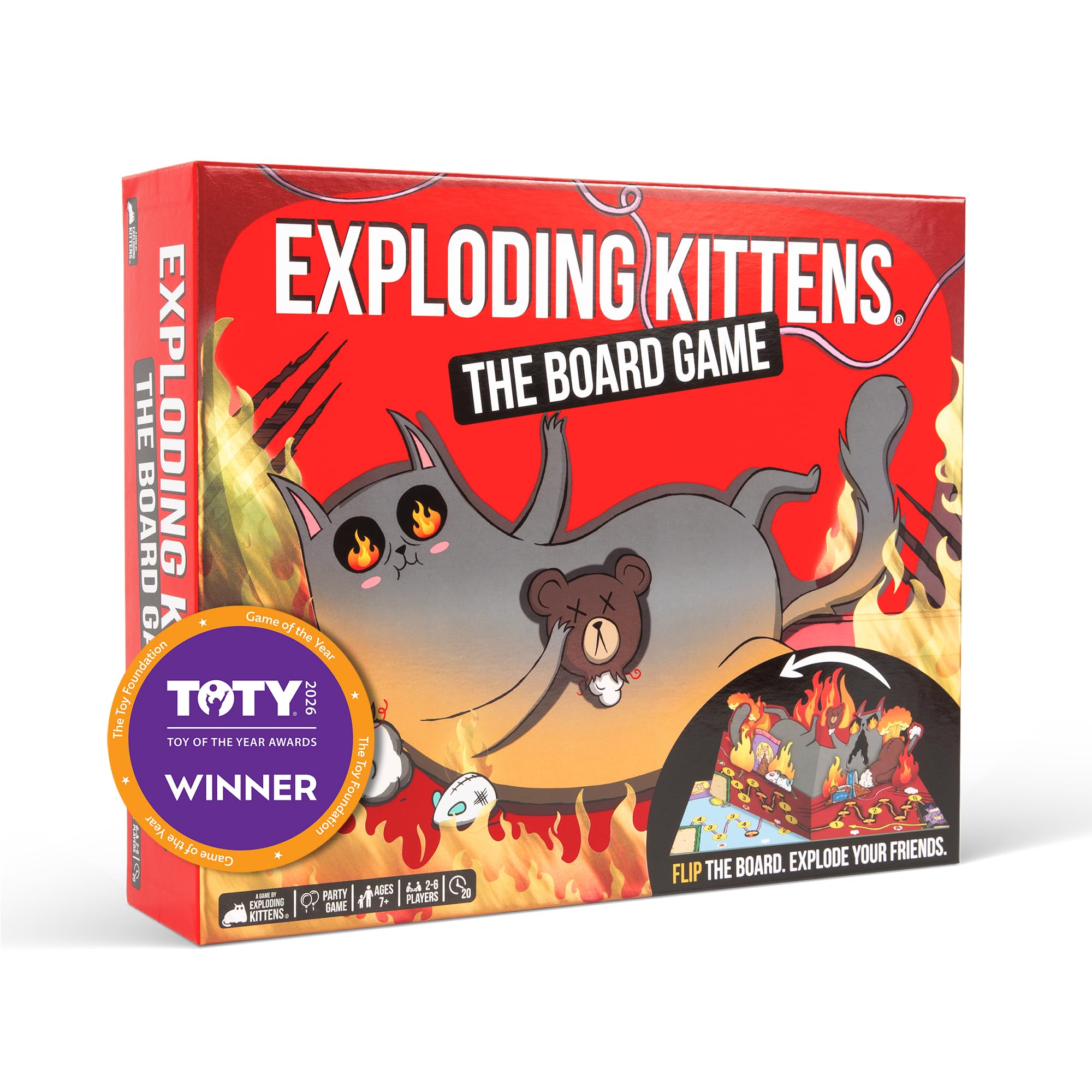
Exploding Kittens expands its wildly popular card-game formula into a full board-game experience that is equal parts chaos and strategy. The headline feature is the pop-up game board that physically flips mid-game, revealing an entirely new path when a player lands on a danger space. This mechanical twist injects genuine surprise into every session—just when a ten-year-old thinks they have a safe route mapped out, the board changes shape and all bets are off.
The component list is generous: 65 action cards, 26 move cards, six character standees, and the three-dimensional board itself. The artwork retains the signature irreverent cat-and-taco humor that the brand is known for, which resonates perfectly with the 8–12 demographic. Play time hovers around 30–45 minutes once the rules click, and the “pee your pants laughing” tone means even losing is entertaining. Kids can play as characters like TacoCat or GnomeCat, which adds a layer of silly identity that keeps the energy high.
That said, the flip-board mechanism is stiff out of the box and requires a few games to loosen up. The card stock, while serviceable, is noticeably thinner than the original Exploding Kittens card game. The game also skews more toward luck than pure strategy—the hidden information and flip-board randomness mean a skilled player can still lose to a lucky draw. For families who prefer deterministic strategy, this may feel less satisfying. But for high-energy game nights with laughter as the primary goal, it delivers exactly what it promises.
Why it’s great
- Unique flip-board mechanic changes the game mid-play
- Whimsical artwork and humor appeal to pre-teens
- Generous component count for the category
Good to know
- Flip board is stiff and needs break-in
- Card stock thinner than the original card game
4. Peaceable Kingdom Space Escape

Space Escape stands out in this lineup because it is purely cooperative—players work together as mole rats trying to gather equipment and reach an escape pod before snakes overrun the space station. Designed by the inventor of Pandemic, this game distills cooperative tension into a 20–30 minute package that is accessible to kids as young as seven but surprisingly challenging for adults. The game demands communication and shared decision-making, not just individual tactics.
The lack of reading is a major advantage for mixed-age groups. All actions are communicated through card draws and token placement, so a younger sibling or a child with reading struggles can participate fully without handholding. The component quality is solid for the category—a sturdy game board, thick card stock, and plastic mole-rat movers that survive frequent handling. The included “challenge game” variant adds unlockable cards after the base game is mastered, extending the shelf life well beyond a dozen plays.
Where Space Escape may divide opinion is its difficulty. Multiple customer reports indicate that winning requires precise coordination and a fair bit of luck—some groups win only one in four attempts. This makes victory genuinely satisfying, but kids who are easily frustrated by repeated failure may lose interest. The cooperative format eliminates the sting of being eliminated, but losing together can still feel demoralizing. If your ten-year-old thrives on pure competition, this may feel too collaborative; for families seeking a non-combative game night option, it is near-perfect.
Why it’s great
- True cooperative play with no player elimination
- No reading required—accessible to all skill levels
- Challenge card variant boosts replayability
Good to know
- Winning requires luck as much as strategy
- May frustrate kids who dislike losing
5. Spin Master Games Tetris: The Board Game
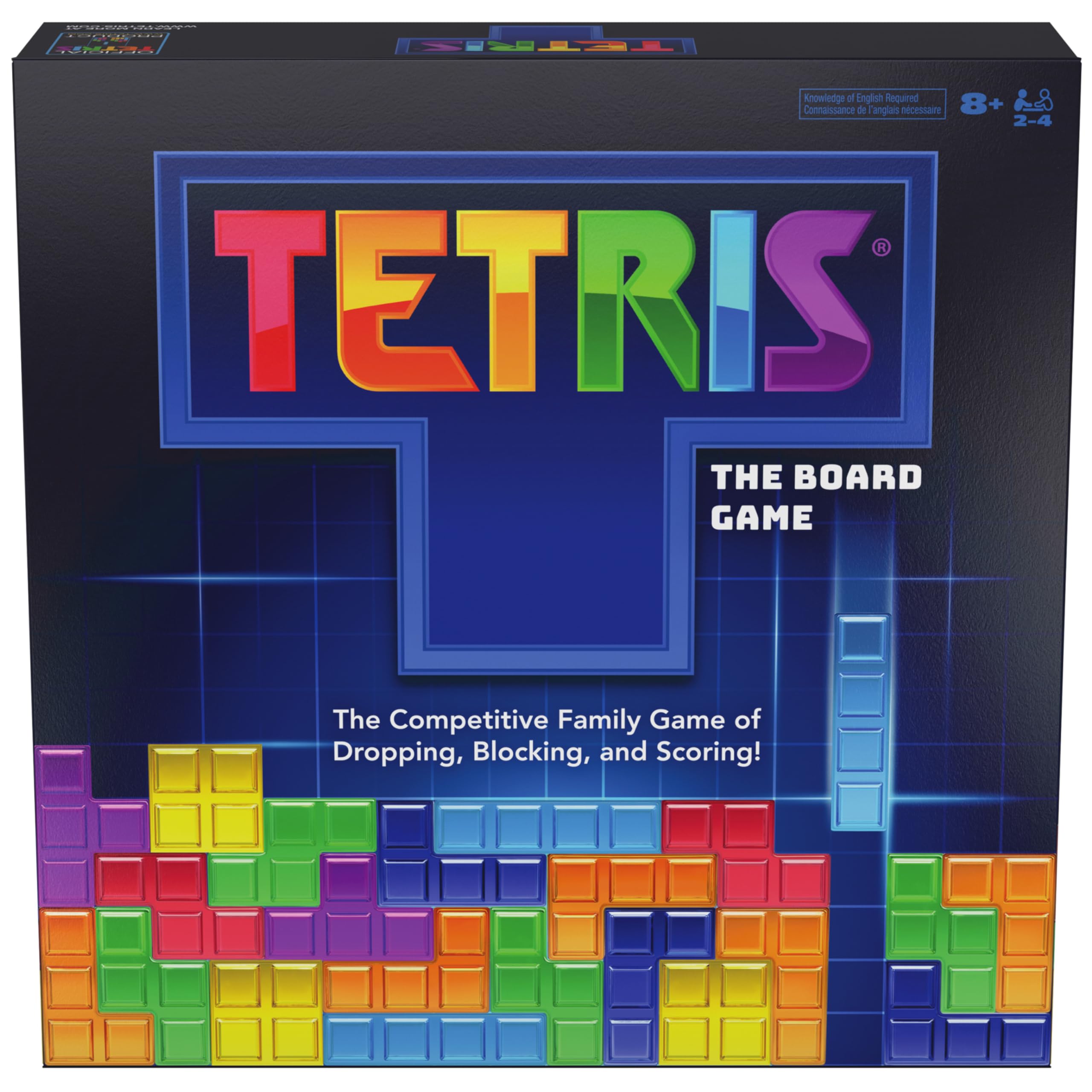
Translating a digital puzzle into a physical tabletop game is a risky proposition, but Spin Master has pulled it off with surprising fidelity. Each player gets their own grid and a pool of translucent Tetrimino pieces. You draw cards to determine which piece to place, racing to complete lines while strategically dropping “garbage” pieces into opponents’ grids using special action spaces. The result is a head-to-head spatial race that captures the same satisfying “tuck and clear” feeling of the original video game.
The component count is substantial: 128 Tetriminos, four grids, a game board, player cards, and minos. The semi-translucent pieces are a nice touch, visually echoing the digital source material. Play time clocks in around 20 minutes, making it one of the fastest games in this roundup—perfect for quick rounds between homework or as a warm-up to a longer game night. The competitive mechanic of blocking opponents adds a layer of strategy beyond simple line-clearing, forcing kids to think about both their own grid and their opponent’s future moves.
The main drawback is that the variability of drawn cards can create luck-heavy situations where one player has an obviously superior hand. Some pieces arrived slightly bent out of the box, though this seems to be a packaging issue rather than a consistent quality problem. The game also requires every player to have a clear view of their own grid, making it less ideal for cramped table spaces. For families looking to introduce classic puzzle logic in a competitive, social format, this is a fresh take that justifies its place on the shelf.
Why it’s great
- Faithful adaptation of the classic digital puzzle
- Fast 20-minute play sessions fit busy schedules
- Competitive blocking mechanic adds strategic depth
Good to know
- Card draw luck can swing outcomes significantly
- Some units arrive with bent pieces
FAQ
Are board games for 10 year olds still educational or just entertainment?
How do I know if a game rated “8+” is too easy or too hard for my ten-year-old?
Should I prioritize cooperative or competitive games for this age group?
Final Thoughts: The Verdict
For most families, the best board games for 10 year olds winner is the ThinkFun Gravity Maze because it offers the deepest puzzle progression in a solo-friendly format that grows with the child’s skill. If you want a game that lights up a crowded room, grab the Codenames 2nd Edition. And for a cooperative experience that teaches teamwork without any reading requirement, nothing beats Peaceable Kingdom Space Escape.

Mo Maruf
I created WellFizz to bridge the gap between vague wellness advice and actionable solutions. My mission is simple: to decode the research and give you practical tools you can actually use.
Beyond the data, I am a passionate traveler. I believe that stepping away from the screen to explore new environments is essential for mental clarity and physical vitality.