Our readers keep the lights on and my smoothie glass nicely filled. As an Amazon Associate, I earn from qualifying purchases.
The bony prominence of a bunion doesn’t happen in isolation — it’s almost always driven by a collapsed or unstable arch that lets the foot roll inward, shifting the big toe out of alignment. Buying a shoe insert that only pads the bunion while ignoring the arch is like treating the smoke and leaving the fire burning under your foot.
I’m Mohammad Maruf — the founder and writer behind WellFizz. I’ve spent the last several years analyzing foot orthotic biomechanics, reviewing over 400 different insole designs, and mapping how arch height, shell rigidity, and heel cup depth correlate with real-world pain relief for bunion sufferers.
This guide focuses on the specific structural support needed to unload the medial forefoot and prevent the bunion from worsening, and it will help you find the best arch support for bunions by prioritizing rigid midfoot shells, deep heel stabilization, and metatarsal lift rather than just toe spacers or gel pads.
How To Choose The Best Arch Support For Bunions
Not all arch supports address the mechanics of a bunion. A hallux valgus deformity develops when the first metatarsal head drifts medially and the big toe angles toward the second toe. The right insole must correct the underlying pronation and offload the sesamoids — not just soften the shoe.
Rigid Arch Profile vs. Soft Cushioning
A gel pad over the bunion bump is useless if the midfoot is still collapsing during push-off. Look for a semi-rigid or rigid shell made from TPU or polyamide that maintains its shape under load. This prevents the first ray from hypermobility and keeps the medial column stable. Soft EVA-only insoles break down quickly and allow the arch to collapse, which aggravates the bunion.
Heel Cup Depth and Varus Wedge
A deep heel cup — 18 mm or more — cradles the calcaneus and controls rearfoot valgus, which is the mechanical driver of hallux valgus in many feet. Some premium orthotics also include a subtle varus wedge (an inward tilt in the heel post) that further corrects pronation. This reduces the torsional force on the first metatarsophalangeal joint every time you step.
Full-Length vs. 3/4-Length Orthotics
Full-length insoles distribute pressure across the entire foot and work best in boots and sneakers where volume is not a concern. 3/4-length orthotics leave the toe box empty, which is ideal for tight shoes or for bunion sufferers who need to wear a toe spacer alongside the support. The trade-off is stability: full-length designs stay in place better during dynamic activities.
Quick Comparison
On smaller screens, swipe sideways to see the full table.
| Model | Category | Best For | Key Spec | Amazon |
|---|---|---|---|---|
| Fit Geno Heavy Duty | Full-Length | All-day wear for heavy frames | Removable TPU arch plate | Amazon |
| OUOKK 3/4-Length | 3/4 Length | Tight shoes and toe spacer use | 26 mm arch height | Amazon |
| WalkHero Rigid Shell | Full-Length | Heavy duty over 220 lbs | Polyamide arch shell | Amazon |
| BestHalo High Arch | Full-Length | High arches with plantar fasciitis | Gel + EVA cushioning | Amazon |
| Professional Heavy Duty | Full-Length | Budget-friendly entry level | Poron cushioning layer | Amazon |
In‑Depth Reviews
1. Fit Geno Arch Support Plantar Fasciitis Insoles
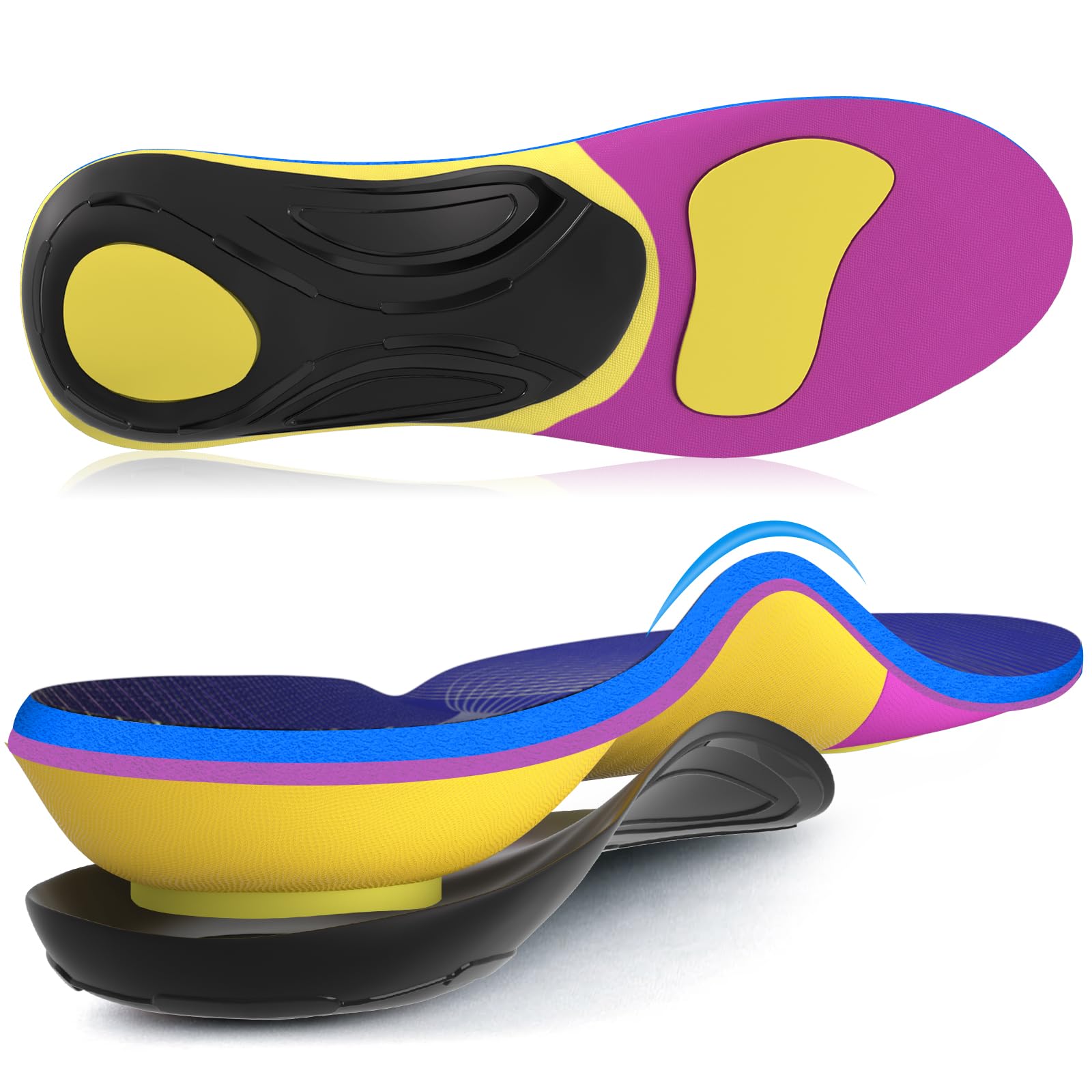
Fit Geno builds its arch support around a rigid TPU plate that provides the kind of torsional stability needed to prevent the medial column from collapsing — the exact mechanical failure that drives hallux valgus. The shell is removable, which gives you the option to wear the insole with or without the rigid frame depending on the shoe volume and the activity level. For bunion correction, keeping the plate in is the right choice.
The Poron foam layer under the heel and metatarsal heads absorbs shock during gait without interfering with the corrective shell. It is built with heavier frames in mind, supporting over 220 lbs, and the deep heel cup effectively cradles the calcaneus to limit rearfoot pronation. Users report noticeable relief within the first shift, even during 10-hour standing days in work boots or sneakers.
Breathable fabric construction keeps moisture down during extended wear, and the layered design lets you trim the bottom layer for a precise fit without destroying the arch profile. Some flat-footed users found the rigid brace too stiff for light walking during an initial adjustment week, but after gradual adaptation the structure delivers lasting relief without the soft collapse that cheaper insoles allow.
Why it’s great
- Removable TPU plate lets you adjust rigidity for different shoes
- Deep heel cup stabilizes rearfoot valgus linked to bunion formation
- Poron foam absorbs impact without reducing arch support
Good to know
- Rigid brace may cause discomfort in flat-footed users during first week of adaptation
- Requires gradual break-in for best results
2. OUOKK Plantar Fasciitis Relief 3/4-Length Arch Support
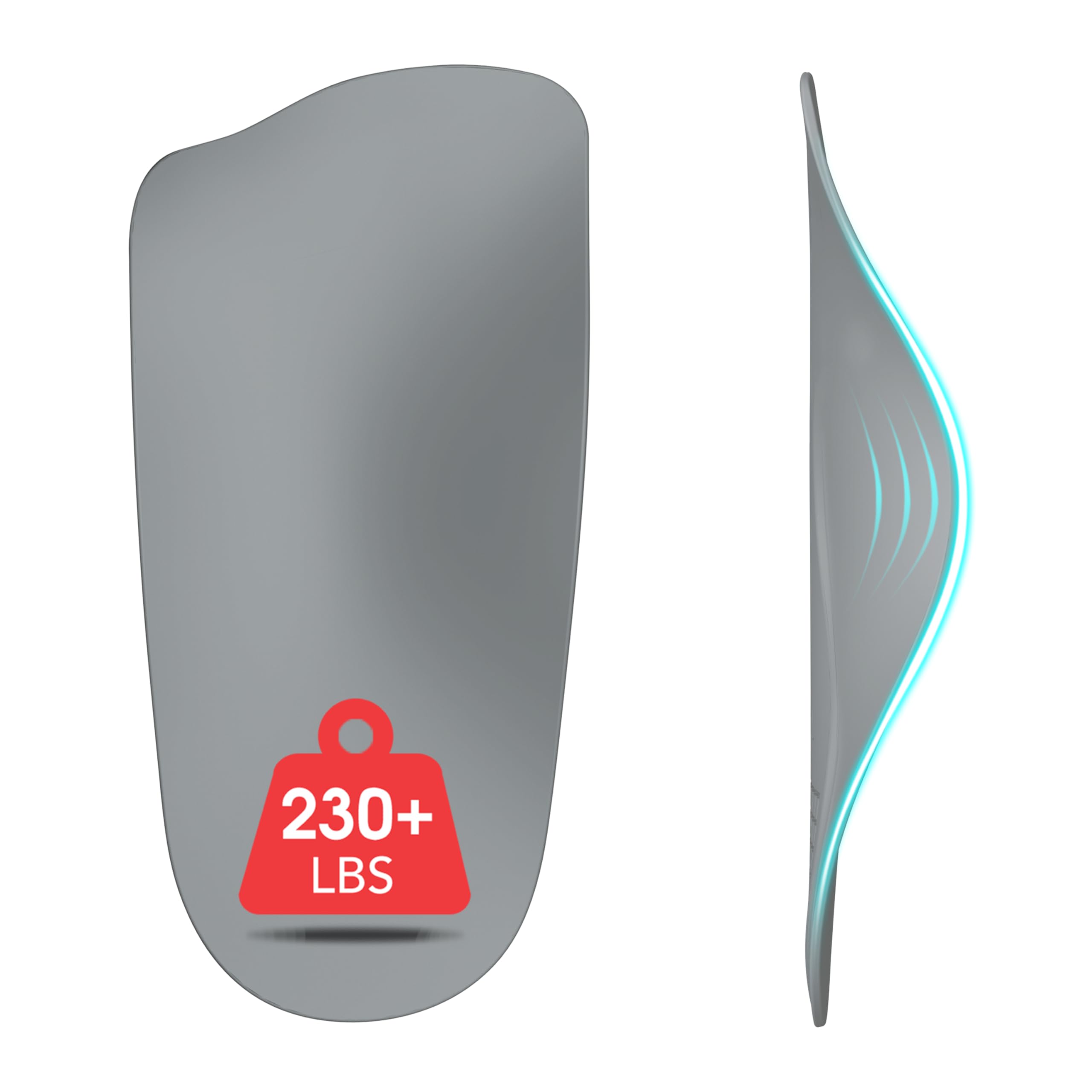
OUOKK’s 3/4-length orthotic is a strategic choice for bunion sufferers who need to pair arch support with a toe spacer or prefer not to add volume in an already cramped toe box. The 26 mm arch profile is among the tallest available in a prefabricated insert, providing aggressive lift under the navicular that directly counteracts the pronation contributing to bunion progression.
The TPU shell is premium-elastic, meaning it holds its shape for over two years of daily use without cracking. The thin edges and 3/4 silhouette make it compatible with low-volume shoes, including flats and narrow dress shoes where full-length insoles would create pressure points. A textured foot massage area in the forefoot helps disperse plantar fascia tension and may reduce the load on the bunion.
One limitation is that the 3/4 length does not anchor as securely as a full-length insole. Some users noted it shifted slightly during aggressive movement, though sitting inside a shoe with a snug midfoot it performed well for over 8 hours of standing. Podiatrist-recommended for correcting X/O leg posture, it serves the bunion sufferer best as a targeted biomechanical tool rather than a universal cushion.
Why it’s great
- Tall 26 mm arch provides forceful correction of midfoot collapse
- 3/4-length fits tight shoes and pairs with toe spacers without bulk
- TPU construction rated for over two years of daily heavy use
Good to know
- May shift inside shoes during high-intensity lateral movements
- Not a full-length solution; requires proper shoe midfoot snugness to stay in place
3. WalkHero Heavy Duty Arch Support Inserts
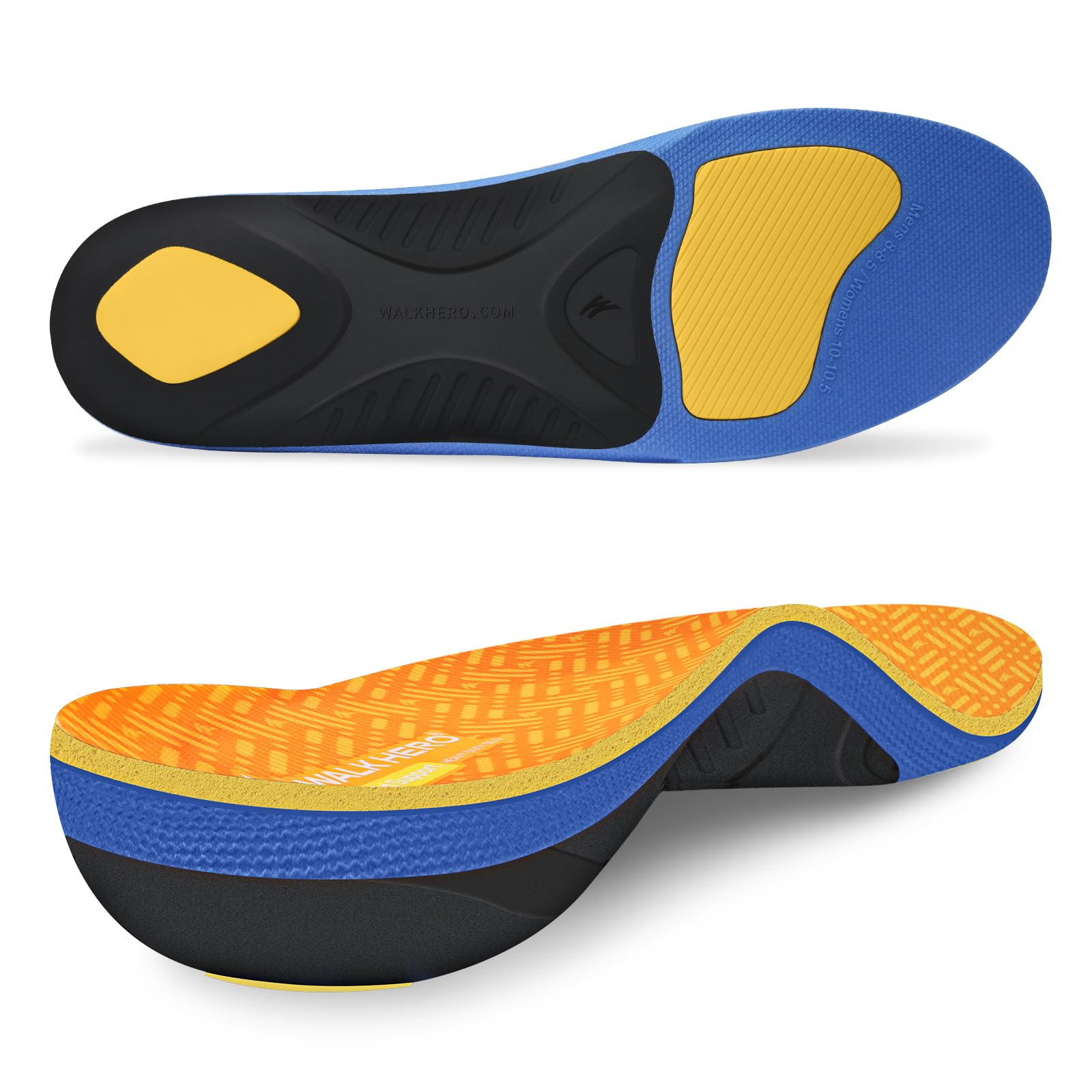
WalkHero uses a high-strength polyamide arch shell that is lighter than TPU but equally rigid, giving it a unique advantage for bunion sufferers who want structural correction without the weight penalty. The shell maintains its curvature under continuous pressure from heavy frames, making it one of the more durable options for individuals over 220 lbs who spend the day on their feet.
The multi-layer cushioning system adds over 4.5 mm of foam between the shell and the foot, including a PU heel pad and a high-rebound EVA forefoot pad. This preserves the corrective geometry while providing enough shock absorption for concrete floors. Twelve size options eliminate the need for trimming in most cases, and the wide sizing range accommodates larger-volume shoes and boots.
A small number of users pointed out that the product listing could be clearer about the single-pair packaging — the images suggest a 2-pack, but delivery includes one left-right pair. The arch support itself, however, remains consistent through long shifts, and clinical feedback confirms it helps reduce knee and lower back strain by controlling excessive pronation, a key contributor to bunion progression.
Why it’s great
- Lightweight polyamide shell offers rigid correction without added weight
- 12 size options reduce need for trimming and ensure precise fit
- Over 4.5 mm total cushioning layer absorbs shock without collapsing
Good to know
- Listing packaging implies a two-pack but ships as a single pair
- Some users with severe flat feet found the shell too stiff initially
4. BestHalo Heavy Duty Plantar Fasciitis Insoles
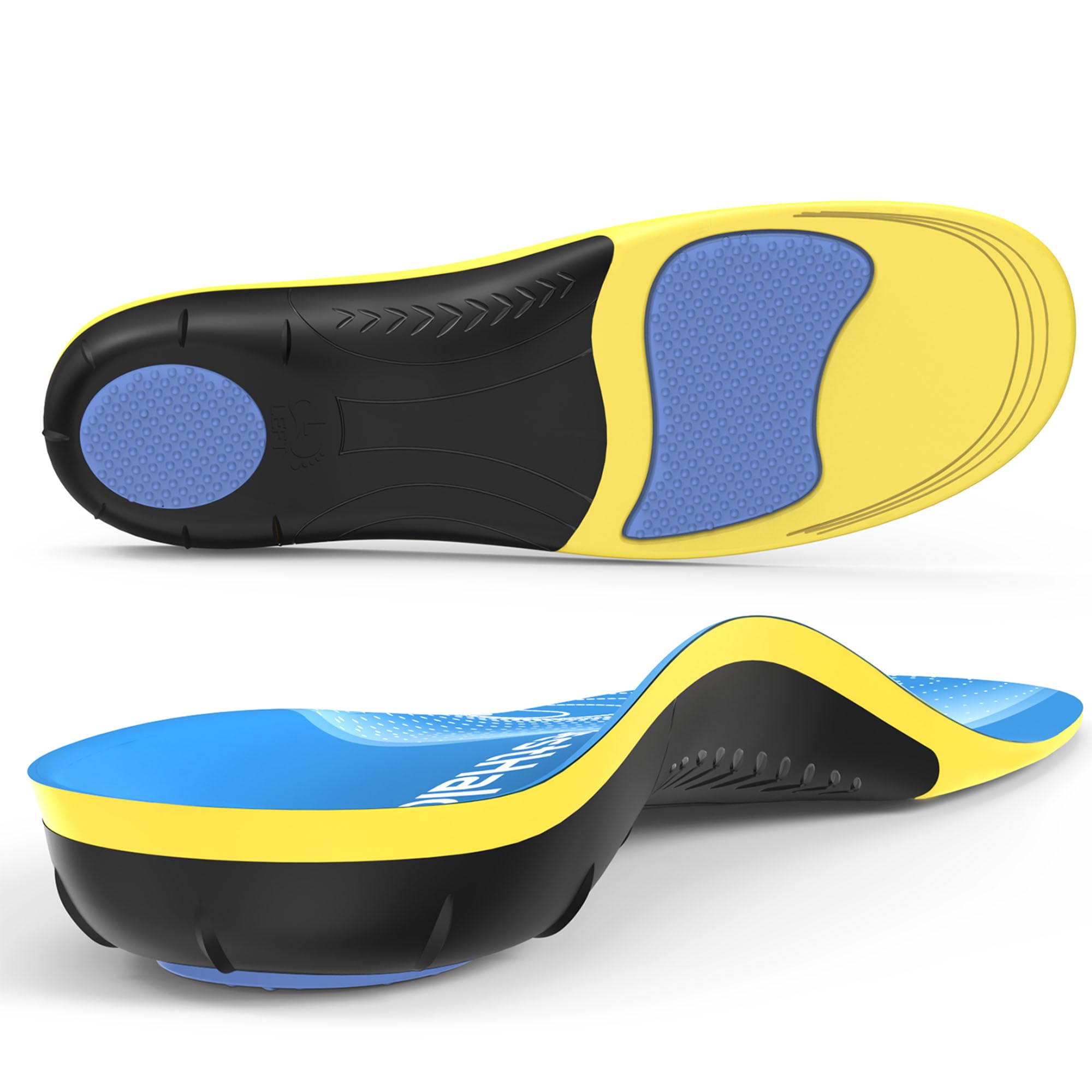
BestHalo targets the high-arch bunion sufferer specifically — a narrower but important demographic since a high arch can also destabilize the forefoot and contribute to bunion formation through excessive load on the metatarsal heads. The biomechanical shape elevates the arch into a firm position that helps realign the foot, reducing the rotational stress on the first MTP joint during gait.
The combination of premium EVA foam and gel cushioning delivers a balance between rigid support and impact absorption that is hard to find at this tier. The deep heel cup stabilizes the rearfoot and limits supination, while the trim-to-fit design lets you customize the width without destroying the structural heel rim. Multiple reviewers noted that the insoles eliminated post-surgery pain all the way up to the hips, which indicates effective kinetic chain alignment.
One factor to consider is that the soft heel cup may feel unstable for users with severe pronation. A reviewer who switched to a firmer orthotic reported new lower back pain during the adjustment period — likely because the gel section did not provide enough calcaneal control for their specific gait. For most users, though, the combination of firm arch and forgiving heel is a winning formula for all-day wear in work boots or tennis shoes.
Why it’s great
- Gel and EVA combination provides shock absorption while maintaining arch shape
- Biomechanical design aligns the foot and reduces hip and back strain
- Trim-to-fit works well with work boots and sneakers without ruining the heel cup
Good to know
- Soft heel cup may not provide enough rearfoot control for severe overpronators
- Some users experienced discomfort adaptation period lasting up to 2 weeks
5. Professional Heavy Duty Support Pain Relief Orthotics
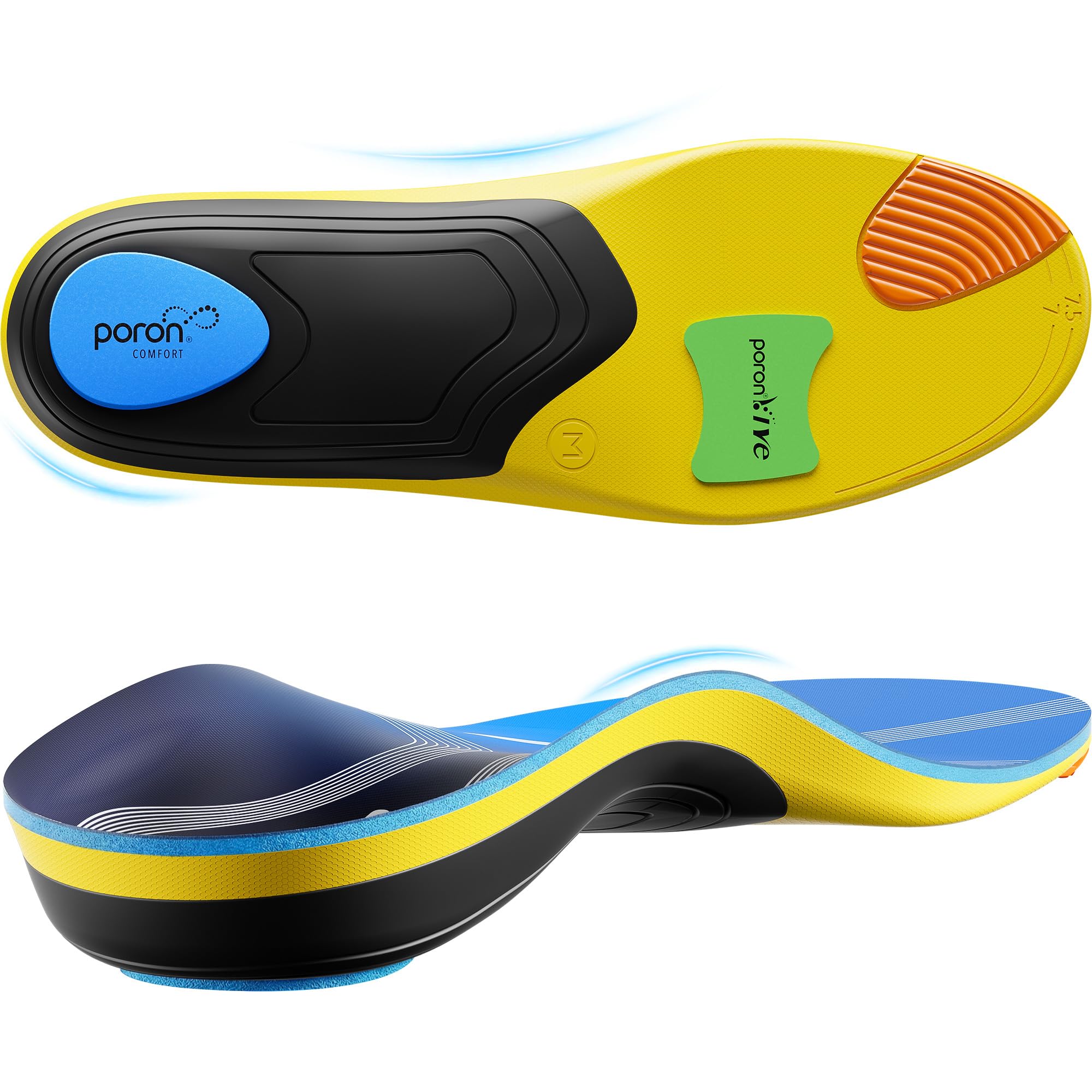
This entry-level orthotic uses a triple-point “Golden Triangle” support system that engages the forefoot, arch, and heel simultaneously — a geometry designed to mimic the function of a custom orthotic at a fraction of the cost. The PORON high-performance foam layer provides dual-density shock absorption that is noticeably better than standard EVA cushioning, and users weighing over 230 lbs reported that the insoles held their shape for weeks without flattening.
The deep U-shaped heel cup prevents side slippage, which is critical for bunion sufferers because slipping aggravates the shear force across the first metatarsal head. Breathable, sweatproof fabric covering keeps the foot cool during 10-hour shifts, and the trim-to-fit design allows for minor width adjustments. Customer reviews overwhelmingly cite immediate pain reduction in the heel and arch area, often by the end of the first day.
The main trade-off is durability at the extreme end of the weight spectrum. Several users noticed the foam bottom began showing wear after about three months of daily wear in work boots, though the arch profile remained intact. For the price, this is a strong starting point for someone new to orthotics who wants to test rigid arch support before committing to a premium shell, especially if their bunion is still in the early stages.
Why it’s great
- Triple-point Golden Triangle design supports forefoot, arch, and heel simultaneously
- PORON foam delivers advanced shock absorption for heavy frames
- Deep U-shaped heel cup prevents instability and reduces shear on the big toe
Good to know
- Foam layer may show wear after three months in daily heavy work boots
- Not as durable as premium TPU or polyamide shells for extreme weight loads
FAQ
Can arch support fix a bunion without surgery?
Should I use a full-length or 3/4-length orthotic for bunions?
How soon will I feel relief from bunion pain with new arch supports?
Final Thoughts: The Verdict
For most users, the best arch support for bunions winner is the Fit Geno Arch Support Insoles because the removable TPU plate and Poron cushioning give you both structural correction and daily comfort in a single package. If you prefer a 3/4-length profile for tight shoes and toe spacer use, grab the OUOKK 3/4-Length Arch Support. And for the budget-conscious newcomer who wants solid relief without a premium investment, nothing beats the Professional Heavy Duty Orthotics.

Mo Maruf
I created WellFizz to bridge the gap between vague wellness advice and actionable solutions. My mission is simple: to decode the research and give you practical tools you can actually use.
Beyond the data, I am a passionate traveler. I believe that stepping away from the screen to explore new environments is essential for mental clarity and physical vitality.