Our readers keep the lights on and my smoothie glass nicely filled. As an Amazon Associate, I earn from qualifying purchases.
You have the fabric picked out, the rotary cutter is sharp, and the pattern is calling your name. But then you sit down at a sewing machine that fights you on every single seam — uneven tension, skipped stitches, a bobbin that tangles at the worst possible moment. That frustration stops here. The right machine for a new quilter is the difference between a project you finish and one you stuff in a drawer.
I’m Mohammad Maruf — the founder and writer behind WellFizz. I have spent thousands of hours analyzing sewing machine specifications from every major manufacturer, cross-referencing user reports on long-term durability, and breaking down exactly which features translate into real quilting success for beginners.
Whether you plan to piece patchwork blocks or eventually try free-motion quilting, choosing the right beginner quilter sewing machine determines whether those first quilt tops come out straight or wavy. This guide covers nine models built to handle that first project and the tenth one after it.
How To Choose The Best Beginner Quilter Sewing Machine
A quilting beginner does not need a machine with four hundred decorative stitches. What matters is a consistent quarter-inch seam, smooth fabric feeding, and the ability to drop the feed dogs for free-motion practice. Here are the three specs that separate a good quilting starter machine from a frustrating one.
Throat Space and Extension Table
The throat space — the distance between the needle and the machine body — determines how easily you can stuff a rolled-up quilt sandwich through the machine. A 6-inch throat works for lap quilts, but anything larger demands frequent stops to re-roll the fabric. An included extension table gives your quilt support so it does not drag and pull the stitches crooked.
Feed Dog System and Walking Foot Compatibility
For straight-line quilting, the feed dogs grab the bottom layer and push it through. If they are not strong enough, the fabric shifts and your points stop matching. A walking foot (also called an even-feed foot) clamps onto the machine and feeds the top layer at the same rate as the bottom. Every machine in this guide is compatible with a walking foot, but some include it in the box — a huge convenience for a beginner.
Metal Frame and Motor Torque
Quilting often means sewing through multiple layers of cotton batting and backing fabric. A machine with a metal internal frame stays stable under that load, and a motor with enough torque punches the needle through without bogging down. Lightweight plastic machines vibrate more and struggle with thickness, which kills the joy of quilting fast.
Quick Comparison
On smaller screens, swipe sideways to see the full table.
| Model | Category | Best For | Key Spec | Amazon |
|---|---|---|---|---|
| Brother CP100X | Computerized | All-around quilting value | 100 built-in stitches, walking foot included | Amazon |
| Brother CS7205 | Computerized | Maximum stitch variety | 150 stitches plus 1 alphanumeric font | Amazon |
| Janome JW8100 | Computerized | Premium build quality | 7-piece feed dog system | Amazon |
| SINGER HD 6700C | Computerized | Thick layers and heavy duty | 411 stitch applications, full metal frame | Amazon |
| Bernette B35 | Mechanical | Swiss mechanical reliability | 23 stitches, all-metal build | Amazon |
| SINGER Heavy Duty 4452 | Mechanical | Speed and piercing power | 1100 stitches/min, 50% more power | Amazon |
| EverSewn Charlotte | Computerized | Feature-dense entry-level | 80 stitches, needle up/down | Amazon |
| Janome 2212 | Mechanical | No-frills mechanical entry | 12 stitches, front-loading bobbin | Amazon |
| Grace Cutie Breeze | Quilting Frame | Dedicated free-motion quilting | 19-inch long arm capacity | Amazon |
In‑Depth Reviews
1. Brother CP100X Computerized Sewing and Quilting Machine

The Brother CP100X strikes the hardest balance between feature depth and beginner accessibility for quilting. It comes with a walking foot and a quilting foot right in the box — two accessories that a new quilter would otherwise have to buy separately to manage even fabric feeding on layered quilt sandwiches. The 100 built-in stitches include a dedicated utility selection perfect for piecing, plus eight auto-size buttonholes for future garment projects.
The fixed needle bar and durable metal frame stabilize the needle as you feed fabric through, which translates into cleaner seams on long patchwork runs where a flimsier machine would drift. Users report that the CP100X sews through denim and heavy cotton layers without the tension headaches common on many entry-level computerized models. The jam-resistant drop-in bobbin and one-step needle threader cut down the time you spend fiddling between fabric changes.
The included wide extension table is a major asset for a quilter — it supports the weight of a full lap quilt so the fabric does not pull the needle off its line. At 10.5 pounds with a metal frame, the machine is light enough to move to a class but heavy enough to stay planted during fast piecing. The primary limitation is that the automatic needle threader feels somewhat bulky on the machine head, and bobbin winding occasionally requires manual thread guidance for perfectly even fills.
Why it’s great
- Walking foot and quilting foot included — saves you a separate purchase
- Fixed needle bar delivers consistent straight stitching
- Wide extension table supports larger quilts during sewing
Good to know
- Needle threader mechanism is bulky and takes practice to align
- Bobbin winding can be uneven without guiding thread by hand
2. Brother CS7205 Computerized Sewing Machine
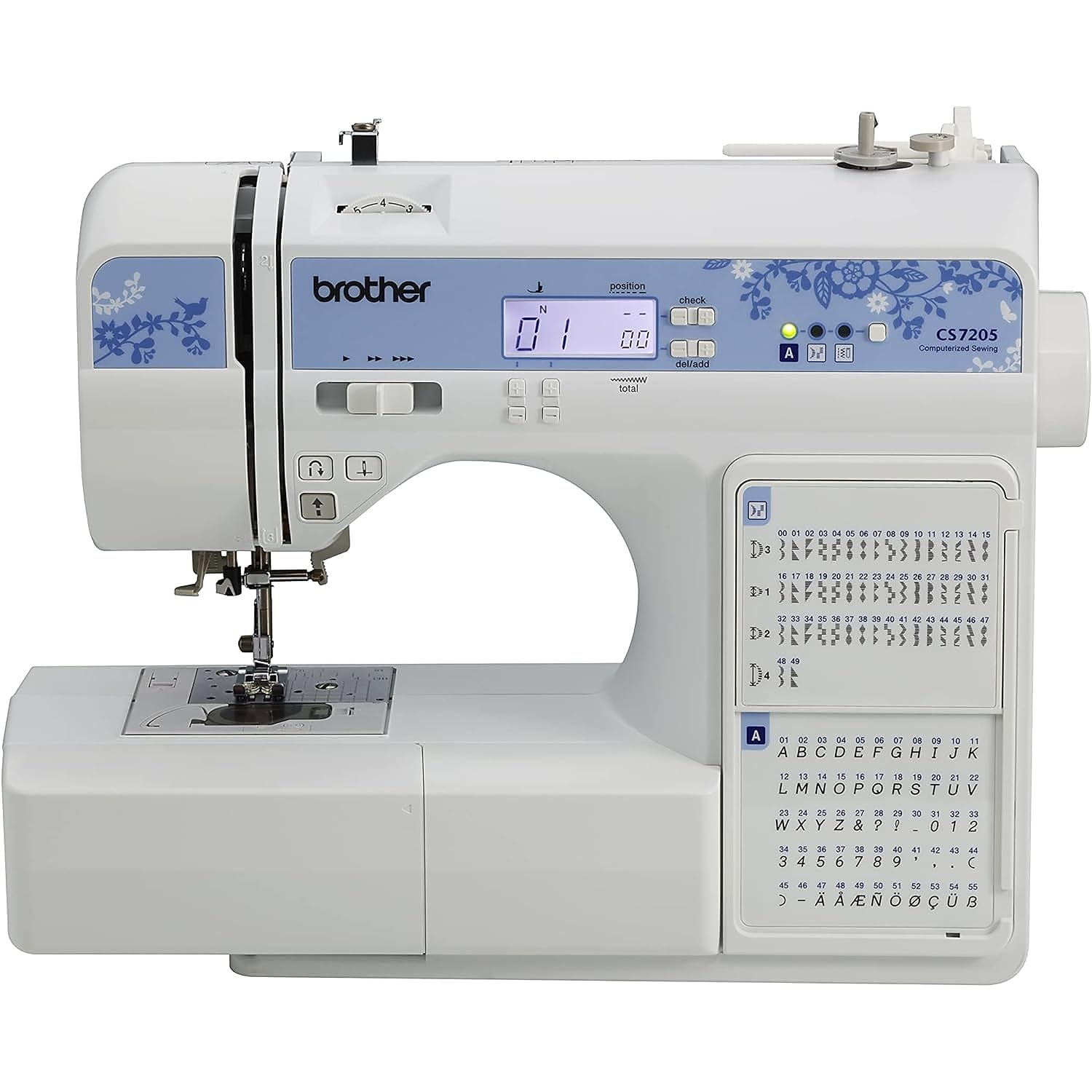
The Brother CS7205 pushes the stitch count to 150, including one alphanumeric font for basic monogramming on quilt labels. For a beginner quilter, the most valuable stitches are those that handle utility piecing and decorative finishing — the CS7205 delivers both, along with eight one-step auto-size buttonholes. The walking foot is included in the accessory bundle, as is a quarter-inch piecing foot, so you have everything needed to start quilting the moment the box arrives.
The LCD screen displays your selected stitch with length and width settings, making it simple to switch between a tight straight stitch for piecing and a wider zigzag for edge finishing. Users consistently mention that the machine operates quietly and produces even stitches on light to medium cotton fabrics, which is the primary material a beginner quilter will work with. The automatic needle threader reliably pushes the thread through the eye, though some users find it finicky with very fine needles.
At just over 2 pounds, the CS7205 is extremely lightweight — this works well for portability but means the machine can vibrate more noticeably during high-speed sewing on a lightweight table. The drop-in bobbin system is jam-resistant and quick to replace, but the bobbin winding mechanism can occasionally tangle thread if the spool is not positioned correctly. For the beginner who wants maximum stitch variety without paying a premium, this machine delivers enormous creative range.
Why it’s great
- 150 stitches plus a lettering font for labeling quilts
- Includes walking foot, quarter-inch foot, and wide table
- Quiet operation and even stitching on cotton fabrics
Good to know
- Lightweight frame vibrates more at high speeds
- Automatic threader struggles with very thin needles
3. Janome JW8100 Fully-Featured Computerized Sewing Machine

The Janome JW8100 occupies the premium tier among computerized beginner machines for good reason — the 7-piece feed dog system moves fabric with a grip and precision that cheaper machines cannot match. This matters enormously for a quilter piecing together many small blocks where even a 1/16-inch shift destroys the alignment. The machine produces balanced, consistent seams on cotton, knits, and multiple layers without requiring constant tension re-tuning.
Janome included a hard cover and an extra-wide extension table as bonus accessories, two items that typically cost extra with other brands. The 100 built-in stitches and seven one-step buttonholes give you room to grow beyond basic quilting into garments and home décor. Users upgrading from budget models cite the machine’s quiet operation, responsive speed control slider, and the ability to sew through thick denim or heavy flannel without the needle struggling or the motor slowing down.
The start/stop button and speed control slider let you sew without the foot pedal, which is a genuine relief for anyone with mobility issues or back pain from long sewing sessions. The free arm is accessible by removing the front storage drawer, making cuff and sleeve quilting possible. The only real complaint across user reviews is that the built-in light could be brighter — a common shortcoming that an external LED task lamp easily solves.
Why it’s great
- 7-piece feed dog system prevents fabric shifting on patchwork
- Hard cover and wide extension table included in the box
- Quiet, powerful motor handles multiple heavy layers
Good to know
- Built-in light leaves shadows on the needle area
- Needle does not raise extremely high for very thick quilt sandwiches
4. SINGER Heavy Duty 6700C Computerized Sewing Machine

The SINGER Heavy Duty 6700C combines computerized convenience with the enhanced piercing power of the Heavy Duty motor platform. This machine punches through multiple layers of cotton, batting, and even lightweight denim without hesitation — a critical advantage when you are quilting a thick sandwich that would stall a weaker motor. The full metal frame eliminates the vibration that can throw off your seam allowance on long straight runs.
With 411 stitch applications including a lettering font, the 6700C provides the widest stitch selection in SINGER’s Heavy Duty line. The LCD screen displays your chosen stitch and lets you adjust length and width with buttons rather than dials, which is easier to learn for a beginner transitioning from a mechanical machine. Users report that the machine sews flawlessly on silky fabrics, stretch knits, quilting cotton, and heavy flannel — covering almost every material a new quilter might encounter.
The one-step buttonhole feature offers seven different styles, and the included accessory bundle contains ten presser feet including a walking foot and an open toe foot for free-motion quilting practice. The main drawback is that the throat space is slightly smaller than dedicated quilting machines, meaning you will need to stop and re-roll the quilt body more frequently on large projects. Some users also note that the foot lever position on the right side takes habit adjustment if you are used to a rear-mounted lever.
Why it’s great
- Enhanced piercing power through multiple quilt layers
- Full metal frame eliminates vibration during fast sewing
- Ten presser feet included, including walking foot
Good to know
- Smaller throat space requires frequent re-rolling of large quilts
- Foot lever placement on the right side may feel awkward at first
5. Bernette B35 Sewing Machine Swiss Design

The Bernette B35 occupies a unique spot — an all-mechanical machine from a Swiss parent company that prioritizes long-term durability over high stitch counts. With 23 built-in stitches, it offers far fewer decorative options than the computerized models above, but every one of those stitches performs with the even tension and consistent feed that Bernette is known for. The all-metal construction means this machine will still be running smoothly a decade from now with basic maintenance.
For a beginner quilter, the B35’s 1-step automatic buttonhole function produces reliable results every time, and the drop-in bobbin system makes thread changes fast. The LED light illuminates the needle area better than older incandescent bulbs, though the machine’s 17.1-inch height can make it feel tall on a standard sewing table. Users with sixty years of sewing experience rate the B35 as a favorite for its steady, serviceable performance on everyday cotton and garment sewing.
The machine ships with seven presser feet, including a hemmer foot and a zipper foot, and the extension table provides solid workspace for small to medium quilts. The mechanical nature means you have no software to worry about — no firmware updates, no digital display glitches. The trade-off is that the B35 can vibrate noticeably at high speed on a lightweight surface, and sourcing aftermarket accessories from Bernette can be more expensive than generic Singer or Brother parts.
Why it’s great
- All-metal construction built to last for many years
- Mechanical design has zero software or digital issues
- Reliable 1-step automatic buttonhole function
Good to know
- Limited to 23 stitches — fewer decorative options
- Vibrates more at high speed on lightweight desks
6. SINGER Heavy Duty 4452 High Speed Sewing Machine

The SINGER Heavy Duty 4452 is a mechanical machine that moves fast — 1100 stitches per minute — and punches through multiple layers with a motor that delivers 50 percent more piercing power than standard domestic machines. For a beginner quilter working with dense cotton and batting, this motor means you rarely have to manually crank the handwheel to get the needle through a thick seam intersection. The full metal frame provides the stability needed to maintain straight stitching at high speeds.
With 32 built-in stitches unlocking 110 stitch applications, the 4452 covers all the essential utility stitches for piecing and quilting, plus stretch and decorative stitches for finishing touches. The top drop-in bobbin with a clear cover plate lets you monitor thread supply as you sew, and the jam-proof design reduces frustration during long sessions. Users consistently report that the machine handles thick fabrics like denim and flannel with ease, though the upright spool pin can cause thread jamming unless you switch to the horizontal pin configuration.
The included accessory kit is generous: a walking foot, non-stick foot, clearance plate, heavy-duty needles, quilting guide, and more. The one-step buttonhole works reliably as long as the lever is positioned precisely. The main flip side is that the machine has many physical dials and knobs that can be confusing for a true beginner, and the needle position dial requires understanding that incorrect settings cause skipped stitches. This machine rewards a beginner willing to read the manual and practice.
Why it’s great
- Powerful motor sews through thick quilt layers with no hesitation
- Walking foot included in the accessory bundle
- Top-loading bobbin with clear cover is easy to monitor
Good to know
- Upright spool pin causes thread jams on certain threads
- Multiple dials require careful reading of the manual to use correctly
7. EverSewn Charlotte Computerized Sewing Machine

The EverSewn Charlotte packs 80 stitches, an automatic needle threader, and drop feed dog capability into a machine priced well below its feature density. The drop feed function is a key spec for a beginner quilter — it allows you to lower the feed dogs so you can practice free-motion quilting by moving the fabric yourself under the needle. The 6.5-inch wide sewing space to the right of the needle gives you room to maneuver small to medium quilt blocks.
The machine includes seven standard presser feet in the box, and the fingertip speed control slider lets you set a maximum sewing pace so you do not accidentally race through a tricky seam. Users with a decade of experience replacing older machines praise the Charlotte for its sturdy metal internal skeleton, intuitive layout, and soothing sound during operation. The needle up/down button is a small feature that makes a large difference when pivoting at corners during patchwork.
The Charlotte’s automatic needle threader works well for most needle sizes but can struggle with very fine needles below size 70. The LED light is adequate but does not perfectly illuminate the marks on the needle plate, making it harder to follow seam guides in dim light. Tension can be finicky with certain thread types, and a few users report replacing a defective threader unit through the manufacturer. For a beginner who wants computerized quilting features without paying a premium, the Charlotte is a strong mid-range option.
Why it’s great
- Drop feed dogs enable free-motion quilting practice
- Metal internal skeleton provides durable construction
- Speed control slider helps beginners avoid runaway sewing
Good to know
- Needle threader struggles with very fine needles
- LED light does not fully illuminate needle plate markings
8. Janome 2212 Front-Loading Sewing Machine

The Janome 2212 is the budget entry point that proves you do not need a computerized machine to start quilting. With 12 built-in stitches, a four-step buttonhole, and a front-loading vertical oscillating hook bobbin system, this machine strips away everything nonessential and focuses on reliable straight stitching. The dial pattern selection and separate stitch width and length adjustments give you full mechanical control — no menus, no screens, just direct feedback from your hands.
The 14.9-pound weight comes from the metal internal components, and users report that the 2212 sews through multi-fold denim without hesitation. For a beginner quilter working with cotton patchwork, the machine produces smooth, even seams with no tension issues as long as you use quality cotton thread. The snap-on presser feet and 5-piece feed dog system handle fabric feeding well enough for lap quilts and smaller projects, though the throat space is limited compared to the wider computerized models.
The included accessories are basic — zipper foot, buttonhole foot, blind hem foot, bobbins, needles, seam ripper — but they cover everything a beginner needs to start their first project. The reverse switch must be held down manually to sew backward, which takes some getting used to. The pedal cord is on the shorter side, so you may need an extension cord or a nearby outlet. For the beginner on a tight budget who values mechanical simplicity and Janome’s build reputation over stitch variety, the 2212 is a solid foundation.
Why it’s great
- Affordable entry with Janome’s proven build quality
- Metal components handle denim and thick cotton well
- Simple mechanical controls are easy to learn and maintain
Good to know
- Only 12 stitches — limited decorative and stretch options
- Pedal cord is short; plan your outlet and desk layout
9. Grace Cutie Breeze Table Top Hoop Quilting Frame

The Grace Cutie Breeze is not a sewing machine — it is a table-top hoop quilting frame that turns your existing domestic machine into a true long-arm quilting setup. Designed for machines with at least 8 inches of throat space and the ability to drop feed dogs, the Cutie Breeze lets you glide the machine over the quilt to create free-motion patterns. This is a game-changer for the beginner who wants to finish full-size quilts without fighting to stuff fabric through a small throat.
The frame fits on any standard desk or table and folds for storage when not in use. The carriage moves the machine smoothly over the quilt surface, and the included top plate with handles gives you ergonomic control over your stitching direction. Users report that the frame assembles easily, glides smoothly, and produces professional-level free-motion results with machines like the Juki TL-2010Q or any domestic model that meets the compatibility criteria — at least 8 inches of throat space, feed dog drop function, and width under 11.5 inches.
The 53-inch length and 27-inch width accommodate quilts up to lap size, and the frame supports up to a 19-inch long arm for future upgrades. The main limitation is the 5-inch by 12-inch quilting area with standard machines, requiring frequent unclamping and re-clamping to cover a full quilt. The included plastic clamps can break under regular tension, though Grace Company customer service replaces them quickly. For a beginner committed to finishing their own quilts at home rather than sending them out, this frame removes the biggest physical barrier.
Why it’s great
- Converts any compatible domestic machine into a quilting setup
- Smooth carriage glide makes free-motion quilting easier to control
- Portable design folds flat for storage between projects
Good to know
- Quilting area limited to about 5×12 inches per pass
- Clamps may break under tension; have spares ready
FAQ
Can I use a regular sewing machine for quilting?
What is the minimum stitch count I need for quilting?
Should I buy a mechanical or computerized machine for quilting?
Final Thoughts: The Verdict
For most users, the beginner quilter sewing machine winner is the Brother CP100X because it includes the walking foot and quilting foot a beginner needs, offers 100 stitches for creative freedom, and comes with a wide extension table that makes maneuvering quilt blocks manageable. If you want maximum stitch variety and an even broader accessory bundle, grab the Brother CS7205. And for dedicated free-motion quilting on your existing machine, nothing beats the Grace Cutie Breeze frame.

Mo Maruf
I created WellFizz to bridge the gap between vague wellness advice and actionable solutions. My mission is simple: to decode the research and give you practical tools you can actually use.
Beyond the data, I am a passionate traveler. I believe that stepping away from the screen to explore new environments is essential for mental clarity and physical vitality.