Our readers keep the lights on and my smoothie glass nicely filled. As an Amazon Associate, I earn from qualifying purchases.
Choosing headphones under $500 means navigating a minefield of marketing claims, inflated driver sizes, and noise-cancelling gimmicks that often mask mediocre sound quality. The real challenge isn’t finding a pair that works—it’s finding one that faithfully reproduces your music without fatigue or coloration, whether you’re mixing a track, losing yourself in a symphony, or blocking out the office drone.
I’m Mohammad Maruf — the founder and writer behind WellFizz. After analyzing hundreds of frequency response curves, impedance ratings, and driver architectures across the current market, I’ve separated the true high-fidelity performers from the overpriced lifestyle accessories in this competitive segment.
Whether you need studio-grade accuracy, supreme travel noise isolation, or all-day wireless comfort, this guide to the headphones under $500 will help you match the right pair to your listening priorities without wasting a dollar on features you don’t need.
How To Choose The Best Headphones Under $500
The sub-$500 headphone market is crowded with both professional reference gear and premium consumer wireless models. The right choice depends entirely on where and how you listen. Here are the critical factors that separate serious performers from overhyped duds.
Open-Back vs. Closed-Back: The First Fork in the Road
Open-back headphones, like the Sennheiser HD 660S2, feature perforated ear cups that let air and sound pass through. This creates a wider, more natural soundstage with better spatial imaging—ideal for critical listening and mixing in quiet rooms. The downside is zero noise isolation; sound leaks both in and out. Closed-back designs, such as the Sony MDR-M1 or the Sennheiser HD 620S, seal the ear cup to block ambient noise and prevent sound from escaping. They are mandatory for commuting, office use, and recording applications where bleed cannot be tolerated.
Impedance and Sensitivity: The Amp Question
High-impedance headphones (150 ohms and above), like the Sennheiser HD 620S, demand more voltage to reach adequate volume. They typically reward you with lower distortion and better driver control when paired with a dedicated headphone amplifier or DAC. Low-impedance models (under 50 ohms) can be driven cleanly by a smartphone or laptop. The Sennheiser HD 490 PRO, with its low impedance and high sensitivity, runs effortlessly from a standard headphone jack, making it a true plug-and-play option for studio and home use without extra gear.
Noise Cancellation vs. Audio Fidelity
Active noise cancellation (ANC) relies on microphones and DSP to generate anti-noise waves, which can subtly alter the frequency response and introduce electronic artifacts. Flagship ANC headphones like the Sony WH1000XM6 and Bose QuietComfort series have improved dramatically, but purists still prefer the untouched, pure signal path of passive, high-end closed-backs like the Focal Bathys (in wired DAC mode) or the Sony MDR-M1 for monitoring. If you prioritize sonic transparency over travel noise reduction, wired passive models remain the superior choice.
Driver Materials and Tuning Philosophy
The driver is the heart of any headphone. Aluminum-magnesium alloy drivers (Focal Bathys) deliver exceptional transient speed and detail retrieval with low mass. Carbon fiber composite drivers (Sony WH1000XM6) offer high stiffness-to-weight ratios, reducing breakup distortion. Traditional dynamic drivers with ultra-light voice coils (Sennheiser HD 660S2) provide a proven, linear frequency response with deep bass extension. Avoid the trap of assuming larger driver size automatically equals better sound—driver tuning and enclosure design matter far more than raw diameter.
Quick Comparison
On smaller screens, swipe sideways to see the full table.
| Model | Category | Best For | Key Spec | Amazon |
|---|---|---|---|---|
| Sony WH1000XM6 | Premium Wireless ANC | Frequent travelers, commuters | 30-hour battery, QN3 processor | Amazon |
| Bowers & Wilkins Px7 S3 | Premium Wireless Hi-Fi | Audio purists on the go | aptX Lossless, 40mm drivers | Amazon |
| Sennheiser HD 660S2 | Audiophile Open-Back | Critical listening, mixing | 150-ohm, 42mm transducer | Amazon |
| Focal Bathys | Hi-Fi Wireless Closed | Maximum detail and portability | 40mm Al/Mg drivers, DAC mode | Amazon |
| Bose QuietComfort (Blue Dusk) | Wireless ANC | All-day comfort, travel | 24-hour battery, 2 modes | Amazon |
| Bose QuietComfort (White Smoke) | Wireless ANC | Versatile daily driver | 24-hour battery, multipoint | Amazon |
| Sennheiser HD 490 PRO | Open-Back Studio | Mixing, gaming, entry hi-fi | 5Hz-36kHz, dual pad sets | Amazon |
| Sennheiser HD 620S | Closed-Back Audiophile | Focused listening, office | 150-ohm, angled drivers | Amazon |
| Sony MDR-M1 | Closed-Back Reference | Studio monitoring, voiceover | 5Hz-80kHz, 40mm driver | Amazon |
In‑Depth Reviews
1. Sennheiser HD 660S2
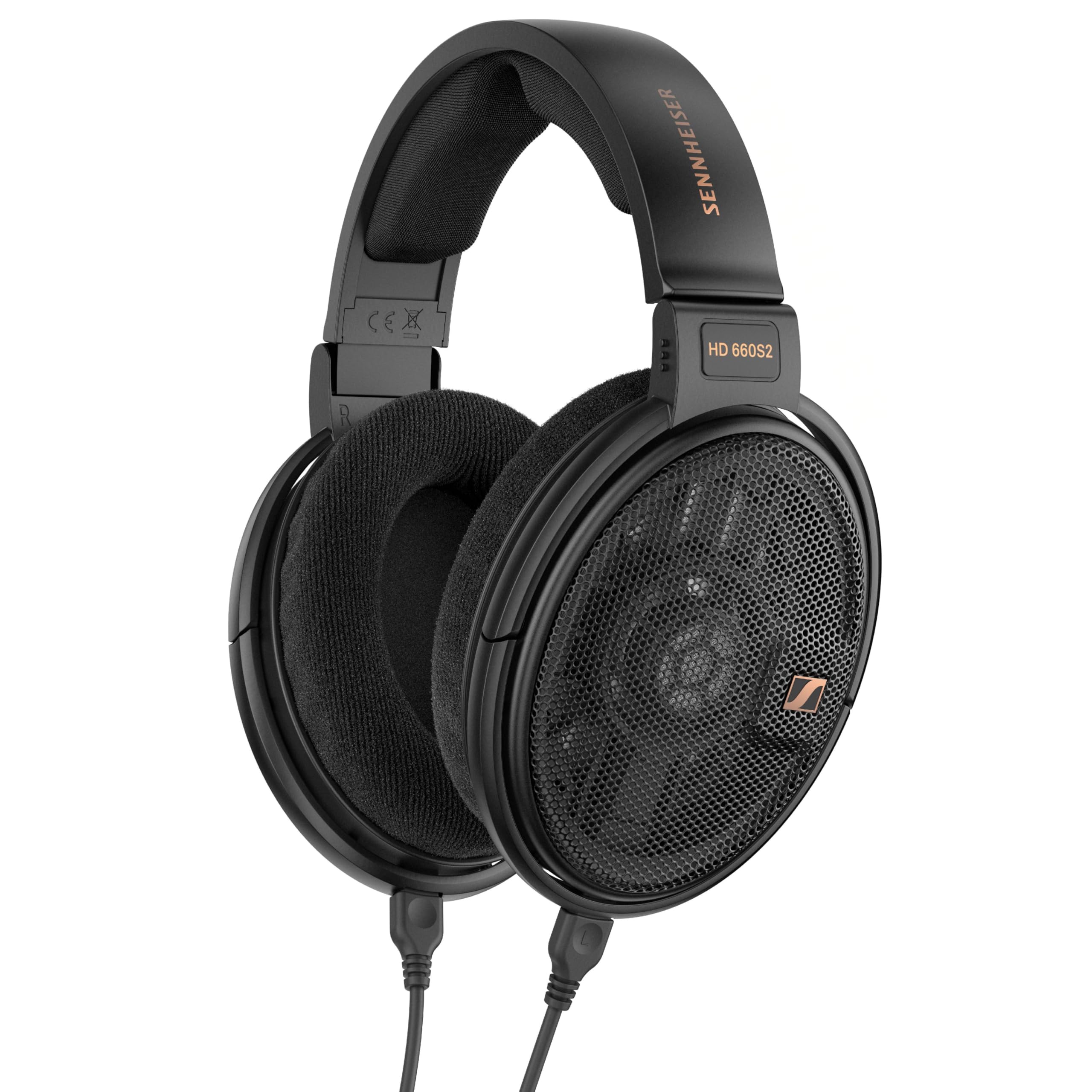
The Sennheiser HD 660S2 represents the sweet spot in the entire sub-$500 landscape, delivering audiophile-grade open-back performance that rivals models costing twice as much. Its 42mm dynamic drivers with an ultra-light aluminum voice coil produce deep sub-bass extension down to 27.5 Hz, which is rare for an open-back at this tier, while maintaining the neutral, revealing midrange that the Sennheiser 6-series is famous for. The soundstage is intimate but highly precise, making it exceptional for vocal-centric music and critical mixing work where you need to hear every nuance without exaggeration.
Comfort is equally impressive thanks to the breathable velour ear cushions and lightweight chassis, which allow fatigue-free listening sessions that easily stretch past four hours. The open-back design means zero isolation—every rustle and conversation in your room will be audible—but that’s the trade-off for the airy, non-fatiguing presentation. Build quality is outstanding, with the headphones crafted in Germany and Ireland using robust materials that feel built to last a decade.
Pairing the HD 660S2 with even a modest DAC/amp like the iFi Zen Air Can unlocks its full potential, especially in the bass region where the extra headroom tightens up the lower frequencies. The included 1.8-meter cables (both 6.3mm and 4.4mm balanced) and a 3.5mm adapter offer flexible connectivity, though the stock cables are slightly microphonic. For listeners who want the most natural, detailed, and musically engaging experience without leaving this price bracket, the HD 660S2 is the clear benchmark.
Why it’s great
- Exceptional bass extension and control for an open-back design
- Natural, non-fatiguing midrange with lifelike vocal reproduction
- Premium build quality with replaceable parts and comfortable velour pads
Good to know
- Benefits significantly from a dedicated headphone amplifier
- Short stock cables may require an extension for desktop use
- No noise isolation—not suitable for noisy environments
2. Sony WH1000XM6
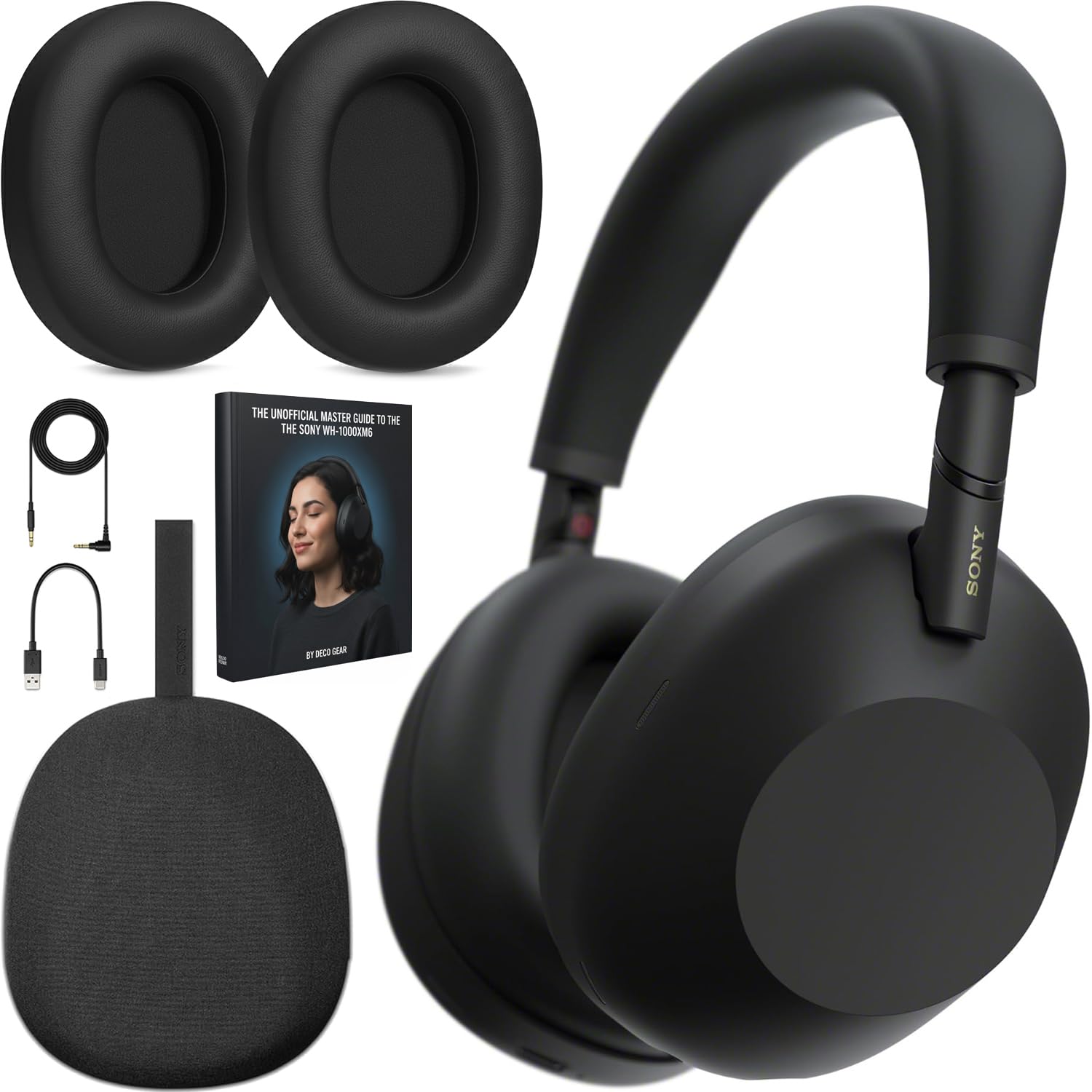
The Sony WH1000XM6 takes the crown as the most advanced wireless noise-cancelling headphone in this roundup, thanks to the new QN3 processor that is seven times faster than its predecessor. This processor drives a 12-microphone array to deliver real-time adaptive noise cancellation that adjusts to your environment, wearing style, and even whether you’re wearing glasses or a hat. The result is an almost eerie silence that lets you focus on music, podcasts, or calls without distraction—even on a roaring subway or in a busy open-plan office.
Sony collaborated with mastering audio engineers to tune the 30mm carbon fiber composite drivers, which deliver a rich, detailed sound with punchy bass and clear, extended highs. The frequency response is slightly V-shaped out of the box, with a bass boost that appeals to pop and electronic listeners, but the companion app’s five-band EQ lets you flatten it out for a more neutral profile. Battery life is a genuine 30 hours with ANC active, and a three-minute quick charge via USB-PD provides three hours of playback—a lifesaver for frequent travelers.
The new foldable design with a compact carrying case and magnetic closure improves portability over the XM5’s rigid case. The wider asymmetrical headband and smooth synthetic leather earcups reduce pressure points during long flights. Call quality is outstanding thanks to the six-microphone beamforming system with AI-based noise reduction, ensuring your voice cuts through wind and background chatter. The only real compromise is the plastic earcup-to-headband connection, which feels slightly fragile compared to metal alternatives, but overall, this is the ultimate all-in-one wireless companion under $500.
Why it’s great
- Best-in-class adaptive noise cancellation with QN3 processor
- Excellent battery life with ultra-fast USB-PD charging
- Superior call quality with AI-based beamforming microphones
Good to know
- Bass-forward tuning out of the box requires EQ for neutrality
- Plastic construction at earcup hinges feels less premium
- No hi-res LDAC support in this generation
3. Bowers & Wilkins Px7 S3

The Bowers & Wilkins Px7 S3 redefines what’s possible from a wireless headphone under $500 by prioritizing pure audio fidelity over marketing buzzwords. Its 40mm dynamic drivers, paired with 24-bit DSP and full aptX Lossless support, deliver a sound that rivals many wired audiophile headphones in clarity, imaging, and transient response. The signature “True Sound” tuning is slightly bass-forward but maintains impeccable midrange openness and treble extension that never veers into harshness, making it ideal for jazz, classical, and acoustic genres where instrument separation matters.
Comfort is a major upgrade over the previous generation, with plush memory foam ear cushions covered in a soft fabric finish that breathes better than synthetic leather, reducing heat buildup during long listening sessions. The updated lightweight headband distributes weight evenly, and the magnesium yoke adds structural rigidity without adding heft. ANC performance is respectable but not class-leading—it attenuates consistent drone noise like airplane hum and office air conditioning effectively, but it struggles more with sudden, irregular sounds than the Sony XM6 does.
The Bowers & Wilkins Music app offers a five-band EQ and adaptive ANC adjustments, giving you granular control over the listening experience. Battery life hits 30 hours, and a 15-minute quick charge delivers seven hours of playback—the fastest top-up in this category. The build quality is superb, with real leather, aluminum accents, and fabric finishes that exude a luxury feel. If sound quality is your absolute priority and you’re willing to accept slightly less aggressive ANC, the Px7 S3 is the best-sounding wireless headphone you can buy at this price.
Why it’s great
- Best-in-class sound quality for wireless headphones at this price
- aptX Lossless support for CD-quality Bluetooth streaming
- Premium materials and exceptional build quality
Good to know
- ANC is good but not top-tier for very noisy environments
- Call quality microphones are average compared to Sony
- Ear cups could be slightly wider for large ears
4. Focal Bathys

The Focal Bathys are a unique proposition in this roundup: a wireless closed-back headphone built around 40mm aluminum-magnesium alloy drivers made in France, with a dedicated USB-DAC mode that supports 24-bit/192kHz audio. This dual personality—wireless convenience with a high-end wired DAC path—makes it the only headphone here that can serve as both a premium travel companion and a desktop reference monitor. The sound is crisp, detailed, and fast, with outstanding transient response that reveals micro-details in recordings that lesser headphones gloss over.
The warm, slightly forward tuning leans into the upper midrange for vocal clarity while maintaining a controlled, punchy bass that never bleeds into the mids. The soundstage is impressively wide for a closed-back, though it shifts slightly depending on head position—a minor quirk that doesn’t detract from the overall immersive experience. ANC is competent but not the star of the show; it offers two noise-cancelling modes and a transparency mode, but cannot be fully disabled, which may cause a subtle pressure sensation for sensitive users.
Build quality is exceptional, with real leather on the headband and earcups, a magnesium yoke for lightness, and a crush-resistant hard case. Battery life exceeds 30 hours in Bluetooth mode, and a 15-minute fast charge provides five hours of playback. The main drawbacks are the lack of LDAC or aptX HD support (aptX Adaptive is the best codec onboard), and the fact that ANC cannot be turned off, which may deter purists. For listeners who want audiophile-grade detail in a portable, closed-back package without sacrificing wireless freedom, the Focal Bathys are unmatched.
Why it’s great
- Exceptional detail retrieval thanks to aluminum-magnesium drivers
- USB-DAC mode for 24-bit/192kHz wired listening
- Premium leather and magnesium construction
Good to know
- ANC cannot be fully disabled
- No LDAC or aptX HD support
- Heavier than many wireless competitors at 326g
5. Bose QuietComfort (Blue Dusk – Limited Edition)

The plush, protein-leather ear cushions and padded headband apply minimal clamping force, making these the most comfortable headphones in this entire guide for extended wear. At roughly 240 grams, they are noticeably lighter than the Sony XM6 and the Bowers & Wilkins Px7 S3, and that weight advantage becomes apparent during six-hour flights or marathon work sessions.
Sound quality is very good but not reference-grade—Bose targets a smooth, non-fatiguing profile with warm bass that never overpowers the mids. The adjustable EQ in the Bose app lets you dial in a touch more treble sparkle or reduce the bass shelf if you prefer a flatter response. ANC performance is excellent, with both Quiet and Aware modes that are instantly accessible via a dedicated button. The noise cancellation doesn’t quite reach the Sony XM6’s obsessive completeness, but it’s close enough that most users will never notice the difference in real-world conditions.
The 24-hour battery life is solid, and the 15-minute quick charge provides 2.5 hours of playback. Multipoint Bluetooth 5.1 allows seamless switching between your phone and laptop, and the wired mode via the included audio cable works even when the battery is completely depleted. The carrying case is rigid and protective, though the limited edition blue color may not appeal to everyone. If comfort is your non-negotiable priority and you want near-best ANC without the weight penalty, this is the headphone to buy.
Why it’s great
- Lightest and most comfortable wireless ANC headphones in this range
- Near-best noise cancellation with responsive Aware mode
- USB-C wired mode works with dead battery
Good to know
- Sound lacks the detail and precision of audiophile rivals
- Limited edition color may be difficult to replace
- Battery life trails Sony at 24 hours vs 30 hours
6. Bose QuietComfort (White Smoke)

The standard Bose QuietComfort in White Smoke shares the same DNA as the limited edition Blue Dusk model but offers a more classic, versatile color that blends into any environment. These headphones continue Bose’s legacy as the benchmark for comfort-focused ANC headphones, with earcups that feel like pillows and a clamping force so gentle you might forget you’re wearing them. The plastic and metal construction feels solid without being heavy, and the fold-flat design with a rigid case makes them easy to stow in a travel bag.
The sonic signature is tuned for approachability rather than analytical rigor, with a slight bass emphasis that makes pop, hip-hop, and rock sound lively and engaging. The mids are clear but slightly recessed compared to the Focal Bathys or Sennheiser HD 660S2, and the treble is rolled off to avoid fatigue—great for all-day listening but less ideal for critical mixing tasks. ANC performance is outstanding, blocking consistent low-frequency noise almost as effectively as the Sony XM6, though it lets through slightly more mid-frequency chatter.
The app-based EQ provides decent control, letting you boost the treble or trim the bass to taste. Multipoint Bluetooth works flawlessly, automatically switching between devices without stuttering or manual reconnection. The battery charges via USB-C and lasts a full day of moderate use, with a 15-minute quick charge giving you 2.5 hours of playback. For anyone who wants a reliable, supremely comfortable wireless headphone that works great out of the box without tinkering, the standard QuietComfort is a timeless choice.
Why it’s great
- Best-in-class comfort with minimal clamping force
- Seamless multipoint Bluetooth switching
- Excellent ANC for consistent low-frequency noise
Good to know
- Sound tuning is consumer-friendly, not reference-neutral
- Plastic components may feel less durable than metal rivals
- 24-hour battery is adequate but not class-leading
7. Sennheiser HD 490 PRO

The Sennheiser HD 490 PRO is a masterclass in practical studio engineering, designed specifically for mixing and production tasks where accuracy and comfort are equally critical. Its open-back architecture with Sennheiser’s Open-frame system minimizes total harmonic distortion (THD) and resonance, delivering a frequency response from 5 Hz to 36 kHz that is exceptionally flat and uncolored. The low-frequency cylinder system ensures full, tight bass without bloat, making it easy to make informed EQ decisions on kicks, basslines, and low synth pads.
The most innovative feature is the inclusion of two distinct sets of ear pads: one set tuned for producing (slightly more bass emphasis) and one set for mixing (flatter, more neutral). Swapping pads changes the perceived frequency response subtly but meaningfully, giving engineers a second reference pair without buying another headphone. The fiberglass-reinforced polymer build is incredibly lightweight at around 260 grams, yet feels durable enough for daily studio abuse. The cups swivel in multiple directions for a perfect seal and accommodate glasses wearers without pressure points.
The low impedance and high sensitivity of the HD 490 PRO mean it runs cleanly from any laptop, audio interface, or even a phone dongle, though a dedicated amp tightens the bass and widens the soundstage. The 1.8-meter detachable cable with a 3.5mm connector and included 6.3mm screw-on adapter covers most studio scenarios, though some users may prefer a longer cable for rack-mounted gear. For anyone mixing or producing music who needs a neutral, revealing, and comfortable open-back reference under $500, the HD 490 PRO is the professional’s choice.
Why it’s great
- Two interchangeable ear pad sets for producing vs mixing
- Extremely low distortion and flat frequency response
- Easy to drive without an external amplifier
Good to know
- Proprietary ear pads may be expensive to replace
- Open-back design offers no noise isolation
- Soundstage is wide but not as expansive as HD 800 series
8. Sennheiser HD 620S
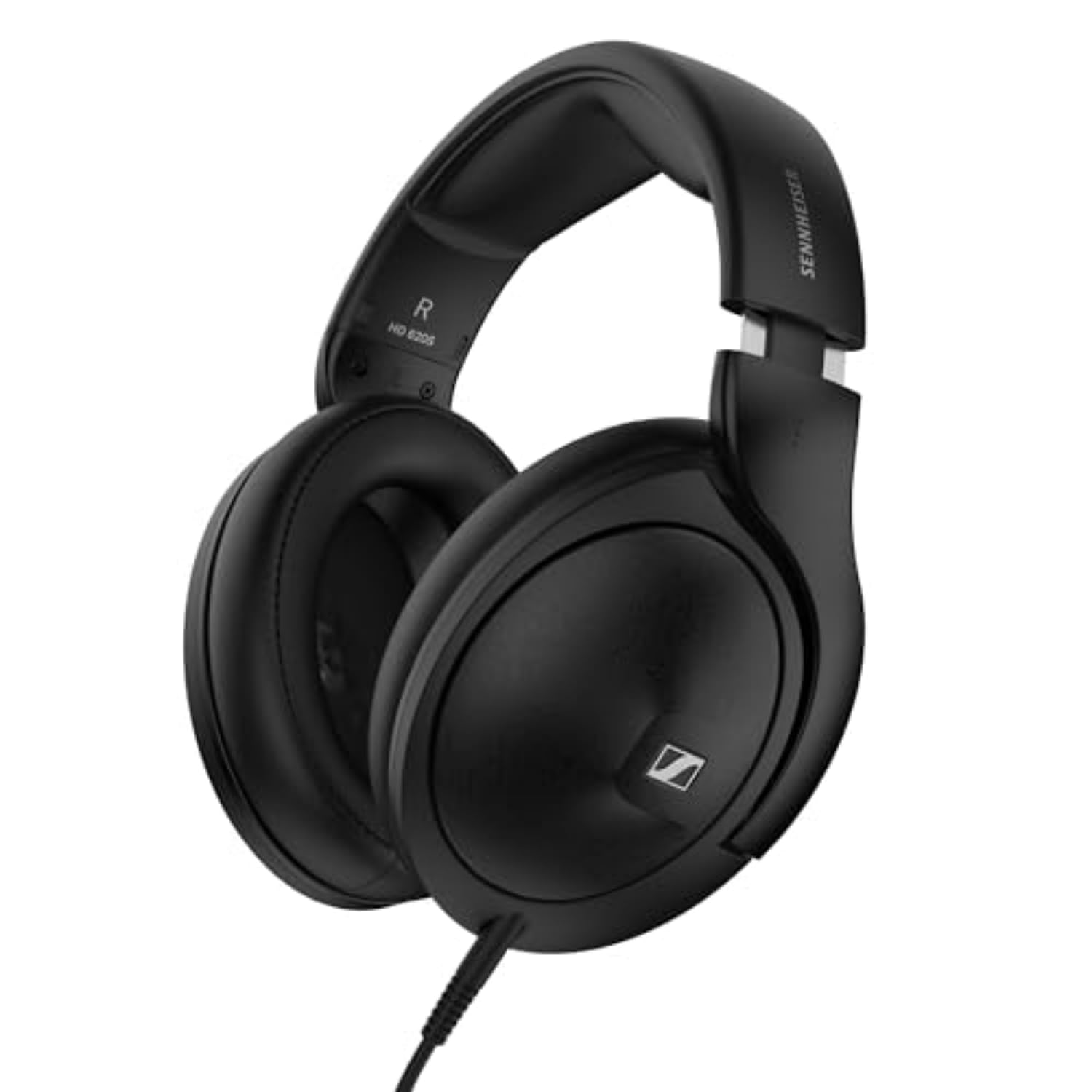
The Sennheiser HD 620S solves a notoriously difficult engineering problem: how to make a closed-back headphone sound as spacious and natural as an open-back. Its angled 42mm dynamic drivers with an ultra-light aluminum voice coil are housed in an open baffle system that reduces internal reflections and resonance, delivering a soundstage that feels genuinely wide for a closed-back—close to what you’d expect from open-back models like the HD 560S. The 150-ohm impedance ensures low distortion and excellent driver control, though it pairs best with a dedicated amplifier or DAC.
The tuning is classic Sennheiser 6-series: neutral, smooth, and highly detailed without being fatiguing. The bass is present and well-defined, the mids are transparent and natural, and the treble extends cleanly without peaks or sibilance. The HD 620S excels in focused listening environments like a home office, dorm room, or late-night desk setup where you need isolation from ambient noise but still want a wide, immersive presentation. The closed-back design provides effective passive isolation, blocking out keyboard clatter, fan hum, and low-level conversation.
Comfort is excellent, with soft polyurethane leather earpads and a steel-reinforced headband slider that feels durable and precise. The detachable 1.8-meter cable with a 3.5mm connector and included 6.3mm adapter covers basic connectivity, but the cable is left-side terminated, which may annoy some users. At its price point, the HD 620S offers a unique combination of closed-back isolation with open-back spaciousness that no other headphone in this guide matches. If you need privacy without sacrificing soundstage, this is your headphone.
Why it’s great
- Exceptional soundstage for a closed-back design
- Neutral, detailed Sennheiser 6-series tuning
- Effective passive isolation for office or dorm use
Good to know
- Benefits from a dedicated headphone amplifier for best results
- Left-side cable termination may not suit all setups
- Headband is not user-replaceable
9. Sony MDR-M1

The Sony MDR-M1 is a professional closed-back reference monitor that punches far above its weight, delivering ultra-wideband playback from 5 Hz to 80 kHz with remarkably low distortion. Developed in collaboration with renowned audio engineers, its 40mm dynamic driver and closed acoustic structure provide high sound isolation and a neutral frequency response that reveals flaws in a mix without flattering them. This makes it an exceptional tool for voiceover recording, podcast editing, and any application where accurate monitoring is essential.
The sound signature is slightly warm in the bass—enough to make low frequencies satisfying without being boomy—while the mids are open and the treble is smooth and non-peaky. Reviewers consistently praise its wide soundstage for a closed-back, with precise imaging that helps localize instruments and effects in a mix. Comfort is outstanding thanks to the ultra-lightweight design at just 216 grams, with soft, thick earpads that fit comfortably over glasses for hours. The adjustable headband and fold-flat mechanism make it easy to stow in a backpack between sessions.
Sony supplies two detachable cables (1.2-meter with 3.5mm plug and 2.5-meter with 6.3mm screw-in plug), a threaded adapter system, and user-replaceable ear pads—features that underscore its professional intent. The lack of a carrying case is a minor oversight, and some listeners may find the treble slightly sibilant on certain recordings, but that level of transparency is exactly what a reference monitor should provide. For budget-conscious creators and discerning listeners who want studio-grade closed-back performance without spending premium dollars, the MDR-M1 is an exceptional value.
Why it’s great
- Ultra-wideband frequency response with very low distortion
- Extremely lightweight (216g) and comfortable for long sessions
- Neutral, revealing sound with excellent closed-back imaging
Good to know
- Treble can be slightly sibilant on some recordings
- No carrying case included
- Ear pads get warm during extended use
FAQ
Do I need an amplifier for headphones under $500?
Which is better for gaming: open-back or closed-back headphones under $500?
Is aptX Lossless better than LDAC for wireless headphones?
Can I use a wired ANC headphone at my desk and wirelessly on the go?
Final Thoughts: The Verdict
For most users, the definitive headphones under $500 winner is the Sennheiser HD 660S2 because it delivers reference-grade open-back sound with exceptional bass extension and vocal clarity that surpasses everything else in this price range—provided you have a modest amplifier to drive it. If you need wireless freedom with best-in-class noise cancellation, grab the Sony WH1000XM6 for its unmatched ANC and 30-hour battery. And for the traveler who refuses to compromise on sonic detail, nothing beats the Focal Bathys, whose wired DAC mode transforms it into a true audiophile closed-back when you reach your destination.

Mo Maruf
I created WellFizz to bridge the gap between vague wellness advice and actionable solutions. My mission is simple: to decode the research and give you practical tools you can actually use.
Beyond the data, I am a passionate traveler. I believe that stepping away from the screen to explore new environments is essential for mental clarity and physical vitality.