Our readers keep the lights on and my smoothie glass nicely filled. As an Amazon Associate, I earn from qualifying purchases.
A poorly fitted backpack can turn the Appalachian Trail or Pacific Crest Trail into a study in misery, with pressure points, chafing, and an aching lower back that takes the joy out of every vista. Choosing the right pack for a long-distance trek is less about brand loyalty and more about the precise interaction between your torso length, the pack’s suspension geometry, and its ability to compress a bulky resupply load into a stable, high-center-of-gravity package for hours of uninterrupted walking.
I’m Mohammad Maruf — the founder and writer behind WellFizz. My market research for this guide involved analyzing over 500 customer reviews against technical specifications like frame design, harness adjustability, fabric denier, and load lift strap geometry to identify the packs that consistently deliver on-trail performance rather than just shelf appeal.
Whether you are planning a weekend shakedown or a five-month journey, finding the perfect backpack for thru hiking means prioritizing torso fit and suspension tuning over every other feature, as the miles will expose any weakness in the system.
How To Choose The Best Backpack For Thru Hiking
Selecting a backpack for a multi-day or long-distance journey requires examining four critical factors that determine whether the pack will be a trusted partner or a source of trail pain. Each factor directly impacts your ability to cover miles day after day without injury or frustration.
Torso Length and Suspension Adjustability
A pack that lists one-size-fits-all rarely fits anyone well for a week-long trip. The distance between your iliac crest and C7 vertebra determines the correct torso length, and a pack with a fixed or limited adjustable suspension will either ride too low on your hips or press into your shoulders. Look for models with a dedicated adjustable torso system—such as Osprey’s AirSpeed or the Kelty adjustable perimeter frame—that allows you to move the hip belt up or down by at least three inches to dial in the load transfer.
Volume and Packing Strategy
For a resupply cycle of 5 to 7 days, a volume between 55 and 65 liters is the sweet spot for most hikers using modern lightweight gear. Packs in the 70 to 105 liter range suit hikers carrying bulky winter gear or larger food loads, but the extra space tempts overpacking, which increases base weight and compromises stability. U-zip or J-zip front access allows you to reach items at the bottom without unloading the entire pack—a significant advantage during camp setup.
Frame Type: Internal vs. External
Modern internal frame packs distribute weight tightly against your back and offer excellent torso twist during scrambling, making them the default choice for most terrain. External frame packs, like the Kelty Trekker 65, provide superior back ventilation and allow you to lash large, bulky gear directly to the frame, which is beneficial for carrying climbing gear or bulky bear canisters. The trade-off is a higher center of gravity that can feel less stable off-trail.
Hip Belt and Harness Padding
On a thru-hike, 90 percent of the pack weight should rest on your hip bones, not your shoulders. A hip belt must have firm, contoured foam that wraps around your iliac crest without gaping. Women-specific versions with a more pronounced angle at the belt pad reduce pressure on broader hip bones. Load lifter straps at the top of the shoulder harness are essential—they pull the pack into your back and shift weight back onto the hips when tensioned correctly.
Quick Comparison
On smaller screens, swipe sideways to see the full table.
| Model | Category | Best For | Key Spec | Amazon |
|---|---|---|---|---|
| Osprey Exos 58 | Ultralight | Fast & light thru-hiking | 2.94 lbs / 58L | Amazon |
| Osprey Rook 65L | Mid-Range | All-around value pack | 3.7 lbs / 65L | Amazon |
| The North Face Terra 55 | Mid-Range | Budget-friendly starter pack | 4 lbs / 55L | Amazon |
| Kelty Glendale 65L-105L | Premium | High load capacity | 85L expandable | Amazon |
| Granite Gear Crown 3 | Ultralight | Weight-conscious hikers | 16 ounces / 60L | Amazon |
| Thule Landmark 60L | Travel Hybrid | Thru-hike + international travel | 4 lbs / 60L | Amazon |
| Kelty Trekker 65 | External Frame | Heavy loads & back ventilation | 5.3 lbs / 65L | Amazon |
| Eberlestock Vapor 5000 | Ultralight Hybrid | Hunting & tactical use | 2.2 lbs / 82L | Amazon |
| Women’s Terra 55 | Women-Specific | Female-specific fit & comfort | 4 lbs / 55L | Amazon |
In‑Depth Reviews
1. Osprey Exos 58

The Osprey Exos 58 represents the peak of ultralight internal-frame engineering for long-distance travel. Weighing just 2.94 pounds, it uses a tensioned mesh back panel that creates a physical air gap between the pack and your spine, which is critical for preventing sweat buildup during high-mileage days on the Appalachian Trail. The ExoForm harness uses seamless layered mesh rather than traditional foam blocks, reducing hot spots without sacrificing load transfer for loads up to 40 pounds.
The 58-liter capacity is efficiently distributed across a stretch front shove-it pocket, dual stretch mesh side pockets that hold 1.5-liter smart water bottles, and a separate hydration sleeve that isolates the water bladder from your sleeping bag. The hip belt pockets are small but perfectly sized for a phone, lip balm, and a snack bar—no wasted space. The frame sheet is removable for those who want to shave another few ounces, though most thru-hikers will keep it in for the fifth day of a carry.
User reports consistently praise the ventilated back panel, especially on sunny climbs, and the lack of any squeaking noise from the frame—a common issue with ultralight designs. The main trade-off is that the shoulder and hip padding is thinner than on premium comfort packs like the Osprey Rook, meaning it rewards disciplined packing where weight stays under 35 pounds. For fast-and-light hikers targeting 20-plus mile days, this pack is the gold standard.
Why it’s great
- Outstanding back ventilation reduces sweat buildup.
- Very low base weight with proper internal frame support.
- Excellent adjustability for torso length and shoulder harness.
Good to know
- Hip belt padding is thinner than plush-mid-range packs.
- Side compression straps can interfere with water bottle access when fully cinched.
2. Osprey Rook 65L

The Osprey Rook 65L bridges the gap between ultralight ambition and real-world durability at a price that undercuts much of the competition. It features the AirSpeed suspension system with a tensioned mesh back panel that you can adjust for torso length, accommodating a wider range of body types than fixed-length packs. The LightWire frame transfers loads effectively to the hip belt, keeping shoulder pressure manageable even when you are carrying a heavy resupply of 30 to 35 pounds.
Where this pack shines is its integrated rain cover—a detail that saves you time and money when the weather turns. The zippered sleeping bag compartment with a floating divider allows you to separate your shelter from your food bag, making camp setup faster. The side pockets are angled toward the rear, which helps you reach water bottles without fully shrugging the pack off, though some users note the straps can compress the pockets when the pack is full.
Customer feedback consistently mentions the high-quality fabric and zippers, with many hikers reporting hundreds of miles without any sign of wear. The main aesthetic downside is the lack of a front mesh pocket, which forces you to stash wet rain gear in the main compartment or the lid pocket. For a mid-range pack that competes with premium models on comfort and includes a rain cover, the Rook is a smart choice for budget-conscious thru-hikers.
Why it’s great
- Integrated rain cover stows in its own pocket.
- Adjustable AirSpeed suspension for varied torso lengths.
- Durable materials and zippers hold up over hundreds of miles.
Good to know
- No external stretch mesh pocket for quick-access layers.
- Hip belt can feel snug on narrow hips despite adjustments.
3. Kelty Glendale 65L-105L
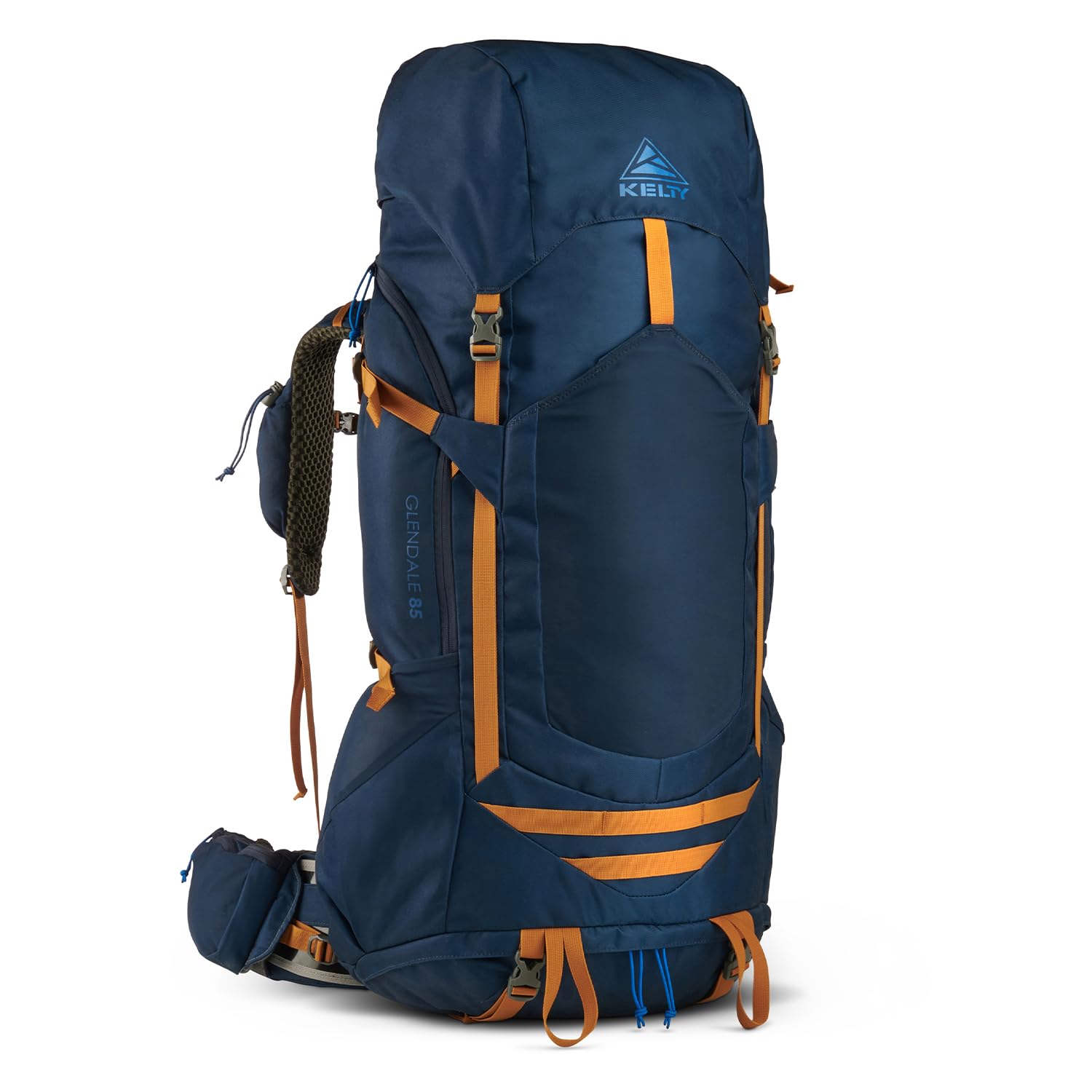
The Kelty Glendale is a modern flagship pack designed for hikers who need the flexibility to scale from a week-long trip to a multi-week expedition without buying a second bag. Its key innovation is the adjustable suspension, which lets you shift the hip belt vertically to dial in fit across a wide range of torso lengths. The perimeter frame provides exceptional stability for heavy loads—users report carrying 50 to 60 pounds without the pack feeling top-heavy or shifting during side-hill traverses.
Pocket placement is the Glendale’s standout feature. It includes dual stretch shoulder strap pockets that can hold a phone or bear spray, a quick-access sleeve pocket with two zippered hip belt pockets, and dual water bottle pockets that accommodate large 1.5-liter canteens. The J-zip front access allows you to open the entire front panel to reach gear at the bottom—perfect for retrieving a rain jacket during a sudden downpour without unpacking your sleeping bag.
The main trade-off is weight: the suspension and frame add mass that makes it less suitable for ultralight hikers. Some users report that at 60-plus pounds the shoulder straps can feel thin, and the adjustable sizing mechanism can slip slightly under extreme load. For winter backpacking, bulky gear carries, or those who simply want the largest usable pack without buying a separate expedition model, the Glendale is a strong performer.
Why it’s great
- Expandable from 65L to 105L for multi-week trips.
- J-zip front access for easy gear retrieval.
- Perimeter frame provides excellent stability for heavy loads.
Good to know
- Heavier than ultralight alternatives.
- Side pockets become inaccessible when pack is fully compressed.
4. Granite Gear Crown 3
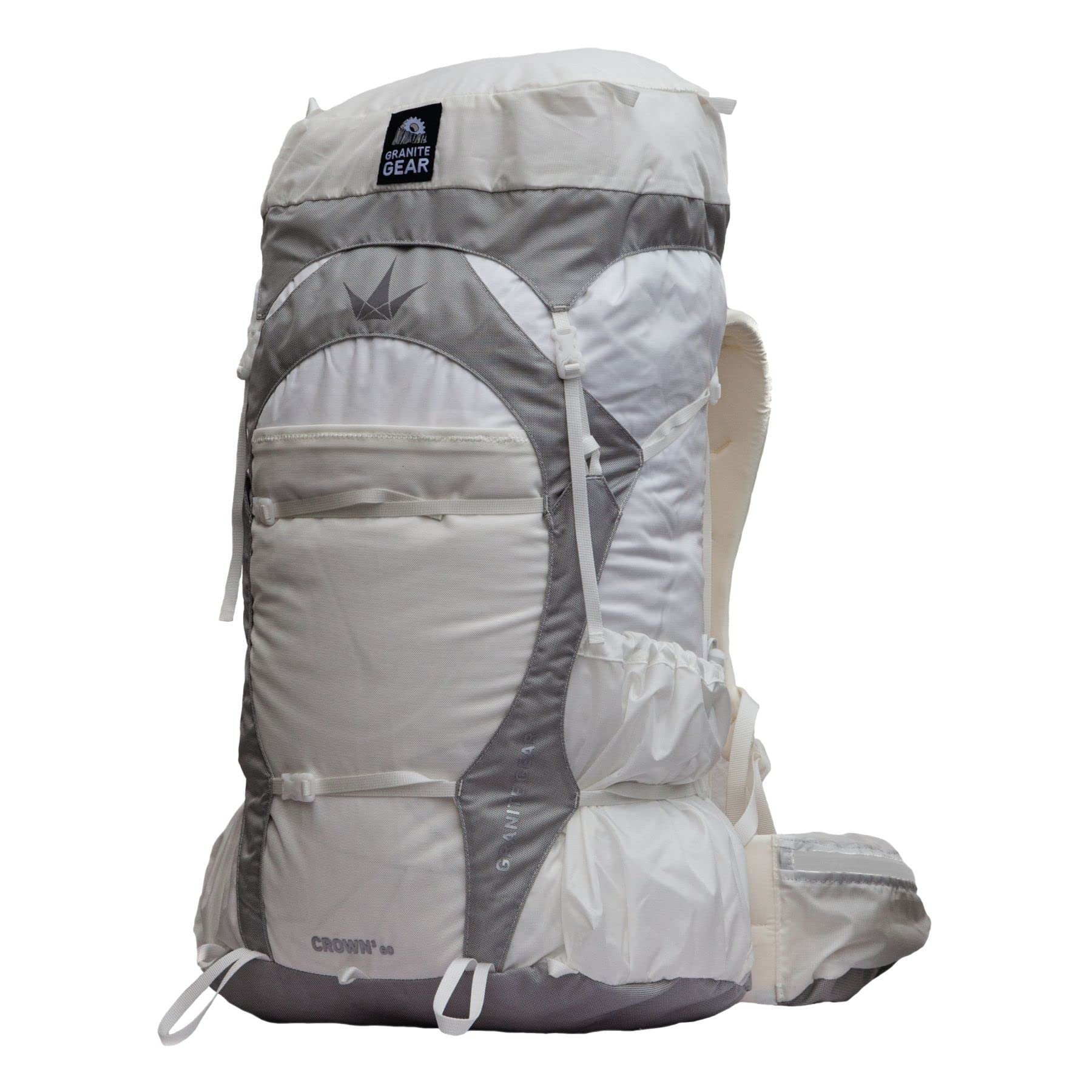
The Granite Gear Crown 3 lives at the extreme end of the weight-to-capacity spectrum—it tips the scales at just 16 ounces for a 60-liter pack. This is accomplished through a minimalist design that includes a removable frame sheet, a roll-top closure instead of a heavy zippered lid, and a harness that uses dual-density foam rather than thick padded panels. For hikers who have dialed their base weight under 15 pounds, the Crown 3 offers an incredible volume-to-weight ratio.
The dual large hip belt pockets are a rare feature in the ultralight category—they are roomy enough to hold a full-size phone, a chapstick, and a snack, with DWR-treated zippers that resist light rain. The roll-top compression system allows you to cinch the pack down when it is less than full, eliminating the flop that plagues traditional top-loaders. The load-lifter straps are functional but require careful adjustment: without the optional aluminum stay (sold separately), the frame flexes noticeably once you exceed 20 pounds.
Users who purchase the aluminum stay report that the pack performs well at 30 to 35 pounds, though the hip belt padding remains minimal compared to mid-range packs. The shoulder straps are thin and can dig in during long carries if you are carrying a heavy water carry section. For summer thru-hikes where every ounce matters and your resupply is lightweight, the Crown 3 is an excellent ultralight tool.
Why it’s great
- Extremely low base weight for a framed 60-liter pack.
- Large, accessible hip belt pockets.
- Roll-top closure provides excellent compression control.
Good to know
- Aluminum stay must be purchased separately for loads over 20 lbs.
- Shoulder straps are thin and may cause discomfort during long carries.
5. The North Face Terra 55
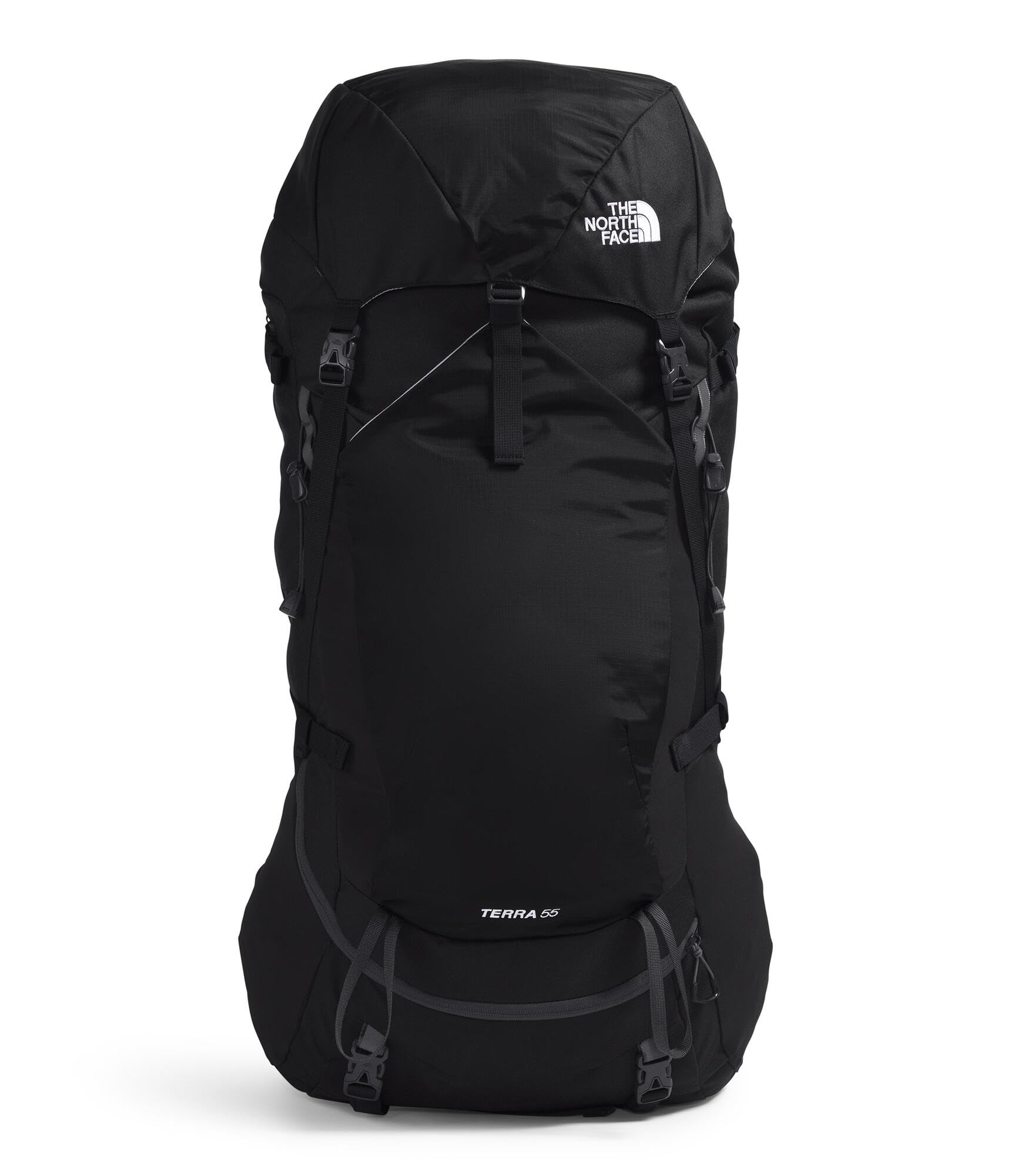
The North Face Terra 55 is a classic 55-liter internal-frame pack that prioritizes straightforward functionality over exotic features. Its full-length two-way U-zip provides access to the main compartment from the top, side, and bottom—a versatile opening that makes it easy to fish out a rain jacket without disturbing your entire load. The removable lid with an internal zip pocket and key clip adds organization for small items like a knife, compass, or headlamp without adding bulk.
The suspension system includes load lifter straps, a sternum strap with an integrated whistle, and a removable frame sheet that helps distribute weight across your hips. At 4 pounds, it is heavier than the ultralight options in this list, but the padded back panel and hip belt are generous enough to prevent hot spots even when carrying 35 to 40 pounds. The external stuff-it pocket tightens with an S/R buckle, providing secure storage for a wet shell or camp shoes.
Users of smaller frame sizes note that the S/M version (53 liters) might feel slightly small for a full week of gear, while the L/XL version (57 liters) adds valuable space. Some reviewers mention that the hip belt, while comfortable, could benefit from more adjustability for very slender or large waists. For the price, the Terra 55 delivers a well-rounded introduction to thru-hiking without demanding a premium outlay.
Why it’s great
- Full-length U-zip allows quick access to all gear.
- Generous padding on hip belt and back panel for comfort.
- Removable lid adds organizational flexibility.
Good to know
- At 4 lbs, it is heavier than ultralight competitors.
- Hip belt lacks fine-grained adjustability for extreme body shapes.
6. Thule Landmark 60L
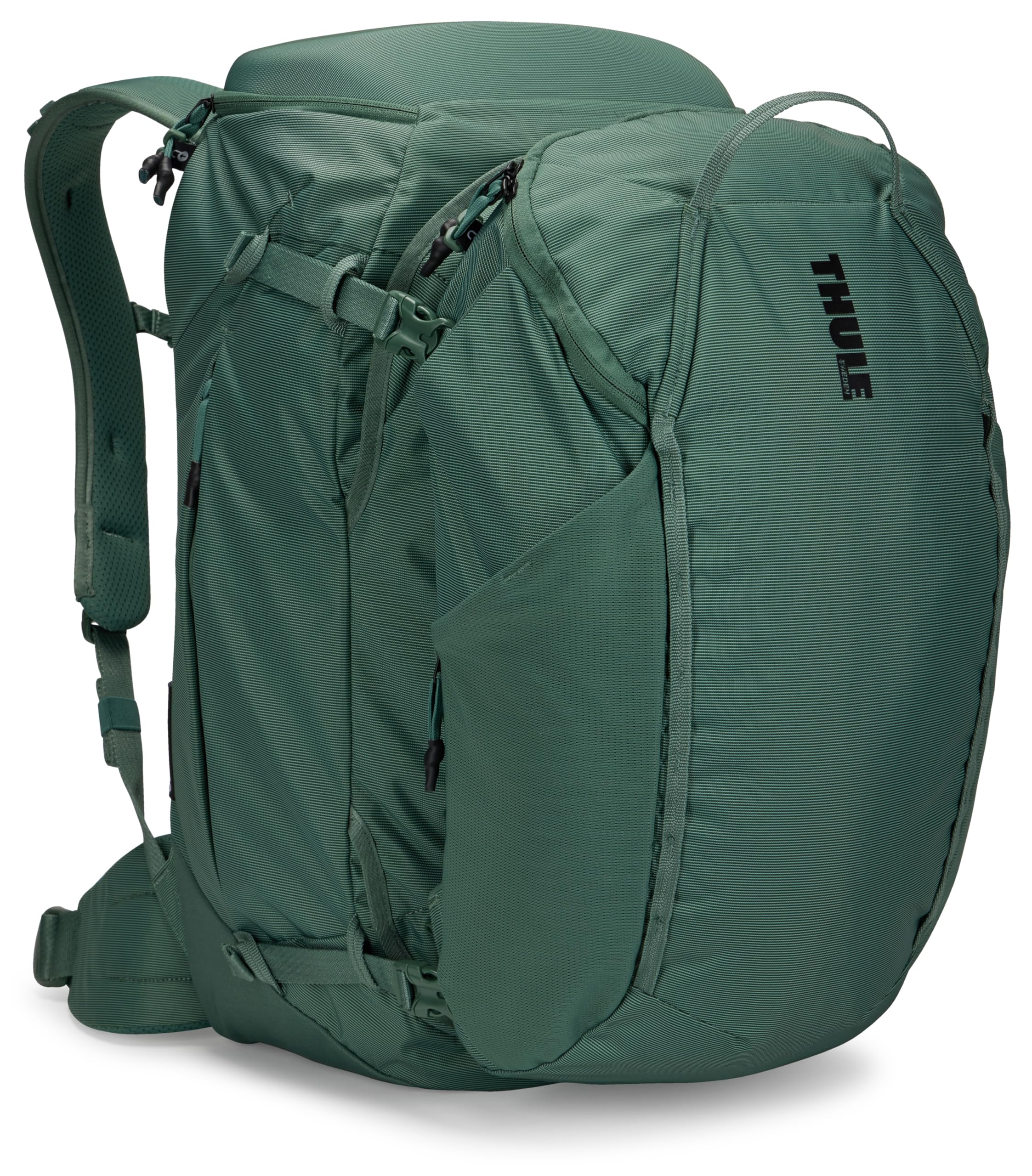
The Thule Landmark 60L is a travel-first backpack that also performs admirably on trail sections between hostels and hut-to-hut routes. Its standout feature is the removable 20-liter daypack that attaches to the main bag, giving you a total of 80 liters of flexible carry capacity for trips that combine air travel with hiking. The main pack opens like a suitcase—panel-loading design that makes packing cubes and gear organization effortless compared to a traditional top-loader.
The Landmark includes anti-theft features that are rare in hiking-focused packs: a covert CashStash pocket hidden under the SafeZone area, LoopLocks that secure zipper pulls to the bag, and a hidden pocket for a passport. The hip belt is integrated but less heavily padded than pure hiking packs, which means it distributes weight reasonably well but may not match the load transfer of a dedicated Osprey or Kelty for 40-pound carries. The 60-liter main compartment is shaped more like a cube than a tube, which makes it easy to pack but can feel bulkier on tight single-track trails.
Users who have traveled for months report that the materials hold up well, though the fabric is not fully waterproof and the included rain cover is a separate purchase. The 20-liter daypack is a brilliant addition for day hikes from a base camp or for navigating airports with valuables. If you are planning a trip that mixes urban exploration with moderate hiking, the Landmark is a versatile hybrid that packs very well.
Why it’s great
- Removable 20-liter daypack adds versatility for travel.
- Panel-loading main compartment allows easy packing cubes access.
- Anti-theft features like CashStash and LoopLocks.
Good to know
- Less hip belt padding than dedicated hiking packs.
- Not fully weatherproof—rain cover recommended.
7. Kelty Trekker 65

The Kelty Trekker 65 is a deliberate throwback to the external frame design that many long-time hikers swear by for its unmatched back ventilation and load-carrying stability. The external frame creates a physical gap between the pack and your back, allowing air to circulate freely—a massive advantage during hot, sweaty climbs where internal frame packs turn your shirt into a sponge. The adjustable suspension system includes a dual-density foam waist belt, padded shoulder straps with stabilizer straps, and a sternum strap, all of which work together to transfer weight directly to your hips.
The Trekker 65’s packing strategy is straightforward: the top-loading main compartment holds 65 liters, with zippered side pockets and a front pocket with organization for small gear. The top lid converts into a sling pack, which is handy for day hikes from a base camp. The optimal carry weight is listed as 20 to 55 pounds, and the frame excels at supporting heavy loads—the external suspension does not collapse or sag the way some internal frames do when loaded near their limit.
The trade-off is weight: at 5 pounds 5 ounces, the Trekker is the heaviest pack on this list, and the rigid frame makes it harder to fly with as carry-on luggage. Some users report that the main bag is mounted slightly high from the factory, causing a pendulum effect; drilling new attachment holes solves this. For hikers who value back airflow and load-carrying capability over ultralight weight, the Trekker is a rugged workhorse.
Why it’s great
- Excellent back ventilation due to external frame design.
- Highly adjustable suspension fits a wide range of body sizes.
- Converts to a sling pack for day hikes from base camp.
Good to know
- Heaviest option at over 5 lbs.
- Main bag may need user adjustment to eliminate pendulum swing.
8. Eberlestock Vapor 5000
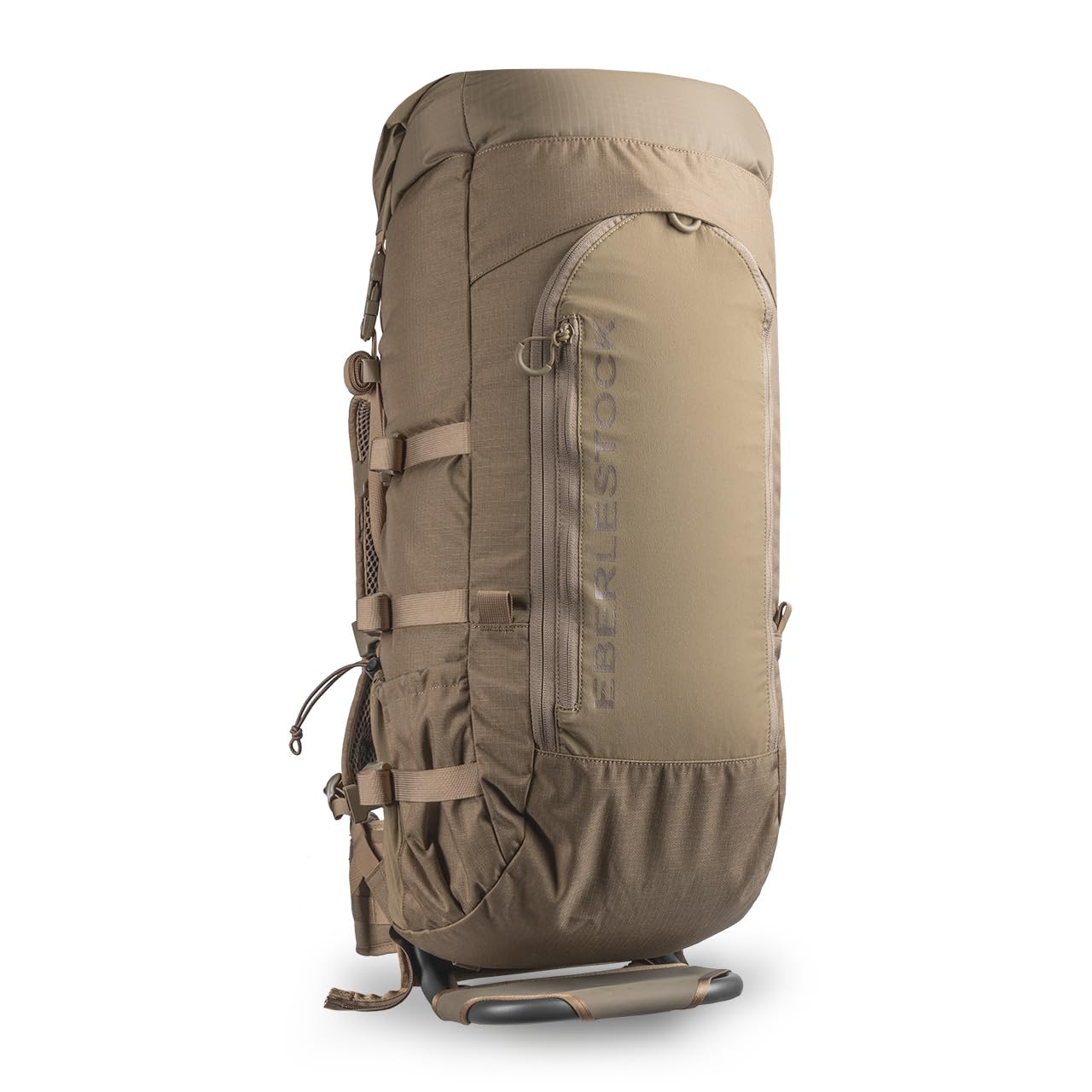
The Eberlestock Vapor 5000 is a 5000-cubic-inch (approximately 82-liter) ultralight hybrid designed for users who need a large capacity pack with a small base weight. Weighing only 2.2 pounds, it uses 500-denier nylon ripstop fabric that resists abrasion from brush and rocks, making it suitable for off-trail use and hunting trips where durability is paramount. The pack is designed to attach to Eberlestock’s F1 Mainframe (sold separately), which gives you the flexibility to use the bag body with a dedicated suspension system optimized for heavy loads.
The external features include deep stretch pockets that can hold spotting scopes, tripods, or large water bottles, and a zippered center front panel made of stretch material for quick-access items. The removable Duraflex buckles allow you to expand the pack from the frame to create a channel for game bags or bulky gear close to your center of gravity. The camouflage versions use 450D Aramid reinforced ripstop for extra puncture resistance, while the solid colors use 500D nylon.
Some users note that the pack is larger in real use than it appears—it requires significant expansion to reach its full volume. The compression straps are non-removable on the male buckles, which can clank against each other while hiking. Without the full mainframe system, the pack lacks a dedicated load-bearing hip belt, making it a bag-only solution until you buy the frame. For experienced users who want a modular system that can scale from day trips to heavy expedition loads, the Vapor 5000 is an interesting option.
Why it’s great
- Very low weight for a large 5000 c.i. capacity.
- Durable 500D nylon ripstop fabric resists abrasion.
- Modular design allows frame upgrades for heavy loads.
Good to know
- Mainframe (hip belt and harness) is sold separately.
- Compression straps can clank without proper management.
9. The North Face Women’s Terra 55
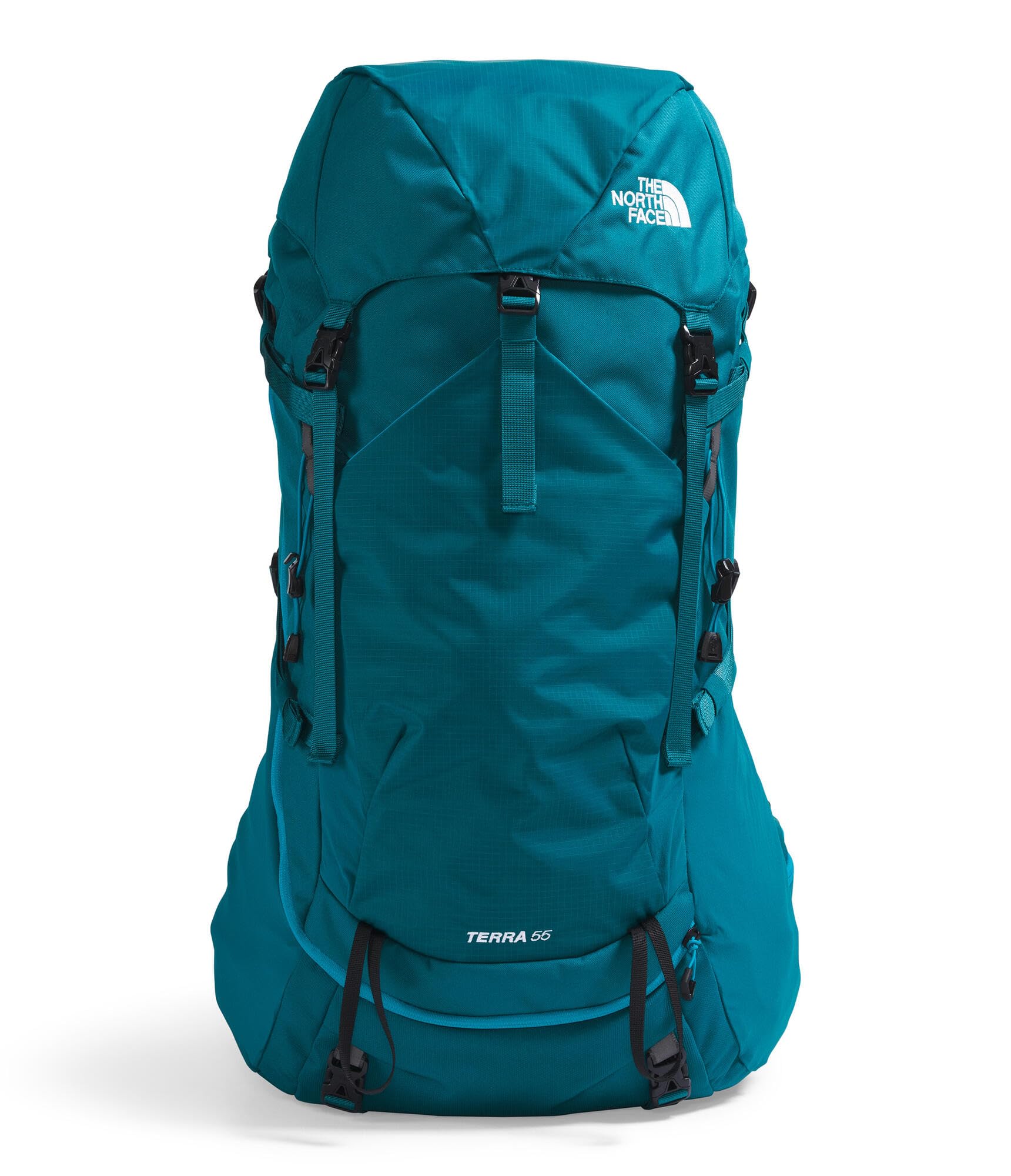
The Women’s Terra 55 is the gender-specific counterpart to the standard Terra 55, with a women-specific back panel, shoulder straps, and hip belt that accommodate a narrower shoulder width and a more pronounced angle at the iliac crest. The padding is optimized for comfort and breathability, with a contoured shape that reduces gaping at the waist—a common issue with unisex packs on female hips. At 4 pounds for the M/L size, it is heavier than ultralight options but offers substantial plushness around the hips and shoulders.
Like the unisex version, the Women’s Terra 55 includes a full-length U-zip for easy access to the main compartment, a removable lid with an internal zip pocket and key hook, and an external stuff-it pocket that tightens with an S/R buckle. The dual stretch bottle pockets are positioned slightly lower than on the men’s version to align better with a female center of gravity, making water retrieval easier without twisting your back. The load lifter straps and sternum strap are all standard, providing the fine-tuning needed to dial in the fit for shorter to medium torso lengths.
User reports emphasize that the pack fits well on smaller frames and that the hip belt effectively transfers weight to the hips even when the pack is moderately loaded. Some reviewers note that the torso length is less adjustable than the Osprey Rook or Kelty Glendale, so if you have an exceptionally long torso, the unisex Terra 55 may be a better choice. For women seeking a comfortable, well-padded pack for weekend-to-week-long trips, the Women’s Terra 55 is a reliable entry-level option.
Why it’s great
- Women-specific back panel and hip belt reduce gaping.
- Full-length U-zip provides easy access to gear.
- Hip belt padding is generous and comfortable.
Good to know
- Limited torso adjustability compared to premium competitors.
- Heavier than ultralight packs in the same volume class.
FAQ
How many liters do I need for a typical five-day resupply?
Should I choose an internal frame or external frame for a thru-hike?
What is the fastest way to adjust my new pack’s fit?
Final Thoughts: The Verdict
For most hikers, the best backpack for thru hiking winner is the Osprey Exos 58 because it combines an ultralight base weight with a ventilated suspension that keeps you dry on long carries. If you want a pack with more padding and a built-in rain cover without breaking the budget, grab the Osprey Rook 65L. And for hikers carrying heavy loads or winter gear, nothing beats the expandable capacity and perimeter frame stability of the Kelty Glendale.

Mo Maruf
I created WellFizz to bridge the gap between vague wellness advice and actionable solutions. My mission is simple: to decode the research and give you practical tools you can actually use.
Beyond the data, I am a passionate traveler. I believe that stepping away from the screen to explore new environments is essential for mental clarity and physical vitality.