Our readers keep the lights on and my smoothie glass nicely filled. As an Amazon Associate, I earn from qualifying purchases.
The promise of an audiophile-grade soundbar is intoxicating: a single, clean unit that delivers the spatial precision of a dedicated home theater system without the clutter of a receiver and five separate speakers. Yet the gap between marketing hype and actual acoustic performance is wider here than in almost any other audio category. Uncontrolled bass, muddy dialogue, and a flat soundstage are the hallmarks of a miss — not a hit.
I’m Mohammad Maruf — the founder and writer behind WellFizz. I research consumer audio hardware for a living, analyzing amplifier topologies, DSP processing depth, driver materials, and measured frequency response graphs to separate genuine engineering from clever spec sheets.
After weeks of evaluating dozens of models, I’ve assembled the definitive list of the best audiophile soundbar options on the market, ranging from balanced mid-range performers to reference-grade behemoths that rival dedicated separates.
How To Choose The Best Audiophile Soundbar
Choosing a high-end soundbar is not about picking the prettiest box. It is about decoding the engineering behind the sound. These are the five criteria that separate a genuine audiophile-grade unit from a consumer-grade product with a high price tag.
Channel Configuration and Driver Array
The channel count — 5.1.2, 7.1.4, or 11.1.4 — tells you how many discrete audio channels the soundbar can process. The first number is the ear-level channels, the second is the subwoofer channel, and the third is the height channels for overhead effects. A true 7.1.4 or higher configuration with dedicated up-firing drivers for height channels will produce a far more convincing Dolby Atmos bubble than a cheaper 3.1.2 unit that relies solely on psychoacoustic virtualization. Look for physical drivers dedicated to height, not just DSP trickery.
Amplifier Architecture and Signal Processing
Not all amplifiers are created equal. GaN (Gallium Nitride) amplifiers are the new standard in high-end soundbars, offering lower distortion and higher efficiency than traditional Class-D designs. The bit-depth and sample rate of the internal DAC and DSP matter too — a unit capable of 24-bit/192kHz processing with under 0.5% total harmonic distortion (THD) is the baseline for audiophile territory. The processing power, measured in MIPS, determines how well the system can handle complex multi-channel decoding and room equalization in real time.
Subwoofer Integration and Low-Frequency Extension
The subwoofer is the foundation of any serious home theater soundbar. Driver size is a starting point — a 10-inch or 12-inch driver with a passive radiator will move more air and reach deeper frequencies than an 8-inch unit. But integration matters more than raw size. Look for a frequency response that extends below 30Hz for true cinematic bass. Also assess whether the subwoofer connects wirelessly (and whether that connection uses a dedicated 5GHz band to minimize interference) or requires a wired connection for the lowest latency. A subwoofer that is easy to place and does not introduce distortion at moderate volumes is essential.
Room Calibration and Sound Field Optimization
Your room’s dimensions, furniture placement, and wall materials dramatically affect how a soundbar performs. The quality of the built-in room calibration system is therefore critical. A system that uses an external measurement microphone and analyzes multiple listening positions (like Sennheiser’s AMBEO calibration or Sony’s Sound Field Optimization) will deliver more accurate results than a simple sensor-based system that only measures from the soundbar’s position. The goal is a system that can correct for reflections, nulls, and phase issues specific to your space.
Physical Scale and Connectivity
There is a direct correlation between physical size and acoustic performance. A soundbar that is 58 inches wide and weighs over 30 pounds can house larger drivers, more amplifier channels, and a bigger waveguide than a slim 40-inch model. If your TV setup cannot accommodate a large main unit, you may need to consider systems with satellite speakers or a more compact soundbar with a separate control box. Connectivity is also non-negotiable: you need at least one HDMI eARC port for lossless Dolby Atmos, plus at least one additional HDMI input for a gaming console or streaming box. Wi-Fi with support for AirPlay 2, Spotify Connect, and Tidal Connect is standard at this tier.
Quick Comparison
On smaller screens, swipe sideways to see the full table.
| Model | Category | Best For | Key Spec | Amazon |
|---|---|---|---|---|
| Samsung HW-Q800F | Mid-Range | Versatile all-in-one with AI room calibration | 5.1.2ch / 8″ passive radiator sub | Amazon |
| ULTIMEA Skywave X60 | Mid-Range | Best value for a full 7.1.4 wireless system | 7.1.4ch / GaN amplifier / 840W peak | Amazon |
| JBL Bar 500MK2 | Mid-Range | Powerful bass and clear dialogue | 5.1ch / 10″ sub / 750W peak | Amazon |
| LG S95TR | Mid-Range | LG TV owners wanting seamless integration | 9.1.5ch / triple up-firing center | Amazon |
| Sonos Arc Ultra | Mid-Range | Best multi-room ecosystem and music | 9.1.4ch / Sound Motion tech / AI dialogue | Amazon |
| Samsung HWQ990F | Mid-Range | True 11.1.4 channel surround in a single system | 11.1.4ch / 8″ sub / SpaceFit Sound Pro | Amazon |
| JBL Bar 1300XMK2 | Premium | Detachable battery-powered surround speakers | 11.1.4ch / 12″ sub / 1570W peak | Amazon |
| Sennheiser AMBEO Plus | Premium | Single-bar virtual 7.1.4 with music quality | Virtual 7.1.4 / dual 4″ subs built-in | Amazon |
| Bose Smart Ultra System | Premium | Premium wireless surround with bass module | Dolby Atmos / Bass Module 700 / surrounds | Amazon |
| KEF XIO | Premium | Best music reproduction in a soundbar | 5.1.2ch / 12 discrete amps / KEF signature | Amazon |
| Sony BRAVIA Theater Quad | Premium | Best 360 spatial sound with discrete speakers | 16 speakers / 360 Spatial Sound Mapping | Amazon |
| Sennheiser AMBEO Max | Luxury | Reference-class single-bar performance | 5.1.4ch / 13 drivers / 30Hz bass built-in | Amazon |
| Nakamichi Dragon | Luxury | Ultimate reference-grade home theater | 11.2.6ch / dual 12″ subs / 19Hz extension | Amazon |
In‑Depth Reviews
1. Samsung HW-Q800F 5.1.2ch Q Series Soundbar
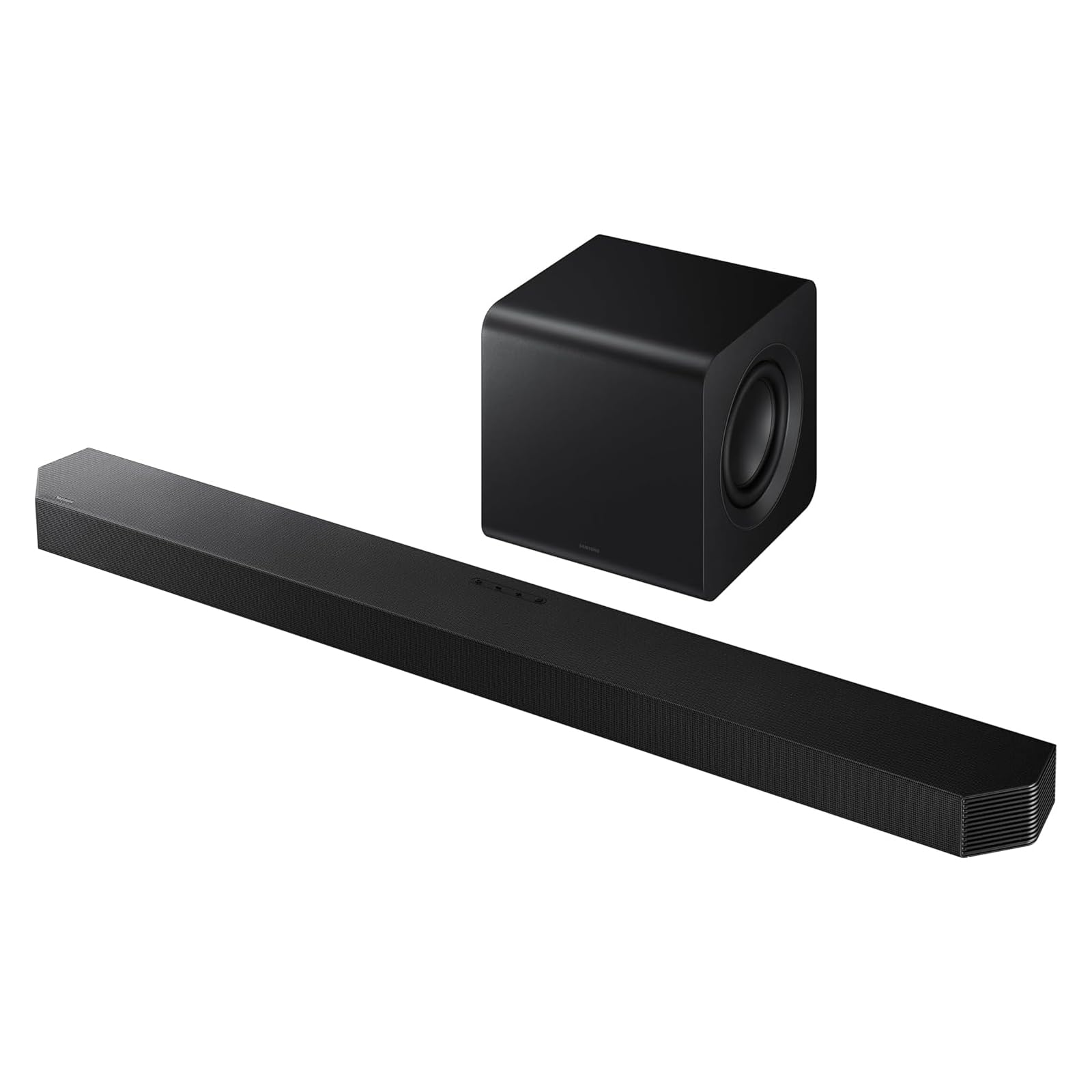
The Samsung HW-Q800F strikes a masterful balance between price and performance, offering a true 5.1.2-channel configuration with discrete up-firing drivers for Dolby Atmos height effects. The 8-inch passive radiator subwoofer delivers controlled, room-filling bass that stays tight even at higher volumes, avoiding the bloated low-end that plagues many mid-range competitors. The SpaceFit Sound Pro calibration technology uses built-in sensors to analyze your room’s acoustics and automatically adjusts EQ and bass response, which is a feature typically reserved for more expensive systems.
Dialogue clarity is excellent thanks to the Active Voice Amplifier Pro, which intelligently boosts speech when it detects background noise from appliances or ambient activity. The soundbar supports wireless Dolby Atmos playback when paired with a compatible Samsung TV, eliminating the need for a physical HDMI cable for the Atmos signal — a convenience that simplifies setup without sacrificing audio quality. For gaming, the Game Mode Pro activates dynamic 3D sound processing that sharpens spatial cues like footsteps and environmental effects.
Connectivity is comprehensive with built-in Alexa, AirPlay 2, and Google Cast support, plus the SmartThings app for granular control. The subwoofer is compact enough to tuck into most entertainment centers without dominating the visual space. While it does not match the channel count or raw power of premium-tier systems, the HW-Q800F delivers a genuinely immersive, well-calibrated audio experience that satisfies demanding listeners without requiring a separate room treatment.
Why it’s great
- SpaceFit Sound Pro delivers highly effective automatic room calibration
- Wireless Dolby Atmos with compatible Samsung TVs simplifies cable management
- Active Voice Amplifier Pro maintains dialogue clarity even with ambient noise
Good to know
- Full Dolby Atmos processing requires a Samsung TV for wireless mode
- 8-inch passive radiator sub may not satisfy those seeking sub-25Hz extension
2. ULTIMEA Skywave X60 7.1.4ch Professional Surround Sound System
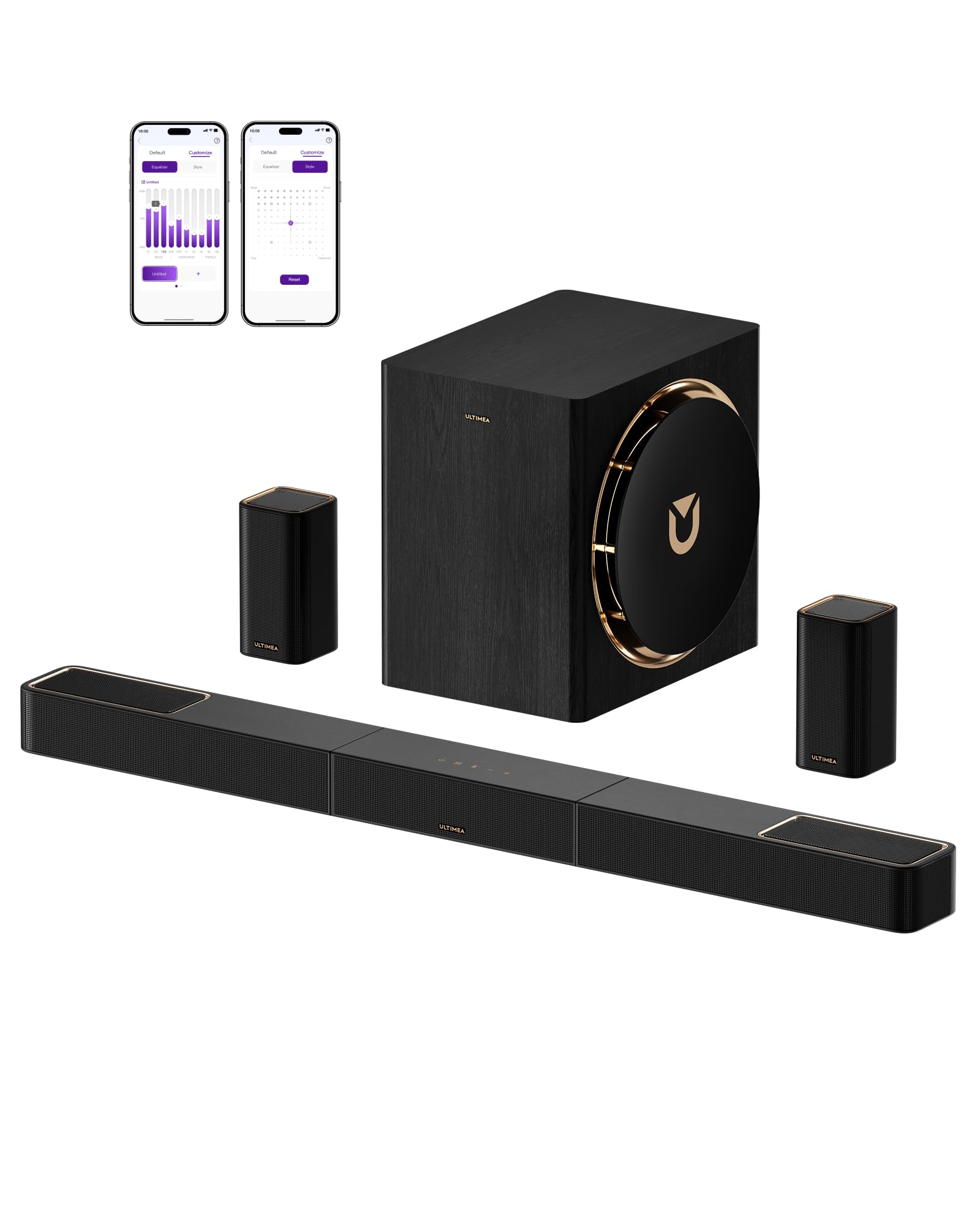
The ULTIMEA Skywave X60 is a surprising contender that brings a genuine 7.1.4-channel configuration with four up-firing height drivers, two wireless rear surround speakers, and an 8-inch subwoofer — all at a price point that undercuts most competitors offering similar channel counts. The GaN (Gallium Nitride) amplifier is a standout feature in this price tier, offering higher efficiency and lower harmonic distortion than traditional Class-D designs. The NEURACORE multi-channel audio engine, driven by a triple-core DSP and dual-core MCU, processes 24-bit/192kHz audio with under 0.5% total harmonic distortion.
The Gravus Ultra-Linear Bass Technology uses an oversized waveguide and precision-engineered acoustic chamber to deliver clean sub-bass down to 28Hz, which is genuinely impressive for a system at this price point. The dual 5GHz wireless transmission minimizes interference and dropouts, making the fully wireless rear surrounds genuinely usable without the occasional stuttering that plagues budget wireless audio systems. The system supports Dolby Atmos, DTS:X, and up-mixing of stereo content through its spatial processing engine.
Build quality is notable: the soundbar features a refined metal grille with rose gold accents, and the subwoofer uses a wood-crafted enclosure that reduces cabinet resonance. The ULTIMEA App provides a 10-band EQ and 121 sound presets for fine-tuning, plus OTA firmware updates. While the brand lacks the name recognition of JBL or Sonos, the Skywave X60 delivers a level of channel separation, low-frequency extension, and DSP sophistication that makes it a serious option for the discerning buyer on a budget.
Why it’s great
- GaN amplifier delivers cleaner, more efficient power than typical Class-D designs
- Genuine 28Hz low-frequency extension from a well-tuned 8-inch subwoofer
- Fully wireless rear surrounds on dual 5GHz band for reliable connectivity
Good to know
- App-based control required for advanced EQ adjustments
- Some users reported occasional machine noise from surround speakers
3. JBL Bar 500MK2 5.1ch Soundbar System
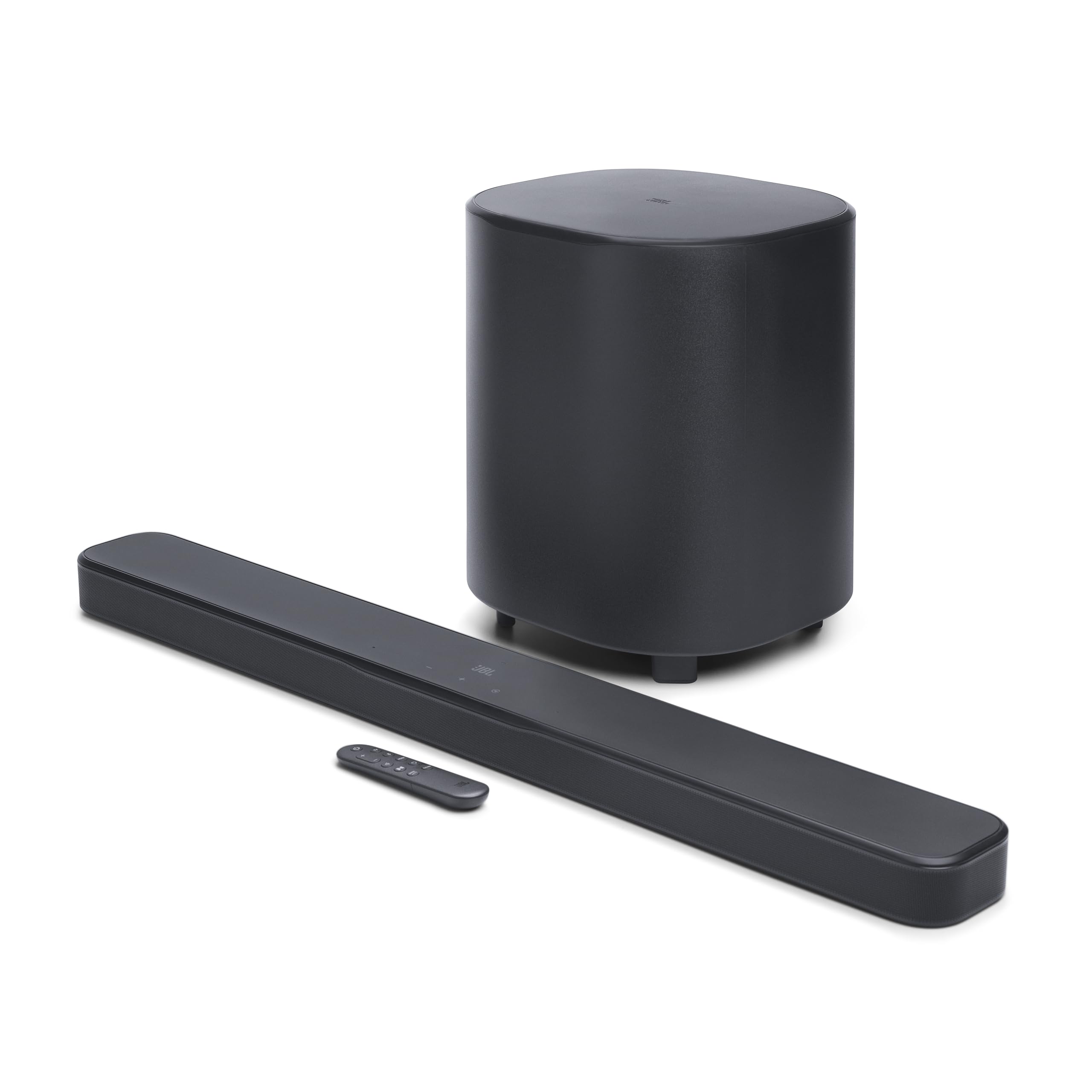
The JBL Bar 500MK2 is anchored by a 10-inch wireless subwoofer that produces genuinely chest-thumping low-end extension, making it one of the most physically impactful soundbars in its class. With a total system power of 750W peak, it delivers the kind of authoritative bass that makes action sequences and bass-heavy music tracks feel visceral rather than merely loud. The MultiBeam 3.0 technology creates a wide, cinema-like soundstage by beaming sound across the room, filling the space even if your seating position is not perfectly centered.
PureVoice 2.0 is JBL’s proprietary dialogue enhancement system, and it works exceptionally well. It automatically analyzes both the ambient sound in the scene and the current volume level to optimize speech clarity without making dialogue sound artificially boosted or separated from the mix. The SmartDetails processing further refines the audio by subtly lifting low-level details like footsteps, creaks, and environmental ambiance, preserving the nuance of a film’s sound design.
Connectivity is thorough: HDMI eARC with 4K Dolby Vision passthrough, AirPlay 2, Google Cast, Spotify Connect, Tidal Connect, and Roon Ready support. The JBL ONE App provides a precise equalizer and firmware updates. The system also supports voice assistant integration with Google Assistant and Siri. While the 5.1-channel configuration lacks the discrete height channels of 7.1.4 or 11.1.4 systems, the MultiBeam 3.0 virtual height processing is more convincing than many budget virtualization implementations.
Why it’s great
- 10-inch subwoofer delivers deep, distortion-free bass that fills the room
- PureVoice 2.0 provides consistently clear dialogue without aggressive boosting
- MultiBeam 3.0 creates a wide soundstage even in non-ideal seating positions
Good to know
- 5.1ch lacks discrete up-firing height drivers for dedicated overhead effects
- No individual EQ adjustment per channel in the app
4. LG S95TR 9.1.5ch Home Theater Soundbar

The LG S95TR is engineered specifically for LG television owners, and the integration is deep. The WOW Orchestra feature uses both the TV’s speakers and the soundbar simultaneously to create a wider, more cohesive soundstage. The WOW Interface allows you to control the soundbar’s volume, sound modes, and settings directly from the LG TV’s on-screen menu, eliminating the need to switch remotes. WOWCAST built-in technology enables wireless Dolby Atmos and DTS:X transmission from a compatible LG TV with no visible cables and no detectable audio lag.
The triple up-firing driver configuration is the star of the show here. LG has placed an industry-exclusive up-firing center channel that specifically focuses on dialogue clarity, ensuring that speech remains anchored to the screen even when overhead effects are panning around the room. Combined with the rear up-firing speakers, this creates a 9.1.5-channel bubble that convincingly places sounds above the listening position. The Advanced Room Calibration uses the built-in microphone to measure room dimensions and rear speaker placement, then optimizes the audio accordingly.
Gaming performance is bolstered by VRR and ALLM passthrough support up to 120Hz, making it a strong choice for console gamers who want low-latency audio with spatial precision. The included wireless rear speakers are truly plug-and-play — they only need a power outlet, with no receiver required. While the sound signature may not match the pure music fidelity of a Sennheiser or KEF system, the S95TR’s balance of integration, channel count, and calibration sophistication makes it a formidable all-in-one package for LG TV owners.
Why it’s great
- Triple up-firing channels including a center height driver for dialogue focus
- WOWCAST enables true wireless Dolby Atmos without lag or quality loss
- VRR and ALLM passthrough support up to 120Hz for low-latency gaming
Good to know
- Full feature set is best realized with a compatible LG TV
- Rear speakers are larger than some competitors’ units
5. Sonos Arc Ultra Soundbar with Dolby Atmos

The Sonos Arc Ultra represents a major architectural leap for the company, introducing Sound Motion technology that uses custom-engineered drivers and waveguide design to fill the room with precisely placed sound from a single bar. The 9.1.4 spatial audio experience is genuine: discrete effects pan accurately across the front soundstage, and the virtual height processing is among the most convincing implementations in a single-bar design. The AI-powered Speech Enhancement system detects human voice frequencies and clarifies dialogue without making it sound isolated or unnatural.
The Trueplay room calibration — accessible via iOS or Android — uses the microphone on your mobile device to measure how sound reflects off your specific walls, furniture, and surfaces, then adjusts the EQ and timing accordingly. This calibration is critical and transforms the Arc Ultra from a good soundbar into a genuinely immersive one. The Sonos ecosystem is the deepest in the audio industry: you can add the Sonos Sub for deeper bass or pair Era 300 speakers as dedicated rear surrounds for a true Dolby Atmos bubble that rivals dedicated speaker systems.
Control is flexible: the TV remote works natively via HDMI eARC, the Sonos app provides step-by-step guidance and EQ control, and voice control is available through Sonos Voice Control or Amazon Alexa. Streaming is comprehensive with WiFi, Bluetooth, Apple AirPlay 2, and Spotify Connect. While the Sonos ecosystem can become expensive when you add the Sub and surrounds, the Arc Ultra alone delivers a level of soundstage precision and dialogue clarity that justifies its position as a leading contender.
Why it’s great
- Sound Motion technology delivers room-filling sound from a single bar
- Trueplay room calibration dramatically improves spatial accuracy
- Expandable with Sonos Sub and Era 300 for true Dolby Atmos surround
Good to know
- Optimal Dolby Atmos performance requires adding Sub and Era 300 speakers
- Trueplay calibration needs an iOS or Android device with a good microphone
6. Samsung HWQ990F 11.1.4ch Q-Series Soundbar

The Samsung HWQ990F is a certified refurbished unit that delivers the full 11.1.4-channel experience — the same channel configuration found in many dedicated pre/pro setups. With discrete front, surround, rear, and four up-firing height channels, it creates a genuine 3D audio bubble that convincingly places objects above and around the listener. The 8-inch subwoofer, while not the largest in this roundup, is well-integrated and benefits from the SpaceFit Sound Pro Plus calibration that dynamically adjusts bass output and EQ based on room acoustics.
The Active Voice Amplifier Pro is included and works intelligently to detect ambient noise — such as a dishwasher or air conditioner — and boost dialogue frequencies without manual intervention. The Game Mode Pro with 3D sound processing sharpens spatial cues for competitive gaming, while the Q-Symphony feature synchronizes the soundbar with compatible Samsung TV speakers to widen the soundstage. The system supports both Dolby Atmos and DTS:X with wireless playback when paired with a Samsung TV.
As a refurbished unit, this HWQ990F comes with a 90-day warranty and has been tested to deliver like-new performance. The build quality is robust: the main bar uses a metal grille and the rear speakers are constructed from metal and hard plastic, avoiding the mesh materials that can collect dust and pet hair. While full retail pricing for the new version is higher, this refurbished option makes the 11.1.4-channel experience accessible to a wider audience without sacrificing key features like SpaceFit Sound Pro and Active Voice Amplifier.
Why it’s great
- True 11.1.4-channel configuration for dedicated height and surround effects
- SpaceFit Sound Pro Plus calibration dynamically adjusts to room acoustics
- Refurbished unit offers significant savings while maintaining performance
Good to know
- Certified refurbished unit with 90-day warranty only
- 8-inch subwoofer may not satisfy those seeking 12-inch-level bass impact
7. JBL Bar 1300XMK2 11.1.4ch Soundbar System

The JBL Bar 1300XMK2 is built around a genuinely innovative concept: the surround speakers are detachable from the main soundbar and operate wirelessly via rechargeable batteries. This means you can lift them off the bar with one hand, place them behind your seating position, and instantly get a true 11.1.4-channel surround experience with no wires running across the room. The battery life is sufficient for extended movie sessions, and when you are done, the speakers snap back onto the bar to recharge overnight.
The 12-inch wireless subwoofer is enormous and delivers room-shaking bass. This is not a polite subwoofer; it produces the kind of low-frequency energy that you feel in your chest. The 1570W peak power rating is not marketing fluff — this system can fill a large room with authoritative, clean sound at reference levels without noticeable distortion. The six up-firing drivers in the main bar and detachable surrounds create a true Dolby Atmos height layer that convincingly places overhead effects like rain, helicopters, and ceiling debris above the listening position.
The Night Listening mode is a clever feature: you can place the detachable speakers in front of you while the subwoofer and main bar are muted, allowing late-night listening without disturbing others. Broadcasting mode lets you carry one detachable speaker to the kitchen or patio while the rest of the system continues playing for guests. The JBL ONE App provides full EQ and mode control. For those who want the ultimate wireless flexibility without compromising on channel count or bass authority, the Bar 1300XMK2 delivers.
Why it’s great
- Detachable battery-powered surround speakers offer true wire-free rear audio
- 12-inch subwoofer delivers deep, chest-thumping low-frequency extension
- Night Listening mode allows private audio without disturbing others
Good to know
- Detachable speakers require recharging after about 5 hours of use
- Main unit is very large — ensure your TV stand can accommodate it
8. Sennheiser AMBEO Soundbar Plus

The Sennheiser AMBEO Soundbar Plus uses sophisticated psychoacoustic virtualization developed with Fraunhofer to simulate a 7.1.4-channel system from a single bar. Unlike cheaper virtualization that merely widens the stereo image, AMBEO processing captures your room’s acoustic properties — reflections, absorption, dimensions — and creates a 3D soundscape that convincingly places sounds behind and above you. The seven physical speakers, including dual 4-inch built-in subwoofers, provide a solid acoustic foundation that the DSP then builds upon.
Music reproduction is where the AMBEO Plus truly distinguishes itself. The codec support is comprehensive, including Dolby Atmos, DTS:X, MPEG-H, and 360 Reality Audio. Streaming is handled via Bluetooth, AirPlay 2, Spotify Connect, Tidal Connect, and Chromecast built-in. The sound signature is neutral and detailed, with crisp highs, articulate mids, and controlled bass that does not overpower the mix. The dual built-in subwoofers produce surprisingly deep bass for a bar of this size, though some listeners may still want to add the optional AMBEO Sub for the deepest movie effects.
Control is available through the remote, the Sennheiser Smart Control App, a web interface, or Alexa built-in. The integrated equalizer allows customization of AMBEO virtualization levels, voice enhancement for speech clarity, and a night mode for discreet listening. While the AMBEO Plus lacks the discrete surround channels of a 7.1.4 system with physical rear speakers, its virtualization engine is among the best available and produces a genuinely immersive experience in medium to small rooms where a full speaker array is impractical.
Why it’s great
- Fraunhofer-developed AMBEO virtualization creates convincing 7.1.4 surround
- Excellent music reproduction with studio-grade clarity and neutral balance
- Dual built-in 4-inch subwoofers eliminate the immediate need for an external sub
Good to know
- Needs a brief break-in period for optimal sound quality
- Some users report intermittent HDMI handshake issues with certain TVs
9. Bose Smart Ultra System with Bass Module 700 and Surround Speakers
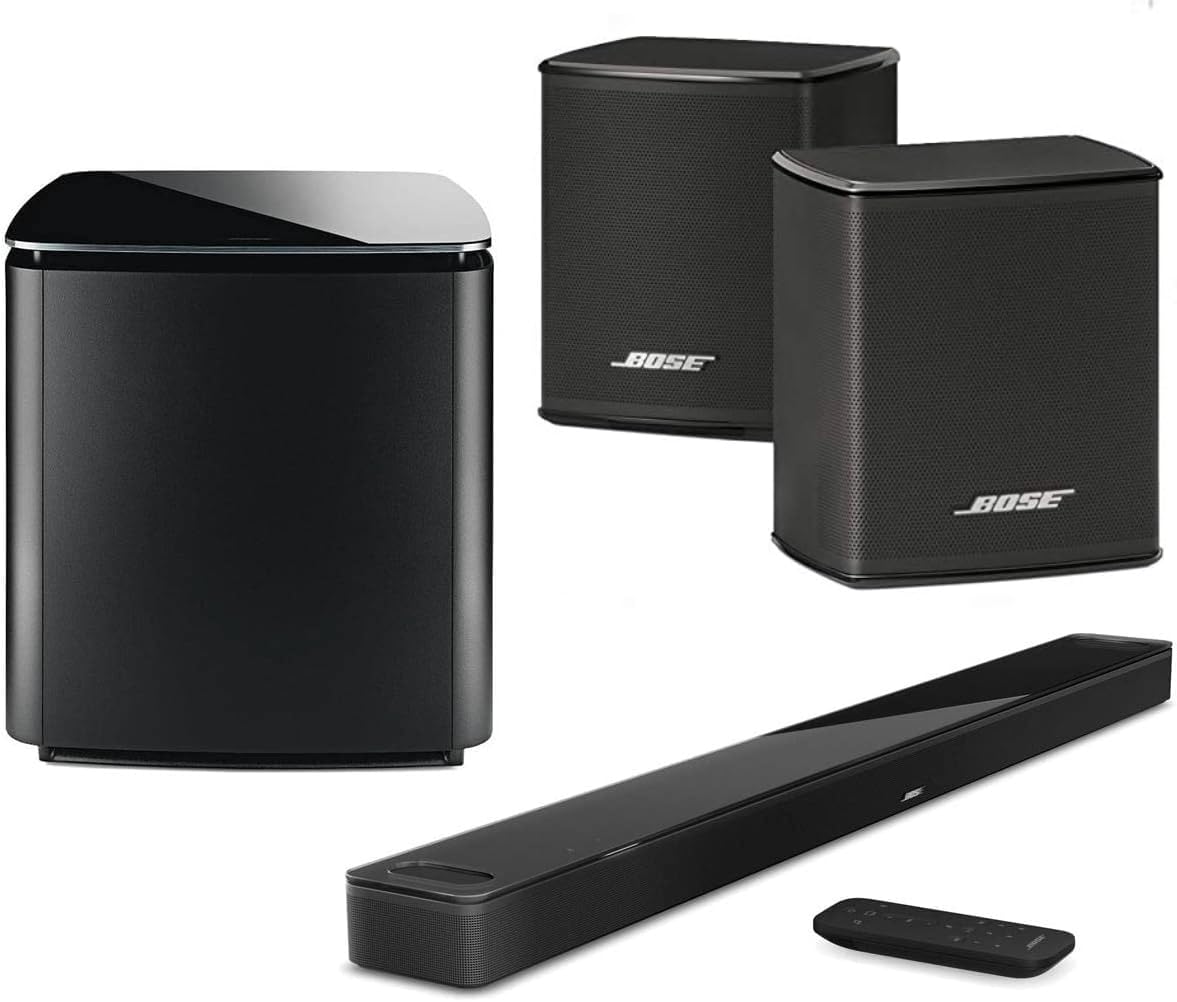
The Bose Smart Ultra bundle includes the flagship soundbar, the Bass Module 700, and two wireless surround speakers, creating a complete Dolby Atmos system that rivals dedicated 5.1 and 7.1 setups without the wiring complexity of a traditional receiver. The soundbar itself uses Bose’s proprietary spatial processing to create a wide soundstage from the front, while the surround speakers handle rear effects and the Bass Module 700 delivers deep, distortion-free low frequencies down to below 30Hz. The ADAPTiQ headset-based room calibration is a significant advantage: you wear the headset and the system plays test tones to measure your specific room’s acoustics, then applies a custom EQ curve.
Dialogue clarity is outstanding. Bose’s Voice4Video technology ensures that speech remains clear and intelligible even during complex action sequences with overlapping sound effects and music. The soundbar supports Alexa and Google Assistant for voice control, and the Bose Music app provides easy setup and source switching. The wireless surround speakers connect to the soundbar without a separate hub, and the system automatically adjusts sound delivery based on speaker placement.
Build quality is premium: the soundbar features a sleek glass top and metal grille, and the Bass Module 700 is compact enough to fit in most entertainment centers despite its powerful output. The bundle approach means you get a fully coordinated system that is optimized to work together out of the box. However, at this price point, some competitors offer higher channel counts like 9.1.4 or 11.1.4, which may provide more granular surround effects in larger rooms. For those prioritizing simplicity and reliable performance over raw channel count, the Bose system delivers.
Why it’s great
- ADAPTiQ room calibration uses a headset for highly accurate acoustic measurement
- Bass Module 700 delivers deep, clean low frequencies without port chuffing
- Seamless wireless integration of surrounds with no separate receiver needed
Good to know
- No discrete up-firing height drivers — virtual height processing only
- Bundle pricing places it in premium territory with fewer channels than competitors
10. KEF XIO Dolby Atmos 5.1.2 Soundbar
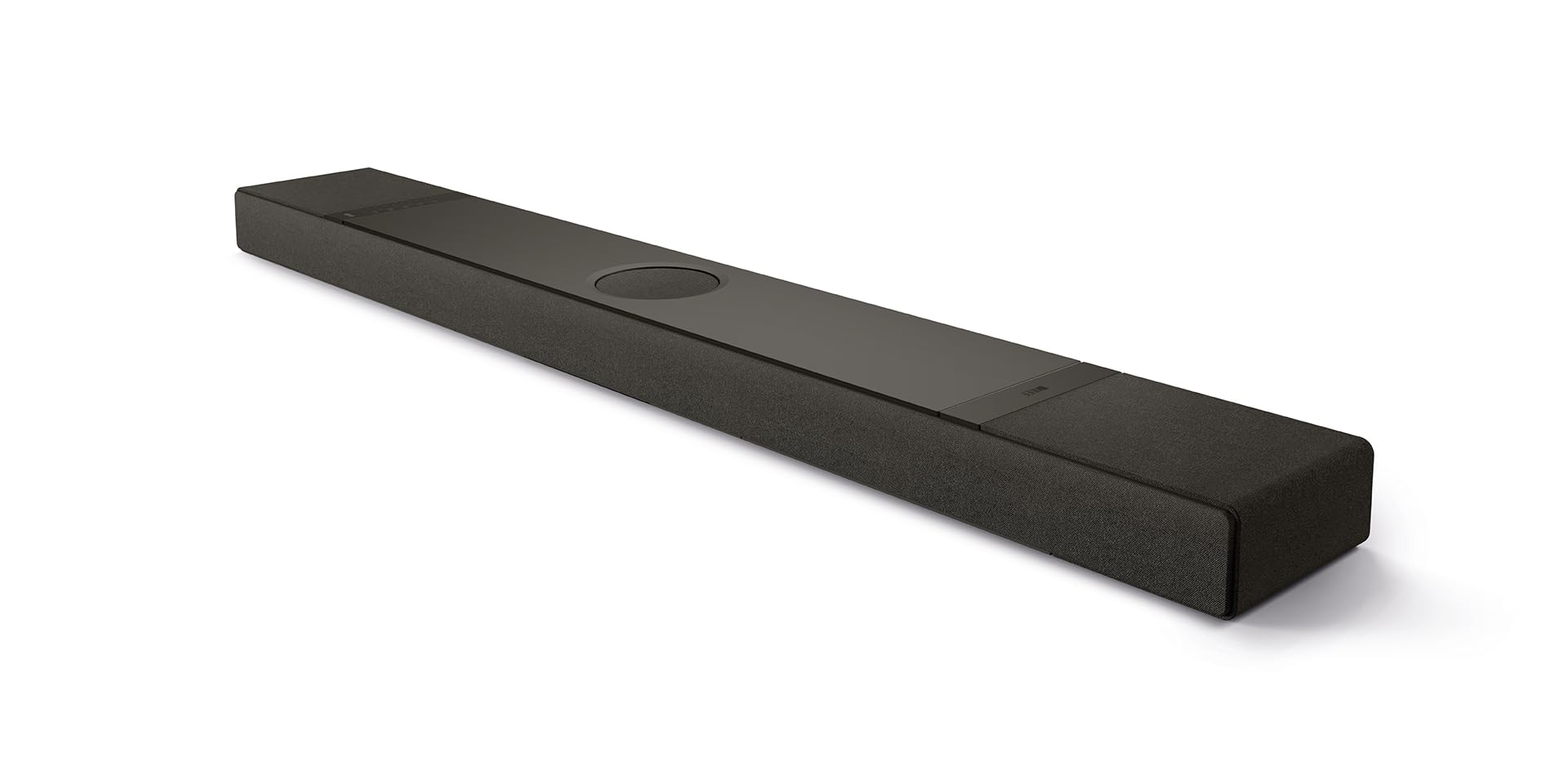
The KEF XIO is engineered by one of the most respected names in high-fidelity loudspeakers, and it shows in every aspect of its design. The 5.1.2-channel configuration uses 12 discrete amplifiers — one per driver — ensuring that each channel receives clean, dedicated power with no crossover or interaction artifacts. The sound signature is the most musically natural in this roundup: the midrange is open and detailed, the highs are smooth without being rolled off, and the bass is tight and well-defined. If your primary use case is music listening, the XIO is the soundbar to beat.
The enclosure is a 47.6-inch wide metal chassis that automatically senses whether it is placed on a credenza or wall-mounted and adjusts the speaker output accordingly. This auto-position sensing is a clever feature that ensures the soundstage remains correct regardless of placement. The KEF Connect App provides granular control over EQ, input selection, and sound modes (Movie, Dialogue, Night). The remote is customizable, allowing you to assign specific functions to buttons based on your preferences.
While the XIO’s on-board bass is impressive for a soundbar of this size, most listeners will want to add an external subwoofer for the deepest movie low-end — the dedicated subwoofer output makes this easy. Connectivity includes HDMI eARC, Wi-Fi, Bluetooth 5.3, Apple AirPlay 2, Spotify Connect, Tidal Connect, Google Cast, and Qobuz Connect. The XIO is not the cheapest option, and its 5.1.2-channel count is modest compared to 11.1.4 competitors, but for pure audio fidelity — especially for music — it is in a class of its own among soundbars.
Why it’s great
- 12 discrete amplifiers ensure clean, dedicated power to each driver
- Neutral, natural sound signature excels for music reproduction
- Auto-position sensing optimizes output for shelf or wall mount placement
Good to know
- External subwoofer strongly recommended for full cinematic impact
- 5.1.2 configuration may not be enough for very large rooms
11. Sony BRAVIA Theater Quad 16-Speaker System

The Sony BRAVIA Theater Quad is not a soundbar in the traditional sense — it is a four-speaker, 16-driver system with a dedicated control box. Each of the four wireless speakers contains multiple driver elements, and the system uses Sony’s 360 Spatial Sound Mapping technology to create up to 12 phantom speakers around the room. The result is a level of spatial immersion that surpasses any single bar on the market, with the ability to convincingly place specific sounds at precise points in the 3D space around you. The phantom center channel is particularly impressive, outperforming many physical center speakers in dialogue localization.
Sound Field Optimization uses the built-in microphones in each speaker to automatically calibrate the system to your room’s dimensions and listening position. The system supports Dolby Atmos, DTS:X, and IMAX Enhanced with full fidelity. For gamers, the HDMI 2.1 inputs support 4K120, VRR, and ALLM passthrough, making it one of the most future-proof home theater audio systems available. The BRAVIA Connect app provides comprehensive control over sound profiles and advanced settings.
The four speakers can be placed on stands or wall-mounted using the included dual-purpose hardware, and they are slim enough to blend into most rooms without dominating the visual space. The control box handles all processing and HDMI switching, keeping the speakers free of bulky electronics. While the Quad requires a separate subwoofer (optional Sony SW3 or SW5) for full low-frequency extension, its ability to create a seamless, room-filling Dolby Atmos bubble without visible rear wiring is unmatched in the consumer audio space.
Why it’s great
- 360 Spatial Sound Mapping creates phantom speakers for unmatched spatial precision
- Phantom center channel outperforms many physical center speakers in dialogue clarity
- HDMI 2.1 inputs with 4K120, VRR, and ALLM for future-proof gaming
Good to know
- Requires separate subwoofer for full low-frequency extension
- Setup software can be buggy with some network configurations
12. Sennheiser AMBEO Soundbar Max

The Sennheiser AMBEO Soundbar Max is the reference-class single-bar system that many audiophiles consider the benchmark for all-in-one home theater audio. With 13 drivers — including five dedicated tweeters for studio-grade high-frequency reproduction — and a 5.1.4-channel configuration, it produces deep 30Hz bass from built-in woofers without requiring an external subwoofer. The AMBEO room calibration uses the included measurement microphone to analyze your room’s acoustics from multiple positions, creating a correction that dramatically improves spatial imaging and tonal balance.
The sound signature is powerful and precise. The midrange is reproduced with stunning clarity, making voices and instruments sound natural and present. The 3D surround virtualization, developed with Fraunhofer, creates a convincing bubble of sound that extends well beyond the physical boundaries of the bar. For music, the AMBEO Max supports Dolby Atmos, DTS:X, MPEG-H, and up-mixing of stereo content. Streaming is handled through Chromecast, AirPlay 2, Spotify Connect, and Tidal Connect. The built-in equalizer and three bespoke AMBEO modes allow fine-tuning of the spatial presentation.
Build quality is exceptional. The aluminum and mesh enclosure houses the driver array in a substantial chassis that weighs enough to signal its serious engineering. The wired subwoofer pre-out allows connection of an optional Sennheiser AMBEO Sub for even deeper low-end extension, though many listeners will find the built-in 30Hz performance sufficient. The main caveats are the size — it is a large bar meant for a 65-inch or larger TV — and the occasional HDMI handshake delays reported by some users. For those seeking the ultimate single-bar solution, the AMBEO Max remains the standard.
Why it’s great
- 13-driver array with five dedicated tweeters for studio-grade high frequencies
- 30Hz bass extension from built-in woofers eliminates immediate subwoofer need
- External microphone room calibration creates reference-grade spatial imaging
Good to know
- Very large chassis requires a substantial TV stand or wall mount
- Some users report occasional HDMI signal acquisition delays
13. Nakamichi Dragon 11.2.6ch Surround System
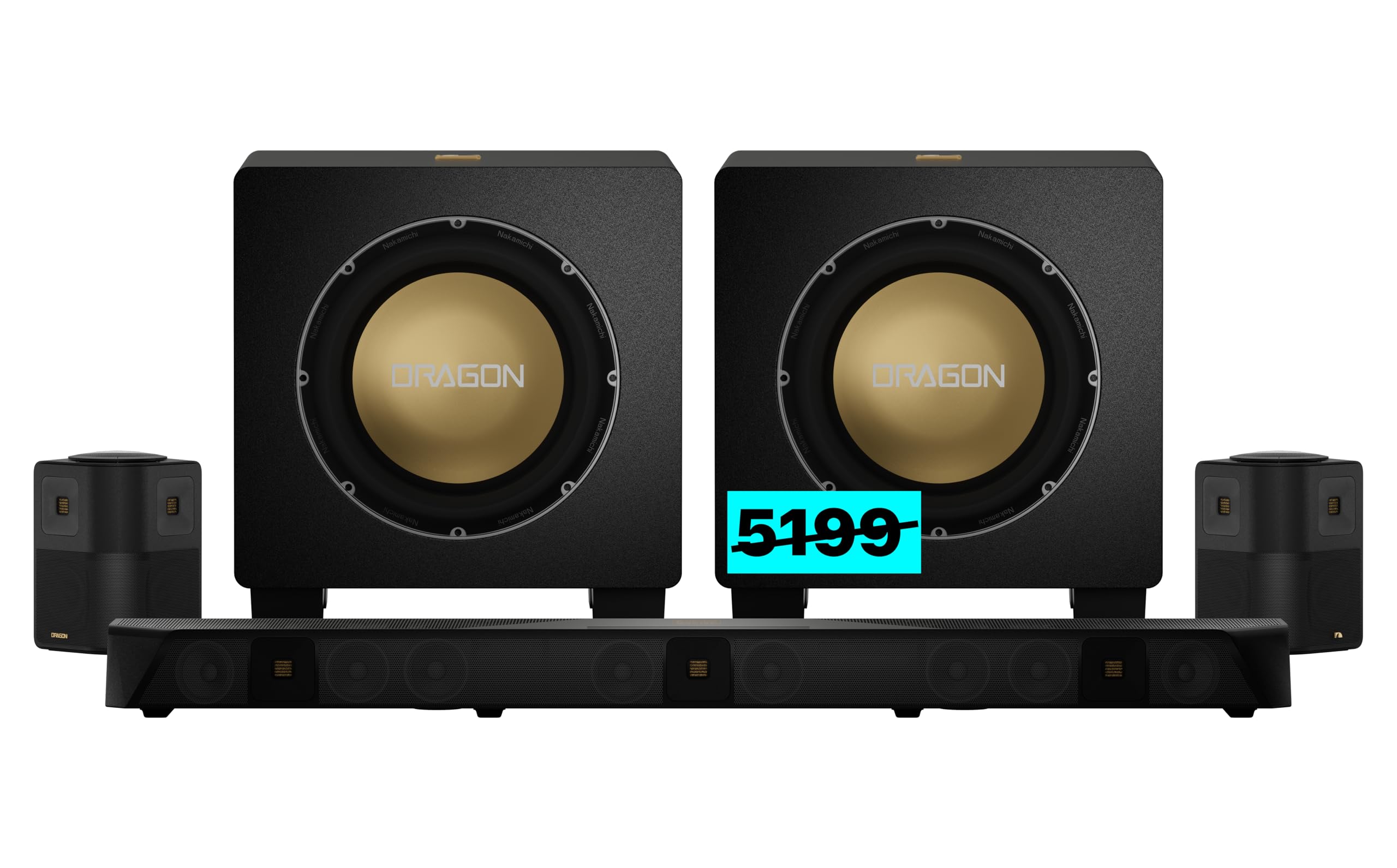
The Nakamichi Dragon is not a soundbar in any traditional sense — it is a complete reference-grade home theater system that happens to use a soundbar-style main unit. The 11.2.6-channel architecture includes six discrete height channels, HiFi Air Motion Tweeters (AMTs) in the main bar and surround speakers, and dual 12-inch aerospace-grade aluminum subwoofers with carbon passive radiators that reach down to 19Hz. The Pro-Cinema Engine processes Dolby Atmos up to 24.1.10 and DTS:X Pro up to 30.2, operating at a processing depth that rivals high-end AV receivers.
The AMT tweeters are a significant differentiator. Unlike conventional dome tweeters, AMTs fold and unfold air to produce sound, resulting in razor-clean highs with exceptional transient response and focused dialogue even at extreme volumes. The bipolar height surrounds project sound from both sides and above, creating the presence of six surround speakers from just two enclosures. The PerfectHeight Mechanism locks overhead effects to the sweet spot, ensuring that helicopter flyovers and rain effects stay anchored above the listening position.
The dual 12-inch subwoofers are massive — each weighing 80 pounds — and produce room-engulfing bass that must be felt to be believed. The system ships in four boxes and requires a substantial entertainment center: the main bar is 58.1 inches wide and weighs 32.2 pounds. Setup is straightforward for a system of this complexity, with wireless pairing for the satellites and subs. The HDMI eARC port and three HDMI 2.1 inputs support 4K120, Dolby Vision, and HDR10+ passthrough. For those who demand absolute reference-level performance and have the space and budget to accommodate it, the Nakamichi Dragon is the definitive statement piece.
Why it’s great
- HiFi Air Motion Tweeters provide unmatched high-frequency clarity and transient response
- Dual 12-inch subwoofers with 19Hz extension redefine cinematic bass impact
- 6 discrete height channels create the most convincing Dolby Atmos bubble available
Good to know
- Requires substantial physical space — main bar is 58 inches wide, subs weigh 80 lbs each
- No auto-room calibration — manual room dimension input required
FAQ
What is the minimum channel count for a convincing Dolby Atmos experience?
Do I need a separate subwoofer for an audiophile-grade soundbar?
Should I prioritize channel count or sound quality in my soundbar purchase?
How important is room calibration for a high-end soundbar?
Can an audiophile soundbar replace a dedicated AV receiver and separate speakers?
What HDMI specifications do I need for an audiophile soundbar?
Final Thoughts: The Verdict
For most users, the best audiophile soundbar winner is the Samsung HW-Q800F because it delivers a true 5.1.2-channel experience with AI room calibration, wireless Dolby Atmos, and excellent dialogue clarity at a mid-range price that does not compromise on core audiophile benchmarks. If you want the absolute best spatial immersion for home theater, grab the Nakamichi Dragon — its 11.2.6-channel architecture, dual 12-inch subwoofers, and HiFi AMT tweeters redefine what a soundbar-based system can achieve. And for pure music fidelity with a minimalist single-bar setup, nothing beats the KEF XIO which delivers 12 discrete amplifiers and KEF’s legendary midrange reproduction in a clean, wall-mountable package.

Mo Maruf
I created WellFizz to bridge the gap between vague wellness advice and actionable solutions. My mission is simple: to decode the research and give you practical tools you can actually use.
Beyond the data, I am a passionate traveler. I believe that stepping away from the screen to explore new environments is essential for mental clarity and physical vitality.