Our readers keep the lights on and my smoothie glass nicely filled. As an Amazon Associate, I earn from qualifying purchases.
If you spend ten-hour shifts on concrete, warehouse floors, or asphalt, the factory insoles in your boots are the first thing working against you. They compress fast, offer little arch support, and leave your feet, knees, and lower back aching by day’s end. A proper boot insole changes that equation entirely.
I’m Mohammad Maruf — the founder and writer behind WellFizz. I’ve spent thousands of hours analyzing biomechanical design, foam density ratings, and real-world user feedback across dozens of orthotic brands to separate the insoles that actually hold up from those that flatten in a week.
Whether you need heavy-duty support for plantar fasciitis, high arches, or long days on your feet, choosing the right pair starts here. This guide breaks down the five best boot insoles for men to keep your feet working as hard as you do.
How To Choose The Best Boot Insoles For Men
The right boot insole is not about pillowy softness — it’s about structural support that resists collapse under repeated impact. Work boots amplify every step’s force, so your insole must manage shock, align your foot, and stay stable inside a deep boot shaft.
Arch Support Height and Firmness
Low, medium, and high arch profiles serve different foot shapes. A medium arch support works for most men, but heavier individuals or those with flat feet often need a firmer, higher arc to prevent the insole from flattening. The material density matters: rigid polypropylene shells hold shape longer than soft foam alone.
Heel Cup Depth and Stability
A deep U-shaped heel cup cradles the calcaneus and controls side-to-side motion inside the boot. This prevents the heel from sliding, which reduces blister formation and stabilizes the gait cycle. Shallow cups may feel fine in sneakers but fail inside the wider volume of work boots.
Cushioning Material and Shock Absorption
EVA foam is lightweight and cheap, but it compresses quickly under heavy loads. Gel pads add impact damping, while PORON urethane foam offers superior resilience and returns to shape after each step. Multi-layer constructions that combine a firm base with a softer top layer provide the best balance for all-day wear.
Quick Comparison
On smaller screens, swipe sideways to see the full table.
| Model | Category | Best For | Key Spec | Amazon |
|---|---|---|---|---|
| Professional Heavy Duty Support Orthotics | Orthotic | Heavy users over 230 lbs | PORON dual-layer cushioning | Amazon |
| BestHalo High Arch Support | High Arch | High arches & supination | Multi-layer EVA + gel pads | Amazon |
| Dr. Scholl’s Work Insoles | Mass Market | Everyday convenience | Massaging Gel Technology | Amazon |
| ARIA Men’s Energy Max Work Insole | Premium Replacement | Direct replacement for Ariat boots | Rebound foam + Agion odor defense | Amazon |
| EASYFEET Orthotic Work Insoles | Anti-Fatigue | All-day standing fatigue | Dual-density cushioning + pads | Amazon |
In‑Depth Reviews
1. Professional Heavy Duty Support Pain Relief Orthotics
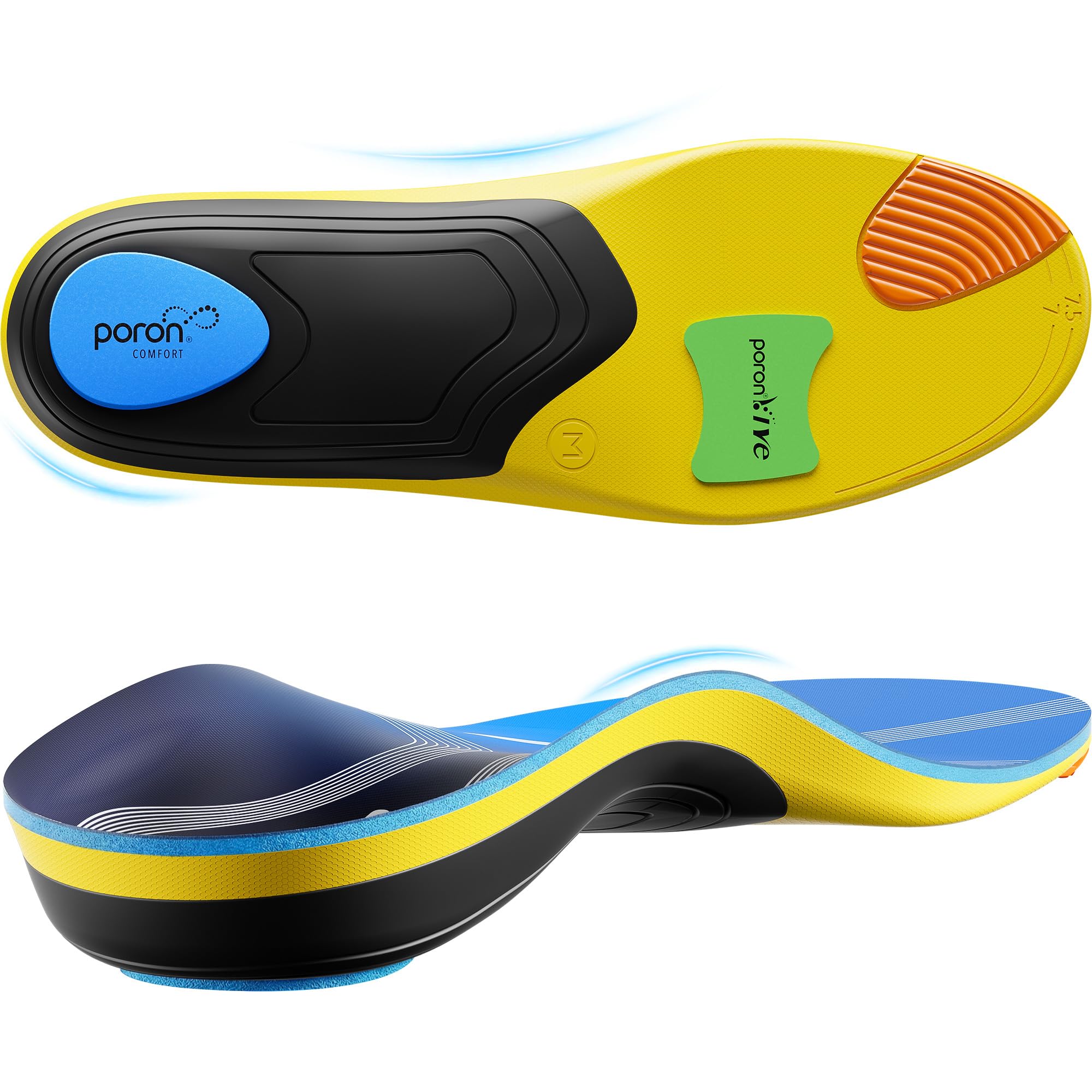
These insoles use dual-layer PORON urethane foam — a material that absorbs up to 90% of impact shock and resists permanent compression far better than standard EVA. The “Golden Triangle” three-point support system distributes load across the forefoot, arch, and heel simultaneously, which is exactly what heavy users over 230 pounds need to prevent the insole from flattening midshift.
The deep U-shaped heel cup locks the calcaneus in place, reducing side-slip inside a loose boot shaft. Real-world feedback from a 275-pound user with plantar fasciitis confirms immediate relief in size 11 boots with no trimming required. The full PU top layer adds softness without compromising the rigid foundation below.
For a product sitting at an entry-level price point, the build quality punches well above its tier. The sweatproof, breathable fabric prevents moisture buildup, and the medium arch profile suits the widest range of foot types. If you need one pair that handles warehouse floors, construction sites, and long walks with equal effectiveness, this is your anchor pick.
Why it’s great
- PORON foam resists collapse under heavy loads
- Three-point support relieves arch and heel pain simultaneously
- Deep heel cup stabilizes gait inside work boots
Good to know
- Some users with very high arches may prefer more lift
- Minor toe trim needed for size 10 and below
2. BestHalo Heavy Duty Plantar Fasciitis Insoles
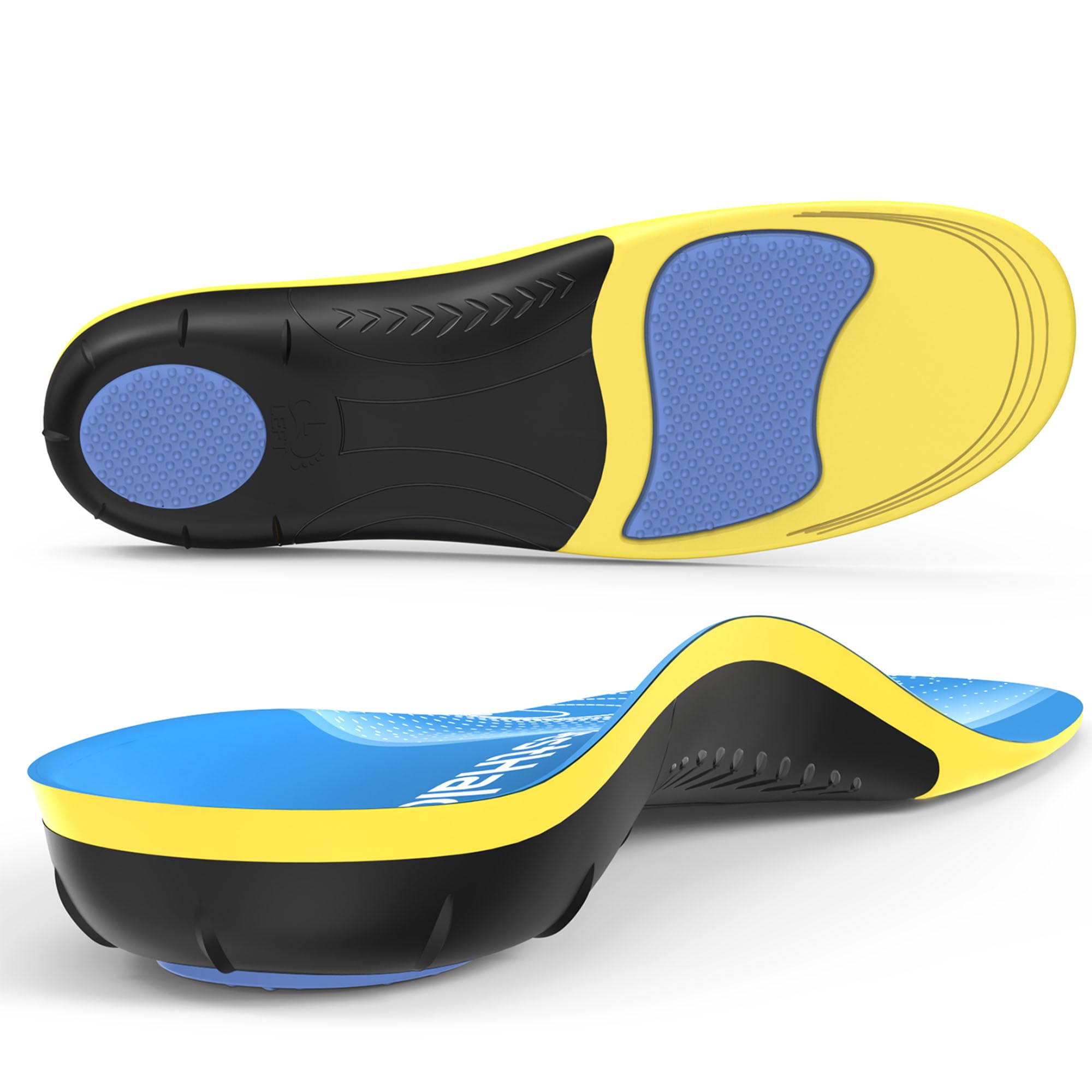
BestHalo engineered these insoles using biomechanical principles specifically for individuals with high arches and supination tendencies. The structured arch support system is noticeably more aggressive than the medium-profile competitors — it actively pushes the foot into neutral alignment rather than passively filling space. This makes it ideal for plantar fasciitis sufferers whose arch has completely collapsed.
The premium EVA foam base is topped with gel cushioning pads at the heel and metatarsal zones. This dual-density approach provides the firm cradle needed for structural correction while keeping the forefoot comfortable during toe-off. One user recovering from foot surgery reported that the high arch eliminated radiating pain from foot to hip within days of switching.
BestHalo recommends a gradual 3- to 7-day break-in period, and that warning is genuine — the arch support is aggressive enough that users accustomed to flat insoles may experience temporary soreness. The trim-to-fit design adapts to most boot sizes, though the deep heel cup may feel restrictive in narrower boots. For high-arched men who have never found enough lift in an over-the-counter insole, this is the solution.
Why it’s great
- High, firm arch support corrects supination and poor alignment
- Gel cushioning pads add shock absorption without softening the arch
- Excellent durability for daily use in work boots and sneakers
Good to know
- Requires a break-in period — not instant comfort for everyone
- Too aggressive for low-arched or flat-footed users
3. Dr. Scholl’s Work Insoles

Dr. Scholl’s Work insoles are the most widely available option on this list, and their Massaging Gel Technology provides noticeable shock absorption on hard surfaces like concrete and asphalt. The gel layer extends the full length of the insole rather than being limited to a heel pad, which distributes impact more evenly than budget foam-only designs. The adaptive cushioning is softer than the orthotic-focused competitors, making it a better fit for users who prioritize immediate plushness over rigid structural correction.
The reinforced arch support is moderate — it reduces fatigue for users with normal to low arches but lacks the aggressive lift that plantar fasciitis sufferers often need. Polygiene StayFresh Technology actively fights odor buildup, a practical advantage for men who wear the same boots daily. Users report easy trimming and a secure fit inside steel-toe boots without shifting or bunching.
The main trade-off is durability: several long-term users note that the gel layer compresses after three to four months of heavy use, especially in high-impact environments. For the price of a two-count pack, these work well as a mid-life replacement cycle — swap them out twice a year and keep your boots comfortable. They are the best choice for buyers who want a proven name and immediate comfort without a break-in curve.
Why it’s great
- Full-length gel cushioning absorbs shock on hard floors
- Polygiene technology controls odor effectively
- Clinically proven comfort for all-day standing
Good to know
- Gel layer compresses faster than foam or PORON alternatives
- Moderate arch support — not enough for severe plantar fasciitis
4. ARIAT Men’s Energy Max Work Insole
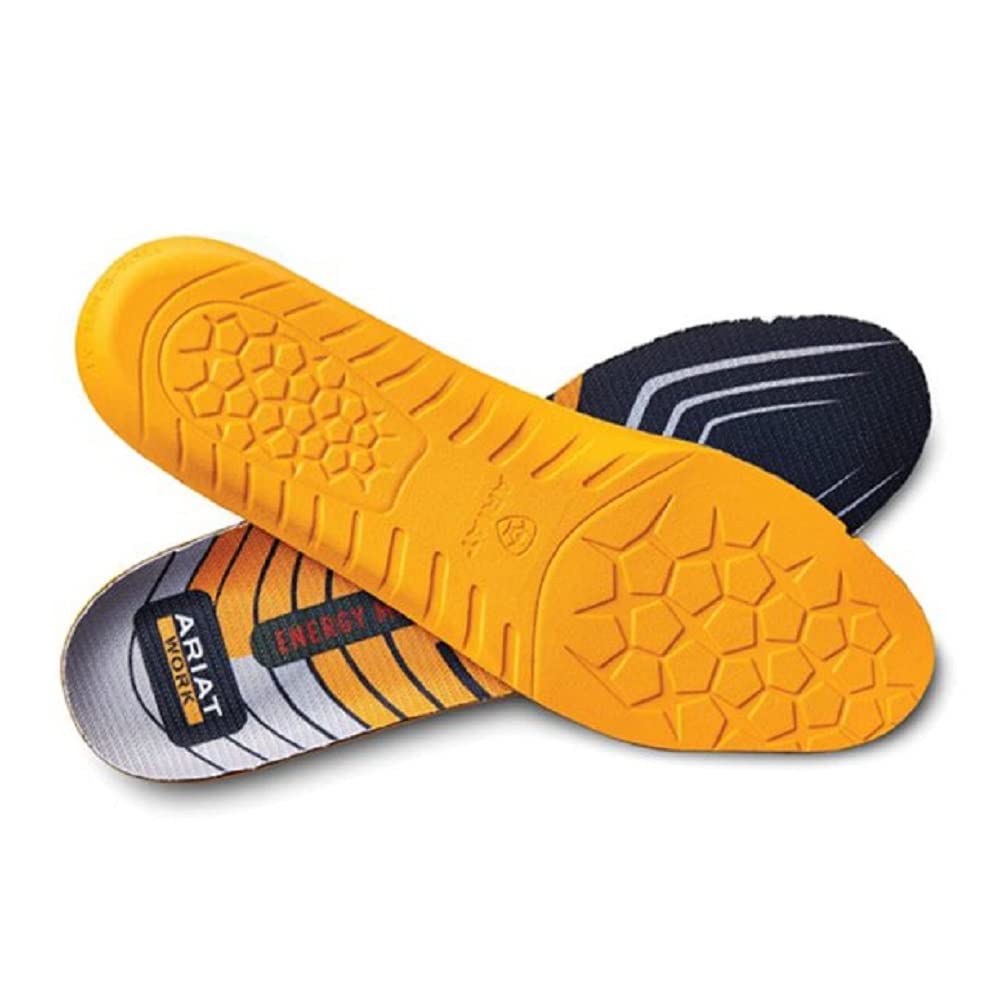
Ariat built these insoles as a direct replacement for the factory inserts found in their work boots, but they fit equally well in any boot with a standard round-toe profile. The rebound foam layer uses a proprietary formulation that cradles the foot while dissipating pressure — it feels less rigid than a full orthotic but more supportive than a generic cushioned insole. Several users report that swapping to this insole extends the life of their boots by replacing the worn-out original foam.
The moisture-wicking liner incorporates Agion antimicrobial technology, which is one of the most effective odor-control treatments available in this price bracket. Open-cell foam regulates temperature actively, keeping feet cooler during hot shifts than closed-cell alternatives. The anatomical shaping includes a slight metatarsal pad that reduces pressure under the ball of the foot without adding bulk inside the toe box.
The trade-off is the lack of a deep heel cup — the Energy Max uses a moderate cradle that provides stability for normal movement but won’t correct severe overpronation. It also comes in exact sizes with no trim-to-fit allowance, so you must match your boot size precisely. For men who already wear Ariat boots or want a drop-in replacement that preserves the boot’s original fit, this is the most seamless option available.
Why it’s great
- Drop-in fit for Ariat boots without trimming
- Agion antimicrobial liner controls odor and moisture
- Rebound foam returns energy with every step
Good to know
- No trim-to-fit — must match exact boot size
- Moderate heel cup lacks correction for severe pronation
5. EASYFEET Orthotic Work Insoles

EASYFEET positions these insoles specifically for workers who stand eight to twelve hours per day — and their design reflects that focus. The dual-density construction combines a cushioning base layer with additional shock-absorbing pads at the heel and metatarsal zones. This creates a progressive compression feel: soft on initial contact but supportive under full weight, which reduces the jolts that travel up to the knees and lower back during long shifts.
The breathable fabric top layer is notably thin, allowing these insoles to fit into dress boots and tighter work shoes without crowding the toe box. Users report that the insoles eliminate the “sinking” sensation that factory insoles develop after a few weeks. The warranty is also stronger than competitors — EASYFEET accepts returns even on trimmed insoles, which removes the risk of cutting too aggressively for a custom fit.
The arch support is medium-height, which suits general fatigue reduction but falls short for users who need aggressive correction for flat feet or plantar fasciitis. Some customers who previously used higher-arched EASYFEET models found this version less supportive. For the man whose primary complaint is leg fatigue at the end of the day rather than localized foot pain, these insoles provide the most targeted relief in the lineup.
Why it’s great
- Dual-density cushioning reduces leg fatigue during long standing shifts
- Thin design fits dress boots and tight work shoes
- Return policy accepts trimmed insoles
Good to know
- Medium arch support is insufficient for severe plantar fasciitis
- Durability around 12 months per manufacturer estimate
FAQ
How do I know if I need a medium or high arch insole?
Can I wear the same insoles in work boots and sneakers?
How often should I replace boot insoles?
Final Thoughts: The Verdict
For most users, the boot insoles for men winner is the Professional Heavy Duty Orthotics because the PORON foam and Golden Triangle arch support handle heavy loads without compressing. If you need aggressive lift for high arches, grab the BestHalo High Arch Insoles. And for a seamless drop-in replacement that fits Ariat boots with zero trimming, nothing beats the Ariat Energy Max Insole.

Mo Maruf
I created WellFizz to bridge the gap between vague wellness advice and actionable solutions. My mission is simple: to decode the research and give you practical tools you can actually use.
Beyond the data, I am a passionate traveler. I believe that stepping away from the screen to explore new environments is essential for mental clarity and physical vitality.