Our readers keep the lights on and my smoothie glass nicely filled. As an Amazon Associate, I earn from qualifying purchases.
A real bonsai demands years of daily watering, precise pruning, and the right light — one missed schedule and your miniature juniper turns brown. Artificial bonsai trees solve that problem entirely, letting you keep the meditative look of a centuries-old art form without the horticultural stress test.
I’m Mohammad Maruf — the founder and writer behind WellFizz. My market research focuses on comparing materials, trunk realism, and pot quality across dozens of faux greenery SKUs so you know which ones bridge the gap between craft-store plastic and convincing decor.
Whether you’re filling a dim corner or a desk that gets no sun, the right artificial bonsai tree delivers the same serenity without the weekly guilt of a dying plant.
How To Choose The Best Artificial Bonsai Tree
A convincing faux bonsai comes down to three things: the trunk’s surface finish, the leaf material’s ability to diffuse light, and the pot’s heft. Beginners often buy based on height alone and end up with a shiny plastic trunk that looks nothing like aged bark.
Material Realism: Polyethylene vs. Plastic vs. Silk
Polyethylene (PE) foliage accepts light differently than basic PVC — it produces a matte finish that mimics real needles and leaves. Silk-blend branches allow more natural droop and movement. Trunks made from molded PE with a textured bark stamp look far more authentic than solid plastic casts that reflect overhead lights.
Pot Quality and Weight
A faux bonsai in a lightweight resin pot signals “fake” the moment you pick it up. Glazed ceramic adds mass and a solid base that resists tipping. Look for at least 1.5 pounds of pot weight for a 10-inch tree and proportionally heavier for taller specimens.
Foliage Density and Branch Articulation
Thin, sparse foliage reveals the internal wire frame and ruins the illusion. Dense branch tips with varied leaf sizes create depth. Wire-armored branches let you reshape the silhouette — a critical feature if the tree sits in a specific corner and needs to angle toward the room.
Quick Comparison
On smaller screens, swipe sideways to see the full table.
| Model | Category | Best For | Key Spec | Amazon |
|---|---|---|---|---|
| Permaplants 16″ Pine | Premium Bonsai | Lifelike trunk detail & ceramic pot | 16″ H, 2.46 kg, ceramic pot & stone base | Amazon |
| Nearly Natural 16in Cedar Bonsai | Mid-Range Bonsai | Wide canopy & bendable branches | 16″ H x 16.5″ W, 2.5 lbs, plastic trunk | Amazon |
| Nearly Natural Cherry Blossom Bonsai | Premium Bonsai | Pink floral color & pastel elegance | 15″ H x 17.5″ W, polyester silk leaves | Amazon |
| Briful Ficus Bonsai in Blue Ceramic | Entry-Level Bonsai | Compact desk decor under 10″ tall | 9″ H x 9.8″ W, PE material, ceramic pot | Amazon |
In‑Depth Reviews
1. Permaplants 16″ Pine Artificial Bonsai Tree
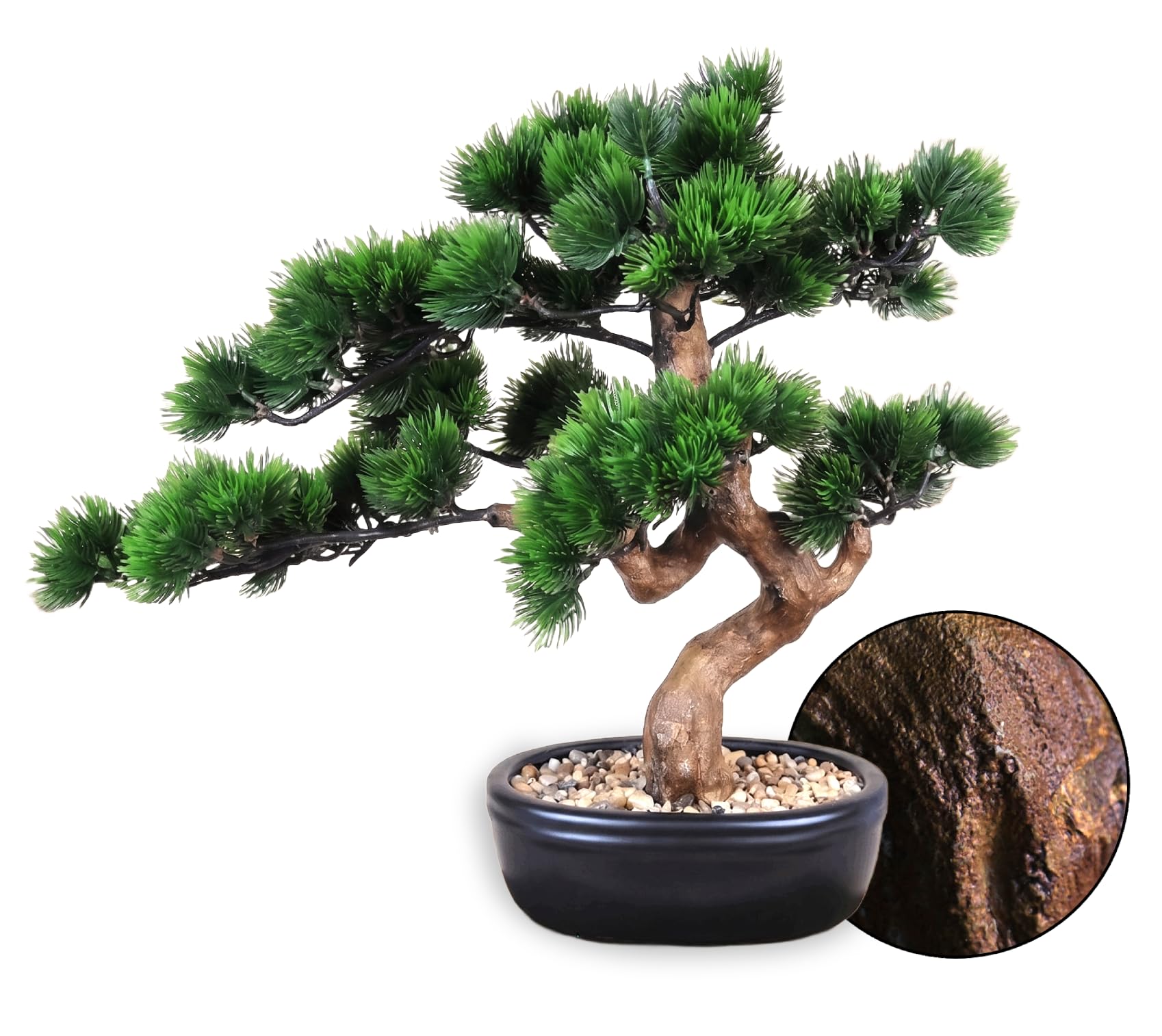
This is what happens when a company with eight years of bonsai experience decides to engineer a replica. The trunk uses molded textures and a matte finish that catches light like aged pine bark — most competitors use shiny PVC that blows the illusion at arm’s length. The foliage is dense enough to hide the internal structure, and the branches arrive ready to shape without needing to fight a single twist tie.
The ceramic pot weighs 2.46 kilograms combined with the rock base, which gives this tree a planted feel no resin pot can match. You can set it on a sideboard or a low shelf without worrying about tipping. At 16 inches tall and 18 inches wide, it fills a corner without overwhelming a standard desk.
Owners consistently note that the trunk passes the “touch test” — running a finger over the bark feels textured rather than slick. The only caveat is the price; this is a deliberate splurge for someone who wants the tree to fool guests at conversational distance. If your space demands a focal piece that looks like it took decades to grow, this is the one.
Why it’s great
- Trunk realism is unmatched among artificial bonsai options
- Heavy ceramic pot and stone base feel substantial
- No assembly required — shape the leaves and display
Good to know
- Premium price reflects the detailed craftsmanship
- Can only pass extreme close-up inspection if foliage is fluffed properly
2. Nearly Natural 16in. Cedar Bonsai Artificial Plant
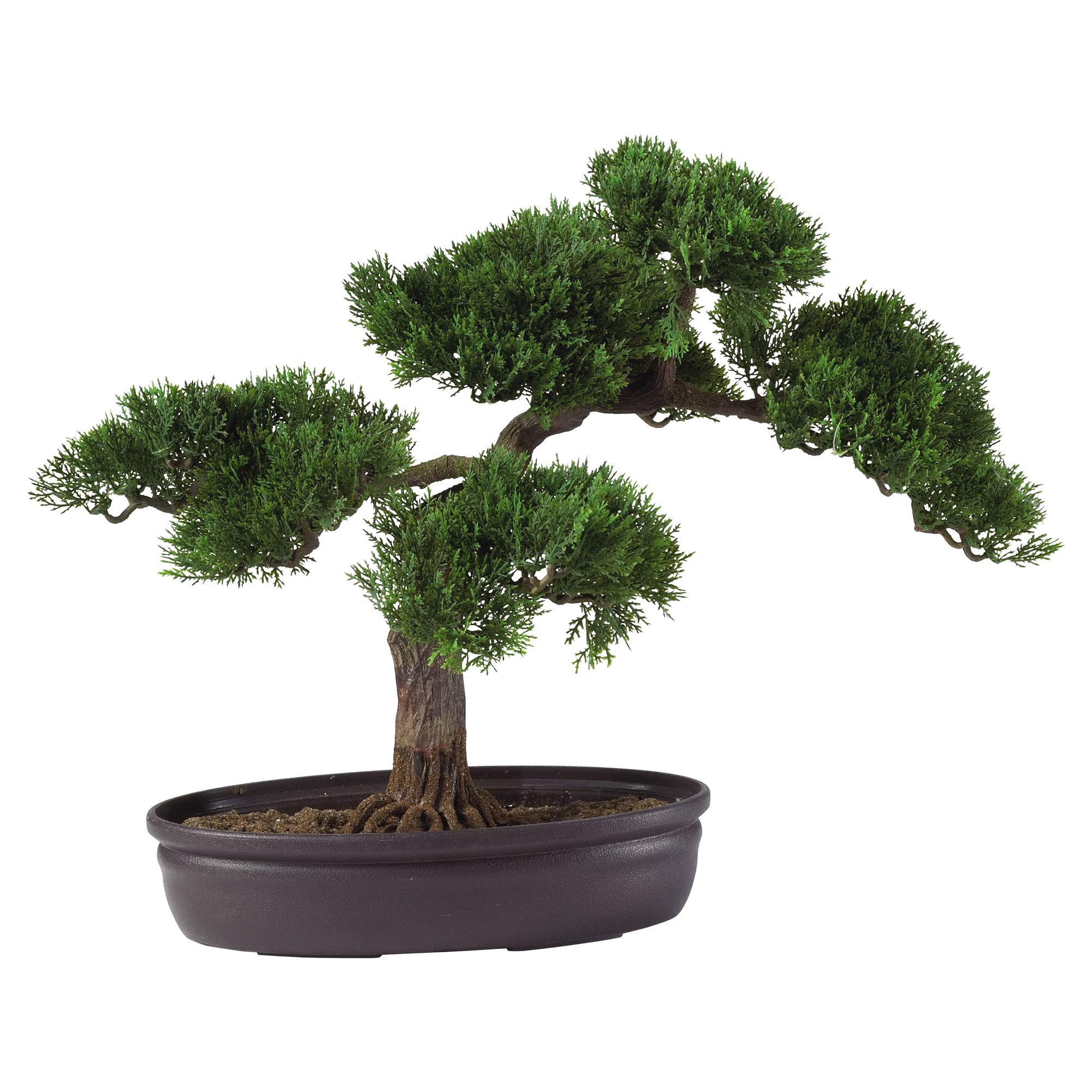
Nearly Natural has been in the faux plant game long enough to know what buyers expect at this price tier. The cedar bonsai uses a plastic trunk with a flocked coating that mimics bark texture, and the branch structure spreads 16.5 inches wide — creating a canopy that feels mature rather than sparse. The polyester blend leaves have a slight sheen, but many owners solve that with a hobby dull-coat spray in under five minutes.
The biggest practical advantage here is the bendable wire inside each branch. You can reshape the silhouette to lean dramatically toward a light source or spread it flat across a bookshelf. The circular nursery pot is basic plastic, so most buyers transfer the tree into a heavier ceramic vessel. Some report cutting the pot base off to separate the foam block, then anchoring it with river rocks — a 10-minute upgrade that elevates the look significantly.
At 16 inches tall, this tree sits comfortably on a side table or a low credenza. Owners who add a layer of small pebbles over the artificial soil consistently report that visitors ask if it’s real. The exposed root structure is the weakest link visually, but it’s easily hidden with a bit of preserved moss.
Why it’s great
- Wide 16.5-inch canopy looks full and established
- Wire-armored branches allow custom reshaping
- Easy to personalize with a repotting upgrade
Good to know
- Foliage has a slight gloss that benefits from dull-coat spray
- Included plastic pot feels cheap; repotting improves realism
3. Nearly Natural Cherry Blossom Bonsai Silk Tree, Pink

Cherry blossom bonsai are notoriously difficult to keep alive indoors — the real ones need cold dormancy periods most homes can’t provide. This polyester-and-plastic replica sidesteps that entire problem. The pastel pink blossoms cluster densely along each branch tip, and the leaves carry a subtle two-tone green that prevents the “toy store” look. Standing 15 inches tall with a 17.5-inch spread, it commands attention on an entryway table or a bedroom dresser.
The trunk uses the same flocked plastic as the cedar version, but the decorative pot has a wider, lower profile that suits the weeping branch habit. Some owners note a bit of Styrofoam exposure at the base after shipping, which is easily concealed with green moss or a layer of pebbles. The branches are bendable, so you can adjust the cascading effect to match your space.
This tree works best in rooms with neutral or warm tones where the pink adds a deliberate pop of color rather than clashing. Owners who place it in low-light office corners report that the color stays vibrant for years because there’s no UV degradation. It’s a conversation piece that requires exactly zero horticultural knowledge.
Why it’s great
- Dense blossom clusters create convincing seasonal color
- Wider 17.5-inch footprint fills a table without needing height
- Bendable branches accommodate custom weeping shapes
Good to know
- Blossom petals may shed slightly during initial handling
- Not designed for outdoor placement or direct sun exposure
4. Briful Artificial Bonsai Tree with Blue Square Ceramic Pot
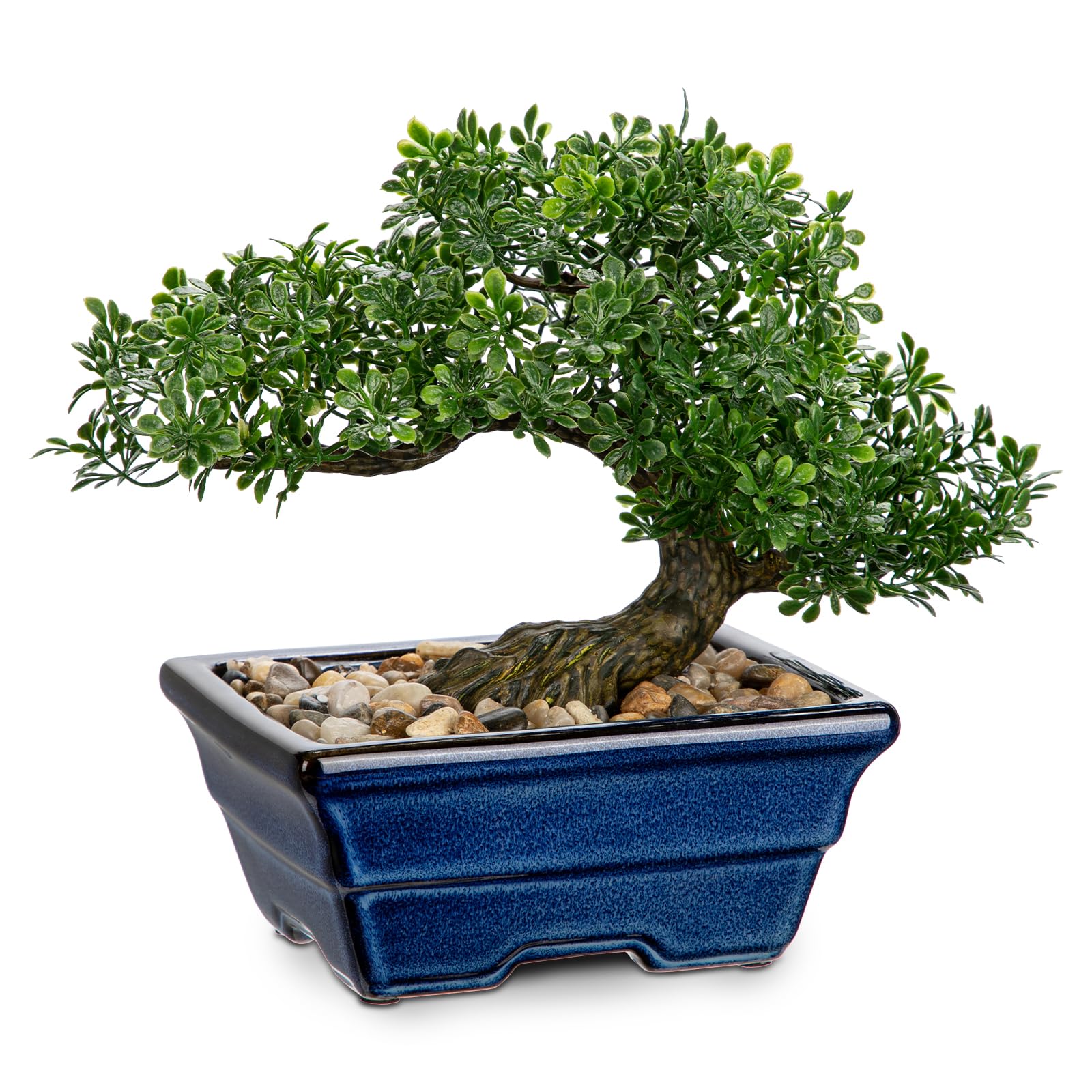
At 9 inches tall and under 3 inches in pot diameter, this is the smallest tree in the lineup — but it earns its spot by solving a specific problem: the cramped desk or narrow shelf where a 16-inch tree would overwhelm. The PE foliage has a matte finish that looks convincingly like a miniature ficus from three feet away. Reviewers consistently mention the gravel glued into the pot, which prevents soil spill and keeps the base tidy.
This weight-to-height ratio is unusual at this size — most sub-10-inch artificial bonsai use hollow plastic pots that slide around. The PE material is non-toxic and odor-free, which matters if the tree sits near a workspace where you spend hours.
Up close, the leaf detailing isn’t as refined as the premium options, but that’s a trade-off for the compact footprint. Owners who keep it on a monitor riser or a bathroom vanity report that the tree holds its shape with zero maintenance. It’s also a practical option for anyone testing whether they like the look of a faux bonsai before committing to a larger, pricier specimen.
Why it’s great
- Compact 9-inch height fits tight desk and shelf spaces
- Glazed ceramic pot provides stable weight distribution
- Gravel glued in place prevents mess and shifting
Good to know
- Leaf detail is softer than premium models under close inspection
- Not suitable as a primary focal piece in a large room
FAQ
Can an artificial bonsai tree be placed in direct sunlight?
How do you clean an artificial bonsai without damaging the foliage?
What is the realistic viewing distance for a typical faux bonsai?
Final Thoughts: The Verdict
For most users, the artificial bonsai tree winner is the Permaplants 16″ Pine because its molded trunk and heavy ceramic base create the most convincing illusion at conversational distance. If you want a wider canopy that you can reshape and repot yourself, grab the Nearly Natural 16in Cedar Bonsai. And for a compact desk-sized option that disappears into tight corners, nothing beats the Briful Ficus Bonsai.

Mo Maruf
I created WellFizz to bridge the gap between vague wellness advice and actionable solutions. My mission is simple: to decode the research and give you practical tools you can actually use.
Beyond the data, I am a passionate traveler. I believe that stepping away from the screen to explore new environments is essential for mental clarity and physical vitality.