Our readers keep the lights on and my smoothie glass nicely filled. As an Amazon Associate, I earn from qualifying purchases.
An ill-fitting upper-arm cuff can turn a simple health check into a painful guessing game, especially if you have larger or smaller arms. Wrist monitors solve this by wrapping snugly around your wrist, but they demand precise positioning at heart level for readings to be trustworthy. The difference between a great monitor and a frustrating one often comes down to the quality of its positioning sensor and the clarity of its display.
I’m Mohammad Maruf — the founder and writer behind WellFizz. I analyze the hardware, filtration, and sensor specs behind home wellness devices to separate genuine clinical-grade tools from overhyped gadgets.
After reviewing dozens of models across every tier, I’ve narrowed the field to the seven monitors that deliver consistent, clinically relevant results without the bulk. This is the comprehensive guide to finding the best bp wrist monitor that fits your wrist, your routine, and your need for reliable data.
How To Choose The Best BP Wrist Monitor
Wrist monitors are more convenient than arm cuffs, but they require careful attention to placement and sensor quality. The following criteria will help you pick a device that fits your wrist size, your lifestyle, and your need for accurate, shareable data.
Positioning and Sensor Accuracy
The most common source of error in wrist monitors is incorrect placement. The device must sit level with your heart during measurement. Look for models with a built-in positioning guide or sensor that alerts you when your wrist is at the correct angle. Premium models like the Omron Gold use a multi-sensor system that verifies positioning before starting inflation, which greatly reduces user error.
Memory Capacity and Data Management
Tracking trends over days and weeks is essential for managing blood pressure. Entry-level monitors may store 60 readings, while advanced models hold 200 or more. If you monitor with a partner, dual-user mode prevents data overlap. For deep analysis, Bluetooth-enabled monitors sync to companion apps that let you export reports for your doctor—a feature worth the premium.
Cuff Comfort and Fit Range
Wrist cuffs must fit snugly without pinching. Most models accommodate wrists between 5.3 and 7.7 inches, but some—like the A&D Medical UB-525—stretch to 8.5 inches. Check the cuff range against your wrist circumference. A cuff that is too loose or too tight will produce erratic readings regardless of the sensor quality.
Quick Comparison
On smaller screens, swipe sideways to see the full table.
| Model | Category | Best For | Key Spec | Amazon |
|---|---|---|---|---|
| Omron Gold Wireless | Premium | Doctor-recommended precision | 200 readings per user, Bluetooth | Amazon |
| HoMedics Premium | Premium | Bluetooth tracking & portability | Wrist Position Sensor, 240 memory | Amazon |
| A&D Medical UB-525 | Mid-Range | Trusted brand, simple operation | 60-reading memory, 5.3-8.5″ cuff | Amazon |
| Beurer BC57 | Mid-Range | Bluetooth pairing & dual-user | 120 memory, Resting Indicator | Amazon |
| New Upgrade Wrist Monitor | Mid-Range | Shared family use, dual power | 198 memory (2×99), Type-C | Amazon |
| Clinically Accurate VA/LED | Mid-Range | Voice guidance for seniors | 240 memory, Voice Broadcast | Amazon |
| Garmin Index BPM | Premium | Garmin ecosystem integration | Upper arm, Wi-Fi sync, 9mo battery | Amazon |
In‑Depth Reviews
1. Omron Gold Wireless Wrist Blood Pressure Monitor
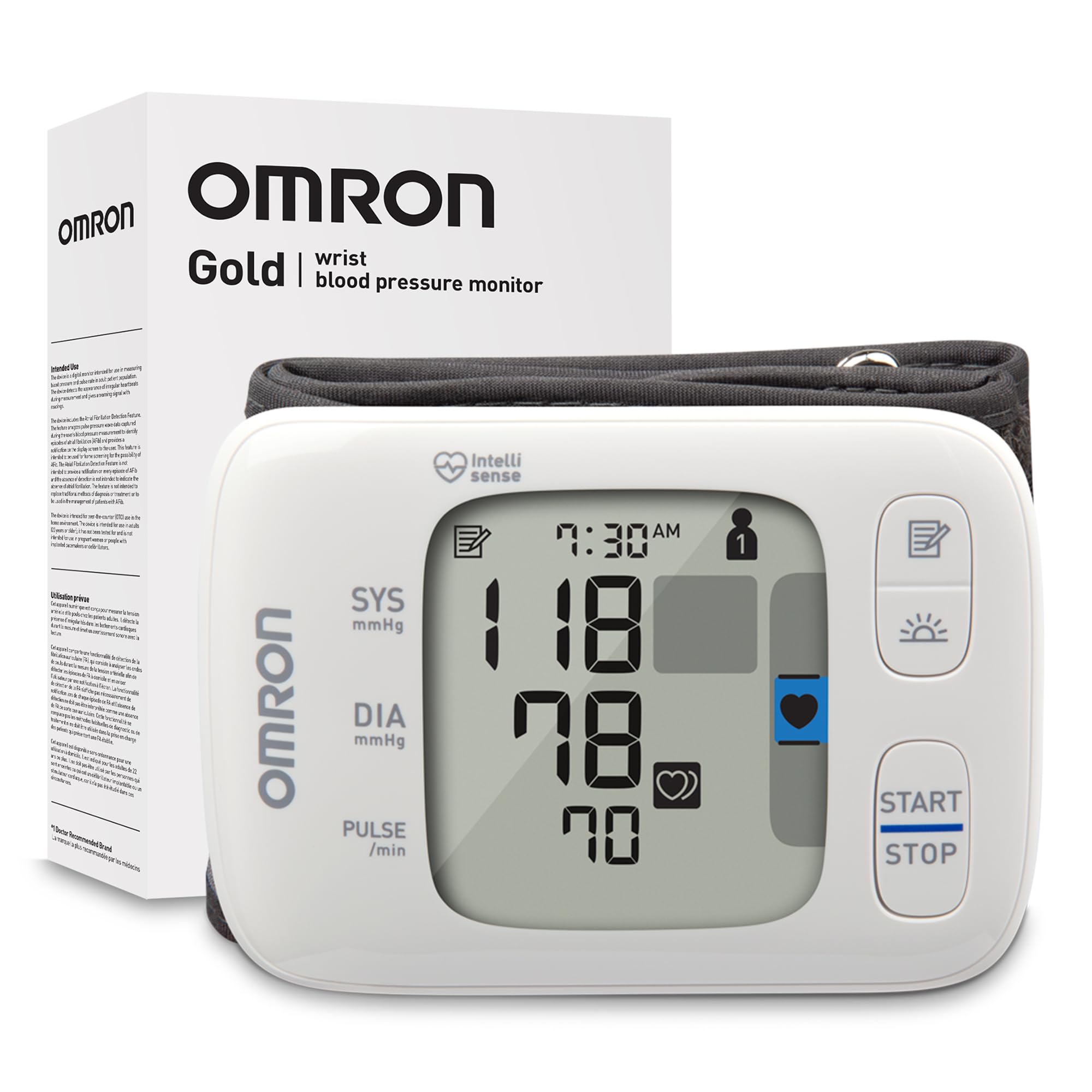
The Omron Gold Wireless is the benchmark for wrist-based blood pressure monitoring. It stores up to 200 readings per user with dual-user support, making it ideal for couples or caregivers tracking health trends. The attached cuff fits wrists from 5.3 to 8.5 inches, which is wider than most wrist monitors and helps ensure a snug fit for a broader range of users.
Its High Morning Average Indicator flags potentially dangerous morning spikes, while the Irregular Heartbeat Detection provides an early warning for arrhythmias. The free Omron Connect app syncs readings via Bluetooth, allowing you to generate trend reports in PDF format to share with your physician. The app integrates with Apple Health and Google Fit for deeper data analysis.
The main caveat is that some users find the inflation process slower than expected, and the slide-switch for dual-user mode is tucked under the strap, making it tricky to toggle. Still, the combination of clinical validation, brand trust, and robust data management makes this the top pick for serious home monitoring.
Why it’s great
- Widest wrist cuff range (5.3″-8.5″) ensures fit for most adults.
- Bluetooth sync with free app enables long-term trend tracking and physician reports.
- High Morning Average Indicator alerts you to cardiovascular risk spikes.
Good to know
- Slow inflation can be slightly annoying during quick checks.
- Dual-user slide switch is small and located under the cuff strap.
2. HoMedics Premium Wrist Blood Pressure Monitor

The HoMedics Premium delivers a strong mix of smart features and user-friendly design. It includes a Wrist Positioning Sensor that lights up when your wrist is at heart level, which directly addresses the most common accuracy issue with wrist monitors. The backlit LCD display and one-touch operation make it simple to use even in low-light conditions.
With 240 total memory slots split between two users (120 each), this monitor supports detailed trend tracking for you and a partner. The HoMedics Health App syncs readings via Bluetooth, allowing you to view historical data and share reports. The Smart Measure inflation technology adjusts the cuff pressure for comfort and speed, and AM/PM averaging helps you understand daily fluctuations.
The biggest downside is the lack of a rechargeable battery—it runs on two AAA batteries, which need replacement. Some users also report durability issues, with a minority experiencing failures after just a few weeks. For reliable use, stick with the 5-year warranty and keep the receipt.
Why it’s great
- Wrist Positioning Sensor reduces user error and improves reading accuracy.
- 240 memory total (120 per user) with Bluetooth sync for detailed trend analysis.
- Smart Measure inflation technology optimizes cuff pressure for comfort.
Good to know
- Not rechargeable; uses AAA batteries only.
- Some early reports of unit failure after a few weeks of use.
3. A&D Medical UB-525 Wrist Blood Pressure Monitor
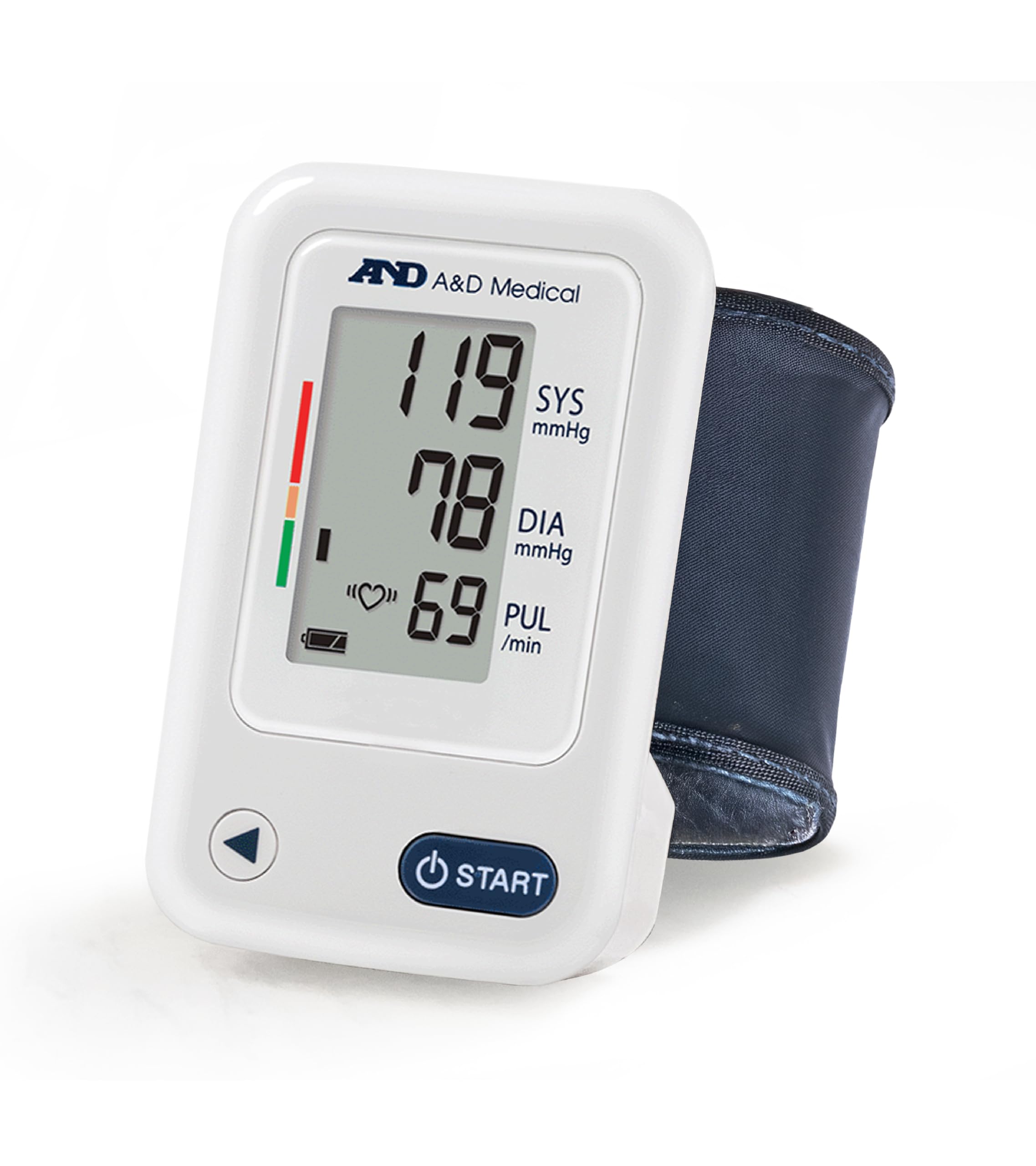
The A&D Medical UB-525 is a no-frills monitor built around a large cuff that fits wrists from 5.3 to 8.5 inches—one of the widest ranges available. This makes it a great choice for users who find standard wrist cuffs too tight or restrictive. One-button operation and an oversized LCD screen with large digits make it easy to read without glasses.
Its 60-reading memory is modest compared to higher-end models, but the free A&D Heart Track App allows you to manually log unlimited readings for long-term tracking on iOS and Android. The gentle inflation algorithm reduces discomfort, and the monitor is clinically validated, making it a trusted choice for home use. Many users report that their doctors have praised the accuracy of A&D readings.
The battery compartment design is the weakest point: a few users report difficulty installing or removing AAA batteries, and the cover can be tricky to secure. Also, this model lacks Bluetooth, so syncing is manual. For simplicity and a trusted brand, however, the UB-525 remains a solid mid-range option.
Why it’s great
- Oversized wrist cuff fits wrists up to 8.5 inches, ideal for larger users.
- One-button operation and large LCD digits offer effortless daily checking.
- Clinically validated and often praised by healthcare professionals.
Good to know
- Battery installation can be difficult due to compartment design.
- No Bluetooth; manual data logging required for app tracking.
4. Beurer BC57 Wrist Blood Pressure Monitor

The Beurer BC57 integrates Bluetooth connectivity with a color-coded risk indicator, making it easy to interpret your readings at a glance. The large LCD screen and resting indicator help you take measurements when you are truly at rest, which improves consistency. It stores 60 readings per user (120 total) and pairs with the HealthCoach app for detailed trend analysis.
The automated cuff fits wrists from 5.3 to 7.7 inches and inflates quietly. The irregular heartbeat detection adds a layer of cardiovascular safety monitoring. Users appreciate the included plastic storage case, which keeps the monitor organized for travel. The app setup is straightforward, and the risk-index feature helps visually communicate whether your reading is within a healthy range.
The main drawback is that some users report difficulty with the Bluetooth connection and app stability. A few units have been received with the date stuck in 2015, preventing proper historical tracking. For those willing to troubleshoot occasionally, the BC57 offers a solid connected experience.
Why it’s great
- Color-coded risk indicator makes readings easy to interpret at a glance.
- Bluetooth sync with HealthCoach app for detailed trend tracking.
- Resting indicator helps ensure accurate measurement conditions.
Good to know
- Bluetooth reliability and app stability can be inconsistent.
- Some units ship with incorrect date settings, affecting data logs.
5. Wrist Blood Pressure Monitor (2026 New Upgrade)
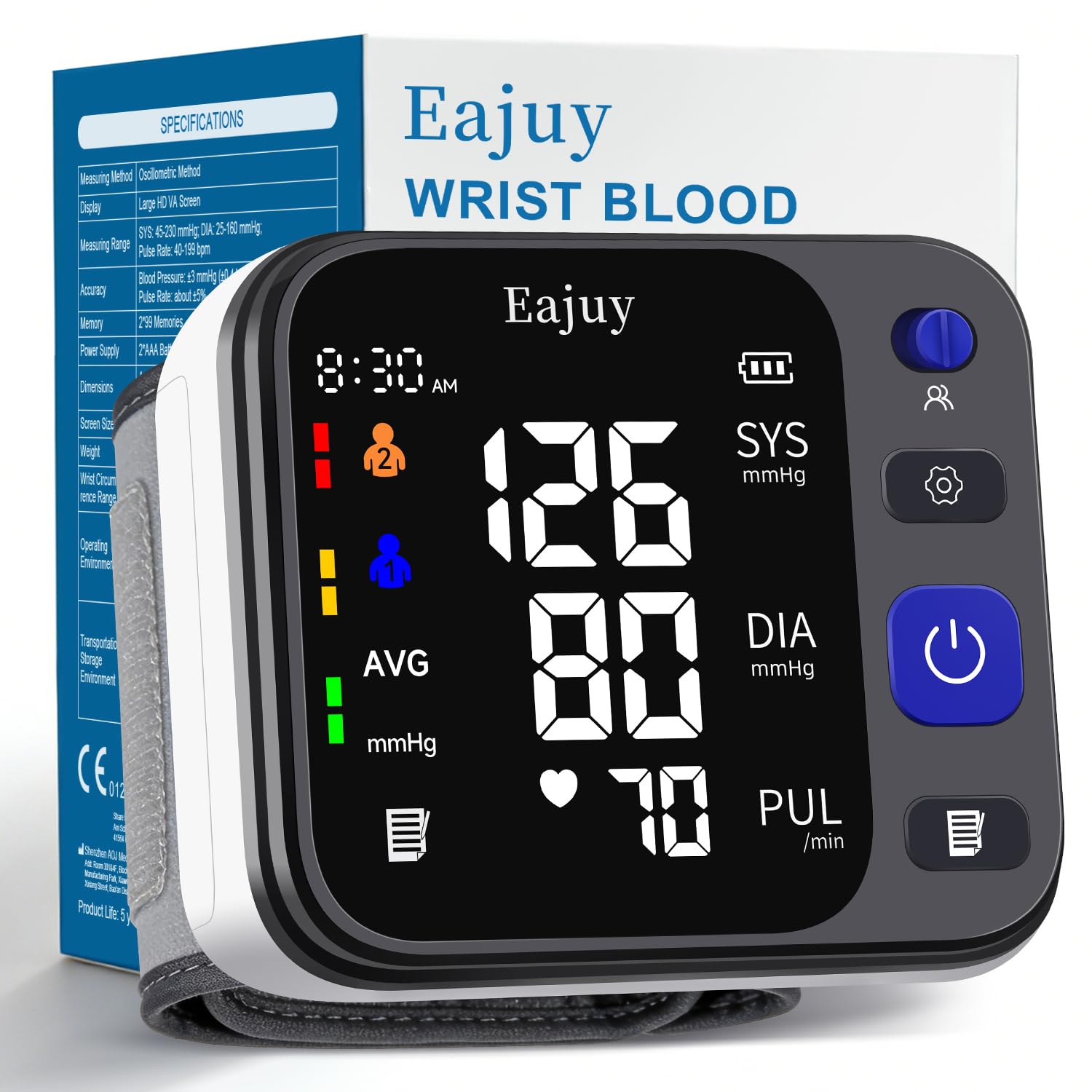
This budget-friendly monitor from Shenzhen AOJ Medical packs dual-user memory (99 readings each), a three-color level indicator, and a large LED screen into a compact design. The standout feature is dual power: it can run on two AAA batteries or via a Type-C cable, giving you flexibility when traveling or when batteries die unexpectedly. The cuff adjusts to wrists between 5.3 and 7.7 inches, which covers most adults.
The one-button operation is genuinely simple—just press and wait for the results in seconds. The smart backlight system automatically adjusts brightness to ambient light, and the anti-glare technology makes the display readable from any angle. The included storage pouch keeps the monitor safe during travel.
The most common complaint is slow inflation, which some users note can take nearly a full minute for a single reading. This can be frustrating if you are doing multiple checks in a row. Accuracy is generally good, but a few users recommend verifying readings against a doctor’s office measurement. For the price, the dual-user and dual-power features are hard to beat.
Why it’s great
- Dual power (AAA or Type-C) offers flexibility for home or travel.
- Dual-user memory (99 each) prevents data mix-up in shared households.
- Three-color level indicator and auto-brightness display improve readability.
Good to know
- Inflation is notably slow, taking up to 60 seconds per measurement.
- Accuracy should be cross-referenced with a medical-grade device.
6. Wrist Blood Pressure Monitor with VA/LED Display & Voice Broadcast
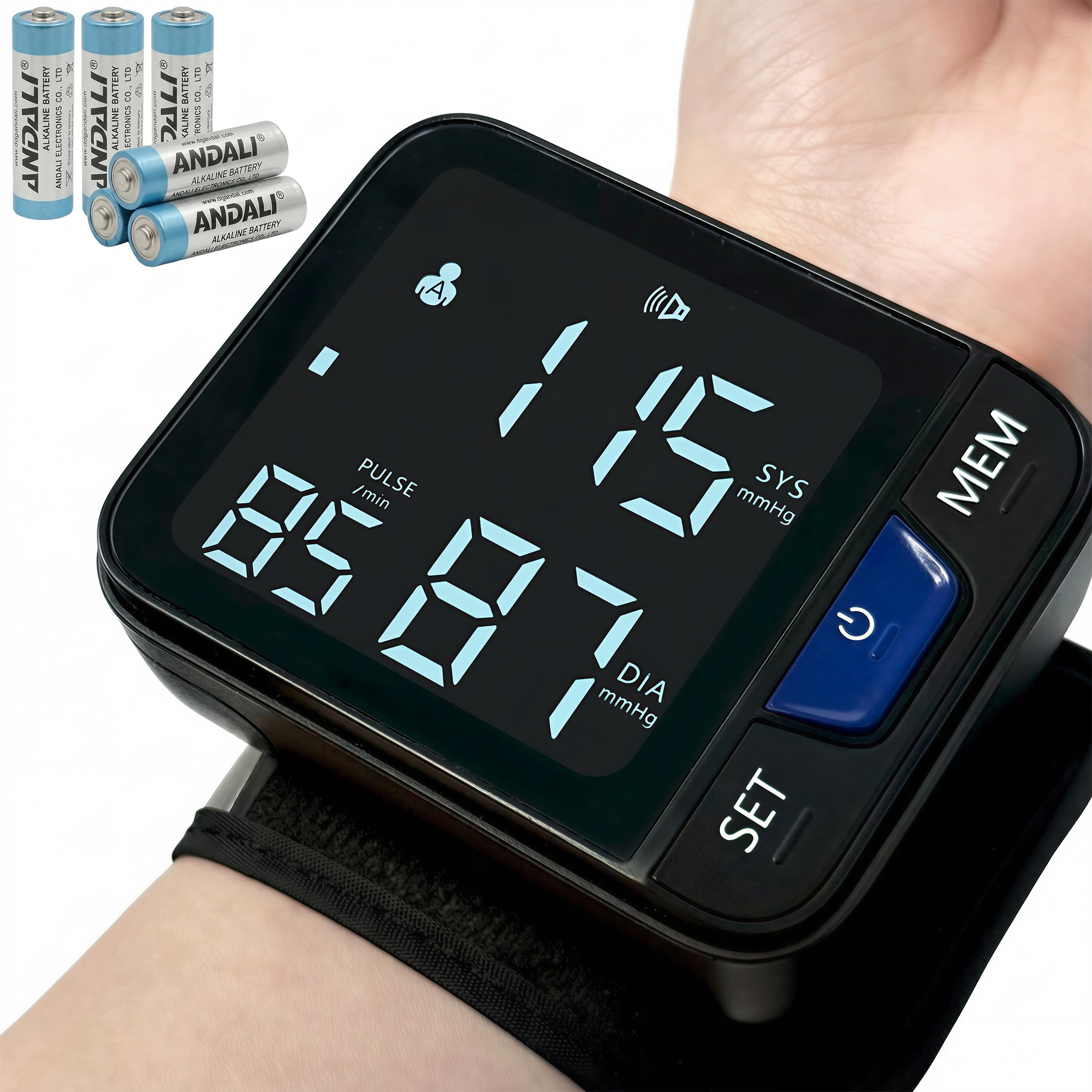
This monitor from IIF targets seniors with its voice broadcast feature and high-contrast VA/LED backlit display. The audio voice reads out systolic and diastolic numbers, pulse rate, and any irregular heartbeat alerts, which is helpful for users with low vision or those who prefer auditory confirmation. The 240-reading memory is split evenly between two users (120 each), making it easy for couples to monitor trends.
The 25-second ultra-fast inflation promises quick results, though some user reports suggest that consistency depends heavily on placement. The advanced bio-sensing chip filters movement interference to stabilize readings, and the arrhythmia detection provides an early warning system. The breathable, skin-friendly cuff material is comfortable for repeated daily use.
Accuracy is a point of contention: a few users report that diastolic readings are consistently higher than those from a manual cuff, while others say readings matched their doctor’s results closely. The device is strictly battery-powered (2 AA) and lacks rechargeable capability. For those who prioritize accessibility features, this monitor delivers, but verifying its calibration is wise.
Why it’s great
- Voice broadcast and backlit display make it accessible for seniors and low-vision users.
- 240-reading memory (120 per user) supports dual-user trend tracking.
- 25-second fast inflation reduces discomfort from prolonged cuff pressure.
Good to know
- Some users report diastolic readings consistently higher than reference devices.
- No rechargeable battery; uses AA batteries only.
7. Garmin Index BPM – Smart Blood Pressure Monitor

The Garmin Index BPM is an FDA-cleared upper-arm monitor that sits at the top of the price spectrum, but it is not a wrist device. It is included here because it represents the gold standard for data integration within the Garmin health ecosystem. The all-in-one unit features an integrated display, Wi-Fi syncing to Garmin Connect, and the ability to store data for up to 16 users.
The adjustable cuff fits arm circumferences from 9 to 17 inches, making it suitable for a wide range of body types. Its one-touch operation initiates a three-reading session that automatically averages the results, a protocol recommended by many cardiologists. Battery life extends up to nine months on four AAA batteries, and the device generates PDF reports that can be shared directly with your doctor.
The biggest trade-off is the price, and the device is not as portable as a wrist monitor. The averaging feature, while clinically beneficial, means you cannot view individual systolic/diastolic pairs for each reading. A few users report that initial readings were alarmingly high until they adjusted the cuff placement. For Garmin enthusiasts, the seamless sync and deep trend analysis justify the investment.
Why it’s great
- Seamless Wi-Fi sync with Garmin Connect for long-term trend reports and PDF exports.
- One-touch three-reading averaging aligns with clinical best practices.
- 9-month battery life reduces the hassle of frequent changes.
Good to know
- Higher price point and not a wrist form factor; less portable.
- Averaging feature prevents viewing individual systolic/diastolic pairs.
FAQ
How accurate are wrist blood pressure monitors compared to arm cuffs?
Can I use a wrist monitor if I have a very small or very large wrist?
How often should I replace the batteries in my wrist monitor?
Final Thoughts: The Verdict
For most users, the best bp wrist monitor winner is the Omron Gold Wireless because it combines the widest cuff range, clinical validation from the #1 doctor-recommended brand, and seamless Bluetooth syncing for trend tracking. If you want a Wrist Positioning Sensor that guides you to perfect placement every time, grab the HoMedics Premium. And for users who need voice guidance and a large backlit display for senior-friendly use, nothing beats the IIF Clinically Accurate Monitor.

Mo Maruf
I created WellFizz to bridge the gap between vague wellness advice and actionable solutions. My mission is simple: to decode the research and give you practical tools you can actually use.
Beyond the data, I am a passionate traveler. I believe that stepping away from the screen to explore new environments is essential for mental clarity and physical vitality.