Our readers keep the lights on and my smoothie glass nicely filled. As an Amazon Associate, I earn from qualifying purchases.
That rotten egg odor wafting from your hot water tap isn’t a plumbing mystery—it’s a clear signal your sacrificial anode rod is reacting with the chemistry of softened water. Softened water, high in sodium ions, accelerates the corrosion of standard magnesium rods, creating hydrogen sulfide gas and leaving your tank vulnerable. Selecting the correct rod material and type is the only reliable fix.
I’m Mohammad Maruf — the founder and writer behind WellFizz. I’ve spent years analyzing the electrochemical interactions between water softeners and water heater components, breaking down the technical specs that actually determine performance and longevity in this category.
With softened water, the rod’s material dictates everything from odor control to tank lifespan, making it critical to find the best anode rod for softened water that matches your specific water chemistry and heater configuration.
How To Choose The Best Anode Rod For Softened Water
Softened water is aggressive. It strips the protective oxide layer off standard anodes faster than hard water, which means you cannot simply grab any rod off the shelf. You need to match the material, length, and type to your tank size, water chemistry, and installation clearance.
Material Matters: Magnesium vs. Aluminum-Zinc vs. Titanium
Magnesium rods provide the strongest electrical potential, making them excellent for protecting the tank but terrible for softened water—they react aggressively, producing hydrogen sulfide gas (that rotten egg smell) and depleting in 1–2 years. Aluminum-zinc alloy rods are the sweet spot for softened water: they resist the sodium-driven reaction far better, eliminate sulfur odors, and last 3–5 years. Powered titanium anodes use a low-voltage DC current to protect the tank without corroding at all—they are permanent, odor-free, and ideal for high-softness homes but require an AC outlet near the heater.
Rod Length and Installation Clearance
Standard rigid rods are typically 33–44 inches long, requiring overhead clearance equal to the rod length plus a few inches for removal. Many water heaters are installed in tight closets or under low ceilings, making a segmented flexible rod necessary. A 44-inch flexible rod folds into four 12-inch segments, allowing you to feed it into the tank section by section. Always measure your clearance from the tank top to the ceiling before ordering.
Thread Size and Compatibility
Nearly all residential water heaters in North America use a standard ¾-inch NPT threaded port for the anode rod. However, some older models or specific brands like Suburban use a ¾-inch x 9-inch straight thread. Always confirm the thread size and nipple length from your heater’s manual or by removing the old rod. A rod with the wrong thread will not seal and can cause a catastrophic leak.
Quick Comparison
On smaller screens, swipe sideways to see the full table.
| Model | Category | Best For | Key Spec | Amazon |
|---|---|---|---|---|
| Podoy Powered Anode Rod | Powered Titanium | Permanent odor & corrosion fix | 9.4″ titanium with 3VDC power | Amazon |
| Briidea Powered Anode Rod | Powered Titanium | Large tanks (40–89 gal) | 12.3″ titanium with HDPE liner | Amazon |
| Eastman 42” Flexible Magnesium | Flexible Magnesium | Bradford White & tight spaces | 42″ w/ stainless steel 5” nipple | Amazon |
| 44″ Aluminum Zinc Anode Rod (Eau) | Aluminum-Zinc | Eliminating sulfur smell | 44″ flexible, segmented 4-part | Amazon |
| Michigan Magnesium Anode Rod | Flexible Magnesium | Step-by-step guidance | 44″ w/ oversized Teflon tape | Amazon |
| 44″ Flexible Magnesium Anode Rod (Yrjns) | Flexible Magnesium | Budget-friendly install kit | 44″ w/ included socket & tape | Amazon |
| Suburban 232768 Aluminum | Solid Aluminum | RV & Suburban water heaters | 9″ aluminum, 3/4″ x 9″ thread | Amazon |
In‑Depth Reviews
1. Podoy Powered Anode Rod
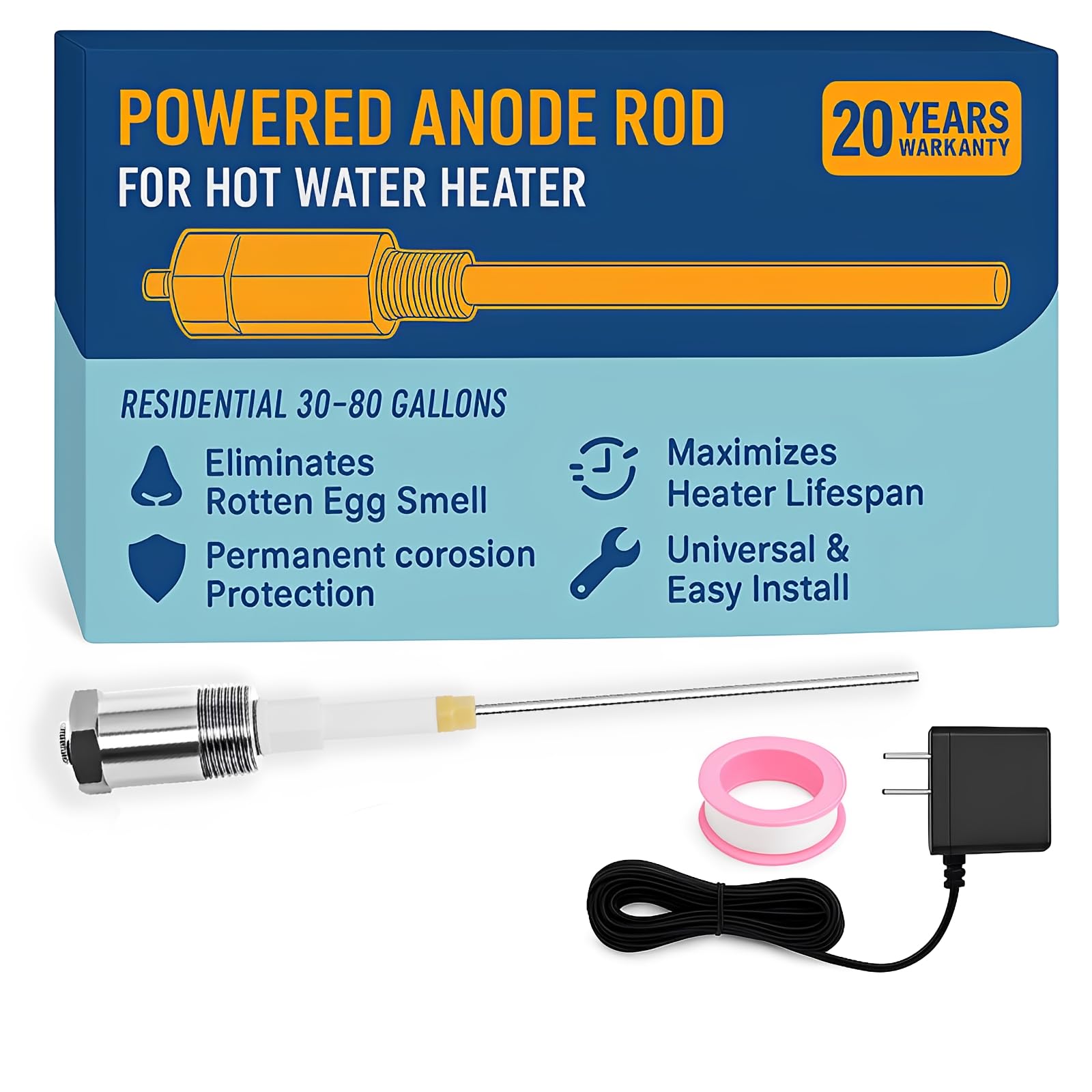
The Podoy powered anode rod changes the game for softened water systems by replacing sacrificial materials with a titanium element that uses low-voltage DC current to prevent corrosion. Because it does not corrode, it produces zero hydrogen sulfide gas—the exact reaction that causes rotten egg smell with magnesium rods in softened water. The 9.4-inch rod body fits nearly any standard ¾-inch NPT port, and it’s rated for tanks from 30 to 80 gallons.
Installation is straightforward: remove the old rod, wrap the included Teflon tape (though a higher-quality tape is recommended), and hand-tighten the new unit before plugging the AC adapter into a nearby outlet. Users report sulfur odors disappearing within 24 hours, a dramatic improvement over flushing or chlorinating the tank. The unit operates on 100-240V AC with a 3VDC output, consuming minimal electricity.
The key trade-off is the need for a power outlet near the water heater. If your heater is tucked into a basement corner without an accessible outlet, you’ll need an extension cord or an electrician. The unit also lacks a visual indicator on the rod itself; only the power supply has an LED, making it hard to confirm operation at a glance. Still, for homes with high water softness, this is the most maintenance-free solution available.
Why it’s great
- Zero corrosion means never replacing the rod
- Eliminates sulfur smell completely in under a day
- Works with all water softness levels
Good to know
- Requires a nearby AC outlet
- Teflon tape included is thin; upgrade to a premium roll
- Not compatible with Bradford White tanks
2. Briidea Powered Anode Rod

The Briidea powered anode rod is designed specifically for larger water heaters, covering 40 to 89 gallons with ease. Its titanium element is coated with ruthenium-iridium, a noble metal layer that resists chemical attack even in the most aggressive softened water environments. The rod is paired with a stainless steel ¾-inch NPT fitting and an HDPE plastic liner that prevents scale buildup on the rod body itself.
Users report that the sulfur smell vanishes within an hour of installation, and the unit’s green LED on the AC adapter provides clear confirmation that the system is active. The installation requires a 1⅜-inch wrench and a nearby outlet, but no draining of the tank is necessary—simply remove the old rod and screw in the new one. The 5-foot power lead is short, so plan your outlet proximity accordingly.
The primary difference from the Podoy is the Briidea’s extended length and its specific compatibility range. The 12.3-inch rod body is longer, which may interfere with gas flue baffles in some gas heaters—measure your clearance to the top of the tank carefully. Some users noted the instructions were minimalist, but the installation process is intuitive for anyone comfortable with basic tools.
Why it’s great
- Ruthenium-iridium coating for extreme durability
- Green LED confirms operation at a glance
- HDPE liner reduces scale accumulation
Good to know
- Short 5-foot power lead limits placement
- Not ideal for gas heaters with tight flue clearance
- Minimal instructions included
3. Eastman 42″ Flexible Magnesium Anode Rod
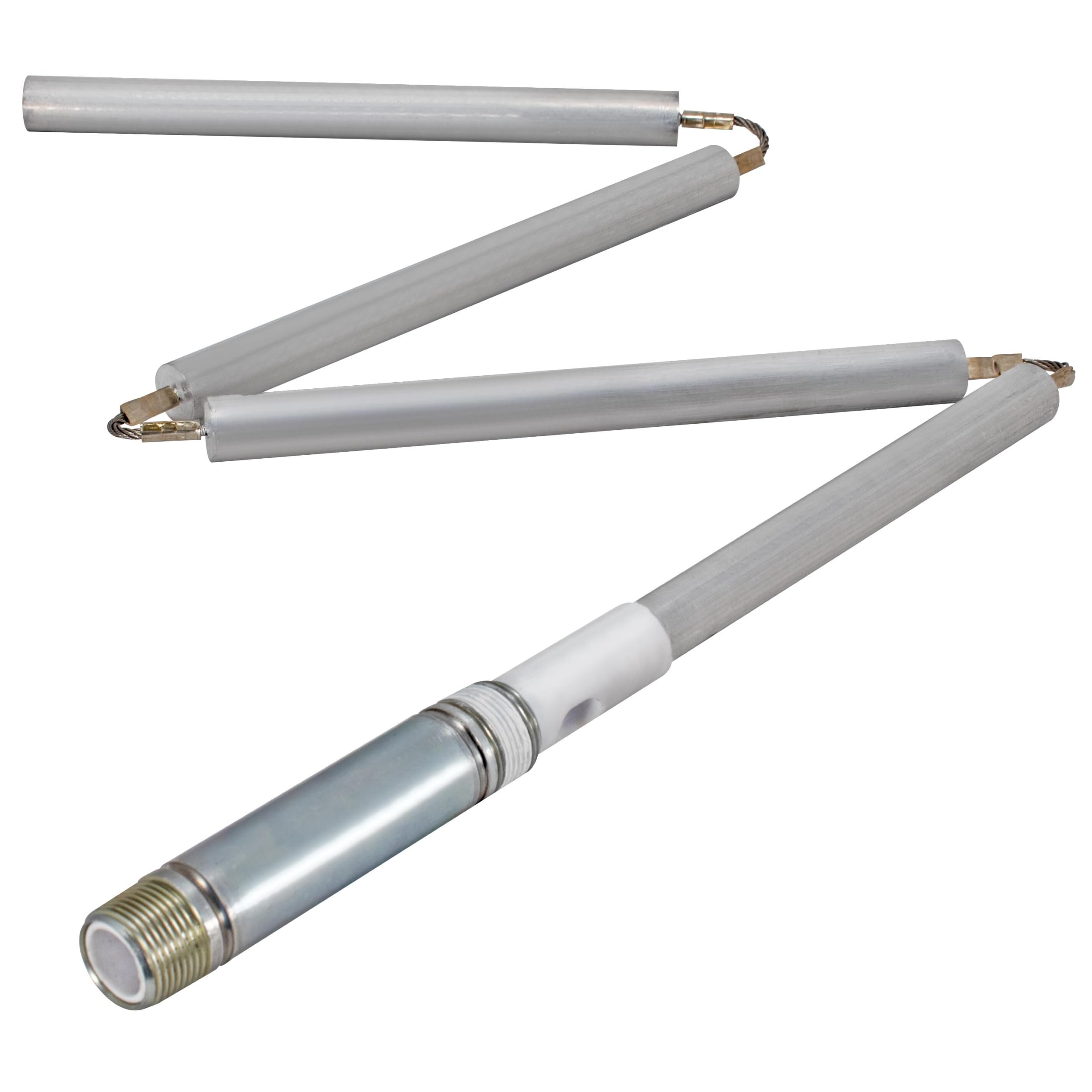
The Eastman 60287 is a premium flexible magnesium rod built with a carbon steel cable and four magnesium links, each 5/8-inch in diameter. The standout feature is the stainless steel ¾-inch x 5-inch NPT nipple—most aftermarket rods use a steel nipple that can rust, but the stainless steel ensures a corrosion-free connection, which is critical in softened water where galvanic corrosion is accelerated. The 42-inch length folds down to fit into any tank with at least 12 inches of overhead clearance.
Users with Bradford White and Rheem heaters found the fit perfect, and the chrome finish gives a clean, modern appearance that stands out against standard galvanized fittings. The magnesium composition provides strong cathodic protection, but softened water will still deplete it faster than an aluminum-zinc rod—expect 2–3 years of life before replacement is needed. The flexible design makes installation in tight closets straightforward.
The 5-inch nipple may be too long for some heaters, requiring you to cut it down or use a shorter fitting—some users had to shorten it to 2 inches to match the original rod dimensions. It also lacks a heat trap, so you’ll need to verify if your heater’s original rod included one. This is a solid choice if you prefer the protection strength of magnesium but are willing to replace it every few years.
Why it’s great
- Stainless steel nipple resists rust in aggressive water
- Flexible 4-segment design for low-clearance installs
- Chrome finish prevents exterior rust
Good to know
- Magnesium depletes faster in softened water
- 5-inch nipple may need shortening
- Does not include a heat trap
4. 44″ Aluminum Zinc Anode Rod (Eau)

The Eau Aluminum Zinc Anode Rod is engineered specifically to combat the hydrogen sulfide reaction that plagues magnesium rods in softened water. Its specially formulated aluminum-zinc alloy resists the sodium-driven galvanic reaction, dramatically reducing the production of rotten egg smell. This is the single most effective sacrificial rod choice for homes with a water softener—it balances strong tank protection with odor elimination, lasting 3–5 years in moderately soft water.
The 44-inch flexible rod is segmented into four sections, each under 12 inches, making installation in tight spaces straightforward. The kit includes a 27mm chrome-finished socket and Teflon sealing tape, eliminating the need to buy extra tools. Users report that after switching from magnesium to this aluminum-zinc rod, the sulfur smell disappeared completely within days—even in cases where repeated bleach flushing had failed.
The rod’s paint-coated threads can sometimes be rough, causing resistance during installation. A quick pass with a wire wheel or a file solves the issue, but it’s an extra step worth knowing. The included Teflon tape is serviceable but thin; a thicker roll provides better insurance against leaks. For the price, this kit delivers the best value for softened water homes that want to stay with a sacrificial anode.
Why it’s great
- Aluminum-zinc alloy stops sulfur smell at the source
- Flexible design fits tight clearance areas
- Includes socket and tape for a complete install kit
Good to know
- Threads may need cleaning before installation
- Teflon tape is thin—consider upgrading
- Not a permanent solution; replace every 3–5 years
5. Michigan Magnesium Anode Rod

This Michigan magnesium anode rod stands out for its focus on education—the kit includes a full-size roll of oversized Teflon tape and a step-by-step manual written by licensed plumbers. For a first-time DIY homeowner, this guidance is invaluable. The 44-inch segmented rod folds into four 12-inch lengths, making it manageable in confined spaces, and it fits the standard ¾-inch NPT port found on Rheem, Reliance, Kenmore, State, GE, and A.O. Smith heaters.
The magnesium material offers the strongest electrical potential for tank protection, but this is a double-edged sword in softened water—users report excellent odor-free performance for the first two years, but the rod can deplete faster in high-softness environments. The instructions explicitly warn about this and recommend annual inspection. The included Teflon tape is notably generous, leaving enough for future replacements.
The kit does not include a socket or a cap, so you’ll need a 1-1/16-inch or 27mm socket and a breaker bar to remove the old rod. The packaging is compact but high-quality, and users consistently praise the clarity of the written guide. This is the right choice if you value instructional support and are comfortable with a magnesium rod’s shorter lifespan in softened water.
Why it’s great
- Professional-grade installation manual included
- Oversized Teflon tape roll for multiple uses
- Segmented design fits heaters in tight alcoves
Good to know
- Magnesium depletes faster in softened water
- Socket and cap not included
- Two people recommended for safe installation
6. 44″ Flexible Magnesium Anode Rod (Yrjns)
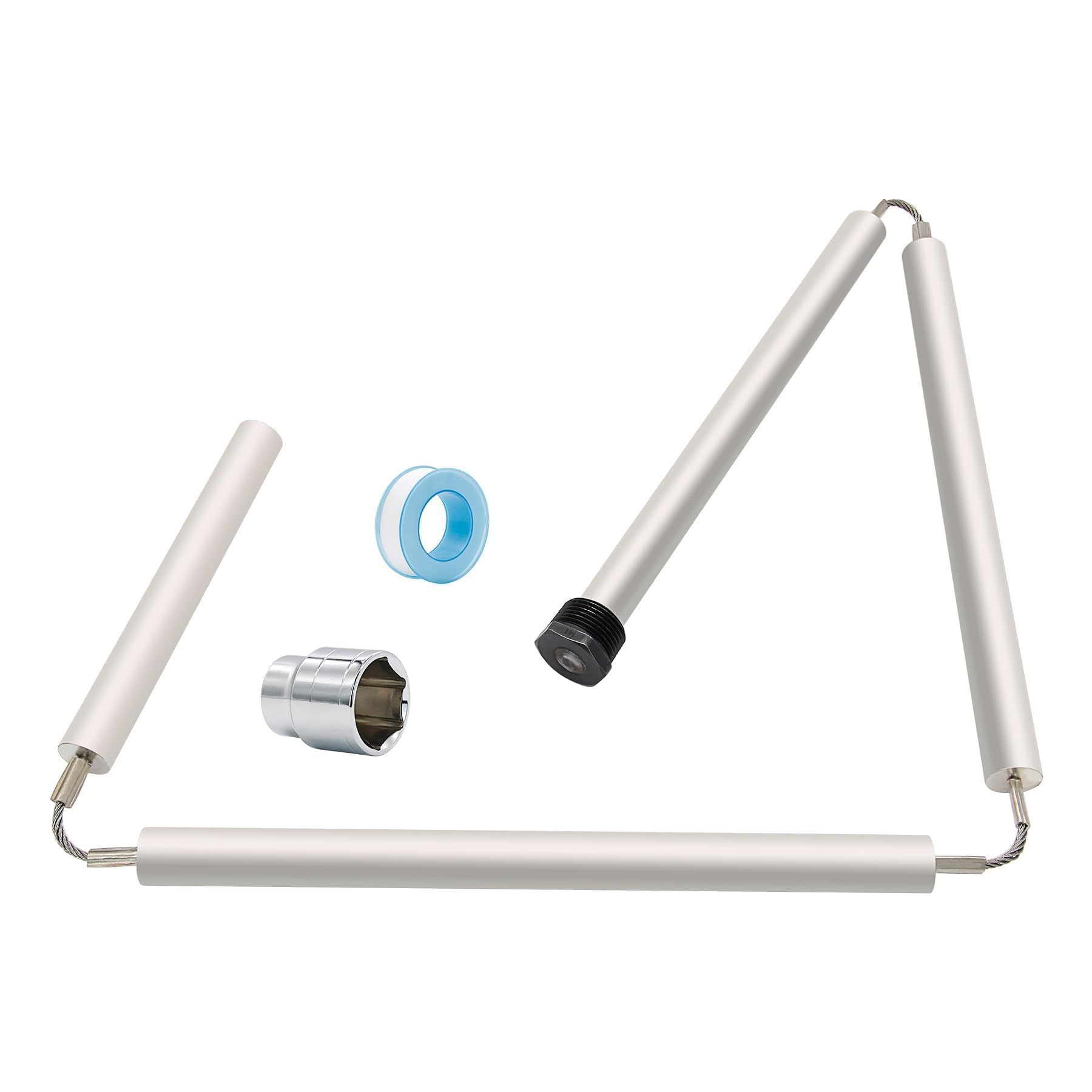
The Yrjns 44-inch flexible magnesium anode rod is the most cost-effective entry point for a complete replacement kit. It includes the rod, a 27mm hex socket, and a roll of Teflon tape—everything you need for a single install. The flexible design uses four hinged segments, each under 12 inches, making it ideal for water heaters with less than 12 inches of overhead clearance. At 1.76 pounds, it’s lighter than many comparable models, reducing strain during installation.
Users with 80-gallon tanks and low-clearance ceilings found the segmented design easy to feed in. The magnesium composition provides strong protection, and several users reported that the rod eliminated hot water odor that had been present for years. The included socket works fine with an impact wrench, and the Teflon tape is adequate for a single-use application—though multiple reviewers noted the tape is thin and recommend buying a separate roll for a leak-proof seal.
The main compromise is the painted threads, which can be rough and may require cleaning with a wire wheel before installation to avoid cross-threading. The rod is made of metal, but the manufacturer’s listing is vague about the exact alloy purity. For a budget-friendly option that gets the job done, this is a solid choice, but expect to replace it more frequently if your water softness is high.
Why it’s great
- Complete kit with socket and tape included
- Lightweight design for easier handling
- Flexible segments handle tight clearance installs
Good to know
- Painted threads may need cleaning before use
- Included Teflon tape is thin; buy a better roll
- Magnesium will deplete faster in softened water
7. Suburban 232768 Aluminum Anode Rod

The Suburban 232768 is a specialized aluminum anode rod designed specifically for Suburban brand water heaters, commonly found in RVs and campers. At only 9 inches long with a ¾-inch x 9-inch thread, it is compact and purpose-built for tight compartments. The aluminum material is naturally more resistant to the corrosive effects of softened water than magnesium, making it a decent choice for RV owners who use water softeners on the road.
Users report that this rod fits models like the SW10DE perfectly, lasting approximately 4 years with 50% deterioration in standard water conditions. The installation requires a 1-1/16-inch socket, a long ratchet, and a 6-inch extension—the compact location inside an RV compartment demands longer tools. The rod does not come with an O-ring, so Teflon tape or pipe dope is essential to prevent the threads from welding to the tank.
The biggest limitation is its narrow compatibility: this rod only works with Suburban water heaters. It is not suitable for standard residential tanks from Rheem, A.O. Smith, or Bradford White. Additionally, at 9 inches, it provides a smaller surface area for corrosion, meaning it may need more frequent inspection than a longer residential rod. This is a niche product for a specific application, not a general-purpose solution.
Why it’s great
- Perfect OEM fit for Suburban RV water heaters
- Aluminum resists softened water better than magnesium
- Compact 9-inch size for tight compartments
Good to know
- Only fits Suburban brand heaters
- No O-ring included; must use Teflon tape
- Requires long tools for installation in RVs
FAQ
Why does softened water cause rotten egg smell with magnesium rods?
How often should I replace a sacrificial anode rod in softened water?
Can I install a flexible rod if my water heater has less than 12 inches of clearance?
Does a powered anode rod work with a gas water heater?
Final Thoughts: The Verdict
For most users, the best anode rod for softened water winner is the Eau 44″ Aluminum Zinc Anode Rod because it directly addresses the sulfur odor problem without requiring an electrical outlet and lasts 3–5 years in soft water. If you want a permanent, maintenance-free solution, grab the Podoy Powered Anode Rod — it will never corrode and eliminates odor in 24 hours. And for budget-conscious DIYers with tight clearance, the Yrjns 44″ Flexible Magnesium Kit offers the best value for a first-time replacement.

Mo Maruf
I created WellFizz to bridge the gap between vague wellness advice and actionable solutions. My mission is simple: to decode the research and give you practical tools you can actually use.
Beyond the data, I am a passionate traveler. I believe that stepping away from the screen to explore new environments is essential for mental clarity and physical vitality.