Our readers keep the lights on and my smoothie glass nicely filled. As an Amazon Associate, I earn from qualifying purchases.
A poorly fitted backpack can turn a mountain trail into a misery of hip chafing, shoulder strain, and a sweaty back that chills you at every rest break. The internal frame is your load-bearing skeleton—a lightweight aluminum stay transfers weight from your shoulders to your hips, but only if the torso length, belt wrap, and load-lifter straps are dialed in for your body. That is the difference between a pack that carries like a second skin and one that fights you every step.
I’m Mohammad Maruf — the founder and writer behind WellFizz. I’ve spent thousands of hours analyzing internal frame geometry, foam density specs, and real-user load-test data to separate marketing fluff from legitimate backpacking packs.
Whether you are a weekend warrior or a long-distance thru-hiker, identifying the right capacity, suspension system, and fit for your torso is what defines the best backpacks for backpacking. I’ve curated nine models that span from budget-friendly workhorses to premium, feature-rich designs built for multi-day loads.
How To Choose The Best Backpacks For Backpacking
Finding the right backpacking pack isn’t about picking the biggest bag or the flashiest brand. It’s about matching the pack’s suspension, volume, and features to your torso length, trip duration, and typical load weight. A mismatch here guarantees a miserable trip. Prioritize fit above all else, then capacity, then weight.
Torso Length and Hip Belt Fit
The internal frame transfers load to your hips only when the hip belt sits snugly on your iliac crest, not on your waist or lower ribs. Measure your torso (C7 vertebra to iliac crest) and look for packs with adjustable torso ranges and heat-moldable or multi-density foam hip belts. A belt that gaps at the hips or digs into soft tissue will cause chafing on a 15-mile day, regardless of how much padding is on the shoulder straps.
Volume vs. Trip Duration
A good rule: 40–50 liters for overnight trips, 50–65 liters for 3–5 days, and 70 liters or more for week-long expeditions or winter gear. More volume adds weight, so resist the temptation to buy a 90-liter pack for a weekend trip. Compression straps help reduce bulk, but you cannot compress empty space in a way that feels stable under a light load. Keep capacity matched to your actual gear list.
Load Transfer and Frame Design
The frame determines how well the pack handles weight. Perimeter wire frames with a central aluminum stay offer excellent torsional stiffness for loads of 40–60 pounds. Lightwire frames save ounces but flex under heavier hauls. Look for load-lifter straps that angle back at roughly 45 degrees—if they sit flat or hang loose, the frame is too short or the pack is overloaded above the shoulder line.
Quick Comparison
On smaller screens, swipe sideways to see the full table.
| Model | Category | Best For | Key Spec | Amazon |
|---|---|---|---|---|
| Mardingtop 60L | Military Tactical | Budget entry with MOLLE expansion | 60L expandable to 75L via MOLLE | Amazon |
| Teton Scout 55L | Internal Frame | Scouts and slim torsos | Adjustable torso 15–20 in | Amazon |
| Mardingtop 70L | Tactical/Heavy | 65+ lb load capacity | 4272 cu in, 600D polyester, YKK zips | Amazon |
| Naturehike 65L | Ultralight | Weight-conscious solo trips | 2.56 lbs, 420D nylon, 15kg max load | Amazon |
| TIDEWE 90L Hunting | External Frame | Big game packing (50–80 lb) | 5500 cu in, noise-free Next Camo G2 | Amazon |
| Kelty Asher 55L | All-Rounder | Weekend trips, 20–40 lb loads | 3.1 lbs, Amp Flow vented back, Fit Pro | Amazon |
| Osprey Rook 50L | Premium/Vented | Ventilation & 2–3 day trips | AirSpeed suspension, 3.6 lb, integrated rain cover | Amazon |
| Deuter Aircontact Lite 50+10 | Long-Distance | Extended treks, excellent load transfer | 3.6 lb, Vari Quick adjustable back, 50+10L expandable | Amazon |
| Osprey Kestrel 48L | Technical Hiking | Big days, carry-on friendly, sturdy | 4.6 lb, AirScape backpanel, trekking pole loops | Amazon |
In‑Depth Reviews
1. Osprey Rook 50L Men’s Backpacking Backpack

The Osprey Rook 50L delivers the most balanced package of weight, ventilation, and trail-ready features in this lineup. Its AirSpeed tensioned mesh backpanel creates a 4-inch air gap between your back and the pack, which drastically reduces sweat buildup on hot climbs. The LightWire peripheral frame transfers up to 40 pounds cleanly to the die-cut foam hip belt, though hikers with narrow hips may find the wrap slightly loose without adjusting the stabilizer straps.
At 3.6 pounds, it is not the lightest 50-liter pack, but the trade-off is a thoughtful feature set: a zippered sleeping bag compartment with a floating divider, dual-access side pockets that angle rearward for easy bottle grabs without removing the pack, and an integrated rain cover that stows in a zippered flap. The torso adjustment range sits between 16 and 21 inches, accommodating most medium and tall body types.
Where the Rook falters is in external storage. There is no large mesh shove-it pocket for wet layers, and the front daisy chain is minimal compared to the Kestrel. For 2–3 day trips where ventilation and load stability are the top priorities, this pack punches well above its weight class. Users report comfortable carries up to 30 pounds over 20-mile days with zero shoulder fatigue.
Why it’s great
- Best-in-class back ventilation for hot-weather hiking
- Integrated rain cover eliminates last-minute gear shopping
- Sleeping bag compartment with removable divider adds packing flexibility
Good to know
- No large external mesh pocket for quick-dry items
- Waist belt can feel loose on very narrow hips
- Lacks back panel access for gear retrieval
2. Deuter Aircontact Lite 50 + 10 L Backpack

The Deuter Aircontact Lite 50+10 is engineered for ambitious long-distance hikers who refuse to compromise load transfer for pack weight. Its namesake Aircontact back system uses hollow chamber foam that channels air through the cushion—the pumping effect of each stride forces warm air out and draws cool air in, keeping your back noticeably less clammy than solid foam blocks. The Vari Quick adjustable back length offers instant micro-adjustments via a pull-forward system, which is valuable when layering changes shift your center of gravity throughout the day.
The 50+10 liter expandable volume is achieved through a height-adjustable lid, letting you cinch down the pack for a 3-day carry or extend it for a 6-day food resupply. The lightweight X-frame uses a single aluminum stay and a rigid perimeter wire, which together handle loads up to 40 pounds with excellent stability. The dedicated bottom compartment with internal divider keeps a sleeping bag isolated from your cook kit and clothing.
Where this pack loses points is the absence of an included rain cover at this price point—a surprising omission given its premium status. The fabric, a mix of 140D ripstop and 600D recycled polyester, balances durability with weight but feels less burly than the 600D-heavy Osprey Kestrel. Still, for multi-week treks requiring precise torso dial-in and expandable capacity, the Aircontact Lite is a serious contender.
Why it’s great
- Vari Quick back system provides tool-free torso adjustments
- Expandable lid offers 50+10L capacity for longer stretches
- Hollow chamber foam delivers effective ventilation without a mesh gap
Good to know
- Rain cover not included—requires separate purchase
- No integrated hydration sleeve with hose port
- Hip belt pockets are smaller than expected for smartphone storage
3. Kelty Asher 55L Backpack
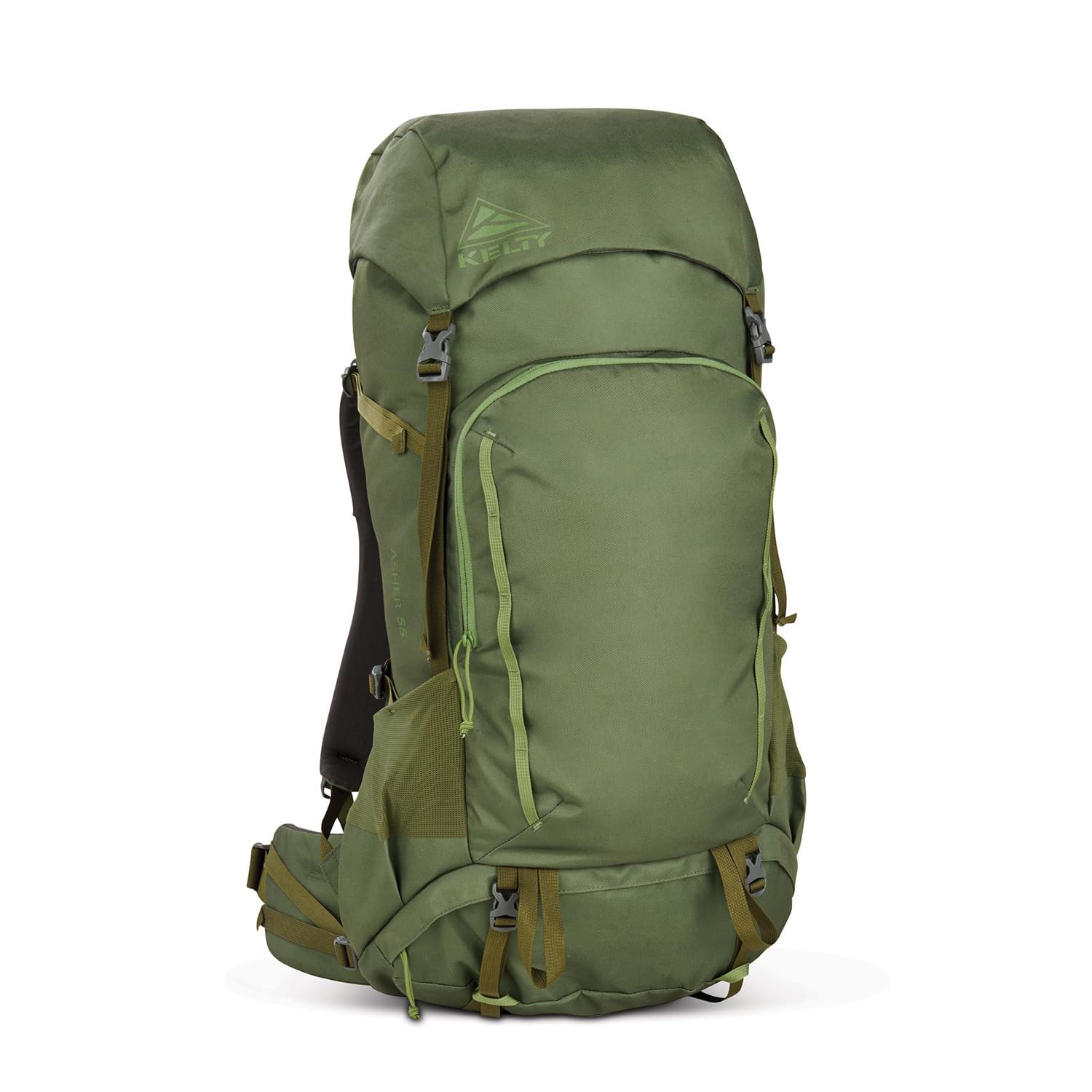
Kelty’s Asher 55L earns its spot with a near-perfect blend of weight, load stability, and fit adjustability. The Fit Pro torso system uses a sliding Velcro ladder that adjusts in 1-inch increments across a 15.5–21 inch range, making it one of the easiest systems to dial in without removing the pack. The Amp Flow ventilated backpanel is a contoured foam block with air channels rather than a tensioned mesh, which adds structure but slightly reduces airflow compared to the Osprey AirSpeed design.
At just 3.1 pounds, the Asher is the lightest pack in the premium tier, and the perimeter frame with a single aluminum stay handles 20–40 pound loads without losing its shape. The sleeping bag compartment is zippered and accessible from the bottom, and the lid pocket doubles as a detachable day pack. Side compression straps effectively stabilize a loose load, and the included rain cover fits neatly in its own pocket.
The compromises show in the harness padding—the shoulder straps lack the plush density found on the Deuter or Osprey Kestrel, and longer hikes with heavy water loads can cause minor pressure points. The water bottle pockets are angled but shallow; a 1-liter Nalgene can eject on steep scrambles. Still, for the weight-conscious weekend backpacker wanting a competent, affordable pack, the Asher delivers where it counts.
Why it’s great
- Lightweight 3.1 lb design without sacrificing frame stability
- Fit Pro torso adjustment is fast and tool-free
- Amp Flow backpanel reduces sweat buildup on moderate hikes
Good to know
- Shoulder straps feel thin under loads over 35 lb
- Side pockets struggle to hold larger water bottles securely
- Velcro ladder system can collect debris over time
4. Osprey Kestrel 48L Men’s Backpacking Backpack

The Osprey Kestrel 48L is the burliest pack in this review at 4.6 pounds, but that weight buys exceptional fabric durability and a chassis that feels bombproof on technical terrain. The injection-molded AirScape backpanel provides a close-to-body carry that tracks well during off-balance traverses—the foam ridges create a rigid contact surface paired with a mesh overlay for modest airflow. The fixed hip belt is heat-moldable and wraps securely around the iliac crest, though the fixed sizing means you must get your torso and waist measurements right at purchase time.
Storage is a strong suit: the top lid features a large zippered pocket with a key clip underneath, and the front panel has a horizontal zip that opens directly into the main compartment—a game changer when you need a rain jacket without unbuckling everything. The daisy chain loops along the front and the compression straps accept extra gear lashes, and the included bright green rain cover is easily accessible from a dedicated pocket. Trekking pole attachment loops are reinforced at the base, preventing the tip from wearing through the fabric over time.
The trade-off for ruggedness is pack weight and a slightly stiff mesh back that can feel less breathable than the Rook’s AirSpeed on hot days. Side elastic pockets are narrower than expected, making water bottle access awkward with a fully loaded pack. Still, for users who need a carry-on-friendly 48-liter pack that can handle 30 pounds of gear for a 4-day off-trail trip, the Kestrel is the most durable option in this tier.
Why it’s great
- Exceptional fabric and zipper durability for rocky terrain
- Front zip access to main compartment is very convenient
- Daisy chain and compression strap system allows external gear lashing
Good to know
- Heavy for a 48L pack at 4.6 lb
- Fixed hip belt requires careful measurement before buying
- Side pockets are stiff and narrow when fully loaded
5. Naturehike 65L Ultralight Hiking Backpack
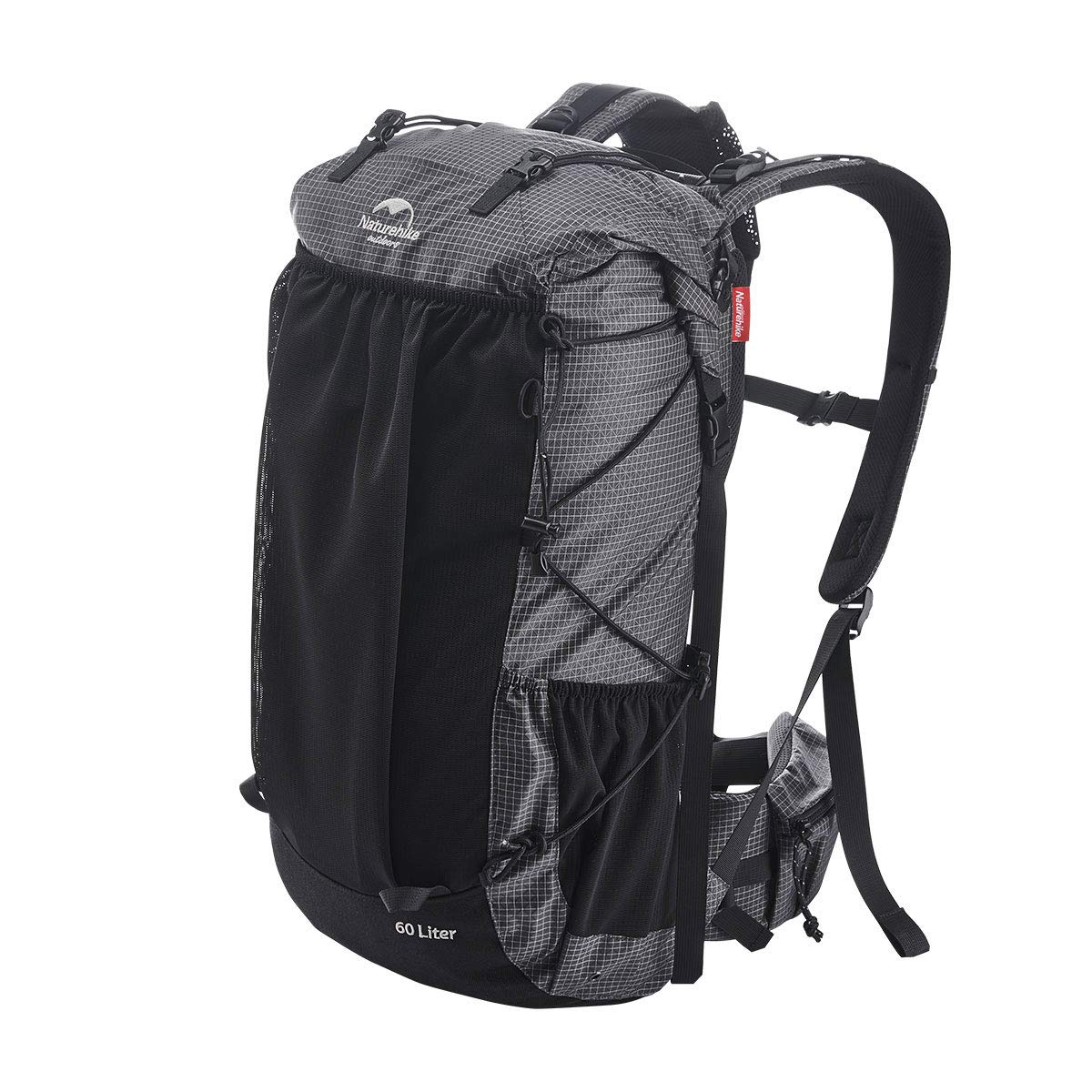
The Naturehike 65L rewrites the budget-expectation script by weighing only 2.56 pounds and packing a legit internal frame into a sub- price point. The 420D nylon fabric resists tears and scratches with surprising tenacity, and the ergonomic back pad uses a mesh cushion structure that breathes far better than dense foam alternatives. The roll-top closure with a separate brain pocket provides both waterproofing and quick-access organization, though the roll-top makes it less convenient for daily access than a standard top-loading lid.
Load capacity is officially rated at 15 kilograms (33 pounds), but real-world tests from users measuring 6’4” and 280 pounds report carrying 50 pounds without seam separation or frame failure. The hip belt uses a moderate-density foam that lacks the contoured shaping of premium packs, so taller users with narrower hips may experience some belt migration under heavy loads. The side pockets are generously sized and hold 1-liter bottles comfortably, while the front mesh shove-it pocket provides quick access for a shell or map.
The main compromise is the absence of integrated load-lifter straps in the traditional sense—the adjusters work but require frequent re-tensioning as the pack settles during the first few miles. The frame also emits an occasional squeak on uneven terrain, a minor annoyance that does not affect structural integrity. For the ultralight-leaning backpacker who wants a 65-liter pack that shaves pounds off base weight without emptying the wallet, this is a legitimate contender.
Why it’s great
- Extremely light at 2.56 lb for a framed 65L pack
- Durable 420D nylon withstands heavy, rough loading without wear
- Breathable mesh back pad reduces sweat buildup on long ascents
Good to know
- Roll-top closure is less convenient than a standard lid for frequent access
- Hip belt lacks structured contouring, can shift on narrow hips
- Load lifters need periodic re-tensioning as pack settles
6. TIDEWE Hunting Backpack 5500 cu in with Frame

The TIDEWE 5500 cubic inch (roughly 90L) hunting backpack is a frame-pack behemoth built for one purpose: hauling heavy loads of meat and gear deep into the backcountry. The external frame uses a curved top bar that clears your head while bending, and the folding cargo shelf on the back can carry a boned-out deer quarter or a heavy pack raft without interior bag constraint. The Next Camo G2 fabric is genuinely noise-free—no crinkle, no squeak—which is critical for hunters but also appreciated by any backpacker wanting silent movement through brush.
The main compartment is cavernous and uses a two-in-one strap system for carrying a bow or rifle upright, but civilian backpackers will likely remove these straps to reduce weight. The waist belt is generously padded but not heat-moldable, and users with a waist measurement above 45 inches may need an extender to get a proper cinch. The included rain cover is well-fitting and stows in a dedicated pocket, and the hydration sleeve accommodates up to a 3-liter bladder.
At 11.9 pounds, this pack carries its own weight heavily—it is not a pack for ultralight trips. The shoulder straps are thin for the intended load range, and the plastic buckles feel less durable than the rest of the pack. Still, for week-long backcountry hunts or base camp carries where weight is secondary to capacity, this pack provides enormous volume at a mid-range price point that undercuts traditional hunting pack brands.
Why it’s great
- Massive 90L capacity fits 5–7 day expeditions easily
- External frame with folding cargo shelf handles meat or oversized loads
- Noise-free fabric and silent buckles are excellent for low-profile movement
Good to know
- Very heavy at nearly 12 lb before any gear is packed
- Shoulder straps are thin for maximum load capacity
- Hip belt may require an extender for larger waist sizes
7. Teton Sports Scout 55L Internal Frame Backpack
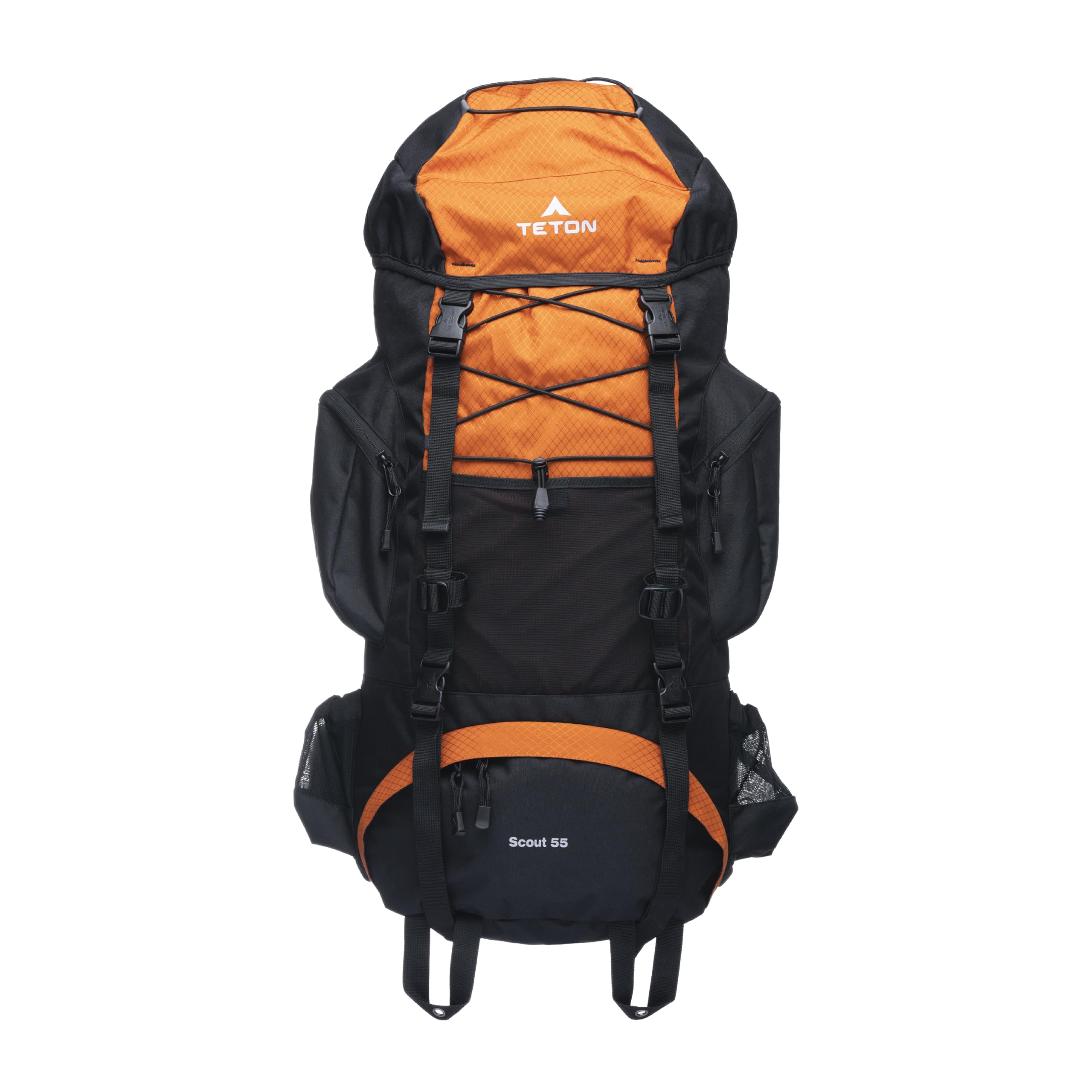
The Teton Scout 55L has become a staple for Scout troops and beginner backpackers because it solves the fit problem that plagues affordable packs: the torso adjustment system actually works for smaller frames. The multi-position torso plate adjusts 4–5 inches, allowing a 5’2” teen and a 6’0” adult to share the same pack with a solid transfer of load to the hips. The open-cell foam lumbar pad provides reasonable lower back cushioning, and the molded air channels reduce sweating enough for moderate summer hikes.
The sleeping bag compartment is separate with a zippered divider, and the multi-directional compression straps let you cinch down a partial load well. The hydration sleeve sits against the backpanel and accommodates a 3-liter bladder, and the rain cover is included (though the elastic on the corners can fatigue over repeated use). Side zippered pockets hold 1-liter bottles securely, and the top lid pocket has enough room for a map, snack, and headlamp.
The shortcomings are predictable at this price point: the shoulder straps are lightly padded and can dig in under loads above 35 pounds, and the waist belt’s foam is firm without the heat-moldable contouring found on premium packs. The chest strap acts more as a retainer than a load stabilizer—it slides on the webbing under heavy jostling. Still, for a first-time backpacker or a growing Scout who needs adjustable fit on a reasonable budget, this pack is a proven starting point.
Why it’s great
- Excellent torso adjustability range fits growing Scouts and adults alike
- Separate sleeping bag compartment with divider is well-implemented
- Included rain cover adds value for beginners
Good to know
- Shoulder straps lack density for loads above 35 lb
- Waist belt foam is firm and not heat-moldable
- Chest strap slides on webbing during active movement
8. Mardingtop 60L Military Internal Frame Backpack
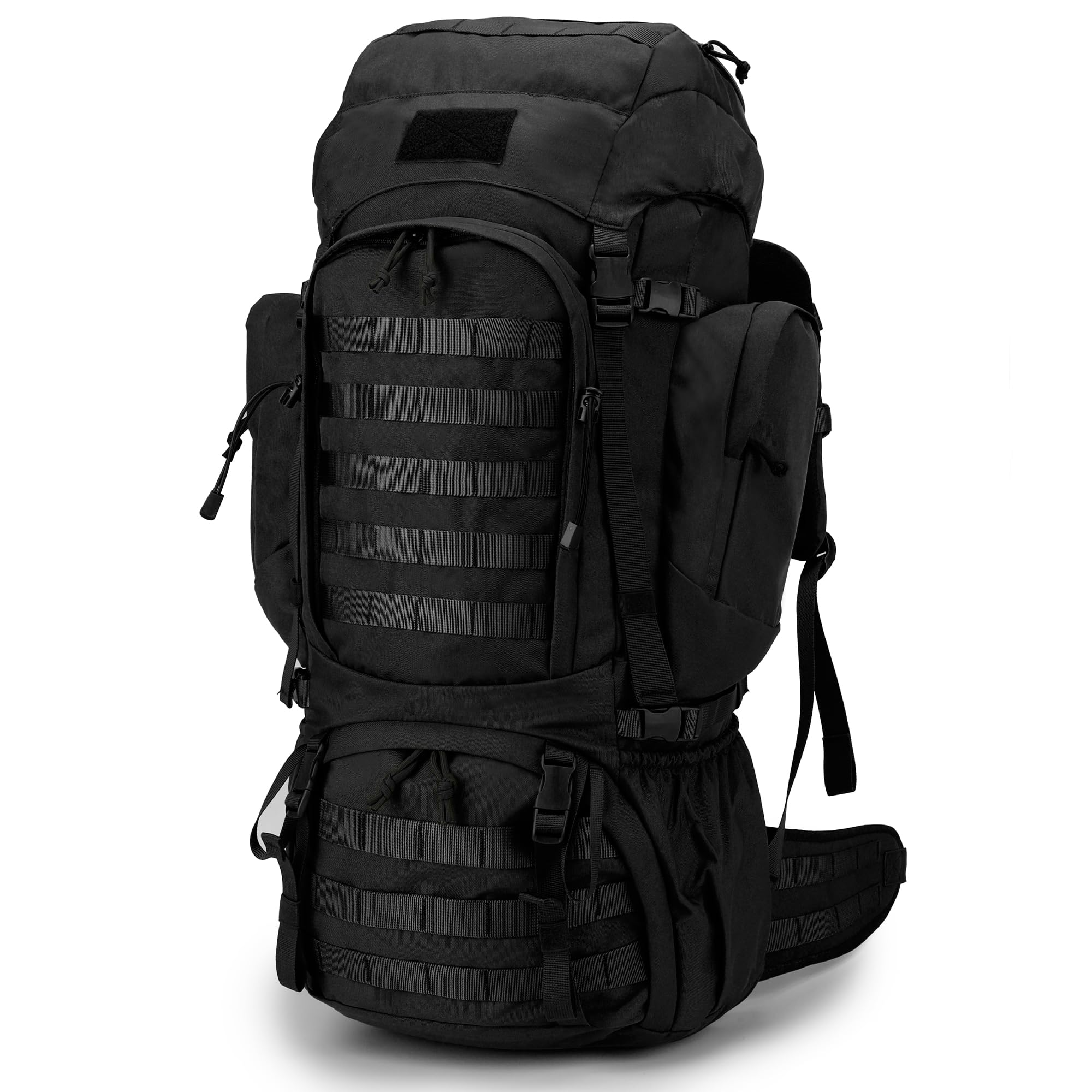
The Mardingtop 60L internal frame pack delivers a surprising amount of pack for the money, anchored by genuine YKK zippers and a 600D polyester shell. The MOLLE webbing on the front and sides gives it the modularity to attach pouches, carabiners, or a tent bag externally. The main compartment is generously sized at 60 liters, and the roll-top extension and external compression straps let you expand to roughly 75 liters when needed. The included rain cover is basic—the elastic perimeter stretches thin quickly—but it provides adequate storm coverage for its class.
The internal frame uses a pair of aluminum stays that transfer load to a foam-padded hip belt, though the belt itself is the pack’s weakest link: the foam density is low, and the belt lacks the structured wrap that prevents migration under heavy loads. Users report that the belt works well for loads up to 40 pounds, but chafing appears at the 50-pound mark on longer carries. The shoulder straps are adequately padded but narrow—broad-shouldered hikers may find them restrictive after 10 miles.
Stitch quality is consistently good, and the heavy-duty thread has held up across multiple seasons of use in reviews. The sleeping bag compartment is large enough for a winter-rated bag, and the side mesh pockets fit 1-liter bottles without popping out. For the budget-conscious backpacker who needs a versatile 60–75 liter pack with modular attachment points and doesn’t mind a less-refined hip belt, the Mardingtop is a capable choice for moderate terrain and shorter distances.
Why it’s great
- Real YKK zippers at a budget price point ensure reliable closure
- MOLLE webbing system allows modular expansion and external attachments
- Expandable capacity from 60L to ~75L for flexible packing
Good to know
- Hip belt padding is low-density and can cause chafing over 40 lb
- Shoulder straps are narrow for broad-shouldered users
- Included rain cover has cheap elastic that loses tension
9. Mardingtop 70L Internal Frame Backpack
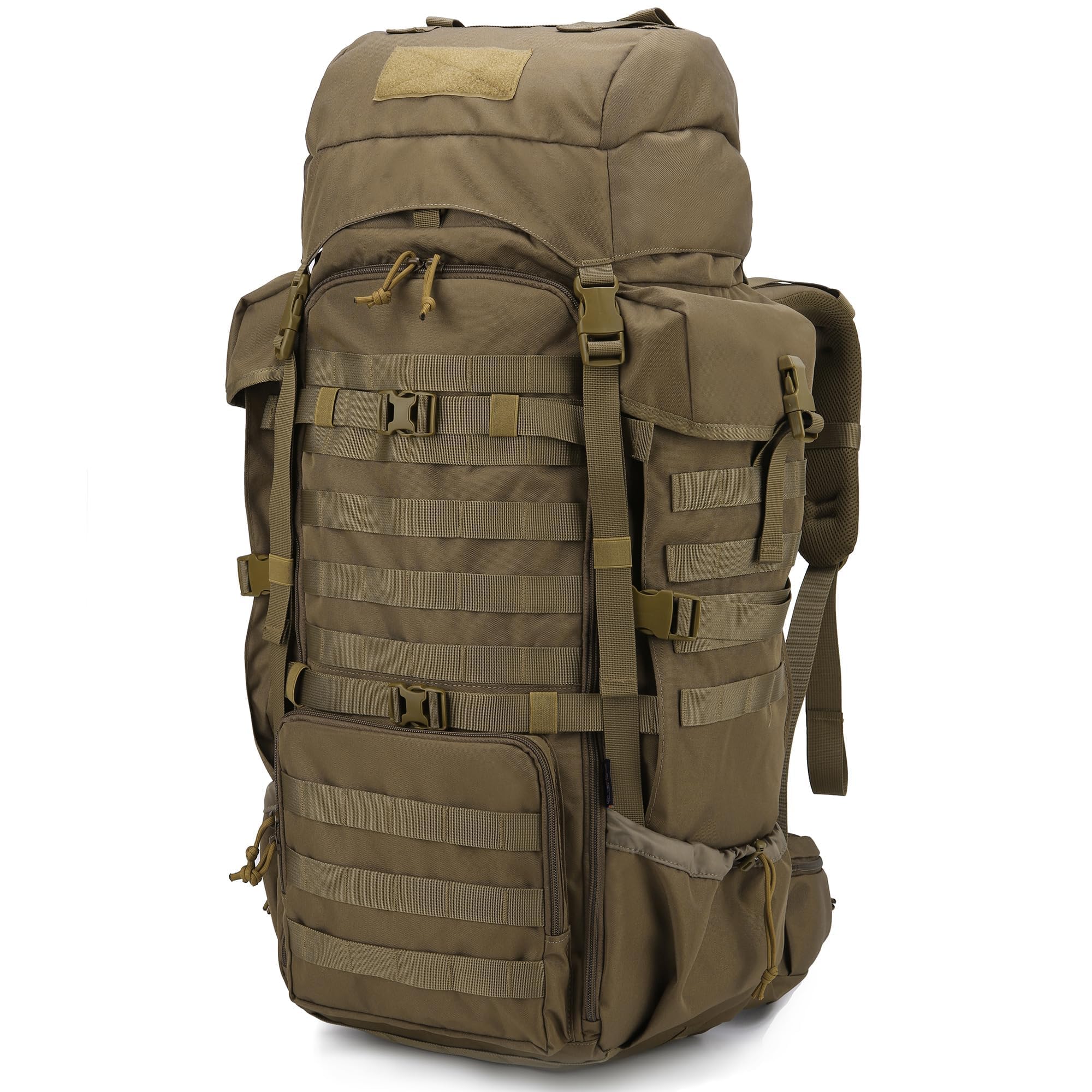
The larger 70-liter sibling in Mardingtop’s lineup trades some modularity for raw capacity, offering 4,272 cubic inches of storage with the same YKK zippers and 600D polyester shell. The front panel unzips like a suitcase, giving full access to the main compartment without digging through the top—a feature that is genuinely useful for gear organization on multi-night trips. The MOLLE webbing is present but scaled back compared to the 60L version, which keeps the profile cleaner for general backpacking use.
Load carrying is where this pack shows its strength: the dual aluminum stays and padded hip belt manage loads of 65 pounds without frame flex, though the belt foam remains the same medium-density material that lacks the contoured wing shape of premium packs. Users report comfortable carries at 50 pounds over moderate distances, but the belt can cause pressure points on bony hips beyond 8 miles. The shoulder straps are wider than the 60L version, offering better distribution for heavier gear.
The fabric is noticeably noisier than quieter packs like the TIDEWE—a rustle and slight crinkle when brushing against brush or rock. Some users also report squeaking from the frame under heavy jounce. The large side pockets fit 36-ounce Yeti-style bottles securely, and the bottom sleeping bag compartment is accessible via a separate zipper. For backpackers needing a budget-friendly 70-liter pack for base camp or winter loads above 50 pounds, this is the highest-capacity option in the value bracket.
Why it’s great
- Front zip opening gives full suitcase-style access to main compartment
- Handles heavy loads up to 65 lb without frame failure
- Wider shoulder straps than the 60L version improve load comfort
Good to know
- Fabric is noisy (rustles and crinkles against brush)
- Hip belt foam can create pressure points on bony hips
- Frame may squeak under heavy jostling during fast hiking
FAQ
Should I get a 50L or 65L pack for a 5-day trip?
What is the difference between an internal frame and an external frame pack?
Can I use a military tactical pack for backpacking?
Final Thoughts: The Verdict
For most users, the backpacks for backpacking winner is the Osprey Rook 50L because its AirSpeed suspension delivers the best balance of ventilation, load stability, and integrated features at a premium price that is justified by build quality. If you want the expandable volume and precise torso fit for long-distance treks, grab the Deuter Aircontact Lite 50+10. And for budget-conscious beginners who need a durable, adjustable 55-liter pack, nothing beats the Teton Sports Scout 55L.

Mo Maruf
I created WellFizz to bridge the gap between vague wellness advice and actionable solutions. My mission is simple: to decode the research and give you practical tools you can actually use.
Beyond the data, I am a passionate traveler. I believe that stepping away from the screen to explore new environments is essential for mental clarity and physical vitality.