Our readers keep the lights on and my smoothie glass nicely filled. As an Amazon Associate, I earn from qualifying purchases.
The challenge with burn scars isn’t just the discoloration — it’s the raised, tight texture that often feels itchy and restricts the skin’s natural movement. Standard lotions fail because they lack the occlusive barrier needed to trap hydration and flatten hypertrophic tissue over time. The right burn-specific scar cream must combine medical-grade silicones with ingredients that fade pigmentation and restore suppleness.
I’m Mohammad Maruf — the founder and writer behind WellFizz. I’ve spent years analyzing dermatological product formulations and decoding consumer feedback on scar therapies, focusing specifically on silicone concentration, absorption rates, and real-world patient outcomes.
This guide narrows the field by evaluating each formula’s silicone base, additional active ingredients, and user-verified results across fresh and old burn marks. The single best option for flattening, softening, and fading a burn scar consistently emerges as the best burn cream for scars recommendation below.
How To Choose The Best Burn Cream For Scars
Burn scars differ from surgical or acne scars because they often involve deeper dermal damage, longer healing timelines, and a higher tendency toward raised hypertrophic or keloid formations. Selecting an effective cream requires looking beyond brand names toward the specific active ingredients and their concentrations.
Medical-Grade Silicone as the Primary Active
Silicone creates a semi-occlusive film over the scar that hydrates the stratum corneum, reduces collagen production, and signals fibroblasts to flatten raised tissue. Without silicone listed within the first few ingredients, the cream will struggle to reduce thickness. Look for products that specify “medical-grade silicone” or “dimethicone” as a key component.
Supporting Actives for Pigmentation and Texture
Allantoin, vitamin E, emu oil, and onion extract each play distinct roles. Allantoin softens keratin and promotes gentle exfoliation of dead skin. Emu oil carries fatty acids deep into the dermis. Onion extract has shown moderate success in reducing redness and itching, particularly in older scars. A formula that combines silicone with two or more of these agents offers broader benefits.
Texture and Application Frequency
Burn-prone areas like the hands, arms, and chest demand a product that spreads easily without tugging. Gels absorb faster and work well under clothing or makeup. Creams provide a heavier barrier for nighttime use. The most effective protocols require two to four applications daily for at least eight weeks on new burns and three to six months on older marks.
Quick Comparison
On smaller screens, swipe sideways to see the full table.
| Model | Category | Best For | Key Spec | Amazon |
|---|---|---|---|---|
| Rejuvaskin RejuvaSil | Premium Gel | Raised, tight burn scars with itchiness | 0.33 oz tube; silicone + emu oil + vitamin C | Amazon |
| Ebanel Silicone Scar Gel | All-in-One Gel | C-section, burn, and injury scars on body | 2.4 oz bottle; onion extract + allantoin | Amazon |
| Rejuvaskin Scar Esthetique | Botanical Cream | Facial burns, discoloration, and sensitive skin | 0.34 oz tube; botanicals + silicone | Amazon |
| NOPUNZEL Silicone Scar Gel | Fast-Absorbing Gel | Fresh burns and fast daily application | 20g tube; medical-grade silicone, dermatologist tested | Amazon |
| Bio-Oil Skincare Oil | Oil Serum | Hydration and fading older burn discoloration | 4.2 oz bottle; vitamin E + chamomile + lavender | Amazon |
In‑Depth Reviews
1. Rejuvaskin RejuvaSil Silicone Scar Gel
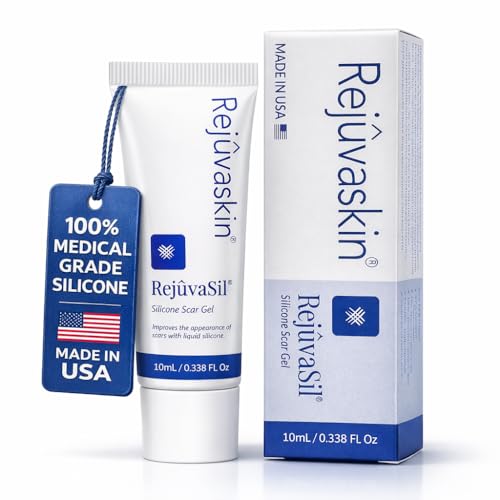
RejuvaSil stands out because its formula directly addresses the two primary complaints of burn scar patients: raised texture and persistent itching. The medical-grade silicone forms a breathable but occlusive layer that flattens hypertrophic tissue, while emu oil penetrates to soothe the underlying nerve sensitivity. Vitamin C targets the dark discoloration that often remains after initial healing, making this gel effective on both old and new burn marks.
Clinical feedback from users with open-heart surgery scars — which share similar tension and thickness with burn scars — confirms that the gel softens the tissue enough to permit comfortable shaving over the area within weeks. The non-comedogenic base ensures it won’t clog pores if applied near the face or neck, which is critical for burns on the upper chest.
The trade-off is the small tube size. At 0.33 ounces, this premium gel runs out faster than larger tubs, especially if you are treating a broad area like an entire forearm. Users treating larger burn zones may need to budget for monthly replenishment.
Why it’s great
- Clinically proven silicone base for flattening raised burn scars
- Emu oil and vitamin C reduce itchiness and discoloration simultaneously
- Pediatric-safe, non-comedogenic formula suitable for face and body
Good to know
- Small 0.33 oz tube may require frequent reordering for large burns
- Premium-tier cost per ounce compared to multi-purpose gels
2. Ebanel Silicone Scar Gel
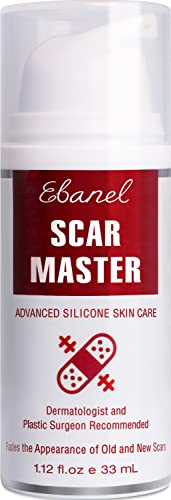
Ebanel delivers the largest volume in the mid-range tier without sacrificing active ingredient depth. The 2.4-ounce bottle contains onion extract, which has research backing for reducing scar redness and itching, and allantoin, which accelerates the sloughing of rough outer skin cells. The medical-grade silicone provides the necessary occlusive barrier, while plankton extract adds a layer of nourishment for compromised tissue.
This gel is fragrance-free, fast-drying, and water-resistant — practical attributes for burn patients who need to apply it on exposed areas like hands or arms before going to work. It is made in an FDA-registered facility in the USA, which adds a layer of manufacturing accountability that appeals to buyers concerned about purity.
Some users note that the gel is thicker than expected, making it slightly harder to spread across a large burn zone. For small to medium-sized burn scars on the chest, knee, or abdomen, the texture is manageable. It is also cost-effective enough to use consistently for the full three- to six-month protocol.
Why it’s great
- Large 2.4 oz bottle at a highly accessible price per ounce
- Onion extract plus allantoin double down on texture and redness
- Water-resistant and fragrance-free for daytime use
Good to know
- Thicker consistency makes broad-area application less smooth
- Results require strict twice-daily use for at least 8 weeks
3. Rejuvaskin Scar Esthetique Scar Cream
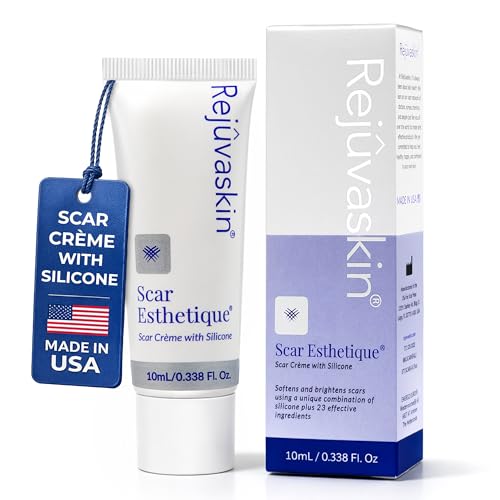
If your burn scar has already healed but left behind uneven texture and stubborn pigment patches, Scar Esthetique targets that exact stage. Unlike pure silicone gels, this cream incorporates a broader botanical blend — including centella asiatica and licorice root extracts — that work on collagen reorganization and melanin suppression. The result is a formula that smooths the feel of the scar while actively lightening the surrounding discoloration.
Users with burn scars on the face or other visually sensitive areas report that the cream layers well under makeup and does not pill during the day. It is safe for dry, oily, and combination skin types alike. The inclusion of silicone still provides the flattening effect, but the emphasis here is on restoring a natural skin tone.
The cream format takes slightly longer to absorb than a gel, which means it is best applied at night or when you have a few minutes for it to settle. The 0.34-ounce tube is small, but because the cream spreads thinly, a single tube can last over a month when treating a localized mark.
Why it’s great
- Botanical-driven formula targets both texture and discoloration
- Safe for all skin types including very sensitive and reactive skin
- Layers well under makeup for daytime burn scar coverage
Good to know
- Takes longer to absorb than silicone-only gels
- Best suited for older, healed burns rather than fresh wounds
4. NOPUNZEL Silicone Scar Gel
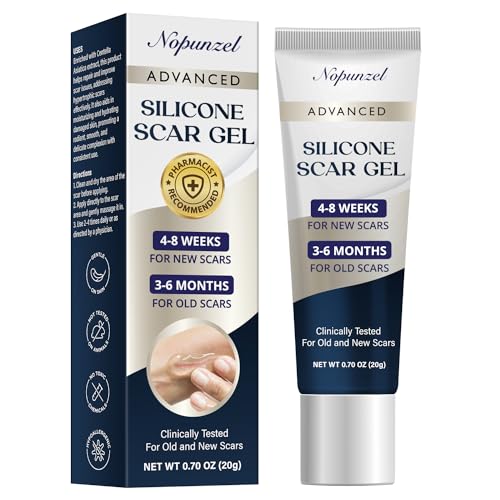
NOPUNZEL’s claim to fame is a fast-absorbing, non-greasy formula that shows visible improvement in under a week for some users. The gel contains medical-grade silicone as its primary active, and the manufacturer recommends two to four applications per day — a higher frequency than most competitors — which likely accelerates the flattening process for fresh burns. The slanted applicator tip makes targeted application simple and hygienic.
User reports on one-year-old dog attack scars (which share similar deep-tissue characteristics with burns) note that the gel significantly faded the mark and softened the texture without any sticky residue. The packaging is compact enough to carry in a pocket for mid-day reapplication, which is crucial for maintaining the 2–4 times per day schedule. The gel is also dermatologically tested and safe for all ages.
The 20-gram size is comparable to RejuvaSil’s volume, so it is not the most economical choice for large burns. It is best positioned for pinpoint treatment of a discrete burn mark or for someone who values quick absorption and zero residue over raw volume.
Why it’s great
- Fast-absorbing, non-sticky texture perfect for on-the-go reapplication
- Clinically tested silicone with visible results often within a week
- Compact packaging with slanted tip for precise application
Good to know
- Requires 2–4 daily applications for optimal results
- 20g size may not last through a full 3-month protocol on larger areas
5. Bio-Oil Skincare Body Oil Serum

Bio-Oil occupies a unique position in this guide because it is not a silicone-based gel — it is an oil serum. For burns that have fully closed and are now in the mature scar phase, Bio-Oil shines at improving discoloration and overall skin texture. The vitamin E, chamomile, and lavender oils lock in moisture and soften the surrounding skin, making the scar less noticeable through improved overall skin health rather than targeted tissue flattening.
Users with hormonal skin conditions and older surgical scars report that Bio-Oil is the only product that faded marks without clogging pores. It absorbs surprisingly fast for an oil, leaving skin soft rather than slick, and the subtle lavender scent makes it pleasant to incorporate into a nightly routine. Dermatologists frequently recommend it as an adjunct to other scar therapies.
Bio-Oil will not flatten a raised hypertrophic burn scar on its own. It is best used either as a maintenance moisturizer after a silicone-based product has already flattened the tissue, or for flat, discolored burn marks where the priority is fading the pigment rather than reducing thickness.
Why it’s great
- Excellent for fading discoloration and hydrating mature burn scars
- Lightweight, fast-absorbing formula that won’t clog pores
- Large 4.2 oz bottle provides generous coverage for full limbs
Good to know
- Contains no silicone; does not flatten raised or hypertrophic scars
- As a supplement to silicone therapy, not a standalone replacement
FAQ
How soon after a burn heals can I start applying scar cream?
Will a silicone burn scar cream work on a ten-year-old burn?
Can I use burn scar cream on my face?
Do I need to massage the cream into the burn scar?
Final Thoughts: The Verdict
For most users, the best burn cream for scars winner is the Rejuvaskin RejuvaSil Silicone Scar Gel because its medical-grade silicone, emu oil, and vitamin C combination addresses the three pillars of burn scar recovery: flattening, itch relief, and pigment correction. If you want a cost-effective product with generous volume, grab the Ebanel Silicone Scar Gel. And for mature burn scars needing deep hydration and color fading, nothing beats the Bio-Oil Skincare Body Oil Serum.

Mo Maruf
I created WellFizz to bridge the gap between vague wellness advice and actionable solutions. My mission is simple: to decode the research and give you practical tools you can actually use.
Beyond the data, I am a passionate traveler. I believe that stepping away from the screen to explore new environments is essential for mental clarity and physical vitality.