Our readers keep the lights on and my smoothie glass nicely filled. As an Amazon Associate, I earn from qualifying purchases.
Walking on black ice or packed snow demands boots that grip, insulate, and block moisture—failure on any front means a cold, wet, or dangerous commute. The wrong sole compound stiffens in low temperatures, turning each step into a hazard.
I’m Mohammad Maruf — the founder and writer behind WellFizz. I analyze winter footwear across the entire traction-to-warmth spectrum, focusing on rubber compound performance, insulation grams, and waterproof membrane reliability.
After comparing dozens of models on grip patterns, temperature ratings, and real-user durability data, I’ve narrowed the field to the most dependable options. My research shows that the right best boots for snow and ice blend aggressive lugs with proven insulation that doesn’t quit below zero.
How To Choose The Best Boots For Snow And Ice
Snow and ice boots sit at the intersection of three competing demands: you need enough insulation to prevent frost-numbed toes, a sole that stays pliable and grippy below freezing, and a waterproof barrier that keeps meltwater out without trapping sweat. Prioritizing only one attribute leaves you vulnerable in the other two.
Traction That Works in Freezing Temps
Standard rubber stiffens around 20°F, turning aggressive lugs into hard, slippery platforms. Look for boots with specialized cold-weather rubber blends—some manufacturers incorporate silica or synthetic compounds that remain flexible down to -40°F. The lug pattern matters too: wide, deep channels shed slush, while smaller multi-directional edges bite into glare ice.
Insulation Weight vs. Activity Level
Insulation is measured in grams (200g, 400g, 800g). A lower gram count (200g) suits high-output activities like snow shoveling where your own body heat builds up. For standing still in single-digit weather—ice fishing, photography, or watching a parade—800g or more insulation prevents cold from creeping through the boot walls. Always pair insulation with a moisture-wicking sock liner; wet insulation loses all thermal value.
Waterproof Membrane and Seam Construction
A waterproof boot relies on more than just a treated outer—the seams must be taped or sealed from the inside. Look for proprietary membranes that balance waterproofing with breathability, measured in grams of moisture vapor transmission per 24 hours. Poor breathability leads to sweat accumulation, which chills your feet faster than external moisture ever does.
Quick Comparison
On smaller screens, swipe sideways to see the full table.
| Model | Category | Best For | Key Spec | Amazon |
|---|---|---|---|---|
| KEEN Revel 4 Mid Height Polar | Premium | Severe cold & mountain terrain | KEEN.Polar insulation, 200g | Amazon |
| SOREL Women’s Tivoli V Tall | Premium | All-day wear in deep snow | Removable 9mm washable liner | Amazon |
| Kamik Momentum 3 Women’s | Mid-Range | Extreme cold & icy trails | Rubber outsole, -40°F rated | Amazon |
| Guide Gear Men’s Side Zip Duck Boots | Mid-Range | Daily commutes & casual wear | 400g Thinsulate insulation | Amazon |
| Columbia Womens Moritza Shield Omni-Heat | Mid-Range | Lightweight warmth & barn work | Omni-Heat reflective lining | Amazon |
| XPETI Men’s Crest Thermo High-Top | Budget | Mild winters & light snow | All-rubber construction, flexible | Amazon |
| Trudave Men & Women Rubber Boots | Budget | Mud, hunting, & deep slush | 6mm neoprene insulation | Amazon |
In‑Depth Reviews
1. KEEN Revel 4 Mid Height Polar Insulated Waterproof
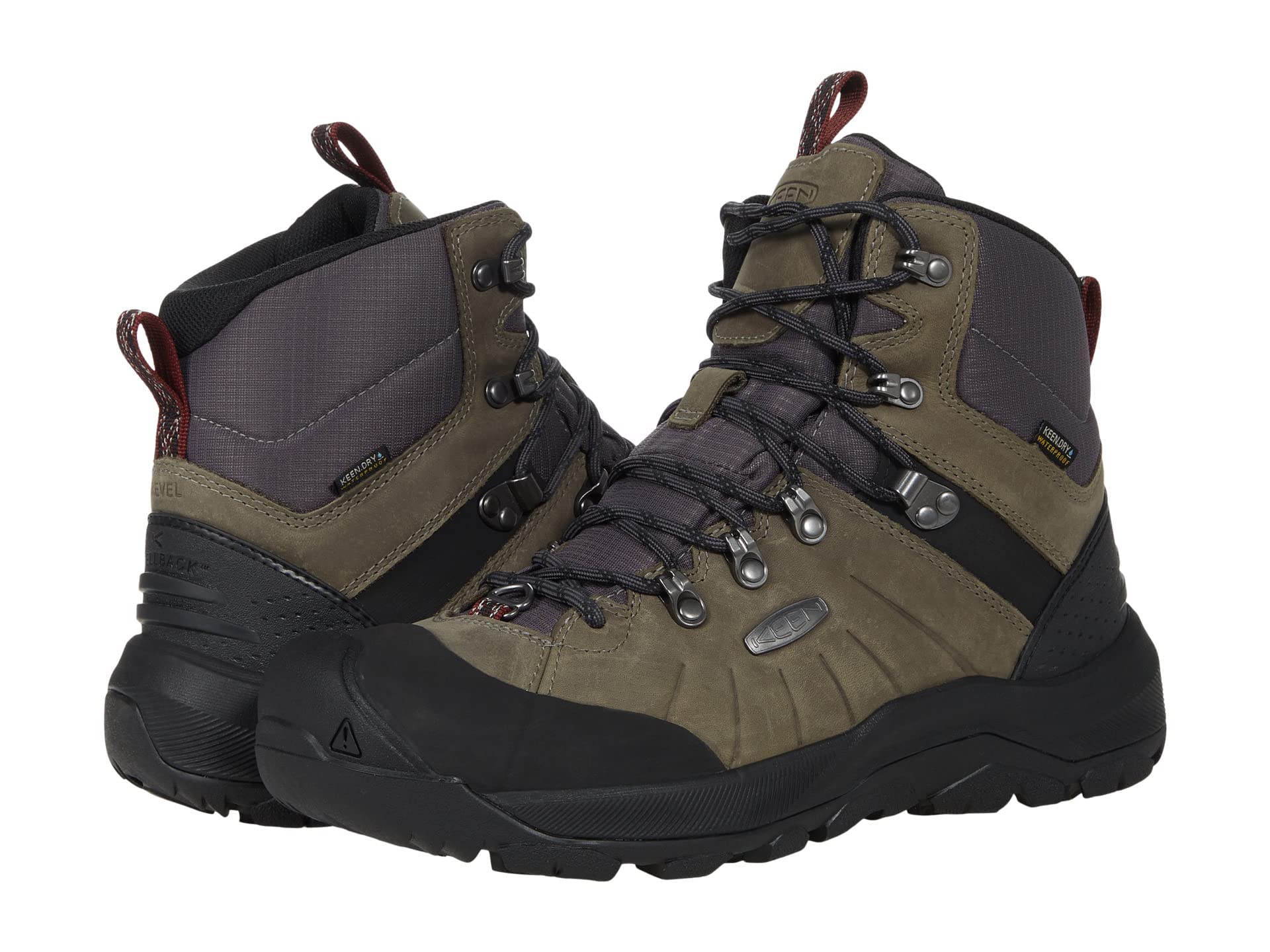
The KEEN Revel 4 immediately sets the benchmark with its Polar insulation—a proprietary blend that traps heat without the bulk of traditional synthetics. Tested on a Colorado fourteener in March with -5°F wind chill, users report feet staying dry and comfortable during mixed snow-and-ice ascents where lesser boots would fail.
Traction is the standout feature here. The outsole uses a winter-specific rubber compound that resists stiffening in extreme cold, and the multi-directional lugs bite into hard-packed snow and glare ice with confidence. Several long-term owners note they frequently leave their microspikes behind because the Revel 4 grips well enough on its own.
The roomy toe box accommodates thick wool socks and allows natural splay during descents—critical for stability on icy slopes. The mid-height cut provides ankle support without restricting mobility, and the waterproof membrane held up through hours of postholing in deep powder. No break-in period was reported by any verified reviewer.
Why it’s great
- Winter rubber compound stays pliable below -20°F
- Generous toe box for layered socking
- Zero break-in time out of the box
- Compatible with strap-on crampons
Good to know
- Premium price tier limits budget appeal
- Not ideal for standing still in subzero temps (200g insulation favors activity)
2. SOREL Women’s Tivoli V Tall Waterproof Boot
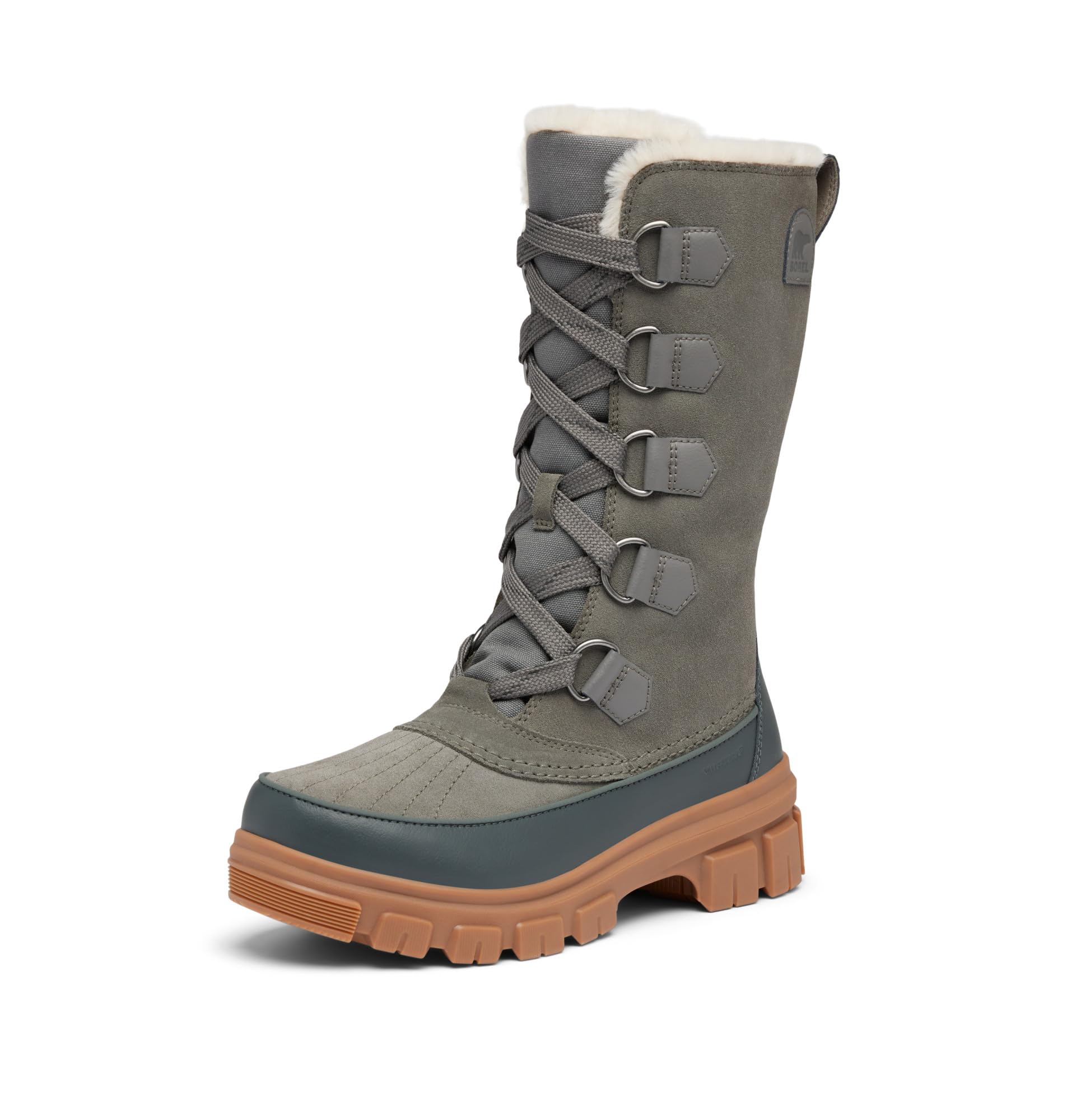
The SOREL Tivoli V Tall proves that winter boots don’t have to look clunky to perform. The removable 9mm felt liner provides substantial warmth down to about 0°F, and users with poor circulation note that heated insoles extend that range comfortably into negative territory. The tall shaft keeps deep snow from sliding in during post-hole walks.
Waterproofing is handled by a sealed seam construction and a rubber shell that wraps upward from the sole—a classic SOREL design that has kept feet dry for decades. The laces are thick and resist freezing in cold temps, a small but meaningful detail that prevents mid-walk frustration.
Underfoot, the molded rubber outsole has a deep tread pattern that handles packed snow and slushy sidewalks well. Some users report that the ankle area can rub when laced too tightly, but loosening the laces or adding moleskin resolves the issue. True-to-size fit with enough room for an orthotic insert.
Why it’s great
- Removable liner dries overnight between wears
- Tall shaft blocks deep snow entry
- Thick laces don’t freeze stiff
- Orthotic-friendly interior space
Good to know
- Ankle area may need break-in for some wearers
- Not designed for high-output hiking or running
3. Kamik Momentum 3 Insulated Snow Boots for Women
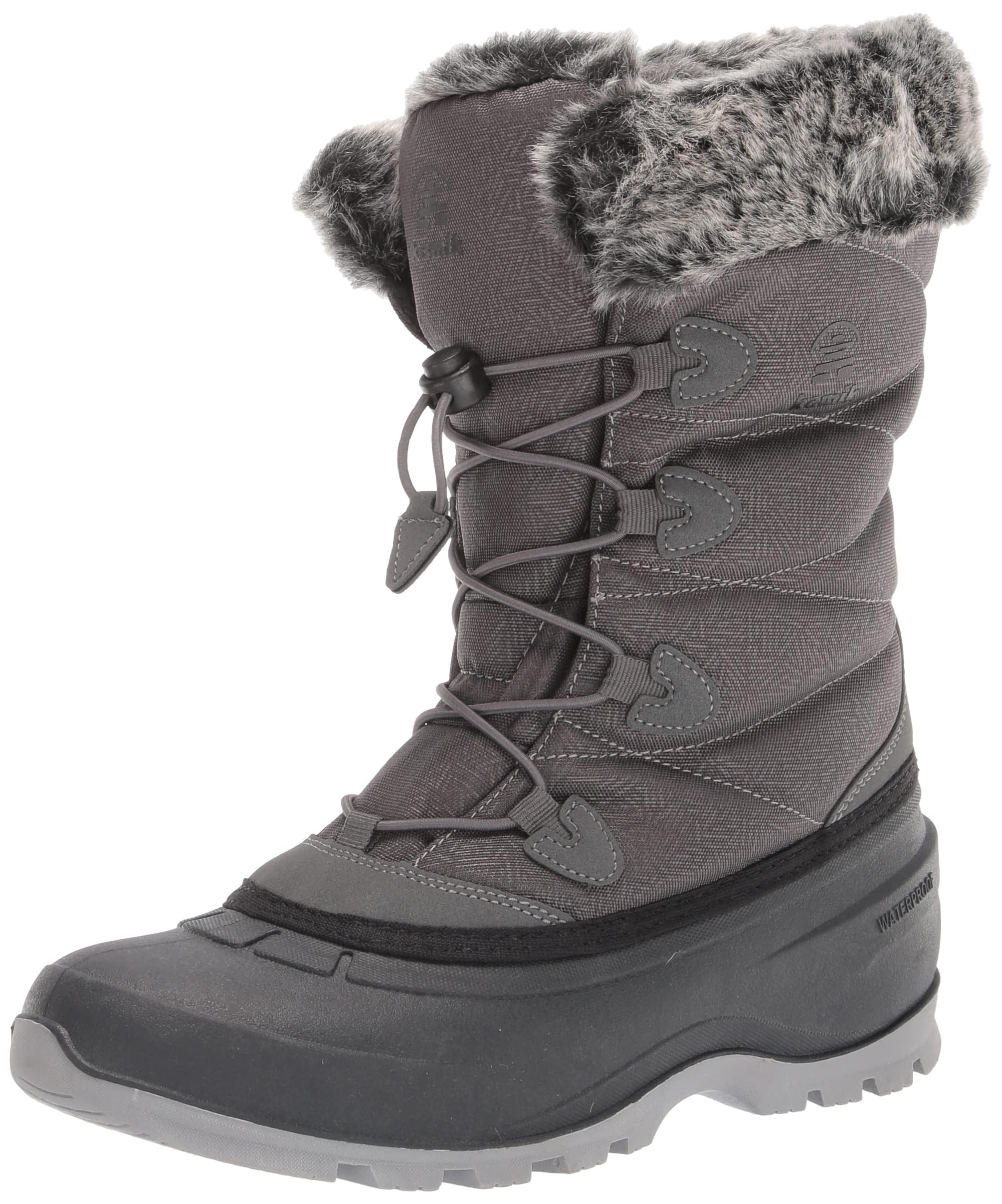
The Kamik Momentum 3 is built for the coldest conditions—its rubber outsole and layered insulation are rated down to -40°F, a spec few competitors in this range can match. The interior is lined with faux fur that extends all the way to the toes, creating a warm pocket that molds to the foot after a few minutes of wear.
Waterproofing is rock-solid thanks to a full rubber shell combined with sealed seams. The elastic lace system and drawstring zip button closure make for quick entry and exit, which users in Alaska and Canada specifically praised for efficiency during snow machine rides and after school drop-offs.
The thick tread delivers reliable traction on icy trails and packed snow, though some heat does transfer from the sole to the ground in extreme cold—a common tradeoff in heavily insulated boots. Reviewers recommend sizing up a full size if you wear half sizes or plan on thick wool socks. Lightweight for its warmth rating.
Why it’s great
- Industry-leading -40°F temperature rating
- Faux fur lining reaches entire toe box
- Quick-entry elastic and drawstring system
- True to size with room for thick socks
Good to know
- Ground-to-sole heat loss felt during prolonged standing
- Ankle area slightly narrow for bulky socks
4. Guide Gear Men’s Side Zip Insulated Leather Duck Boots

The Guide Gear Duck Boot hits the sweet spot between durability and daily practicality. The 400g Thinsulate insulation provides enough warmth for single-digit temperatures without feeling heavy, and the leather upper combined with a rubber lower shell creates the classic duck boot silhouette that shrugs off slush and puddles.
Side zippers make these boots unusually easy to get on and off—a real advantage when you’re running errands and need to swap footwear quickly. The tread pattern is robust enough for icy parking lots and snowy sidewalks, though it doesn’t have the deep lugs needed for off-trail snow travel.
One tradeoff is that the insulation is moderate: some users in very cold climates found the 400g rating insufficient for extended periods below 0°F without heavy socks. The fit runs about a half-size large, so sizing down may be necessary for a snug feel. Despite this, the waterproof construction and zip convenience earn it a strong value reputation.
Why it’s great
- 400g Thinsulate covers most winter conditions
- Side zipper allows quick in-and-out changes
- Leather upper with waterproof rubber shell
- Proven durability spanning years of use
Good to know
- Runs half-size large—size down for best fit
- Not suited for extreme subzero temperatures
5. Columbia Womens Moritza Shield Omni-Heat Insulated Snow Boot

The Columbia Moritza Shield stands out for its combination of low weight and active warmth. The Omni-Heat reflective lining bounces body heat back toward the foot, allowing it to insulate effectively with less material—meaning this boot feels noticeably lighter on your feet than most insulated snow boots in its class.
Traction is handled by Columbia’s Omni-Grip outsole, which uses a winter-specific rubber compound with multi-directional lugs. Verified reviewers report excellent grip on icy barn floors and snow-packed rural roads, with no slipping after hours of use. The ankle area provides good stability without restricting natural flex.
Users consistently recommend ordering a half-size up because the boot runs slightly small. The non-bulky design and lack of fleece or fur make it ideal for barn work, dog walking, or any situation where you need dexterity inside the boot. The seal of the boot can feel a bit snug around the upper ankle for some wearers.
Why it’s great
- Reflective Omni-Heat lining reduces bulk while trapping heat
- Lightweight enough for active chores and daily errands
- Excellent grip on wet ice and packed snow
- Breathable enough to prevent sweat buildup
Good to know
- Runs small—order half-size up
- Upper ankle area can feel restrictive for some
6. XPETI Men’s Crest Thermo High-Top Winter Hiking Boots
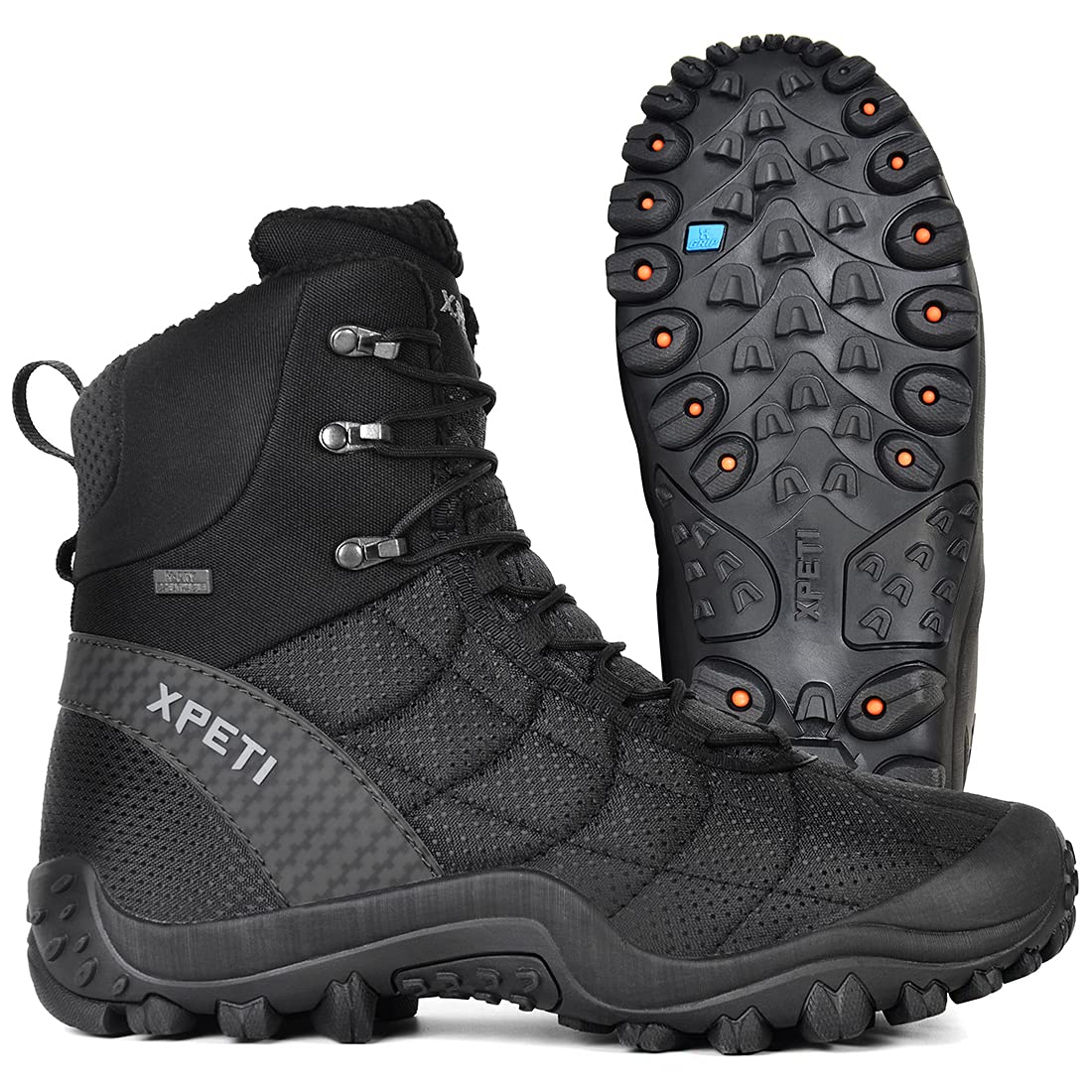
The XPETI Crest Thermo offers a surprisingly low weight and flexible sole construction that makes walking feel natural, not clunky. The all-rubber outer shell is easy to clean and resists water well, but some users note that snow melt on the footbed can eventually seep through the lace area if you’re standing in deep snow for extended periods.
Traction is genuinely good on icy grass and muddy terrain—a common real-world test for anyone working outdoors. The ankle support is excellent for a boot in this price tier, and the fit accommodates orthotic insoles and thick socks when ordered two sizes up from your regular shoe size.
The warmth rating is moderate rather than extreme. At 6°F with wool socks, feet stayed toasty, but the boot loses effectiveness below zero. For light snow days, commuting, or short outdoor sessions, the XPETI provides a comfortable, flexible experience that costs significantly less than premium alternatives.
Why it’s great
- Very lightweight for a rubber winter boot
- Easy to clean, no fabric to absorb grime
- Good ankle support in a budget-tier package
- Works well with orthotics and thick socks
Good to know
- Must size up significantly for cold-weather socks
- Waterproofing limited at lace entry point
7. Trudave Rubber Boots for Men & Women with Steel Shank
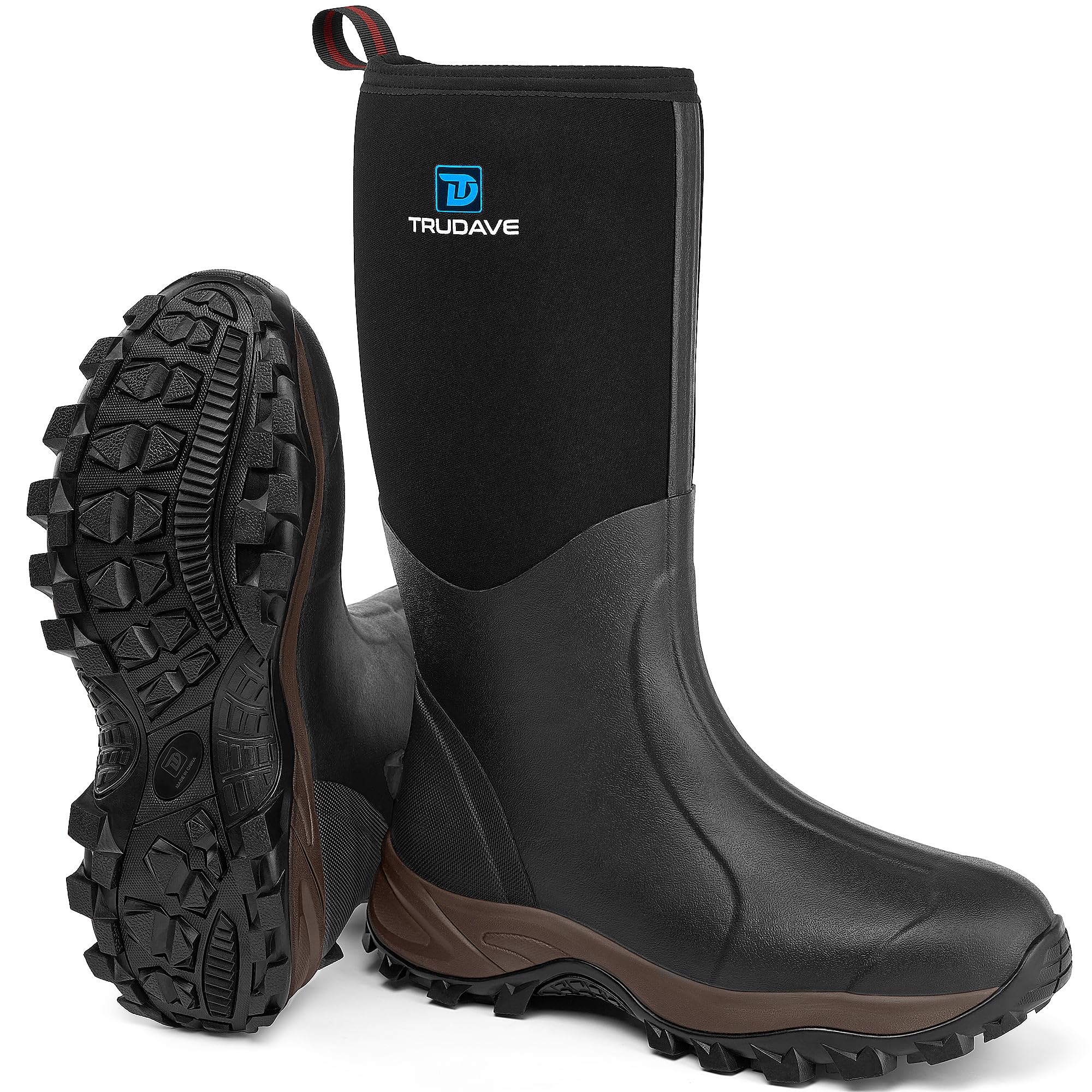
The Trudave rubber boot uses 6mm neoprene insulation inside a full rubber shell, creating a design that works equally well for muddy hunting treks, shoveling wet snow, and standing in shallow slush. The steel shank provides underfoot stability for walking on uneven terrain and climbing over obstacles.
Users praise the boot’s lightweight feel compared to thicker competitors like traditional Muck boots, and the reduced insulation means less sweat buildup during active use. The deep tread pattern has excellent grip in mud, deep snow, and on rock crusher surfaces. Several reviewers wore these for 12-hour work days without foot pain.
The tradeoff is that insulation feels thinner than expected for extreme cold—wool socks are necessary for any prolonged exposure below 10°F. The top edge of the boot can rub against the calf when folded down. For the price, the Trudave delivers solid waterproof performance and durable construction for multi-season wet-weather use.
Why it’s great
- Steel shank provides stable support on rough terrain
- Lighter and less sweaty than premium rubber boots
- Deep, aggressive tread for mud and slush
- Comfortable for full-day work shifts
Good to know
- Insulation requires wool socks for temps below 10°F
- Top edge can chafe calves when folded down
FAQ
Do I need Crampon-compatible boots for icy sidewalks?
How do I prevent my boots from leaking at the tongue or lace area?
Final Thoughts: The Verdict
For most users, the best boots for snow and ice winner is the KEEN Revel 4 Mid Height Polar because its winter-specific traction compound, 200g Polar insulation, and zero-break-in comfort cover the widest range of cold-weather scenarios without compromise. If you prioritize all-day warmth in extreme cold with a removable liner, grab the SOREL Women’s Tivoli V Tall. And for budget-conscious buyers who need reliable waterproofing for active use, the Trudave Rubber Boots deliver dependable performance at an entry-level price.

Mo Maruf
I created WellFizz to bridge the gap between vague wellness advice and actionable solutions. My mission is simple: to decode the research and give you practical tools you can actually use.
Beyond the data, I am a passionate traveler. I believe that stepping away from the screen to explore new environments is essential for mental clarity and physical vitality.