Our readers keep the lights on and my smoothie glass nicely filled. As an Amazon Associate, I earn from qualifying purchases.
Basement walls and floors constantly fight moisture from surrounding soil, hydrostatic pressure, and vapor drive — leaving you with musty odors, flaking paint, or worse, standing water. The right product doesn’t just coat the surface; it chemically bonds with the concrete to block water molecules while allowing vapor to escape.
I’m Mohammad Maruf — the founder and writer behind WellFizz. Every sealer I analyze gets rated on active chemistry (silane/siloxane ratios, lithium-silicate density), perm ratings, and real-world resistance to chloride intrusion and freeze-thaw cycling.
Choosing the wrong formulation leads to peeling films, recurring damp spots, or wasted labor. After hours of sorting through technical specs and field reports, this guide narrows down exactly what works to help you find the best basement concrete sealer for your specific wall or floor condition.
How To Choose The Best Basement Concrete Sealer
Basement concrete is unique because it’s constantly exposed to moisture on one side (the soil) and air on the other (your living space). This dual environment makes the wrong sealer trap water inside the slab, causing delamination or efflorescence. Here is what matters most.
Penetrating vs. Film-Forming Chemistry
Penetrating sealers (silane, siloxane, lithium-silicate) chemically react with the concrete’s free lime to become part of the substrate. They do not peel because they have no surface film. Film-forming sealers (acrylics, epoxy, polyurethane) sit on top and are ideal for floors but fail on vertical walls under hydrostatic pressure — water pressure will blow the coating off.
Active Solids / Concentration Ratio
Standard ready-to-use sealers contain 5–10 percent active silane/siloxane solids. Ultra-concentrate formulas (like Lithi-Tek 9500 or Siloxa-Tek 8500) require dilution at a 4:1 water-to-concentrate ratio, delivering much higher active solids per square foot for deeper penetration and longer service life. Higher concentration generally means better resistance to chloride intrusion and efflorescence.
Vapor Permeability Rating
ASTM E96 measures how many perms (grains of water vapor per hour per square foot per inch of mercury) a cured membrane allows. A low perm rating (below 1.0) blocks vapor, making the sealer suitable for shower floors but risky on below-grade basement slabs that need to breathe. Sealers with no surface film naturally achieve a high perm rating (>5 perms) and prevent trapped moisture from damaging the concrete.
Application Method & Drying Time
Most penetrating sealers are applied with a pump-up garden sprayer. The critical technique for silane/siloxane products is “wet-on-wet” application — the second coat must go on while the first is still visibly wet. This ensures uniform chemical penetration and avoids blotchy, unsealed spots that become weak points. Drying time before foot traffic can range from 1 to 24 hours depending on humidity and porosity.
Quick Comparison
On smaller screens, swipe sideways to see the full table.
| Model | Category | Best For | Key Spec | Amazon |
|---|---|---|---|---|
| Lithi-Tek 9500 Ultra Concentrate | Penetrating Densifier | Structural floors & walls needing densification | 1:4 concentrate / treats 1000 sq ft | Amazon |
| Siloxa-Tek 8500 Ultra Concentrate | Penetrating Water & Salt Repellent | DOT-grade protection & deicing salt exposure | 6x higher actives than standard | Amazon |
| Rust-Oleum EpoxyShield Basement Floor Kit | Epoxy Film Coating | Finished basement floors, foot traffic | 2-part epoxy / 250 sq ft per kit | Amazon |
| USG DUROCK Liquid Waterproofing | Acrylic Membrane | Tile underlayment & shower walls | 0.38 perms at 20 mils dry | Amazon |
| AMES Blue Max White Liquid Rubber | Elastomeric Liquid Rubber | Below-grade foundations & flood-prone walls | 900% elongation / non-toxic | Amazon |
| MasonryDefender Silane Siloxane Sealer | Penetrating Water Repellent | General basement walls & garage slabs | 128 oz RTU / 90–150 sq ft | Amazon |
| MasonryDefender All Purpose Sealer | Penetrating Sealer (Multi-Surface) | Brick, stone & concrete combo walls | 128 oz RTU / waterproof rating | Amazon |
In‑Depth Reviews
1. Lithi-Tek 9500 Ultra Concentrate
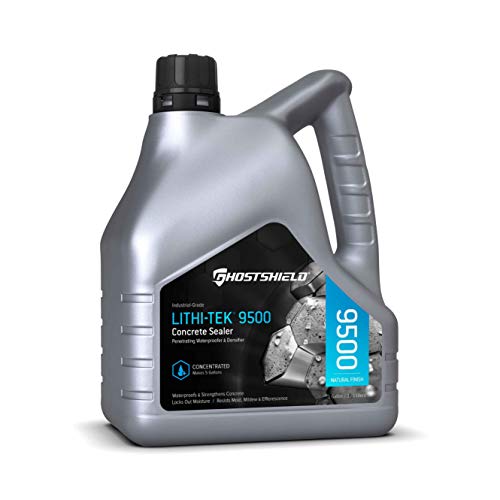
Lithi-Tek 9500 is a lithium-silicate densifier and penetrating waterproofer in one — it reacts with the free lime in concrete to form a hard, crystalline structure that resists moisture vapor and abrasion. The industrial-grade concentrate dilutes 4:1 with water, yielding five gallons of sealer that treats up to 1,000 square feet per coat. This makes it one of the most cost-efficient options for large basement floors or poured walls.
Users report excellent water beading and a natural, clear finish that does not darken or gloss the surface. The densification effect reduces surface dust and strengthens weak or crumbly concrete by up to 50 percent, which is invaluable for older slabs with surface spalling. Application requires a wet-on-wet technique — the second coat goes on while the first is still damp — to avoid streaky penetration.
On the downside, the concentrate must be mixed precisely, and the sealer cures quickly in low-humidity conditions, leaving little margin for error. It is not recommended for surfaces exposed to deicing salts, so outdoor basement stairwells may need a different topcoat. For interior wall and floor waterproofing with added structural reinforcement, this is the clear winner.
Why it’s great
- Ultra-concentrate formula delivers exceptional coverage per gallon
- Strengthens concrete while repelling liquid water and vapor
- Zero surface film — no peeling or delamination risk
Good to know
- Requires precise mixing and fast wet-on-wet application
- Not formulated for deicing salt exposure areas
2. Siloxa-Tek 8500 Ultra Concentrate

Siloxa-Tek 8500 is the Department of Transportation-approved silane/siloxane sealer designed for vertical and horizontal concrete exposed to chlorides and deicing salts. The ultra-concentrate formula contains six times the active ingredients of standard water-based sealers, and its nanoparticle-sized molecules penetrate deeper into the concrete matrix for unrivaled salt and water repellency. Applications include basement walls, garage floors, walkways, and pool decks.
Real-world users report water beading like glass on treated concrete, with the invisible finish preserving the original surface appearance. The low-VOC, water-based formula is UV stable and will not break down under direct sunlight, making it equally effective for indoor basement walls and exterior foundation walls. Coverage is up to 250 square feet per diluted gallon per coat, and certified applicators report vertical service life up to ten years.
The primary trade-off is the higher upfront investment per gallon concentrate, though the total cost per square foot remains competitive given the long reapplication interval. The fast absorption into porous concrete means you must work in small sections and keep a wet edge to avoid patchy penetration. If your basement faces road salt runoff or chloride exposure, this is the most future-proof option.
Why it’s great
- DOT-approved for chloride and deicing salt resistance
- Six times higher actives than standard water-based sealers
- UV stable with up to 10-year vertical service life
Good to know
- Premium cost requires careful budgeting for large areas
- Very fast absorption demands disciplined wet-edge technique
3. Rust-Oleum EpoxyShield Basement Floor Kit

Rust-Oleum EpoxyShield is a two-part, water-based epoxy that forms a thick, durable film on interior basement floors. Unlike penetrating sealers, this coating sits on top of the concrete and creates a glossy-satin surface that resists stains, tire marks, and abrasion. The kit covers up to 250 square feet with a single coat and includes decorative color chips for a finished, professional look. It accepts foot traffic in 24 hours.
Users highlight the one-coat coverage and ease of cleaning — spills wipe up without staining. The low-odor formula is more tolerable indoors than solvent-based epoxies. Proper preparation is critical: the floor must be cleaned, etched, and completely dry before application. Many reviewers report that multiple kits are needed to avoid color variation across large slabs, and the epoxy can dry quickly, leaving visible roller marks if not applied with a wet edge.
The film-forming nature makes this unsuitable for walls with hydrostatic pressure — water trapped behind the epoxy will cause it to bubble and peel. It is also slippery when wet, so a non-slip additive is recommended for basement stairs or workshop areas. For a finished basement floor that sees light vehicles and foot traffic, this epoxy delivers a clean, durable surface that transforms the space.
Why it’s great
- Durable satin finish resists stains, wear, and tire marks
- Low odor and walk-on ready in 8 hours
- Includes decorative chips for a finished look
Good to know
- Film-forming — not suitable for walls with moisture pressure
- Slippery when wet; add non-slip aggregate for safety
4. USG DUROCK Liquid Waterproofing Membrane
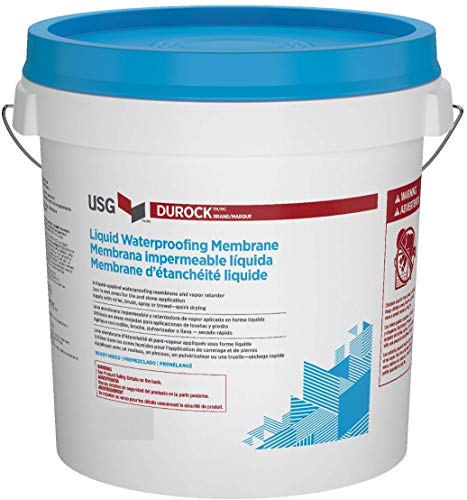
USG DUROCK is a liquid-applied acrylic membrane engineered specifically for tile and stone underlayment applications. Unlike penetrating sealers, this product forms a continuous rubber-like film that blocks both liquid water and vapor. The low perm rating of 0.38 perms at 20 mils dry thickness makes it ideal for shower floors, tub surrounds, and countertops where zero moisture movement is desired. It can be rolled, brushed, troweled, or sprayed.
Users appreciate the bright blue color that provides visual confirmation of coverage, along with the fast drying time and low odor. The membrane provides anti-fracture protection over cracks up to 1/8 inch, which is useful for preventing tile cracks from propagating through the substrate. Cleanup with soap and water is straightforward before the material cures fully.
DUROCK is not a general-purpose basement wall sealer — its low perm rating and film-forming nature make it inappropriate for below-grade slabs that need to breathe. The thickness of the liquid makes spreading a uniform coat challenging, and achieving the advertised coverage requires careful technique. For tile-backed waterproofing and specific slab crack isolation, this membrane is a specialist that excels.
Why it’s great
- Very low perm rating (0.38) for complete vapor block
- Anti-fracture protection over non-structural cracks
- Easy visual confirmation with bright blue color
Good to know
- Not suitable for breathing basement floors or walls
- Thick consistency can be difficult to spread evenly
5. AMES Blue Max White Liquid Rubber Waterproofer

AMES Blue Max is a high-strength elastomeric liquid rubber formulated for below-grade foundation walls, insulated concrete forms, and poured basements. The key technical differentiator is 900 percent elongation — the cured membrane stretches nearly ten times its original length before tearing, which is critical for concrete that develops hairline shrinkage cracks over time. It can be applied to vertical or horizontal surfaces by brush, roller, or spray.
Users report excellent adhesion to concrete, wood, and metal substrates, with the white color providing good visibility during application. The formula is non-toxic, eco-friendly, and VOC compliant in all states, making it safe for interior basement use. The liquid rubber cures to a flexible, continuous membrane that resists cracking and peeling even under hydrostatic pressure.
The main considerations are cure time — the manufacturer recommends 24 hours between coats, and full water exposure requires at least a week of warm, dry weather. The product has a slightly slimy texture during application, and it requires a top coat if exposed to direct sunlight for extended periods. For basement walls with existing movement cracks or concrete block foundations prone to shifting, this liquid rubber offers the most forgiving elasticity.
Why it’s great
- 900% elongation bridges movement cracks effectively
- Non-toxic and low-VOC for safe interior use
- Strong adhesion to concrete, wood, and metal
Good to know
- Requires 24-hour dry time between coats
- Needs top coat if exposed to direct sunlight
6. MasonryDefender Silane Siloxane Sealer (1 Gallon)
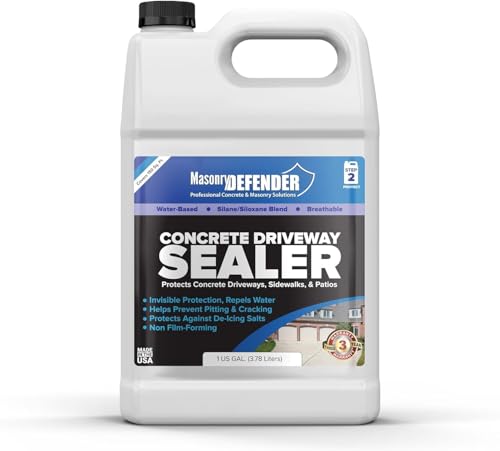
The MasonryDefender Silane Siloxane Sealer is a ready-to-use penetrating formula designed for clear, invisible waterproofing on basement walls, garage slabs, and driveways. Unlike film-forming coatings, it bonds chemically with the concrete to repel water while allowing vapor to escape — preventing the peeling and blistering that plagues painted surfaces. Coverage is 90 to 150 square feet per gallon, and it can be applied with a low-pressure garden sprayer.
Customer feedback over several years confirms the sealer remains effective, with treated areas staying visibly cleaner and showing better water beading than untreated concrete. The non-glossy finish does not alter the surface appearance, which is important for basement walls where a painted look is not desired. Users report the product has no odor and cleans up easily with water.
The trade-off is the limited coverage per gallon compared to concentrates, meaning larger basements will require multiple containers. Some users note that overapplication can leave temporary wet-looking stains until the product fully cures. For a budget-friendly entry into penetrating sealers that performs solidly on typical basement walls, this MasonryDefender option is a reliable, no-fuss starting point.
Why it’s great
- Invisible, breathable finish with no peeling risk
- No odor and easy cleanup with water
- Proven long-term water repellency in user reports
Good to know
- Limited coverage — more gallons needed for large basements
- Overapplication can cause temporary wet-looking stains
7. MasonryDefender All Purpose Brick Stone & Concrete Sealer

The MasonryDefender All Purpose formula shares the same silane/siloxane penetrating chemistry but is explicitly formulated for a wider range of substrates including brick, limestone, sandstone, and granite. This makes it the best choice for basement walls that combine poured concrete with brick or stone sections — common in older homes with fieldstone foundations or brick partition walls. The waterproof barrier does not alter the natural appearance of any of these materials.
Users report successful results on terra cotta pots, garden statues, and stone porch posts, which indicates the sealer’s versatility extends well beyond pure concrete. The easy spray-on application works with standard garden sprayers, and the fast absorption means second coats can be applied within an hour. Multiple reviewers confirm water beading on treated brick and stone after rainfall, with no change in surface color or texture.
The primary consideration is that the all-purpose formula has a slightly shorter track record in user reports compared to the dedicated concrete version, and some users note uncertainty about the exact chemical composition. Coverage remains 90 to 150 square feet per gallon, so large stone foundation walls may require multiple units. For mixed-masonry basements where a single product must handle concrete, brick, and stone, this all-purpose sealer eliminates the need for multiple specialty products.
Why it’s great
- Works on concrete, brick, stone, limestone, and granite
- Invisible finish preserves natural material appearance
- Fast absorption allows same-day second coat application
Good to know
- Limited long-term durability data for mixed substrates
- Same coverage limits as standard ready-to-use formulas
FAQ
Can I use a penetrating sealer on a basement floor that already has paint?
How long does a penetrating silane/siloxane sealer last on basement walls?
Will a penetrating sealer stop active water leaks through cracks?
Is it safe to apply sealer in a finished basement with low ventilation?
Final Thoughts: The Verdict
For most users, the best basement concrete sealer winner is the Lithi-Tek 9500 Ultra Concentrate because it densifies and waterproofs simultaneously at a cost per square foot that beats ready-to-use alternatives. If you need certified salt and chloride resistance for a basement entry or garage slab exposed to road chemicals, grab the Siloxa-Tek 8500 Ultra Concentrate. And for a finished basement floor that needs a durable, stain-resistant surface, nothing beats the Rust-Oleum EpoxyShield Basement Floor Kit.

Mo Maruf
I created WellFizz to bridge the gap between vague wellness advice and actionable solutions. My mission is simple: to decode the research and give you practical tools you can actually use.
Beyond the data, I am a passionate traveler. I believe that stepping away from the screen to explore new environments is essential for mental clarity and physical vitality.