Our readers keep the lights on and my smoothie glass nicely filled. As an Amazon Associate, I earn from qualifying purchases.
The lateral lunge, the sudden pivot, the sharp pain — tennis demands explosive lateral movement that puts immense stress on the ankle’s ligaments, making a supportive brace a critical piece of gear for both injury prevention and recovery. A high-quality ankle brace designed for tennis stabilizes the joint without compromising the footwork required for a quick split-step or a deep court slide.
I’m Mohammad Maruf — the founder and writer behind WellFizz. I’ve spent years analyzing the biomechanics of sports supports, dissecting everything from closure systems to proprietary knit technologies to determine what actually prevents ankle rolling during multidirectional movement.
After testing dozens of models against the specific demands of court sports, these are the top contenders that deliver real lateral stability and comfort. This guide breaks down the key differences to help you find the best ankle brace for tennis that matches your specific level of play and injury history.
How To Choose The Best Ankle Brace For Tennis
The primary enemy of a tennis player’s ankle is the inversion sprain, caused when the foot rolls inward during a sharp cut or recovery step. A brace for tennis must specifically counter this motion while allowing the natural dorsiflexion needed for a low-to-the-ground forehand. Here is what to look for.
The Figure-8 Stabilization System
This is the single most important feature for tennis. A figure-8 strap system wraps around the heel and across the top of the foot, mimicking the function of athletic tape. It actively resists the roll that causes sprains and provides the highest level of functional stability. If you have a history of ankle injuries, figure-8 straps are non-negotiable.
Closure Mechanism: Speed vs. Full Lace
Full lace-up braces offer granular, distributed compression from the foot up the shin, but they take time to adjust and cinch properly. Speed-lace systems use a single pull-tab to tighten multiple laces simultaneously, offering a faster, more consistent fit during a match. For players who change quickly between serves, speed-lace is a clear advantage.
Heel Lock and Low-Profile Fit
A brace that slips or bunches inside a tennis shoe is a distraction and can cause blisters. A well-designed heel lock ensures the brace stays planted during aggressive cuts. Equally important is a low-profile, slim fit that doesn’t widen the foot, allowing the brace to slide easily into a standard court shoe without altering the fit.
Quick Comparison
On smaller screens, swipe sideways to see the full table.
| Model | Category | Best For | Key Spec | Amazon |
|---|---|---|---|---|
| Med Spec ASO Ankle Stabilizer | Lace-Up / Figure-8 | Maximum Stabilization | Figure-8 nylon straps | Amazon |
| DonJoy Stabilizing Speed Pro | Speed-Lace / Stays | Quick On/Off & Pro Stability | Removable articulated stays | Amazon |
| Shock Doctor Ankle Stabilizer | Speed-Lace | Low Profile & Adjustable | Speed-lace closure | Amazon |
| ZOELION Ankle Brace | Hook & Loop / Strap | Value & Triple-Lock Support | Auto-adaptive side pads | Amazon |
| Bauerfeind MalleoTrain | Pull-On / Compression | Premium Everyday Comfort | Viscoelastic massage pads | Amazon |
In‑Depth Reviews
1. Med Spec ASO Ankle Stabilizer
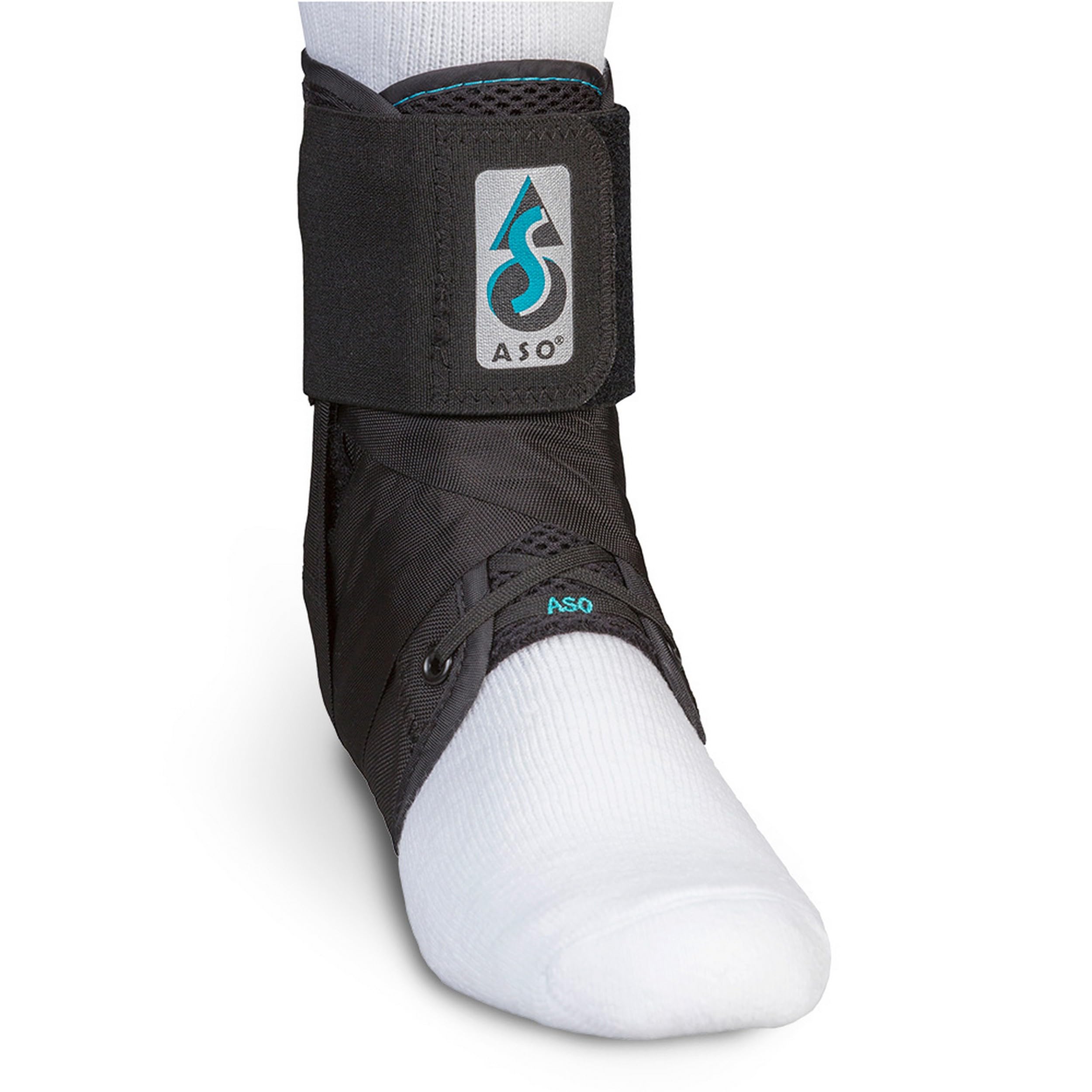
The Med Spec ASO is the gold standard for a reason: its dual elastic figure-8 straps provide the most direct, customizable lateral stabilization of any brace in this category. Athletic trainers and physical therapists consistently recommend it because the independent lace-up boot and crossover straps allow you to adjust compression along both the shin and the heel independently. This is the benchmark for active ankle injury prevention on the court.
At 169 grams, the ASO is remarkably lightweight considering the level of protection it delivers. The CoolFlex padding and durable nylon tongue resist stretch even after a sweaty two-hour match, and the bilateral design fits either foot without needing a separate model. Real-world reviews from tennis players highlight how the brace completely eliminated the feeling of instability during lateral cuts.
One caveat: the full lace-up system takes about 30-45 seconds to put on properly, which is slower than speed-lace options. Some users find the laces too long, but the center-point eyelet ensures even tightening across the foot. If your priority is absolute stabilization over a fast application, this is the brace to beat.
Why it’s great
- Unmatched figure-8 lateral roll prevention
- PT-recommended for chronic instability
- Breathable CoolFlex padding resists odor
Good to know
- Slower to apply than speed-lace models
- Laces can be long for smaller shoes
2. DonJoy Stabilizing Speed Pro Ankle Support Brace

The DonJoy Speed Pro distinguishes itself with a unique speed-lace system that compresses the entire lace column with a single Velcro pull tab, dropping application time to under 10 seconds. For a tennis player who needs to swap braces between practice and a match, this is a massive convenience. The brace is constructed from 800D ballistic nylon, making it the most abrasion-resistant option for players who slide or drag their feet.
It includes removable articulated medial and lateral stays — rigid inserts that enhance proprioception and actively resist inversion rolling. The full circumferential elastic strap wraps the top of the brace, adding compression around the tibia and fibula for a locked-in feel. Multiple user reviews from tennis players recovering from sprains note that this brace reduced perceived pain from a 9 to a 2-3 during court activity.
However, the D-ring anchors for the figure-8 straps can create pressure points on the bony prominences of the ankle for some users. The heel material has also been reported to bunch after extended use, especially during high-volume lateral movement. It also runs slightly bulkier than the ASO, requiring a well-fitting court shoe.
Why it’s great
- 10-second speed-lace system for match-day convenience
- Removable articulated stays for adjustable rigidity
- Ultra-durable 800D ballistic nylon construction
Good to know
- D-rings can dig into the ankle
- Heel material may bunch over time
3. Shock Doctor Ankle Stabilizer with Flexible Support Stays

The Shock Doctor stabilizer is designed for players who want a low-profile brace that fits easily into a standard court shoe without bunching or adding significant volume. Its speed-lace closure provides quick, even tension, and the flexible support stays offer a moderate level of roll prevention without the rigidity of full articulated stays. For tennis players with mild instability or those returning from a minor sprain, this is a solid middle-ground option.
Reviewers consistently note the excellent breathability and the zero arch compression design, which is critical for players who need to maintain natural foot feel during explosive starts. The adjustable lacing allows for a highly customized fit, and the brace works well with both high and low-top shoes. The universal fit works for both feet, simplifying ordering.
Where the Shock Doctor falls short is in providing serious stabilization. Multiple reviews from competitive athletes state the brace offers minimal support for moderate to severe instability. The bottom Velcro strap can also catch on socks and pant legs, and the sizing runs small, so careful measurement is required. This is a good brace for prevention, not for rehabbing a Grade 2 sprain.
Why it’s great
- Extremely low-profile, fits in most shoes
- Zero arch compression for natural foot feel
- Highly adjustable speed-lace closure
Good to know
- Not supportive enough for serious sprains
- Sizing runs small, requires precise measurement
4. ZOELION Ankle Brace with Auto-adaptive Side Pads
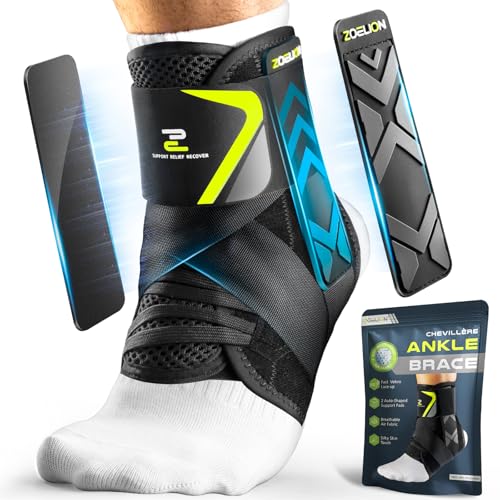
The ZOELION brace brings an interesting auto-adaptive pad system to the table, with medial and lateral pads that self-conform to the ankle bone to provide targeted roll prevention without hard pressure points. Its triple-lock system uses an inner ankle wrap, a figure-8 stabilizing strap, and a wide top closure, offering comprehensive support that rivals more expensive braces. For tennis players on a budget, this is a compelling option that doesn’t skimp on features.
The hook-and-loop quick lace system eliminates the need to thread traditional laces, making it easier to slip on and off between sets. With over 600 micro-vents, it is one of the most breathable options tested, keeping the foot cooler during long rallies. The low-elastic fabric contours naturally from heel to sole, providing arch and Achilles support without restricting dorsiflexion.
While the auto-adaptive pads are comfortable, they may not provide the same level of rigid lateral blocking as the articulated stays on the DonJoy or the figure-8 straps on the Med Spec ASO. Some users reported that the support feels adequate for daily walking but less confidence-inspiring during intense lateral movements. The included sizing guide requires careful ankle circumference measurement.
Why it’s great
- Auto-adaptive pads conform to ankle anatomy
- Triple-lock system provides comprehensive coverage
- Highly breathable with 600+ micro-vents
Good to know
- Pads may feel less rigid for aggressive lateral cuts
- Requires careful ankle measurement for sizing
5. Bauerfeind MalleoTrain Ankle Support Brace

The Bauerfeind MalleoTrain is in a completely different class from the other braces on this list. It is a medical-grade compression support that uses a proprietary knitting machine to create a three-dimensional, breathable fabric that conforms perfectly to the ankle. The integrated viscoelastic massage pads on the medial and lateral malleoli provide targeted, self-adjusting pressure that reduces swelling and improves proprioception during movement.
For tennis players dealing with tendinopathy, chronic instability from old sprains, or post-injury swelling, the MalleoTrain offers a level of anatomical comfort that lace-up braces simply cannot match. It is pull-on, with no straps or laces to adjust, providing even, gradient compression that improves circulation. The low-profile knit fits easily into any court shoe without adding bulk, and it is machine-washable, which is a major advantage for sweaty players.
The key trade-off is that the MalleoTrain does not offer the same brute-force lateral stabilization as the Med Spec or DonJoy braces. It is designed for mild to moderate instability and pain relief, not for preventing a full Grade 2 or 3 sprain. The price is also a significant jump into the premium tier. For players seeking a comfortable, high-quality support for everyday play and recovery, it is unmatched, but for pure roll prevention, a lace-up brace is better.
Why it’s great
- Exceptional medical-grade compression knit fits like a second skin
- Viscoelastic pads reduce swelling and improve joint awareness
- Machine-washable and ultra-low profile
Good to know
- Not designed for maximum lateral roll prevention
- Premium pricing is significantly higher
FAQ
Can I wear an ankle brace under my tennis shoes?
How tight should a tennis ankle brace be?
Which brace is best for a Grade 2 ankle sprain in tennis?
Final Thoughts: The Verdict
For most tennis players, the best ankle brace for tennis winner is the Med Spec ASO Ankle Stabilizer because its figure-8 stabilization system provides the highest level of proven lateral roll prevention that is trusted by athletic trainers and physical therapists. If you prioritize a fast, tool-free application and want removable stays for adjustable rigidity, grab the DonJoy Stabilizing Speed Pro. And for everyday comfort, swelling reduction, and premium build quality without the bulk of traditional braces, nothing beats the Bauerfeind MalleoTrain.

Mo Maruf
I created WellFizz to bridge the gap between vague wellness advice and actionable solutions. My mission is simple: to decode the research and give you practical tools you can actually use.
Beyond the data, I am a passionate traveler. I believe that stepping away from the screen to explore new environments is essential for mental clarity and physical vitality.