Our readers keep the lights on and my smoothie glass nicely filled. As an Amazon Associate, I earn from qualifying purchases.
The tween years are a tricky transition for game night: they have outgrown Candy Land but aren’t ready for five-hour war games. The sweet spot sits in games that reward quick thinking, social bluffing, and spatial reasoning without feeling like homework or requiring deep rulebooks. A game that takes twenty minutes to learn but offers years of replay value is the real prize for this age group.
I’m Mohammad Maruf — the founder and writer behind WellFizz. I have spent over a decade analyzing the mechanics, component quality, and age-appropriateness of hundreds of family and strategy games to find what actually holds a tween’s attention.
After sifting through thousands of verified customer reviews and playing through each title’s core loop, I have landed on the strongest contenders that balance strategic depth with pure fun. This guide covers the best board games for tweens that deliver lasting entertainment without the screen.
How To Choose The Best Board Games For Tweens
Tweens sit at a unique intersection: they possess the cognitive ability for abstract strategy but still crave social silliness and approachable rules. The wrong pick — too childish or too complex — ends up collecting dust on the shelf. These four filters will help you land on a game that actually gets played.
Age Rating and Rule Complexity
Ignore the manufacturer’s age range and instead look at the weight of the rulebook. A game rated for ages 8+ with a two-page rule sheet is usually perfect for a ten-year-old. Games rated for ages 12+ often require reading and reasoning skills that still feel like a chore. The best tween games teach their core loop in under five minutes.
Player Count and Social Dynamics
A game that only plays two or three people will sit unused at a sleepover with six kids. Look for flexible player counts — ideally 2-6 or 2-8 — so the game scales up when friends come over. Competitive but not mean is the goal: games that encourage table talk and shared laughter rather than silent calculation score higher for this age.
Playtime per Session
Tweens have short windows of sustained attention, especially in social settings. Games that finish in 20-30 minutes are ideal. A 60-minute game works for family nights but can drag with a group of easily distracted friends. Quick setup and teardown matter just as much as playtime.
Component Quality and Theme
Thin cardboard cards and flimsy tokens get destroyed in a tween’s hands. Prioritize games with thick cardboard pieces, durable cards, and weighted chips. The theme should feel cool, not childish: sheep, trains, and abstract Tetris pieces hit the mark. Avoid themes that feel too babyish or too violent.
Quick Comparison
On smaller screens, swipe sideways to see the full table.
| Model | Category | Best For | Key Spec | Amazon |
|---|---|---|---|---|
| Ticket to Ride (2025 Refresh) | Strategy | Long-term planning & geography | 30-60 min playtime; 2-5 players | Amazon |
| Battle Sheep | Abstract Strategy | Quick spatial reasoning | 20 min playtime; modular hex board | Amazon |
| Exploding Kittens: The Board Game | Party | Loud group laughter | Flipping board mechanic; 2-6 players | Amazon |
| Spin Master Tetris Board Game | Puzzle | Hands-on spatial strategy | 128 physical Tetriminos; 2-4 players | Amazon |
| Hasbro Girl Talk Truth or Dare | Party | Sleepovers & social bonding | 200 cards; 2-10 players | Amazon |
In‑Depth Reviews
1. Asmodee Ticket to Ride Board Game (2025 Refresh)
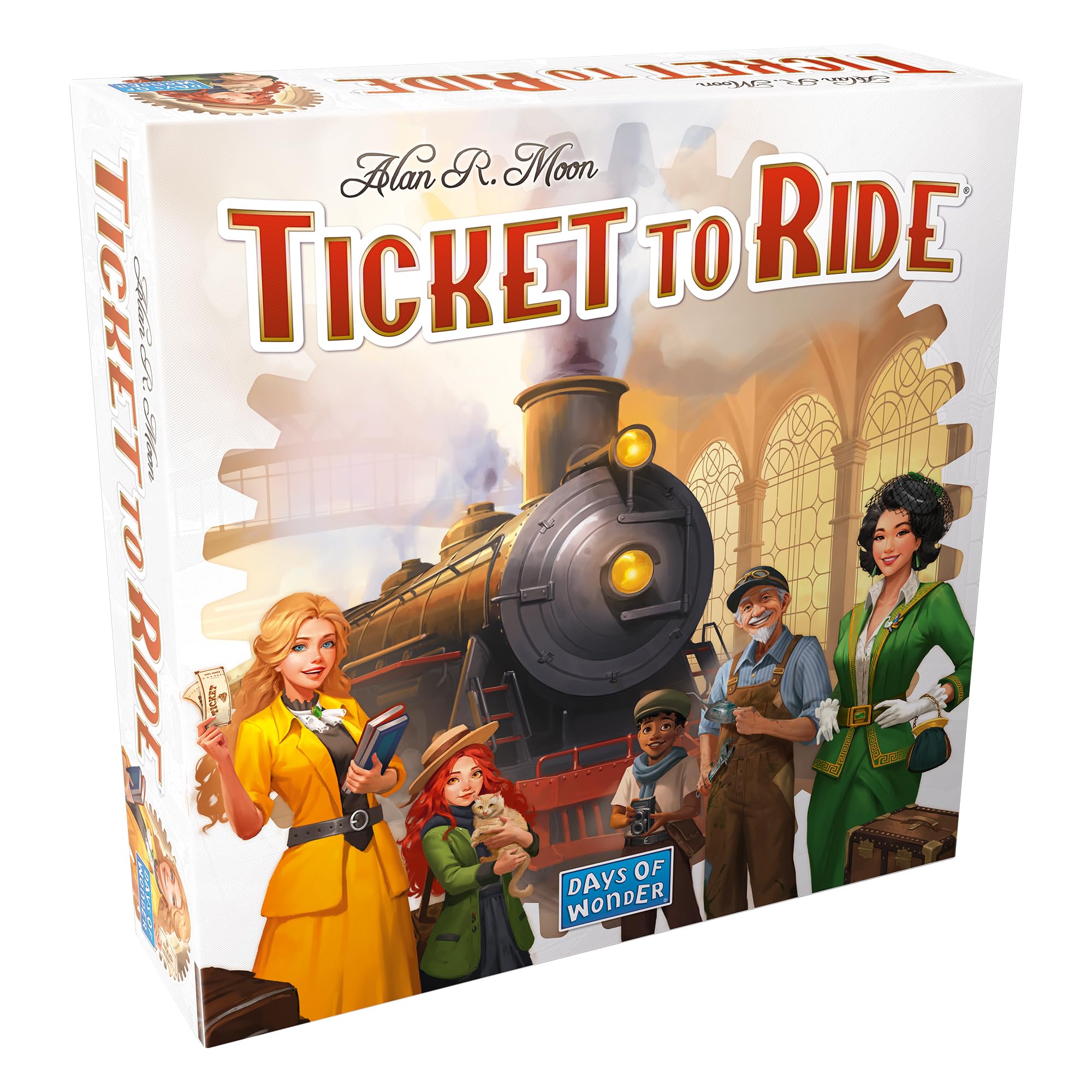
Ticket to Ride has been the gold standard for family strategy games for nearly two decades, and the 2025 Refresh modernizes the components without touching the perfect core loop. Players collect colored train cards and claim railway routes across a giant map of North America, balancing expansion with blocking opponents. The game rewards forward planning and spatial awareness — exactly the cognitive muscles tweens are developing.
The physical production here sets a benchmark: 225 plastic trains in five colors, a thick board that lies flat, and cards that shuffle cleanly. With a playtime that settles around 45-60 minutes after everyone knows the rules, it fits comfortably into a family game night without dragging. The set collection mechanic is intuitive enough that an eight-year-old can grasp it within two turns, yet the route-building decisions offer real depth for adults.
What makes this a tween standout is the competition without conflict — you are racing to claim routes, not attacking other players directly. The “longest route” bonus adds a subtle layer of strategy that keeps older players engaged. Parents report sessions happening three times per week, which speaks to the game’s magnetic replayability.
Why it’s great
- Exceptional replay value with variable ticket draws
- Teaches geography and planning in a fun, natural way
- Easy to learn, hard to master — works for all ages
Good to know
- Sessions run closer to 60 minutes, longer than some tween games
- Large box makes it less portable for travel
2. Battle Sheep Abstract Strategy Board Game
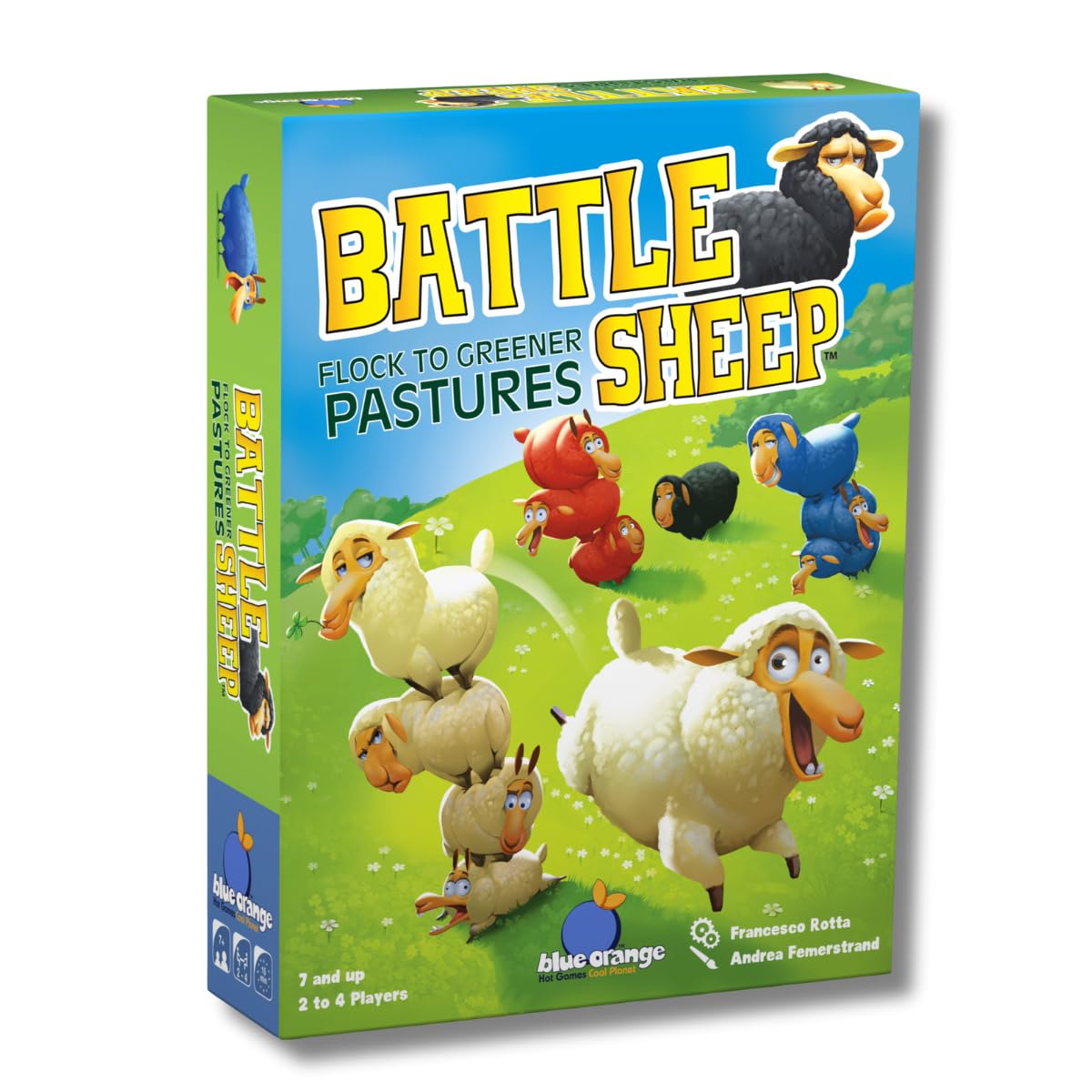
Battle Sheep is a masterclass in minimal rules delivering maximum strategy. Players start by arranging hexagonal pasture tiles into a unique board each game, then take turns moving stacks of sheep tokens in straight lines — leaving at least one token behind each turn. The goal is to occupy the most hexes when no more moves are possible. It sounds simple, but the spatial logic is surprisingly deep.
The component quality punches far above its price tier: the sheep chips are thick, heavy urea tokens that feel satisfying to stack and slide. The modular board ensures that no two games ever play the same, which is the single biggest factor in a game’s longevity. With rounds lasting about 10-20 minutes, it fits perfectly between homework and dinner.
For tweens, this game builds spatial reasoning and forward-thinking without feeling like a math lesson. Younger players can hold their own against adults because the logic is visual rather than numerical. Reviewers consistently note that kids aged seven and up can outmaneuver parents once they grasp the blocking mechanics.
Why it’s great
- Ultra-fast 10-20 minute sessions encourage multiple rounds
- Modular board creates infinite replayability
- High-quality chip components withstand rough handling
Good to know
- Tall stacks of tokens can tip over for very small hands
- Best at 3-4 players; 2-player games feel slightly less dynamic
3. Exploding Kittens: The Board Game
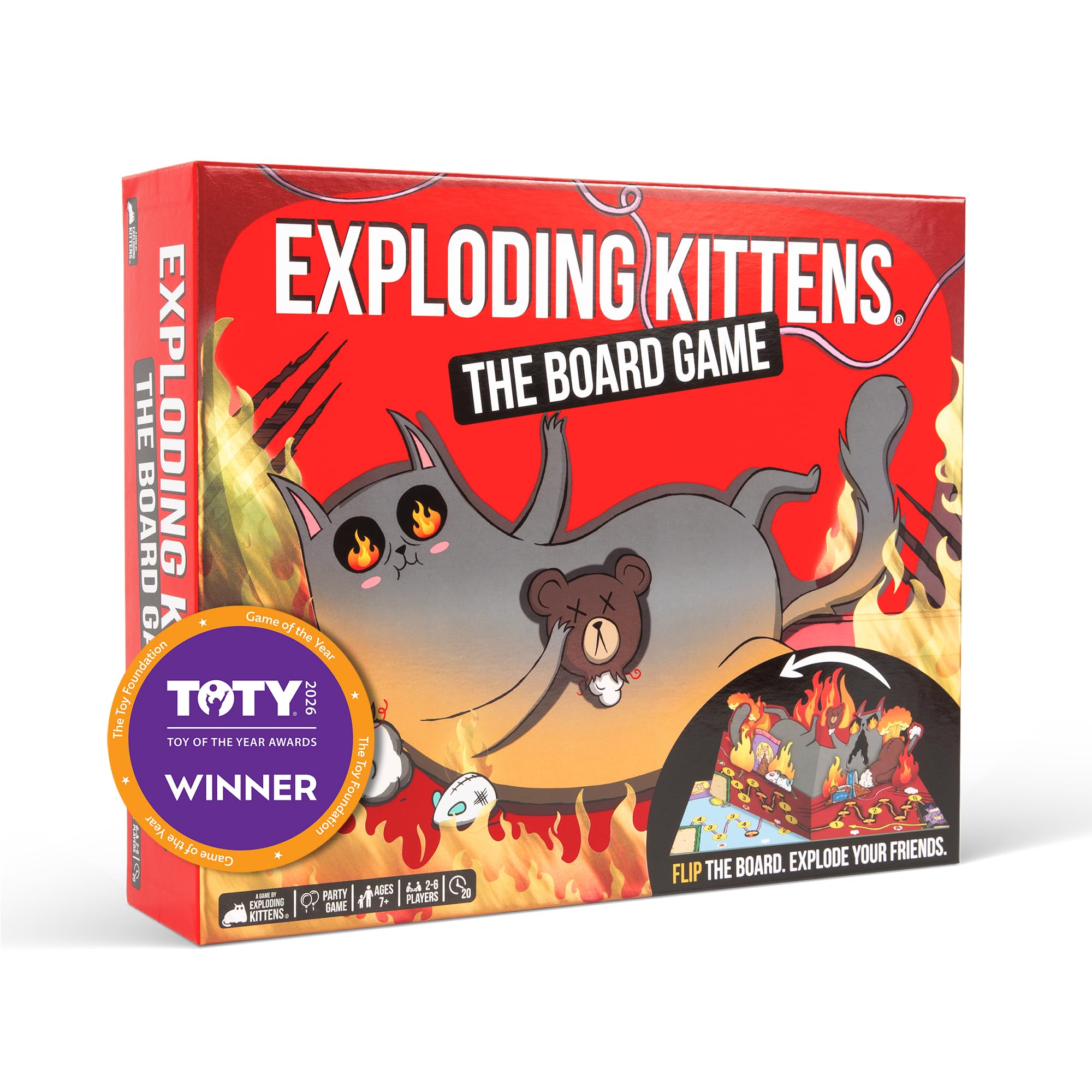
Exploding Kittens took the card game world by storm, and this board game expansion adds a physical, spatial dimension that elevates the experience. The headline feature is a pop-up board that flips mid-game to reveal a completely new path — transforming the playing field and forcing players to adapt their strategy on the fly. The goal is to reach the end of the board without exploding, but betrayal and sudden reversals are baked into every turn.
The production is characteristically absurd: you can play as TacoCat or GnomeCat, and cards grant powers like Meatpants or Butterfly Punch. The artwork is vivid and funny without being inappropriate for younger players. Action cards and move cards create a chaotic, laugh-out-loud rhythm that keeps the table engaged. Sessions run about 45 minutes to an hour once everyone understands the flow.
For tweens, this game hits the sweet spot between strategy and silliness. There is genuine decision-making — which path to take, when to use a special card — but the tone stays light and irreverent. The flipping board mechanic is a genuine innovation that forces re-evaluation, teaching adaptability in a way that feels like play.
Why it’s great
- Unique flipping board mechanic keeps every game unpredictable
- Hilarious art and card names appeal to tween humor
- Works well at parties and family game nights
Good to know
- The flip mechanism can feel stiff out of the box
- Gameplay may feel less strategic than the original card version
4. Spin Master Games Tetris Board Game
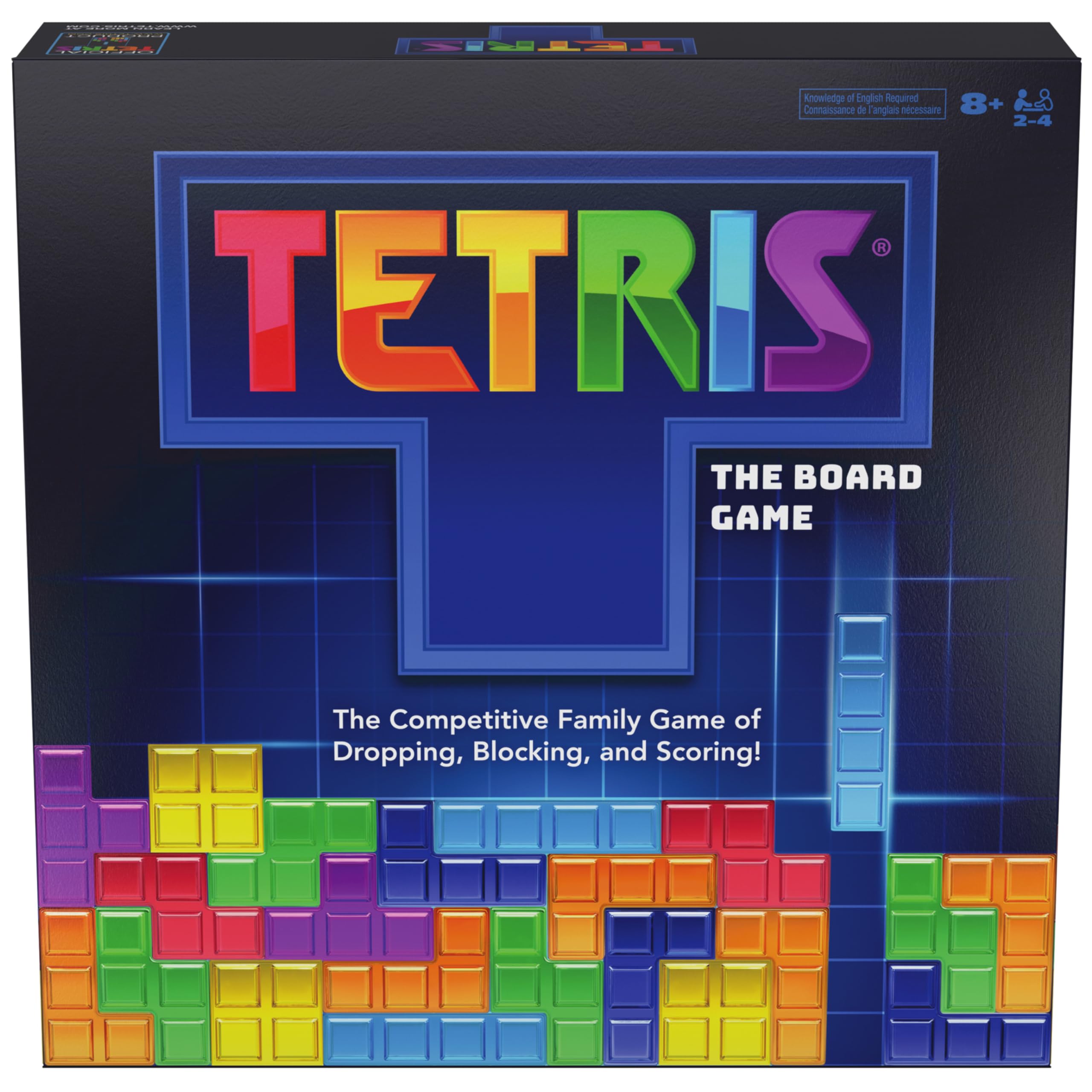
Translating a digital classic to the tabletop is risky, but Spin Master’s Tetris board game pulls it off with a clever competitive twist. Instead of clearing lines alone, players race head-to-head to fill their grids while using the “Garbage Drop” mechanic to dump unwanted pieces into an opponent’s board. The physicality of handling the semi-translucent Tetriminos — 128 pieces in total — adds a tactile satisfaction that the screen version cannot replicate.
The game includes four individual grids, a central gameboard, and Tetrimino cards that dictate which pieces you must place. The blocking mechanic is the real genius: landing a piece on a black icon lets you force a Tetrimino into an opponent’s grid, creating a race against chaos. The rules are lean enough to explain in two minutes, making it accessible for a group of tweens to pick up without adult supervision.
Reviewers consistently note that kids aged eight to twelve love the spatial challenge without realizing they are practicing geometry and planning. The 20-minute playtime is ideal for short attention spans, and the competitive head-to-head format produces genuine excitement. Some pieces arrived bent in early batches, but the overall component quality holds up well for the price tier.
Why it’s great
- Faithful physical adaptation of the beloved video game
- Garbage Drop mechanic adds real strategic tension
- Quick 20-minute sessions work for school nights
Good to know
- Some Tetrimino pieces may arrive slightly bent
- Best with exactly 2-4 players; doesn’t scale larger
5. Hasbro Gaming Girl Talk Truth or Dare Board Game

The 1980s classic returns with a modern update that captures the core appeal: silly secrets, outrageous dares, and the giant central spinner that decides your fate. This is not a strategy game — it is pure social catalyst, designed to get tweens talking, laughing, and bonding. The 200 cards include questions like “How many selfies do you take a day?” and dares that range from goofy to mildly embarrassing, all within safe boundaries for ages ten and up.
The physical package is thoughtful for its target audience: a portable carrying case that stores the spinner, cards, and ten score trackers. The spinner is large and satisfying to spin, creating a focal point for the table. With support for up to ten players, it scales to sleepovers, birthday parties, and large family gatherings where traditional four-player games fall short.
For tweens in the 10-12 range, this game fills a specific gap: it provides structured social interaction without screens. The updated card deck feels current without being inappropriate, and the truth-or-dare format encourages kids to share and bond in a low-stakes environment. Reviewers note that even reluctant participants get drawn in once the laughs start.
Why it’s great
- Scales to large groups up to 10 players
- Portable carrying case for sleepovers and travel
- Age-appropriate content for 10+ players
Good to know
- Pure social game with no strategic depth
- Best suited for girls in the 10-12 age range
FAQ
What playtime is ideal for a tween board game?
Are strategy games too advanced for a ten-year-old?
How many players should a tween game support?
Final Thoughts: The Verdict
For most families, the board games for tweens winner is the Ticket to Ride (2025 Refresh) because it teaches planning and geography in an engaging, non-competitive format that scales from casual kids to competitive adults. If you want quick-fire spatial reasoning that fits into a ten-minute window, grab the Battle Sheep. And for loud laughter and large sleepover groups, nothing beats the chaos of Exploding Kittens: The Board Game.

Mo Maruf
I created WellFizz to bridge the gap between vague wellness advice and actionable solutions. My mission is simple: to decode the research and give you practical tools you can actually use.
Beyond the data, I am a passionate traveler. I believe that stepping away from the screen to explore new environments is essential for mental clarity and physical vitality.