Our readers keep the lights on and my smoothie glass nicely filled. As an Amazon Associate, I earn from qualifying purchases.
A 75-gallon tank needs floor space, fights standby heat loss, and eventually runs dry. On-demand gas water heaters eliminate that tank entirely, delivering endless hot water to large households without the footprint or the recovery penalty.
I’m Mohammad Maruf — the founder and writer behind WellFizz. I analyze residential heating hardware, combustion efficiency, flow dynamics, and real-world installation constraints to separate premium engineering from marketing spec sheets.
Whether you are retrofitting a 75-gallon tank or designing a new build, selecting the right 75 gallon gas water heater replacement requires matching flow rate, fuel type, and venting to your actual household demand.
How To Choose The Best 75 Gallon Gas Water Heater Replacement
Replacing a 75-gallon tank with an on-demand gas heater shifts the buying criteria from storage volume to flow rate and BTU capacity. You need to calculate peak demand, verify gas line capacity, and decide between condensing and non-condensing heat exchangers.
Flow Rate vs. Storage Volume
Storage tanks rate capacity in gallons; tankless heaters rate capacity in gallons per minute at a specific temperature rise. A 75-gallon tank delivers roughly 90 gallons in its first hour before recovery slows. A tankless unit with 9.0 GPM at a 70°F rise delivers 540 gallons per hour continuously — no recovery pause.
Condensing vs. Non-Condensing
Non-condensing units use a single heat exchanger and require stainless steel venting. Condensing units capture latent heat from exhaust gases, achieving UEF values above 0.90, and can vent through standard PVC — a major advantage for retrofits where metal venting is not installed.
Quick Comparison
On smaller screens, swipe sideways to see the full table.
| Model | Category | Best For | Key Spec | Amazon |
|---|---|---|---|---|
| Rinnai RXP199iN | Condensing | Smart recirculation | 11.1 GPM, UEF 0.98 | Amazon |
| A. O. Smith ATI-310CX3 | Non-Condensing | Scale prevention | 8.0 GPM, 190k BTU | Amazon |
| Rinnai RU199iN | Condensing | High flow for large homes | 11.0 GPM, Circ-Logic | Amazon |
| Rinnai RE199iN | Non-Condensing | Reliable middle-range | 9.8 GPM, 199k BTU | Amazon |
| NEW Rinnai RX199iN | Condensing | Indoor/outdoor install | 11.1 GPM, UEF 0.98 | Amazon |
| Rheem Prestige RTGH-84DVLN-2 | Condensing | Leak detection | 8.4 GPM, 199k BTU | Amazon |
| Rheem RTG-95DVLN-3 | Non-Condensing | Hot-start programming | 9.5 GPM, 199.9k BTU | Amazon |
| Westinghouse HW199A0G-NG | Non-Condensing | WiFi & voice control | 10.3 GPM, 199k BTU | Amazon |
| ThermoMate RTC68iN | Condensing | Highest efficiency | 9.38 GPM, 0.91 UEF | Amazon |
| Noritz NR66ODNG | Non-Condensing | Outdoor installation | 6.6 GPM, 140k BTU | Amazon |
| A. O. Smith ATI-310CX3 | Non-Condensing | Scale prevention | 8.0 GPM, X3 tech | Amazon |
| Rinnai RE199iN | Non-Condensing | Reliable middle-range | 9.8 GPM, LED display | Amazon |
| Noritz NR50ODNG | Non-Condensing | Outdoor budget entry | 5.0 GPM, 120k BTU | Amazon |
In‑Depth Reviews
1. Rinnai RXP199iN

The RXP199iN combines a condensing heat exchanger with a built-in recirculation pump and Smart-Circ technology that learns usage patterns to deliver hot water faster without wasting energy. At 199,000 BTU and up to 11.1 GPM, it can keep seven fixtures running simultaneously. The Smart Sense gas control automatically switches between natural gas and propane, and the Versa Vent allows indoor or outdoor installation with standard PVC.
Real-world owners report replacing 50-gallon tanks in homes with five adults and never running out of hot water. The unit is noticeably quiet, and the recirculation pump cuts the wait time at distant faucets from over a minute to seconds. Some users note the recirculation pump has an audible hum on the economy setting, but it remains tolerable.
The built-in Quick Flush feature simplifies descaling maintenance, and the 15-year heat exchanger warranty backs the investment. The Rinnai Central app adds remote monitoring when paired with the optional Controlr module. For households wanting endless hot water plus reduced water waste, this unit delivers both in one chassis.
Why it’s great
- Built-in recirculation pump with learning algorithm
- Dual fuel compatible without conversion kit
- Indoor or outdoor installation via Versa Vent
Good to know
- Recirc pump audible on economy mode
- Controlr module sold separately
2. Rinnai RU199iN

The RU199iN delivers 11 GPM from a compact condensing chassis, making it a top contender for large homes that cannot fit a 75-gallon tank. Its Circ-Logic feature pairs with an external pump to provide scheduled or on-demand recirculation, reducing the cold-water wait at far fixtures without running the pump constantly.
Users report stable temperature output across simultaneous showers, dishwashers, and washing machines. The unit fires up quietly, and many note a 50% reduction in natural gas bills compared to a previous tank heater. DIY installation is feasible for experienced plumbers, but professional sign-off is required to maintain the 15-year heat exchanger warranty.
The front cover snap-in strips have been reported as slightly loose by some owners, and the pressure release valve outlet can be skewed. These are minor build-quality notes that do not affect performance. The RU199iN remains a well-proven platform with thousands of installations across North America.
Why it’s great
- 11 GPM continuous flow for seven fixtures
- Circ-Logic for intelligent recirculation scheduling
- 50% gas savings reported by owners
Good to know
- External recirculation pump required
- Some units have loose front panel clips
3. NEW Rinnai RX199iN
The RX199iN brings Rinnai’s condensing platform into a single model that installs indoors or outdoors. At 199,000 BTU and up to 11.1 GPM, it matches the flow of the RU series but adds the Versa Vent system with an RX-OVC vent cap for outdoor mounting. This flexibility is a lifesaver for homes without indoor space or existing vent runs.
Owners replacing 30-gallon oil heaters or aging tank units report immediate improvements in fuel efficiency and endless hot water for families of five to seven. The Quick Flush feature simplifies annual maintenance, and the Smart Sense gas control automatically detects fuel type — a rarity at this price tier. Some users note the unit sits at 55 pounds, heavier than non-condensing rivals, due to the secondary heat exchanger.
The UEF of 0.98 is among the highest available, meaning nearly all fuel energy goes into heating water rather than escaping as exhaust. For anyone planning a new build or a complete system overhaul, the RX199iN removes installation guesswork and delivers utility-bill savings from day one.
Why it’s great
- Indoor or outdoor installation in one unit
- UEF 0.98 for maximum energy savings
- Auto fuel detection for natural gas or propane
Good to know
- RX-OVC vent cap required for outdoor install
- Heavier than non-condensing models
4. A. O. Smith ATI-310CX3
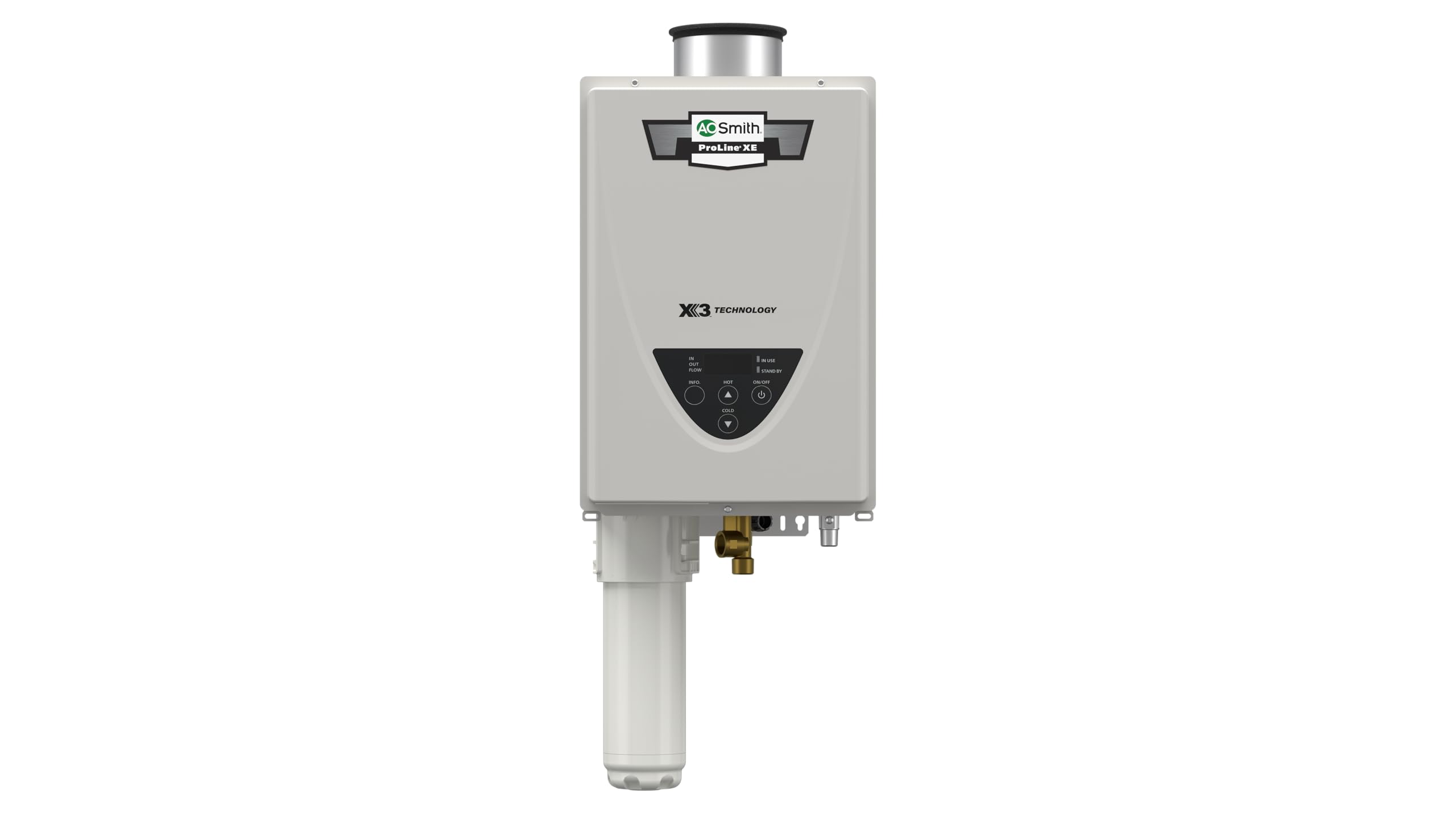
A. O. Smith integrates X3 Scale Prevention Technology directly into the ATI-310CX3, eliminating annual descaling and the need for isolation valves. This is a huge maintenance win for households with hard water. The 8.0 GPM flow rate handles up to three simultaneous showers, and the 190,000 BTU commercial-grade copper heat exchanger provides 25x better thermal conductivity than steel.
Professional installers report the unit sets up quickly thanks to the included propane conversion kit and concentric vent system. The integrated AFR sensor and overheat cutoff add safety layers. Some owners note the unit is noisier than condensing rivals during full-fire operation, but the trade-off is lower upfront cost and simpler venting with stainless steel pipe.
The 15-year heat exchanger warranty is competitive, and the brand’s nationwide support network makes parts easy to source. For homeowners in hard-water regions who want a tankless upgrade without the descaling chore, this is the standout choice.
Why it’s great
- X3 scale prevention eliminates descaling
- Commercial-grade copper heat exchanger
- Propane conversion kit included
Good to know
- Noisier than condensing alternatives
- Requires stainless steel venting
5. Rinnai RE199iN

The RE199iN is Rinnai’s non-condensing workhorse, pumping 9.8 GPM from a 199,000 BTU burner. The compact silver chassis mounts easily on interior walls, and the LED display provides diagnostic codes and service reminders. This unit is ideal for households that need high flow but want to avoid the higher upfront cost and condensate drainage of condensing models.
Return buyers frequently note that their previous Rinnai lasted 9 to 14 years with minimal issues, and the new model slides into existing venting without modification. The hot-start programming prevents cold bursts during back-to-back showers, a common complaint with cheap tankless units. Professional installation is recommended, and owners who DIY report straightforward plumbing connections.
The warranty structure — 15 years on the heat exchanger, 5 years on parts, 1 year on labor — matches industry leaders. For a large home replacing a 75-gallon tank without upgrading to condensing technology, this is the safe, reliable middle path.
Why it’s great
- 9.8 GPM flow handles three+ bathrooms
- LED diagnostic display simplifies troubleshooting
- Hot-start programming eliminates cold bursts
Good to know
- Professional install strongly advised
- Recirculation requires external pump
6. Rheem RTG-95DVLN-3
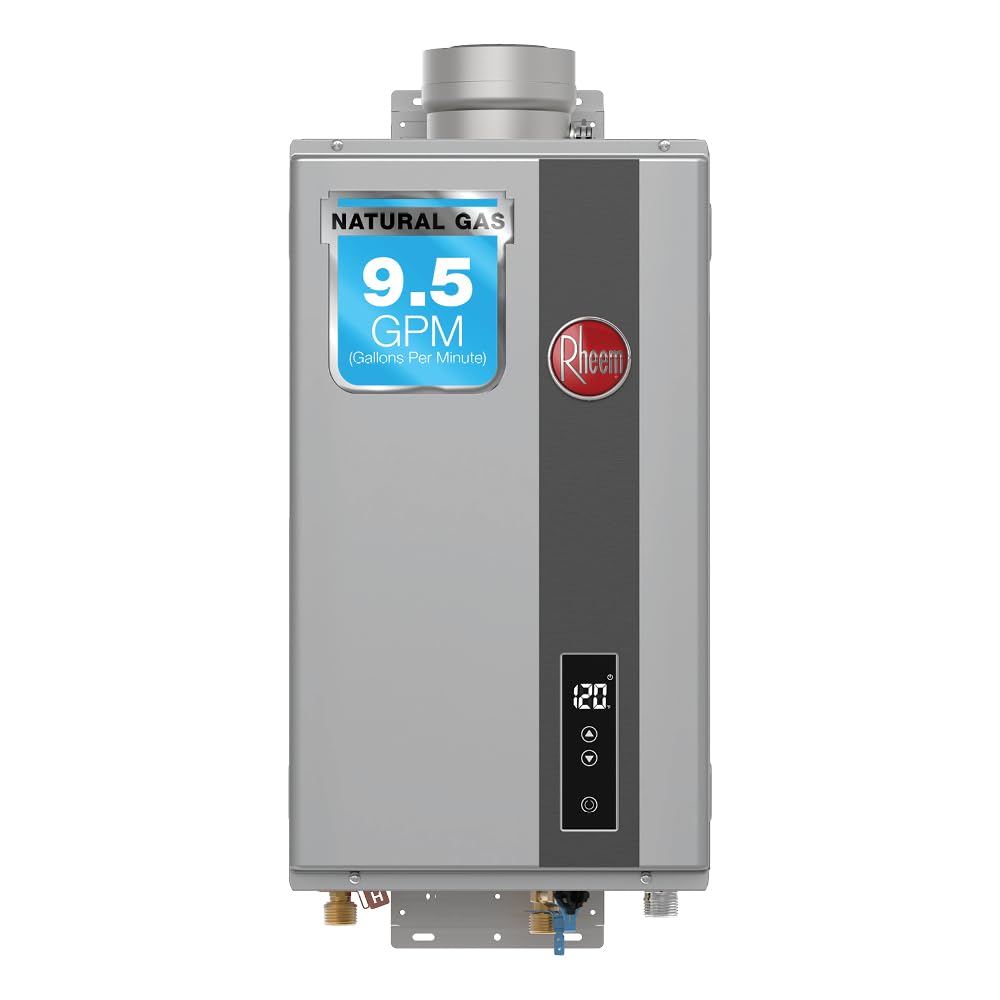
Rheem’s RTG series delivers 9.5 GPM at 199,900 BTU in a compact 46.5-pound package. The hot-start programming specifically targets the cold-water sandwich effect, making it a strong pick for homes with back-to-back showers. The UEF 0.82 rating keeps operating costs low without requiring a condensate line.
Owners report DIY installs under three hours with two people, and the unit’s 13-year track record with previous Rheem tankless models builds confidence. A small number of units have failed within the first year, but Rheem’s support network resolves warranty claims without excessive friction. The missing parts kit means you will need to purchase venting and gas line components separately.
The gray metal cabinet is durable and wall-mountable in tight utility spaces. For households that want Rheem’s reliability and national service network but do not need condensing efficiency, the RTG-95DVLN-3 is a dependable choice.
Why it’s great
- Hot-start programming prevents cold bursts
- Lightweight at 46.5 pounds for easy mounting
- Proven platform with long service history
Good to know
- Venting and gas line parts sold separately
- Isolated early failure reports
7. Rheem RTGH-84DVLN-2

The Rheem Prestige RTGH-84DVLN-2 is a condensing unit that vents through standard PVC and includes built-in water and gas leak detection sensors that shut down the unit and display an error code. The 8.4 GPM flow is slightly lower than the RTG series, but the condensing design delivers better energy utilization and quieter operation than non-condensing alternatives.
Owners in 1,000-square-foot homes report maintaining 120°F output through a 50-minute shower without any temperature drop. The 20-30 second delay to hot water at distant fixtures is normal for any tankless installation without recirculation. The unit’s 77.9-pound weight reflects the stainless steel secondary heat exchanger, making installation a two-person job.
Packaging complaints are the most common negative feedback — units arriving with cosmetic dents. Check the crate immediately upon delivery. The 15-year heat exchanger warranty and Rheem’s service network mitigate long-term risk, and the leak detection feature adds peace of mind for indoor installations.
Why it’s great
- Water and gas leak auto-shutoff
- PVC venting simplifies retrofits
- Quieter than non-condensing models
Good to know
- Heavy unit at nearly 78 pounds
- Packaging quality inconsistent
8. Westinghouse HW199A0G-NG
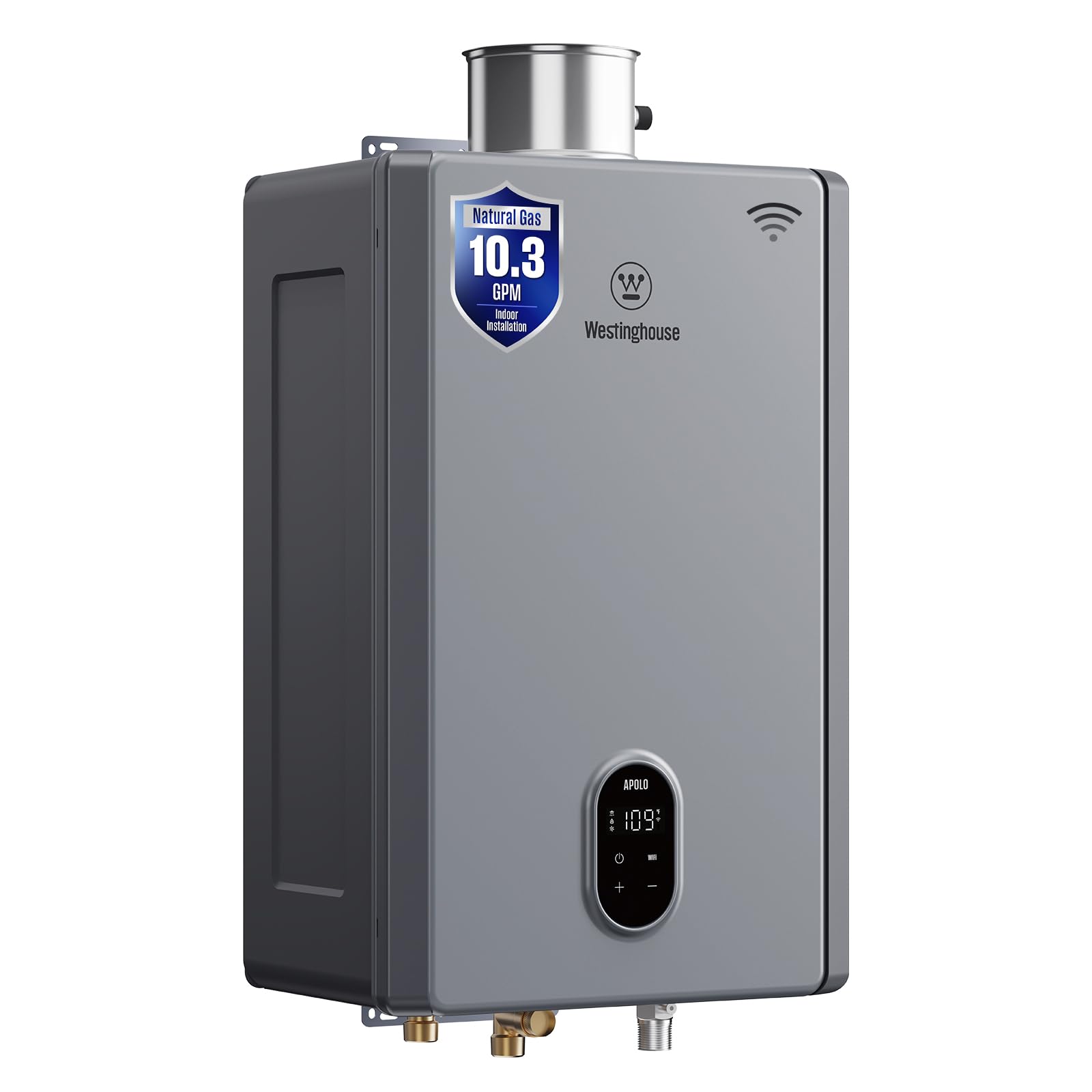
The Westinghouse HW199A0G-NG combines 10.3 GPM flow with built-in WiFi and voice control via Alexa or Google Assistant. The 199,000 BTU burner uses a six-stage combustion system with a wide 1:20 turndown ratio, meaning it can modulate down to very low flow rates without cycling on and off. This precision maintains water temperature within ±1°F across simultaneous loads.
Homeowners appreciate the smartphone app for adjusting temperature and receiving fault alerts from anywhere. The integrated freeze protection down to -13°F ensures winter reliability in cold climates, and the phosphorus-deoxidized copper heat exchanger resists corrosion better than standard copper. The unit arrived with clear step-by-step instructions that made the initial startup process straightforward.
Some users reported difficulty finding a contractor willing to install a tankless unit they did not purchase locally. If you plan to DIY, download the installation manual in advance and purchase all recommended venting and gas components. The 10.3 GPM rating makes this suitable for four or more bathrooms in moderate climates.
Why it’s great
- WiFi app and voice control built in
- ±1°F temperature stability
- Freeze protection down to -13°F
Good to know
- Contractors may refuse third-party installs
- Venting components purchased separately
9. ThermoMate RTC68iN
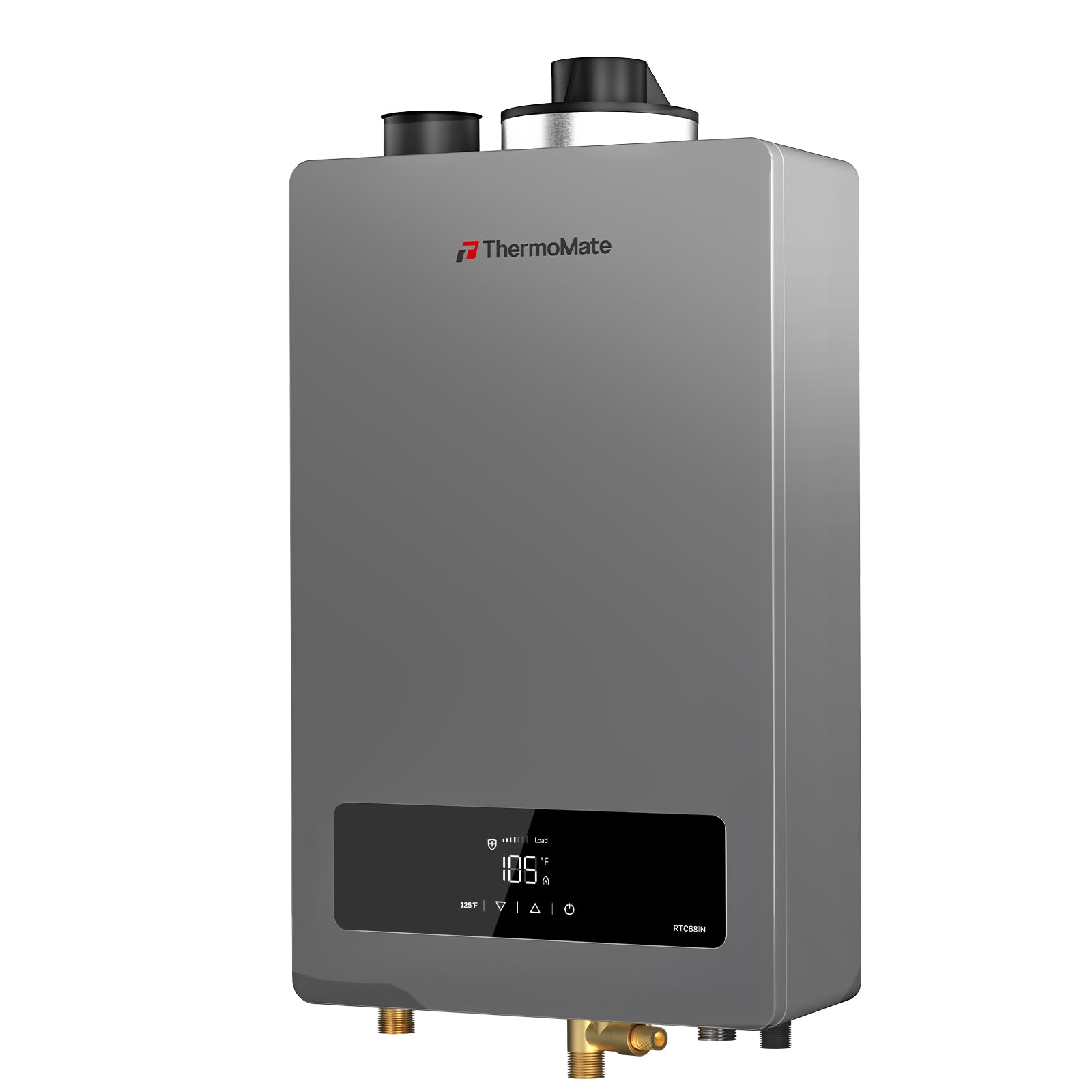
ThermoMate’s RTC68iN condensing unit achieves a 0.91 UEF, meaning it converts 91% of fuel energy into hot water — roughly 17% better than standard non-condensing models. The dual heat exchanger uses stainless steel for the condensing stage and oxygen-free copper for primary heating, balancing corrosion resistance with thermal transfer speed.
At 163,000 BTU, the flow rate reaches 9.38 GPM when inlet water is above 77°F, but drops to around 6 GPM in colder climates with 62°F supply water. That is still enough for three simultaneous showers. The sealed combustion design keeps operational noise low, and the intelligent water mixing valve eliminates temperature fluctuation during multi-fixture use.
Being a condensing unit, it produces mildly acidic condensate that must drain into a floor sink or neutralizer kit. The 41°F automatic frost protection activates without a separate heating element. For environmentally focused buyers, the combination of high UEF and stainless steel heat exchanger longevity makes this a compelling green option.
Why it’s great
- 0.91 UEF for maximum energy savings
- Dual stainless steel and copper heat exchangers
- Sealed combustion for quiet operation
Good to know
- Flow rate drops in cold inlet water conditions
- Requires condensate drainage and neutralizer
10. Noritz NR66ODNG

Noritz engineered the NR66ODNG for outdoor mounting, eliminating the need for any vent pipe — a massive simplification for retrofits. The 140,000 BTU burner delivers 6.6 GPM, which covers two simultaneous showers but may struggle with a third fixture. The UEF 0.81 keeps operating costs reasonable for a non-condensing design.
Owners in cold climates report successful operation down to -7°F with heat tape and a windbreak installed around the unit. The compact 36-pound chassis is easy to hang on an exterior wall, and the all-weather cabinet requires no enclosure. The lack of indoor venting makes installation significantly cheaper than any indoor unit.
The 12-year heat exchanger warranty is shorter than Rinnai’s 15-year terms, but the outdoor simplicity and lower purchase price compensate. Be aware that outdoor units have a minimum temperature setting around 115°F versus 99°F on some indoor models, which may be too warm for households that prefer cooler showers.
Why it’s great
- Zero venting required for outdoor install
- Lightweight at 36 pounds
- Low-NOx emissions compliance
Good to know
- 6.6 GPM limits simultaneous high-flow use
- Minimum temp of 115°F on some units
11. Noritz NR50ODNG

The Noritz NR50ODNG is an entry-level outdoor unit that delivers 5.0 GPM at 120,000 BTU — sufficient for a two-bathroom home but not a full 75-gallon tank replacement. Owners report gas bills dropping from to per month, and the outdoor design means no venting costs. The unit has been adopted by hotel chains and manufacturing facilities, suggesting robust internals despite the low price.
Users note that it takes about a minute for hot water to reach the faucet, which is standard for any tankless system without recirculation. The remote control (sold separately) has a temperature range limitation: once set below 120°F, it cannot be readjusted higher. This is a firmware quirk that only affects users who want precise temperature control.
The 33-pound weight makes solo wall mounting possible. Parts availability at local supply houses is excellent. For a shop, cabin, or small home where six fixtures are never used simultaneously, this is the most economical way to go tankless without sacrificing reliability.
Why it’s great
- Lowest entry cost for outdoor tankless
- 33-pound weight for easy installation
- Widely available parts at supply houses
Good to know
- 5.0 GPM limits to two-bathroom homes
- Remote temperature range bug
12. Hayward W3H150FDN
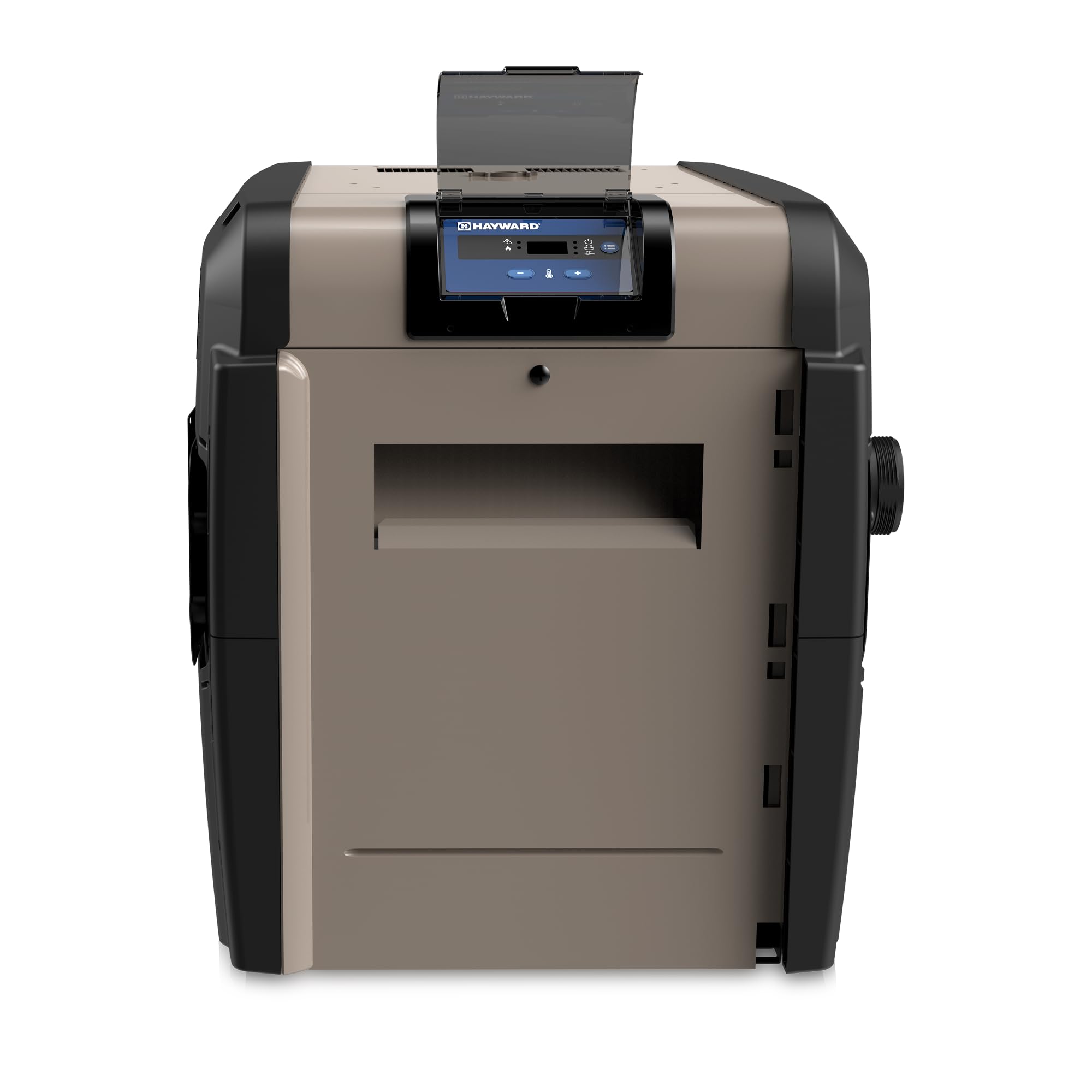
The Hayward Universal H-Series W3H150FDN heats inground pools up to 450 square feet with 150,000 BTU of natural gas heat. The digital LED display provides self-diagnostic capabilities, and the low-NOx burners meet strict emissions standards. Flexible gas and electric connections on either side simplify installation.
Pool owners report raising a 20,000-gallon pool from 74°F to 92°F in seven hours with ambient temperatures around 63°F — far faster than a heat pump. The unit is much quieter than previous generation Hayward heaters. The 150-pound weight requires a solid concrete pad or reinforced mounting.
Some units have experienced heating coil leaks from imperfect welds after one season, and warranty support has been inconsistent in certain regions. Buying from a local dealer rather than online may improve service access. For pool-only heating with natural gas, this remains the industry standard form factor.
Why it’s great
- Rapid pool heating in cold ambient conditions
- Low-NOx emissions for eco compliance
- Flexible left/right connection configuration
Good to know
- Some weld quality issues reported
- Warranty support inconsistent via online purchase
13. Hayward W3H150FDP
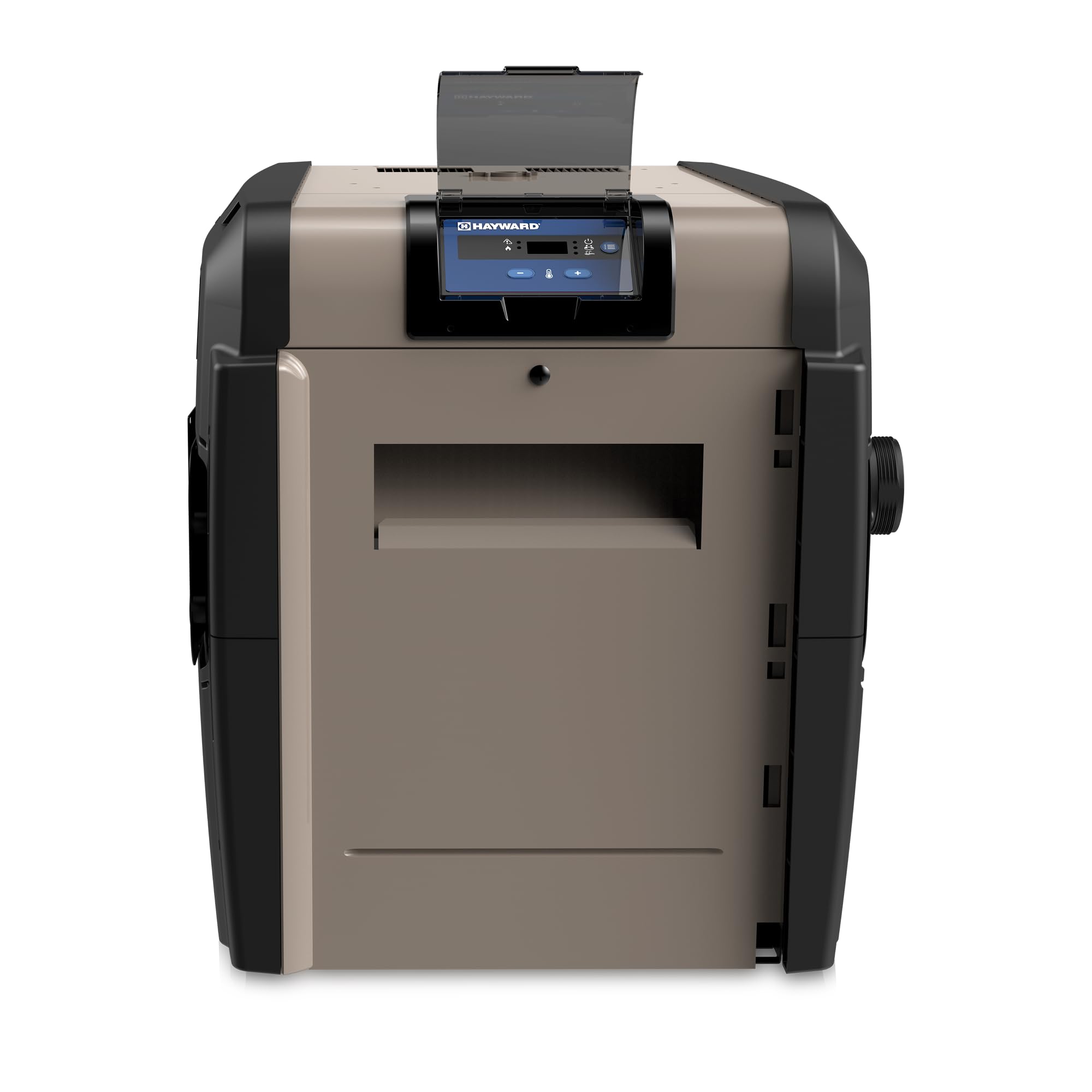
The W3H150FDP is the identical Universal H-Series platform in propane configuration, delivering 150,000 BTU for pools and spas up to 450 square feet. The self-diagnostic LED panel, low-NOx compliance, and flexible gas/electrical connections mirror the natural gas version. The 145-pound unit fires up quickly and maintains set temperature with minimal cycling.
Owners using it exclusively for a spa report heating rates of 1°F per ten minutes — ten times faster than a heat pump. The unit has run reliably for multiple seasons with only a low rumble during firing. Some users note the efficiency rating is at the low end compared to newer condensing pool heaters, but the upfront cost is significantly lower.
As with the natural gas version, quality control varies. Some units suffer from manufacturing defects such as copper fins pushed against the burner tube, leading to premature failures. Inspect the heat exchanger thoroughly upon arrival. For propane-only pool heating, this is the standard choice but verify local warranty support before purchasing.
Why it’s great
- Extremely fast spa heating rate
- Runs quietly with minimal cycling
- Standard form factor for easy replacement
Good to know
- Lower efficiency compared to condensing pool heaters
- Some manufacturing defects reported
FAQ
How many GPM do I need to replace a 75-gallon tank?
Can I install a tankless heater myself?
Condensing or non-condensing for a 75-gallon tank replacement?
Final Thoughts: The Verdict
For most buyers replacing a 75 gallon gas water heater, the winner is the Rinnai RXP199iN because it combines a built-in recirculation pump, UEF 0.98 efficiency, and indoor/outdoor installation flexibility in a single chassis. If you want integrated scale prevention without annual descaling, grab the A. O. Smith ATI-310CX3. And for pure flow capacity at the best value, nothing beats the Rinnai RE199iN.

Mo Maruf
I created WellFizz to bridge the gap between vague wellness advice and actionable solutions. My mission is simple: to decode the research and give you practical tools you can actually use.
Beyond the data, I am a passionate traveler. I believe that stepping away from the screen to explore new environments is essential for mental clarity and physical vitality.