Our readers keep the lights on and my smoothie glass nicely filled. As an Amazon Associate, I earn from qualifying purchases.
Working on concrete all day transmits up to four times your body weight in shock through your spine with every step. Without the right combination of midsole cushioning, outsole grip, and supportive construction, that hard surface leads to chronic foot pain, knee strain, and lower back issues that no number of insoles can fix alone.
I’m Mohammad Maruf — the founder and writer behind WellFizz. I’ve spent years analyzing material science, sole densities, and ASTM safety standards to identify which boots actually absorb the punishment of a concrete floor rather than just surviving it.
After months of cross-referencing real-world reviews and spec sheets, I built this guide to help you find the real boots for working on concrete that deliver lasting shock absorption, solid traction, and all-day wearability without requiring a painful break-in period.
How To Choose The Best Boots For Working On Concrete
Concrete is unyielding. The wrong boot turns an 8-hour shift into a punishing test of endurance. Focus on these four factors to find a pair that keeps you comfortable and supported from first step to last.
Sole Construction and Midsole Density
EVA foam midsoles feel soft in the store but compress permanently after weeks of concrete pressure, leaving you walking on a flat board. Polyurethane (PU) or rubber-based midsoles retain their rebound much longer. Wedge soles distribute weight across a larger surface area rather than concentrating impact on a heel, reducing fatigue during long periods of standing.
Safety Toe Material and Weight Penalty
Steel toes offer the most protection but add noticeable heft that increases fatigue on concrete all day. Alloy toes shave weight while meeting the same ASTM F2413 impact and compression standards. Composite toes are lightest and non-conductive, ideal for warehouse and electrical environments, though they require more internal volume that can feel bulky.
Slip Resistance and Outsole Pattern
Concrete floors can be dry, oily, or wet depending on the workspace. A boot marked ASTM F2913 (SATRA) provides verified slip resistance. Look for rubber compounds with a durometer rating around 65-75 Shore A — soft enough to grip, hard enough to last. Deeper lug patterns help outdoors but trap debris on smooth interior concrete.
Break-In Timeline and Ankle Support
Boots that require weeks of painful breaking-in are a liability on concrete, because your feet swell and ache before the leather molds. Look for models with padded collars, gusseted tongues, and flexible leathers that conform within days. An 8-inch shaft provides better ankle stability when carrying loads on hard, flat surfaces than a 6-inch profile.
Quick Comparison
On smaller screens, swipe sideways to see the full table.
| Model | Category | Best For | Key Spec | Amazon |
|---|---|---|---|---|
| Timberland PRO Endurance 8″ | Mid-Range | All-day standing & heavy construction | 6.4 lbs per pair; PU midsole | Amazon |
| ROCKROOSTER Moc Toe | Mid-Range | 20k-step days on concrete | Poron XRD heel cushion; wedge sole | Amazon |
| Timberland PRO Gridworks 6″ | Premium | Long-term durability with alloy toe | Alloy safety toe; 2+ year sole life | Amazon |
| Orthofeet Granite | Premium | Wide feet & orthopedic support | Waterproof; slip-resistant outsole | Amazon |
| KEEN Utility Detroit Mid | Premium | Diabetic comfort & waterproofing | Steel toe; rubber overmolded toe cap | Amazon |
| New Balance Calibre | Premium | Easy on/off & composite toe | Composite toe; side zipper entry | Amazon |
| ARIAT Turbo Chelsea | Premium | Zero break-in for 9-hour shifts | Carbon toe; 1.79 lbs per boot | Amazon |
| Wolverine Durashock | Premium | Max shock absorption on hard floors | Durashock PU midsole; 18-month lifespan | Amazon |
| Cat Footwear Striver | Entry-Level | Budget-friendly steel toe protection | Steel toe; rugged outsole traction | Amazon |
In‑Depth Reviews
1. Timberland PRO Men’s Endurance 8 Inch Steel Safety Toe Waterproof Work Boots

The Timberland PRO Endurance brings a polyurethane midsole that resists compression far longer than the EVA found in budget boots, maintaining its shock absorption across 65-hour weeks on concrete. The 8-inch shaft provides extra ankle stability when carrying loads, and the steel toe meets ASTM F2413 standards without feeling excessively clunky thanks to a well-proportioned last.
Real-world users report zero blistering after the initial stiffness fades, with traction that holds on snow and ice — a testament to the rubber outsole compound. The waterproof membrane keeps feet dry through wet concrete pours, and the puncture-resistant plate adds protection against debris common on construction sites. At roughly 6.4 pounds per pair, it’s heavier than composite-toe alternatives, but the weight trade-off delivers genuine durability.
The leather finish looks less polished than premium heritage brands, but the boot’s structural integrity stays intact after six months of daily abuse. The orange cosmetic strip on the heel shows wear before the functional parts do, which is a minor aesthetic complaint for a boot that prioritizes performance over appearance.
Why it’s great
- PU midsole retains rebound on concrete longer than EVA alternatives
- Excellent ankle support with 8-inch shaft and padded collar
- Waterproof and puncture resistant for demanding environments
Good to know
- Heavier than alloy or composite-toe boots
- Leather shows cosmetic wear faster than premium grain leathers
2. ROCKROOSTER Men’s Comfortable Work Boots Non-Slip Wide Casual Shoes, Poron XRD, Coolmax

The ROCKROOSTER moc toe uses a Poron XRD insert in the heel that absorbs up to 90% of impact forces — a spec usually found in boots costing significantly more. Combined with a wedge sole design that spreads pressure across the entire footbed, this boot is engineered specifically for high-step-count days on unyielding surfaces. The dense foam wedge sits above a thick rubber outsole that improves longevity over all-foam designs.
Buyers logging over 20,000 steps daily on concrete report the comfort lasting 16 months before the orthotic begins to flatten, which is exceptional at this price tier. The tumbled leather wraps the foot like a sock, requiring almost no break-in period. The Coolmax lining helps manage sweat during 10-hour shifts, and the ASTM F2892-18 EH rating provides electrical hazard protection without a steel toe’s weight penalty.
The trade-off is water resistance rather than full waterproofing — stitching allows seepage in deep puddles, so these are best for dry indoor or covered outdoor concrete work. Quality control can be inconsistent, with mismatched moc toe ridges or misaligned eyelets reported on some pairs, though replacements are handled promptly.
Why it’s great
- Poron XRD heel insert dramatically reduces concrete impact
- Wedge sole distributes weight evenly for standing endurance
- Thick tumbled leather with genuine leather heel counter at a mid-range price
Good to know
- Only water-resistant, not waterproof for deep puddles
- Inconsistent quality control on cosmetic details
3. Timberland PRO mens Gridworks Wedge 6 Inch Alloy Safety Toe Waterproof Industrial Work Boot

The Gridworks Wedge swaps steel for an alloy safety toe, dropping roughly half a pound of weight per boot compared to equivalent steel-toe models — a meaningful difference when fatigue accumulates across a concrete floor shift. The wedge outsole is thicker than traditional heeled boots, providing a broader contact patch that reduces localized pressure points on the ball and heel of the foot.
Multiple long-term users report the original sole lasts over two years with three insole changes, which indicates the midsole compound resists the compression breakdown that plagues cheaper boots after six months. The waterproof membrane holds up in wet conditions, and the alloy toe meets ASTM F2413 without the bulk that makes steel toes feel restrictive when kneeling or crouching.
The wide width option is genuinely roomy, accommodating thicker orthotics without squeezing the toes. Regular waxing keeps the leather manageable with scuffs, though the upper does show patina faster than full-grain leathers. At 6 inches, the shaft provides less ankle support than 8-inch boots, but the trade-off is greater mobility for those who prefer a lower profile.
Why it’s great
- Alloy toe reduces weight without sacrificing impact protection
- Wedge sole outsole lasts 2+ years with insole replacements
- Waterproof and comfortable straight out of the box
Good to know
- 6-inch height offers less ankle support than 8-inch models
- Leather shows scuffs faster than premium full-grain options
4. Orthofeet Men’s Orthopedic Granite Waterproof Slip Resistant Work Boot

The Orthofeet Granite is built around a wide toe box that eliminates the pinching and toe pain common with narrow safety boots on concrete. The included orthotic insole features arch support and a metatarsal pad that reduces pressure on the ball of the foot, which is critical when standing on a hard surface for 10 to 12 hours without relief.
Users with arthritis, heel pain, or previous foot injuries report that this boot allows them to complete heavy labor shifts without aggravation — something they couldn’t achieve with standard work boots. The slip-resistant outsole holds up well against oil and grease in industrial settings, and the waterproof leather keeps feet dry through wet concrete and puddles.
The softer leather and insole foam do have trade-offs: some buyers note the insoles feel thin after about two weeks of heavy use, requiring aftermarket orthotics for sustained comfort. The tread could be deeper for mud or uneven terrain, but on flat concrete it provides sufficient grip without trapping debris.
Why it’s great
- Wide toe box eliminates toe pain from narrow boots
- Orthotic insole reduces heel and arch fatigue on concrete
- Durable enough to outlast premium competitors in similar conditions
Good to know
- Insoles may compress quickly for heavy users
- Softer leather shows wear faster than thicker-grained boots
5. KEEN Utility Men’s Detroit Mid Steel Toe Work Boot
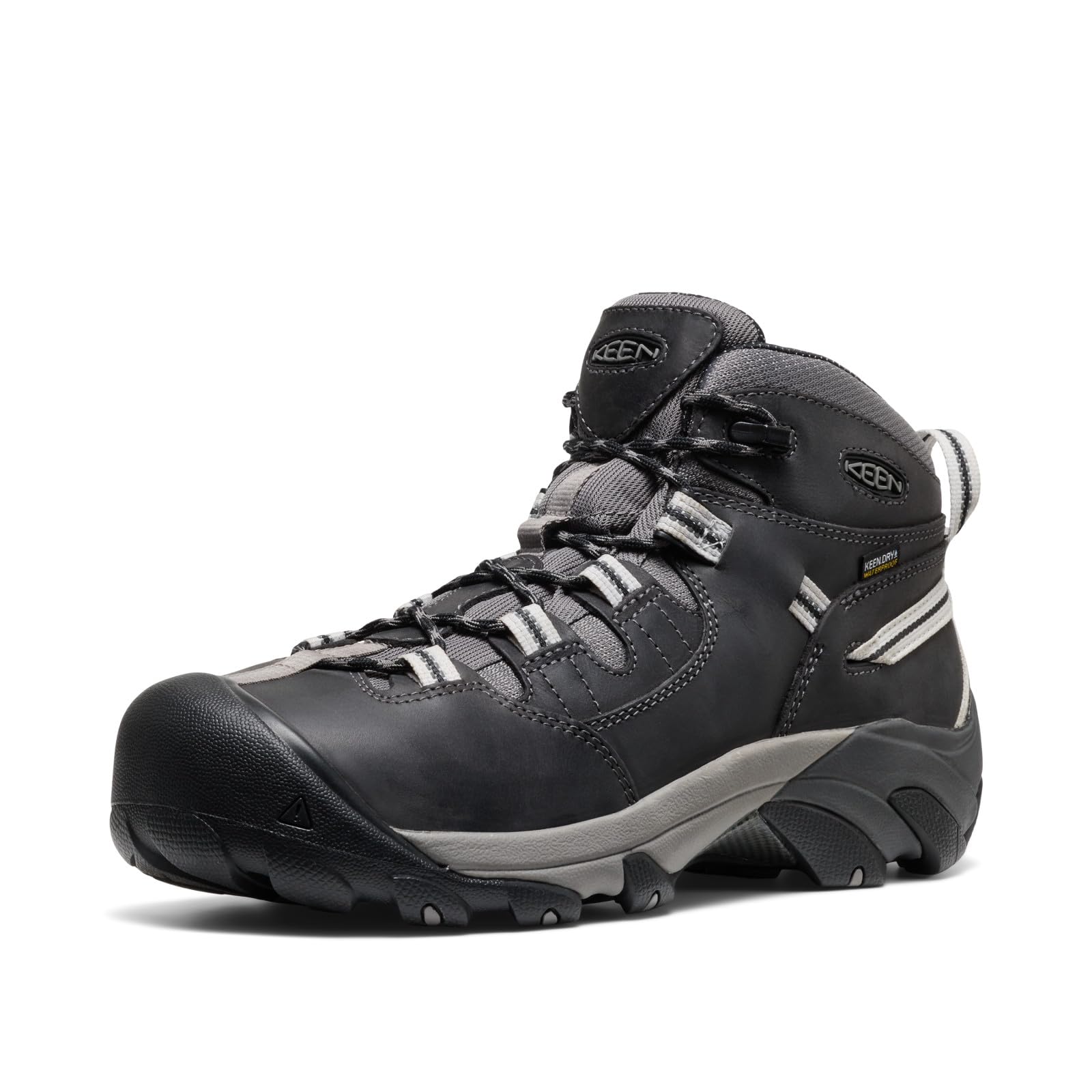
KEEN Utility’s Detroit Mid strikes a rare balance: steel toe protection in a package that feels considerably lighter than traditional steel-toe boots. The rubber overmolded toe cap adds abrasion resistance without the weight of full leather reinforcement, and the waterproof membrane performs reliably even after extended submersion in wet concrete or puddles.
Diabetic users and those with circulation concerns report this as the best boot for long periods on concrete because it avoids the tight pressure points that cause discomfort in narrower designs. The zero-drop heel platform keeps the foot in a natural position, reducing strain on the Achilles compared to elevated heel boots. One user reported the boots lasting six years of heavy use, which is an outlier but speaks to the build quality.
The laces are excessively long and the soles can be noisy on polished concrete floors. The upper can develop distressed creases at the toe bend within months, and the thin laces may wear prematurely against nylon eyelets. These are functional rather than catastrophic flaws for a boot that prioritizes comfort and safety.
Why it’s great
- Steel toe protection in a surprisingly lightweight package
- Excellent waterproofing that holds up to submersion
- Zero-drop platform reduces Achilles strain on flat surfaces
Good to know
- Soles can be noisy on smooth concrete floors
- Leather may show creasing and fading at toe bend
6. New Balance Calibre Composite Toe Work Boots for Men – EH, PR, Non-Slip
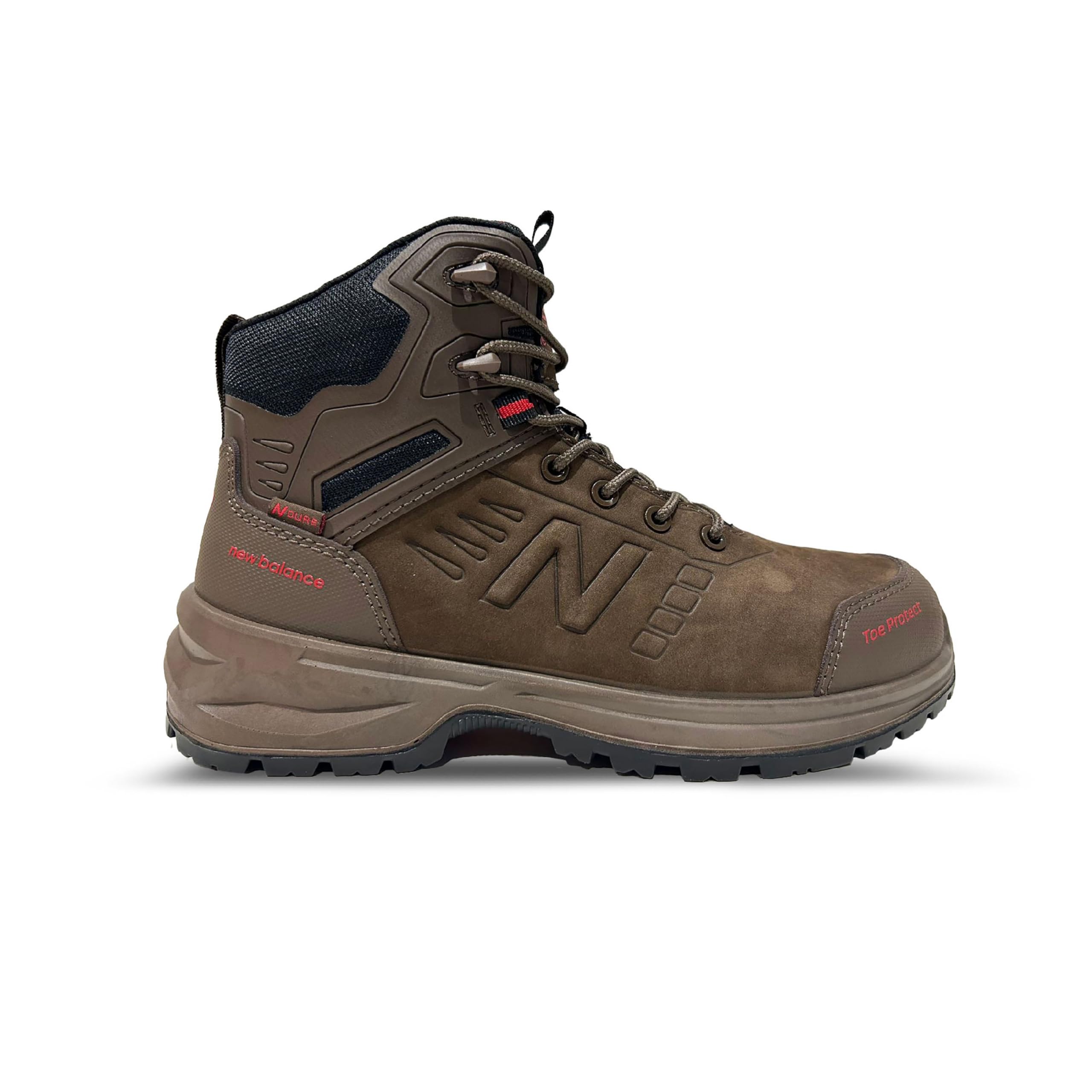
The New Balance Calibre brings a composite toe that is noticeably lighter than steel alternatives, reducing the fatigue of lifting your feet across a concrete floor all day. The side zipper with Velcro closure lets you get in and out quickly without untying — a convenience that adds up when you’re removing boots for security checks or breaks multiple times per shift.
Buyers in warehouse and maintenance roles report the boot stays waterproof under power washing conditions and maintains its appearance for six months with light construction use. The wider toe box accommodates thick socks or orthotics, though the overall fit leans generous, so sizing down is recommended for those with narrow feet.
The top lace holes are not speed hooks, which makes tightening the upper tricky for people with high insteps. Breathability is limited, making these less ideal for hot environments without moisture-wicking socks. The leather scuffs more easily than full-grain options, but the replacement cycle of 6 to 12 months is reasonable given the weight savings and composite toe protection.
Why it’s great
- Composite toe reduces weight for all-day concrete fatigue management
- Side zipper allows quick on/off without unlacing
- Wider toe box accommodates orthotics comfortably
Good to know
- Leather scuffs easily compared to full-grain alternatives
- Poor breathability in hot conditions
7. ARIAT Turbo Chelsea Waterproof Carbon Toe EH
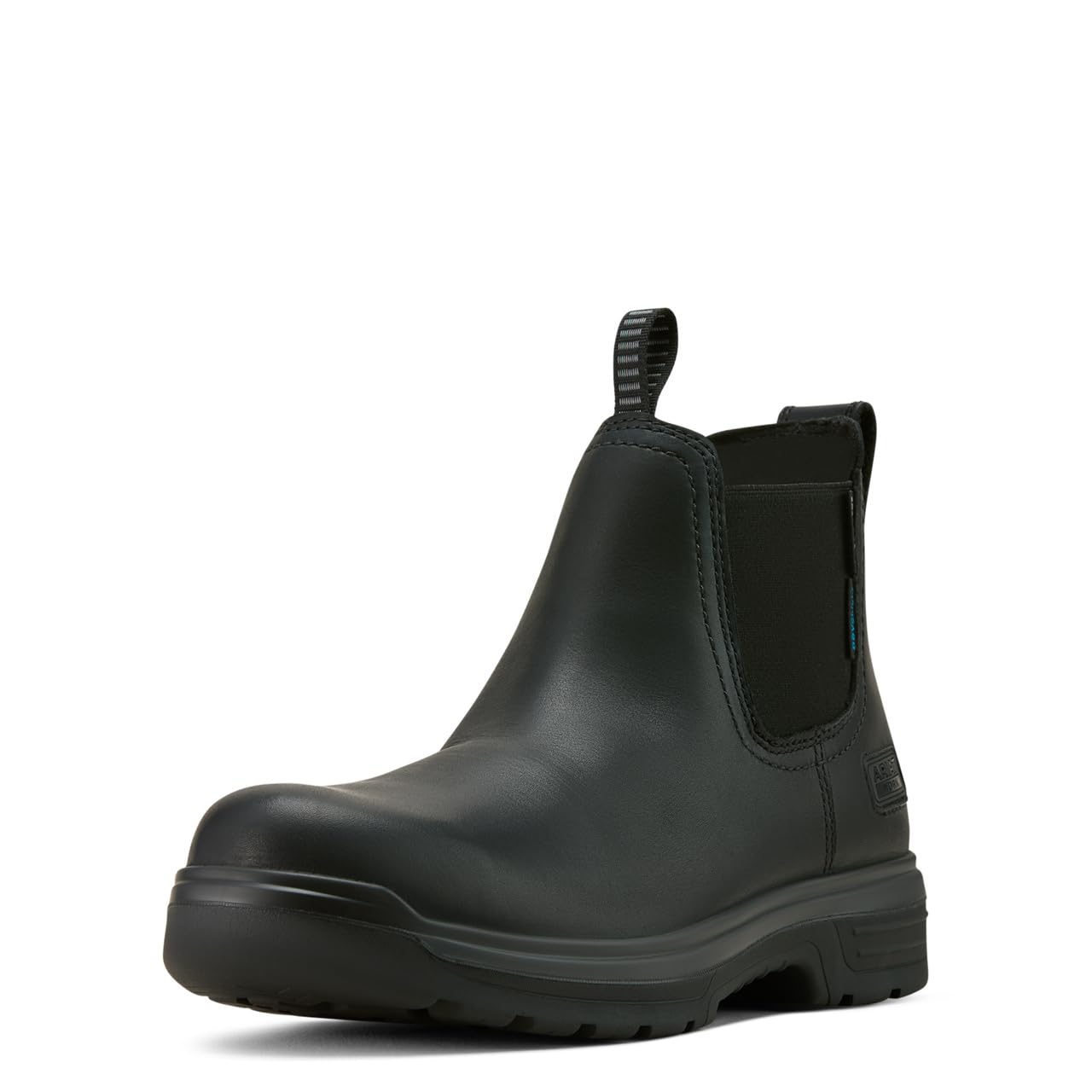
The ARIAT Turbo Chelsea is built for workers who need immediate comfort without a break-in period. The carbon toe offers the same impact protection as steel at roughly half the weight, and the Chelsea silhouette eliminates lacing pressure points entirely — a major advantage on concrete where foot swelling occurs over long shifts. At 1.79 pounds per boot, it’s among the lightest safety toe Chelsea boots available.
Users report wearing these for 9-plus hours of standing and walking on day one with zero hotspots or blisters. The waterproofing holds up under heavy industrial conditions, and the outsole provides reliable grip on dry and wet concrete. One wearer even had the boot survive being run over by a zero-turn mower, which speaks to the carbon toe’s real-world resilience.
A 4 to 5 day break-in is still reported by some users with wider feet. The boot offers less ankle support than lace-up 8-inch alternatives, so it’s best for environments where mobility and quick donning matter more than maximum stabilization.
Why it’s great
- Carbon toe is lighter than steel and alloy alternatives
- Zero break-in period for immediate comfort on concrete
- Chelsea style allows easy on/off with no laces
Good to know
- Carbon toe reduces interior space; sizing up may be needed
- Less ankle support than traditional 8-inch lace-up boots
8. Wolverine Men’s W03238 Durashock Boot

Wolverine’s Durashock midsole is a polyurethane formulation specifically designed to absorb the repetitive impact of walking on hard surfaces.
Buyers report these boots lasting 18 months before showing the kind of wear that prompts replacement — significantly longer than the 6-to-12-month cycle common in this category. The soft leather upper conforms quickly with minimal break-in, and the fit runs true for most foot shapes. The boot is not safety toe rated, which makes it a better fit for environments that prioritize comfort over impact protection.
Stitching and upper separation issues have been reported on previous Wolverine models, though the Durashock series appears to have improved quality control. The outsole offers good traction on dry concrete but can feel slippery on wet or oily surfaces compared to dedicated slip-resistant rubber compounds. Regular leather conditioning extends the upper’s life noticeably.
Why it’s great
- PU Durashock midsole absorbs concrete impact longer than EVA
- Consistently durable for 18 months of daily heavy use
- Soft leather requires almost no break-in period
Good to know
- No safety toe — unsuitable for OSHA-required toe protection zones
- Outsole grip decreases on wet or oily surfaces
9. Cat Footwear mens Striver Steel Toe

The Cat Footwear Striver is a straight-forward steel toe boot that delivers core protection and decent grip at a budget-friendly price point. The steel toe meets ASTM standards for impact and compression, and the rugged outsole provides solid traction on dry concrete and snow-covered surfaces. It’s not packed with advanced cushioning technology, but it does offer a functional platform for lighter duty concrete work.
Users report a rough 1-week break-in period that can be eased with thick wool socks and mink oil. After that, the boot softens into comfortable daily wear. The grip is praised for its reliability on slippery surfaces, and the steel toe is noticeable but not crippling — one reviewer noted you only feel it when you kick something solid. The price makes it a low-risk entry point for someone new to steel toe boots or working on concrete part-time.
The boot lacks a pull tab or loop at the heel, making it harder to get on without a shoehorn. It’s heavier than alloy or composite-toe alternatives, which adds to fatigue during full-day concrete shifts. This boot is best suited for intermittent concrete exposure rather than 60-hour weeks on a concrete warehouse floor.
Why it’s great
- Steel toe protection at an accessible price point
- Durable outsole with good traction on concrete and snow
- Becomes comfortable after break-in with proper conditioning
Good to know
- Heavier than alloy or composite-toe options for extended shifts
- No heel pull tab for easier donning
FAQ
How often should I replace boots used daily on concrete?
Is a steel toe or composite toe better for concrete work?
Do wedge sole boots last as long as heeled boots on concrete?
Final Thoughts: The Verdict
For most users, the boots for working on concrete winner is the Timberland PRO Endurance 8″ because it combines PU midsole longevity, steel toe protection, and waterproofing in a package that handles 65-hour weeks without breaking down. If you prioritize immediate comfort and a zero break-in period, grab the ARIAT Turbo Chelsea. And for maximum shock absorption without a safety toe requirement, nothing beats the Wolverine Durashock.

Mo Maruf
I created WellFizz to bridge the gap between vague wellness advice and actionable solutions. My mission is simple: to decode the research and give you practical tools you can actually use.
Beyond the data, I am a passionate traveler. I believe that stepping away from the screen to explore new environments is essential for mental clarity and physical vitality.