Our readers keep the lights on and my smoothie glass nicely filled. As an Amazon Associate, I earn from qualifying purchases.
Finding headphones that deliver chest-thumping low-end without burying the mids and highs is the core tension in this market — most budget sets either rattle the ear cups or produce a muddy, one-note boom. The difference between a driver and a dedicated bass system is measurable in driver excursion, diaphragm stiffness, and frequency response curve below 60 Hz.
I’m Mohammad Maruf — the founder and writer behind WellFizz. I spend my time dissecting driver architecture, enclosure tuning, and Bluetooth codec bottlenecks that determine whether a set of cans actually reproduces sub-bass or just simulates it with distortion.
After stacking seven contenders across wired studio monitors and wireless gym-focused models, the shortlist for the best bass boosted headphones reveals a clear split between analytical low-end for mixing and sensory bass for working out.
How To Choose The Best Bass Boosted Headphones
True bass-forward sound requires more than a software EQ slider — it begins with the physical driver architecture and the enclosure’s ability to handle low-frequency pressure without distortion. Here are the critical factors that separate a well-tuned bass response from a flabby, one-note thump.
Driver Size and Type
A 40mm dynamic driver is the industry baseline, but larger 50mm drivers found in studio monitors can move more air for deeper sub-bass extension. The real differentiator is diaphragm material — rigid polymer or beryllium-coated diaphragms resist buckling at high excursion, preserving clarity when the track drops into the 30–50 Hz range.
Impedance and Sensitivity
Low-impedance headphones (around 32 ohms) are easier to drive from a phone or laptop, but they can clip on bass-heavy passages if the amplifier doesn’t supply enough current. Higher-sensitivity ratings above 100 dB/mW ensure that the low end remains punchy without needing a separate headphone amp.
Wired vs. Wireless Bass Delivery
Wired connections deliver uncompressed audio, which preserves the full dynamic range of a bass-heavy mix. Bluetooth codecs like AAC and SBC can compress the low-frequency information, especially on older versions. For wireless bass, look for headphones with a dedicated onboard DSP that applies a hardware bass curve post-codec — this avoids the thin, hollow sound many Bluetooth sets exhibit.
Battery Life and Charge Speed
Bass-boosted wireless headphones draw more current to drive the low-end amplification circuit. A battery rating of at least 40 hours ensures the bass circuit stays active through a work week. Rapid-charge features that deliver 3–8 hours of playback from a 10-minute charge are essential for gym travelers who forget to plug in.
Quick Comparison
On smaller screens, swipe sideways to see the full table.
| Model | Category | Best For | Key Spec | Amazon |
|---|---|---|---|---|
| Skullcandy Crusher 540 Active | Wireless Over-Ear | Gym with sensory bass | 40mm + dual bass drivers | Amazon |
| Beats Solo 4 | Wireless On-Ear | Premium balanced sound | Custom 50-hour acoustic drivers | Amazon |
| Skullcandy Hesh 360 | Wireless Over-Ear | Long endurance with bass | 100-hour battery life | Amazon |
| Soundcore Q20i | Wireless Over-Ear | Budget ANC with BassUp | 40mm drivers + BassUp mode | Amazon |
| JBL Tune 520BT | Wireless On-Ear | Everyday JBL Pure Bass | 57-hour battery life | Amazon |
| JBL Tune 510BT | Wireless On-Ear | Compact entry-level bass | 40-hour battery with USB-C | Amazon |
| OneOdio Pro-10 | Wired Over-Ear | Studio monitoring bass | 50mm neodymium drivers | Amazon |
In‑Depth Reviews
1. Skullcandy Crusher 540 Active
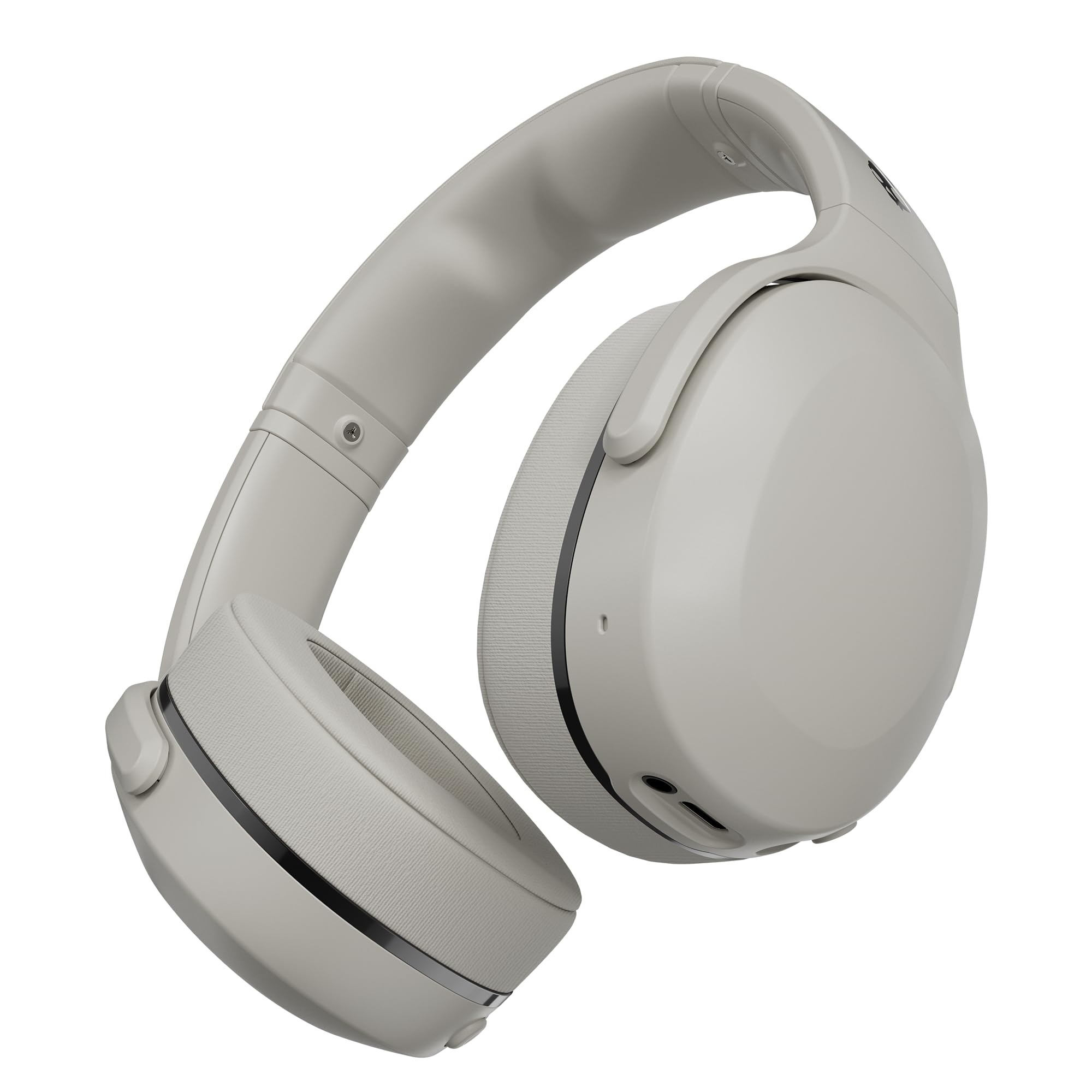
The Crusher 540 Active is the only closed-back wireless headphone in this class that deploys dual dedicated bass drivers alongside the primary 40mm full-range drivers. This dual-driver architecture allows sub-bass down to 20 Hz with tactile vibration — you feel the kick drum in your jaw rather than just hearing it. The Bass Slider on the left ear cup lets you dial in the intensity from a light rumble to a head-shaking thump without touching an app.
At 40 hours of battery life with Rapid Charge delivering 4 hours from a 10-minute plug-in, this set stays viable through a full week of gym sessions and commutes. The nano-coating and breathable ear cushions resist sweat absorption, and the clamp force holds securely during burpees or bench presses. Tile finding technology is baked into the headband for recovery after careless storage.
The sound signature is undeniably consumer-tuned — mid-bass is elevated by about 8 dB relative to neutral, which can mask fine detail in the upper mids. Audiophiles tracking cymbal decay or vocal sibilance will prefer a flatter reference. But for the buyer whose primary demand is visceral, floor-shaking low end, this is the definitive tool.
Why it’s great
- Dual bass drivers produce tactile sub-bass no EQ can fake
- Sweat-resistant nano-coating survives heavy gym use
- 40-hour battery with fast 10-minute Rapid Charge
Good to know
- Bass slider at max distorts mid-bass slightly on complex tracks
- Heavier than average; small heads may find clamp force tight
2. Beats Solo 4

The Solo 4 represents the fourth generation of Beats’ on-ear architecture, and the acoustic engineers have finally tuned the bass to punch rather than boom. The custom driver layering produces a 40 Hz sub-bass that remains controlled at 90% volume — no port chuffing or diaphragm slap, which plagued earlier Solo models. Personalized Spatial Audio with dynamic head tracking adds a holographic layer to the low end without smearing the stereo image.
Battery life reaches 50 hours, and Fast Fuel provides 5 hours of playback from a 10-minute charge via USB-C. The UltraPlush ear cushions are larger than the Solo 3, reducing the on-ear pressure that made long listening fatiguing. Class 1 Bluetooth extends reach to about 100 meters line-of-sight, rare in this category.
The trade-off is the on-ear form factor itself: the angled cups never fully seal, so ambient noise leaks in during loud commutes. Bass extension below 50 Hz rolls off faster than over-ear equivalents, and the lack of active noise cancellation means you’ll need to raise volume in noisy environments. This is a lifestyle bass headphone, not a studio reference.
Why it’s great
- Controlled 40 Hz bass with no distortion at high SPL
- UltraPlush cushions reduce on-ear pressure significantly
- 50-hour battery and 5-hour Fast Fuel charge
Good to know
- On-ear design leaks sound and lets in ambient noise
- No active noise cancellation for loud travel
3. Skullcandy Hesh 360
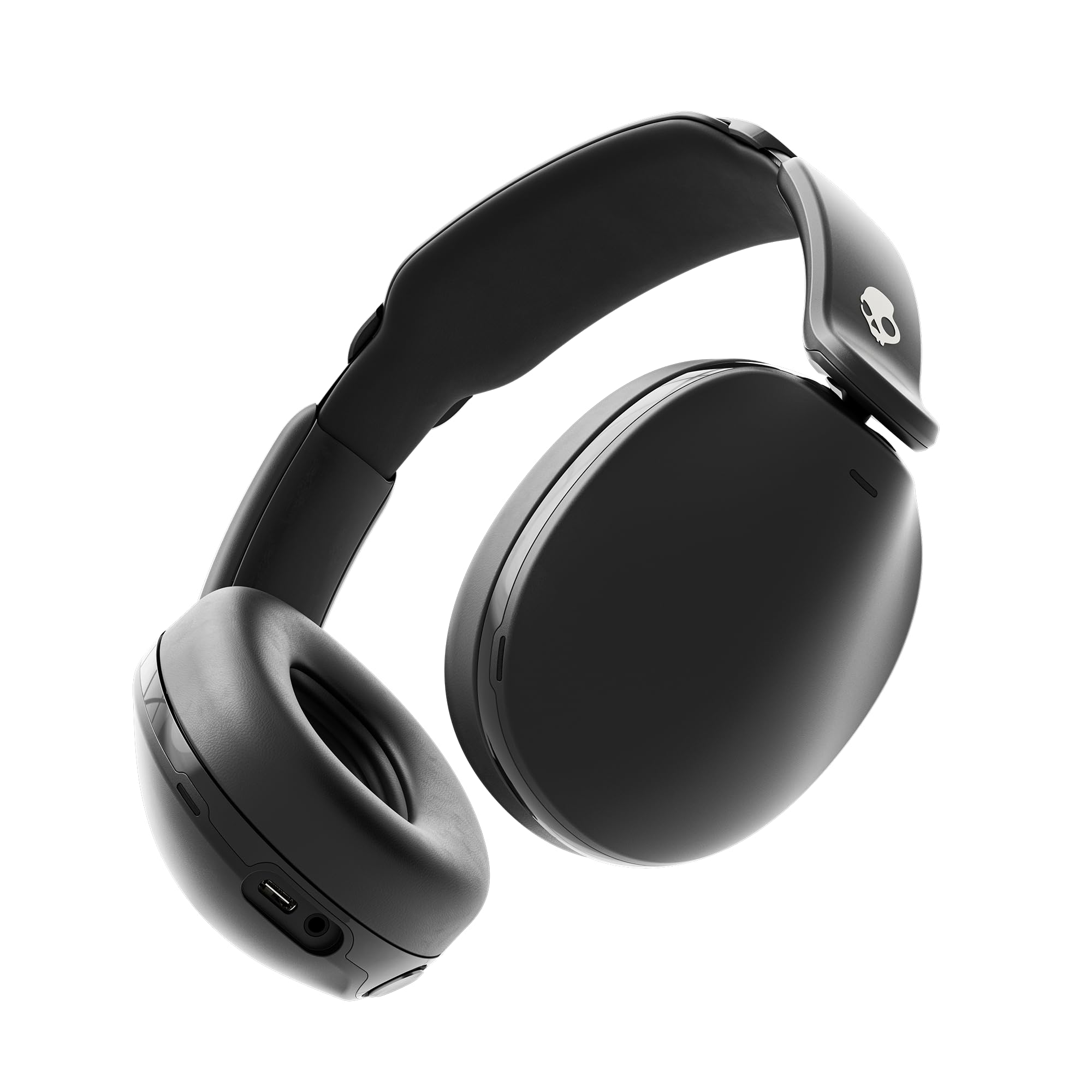
The Hesh 360 trades dual-bass drivers for a single 40mm dynamic driver tuned with a broad 6 dB low-shelf boost from 80 Hz downward. The result is a warm, present bass that doesn’t overpower the mids — kick drums have satisfying weight, and bass guitars retain their string articulation. The 100-hour battery life is the highest in this lineup, and Rapid Charge delivers 8 hours of playback from a 10-minute charge, which changes the calculus for field use.
Multipoint pairing lets you toggle between a laptop and phone without manually disconnecting. The Adjustable Stay-Aware Mode in the Skullcandy App allows variable ambient mic pass-through, which is useful for jogging on shared paths without removing the cans. The flat-folding design compresses to palm size for backpack carry.
Bass extension at the extreme bottom end (sub-40 Hz) is limited by the single-driver architecture — there is no tactile rumble. The ear cushions are plush but generate heat during extended wear in warm rooms. For listeners who want a deep but controlled low end without the head-shaking gimmick, the Hesh 360 is the rational choice.
Why it’s great
- 100-hour battery life is class-leading and liberating
- Controlled bass boost keeps mids articulate
- Multipoint Bluetooth and adjustable ambient mode
Good to know
- No sub-bass tactile rumble below 40 Hz
- Ear cushions can get warm after 2 hours
4. Soundcore by Anker Q20i

Anker’s Q20i combines hybrid active noise cancellation with a dedicated BassUp mode that applies a 5–7 dB shelf boost below 100 Hz through the onboard DSP. The 40mm dynamic drivers are tuned for decent excursion, and the BassUp setting rounds off the low end without introducing port compression or distortion. In normal mode the signature is neutral-leaning — the bass boost is an optional layer, not a baked-in tuning.
Battery life reaches 40 hours with ANC on and 60 hours in standard mode. The 5-minute fast charge provides 4 hours of playback, which is competitive with the premium tier. Dual-device Bluetooth 5.0 connects to a laptop and phone simultaneously, and the Soundcore App provides 22 EQ presets plus a custom 10-band equalizer for fine-tuning the low end to personal taste.
The ANC is effective for low-frequency drone (airplane hum, fan noise) but less so for higher-pitched chatter. The BassUp mode introduces a slight warmth that can make vocals sound recessed at maximum boost. For buyers who want ANC plus an on-demand bass lift without spending above the range, this is the strongest contender.
Why it’s great
- Hybrid ANC kills low-frequency noise for commute focus
- BassUp mode is a toggleable boost, not permanent tuning
- 60-hour battery in standard mode is excellent endurance
Good to know
- ANC struggles with high-frequency voices
- BassUp at max can veil upper-mid clarity
5. JBL Tune 520BT

JBL’s Pure Bass tuning is a documented formula — a 4–5 dB elevation in the 60–80 Hz octave with a quick roll-off above 150 Hz to prevent bleed into the vocals. The Tune 520BT implements this curve cleanly, avoiding the muddy lower-mid hump that plagues cheaper bass-boosted sets. Bluetooth 5.3 ensures stable transmission of the bass signal without dropouts, and the JBL Headphones App provides a 5-band EQ for minor adjustments.
The on-ear form factor is compact and lightweight at 157 grams, making this the most travel-friendly option. Battery life tops 57 hours, and the 5-minute speed charge yields 3 hours of playback. The on-ear cup buttons handle playback and call management intuitively.
The smaller ear cups exert mild clamping pressure on larger ears, and the on-ear seal is not complete — bass response drops noticeably in noisy open-plan environments. The lack of active noise cancellation means you will raise volume to compensate, which eats into the battery faster. This is a bass headphone for quiet to moderate-noise settings only.
Why it’s great
- JBL Pure Bass curve is clean with no mid-bay mud
- Ultra-light 157g design for all-day carry
- 57-hour battery with 3-hour rapid charge
Good to know
- On-ear seal fails in noisy environments
- No ANC; volume must increase in loud rooms
6. JBL Tune 510BT

The Tune 510BT uses the same foundational Pure Bass tuning as the 520BT but with a generation-older Bluetooth 5.0 chip and a slightly less aggressive EQ curve in the sub-bass region. The 40-hour battery life is still strong, and the 2-hour USB-C full charge is convenient for daily top-ups. The on-ear design folds flat into a compact profile that fits in most jacket pockets.
Build quality is identical to the 520BT — plastic construction with a flexible headband that survives moderate abuse. The mic on the ear cup handles hands-free calls with decent clarity indoors, and the multi-function button activates Siri or Google Assistant on paired devices. The adjustable headband accommodates a wide range of head sizes, though the slender padding can feel thin on top during extended sessions.
The sub-bass extension is noticeably weaker than the Crusher 540 or even the Q20i’s BassUp mode — tracks with deep synth bass below 50 Hz lose their physical weight. The on-ear design lets in significant ambient noise. This is an entry-level set for listeners who want the JBL bass signature on a strict budget and don’t need sub-50 Hz rumble.
Why it’s great
- JBL Pure Bass signature at a very accessible price
- Folds flat for ultra-compact storage
- 40-hour battery with 2-hour full charge
Good to know
- Sub-bass below 50 Hz lacks physical weight
- On-ear design provides minimal noise isolation
7. OneOdio Wired Over Ear Headphones Pro-10

The OneOdio Pro-10 is a wired studio headphone that uses large 50mm dynamic drivers with neodymium magnets — the same topology found in many reference-class headphones costing five times as much. The bass response is linear and extended down to 20 Hz with very low distortion, making this the only option in the roundup suitable for critical mixing of bass-heavy genres. The 90-degree swiveling ear cups allow single-ear monitoring for DJ cueing without removing the whole set.
Dual connection ports (3.5mm and 6.35mm) cover studio interfaces, amplifiers, and consumer devices without adapters. The self-adjusting headband distributes weight evenly, though the 256-gram build is heavier than the wireless on-ear sets. The shared audio port lets a second listener plug in without a splitter — useful for collaborative production sessions.
The velour-like ear pads are comfortable for 3+ hour sessions but will compress over 6–12 months of daily use. There is no inline microphone or volume control on the cable, so call functionality is absent. The sound signature is neutral with slight upper-mid emphasis — the bass is accurate but not boosted, so buyers expecting a consumer thump should look elsewhere. This is a tool, not a toy.
Why it’s great
- 50mm neodymium drivers deliver linear 20 Hz bass
- Dual 3.5mm and 6.35mm ports for studio and consumer gear
- Single-side monitoring with swiveling cups
Good to know
- Neutral tuning — not a consumer bass boost
- Ear pad coating can peel after extended use
FAQ
What driver size is ideal for deep bass in headphones?
Can I add a bass boost to any headphone with an EQ app?
Do wireless Bluetooth headphones deliver less bass than wired ones?
Final Thoughts: The Verdict
For most users, the best bass boosted headphones winner is the Skullcandy Crusher 540 Active because dual independent bass drivers produce tactile sub-bass that EQ alone cannot replicate, and the sweat-resistant build makes it gym-ready. If you want balanced bass with ANC and long battery, grab the Soundcore Q20i. And for studio-critical bass extension with no wireless compression, nothing beats the OneOdio Pro-10.

Mo Maruf
I created WellFizz to bridge the gap between vague wellness advice and actionable solutions. My mission is simple: to decode the research and give you practical tools you can actually use.
Beyond the data, I am a passionate traveler. I believe that stepping away from the screen to explore new environments is essential for mental clarity and physical vitality.