Our readers keep the lights on and my smoothie glass nicely filled. As an Amazon Associate, I earn from qualifying purchases.
Overpronation isn’t just a foot issue — it’s a chain reaction that travels up through your ankles, knees, and hips, turning every run or long walk into a grind against instability. The right arch support can realign your stride, but picking the wrong one adds discomfort or worsens the very collapse it’s meant to fix.
I’m Mohammad Maruf — the founder and writer behind WellFizz. My research focuses on biomechanics and footwear engineering, drilling into how specific foam densities, posting structures, and insole contours actually manage pronation over time.
After evaluating the top options on the market, I’ve broken down exactly which models deliver the medial support and cushioning you need. This is your guide to finding the best arch support for overpronation, built around real specs and real user outcomes.
How To Choose The Best Arch Support For Overpronation
Overpronation means your foot rolls inward too much when you step. The right solution doesn’t just cushion the arch — it actively resists that collapse. Here’s what to watch for when picking between insoles and stability shoes.
Medial Posting vs. Guide Rails
Medial posts are firmer densities built into the midsole’s inner edge to block excessive roll. Guide rails, found in modern stability shoes, are plastic or foam walls that cradle the heel and guide the foot forward without forcing it into a rigid position. Your choice depends on whether you need firm resistance or adaptive support.
Arch Height and Contour
A low or flat foot needs a shallower arch cup to avoid painful pressure on the navicular bone. High arches require deeper, more pronounced contours. Most insoles offer moderate or high profiles — check customer feedback from users with similar foot types before buying.
Cushion Density and Stack Height
Dual-density foams provide a soft top layer for comfort and a firm bottom layer for control. Stack height (the thickness of the sole) affects stability: taller stacks can feel unstable for overpronators unless reinforced with a wide base or external heel counter. For insoles, look for dual-layer construction that doesn’t bottom out under load.
Quick Comparison
On smaller screens, swipe sideways to see the full table.
| Model | Category | Best For | Key Spec | Amazon |
|---|---|---|---|---|
| PowerStep Pinnacle Insoles | Insole | All-day wear & shoe versatility | Dual-layer cushion, firm poly arch | Amazon |
| Saucony Women’s Omni 21 | Stability Shoe | Daily running & walking | Medial post, PWRRUN foam | Amazon |
| Saucony Men’s Hurricane 24 | Stability Shoe | Long-distance runs & recovery | Guide rails, PWRRUN PB top layer | Amazon |
| New Balance Fresh Foam X 860 V13 | Stability Shoe | High-mileage training & walking | Fresh Foam X, medial post | Amazon |
| Hoka Arahi 7 | Stability Shoe | Recovery & injury prevention | J-Frame guide, early-stage Meta-Rocker | Amazon |
In‑Depth Reviews
1. PowerStep Pinnacle Insoles

With over two decades on the market and a #1 podiatrist-recommended claim, the PowerStep Pinnacle remains a go-to for moderate overpronation. Its full-length design combines a rigid polypropylene arch shell with dual-layer cushioning, giving you the structured resistance needed to stop the foot from rolling inward without sacrificing step-in comfort.
The arch profile sits on the higher side, which reviewers note can feel aggressive for those with truly flat feet during the first few days. Once broken in, however, the support locks the heel in place and dramatically offloads pressure from the plantar fascia — a recurring theme in feedback from users who saw 65% improvement in PF pain and reduced lower back strain.
These insoles fit shoes where the factory insole can be removed — athletic, work, and casual styles all work. No trimming is required, and the polyester top cover wicks moisture well. For a mid-range entry that works across multiple shoe types, the PowerStep Pinnacle is the most versatile pronation manager here.
Why it’s great
- Firm polypropylene arch shell resists pronation effectively
- Dual-layer cushioning reduces fatigue during all-day wear
- No trimming needed — fits standard removable-insoles shoes
- Podiatrist-recommended with strong PF and back pain relief reports
Good to know
- High arch may feel too firm for very flat feet initially
- Only fits shoes with removable insoles — not for slip-ons
2. Saucony Women’s Omni 21 Running Shoes
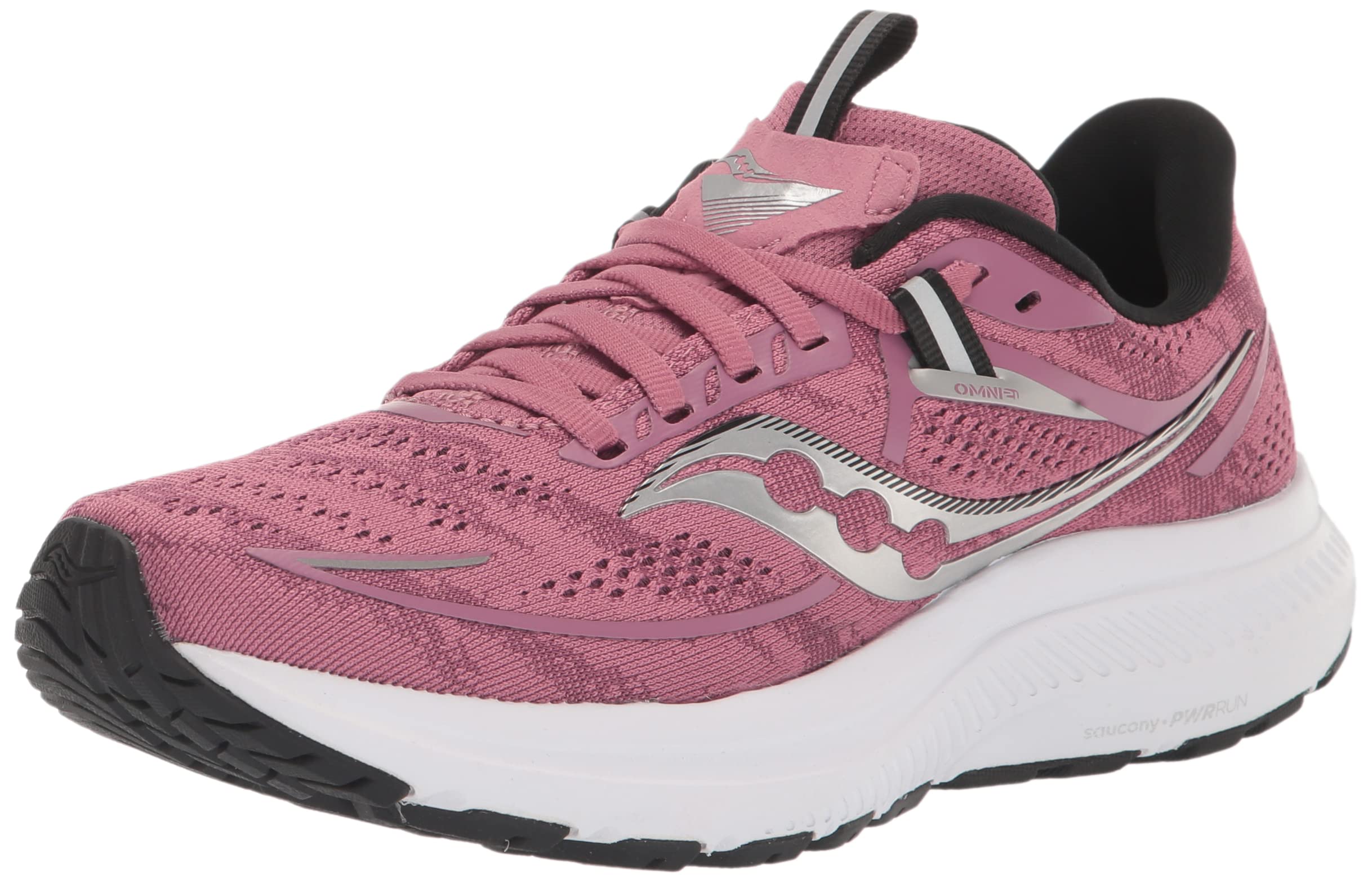
The Saucony Omni 21 hits the sweet spot between daily trainer and stability powerhouse. It uses a medial post system — a higher-density foam wedge along the inner midsole — to actively brake overpronation on each footstrike. The PWRRUN midsole provides a responsive ride without feeling mushy, making it a solid pick for runners who want to maintain a natural gait.
Testers consistently highlight the wide toe box, which accommodates orthotics if you need extra arch height beyond what the shoe’s built-in support offers. The outsole features durable rubber coverage, and the upper uses engineered mesh for breathability during longer sessions. Several reviews mention it works equally well for walking and light trail use thanks to the aggressive tread pattern.
Fitting is true to size for most, though a half-size up is recommended if you plan to use custom insoles. The Omni 21 is not the lightest shoe in the category, but the trade-off is noticeably better motion control for moderate to severe pronators who don’t want a marshmallow-soft platform.
Why it’s great
- Medial post provides targeted pronation resistance during runs
- Wide toe box accommodates orthotics and foot swelling
- Durable outsole with multi-surface traction
- Responsive PWRRUN foam for daily training
Good to know
- Heel fit runs slightly snug for narrow-footed runners
- Not ideal for speed workouts — built for steady miles
3. Saucony Men’s Hurricane 24 Sneaker
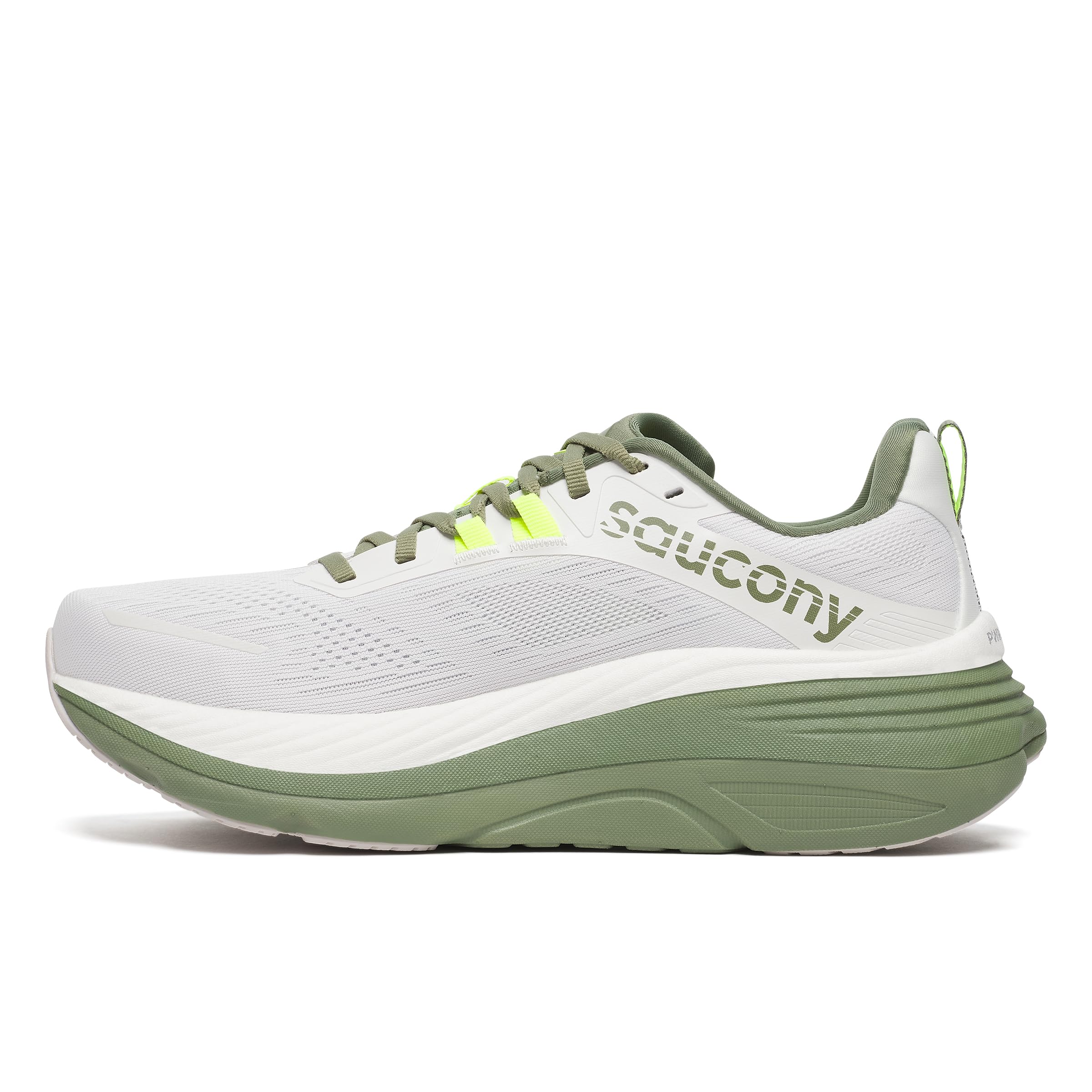
The Hurricane 24 is Saucony’s max-stability offering, engineered for runners who need pronounced pronation control across ultra distances and recovery runs. Instead of a traditional medial post, it uses a guide rail system — plastic walls on both sides of the heel that cradle the foot and prevent excessive inward roll without a hard block under the arch.
The midsole stacks PWRRUN PB (a pebax-based foam) underfoot, delivering a plush, energy-returning ride that feels softer than the Omni 21 yet still highly supportive. Reviewers note that the forefoot and toe box offer generous room, and the weight — while higher than neutral trainers — is acceptable given the stability it provides. Several users managing patellar tendonitis and flat feet report it as their most comfortable long-distance shoe.
An important caveat: build consistency varies between production facilities. Some pairs run narrower and more pliable, while others feel wider and firmer. If possible, try them on or order from a retailer with a flexible return policy. Despite this, the Hurricane 24 remains a top-tier choice for male runners logging 20-plus miles weekly with moderate to severe overpronation.
Why it’s great
- Guide rails provide non-intrusive stability without a harsh medial post
- PWRRUN PB foam offers excellent energy return and comfort
- Roomy forefoot and toe box for long-run foot swelling
- Excellent for patellar tendonitis and flat-footed runners
Good to know
- Heavier build — not suited for speed days or racing
- Inconsistent fit between different manufacturing batches
4. New Balance Fresh Foam X 860 V13
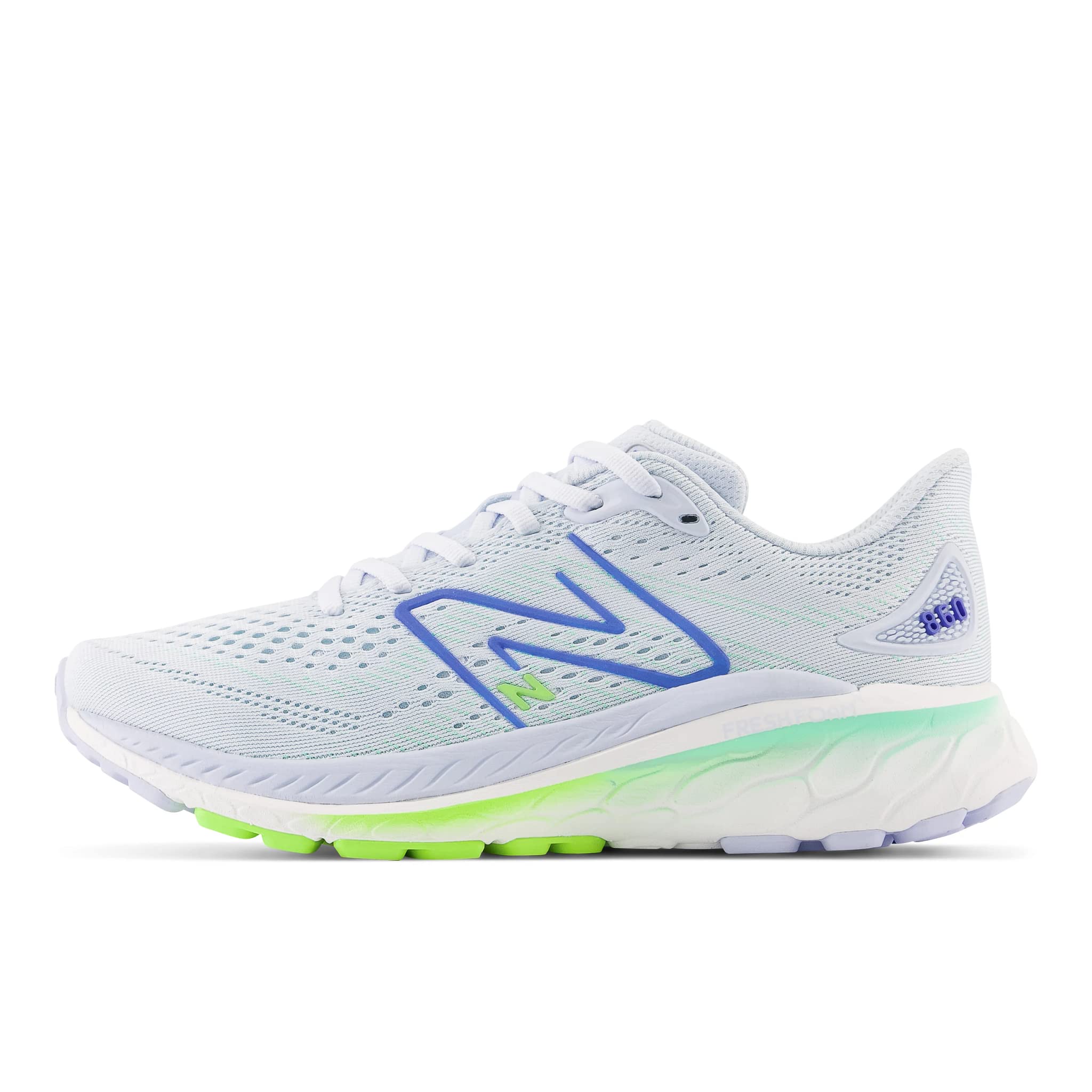
The Fresh Foam X 860 V13 is New Balance’s answer to the stability category, pairing a generous slab of their softest foam (Fresh Foam X) with a discreet medial post for pronation management. It’s a shoe that prioritizes comfort first — the kind of platform you can wear for a full workday on your feet, then head straight to a long walk without switching shoes.
Feedback from users consistently points to the plush heel cushioning as a game-changer for plantar fasciitis and general foot soreness. The arch support sits at a moderate height, making it accessible to a wider range of foot types than aggressively posted alternatives. However, the shoe does run narrow and slightly small: multiple reviewers recommend going a half to a full size up, especially if you plan to use thick socks or custom orthotics.
The outsole features aggressive traction lugs that grip well on paved and light gravel surfaces. While the Fresh Foam X compound delivers exceptional step-in plushness, it does compress more over time than denser foams, meaning heavy runners may notice a drop in support after 300 miles. For moderate pronators seeking a cushioned daily trainer, the 860 V13 is a strong balance of comfort and control.
Why it’s great
- Fresh Foam X offers premium step-in comfort for all-day wear
- Moderate medial post works for mild-to-moderate pronation
- Aggressive outsole traction for mixed-surface use
- Effective heel-to-toe rocker aids smooth gait
Good to know
- Runs narrow — size up half to full size for comfortable fit
- Foam compresses faster than firmer stability alternatives
5. Hoka Arahi 7
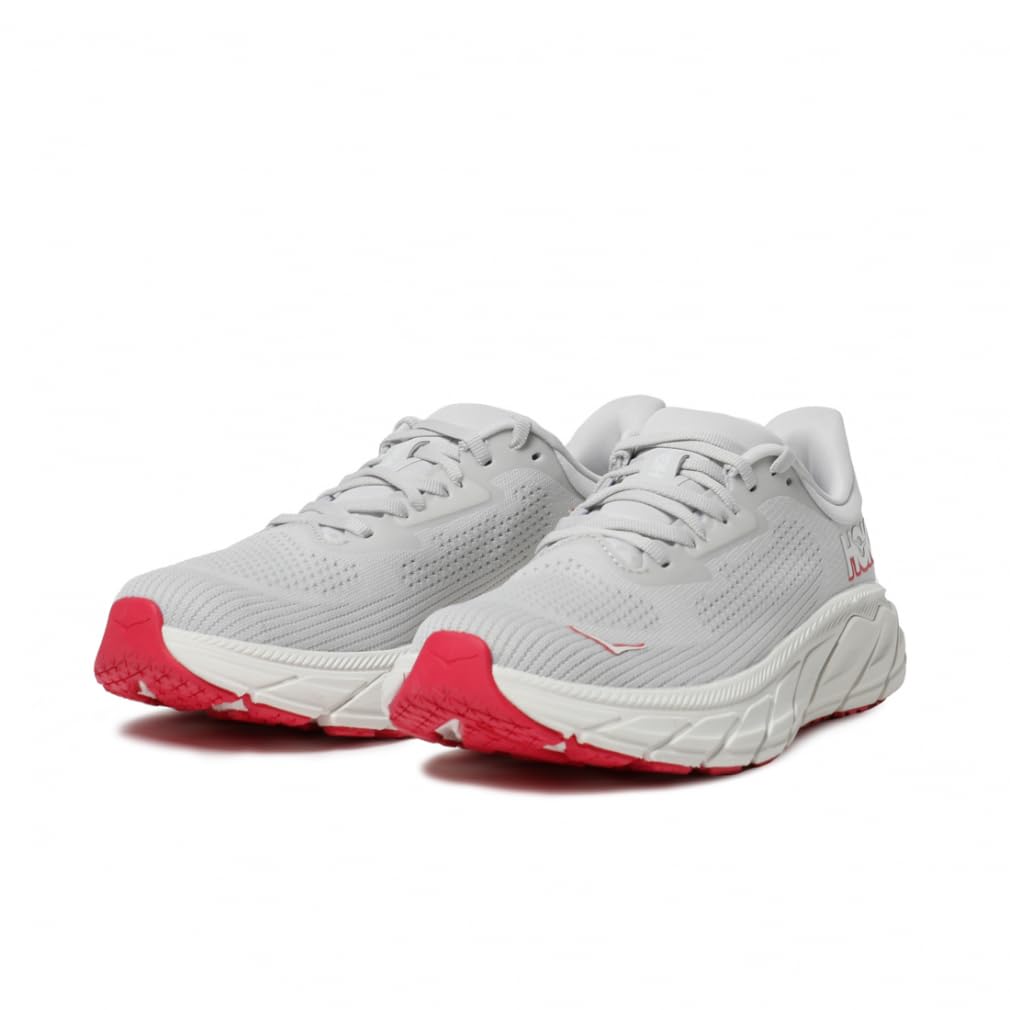
The Hoka Arahi 7 is the lightest stability shoe in this lineup, using Hoka’s J-Frame technology — a firmer foam density that wraps around the heel and medial side — to guide the foot without a traditional post. Combined with the early-stage Meta-Rocker geometry, the Arahi encourages a smooth heel-to-toe transition that feels nearly effortless, even for those with posterior tibial tendon issues.
User reports are overwhelmingly positive for recovery scenarios: runners returning from injury or dealing with chronic pronation-related pain praise the Arahi’s ability to reduce discomfort while maintaining a nimble, non-bulky feel. The stack height is generous, yet the shoe stays impressively light thanks to the supercritical foam formulation. The upper is breathable and the heel counter is structured without being stiff.
However, the J-Frame provides a subtler level of pronation control than a full medial post or guide rail system. Severe overpronators — those whose ankles collapse significantly — may find the Arahi too soft for aggressive motion control. It’s best suited to mild or moderate pronators who want a stable ride without the weight penalty of a traditional stability shoe. The Arahi 7 is a premium tool for the runner who values a smooth, quiet gait above raw resistance.
Why it’s great
- J-Frame provides subtle, non-intrusive stability for mild-to-moderate pronation
- Meta-Rocker promotes a smooth, efficient stride
- Lightweight construction for a stability shoe (under 9 oz women’s)
- Excellent for recovery runs and injury-prone runners
Good to know
- Not enough resistance for severe overpronation needs
- Higher price point than comparable stability options
FAQ
Can a shoe alone fix severe overpronation or do I need custom orthotics?
How quickly should I transition into a firm stability insole like the PowerStep Pinnacle?
Will a stability shoe like the Hoka Arahi 7 wear out faster than a neutral shoe?
Final Thoughts: The Verdict
For most users, the best arch support for overpronation winner is the PowerStep Pinnacle Insole because its rigid polypropylene shell provides the most reliable pronation resistance across all shoe types, backed by decades of podiatric recommendation. If you want a stable shoe for daily runs with a wide toe box and responsive foam, grab the Saucony Omni 21. And for long-distance recovery miles where you need cushioned guide-rail support without the weight, nothing beats the Hoka Arahi 7.

Mo Maruf
I created WellFizz to bridge the gap between vague wellness advice and actionable solutions. My mission is simple: to decode the research and give you practical tools you can actually use.
Beyond the data, I am a passionate traveler. I believe that stepping away from the screen to explore new environments is essential for mental clarity and physical vitality.