Our readers keep the lights on and my smoothie glass nicely filled. As an Amazon Associate, I earn from qualifying purchases.
The articulated screen has moved beyond a simple vlogger convenience—it is now a structural necessity for any shooter who frames from a low angle, overhead, or self-portrait position. But a flimsy hinge, poor resolution, or a screen that flips sideways only to block your own hotshoe port turns a useful tool into a workflow liability. The real challenge is matching the right articulation type to your shooting style while keeping image quality and autofocus performance high.
I’m Mohammad Maruf — the founder and writer behind WellFizz. Over years of analyzing camera hardware, I’ve carefully tracked how flip screen mechanisms, hinge durability, and screen dot ratings interact with sensor performance and lens ecosystems to help you make a purchase that lasts.
Whether you shoot from a tripod, film yourself at arm’s length, or need a waist-level finder for street photography, the right body with a smartly engineered hinge transforms your setup. This guide compares the leading contenders to help you identify the best camera with flip screen for your specific creative demands.
How To Choose The Best Camera With Flip Screen
Not every tilting or flipping display serves the same purpose. A fully articulated screen that swings out to the side is ideal for vloggers who mount the camera on a tripod, because the screen clears the tripod plate. A top-tilting screen is more discreet for street shooters but becomes blocked by a hotshoe microphone. Know your rig before you pick the hinge.
Screen Resolution & Brightness
A 1.04-million-dot LCD is the baseline for accurate manual focus peaking. Screens rated at 1.62 million dots or higher offer noticeably sharper playback review. Peak brightness matters more: a 400-nit or higher display stays usable under direct sunlight, while dimmer screens force you to rely on the viewfinder or a hood.
Autofocus Performance in Selfie Mode
When you flip the screen toward yourself, the camera’s face and eye detection must remain reliable without the phase-detect array behind the mirror. Look for on-sensor phase detection that covers at least 80% of the frame. Real-time Eye AF for humans (and animals) ensures the focus stays locked even as you move through the frame.
Video Recording Limits & Overheating
Many cameras impose a 29-minute, 59-second recording limit or shut down after 20 minutes of 4K when the screen is flipped out and the sensor works harder. Bodies with active cooling—like a built-in fan—or those that allow unlimited recording in a specific codec (10-bit 4:2:2) are safer if you film long interviews or livestreams.
Quick Comparison
On smaller screens, swipe sideways to see the full table.
| Model | Category | Best For | Key Spec | Amazon |
|---|---|---|---|---|
| Panasonic LUMIX S5II | Full-Frame Hybrid | Unlimited 4K 10-bit with fan cooling | Phase Hybrid AF + Active I.S. | Amazon |
| Nikon Z6 III | Full-Frame Stills/Video | 6K/60p internal N-RAW | 4000-nit EVF / 4K/120p | Amazon |
| FUJIFILM X-E5 | APS-C Rangefinder | Compact travel with film sim dial | 40.2MP X-Trans 5 HR / 7-stop IBIS | Amazon |
| Sony a7 III | Full-Frame Classic | Pro-grade battery life & AF speed | 693 phase-detect AF points | Amazon |
| Panasonic LUMIX S5 | Full-Frame Video Focus | V-Log 14+ stop dynamic range | 6.5-stop Dual I.S. 2 | Amazon |
| Canon EOS R7 | APS-C Action | 15 fps mech / 30 fps e-shutter | 32.5MP APS-C / 5-axis IBIS | Amazon |
| OM SYSTEM OM-5 Mark II | Micro 4/3 Travel | Weather-sealed lightweight kit | Computational photography button | Amazon |
| Nikon Z 6II | Full-Frame Versatile | Dual card slots (CFexpress + SD) | 24.5MP BSI / 14 fps | Amazon |
| Canon EOS RP | Entry Full-Frame | Lightweight travel & vlogging | RF 24-105mm F4-7.1 IS STM | Amazon |
| Sony Alpha a6400 | APS-C Compact | Fast 0.02 sec AF on a budget | 425 phase/425 contrast points | Amazon |
| Nikon D5100 | DSLR Entry | Budget-friendly articulating LCD | 16.2MP DX / 920k-dot LCD | Amazon |
In‑Depth Reviews
1. Panasonic LUMIX S5II Mirrorless Camera
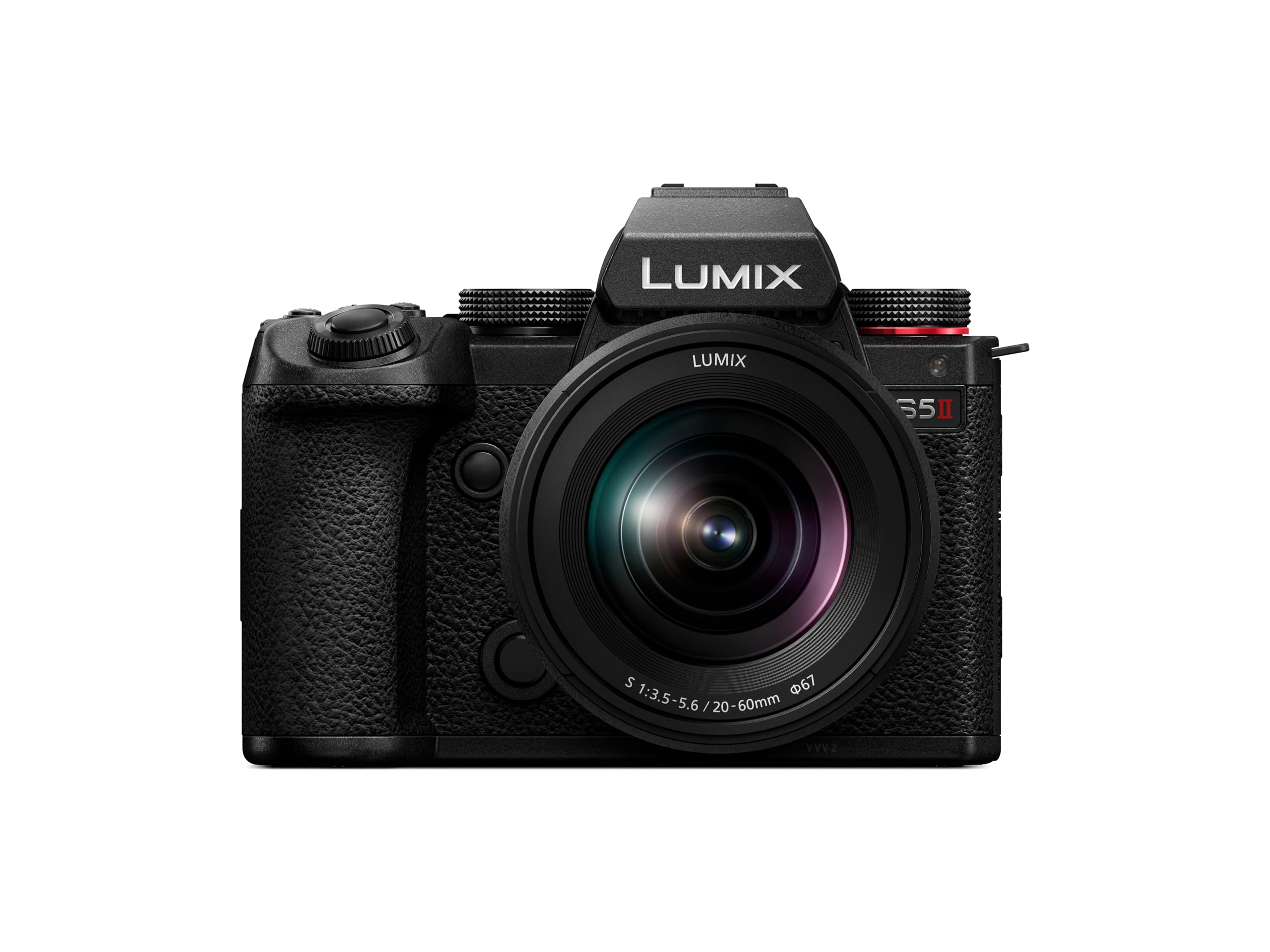
The S5II addresses the single biggest complaint of its predecessor by adding Phase Hybrid Autofocus, which finally delivers reliable face and eye tracking even when the flip screen is turned toward the user. The 24.2MP full-frame sensor captures clean 4:2:2 10-bit color internally, and the built-in fan eliminates the overheating that plagued earlier Lumix bodies during long takes. You get truly unlimited recording in 6K Open Gate or 4K 60p without a time limit counter ticking in the corner.
Active I.S. technology uses a gyro sensor to correct for walking motion, making handheld gimbal shots less wobbly while you watch your framing on the side articulated 1.84-million-dot LCD. The flip screen mechanism swings out to the left, freeing the hotshoe for an external mic—a thoughtful layout for solo creators. The 20-60mm F3.5-5.6 kit lens provides a useful wide starting point, especially for real estate or environmental portraits.
Battery life runs about 90 minutes of continuous recording, so a grip or spare battery is essential for full-day shoots. The menu system rewards careful study but frustrates out-of-box users. Still, for a hybrid shooter who needs reliable autofocus, active stabilization, and unlimited 10-bit video from a flip-screen body, the S5II sets the baseline that others try to match.
Why it’s great
- Unlimited 6K Open Gate recording with no time limit
- Active I.S. smooths handheld walking footage dramatically
- Phase Hybrid AF tracks eyes reliably in selfie orientation
Good to know
- Battery lasts roughly 90 minutes of continuous recording
- Menu system is deep and requires time to learn
2. Nikon Z6 III

The Z6 III brings a 4000-nit electronic viewfinder that remains usable under harsh midday glare, and its 6K/60p internal N-RAW recording pushes video specs far beyond its price class. The vari-angle touchscreen flips out to the side and articulates fully forward, but the hinge sits slightly lower than some competitors—it clears most tripod plates but can snag on larger ball heads. The 24.5MP BSI sensor delivers exceptional low-light performance with an ISO range up to 204800 extended.
Deep Learning AF improves human eye detection down to -10 EV, making the Z6 III reliable for dimly lit interviews or evening street shots. The dual card slots accept CFexpress Type B and UHS-II SD simultaneously, giving you backup peace of mind during paid gigs. In-body stabilization works well for static handheld video but struggles to match Panasonic’s Active I.S. during walking shots.
Battery life hovers around two hours of mixed use, which is decent but not class-leading. The menu system is dense and requires customization to put frequently used flip-screen adjustments—like picture profiles or zebras—on quick-access buttons. For a stills-heavy hybrid photographer who wants 6K RAW flexibility and a bright EVF, the Z6 III is a serious tool.
Why it’s great
- Internal 6K/60p N-RAW recording in a sub- body
- 4000-nit EVF bright enough for direct sunlight
- Dual card slots (CFexpress + SD) for professional backup
Good to know
- Active I.S. is weaker than Lumix competitors during motion
- Menu customization needed for quick flip-screen controls
3. FUJIFILM X-E5
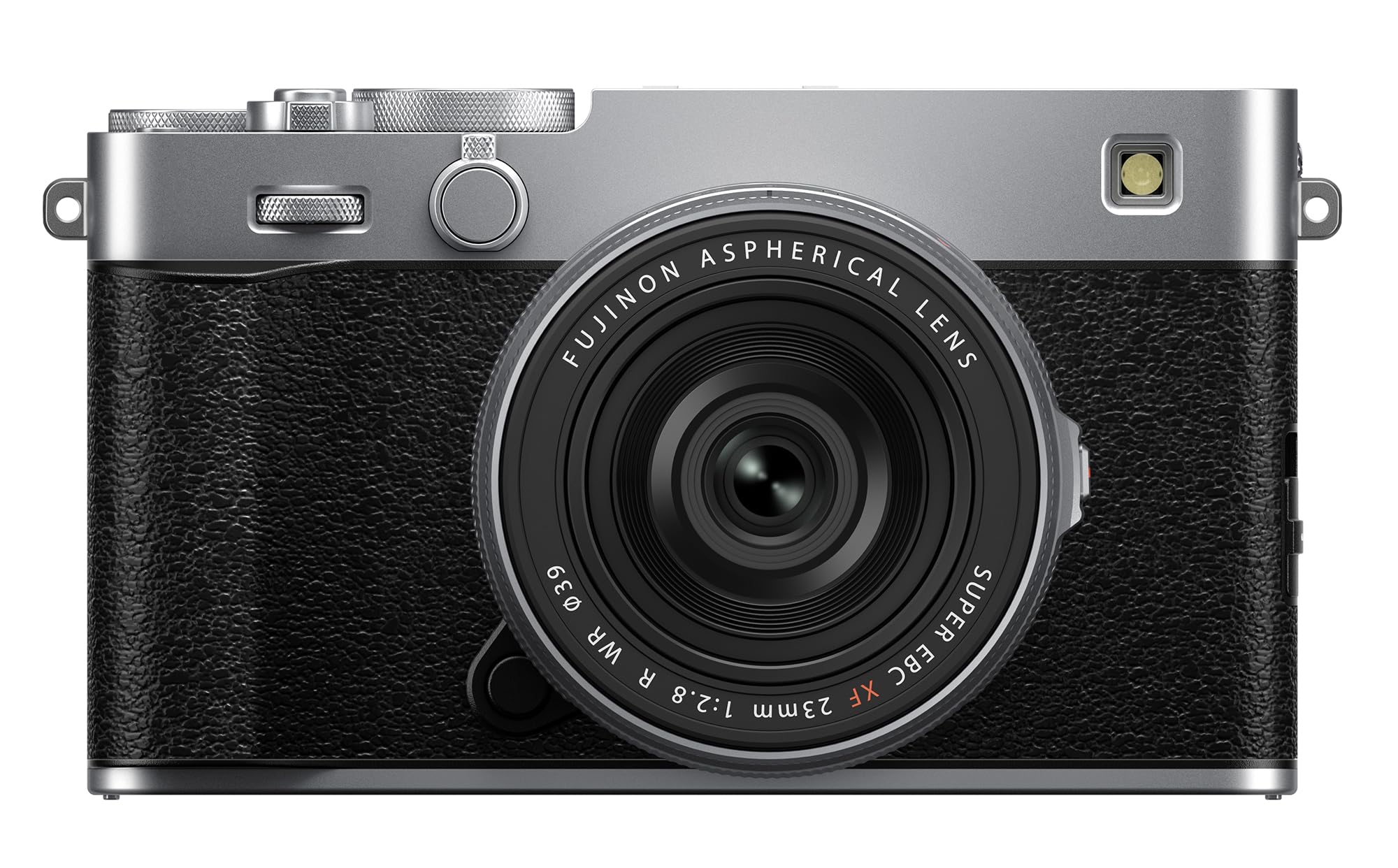
The X-E5 revives the rangefinder experience with a machined aluminum top plate and a customizable Film Simulation dial that lives under the control deck. Its 40.2MP X-Trans 5 HR sensor and X-Processor 5 engine deliver class-leading resolution for APS-C, and the IBIS system provides up to seven stops of stabilization—enough to shoot sharp handheld shots at shutter speeds that would blur on older Fujis. The screen tilts upward only, not to the side, which keeps the body slim but blocks access when a flash or mic is mounted in the hotshoe.
Deep learning AI subject detection AF works well for human faces, but the absence of a fully articulated flip screen means the X-E5 is not a vlogging-first camera. The 23mm F2.8 R WR pancake lens keeps the total package pocketable, and the film sim dial with three custom slots lets you save your own recipes for instant recall. Bluetooth connectivity is placed on the base, mimicking a film rewind button for tactile nostalgia.
The body is not weather-sealed, so rain or dust requires caution. The 1.62-million-dot tilting LCD is crisp but small for precise manual focus at 40MP magnification. If you prize compact everyday carry with Fuji color science over a multi-angle screen, the X-E5 delivers an unmatched character-to-size ratio.
Why it’s great
- Ultra-compact rangefinder design with 40.2MP sensor
- 7-stop IBIS for sharp handheld shots in low light
- Customizable Film Simulation dial for quick looks
Good to know
- No fully articulated flip screen; tilting only
- Not weather-sealed—avoid rain and dust
4. Sony a7 III

The a7 III remains a reference point for full-frame value because its 24.2MP BSI sensor and 693 phase-detection AF points still compete with cameras released years later. The 3-inch tilting LCD flips up 107 degrees and down 41 degrees, which helps for waist-level or overhead framing but does not rotate to face forward for self-recording. That limitation makes it a poor choice for vloggers who need to see themselves while filming.
Battery life is the standout feature: the NP-FZ100 pack delivers roughly 710 shots per CIPA rating, meaning a single charge can handle a wedding or full day of event coverage. The 28-70mm F3.5-5.6 kit lens is optically adequate but lacks a constant aperture—upgrading to a 24-105mm F4 or a fast prime transforms the system. 4K video is oversampled from 6K and looks detailed, but the tilting screen and lack of a headphone jack limit serious video monitoring.
Weather sealing is decent but not pro-level, and the menu system remains famously convoluted. For a photographer who prioritizes battery endurance and proven AF across 693 points, the a7 III is a reliable workhorse that will not quit during a long day.
Why it’s great
- Class-leading battery life (~710 shots per charge)
- 693 phase-detect AF points cover 93% of the frame
- Oversampled 4K video quality is detailed and filmic
Good to know
- Screen tilts only—does not flip forward for vlogging
- No headphone jack for audio monitoring during video
5. Panasonic LUMIX S5

The original S5 established Panasonic as a video-first hybrid, and its 24.2MP full-frame sensor with Dual Native ISO still produces remarkably clean footage at ISO 4000. The fully articulating 1.84-million-dot LCD flips out sideways and rotates 180 degrees forward, giving vloggers and cinematographers clear framing. V-Log with 14-plus stops of dynamic range captures gradation that holds up well in color grading, and 4K 60p in 10-bit internal (cropped) is a welcome bonus.
5-axis Dual I.S. 2 delivers 6.5 stops of stabilization, which means many handheld shots can skip the gimbal entirely. The menu structure is logical for video shooters, with clear waveform monitoring and zebra controls. The 20-60mm kit lens offers an unusual wide starting point at 20mm, which is excellent for tight interior or interview shots.
Autofocus is contrast-detect with DfD technology, not phase-detect—it hunts noticeably in low light and struggles during fast subject movement. The flip screen is well-built, but the hinge feels slightly fragile when extended. For a filmmaker who prioritizes V-Log, IBIS, and articulating LCD over speed of autofocus, the S5 remains a compelling budget video body.
Why it’s great
- V-Log with 14+ stops of dynamic range for pro grading
- 6.5-stop IBIS makes handheld video gimbal-free
- Full articulating screen with 1.84M-dot resolution
Good to know
- Contrast-detect AF hunts in low-light conditions
- Flip screen hinge feels less robust than premium bodies
6. Canon EOS R7

The EOS R7 packs a 32.5MP APS-C sensor into a body that shoots 30 fps with the electronic shutter and 15 fps mechanically—speeds that rival flagship sports cameras. The vari-angle touchscreen flips out to the side and articulates fully forward, making it one of the most flexible flip displays for both overhead and selfie angles. Dual Pixel CMOS AF II covers approximately 100% of the frame, and the 651 AF zones track birds, cars, and human faces with near-sticky precision.
In-body 5-axis stabilization gives you up to 7 stops of correction, and the buffer depth is generous enough to capture dozens of RAW frames before slowing down. The RF mount opens up Canon’s premium lens lineup, though APS-C shooters may prefer the lighter RF-S lenses for balance. 4K video is oversampled from 7K, producing sharp detail, and Movie Servo AF keeps subjects locked during recording.
The LP-E6NH battery lasts around 500 shots under heavy use, which is acceptable but not class-leading. The flip screen’s hinge protrudes noticeably when folded, which can catch in a tight bag. For sports, wildlife, or any action scenario where high frame rates and fast AF matter more than full-frame shallow depth of field, the R7 is a formidable APS-C tool.
Why it’s great
- 30 fps electronic shutter captures split-second action
- Dual Pixel CMOS AF II covers nearly 100% of the sensor
- Oversampled 4K video from 7K gives sharp output
Good to know
- Hinge protrudes when folded, making bag storage tight
- Battery yields ~500 shots on heavy shooting days
7. OM SYSTEM OM-5 Mark II
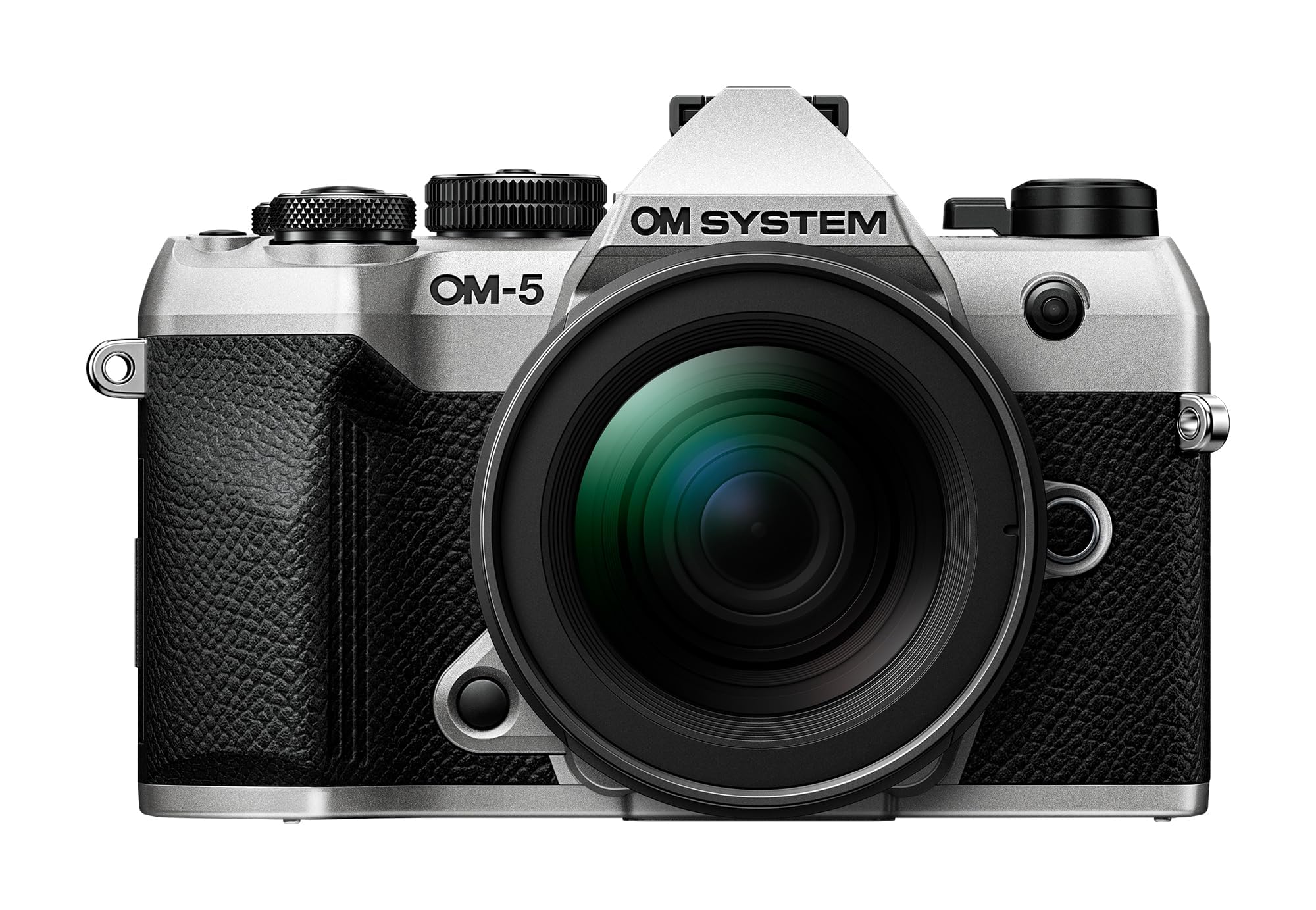
The OM-5 Mark II packs a Micro Four Thirds sensor into a body that is smaller and lighter than any APS-C or full-frame competitor, while still offering weather sealing that shrugs off rain and dust. The vari-angle touchscreen flips out sideways, and the 12-45mm F4.0 PRO kit lens keeps the total weight under 500 grams. Computational photography features like Live ND, focus bracketing, and a dedicated button for 50MP handheld high-res mode give outdoor shooters tools that would require extra gear on larger formats.
Phase-detection AF with 121 points is fast enough for hiking and travel portraits, though it cannot match the subject-tracking sophistication of Sony or Canon systems. The 5-axis IBIS delivers 6.5 stops of stabilization, which lets you shoot sharp 1-second handheld exposures in twilight. Unlimited 4K video recording means no time limit, and the USB-C port allows in-camera charging.
The grip remains small for larger hands, and the 1.04-million-dot LCD is lower resolution than competitors at this price tier. Battery life is modest—plan for two spare packs during a full day of outdoor shooting. For the ultralight traveler who values weather sealing and computational features over absolute sensor size, the OM-5 Mark II is the most packable flip-screen camera on this list.
Why it’s great
- Extremely compact and weather-sealed for trail use
- Computational modes like Live ND and focus bracketing
- USB-C charging and unlimited 4K recording
Good to know
- 1.04M-dot LCD is lower resolution than rivals
- Battery life requires spare packs for all-day shoots
8. Nikon Z 6II

The Z 6II refines the original Z6 with a dual-exposure processor that improves buffer capacity by 3.5 times and adds UHS-II SD compatibility alongside the CFexpress/XQD slot. The 24.5MP BSI CMOS sensor produces images with excellent dynamic range and color depth, and the body offers a comfortable, well-dampened grip that reduces fatigue during long shoots. The vari-angle touchscreen flips out to the side, but it does not articulate fully forward—it tilts up and down but stops short of a complete selfie orientation.
Continuous shooting at 14 fps with full AF tracking is sufficient for most event and portrait work. Eye-AF is improved over the original Z6, though it still drops lock occasionally in low-contrast scenes. The Z mount accepts both native S-line lenses that resolve exceptionally well and a massive library of F-mount glass via the FTZ adapter.
4K UHD video is available at 60p with full pixel readout, and the in-body stabilization works well for static handheld shots. The flip screen limitation makes this a better choice for photographers who frame through the EVF rather than the LCD. For a reliable full-frame hybrid with dual card security and a deep lens library, the Z 6II is a proven companion.
Why it’s great
- Dual card slots (CFexpress + UHS-II SD) for backup
- Excellent dynamic range and color depth from BSI sensor
- 14 fps continuous shooting with AF tracking
Good to know
- Flip screen does not rotate fully forward for selfie use
- Eye-AF can lose lock in low-contrast lighting
9. Canon EOS RP

The EOS RP is the most affordable full-frame flip-screen camera on the market, making it a popular entry point for users upgrading from crop-sensor DSLRs. Its 26.2MP sensor is paired with a fully articulating 1.04-million-dot LCD that swings out to the side and rotates 180 degrees forward—ideal for vloggers and portrait photographers who frame themselves. The RF 24-105mm F4-7.1 IS STM kit lens includes optical stabilization rated up to 5 stops, which helps keep handheld shots steady in good light.
Dual Pixel CMOS AF with 4779 selectable points provides fast and quiet focusing during both stills and video. The body is notably light at around 440 grams, making it comfortable to carry on a gimbal or neck strap for extended periods. 4K video exists but with a heavy crop factor and limited frame rates, so the RP is primarily a stills camera with casual video capabilities.
The battery is the small LP-E17 pack, which yields around 250 shots per charge—a genuine limitation for event work. The kit lens aperture closes to F7.1 at the tele end, which limits low-light performance and background blur. For the new full-frame shooter who wants an articulating screen and Canon’s RF mount at the lowest possible entry cost, the RP delivers the basics.
Why it’s great
- Lightest and most affordable full-frame flip-screen option
- Fully articulating screen rotates 180 degrees for selfie
- Dual Pixel CMOS AF covers most of the frame accurately
Good to know
- Battery life is limited to ~250 shots per charge
- 4K video has a heavy crop and limited frame rates
10. Sony Alpha a6400

The a6400 boasts the world’s fastest autofocus at the time of its release, with a 0.02-second acquisition time and 425 phase-detection points covering 84% of the APS-C sensor. The 180-degree flip screen tilts fully upward, making it one of the most convenient cameras for vloggers who want to check framing while recording. Real-time Eye AF and Real-time Tracking work reliably for humans and animals, even when the subject moves quickly through the frame.
The 24.2MP Exmor CMOS sensor produces vibrant colors and crisp Detail, and continuous shooting at 11 fps is adequate for most action scenarios. 4K video is oversampled from 6K, delivering detailed footage, and the camera has no recording time limit in standard modes. The compact body fits easily into a small bag or purse.
The flip screen hinges upward rather than to the side, which means a microphone in the hotshoe blocks the display when flipped. The touchscreen is limited to focus control only—no touch menu navigation during recording. Battery life is moderate at roughly 410 shots, but third-party USB charging is possible via the micro USB port. For a budget-conscious vlogger or content creator who prioritizes AF speed and a forward-facing screen, the a6400 remains a strong pick.
Why it’s great
- Industry-leading 0.02 second autofocus acquisition
- 180-degree upward tilting screen for vlogging
- Oversampled 4K from 6K with no recording time limit
Good to know
- Hotshoe mic blocks the flip screen when tilted up
- Touchscreen only works for focus, not menu navigation
11. Nikon D5100

The D5100 is an older but still capable entry-level DSLR that introduced Nikon’s vari-angle LCD to the budget segment. Its 16.2MP DX-format CMOS sensor produces images with good color and dynamic range for its class, and the 3.0-inch 920K-dot articulated screen swings out to the side and rotates freely for low-angle, overhead, or self-portrait shots. The 11-point AF system with 3D tracking is basic by modern standards but adequate for landscapes and slow-moving subjects.
Full HD 1080p video at 30 fps is usable for home movies and educational content, though it lacks the resolution and frame rate options of more recent models. The 18-55mm F3.5-5.6 kit lens covers a standard zoom range with VR stabilization, and the camera is compatible with the entire Nikon F-mount lens ecosystem—a huge library of affordable glass. The optical viewfinder gives you a direct, lag-free view for traditional stills shooting.
The D5100 maxes out at 4 fps continuous shooting, which is slow for action, and the 16.2MP sensor shows its age in heavy crops or high-ISO situations above 3200. Live view autofocus is slow and contrast-based, making video focusing a manual affair. For a beginner on a tight budget who wants a vari-angle LCD to learn composition and manual exposure, the D5100 is a functional, affordable starting point.
Why it’s great
- Fully articulated vari-angle LCD for flexible shooting angles
- Compatible with huge library of affordable F-mount lenses
- Good color and dynamic range for an entry-level DSLR
Good to know
- 16.2MP sensor shows noise above ISO 3200
- Live view autofocus is slow and contrast-based only
FAQ
Does a flip screen affect video recording time limits?
Which flip screen type is best for gimbal use?
Can I use a monitor or EVF instead of a flip screen?
Final Thoughts: The Verdict
For most users, the best camera with flip screen winner is the Panasonic LUMIX S5II because it combines reliable Phase Hybrid AF, unlimited 10-bit recording, and active stabilization in a body with a fully articulated LCD that works for both photographers and videographers. If you want the highest resolution flip-screen travel camera, grab the FUJIFILM X-E5. And for the fastest autofocus on a budget, nothing beats the Sony Alpha a6400.

Mo Maruf
I created WellFizz to bridge the gap between vague wellness advice and actionable solutions. My mission is simple: to decode the research and give you practical tools you can actually use.
Beyond the data, I am a passionate traveler. I believe that stepping away from the screen to explore new environments is essential for mental clarity and physical vitality.