Our readers keep the lights on and my smoothie glass nicely filled. As an Amazon Associate, I earn from qualifying purchases.
Wildfire smoke turns your indoor refuge into a hazard zone, filling every room with fine particulate matter that bypasses your body’s natural defenses. Unlike dust or pollen, smoke particles — particularly PM2.5 — are small enough to enter your bloodstream, triggering respiratory distress, eye irritation, and long-term health complications long after the visible haze clears. A dedicated air purifier is the only way to actively scrub this microscopic ash and gas from your living spaces.
I’m Mohammad Maruf — the founder and writer behind WellFizz. For years, I’ve analyzed hundreds of filtration systems, focusing on carbon filter weight, CADR (Clean Air Delivery Rate) for smoke, and real-world performance data against the specific particle chemistry of wildfire smoke.
After evaluating dozens of models specifically designed to combat smoke, I’ve narrowed the field to the most effective units that balance high-efficiency particulate arrestance with sustained gas and odor removal. This is your essential guide to the best air purifier for wildfire smoke.
How To Choose The Best Air Purifier For Wildfire Smoke
Wildfire smoke is chemically complex — it carries both solid particles (ash, soot) and gaseous compounds (VOCs, formaldehyde, benzene). A machine that only catches particles leaves you smelling the fire. You need a multi-layered defense.
Prioritize Smoke CADR Above All Else
CADR for smoke, measured in cubic feet per minute (CFM), tells you how fast the unit removes smoke particles from a specific room size. A smoke CADR of 200 or higher is the baseline for meaningful protection in a medium-large room. Ignore room-size claims that don’t reference CADR — they often assume unrealistically low air exchange rates. For wildfire conditions, aim for a unit that can turn over your room’s air at least four times per hour.
Carbon Filter Mass Determines Gas Removal
The thin, mesh-like carbon sheets found in many budget purifiers are useless against smoke odor and VOCs. Look for a thick, pelletized activated carbon filter — the heavier the better. Some premium units use carbon filters with potassium permanganate impregnation to chemically break down smoke gases rather than just trapping them. If the carbon filter weighs less than a pound, it will saturate quickly during wildfire season.
Filter Replacement Cost is a Long-Term Commitment
Running a purifier 24/7 during wildfire season accelerates filter clogging. A HEPA filter exposed to heavy smoke may need replacement every three to four months, not the advertised six to twelve. Calculate the annual cost of replacing both the HEPA and carbon filters before buying. Units with washable pre-filters extend the life of the main filter and reduce ongoing expenses.
Quick Comparison
On smaller screens, swipe sideways to see the full table.
| Model | Category | Best For | Key Spec | Amazon |
|---|---|---|---|---|
| Coway Airmega AP-1512HH | Mid-Range | Best Overall Smoke Fighter | Smoke CADR 233 CFM | Amazon |
| GermGuardian AC48252PK | Budget | Best Value 2-Pack Setup | Smoke CADR ~175 CFM | Amazon |
| LEVOIT Core 400S-P | Mid-Range | Smart Home Smoke Management | Smoke CADR 231 CFM | Amazon |
| WINIX 5520 | Mid-Range | Quiet Smoke & Odor Control | Smoke CADR ~210 CFM | Amazon |
| SIESEAN AP-400 | Mid-Range | Fast Large Room Purification | Smoke CADR 235 CFM | Amazon |
| Honeywell HPA200 | Mid-Range | Durable Long-Term Performer | Bulk HEPA Filter System | Amazon |
| AirDoctor AD3500 | Premium | Medical-Grade Smoke Filtration | Captures 0.003 microns | Amazon |
| Airdog X5 | Premium | Zero Replacement Filter Cost | Washable TPA Filter | Amazon |
| Coway Airmega 400S | Premium | Whole-Home Smoke Solution | 3,120 sq ft coverage | Amazon |
In‑Depth Reviews
1. Coway Airmega AP-1512HH(W)
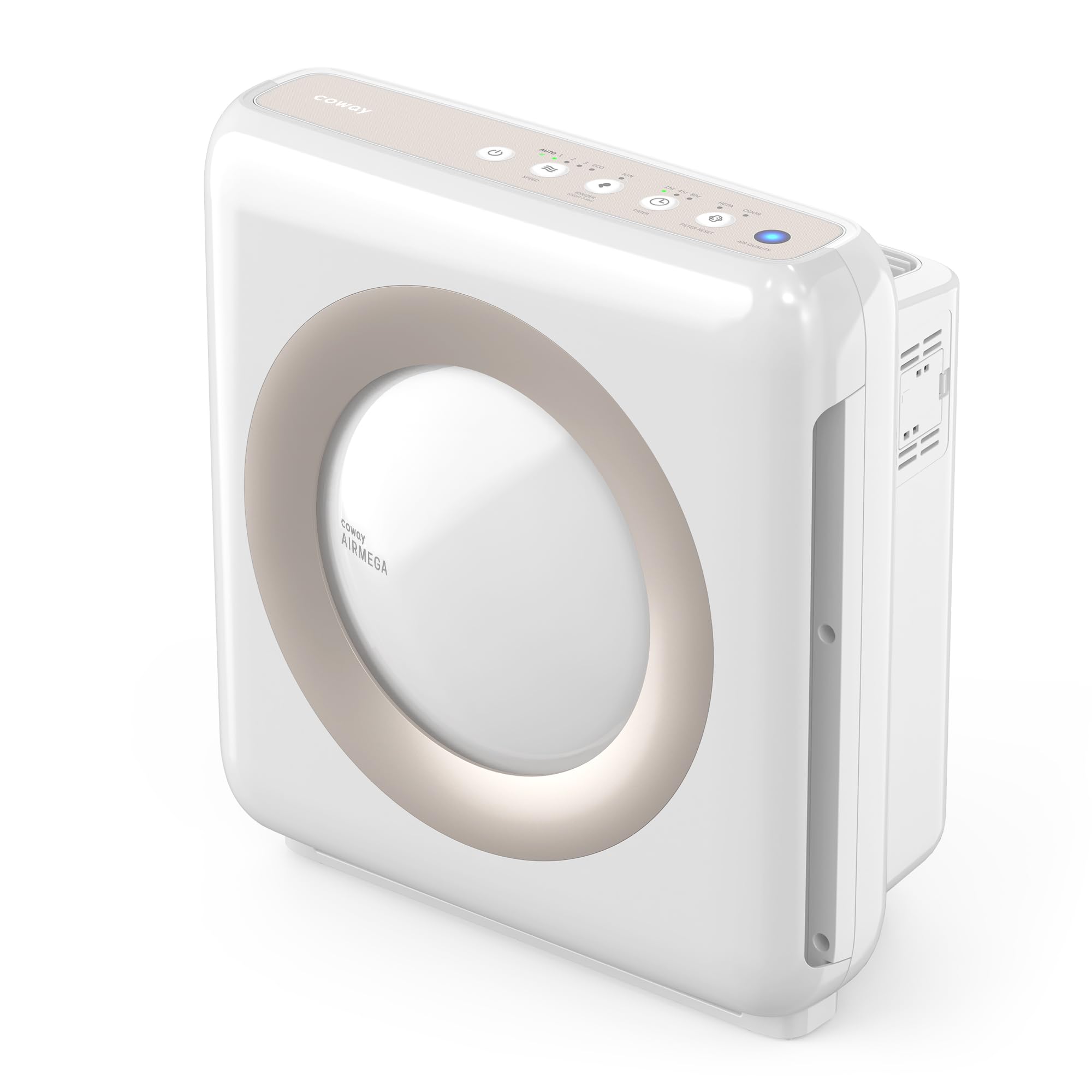
The Coway Airmega AP-1512HH has earned its reputation as the reference standard for smoke-fighting air purifiers. Its smoke CADR of 233 CFM translates to rapid particle removal in real-world conditions, and multiple verified owner reports confirm it clears heavy wildfire smoke haze — dropping the air quality indicator from red to blue in roughly five minutes. The four-stage system includes a washable pre-filter that captures larger ash particles, a true HEPA filter rated for 99.97% efficiency at 0.3 microns, a deodorization carbon filter, and a Vital Ion option for additional particle agglomeration.
The pollution sensor communicates indoor air quality via a brightly colored LED ring, and the auto mode adjusts fan speed from level one through three based on real-time readings. When no pollution is detected for 30 minutes, it switches to Eco mode, powering the fan off to save energy. Noise levels range from a barely audible 24.4 dB on the lowest setting to 53.8 dB on high, making it suitable for bedrooms on lower speeds during wildfire events.
One limitation is the absence of Wi-Fi or app connectivity, which is not a dealbreaker given the unit’s superb standalone performance. The filter replacement indicator monitors both the pre-filter and HEPA filter independently, taking the guesswork out of maintenance. With a recommended room size of 361 square feet, it is an ideal single-room solution that punches well above its weight in smoke removal.
Why it’s great
- Highest verified smoke CADR in its class at 233 CFM
- Real-time air quality display with intuitive color coding
- Washable pre-filter extends HEPA life and reduces costs
- Ultra-quiet 24.4 dB low setting for uninterrupted sleep
Good to know
- No smart home or app integration
- Carbon filter is relatively lightweight for heavy VOC loads
- Recommended room size is modest at 361 sq ft
- Auto mode cannot default to medium speed
2. GermGuardian AC48252PK (2-Pack)

The GermGuardian AC48252PK comes as a two-pack, making it an immediate value proposition for households needing coverage in multiple rooms during wildfire season. Each unit uses a true HEPA filter that captures 99.97% of particles down to 0.1 microns, paired with an optional UV-C light that reduces airborne germs, bacteria, and mold spores. The carbon pre-filter handles light odors, though its thin construction means it will saturate faster than thicker carbon beds when exposed to heavy wildfire smoke.
With a 743 square foot per hour clean air delivery rate, each unit can handle a medium-sized living space effectively. The three-speed fan includes a low setting that works as gentle white noise — quiet enough for a bedroom but not silent. The high setting moves substantial air but generates noticeable fan noise, which is typical for units in this tier. Owners report that the units remain effective after multiple years of service, with filter replacements being straightforward and widely available.
The lack of an auto mode or air quality sensor means you must manually select the fan speed based on smoke conditions. This is a minor inconvenience given the price point, and the simple dial control is reliable and easy to operate. The 2-pack configuration allows you to place one unit in the bedroom and one in the living area, providing comprehensive smoke protection without needing a single larger unit. Consider upgrading the carbon pre-filter to a heavier aftermarket option for better smoke odor control.
Why it’s great
- Two units for comprehensive multi-room coverage
- Proven long-term durability with 1+ year of continuous use
- UV-C light provides additional germicidal protection
- Washable first-stage filter reduces replacement frequency
Good to know
- No air quality sensor or auto-adjustment
- Carbon pre-filter is thin and saturates quickly
- High speed can be loud for sensitive sleepers
- UV-C bulb needs periodic replacement
3. LEVOIT Core 400S-P

The LEVOIT Core 400S-P brings AHAM VERIFIDE certification to the smart purifier segment, with independently tested smoke CADR of 231 CFM, dust CADR of 240 CFM, and pollen CADR of 259 CFM. This unit is built around a 3-stage filtration system: a nylon pre-filter for large particles, an activated carbon filter for VOCs and odors, and an H13 True HEPA filter rated for 99.97% efficiency at 0.3 microns. The patented ARC Formula technology specifically targets smoke odor breakdown, making it more effective than passive carbon-only systems.
The AirSight Plus laser dust sensor provides a real-time PM2.5 display, updating continuously to show exactly how smoke levels change during a wildfire event. Auto mode responds to the sensor data by adjusting fan speed automatically, and sleep mode drops noise to 24 dB — quiet enough for uninterrupted rest. The free VeSync app enables remote control, schedule setting, filter life tracking, and integration with Amazon Alexa and Google Assistant.
Coverage is rated at 1,733 square feet per hour on the highest setting, but the recommended room size for continuous use is closer to 400-500 square feet. The 3-in-1 filter replacement is reasonably priced, though the carbon layer is not as thick as premium standalone carbon filters. The WiFi setup requires a 2.4GHz network, which can be a hiccup for users with mesh systems. Overall, this is the strongest smart option for homeowners who want real-time smoke data and remote control.
Why it’s great
- AHAM VERIFIDE with 231 CFM smoke CADR
- Real-time PM2.5 laser sensor with digital display
- Whisper-quiet 24 dB sleep mode
- Full smart home integration with app and voice
Good to know
- WiFi only supports 2.4GHz networks
- Carbon filter is moderate thickness
- Air quality sensor can be slow to detect nearby smoke
- Smart features locked behind app setup
4. WINIX 5520
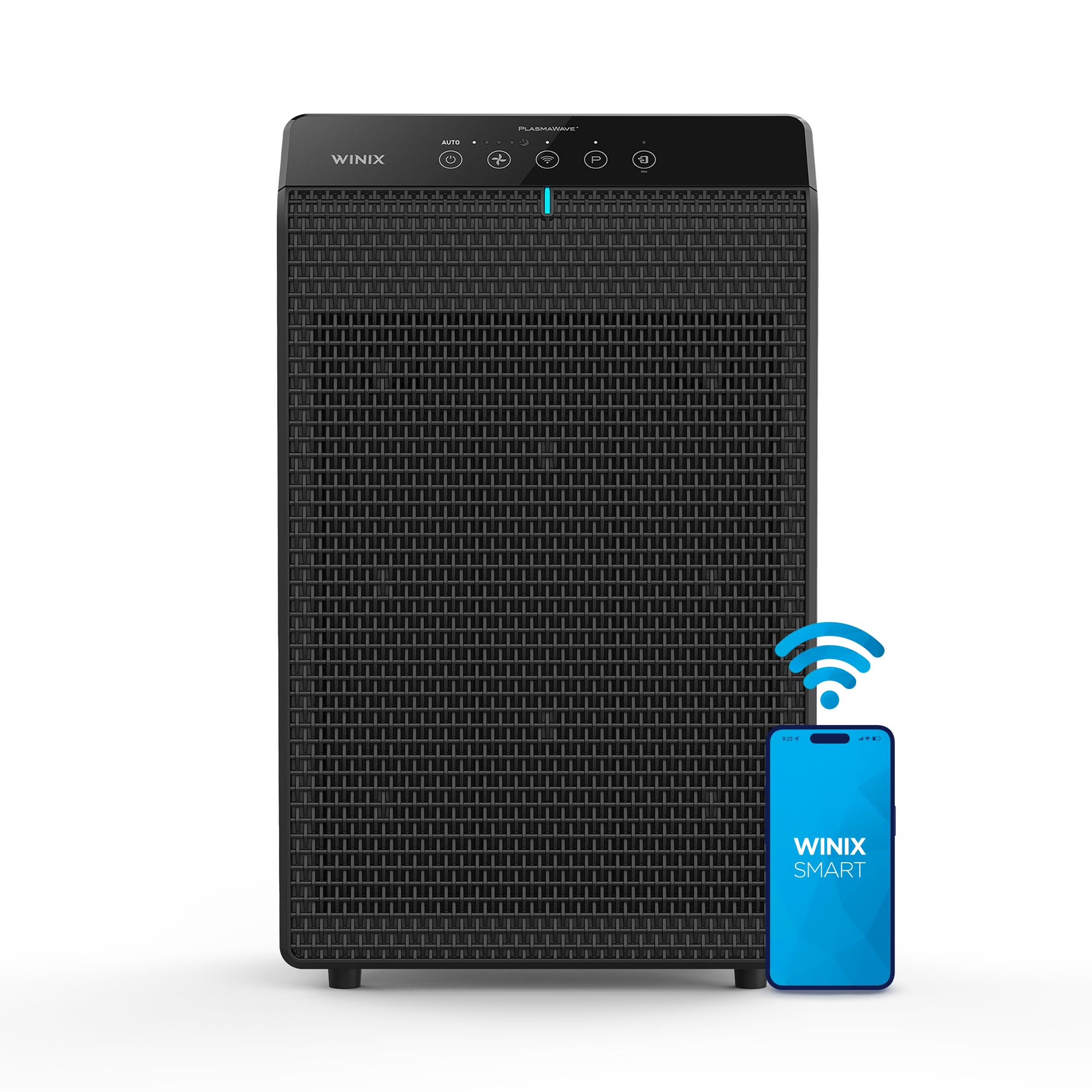
The WINIX 5520 enters the 2025 market with a strong emphasis on whisper-quiet operation, achieving a nearly silent 23.5 dB on its lowest speed. AHAM verified at 392 square feet, this unit uses a three-stage filtration system: a washable fine mesh pre-filter, a true HEPA filter capturing 99.99% of particles as small as 0.01 microns, and an advanced odor control carbon filter (AOC) that uses activated carbon pellets to reduce VOCs and smoke odors. The carbon filter is designed specifically to target the gaseous components of wildfire smoke.
Built-in air quality sensors feed data to a color-coded LED indicator (blue for good, orange for moderate, red for poor), and auto mode adjusts fan speed in real-time. The smart sensors have proven sensitive enough to detect kitchen gas and alcohol spray, indicating they will respond promptly to wildfire smoke infiltration. The Winix Smart App adds remote control and monitoring, while Amazon Alexa voice control is supported for hands-free adjustments.
Sleep mode is automated — the unit detects when the room darkens and automatically activates quiet, energy-efficient operation, returning to auto mode when light returns. Coverage extends up to 1,882 square feet in one hour, making it suitable for open-concept homes. The washable pre-filter and carbon filter reduce ongoing costs, though the HEPA filter still requires periodic replacement. Some users note that the vertical side air intake design can be less efficient if placed too close to walls.
Why it’s great
- Ultra-quiet 23.5 dB low speed operation
- Sensitive real-time air quality sensor with auto mode
- Washable pre-filter and carbon filter reduce waste
- Automated sleep mode with light detection
Good to know
- Vertical side intake needs 6-12 inches of clearance
- Carbon filter is moderate weight
- Higher speeds generate noticeable fan noise
- Smart app has occasional connectivity issues
5. SIESEAN AP-400
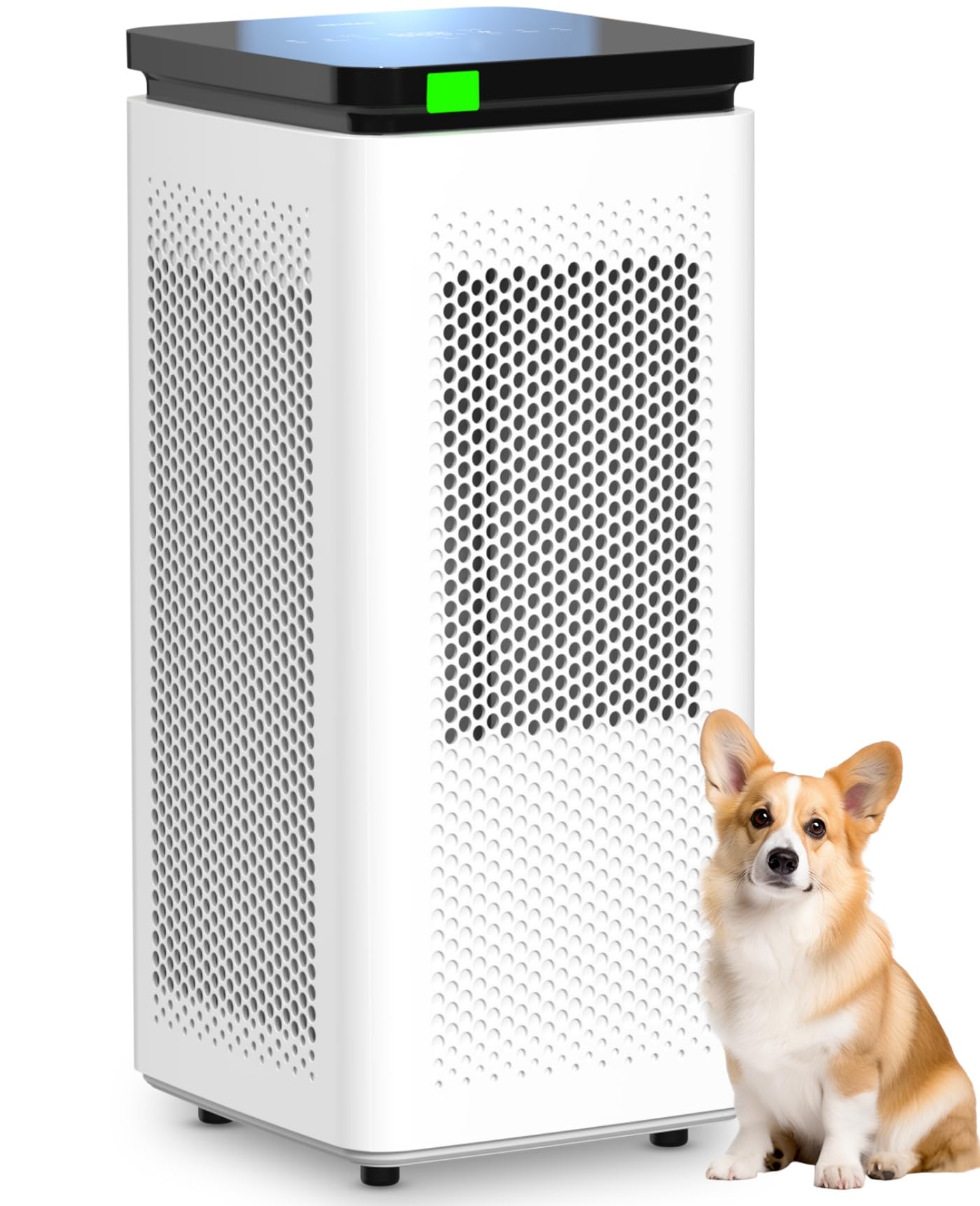
The SIESEAN AP-400 delivers a smoke CADR of 235 CFM, making it one of the fastest particle removers in the mid-range bracket. Its dual-inlet airflow design pulls air from both sides simultaneously, effectively doubling the intake surface area compared to single-sided units. This enables it to clean a 500 square foot room in just 15 minutes and scale up to 3,500 square feet per hour — ideal for open-concept homes where smoke can travel freely.
The H13 True HEPA filter captures 99.97% of particles down to 0.1 microns, while the activated carbon filter handles VOCs, cooking odors, and smoke gases. A built-in PM2.5 digital display provides real-time feedback on particle concentration, and auto mode adjusts fan speed based on sensor readings. Sleep mode drops noise to 30 dB, and the dimmer function allows you to turn off all panel lights for undisturbed rest. The child lock and timer functions make it family-safe for shared living spaces.
Independent certifications from CARB, DOE, EPA, and UL provide assurance of energy efficiency and electrical safety — important for units running 24/7 during wildfire season. The floor-standing design with a compact 10-inch square footprint fits naturally in living rooms and bedrooms. Filter replacement is recommended every 3-4 months under heavy smoke use, and genuine SIESEAN filters are available on Amazon. Some users report that the auto mode sensor can occasionally lag behind sudden smoke events.
Why it’s great
- Smoke CADR of 235 CFM — class-leading speed
- Dual-sided intake doubles air processing capability
- Real-time PM2.5 digital display for precise tracking
- Multiple safety certifications for 24/7 operation
Good to know
- Carbon filter is adequate but not heavy-duty
- Auto mode sensor can have brief response delays
- Replacement filters needed every 3-4 months in heavy smoke
- Fan on high is noticeably audible
6. Honeywell HPA200
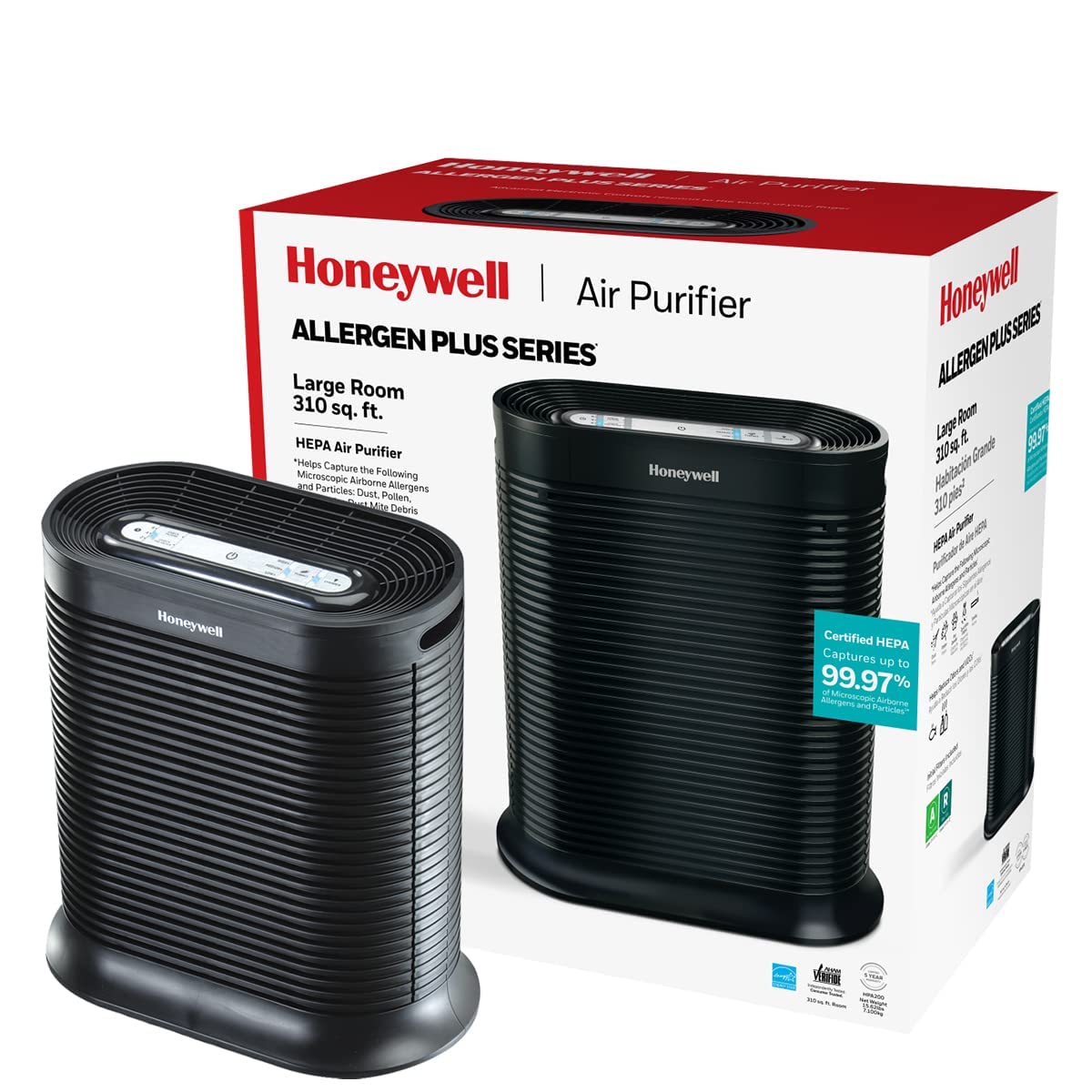
The Honeywell HPA200 is a workhorse with a proven track record of 7-10 year lifespans in continuous use. It uses a three-filter system: a pre-filter that catches visible dust and ash, an activated carbon pre-filter for odor reduction, and a true HEPA filter that captures 99.97% of airborne particles as small as 0.3 microns. The unit is designed to clean up to 1,500 square feet in 60 minutes at one air change per hour, but its recommended room size for effective smoke filtration is 310 square feet.
Four fan speeds including a Turbo Clean setting give you precise control over air movement. The allergen setting operates at a noise level comparable to a box fan, while the lower “Germ” setting is virtually silent. The unit can be placed against a wall, which is a practical advantage for tight spaces. The touch button controls are intuitive, and the blue power light can be turned off for complete darkness in bedrooms.
Filter maintenance is straightforward: the pre-filter requires cleaning every three months, and the three separate HEPA filters need replacement annually. The bulk HEPA configuration moves substantial air volume, but the activated carbon layer is thin and primarily targets light odors rather than heavy smoke VOCs. Owners consistently report significant reduction in dust allergens and pet dander, with smoke odor reduction being a secondary but effective function. This is the right choice for those who want a durable, low-fuss machine that will still be running a decade from now.
Why it’s great
- Industry-leading durability lasting 7-10+ years
- Four fan speeds including Turbo Clean for smoke events
- Place against wall design saves floor space
- Blue light can be fully disabled for sleep
Good to know
- Carbon layer is thin; limited VOC removal
- Large footprint: 17.7 x 18.8 x 10 inches
- Uses three separate HEPA filters, not one cartridge
- Touch buttons can be unintuitive initially
7. AirDoctor AD3500
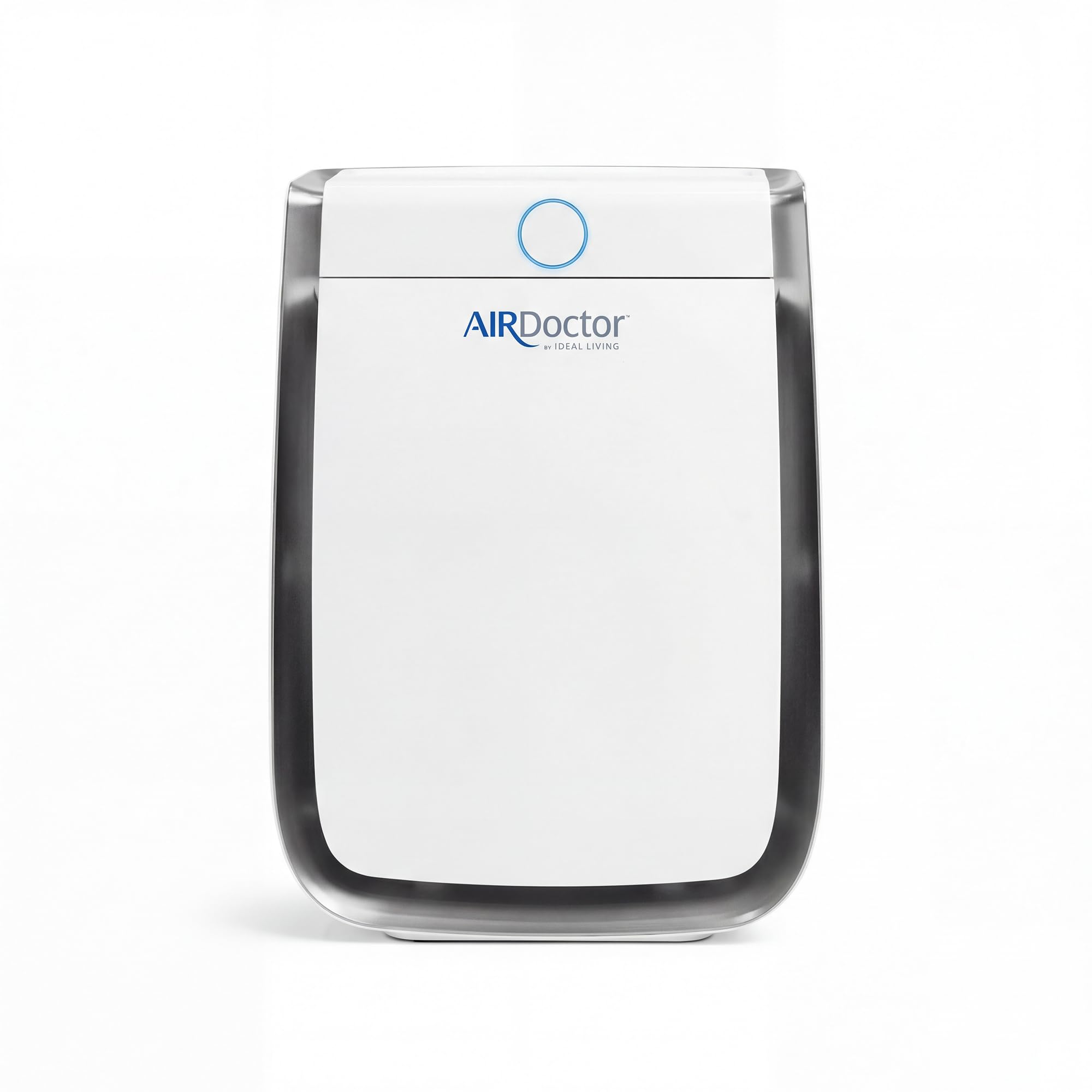
The AirDoctor AD3500 uses hospital-grade UltraHEPA filtration that captures 99.99% of airborne particles at 0.003 microns — 100 times smaller than the standard HEPA requirement. This is significant for wildfire smoke, which contains ultra-fine particles that can penetrate deep into lung tissue. The premium activated carbon filter is impregnated with potassium permanganate, chemically breaking down smoke gases and VOCs rather than simply adsorbing them. This chemical breakdown is critical for neutralizing formaldehyde and benzene found in wildfire smoke.
Coverage is substantial: the unit cleans 630 square feet in 15 minutes and up to 2,520 square feet in one hour, making it suitable for large living rooms, kitchens, and open basements. The AirDoctor Halo sensor provides real-time PM2.5 readings with a color-coded display, and auto mode adjusts fan speed automatically, including a Boost setting for extreme smoke events. Four fan speeds plus a sleep mode ensure quiet overnight operation, and the filter indicator takes the guesswork out of maintenance.
The three-stage filtration system (pre-filter, premium activated carbon, UltraHEPA) is backed by third-party testing and is FSA/HSA eligible. The carbon filter requires replacement every six months, and the UltraHEPA filter lasts 12 months — but heavy wildfire smoke can shorten this interval. At 24 pounds and 27 inches tall, this is a substantial unit that demands floor space. Verified owners report waking up without stuffy noses during wildfire season, and the auto mode responds quickly to cooking odors and other airborne pollutants.
Why it’s great
- UltraHEPA captures 99.99% at 0.003 microns
- Potassium permanganate carbon filter breaks down smoke gases
- FSA/HSA eligible for pre-tax purchase
- Rapid 630 sq ft cleaning in 15 minutes
Good to know
- Replacement filters are expensive
- Large footprint requires dedicated floor space
- Carbon filter needs replacement every 6 months
- Premium price point may exceed some budgets
8. Airdog X5
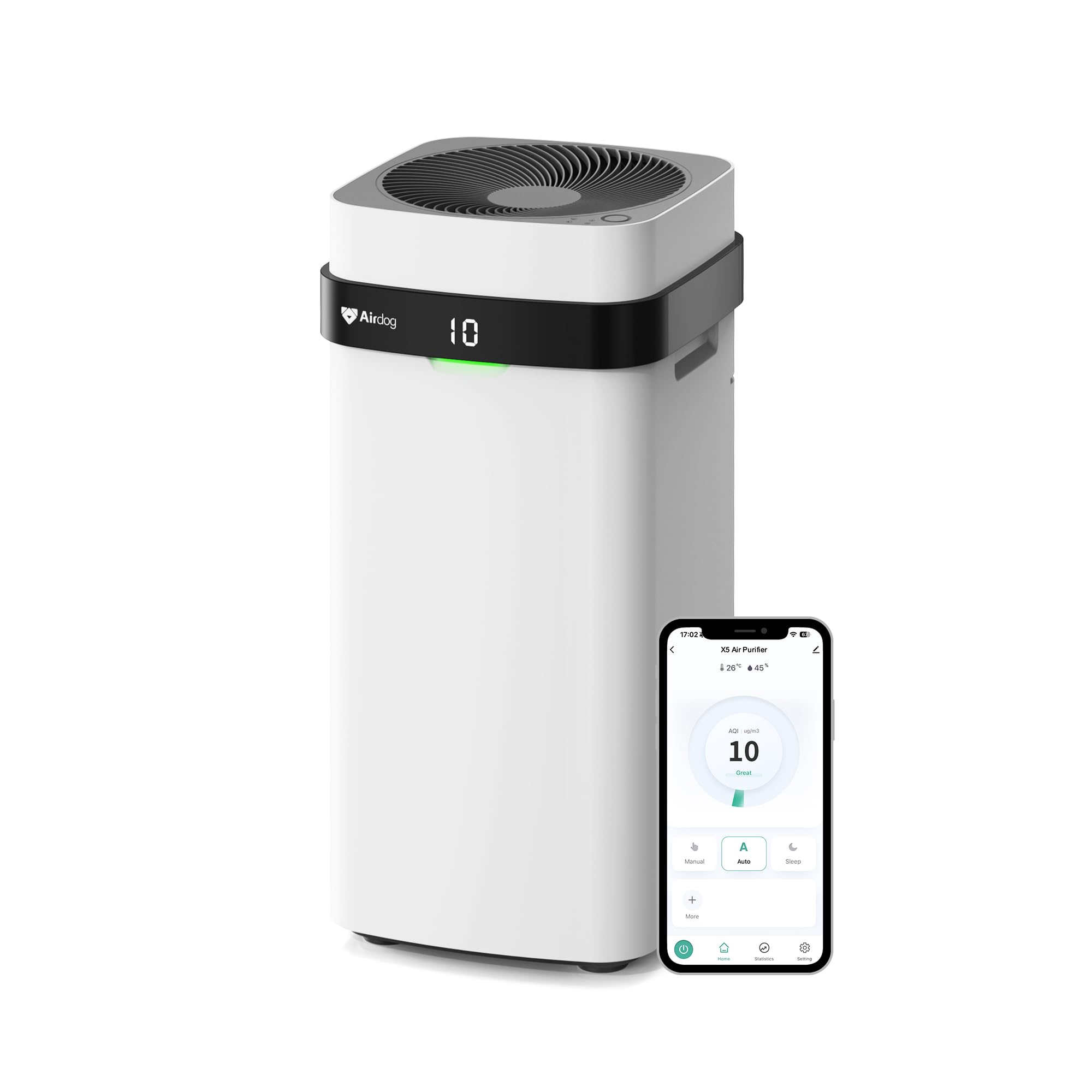
The Airdog X5 breaks the traditional HEPA paradigm with its patented TPA (Technical Plasma Air) technology. Instead of trapping particles on a disposable filter, the X5 uses a high-pressure ionizer to terminate harmful particles by destroying their molecular function. The washable filter is made of durable, recyclable graphene material and lasts the lifetime of the unit — eliminating the recurring cost and waste of replacement HEPA filters. It captures 99.9% of particles down to 0.0146 microns, surpassing HEPA’s 0.3-micron limitation.
Coverage extends to 1,614 square feet per hour with a 360-degree air circulation design that draws from all directions. The built-in air quality sensor reads real-time AQI and displays it via a color-coded indicator light. Auto mode adjusts fan speed based on measured air quality, and sleep mode operates at just 22 dB — quieter than a whisper. The vertical tray construction prevents airflow blockage and excess noise even after prolonged use.
Four purification speeds plus auto and sleep modes give you flexibility during varying smoke conditions. The app and remote control provide convenient adjustment from across the room. The unit does not require any ongoing filter purchases, which makes it cost-effective over multi-year wildfire seasons. Some users note that the matte white plastic case can stain from heavy candle or smoke exposure, requiring occasional cleaning. The ionizer produces trace ozone, though the included ozone-reducing filter keeps levels well within safety standards.
Why it’s great
- Lifetime washable filter — zero replacement costs
- Captures 99.9% at 0.0146 microns
- Near-silent 22 dB sleep mode
- 360-degree intake for flexible placement
Good to know
- TPA technology produces trace ozone
- Matte white case stains from smoke residue
- App reliability has been inconsistent
- CADR is lower than premium HEPA alternatives
9. Coway Airmega 400S
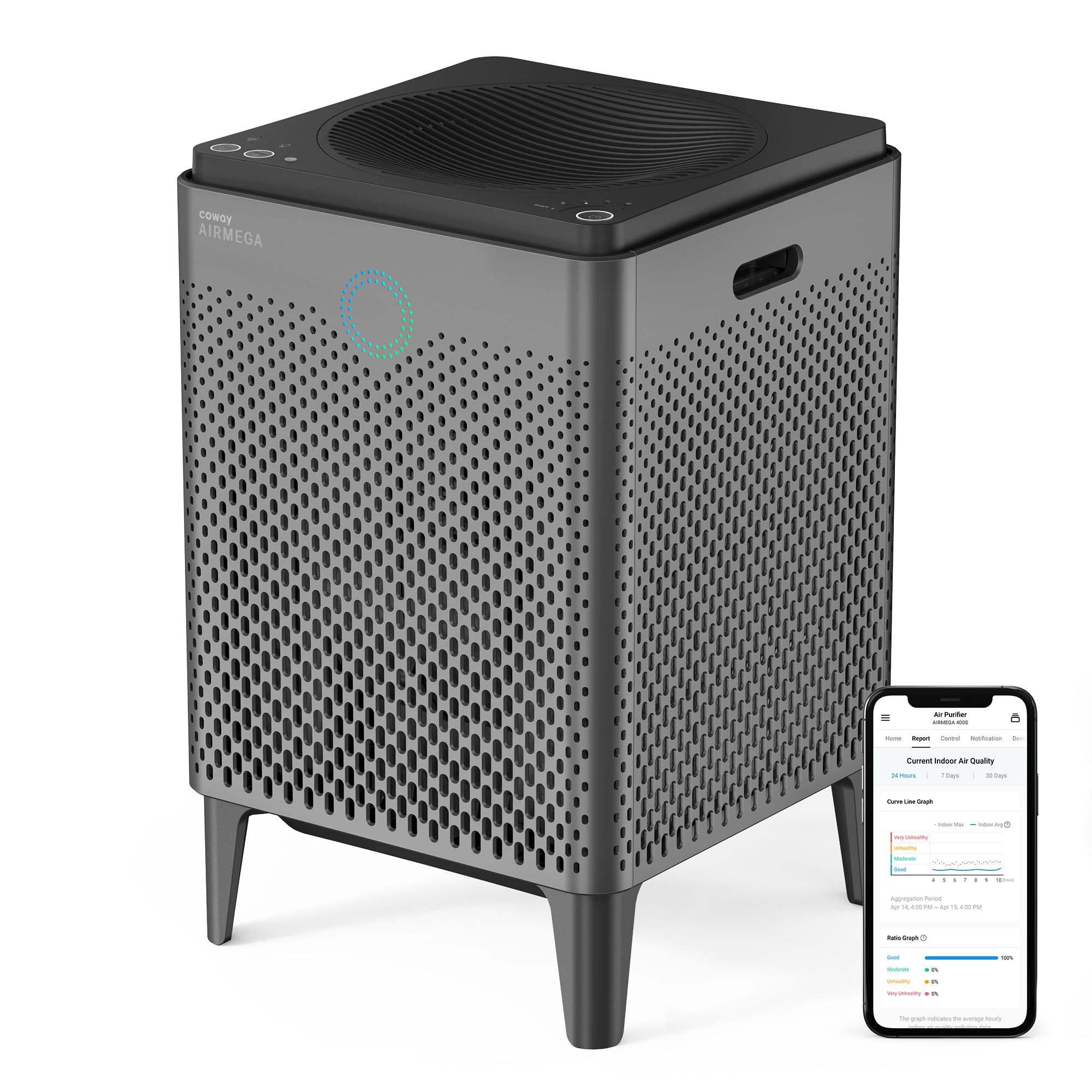
The Coway Airmega 400S is the whole-home champion, designed to clean spaces up to 3,120 square feet in 60 minutes — making it the most powerful unit in this lineup for open floor plans and multi-room smoke infiltration. The HyperCaptive Filtration System combines a pre-filter, an active carbon filter, and a true HEPA filter to reduce 99.97% of 0.3-micron particles while also reducing VOCs and odors. Two large Max2 filters work in parallel to double the filtration area compared to single-filter units.
Smart Mode automatically adjusts fan speeds based on real-time air quality readings from the built-in sensor. Eco Mode powers the fan off when air quality remains clean for 30 minutes, restarting automatically when pollution is detected. The IoCare mobile app provides indoor and outdoor air quality monitoring, filter replacement notifications, scheduling, and smart mode control. Amazon Alexa and Dash Replenishment are supported for automated filter reordering.
The unit has a substantial footprint: 14.8 inches square and 22.8 inches tall, weighing 25 pounds. The dual-fan design moves massive air volume — noticeable even on low settings — but can be loud on the highest speed. The fine mesh pre-filters catch large particles and are easily cleaned by hand, extending the life of the main HEPA filters. Owners report excellent pet dander and odor removal, with the pre-filter requiring vacuuming every one to two weeks in homes with shedding animals. The app has been a mixed experience, particularly on Android, though recent updates have improved stability.
Why it’s great
- Massive 3,120 sq ft coverage for whole-home use
- Dual Max2 filters double the filtration capacity
- Smart Mode with real-time air quality adaptation
- Alexa voice control and Dash Replenishment
Good to know
- Large and heavy — needs dedicated floor space
- High speed is loud due to powerful dual fans
- Android app has history of connectivity issues
- Annual filter replacement costs around
FAQ
Can a standard HEPA filter handle wildfire smoke?
How often should I replace filters during wildfire season?
What is the ideal room size for a smoke-fighting air purifier?
Do I need an ionizer or UV-C light for smoke?
Final Thoughts: The Verdict
For most users, the best air purifier for wildfire smoke winner is the Coway Airmega AP-1512HH because it delivers the highest smoke CADR in its class at 233 CFM, uses a proven four-stage filtration system, and has a washable pre-filter that extends filter life. If you want real-time PM2.5 data and smart home control, grab the LEVOIT Core 400S-P. And for whole-home smoke protection across an open floor plan, nothing beats the Coway Airmega 400S with its massive 3,120 square foot coverage and dual Max2 filter system.

Mo Maruf
I created WellFizz to bridge the gap between vague wellness advice and actionable solutions. My mission is simple: to decode the research and give you practical tools you can actually use.
Beyond the data, I am a passionate traveler. I believe that stepping away from the screen to explore new environments is essential for mental clarity and physical vitality.