Our readers keep the lights on and my smoothie glass nicely filled. As an Amazon Associate, I earn from qualifying purchases.
You’re setting up a home recording space and need a microphone that delivers professional-grade clarity without draining your studio fund. A large diaphragm condenser microphone captures the full harmonic richness of vocals and acoustic instruments, but the risk of picking up a noisy, thin, or overly sibilant sound is real at this price point — the wrong capsule or a high self-noise floor will sabotage your mix before you even hit record.
I’m Mohammad Maruf — the founder and writer behind WellFizz. I’ve spent years analyzing the full spectrum of recording hardware, from entry-level XLR mics to high-end studio condensers, focusing on capsule design, self-noise specs, and build durability that define value.
Whether you’re recording vocals, streaming, or podcasting on a tight budget, finding the right tool is about balancing sensitivity, transient response, and practical features like pad switches and hi-pass filters. This guide covers the budget large diaphragm condenser microphone options that deliver serious studio performance without breaking your bank.
How To Choose The Best Budget Large Diaphragm Condenser Microphone
Picking the right condenser at a budget-friendly price is a game of trade-offs. You want a low self-noise floor (below 20 dBA is excellent), a well-balanced frequency response without harsh peaks, and enough SPL handling to cover everything from spoken word to loud guitar cabs. The capsule is the heart of the mic — a gold-sputtered or custom-designed large diaphragm will give you that rich, warm tone you’re after, while a generic capsule often sounds brittle or thin. Pay special attention to included accessories: a shock mount and metal carrying case can save you nearly the cost of the mic itself.
Self-Noise and Sensitivity
Self-noise is your enemy in a quiet vocal or fingerpicking session. Look for a rating of 20 dBA or lower — anything higher will add a hiss to your recorded track that’s hard to remove. Sensitivity, measured in mV/Pa, tells you how much level the mic outputs for a given signal. Higher sensitivity (around 25-40 mV/Pa) means you need less gain from your preamp, keeping noise down. Balanced specs here define a well-engineered entry-level mic.
Pad and Filter Switches
A -20 dB pad is critical if you’re miking a snare drum or a loud amplifier — it prevents the mic’s internal electronics from clipping. A hi-pass filter (usually set at 80 or 100 Hz) cuts low-frequency rumble from HVAC systems, traffic, or desk vibrations. On a budget mic, these switches add huge flexibility without additional gear. Not every mic in this tier includes them, so they separate the serious tools from the toys.
Quick Comparison
On smaller screens, swipe sideways to see the full table.
| Model | Category | Best For | Key Spec | Amazon |
|---|---|---|---|---|
| AKG P220 | Premium | Versatile home studio | Max SPL: 155 dB | Amazon |
| Lewitt LCT 240 Pro | Premium | Clean, modern recordings | Self-noise: 20 dBA | Amazon |
| Audio-Technica AT2020 | Mid-Range | Home/project studio | Frequency Range: 20 Hz – 20 kHz | Amazon |
| sE Electronics X1 A | Mid-Range | Extreme SPL handling | Max SPL: 150 dB | Amazon |
| Behringer B-1 | Mid-Range | Flat frequency response | Self-noise: 10 dBA | Amazon |
| Blue Spark SL | Premium | Broadcast vocal quality | Self-noise: 16.4 dBA | Amazon |
| Audio-Technica AT2035 (Renewed) | Value | Versatile studio work | Weight: 2 pounds | Amazon |
In‑Depth Reviews
1. AKG P220 Perception 220
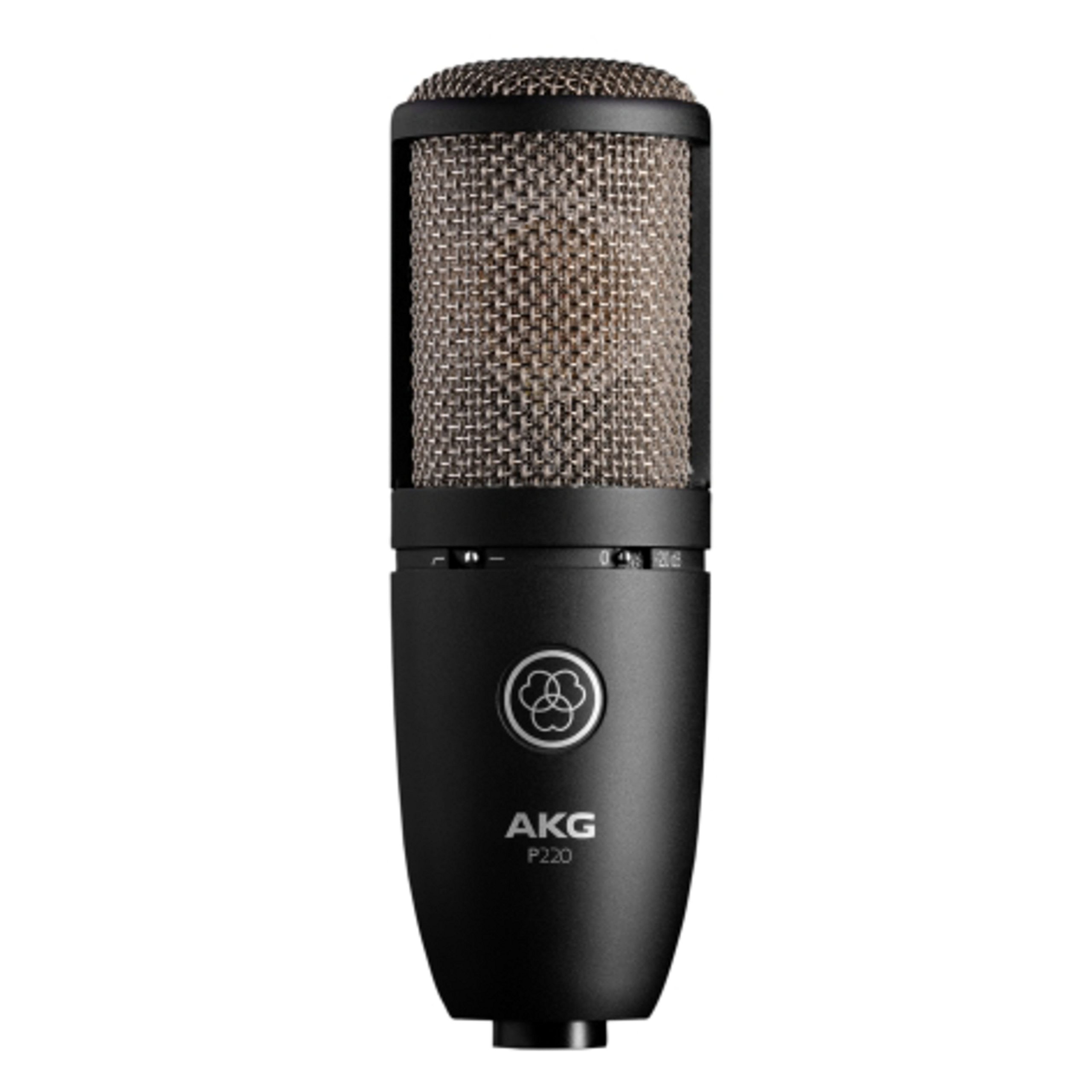
The AKG P220 punches well above its price class with a sound character that rivals mics costing three times as much. Its rugged all-metal body and switchable bass-cut filter give you the toolset to handle less-than-perfect room acoustics. The cardioid pattern effectively isolates your source, making it a strong choice for vocals, acoustic guitars, and even drum overheads without excessive bleed.
Designed and engineered in Vienna, this mic delivers a clean, neutral tone that sits easily in a mix. The included shock mount is well-made and provides solid isolation from mechanical noise. Users consistently note its clarity and warmth, especially on bassy voices that benefit from the mic’s extended low-end response without sounding muddy.
The only real drawbacks are its weight — it’s hefty enough that you’ll need a balanced stand — and the somewhat fragile finish that can scratch over time. For anyone building a home studio on a tight budget, the P220 offers premium-tier construction and sonic performance at an entry-level price.
Why it’s great
- Sturdy all-metal build with roadworthy construction
- Switchable bass-cut filter eliminates low-frequency rumble
- Neutral, full-bodied sound that mixes easily
Good to know
- Heavy weight requires a robust mic stand
- Blue finish can scratch with regular use
2. Lewitt LCT 240 Pro

The Lewitt LCT 240 Pro has carved a reputation for a clean, modern sound that’s especially flattering on voices and acoustic instruments. Its self-noise floor sits at a very usable 20 dBA, meaning your quiet passages won’t be marred by hiss. A subtle mid-range presence makes it ideal for source material that needs to cut through a mix without additional EQ work.
The capsule is tuned with a gentle boost in the airy frequencies, adding a sense of openness and detail that budget mics often lack. Its stainless steel enclosure feels dense and premium, and the mic is notably compact — a benefit if you’re working in a tight space or need to get close to your source. Users report excellent performance on voiceover and home recording vocals straight into an audio interface.
Some users find the mic slightly bright compared to warmer voicings like the AKG, and it lacks a pad switch, which could be an issue for extremely loud instruments without an external pad. If you value pristine high-end detail and a low-noise floor for spoken word or modern vocals, the LCT 240 Pro is a strong contender at its tier.
Why it’s great
- Clean, detailed high-end with airy boost
- Low self-noise floor for quiet recordings
- Compact and well-constructed stainless steel body
Good to know
- No integrated -20 dB pad
- Sound leans slightly bright, not neutral/warm
3. Audio-Technica AT2020

The Audio-Technica AT2020 remains the benchmark for entry-level condenser microphones for good reason. Its custom-engineered low-mass diaphragm delivers extended frequency response and superior transient response, capturing the nuance of fast attacks on vocals and percussion with surprising accuracy. The cardioid polar pattern provides clean rejection of off-axis noise, which is essential for home studios with less-than-ideal acoustic treatment.
With high SPL handling and a wide dynamic range, it handles everything from a quiet fingerpicked guitar to a loud vocal performance without strain. It requires standard 48V phantom power and works seamlessly with any budget audio interface.
The AT2020 lacks a pad or filter switch, which mean you’ll need to manage loud sources with your preamp gain or external tools. It also has a slightly higher self-noise floor than some modern competitors. For sheer value and proven performance, the AT2020 remains the default recommendation for first-time studio builders.
Why it’s great
- Proven, reliable sound that’s become an industry standard
- Low-mass diaphragm delivers fast transient response
- Handles high SPL with wide dynamic range
Good to know
- No pad or hi-pass filter switches
- Self-noise floor is higher than some budget contenders
4. sE Electronics X1 A

The sE Electronics X1 A brings a surprisingly competitive feature set to the mid-range table. Its newly developed capsule delivers a well-balanced frequency response with good speed, and the inclusion of both a -20 dB pad and a 100 Hz low-cut filter gives you the control you often have to buy a more expensive mic to get. The internal windscreen is a smart touch that reduces plosives without needing an external pop filter immediately.
With a max SPL of 150 dB, you can place it in front of a cranked guitar amp or a loud snare without fear of distortion. Build quality is solid with an all-metal chassis that rejects electrical interference. Users often compare its sound to the AT2020 but note it offers more flexibility thanks to the switches, making it a better fit for varied recording scenarios.
Some listeners find the tone slightly less crisp than the AT2020, with a sound that some compare to an MXL 440 FET but at a higher price. The switches are a genuine advantage for versatility, but if pure top-end detail is your priority, the AT2020 or Lewitt may serve better.
Why it’s great
- Includes both -20 dB pad and hi-pass filter
- Built-in internal windscreen reduces plosives
- High SPL handling for loud sources
Good to know
- Sound may feel less crisp than the AT2020
- Price premium over similar spec’d MXL units
5. Behringer B-1

The Behringer B-1 stands out for an exceptionally low self-noise rating of 10 dBA — one of the quietest you’ll find at this level. The gold-sputtered large-diaphragm capsule is shock-mounted internally to reduce mechanical noise, and the cardioid pickup pattern provides solid feedback rejection. It’s been praised by users for recording flat, with a well-balanced frequency spectrum that requires little to no post-processing.
This mic is extremely sensitive, which is both a strength and a consideration: it will capture every detail of your performance, but also every creak and rustle in the room. The included case and windscreen add value. Many users compare its sound quality favorably to microphones costing hundreds more, calling it a hidden gem for home studios.
Its sensitivity can be a double-edged sword — background noise like a squeaky chair or distant conversation can become an issue. The enclosure is aluminum, which feels less robust than steel-bodied competitors. For controlled environments where a flat, low-noise recording is critical, the B-1 is a dark horse that outperforms its price tier.
Why it’s great
- Exceptionally low self-noise of 10 dBA
- Gold-sputtered shock-mounted capsule for clear sound
- Very affordable and includes quality accessories
Good to know
- Extreme sensitivity picks up all room noise
- Aluminum build less durable than steel chassis
6. Blue Blackout Spark SL

The Blue Blackout Spark SL delivers a warm, rich sound that’s been a favorite for broadcast, podcasting, and vocal tracking. Its custom Blue condenser capsule combined with Class-A JFET electronics produces a detailed, musical tone that requires minimal processing. The included shockmount and wooden storage box reflect a premium presentation that’s rare at this price.
With a self-noise of 16.4 dBA, it’s quiet enough for spoken word, and the integrated 100 Hz high-pass filter and -20 dB pad give you handy tools to shape the sound at the source. The mic’s cardioid pattern is precise, and its small footprint makes it easy to position in tight studio layouts. Users consistently describe its sound as warm and radio-ready, especially for bassy and mid-tone voices.
This mic is discontinued from the Blue line which means availability can be hit-or-miss. Some users also note that its warm character may not suit every voice — if you need a brighter, more neutral sound, a mic like the Lewitt could be a better fit. For dedicated podcasters and streamers who prioritize a vocal tone that’s ready to air with minimal tweaking, the Spark SL is a refined choice.
Why it’s great
- Warm, broadcast-ready sound with Class-A JFET electronics
- Includes high-pass filter and -20 dB pad
- Premium accessory kit with shockmount and storage case
Good to know
- Discontinued model — availability varies
- Warm voicing not ideal for voices needing a bright, neutral capture
7. Audio-Technica AT2035 (Renewed)

The Audio-Technica AT2035 is a step up from the AT2020, offering a slightly more refined sound with lower self-noise and a wider dynamic range. This renewed version gives you access to that step-up performance at an entry-level price point, making it a smart play for buyers willing to accept minor cosmetic wear in exchange for serious capability. The cardioid pattern and large diaphragm capture vocals and instruments with clarity and natural detail.
Users report the AT2035 delivers a clean, defined sound that works well for diverse sources — from banjo and fiddle to vocal practice — with a clarity that helps you hear and correct nuances in your performance. Its all-metal construction feels durable, and the mic handles phantom power without fuss. It’s a very solid option for home studios that need a reliable workhorse.
A small quirk exists in the XLR input area: some thicker cables may not fit securely, so you may need to pair it with standard-sized connectors. As a renewed product, there’s no guarantee of original accessories, though the mic itself is typically in good working order. If you want a proven upgrade path without paying full retail, the renewed AT2035 is a wise pick.
Why it’s great
- Step-up performance over AT2020 with lower self-noise
- All-metal build for durability
- Great value thanks to renewed pricing
Good to know
- XLR input recess can be tight for larger connectors
- Renewed condition may lack original case/accessories
FAQ
Do I need phantom power for these budget large diaphragm condenser mics?
What is the benefit of a -20 dB pad switch on a budget condenser mic?
How important is a hi-pass filter in a budget large diaphragm condenser mic?
Final Thoughts: The Verdict
For most users, the budget large diaphragm condenser microphone winner is the Audio-Technica AT2020 because it offers proven, reliable sound quality and build consistency that’s hard to beat at this tier. If you want maximum versatility with pad and filter switches, grab the sE Electronics X1 A. And for the lowest noise floor in extreme quiet situations, nothing beats the Behringer B-1.

Mo Maruf
I created WellFizz to bridge the gap between vague wellness advice and actionable solutions. My mission is simple: to decode the research and give you practical tools you can actually use.
Beyond the data, I am a passionate traveler. I believe that stepping away from the screen to explore new environments is essential for mental clarity and physical vitality.