Our readers keep the lights on and my smoothie glass nicely filled. As an Amazon Associate, I earn from qualifying purchases.
A sewing machine that jams on the first hem or skips stitches through light cotton is the fastest way to kill a beginner’s momentum. The difference between a frustrating first project and a smooth learning curve often comes down to one thing: the internal frame material and feed dog design. A plastic-geared machine sold as a “starter” can actually teach bad habits, while a machine with a metal interior and a drop-in bobbin system builds real confidence from the first seam.
I’m Mohammad Maruf — the founder and writer behind WellFizz. Over years of analyzing home craft and apparel construction tools, I’ve evaluated mechanical and computerized machines based on stitch quality, frame durability, and ease of threading to separate reliable starters from frustrating shelf-fillers.
This guide focuses on models that genuinely support a new sewer’s first year of projects, from hemming curtains to constructing a simple garment, which is exactly what a buyer needs from a reliable basic sewing machine for beginners.
How To Choose The Best Basic Sewing Machine For Beginners
The market is flooded with mini plastic machines that look cute but lack the weight and internal stability to sew a consistent straight line. A true beginner machine must balance simplicity with enough heft to handle a fabric sandwich without vibrating off the table. Here are the core specs to focus on.
Frame Material: Metal vs. Plastic Interior
This is the single most important decision point. A machine with a metal internal frame (often called a “metal chassis”) provides the weight and rigidity needed to keep the needle aligned through multiple layers of fabric. Plastic-frame machines are lighter and cheaper but tend to vibrate more at higher speeds and can develop needle alignment issues over time. For a first machine, a metal frame is the safer long-term investment.
Bobbin System: Drop-In vs. Front-Loading
Beginners benefit enormously from a top drop-in (also called “drop and sew”) bobbin system. These have a clear plastic cover so you can see thread running out in real time, and they are far less likely to jam than traditional front-loading (vertical oscillating hook) bobbins. Front-loading bobbins are more common on vintage-style mechanical machines and offer greater stitch control for experienced users, but the learning curve is steeper.
Stitch Count and Buttonhole Type
For a basic machine, 10 to 15 built-in stitches is a sweet spot. You need straight, zigzag, and a few stretch or decorative stitches to experiment with. A one-step or four-step automatic buttonhole is a must for garment sewing — it lets you create a buttonhole with consistent width and length without manually pivoting the fabric. Avoid machines with fewer than 8 stitches unless you plan to only hem and mend.
Quick Comparison
On smaller screens, swipe sideways to see the full table.
| Model | Category | Best For | Key Spec | Amazon |
|---|---|---|---|---|
| Brother XM3700 | Mid-Range | Feature variety on a budget | 37 stitches, auto needle threader | Amazon |
| Janome MOD-15 | Premium | Silent, precise mechanical sewing | 5-piece feed dog system | Amazon |
| Janome 2212 | Premium | Pure mechanical durability | 12 stitches, front-load bobbin | Amazon |
| Singer 4423 | Premium | High-speed thick fabric sewing | 1100 stitches/min, metal frame | Amazon |
| Singer 6800C | Premium | Computerized versatility with LCD | 586 stitch applications, LCD | Amazon |
| American Home AH700 | Value | Lightweight free-arm quilting | 15 stitches, 12.8 lbs | Amazon |
| Brother FB1757X | Value | Reliable mechanical simplicity | 17 stitches, LED light | Amazon |
| Stoigeld SM-725 | Budget | Teaching kids and ultra-light DIY | 12 stitches, 4.2 lbs | Amazon |
In‑Depth Reviews
1. Brother XM3700 Sewing Machine

The Brother XM3700 hits the sweet spot for a beginner who wants room to grow without getting overwhelmed. With 37 built-in stitches and a one-step auto-size buttonhole, it covers everything from basic mending to decorative stitching on pillowcases and tote bags. The automatic needle threader is a genuine time-saver for eyes that struggle with fine thread, and the jam-resistant drop-in bobbin eliminates the most common beginner frustration: a jammed lower thread.
Weighing 12.5 pounds, it is light enough to move between rooms but heavy enough to stay stable during straight stitching on cotton or denim. The free arm is ideal for sewing cuffs and sleeves, which is exactly the kind of cylindrical project a new sewer encounters early. The included five sewing feet (zigzag, zipper, blind stitch, buttonhole, and button sewing) cover the majority of entry-level projects without requiring extra purchases.
The machine uses a combination of metal and plastic components in the interior, which keeps the price accessible while still providing reliable stitch formation. Some users note the reverse stitch placement takes a moment to get used to, but the overall ease of threading and consistent stitch quality across light silks to heavier materials make this a strong all-rounder for the first year of sewing.
Why it’s great
- Highest stitch count in its class provides creative flexibility
- Drop-in bobbin with clear cover simplifies troubleshooting
- Free arm and included feet reduce initial accessory costs
Good to know
- Auto threader requires practice to master
- Reverse lever placement feels awkward at first
2. Janome MOD-15 Easy-to-Use Sewing Machine

The Janome MOD-15 is a mechanically driven machine built around a 5-piece feed dog system that delivers exceptional fabric control at low and moderate speeds. Where many entry-level machines struggle with lightweight knits or silks, the MOD-15’s feed dogs grip the fabric evenly, preventing the puckering and skipped stitches that plague cheaper models. The automatic tension system means beginners rarely need to manually adjust the upper thread tension dial — a feature that removes a major point of confusion.
With 15 stitches including a four-step buttonhole, this machine is deliberately limited but highly refined. The stitch length and zigzag width are adjustable via dials that click into place, giving tactile feedback that a computer screen cannot replicate. Experienced sewists in reviews note it handles multi-fold denim without strain, yet remains quiet enough to use in a shared living space without disturbing others.
The free arm and drop feed feature allow for darning and free-motion quilting with the included darning plate. The machine weighs 11.7 pounds, placing it in the portable category while still maintaining a metal interior that resists vibration. One detail to note: fleece lint can accumulate inside the bobbin area more quickly than on other models, so regular brushing is necessary to maintain smooth operation.
Why it’s great
- Superior feed dog system for lightweight and slippery fabrics
- Automatic tension reduces beginner setup errors
- Quiet operation and tactile dial controls
Good to know
- Four-step buttonhole is slower than one-step alternatives
- Fleece lint requires regular cleaning to avoid jams
3. Janome 2212 Front-Loading Sewing Machine

The Janome 2212 is a no-nonsense mechanical machine built around a front-loading vertical oscillating hook — the same bobbin system found on many industrial machines. This design gives the user more control over bobbin tension and produces a more consistent stitch on longer runs, but it requires a slightly more careful threading technique than a drop-in system. For a beginner willing to learn the classic method, the payoff is a machine that will likely outlast every other appliance in the craft room.
At 14.9 pounds with a metal and plastic frame, the 2212 is the heaviest mechanical machine in this review, which translates to minimal vibration even at top speed. The five-piece feed dog system and extra-high presser foot lift allow it to sew through four layers of fleece or denim without hesitation. The 12 built-in stitches and four-step buttonhole are deliberately basic, but the stitch length and width adjustments are granular enough to handle quilting and garment construction with precision.
Reviews consistently highlight the clear instruction manual and the machine’s ability to sew multi-fold denim without jamming. The reverse switch must be held down manually rather than locking — a minor ergonomic quirk that some users find tedious. The foot pedal cord could be longer for floor placement, but the machine’s stability and smooth speed control make it a favorite among quilting beginners who want a mechanical machine that will not develop electronic issues.
Why it’s great
- Heavy, stable frame absorbs vibration for smooth stitching
- Front-load bobbin provides precise tension control
- Excellent for quilting and multi-layer denim projects
Good to know
- Reverse requires holding lever manually
- Front-load bobbin has a steeper learning curve
4. SINGER Heavy Duty 4423 Sewing Machine
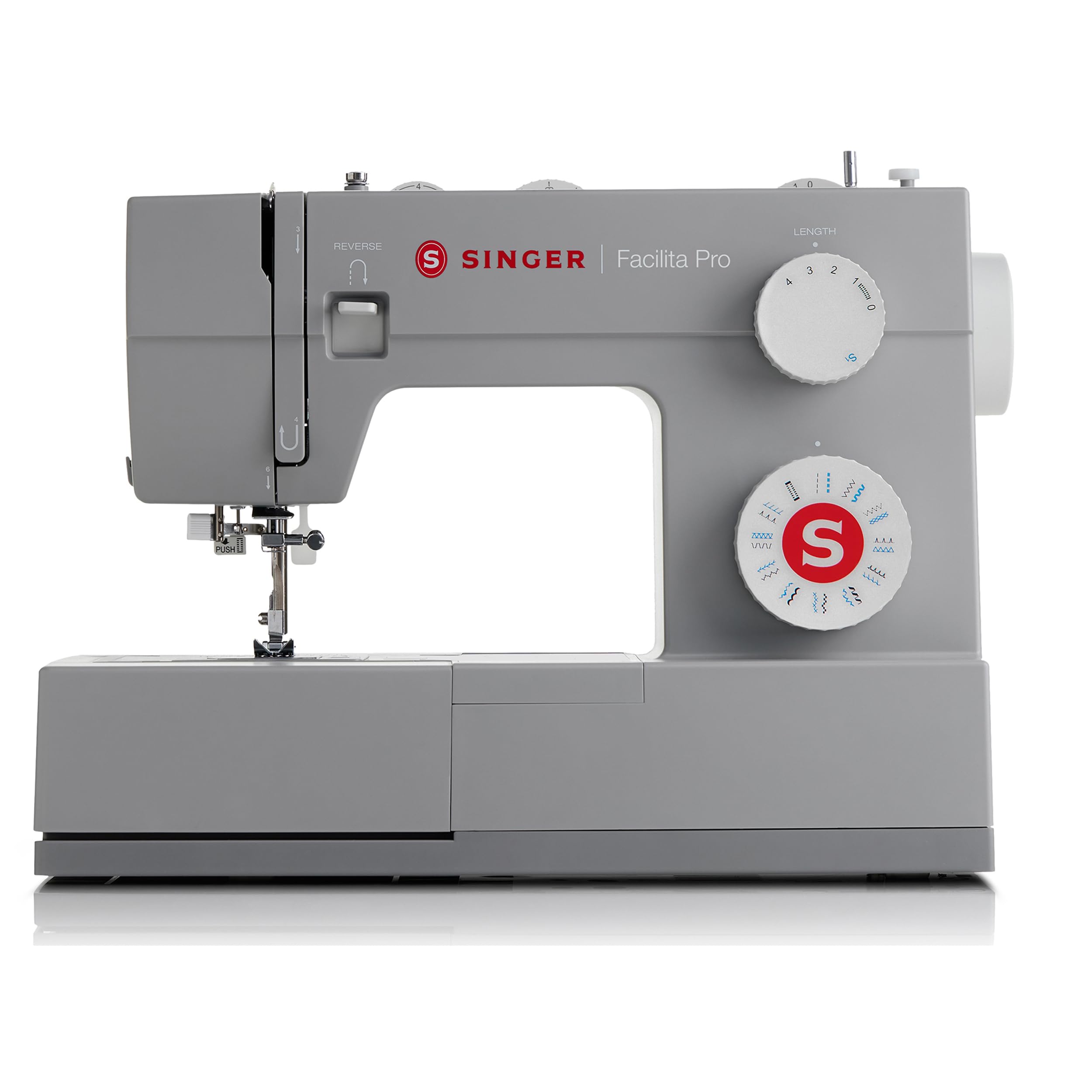
The SINGER 4423 is marketed as “heavy duty,” and the spec sheet backs it up: a motor rated 60% stronger than standard home sewing machines, capable of 1,100 stitches per minute. For a beginner who plans to sew through multiple layers of denim, canvas, or even light leather, this machine delivers piercing power that slower motors cannot match. The heavy-duty metal interior frame and stainless steel bedplate keep the machine planted during high-speed runs, reducing skipped stitches.
With 23 built-in stitches yielding 97 stitch applications, the 4423 offers more variety than most mechanical machines in its tier. The one-step buttonhole is fast and consistent, though the included manual is sparse — most users find the machine easier to set up via YouTube tutorials. The automatic needle threader works well, but the foot pedal is sensitive, requiring a light touch to avoid sudden bursts of speed. This is a machine that rewards patience during the first few hours of use.
Reviews indicate the machine sews smoothly from the first use and handles thick seams with ease. It requires Class 15 plastic bobbins (not the older metal 15J style), which is an important detail for replacements. The LED light is bright, and the included soft-sided dust cover keeps the machine clean between projects. The short foot pedal cord is a common complaint, but an extension cord solves the issue easily.
Why it’s great
- Powerful motor pierces thick seams effortlessly
- High speed reduces project time on long seams
- Metal frame provides long-term durability
Good to know
- Foot pedal is sensitive and requires practice
- Manual is lacking; setup relies on online tutorials
5. SINGER Heavy Duty 6800C Computerized Sewing Machine

The SINGER 6800C bridges the gap between a heavy-duty mechanical machine and a full-featured computerized model. With 586 stitch applications, two lettering fonts, and a one-step buttonhole, it offers the most creative versatility of any machine in this guide. The LCD screen displays stitch images and presser foot recommendations, making it easier for a beginner to understand which foot and setting to use for a given stitch without flipping through a manual.
The motor is the same 60% stronger motor found in the 4423, delivering 1,100 stitches per minute with enhanced piercing power. The top drop-in bobbin system with a transparent cover makes thread monitoring intuitive. The built-in thread cutter and tie-off button are quality-of-life features that speed up production sewing. The included 10 presser feet — including an even feed/walking foot and an open toe foot — cover almost every common technique immediately.
Reviews note that the machine runs smoothly and quietly even after extended use, and the accessory package is considered exceptional value. Some users report that the included needles broke quickly, which is common with pre-packaged accessories. The machine is lightweight for its capabilities at 16.6 pounds, but the plastic exterior panels mean it does not feel as solid as the Janome 2212. For a beginner who wants to experiment with decorative stitches and lettering without buying a separate embroidery unit, this is the most capable choice.
Why it’s great
- Vast stitch library enables creative projects from day one
- Auto-cut and tie-off reduce manual steps
- Included 10-foot accessory kit saves money
Good to know
- Plastic exterior feels less durable than full-metal builds
- Included needles may break quickly; replacements recommended
6. American Home AH700 Sewing Machine for Beginners

The American Home AH700 (also known as “The Dream”) is a mechanical machine built on the same platform as classic Janome models, manufactured in Thailand. For a beginner, this means you get the build quality of a premium brand at a more accessible entry point. The 15 adjustable stitch types include a four-step buttonhole, and the tension dial provides quick adjustments when switching between fabrics. The automatic bobbin winder stops when full, preventing the common problem of overwound bobbins that cause tangling.
At just under 13 pounds, this is one of the lightest full-featured mechanical machines available, and the built-in carry handle makes it genuinely portable for sewing classes or craft meetups. The free arm is accessed by removing the flatbed extension, and it is long enough to accommodate pants legs and sleeves comfortably. The included darning plate allows for free-motion quilting, which is rare in this price bracket.
Reviews consistently praise the machine’s sturdy metal construction and smooth operation. The foot pedal is sensitive — some users find it “too touchy” with a tendency to race at the slightest pressure. This takes getting used to, especially for a beginner. The machine handles light to medium fabrics well, but heavy outdoor fabrics require careful speed management. The 25-year limited warranty provides peace of mind that is unusual at this level.
Why it’s great
- Lightweight with carry handle for true portability
- Includes darning plate for free-motion quilting
- 25-year warranty adds long-term value
Good to know
- Foot pedal is very sensitive, prone to sudden speed bursts
- Feed dogs do not drop; darning plate must be used
7. Brother FB1757X Mechanical Sewing Machine
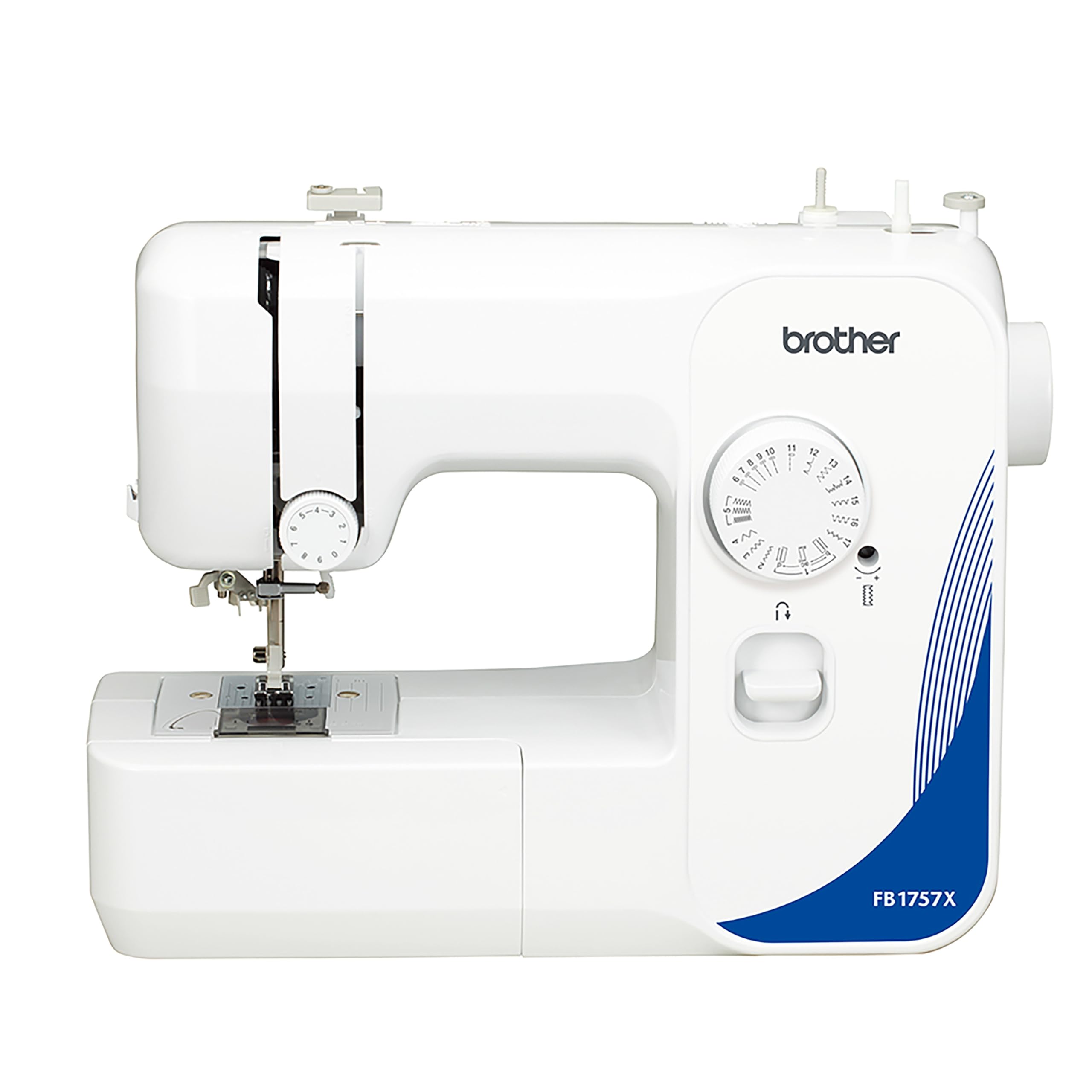
The Brother FB1757X is a straightforward mechanical machine with 17 built-in stitches, including a four-step buttonhole. It is designed for the beginner who values simplicity over flashy features. The reverse button is easy to locate, and the free arm provides access to cylindrical sewing tasks. The LED lighting is bright enough to illuminate the work area clearly, reducing eye strain during extended sessions.
The machine uses a jam-resistant drop-in bobbin system, which is one of the most beginner-friendly bobbin designs available. Threading is guided by printed marks on the machine body, and the overall setup time is under 10 minutes for a first-time user. It weighs approximately 12 pounds and measures 15 inches wide, making it easy to store in a closet or carry to a class.
Customer reviews highlight the smooth and quiet operation, with consistent stitch quality across light cotton and medium-weight fabrics. Some users note that the included accessories are limited, but the machine is easy to supplement with generic presser feet and bobbins. It sews through denim jeans without struggle, and the cost makes it an excellent budget-friendly option for teens or adults learning to sew.
Why it’s great
- Simple setup with printed threading guides
- Jam-resistant drop-in bobbin reduces beginner frustration
- Smooth and quiet operation
Good to know
- Accessories kit is minimal; extra feet sold separately
- Only 17 stitches may feel limiting over time
8. Stoigeld SM-725 Sewing Machine for Beginners
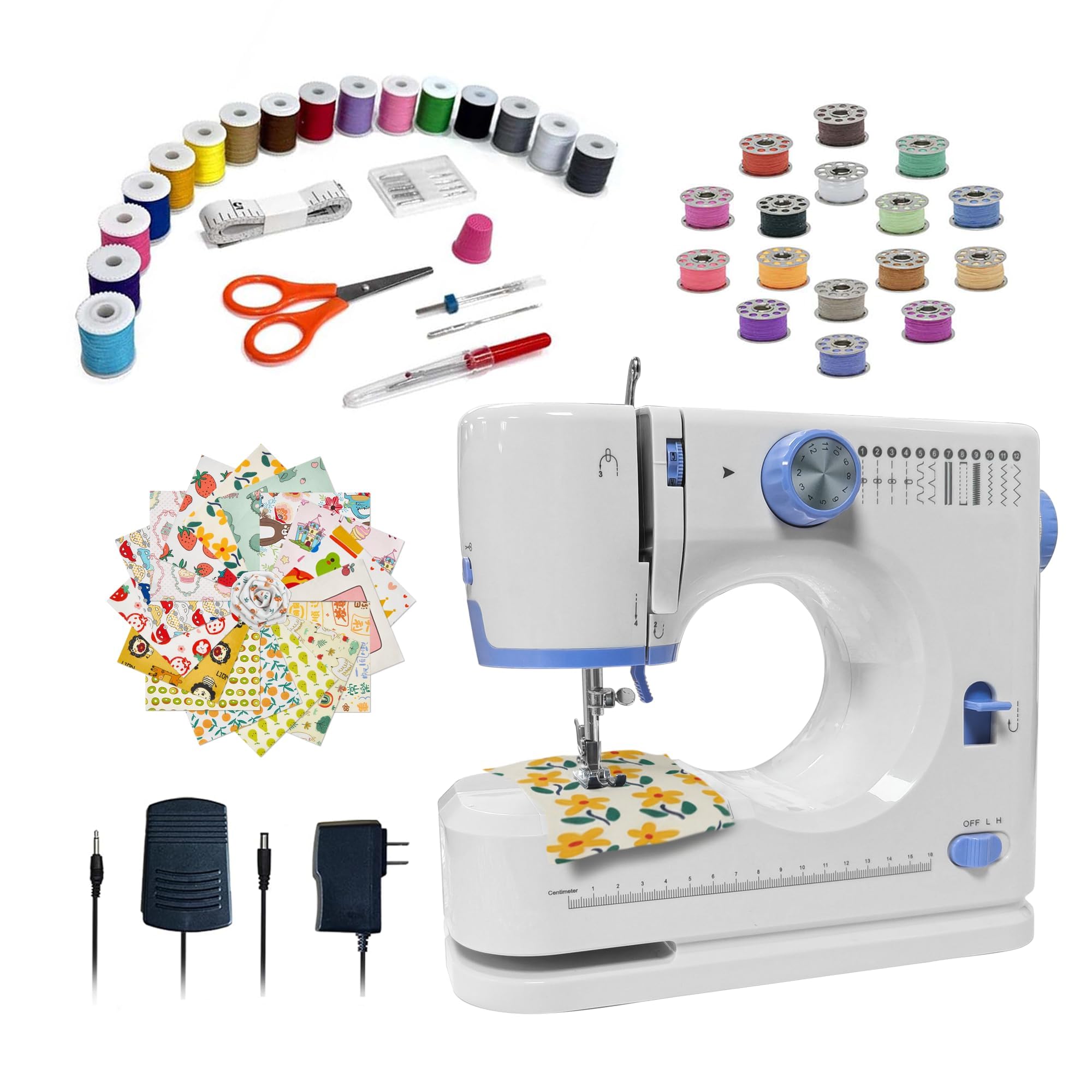
The Stoigeld SM-725 is a compact, ultra-portable sewing machine designed specifically for light-duty use: thin cotton, linen, and up to four to six layers of woven fabric. It weighs only 4.2 pounds, making it the most portable machine in this guide, and it comes with a substantial starter kit that includes 20 fabric pieces and 32 spools of thread. This bundle is ideal for a complete beginner who wants to practice stitches without buying separate supplies.
The machine features 12 built-in stitches, a four-step buttonhole, and a reverse function. The two-speed selector (high and low) is a valuable safety feature for young or inexperienced users — starting on low speed reduces the risk of runaway stitching. The compact size means it fits in a small apartment or dorm room, and the plastic construction keeps the weight minimal, but also limits the machine’s ability to handle thicker materials.
Customer reviews are mixed: many users love the compact size and value bundle, while a few report mechanical failures after limited use, including thread breakage at the tension disc and needle jams. This machine is best understood as a teaching tool or a backup machine for quick repairs, not a primary machine for garment construction. For a child learning to sew or an adult who needs a tiny machine for occasional mending, it serves a clear niche.
Why it’s great
- Incredibly lightweight and portable for travel or storage
- Includes fabric and thread bundle — everything needed to start
- Two-speed control improves safety for children
Good to know
- Only suitable for light fabrics; not for denim or heavy layers
- Plastic components and internal gears limit durability
FAQ
Should a beginner buy a mechanical or a computerized sewing machine?
How many stitches does a basic sewing machine for beginners need?
Is a metal frame necessary for a beginner sewing machine?
Final Thoughts: The Verdict
For most users, the basic sewing machine for beginners winner is the Brother XM3700 because it combines 37 stitches with a drop-in bobbin and auto needle threader at a price that leaves room for buying fabric supplies. If you want a quiet mechanical workhorse with superior feed dogs for slippery fabrics, grab the Janome MOD-15. And for high-speed thick fabric sewing without vibration, nothing beats the SINGER Heavy Duty 4423.

Mo Maruf
I created WellFizz to bridge the gap between vague wellness advice and actionable solutions. My mission is simple: to decode the research and give you practical tools you can actually use.
Beyond the data, I am a passionate traveler. I believe that stepping away from the screen to explore new environments is essential for mental clarity and physical vitality.