Our readers keep the lights on and my smoothie glass nicely filled. As an Amazon Associate, I earn from qualifying purchases.
A 400 watt solar panel sits at a specific sweet spot for off-grid power — large enough to run a full-size refrigerator or charge a sizable battery bank, yet manageable enough for a single person to handle during installation. The market is flooded with options, but real-world output often tells a different story than the spec sheet, especially when heat, shading, and panel angle come into play. Understanding which panels actually deliver close to their rated wattage under normal conditions is the difference between a system that works and one that frustrates.
I’m Mohammad Maruf — the founder and writer behind WellFizz. I’ve spent years analyzing solar panel efficiency data, reading through thousands of verified customer reports, and cross-referencing real-world output against manufacturer claims to understand which 400W panels hold up under actual sun conditions.
After comparing efficiency ratings, build quality, warranty terms, and real-world performance data across nine models, you’re about to see the clearest breakdown of the best 400 watt solar panel options available right now.
How To Choose The Best 400 Watt Solar Panel
Shopping for a 400W panel means weighing factors that directly affect how many usable kilowatt-hours you pull down each day. Here are the four specifications that separate a smart investment from a disappointing one.
Cell Type and Busbar Count
Monocrystalline cells dominate the 400W category for their higher efficiency per square foot. Within monocrystalline, you’ll find P-type (older standard) and N-type cells. N-type cells resist light-induced degradation better and typically carry a lower temperature coefficient, meaning they lose less power when the panel heats up. The busbar count — the thin metal strips on the cell surface — has jumped from 9BB to 16BB in newer panels. More busbars mean shorter electron travel paths, reduced micro-crack risk, and better shade tolerance.
Bifacial vs Monofacial
Bifacial panels capture sunlight from both the front and rear sides, using a transparent backsheet instead of an opaque one. If your panel is mounted above a reflective surface like a white roof, gravel, or snow, you can gain 15-30% extra output from rear-side reflection. Monofacial panels are simpler and cheaper but leave that potential energy on the table. For ground-mounted arrays or flat rooftops, bifacial panels offer a compelling efficiency upgrade for a moderate price premium.
Temperature Coefficient
The temperature coefficient, expressed as a percentage per degree Kelvin (e.g., -0.30%/K), tells you how much power the panel loses for each degree above 25°C (77°F). A panel rated at -0.30%/K loses 3% of its power at 35°C, while a panel at -0.45%/K loses 4.5% at the same temperature. In hot climates or rooftop installations where panels run hotter than ambient air, a lower temperature coefficient is one of the most impactful numbers on the spec sheet.
Warranty and Long-Term Output Guarantee
Solar panels are a 25- to 30-year investment. The warranty structure matters: a 10-year material and workmanship warranty covers defects, while a 25-year linear performance guarantee ensures the panel still produces at least 80-85% of its rated power after two and a half decades. Panels from established brands or those with transferable warranties hold their value better and give you recourse if output drops prematurely.
Quick Comparison
On smaller screens, swipe sideways to see the full table.
| Model | Category | Best For | Key Spec | Amazon |
|---|---|---|---|---|
| Callsun 400W Bifacial (2x200W) | Mid-Range | Best Overall Value | 25% Efficiency, N-Type 16BB | Amazon |
| EPOCH 400W Bifacial | Mid-Range | Dual-Side Harvesting | 16BB N-Type, IP68 Junction Box | Amazon |
| DOKIO 400W Monocrystalline | Budget | Simple Single-Panel Installs | 49.38 lbs, 3m MC4 Cable | Amazon |
| STAR 400W Frameless (2x200W) | Mid-Range | Self-Cleaning Rooftop Mounts | Frameless, 24.9 lbs per panel | Amazon |
| JJN 400W Bifacial | Premium | High-Capacity Arrays | 30-Year Warranty, 13.78A Imp | Amazon |
| EF ECOFLOW 400W Portable | Premium | Portable Emergency Backup | Foldable, 35.3 lbs, IP68 Body | Amazon |
| Renogy 400W Premium Kit | Premium | Complete Plug-and-Play System | 40A MPPT, Bluetooth Included | Amazon |
| Ayahoomane 800W Portable (2x400W) | Premium | Dual-Panel Portable Array | 36V Output, Multiple Adapters | Amazon |
| Anker SOLIX PS400 Portable | Premium | Premium Portable Power | 4 Kickstand Angles, IP67 | Amazon |
In‑Depth Reviews
1. Callsun 400W Bifacial (2x200W)
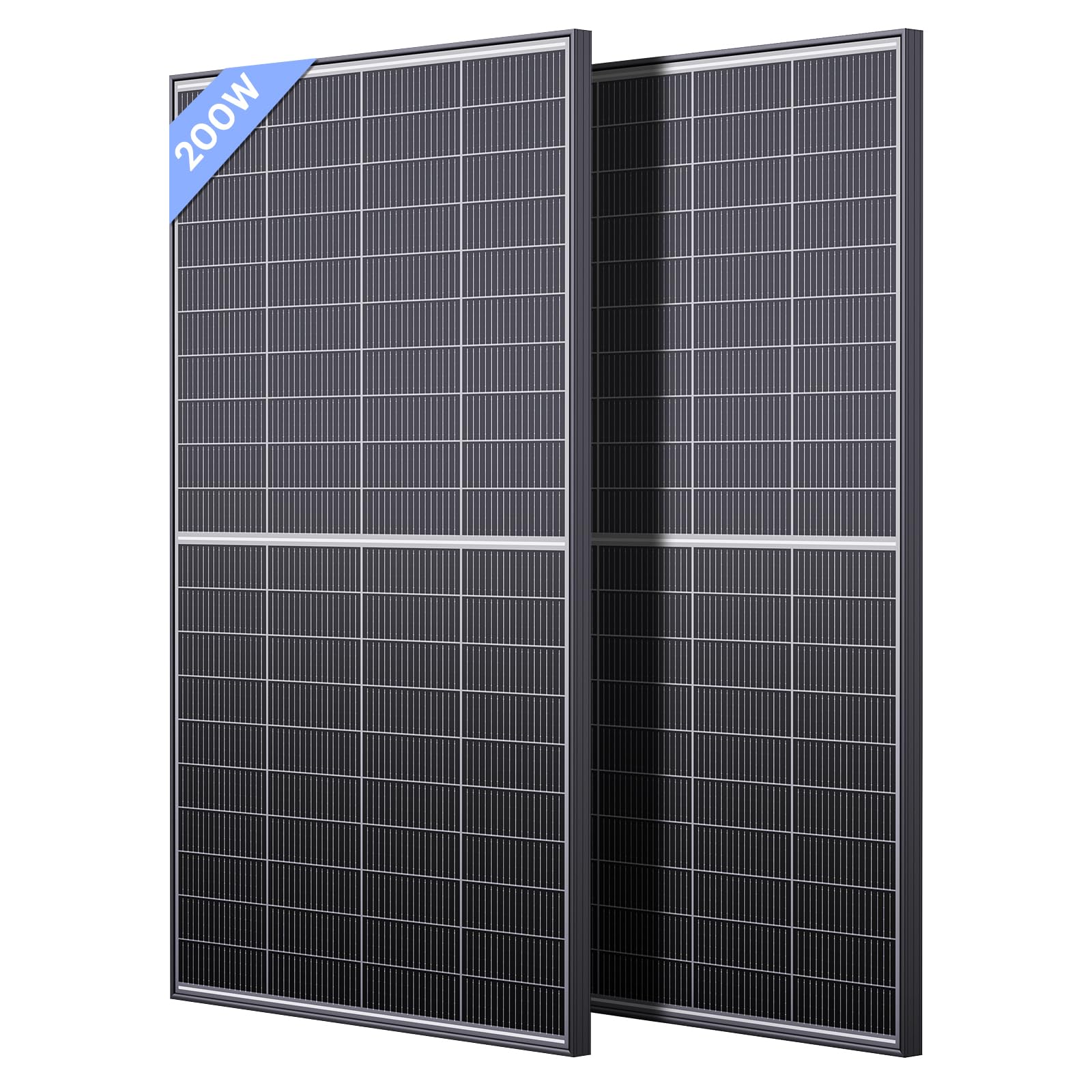
The Callsun kit delivers two 200W N-type bifacial panels that, in real-world tests, have hit 420W peak — exceeding the rated 400W thanks to rear-side reflection. The 16BB busbar design and TwinCell anti-shade technology mean that if a tree branch covers half of one panel, the other half keeps producing at full capacity. Users in Texas reported 380W output even in 92°F heat, a strong result for a panel with a -0.30%/K temperature coefficient.
Each panel weighs only 23.8 pounds and measures 51.3 by 30.3 inches, making them an ideal fit for Class B vans and tight rooftop layouts. The 3.8mm tempered glass and IP68 junction box provide solid weather protection, and the 25-year performance guarantee (maintaining at least 84.5% output after 25 years) matches premium-tier warranty terms at a mid-range price point.
Multiple buyers noted that the panels consistently overproduced their rating on sunny days, with one reporting 275-300W per panel across a seven-panel array. The packaging drew praise — thick foam ensured zero damage during shipping. Just confirm your charge controller’s voltage limit before wiring in series, as the open-circuit voltage runs higher in cold weather.
Why it’s great
- Real-world output frequently exceeds the 400W rating due to bifacial gain
- Compact 23.8 lb panels simplify rooftop mounting on smaller vehicles
Good to know
- Open-circuit voltage rises in cold conditions — verify your controller’s max input
2. EPOCH 400W Bifacial

EPOCH’s entry into the 400W bifacial space uses Class A+ N-type cells with a 16BB busbar layout and a high transparency rating of 91.5%. Users reported that a single panel consistently delivered 275W even in flat-mounted (worst-case) orientation on an SUV roof, and on rainy overcast days it still pulled 60-150W — enough to keep a battery bank from draining overnight. Two panels in parallel charged a Bluetti EB240 at 300W.
The build quality stands out: the panel uses an IP68-rated junction box and IP67 MC4 connectors, with a rugged aluminum frame that tolerates snow loads up to 5400 Pa and wind loads up to 2400 Pa. The black frame received aesthetic praise from buyers who prefer a streamlined look over the standard silver. One off-grid cabin user reported running a fridge 24/7 on these panels with no battery drain issues.
Packaging drew mixed feedback — the first set in one order was destroyed in transit, and the replacement arrived with a damaged box and scuffed frame. Buyers in remote areas should inspect panels immediately upon delivery and test output before mounting permanently.
Why it’s great
- Excellent low-light performance — holds 60-150W even in rainy overcast conditions
- Premium black frame and high-quality cell construction for long-term durability
Good to know
- Shipping packaging varies — inspect thoroughly on delivery for frame damage
3. DOKIO 400W Monocrystalline

The DOKIO 400W panel replaces the common four-panel 100W setup with a single 49.38-pound unit, reducing branch connections and potential failure points. Its 3-meter MC4 cable gives more routing freedom than standard 0.9m leads, often eliminating the need for extension cables. A ham radio operator used four of these panels in a semi-portable field array, reporting real-world output of 70-80% of rated power in heat — consistent with expectations for a panel without advanced temperature coefficient optimization.
The aluminum frame and tempered glass construction handle yard and garden conditions well, and the pre-drilled mounting holes make installation straightforward. One user mounted this panel on a Club Car Precedent golf cart roof, using it as a solar charger while parked. The panel dimensions (67.8 x 44.6 inches) mean it will cover a significant footprint, so measure your mounting area before purchasing.
Buyers noted that output drops to around 300W in 80°F temperatures if the panel isn’t at an optimal angle, which is typical for a panel without bifacial or high-efficiency N-type cells. For a simple off-grid shed, garden, or golf cart application where maximum per-watt efficiency isn’t critical, this single-panel solution saves installation time.
Why it’s great
- Single 400W panel replaces four 100W panels, reducing connectors and wiring complexity
- Long 3m MC4 cable provides flexible routing without extensions
Good to know
- Output drops significantly above 80°F — budget for ~70-80% of rated power in hot weather
4. STAR 400W Frameless (2x200W)
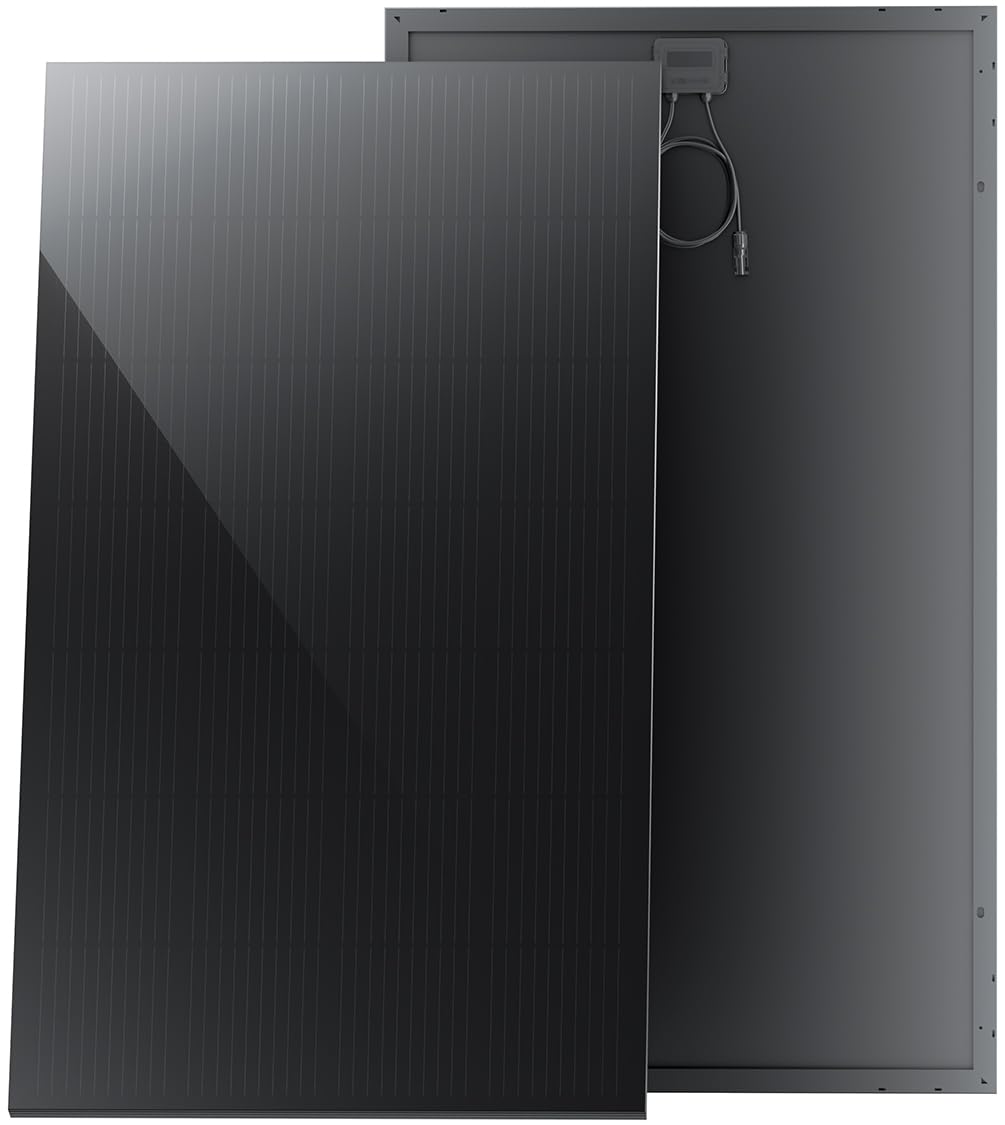
The STAR Cleanedge series eliminates the aluminum frame entirely, using a frameless design that prevents dust and water from pooling along edges. Rain effectively self-cleans the surface, and the manufacturer claims a 15% boost in power generation compared to framed panels due to reduced dirt buildup. Each panel weighs only 24.9 pounds, making this one of the lighter 200W panel options for rooftop use. A buyer who installed four panels on a Ram Promaster van reported peak output of 940W from an 870W-rated system — roughly 108% of rating — in full sun.
The 25% high-efficiency monocrystalline cells carry ETL, ISO9001, and CE certifications. The panels are 53.7 by 30.3 inches each, which fits well alongside AC units on van roofs. One user noted that the glass sits flush with the frame edge, so rubber padding on mounting clamps is recommended to prevent glass stress. A Midwest buyer ground-mounted a set at 30° tilt and achieved approximately 90% of rated output in April, with the panels holding 80-120W longer into dusk than their previous set.
A durability concern emerged from one buyer who reported laminate separation at the corners after only a few months, and efforts to contact the seller were unsuccessful. The frameless design eliminates the frame’s protective edge — panels should be handled carefully during installation and mounted with appropriate edge protection.
Why it’s great
- Frameless design reduces dust buildup and improves self-cleaning in rainy climates
- Lightweight 24.9 lb panels are easy to handle and mount on van roofs
Good to know
- Laminate corners are exposed without a frame — use padded clamps and handle with care
5. JJN 400W Bifacial
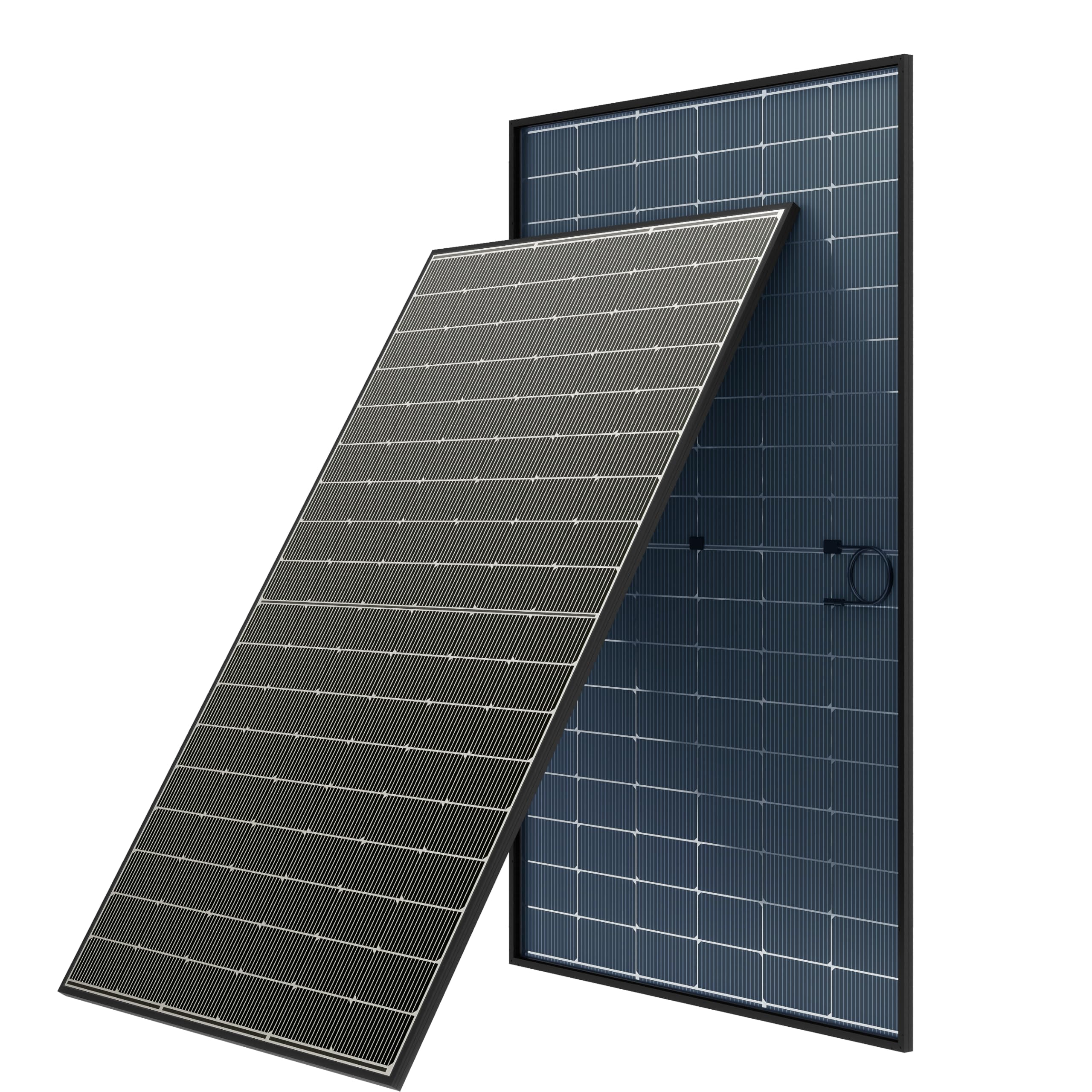
JJN’s bifacial 400W panel uses N-type 16BB cells and a transparent backsheet that captures rear-side reflected light. The most notable spec is the 30-year transferable power output warranty — one of the longest in this category — paired with 2400 Pa wind load and 5400 Pa snow load ratings. Users running 48V 300Ah LiFePO4 banks reported eight panels producing 1060W (106% of rating) in cool full sun, with output dropping to 720W in non-ideal conditions.
The panel weighs 94.6 pounds for the set, and individual units are substantial — buyers confirmed they require two people for safe rooftop installation. A user who also purchased the 200W version noted that the 200W panels (Voc 28.1V) in a 2S2P configuration were more than 10% efficient than the 400W panels in parallel, suggesting the 200W variants may be a better choice for some setups. The panels consistently delivered 85-87% of rated power in July temperatures above 80°F.
Packaging and delivery were generally positive, with Amazon freight handling the large format without damage. However, a small number of cells showed single dots of damaged micro-cells in one shipment — the panels still produced full power, but the cosmetic imperfection may bother detail-oriented buyers. Pre-drilled mounting holes and standard MC4 connectors keep installation straightforward.
Why it’s great
- Industry-leading 30-year transferable power output warranty provides long-term confidence
- Bifacial design delivers over 100% of rated power in cool, reflective conditions
Good to know
- Very heavy at 94.6 lbs per set — plan for two-person installation
6. EF ECOFLOW 400W Portable

The EcoFlow 400W portable panel folds into a zippered carrying case that measures roughly the size of a large suitcase, making it one of the few true portable options in the 400W category. The panel uses monocrystalline cells with a 22.4% conversion rate and an IP68 waterproof rating on the main body. Users pairing it with the Delta Pro reported peak output of 348W from a single panel in midday July sun in Texas, and two panels reached 695W combined — about 87% of the combined rating, which is strong for portable panels that lack optimal air gap cooling.
The adjustable kickstand case supports angled positioning, though some buyers found the hook-based angle system finicky and opted to simply lean the panels against a wall or vehicle instead. At 35.3 pounds, the panel is heavy for a portable unit but expected given the 400W capacity. The built-in MC4 connector works directly with EcoFlow power stations for plug-and-play charging. After Hurricane Beryl, one buyer ran a refrigerator, entertainment system, and power tools from a Delta Pro charged solely by these panels.
The main limitation is winter performance — output drops significantly when the sun sits low in the sky, and the panel’s portable form factor means you can’t optimize tilt as effectively as a ground-mounted rigid array. For emergency backup and camping where setup speed matters more than peak efficiency, this panel excels.
Why it’s great
- Truly portable with foldable design and integrated carrying case for easy transport
- IP68-rated body handles rain and dust during outdoor use
Good to know
- Winter output drops significantly — plan for lower daily harvest in low-sun months
7. Renogy 400W Premium Kit

The Renogy Premium Kit bundles four 100W monocrystalline panels with a 40A MPPT Rover charge controller, Bluetooth module, Z-brackets, and all necessary cabling. This is a complete system out of the box — you add batteries and you’re generating power. The MPPT controller boasts 99% tracking efficiency and 98% peak conversion, which noticeably outperforms the PWM controllers often bundled with budget kits. Users reported charging a 200Ah battery from 77% to full in 8 hours even with clouds passing through.
The kit reliably delivers 2-2.5 kWh per day depending on sun hours, enough to run a gaming PC, vacuum, blender, and small kitchen appliances. Multiple buyers confirmed the system was still running flawlessly after three to five years of continuous use, paired with lithium batteries. The 3.2mm low-iron glass and 35mm aluminum frames handle 2400 Pa wind and 5400 Pa snow loads, matching the structural specs of premium rigid panels.
The included BT-1 Bluetooth module received mixed feedback — the app is functional but basic, and some users found the connection unreliable. The panel-to-controller wiring is shorter than ideal for some installations, and the fuse block is bulkier than necessary. For someone new to solar who wants a single order with everything needed to start generating power, this kit eliminates the guesswork of component matching.
Why it’s great
- Complete all-in-one kit with MPPT controller, Bluetooth, brackets, and cables included
- Proven long-term reliability — multiple users report 3-5 years of trouble-free operation
Good to know
- BT-1 Bluetooth module connection can be unreliable — a battery shunt monitor is a better investment
8. Ayahoomane 800W Portable (2x400W)
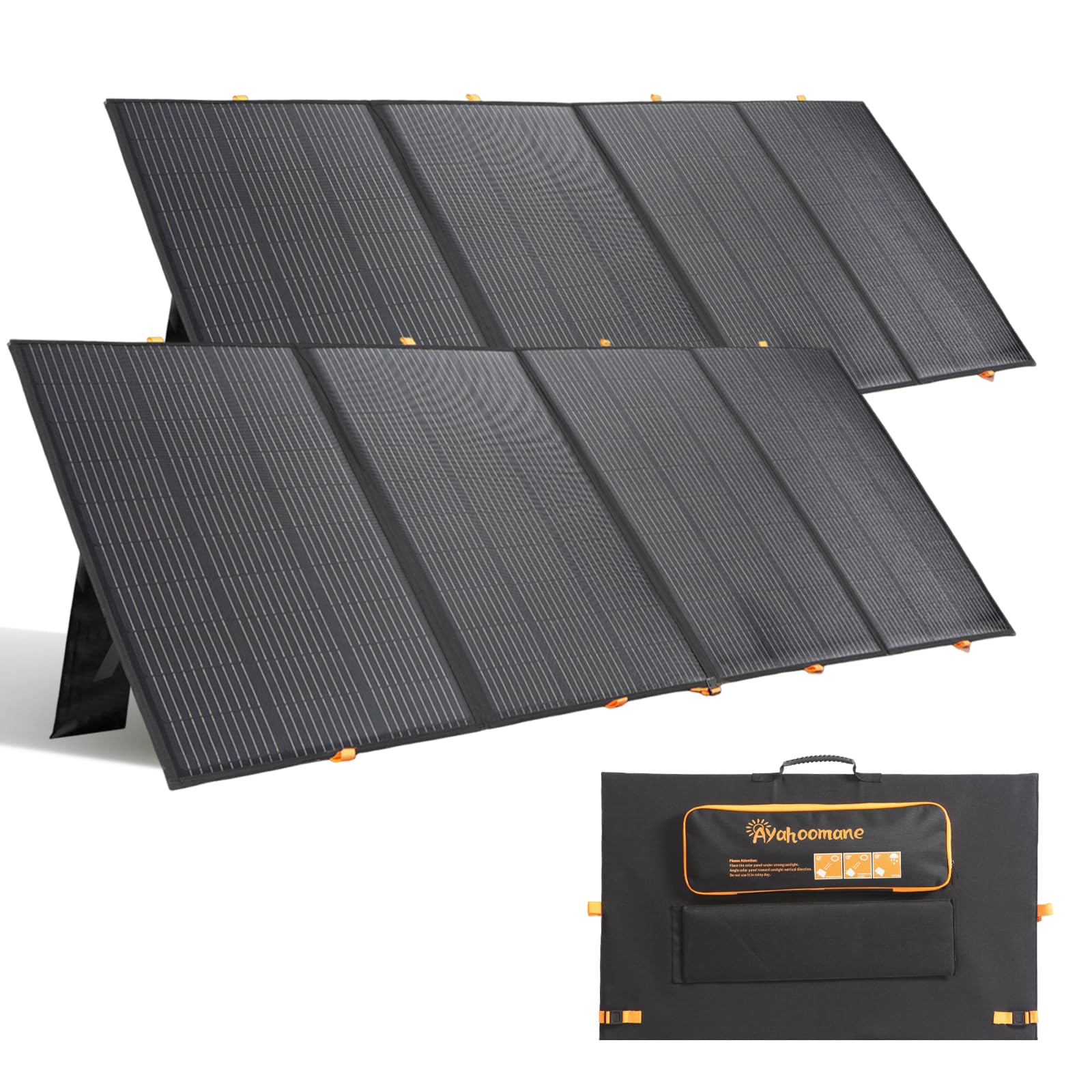
This bundle includes two 400W foldable panels with a 36V output and a full set of adapters (MC4 to Anderson, XT60, DC7909, and DC5525), making it compatible with nearly every major power station brand including Jackery, EcoFlow, Bluetti, and Anker. Users reported real-world output around 340W per panel at 800 W/m^2 irradiance, and 355W into an Anker C1000X on a sunny day. The ETFE laminated surface and IP67 waterproof rating provide reasonable protection for outdoor use.
Each panel folds down to 38.3 by 24 by 1.6 inches and weighs 33.1 pounds, with a built-in handle for carrying. The four-panel-per-unit foldable design makes setup quick — unfold, prop with the included hooks, and connect to your power station. A buyer in Houston averaged 320W per panel in November with partly hazy skies, hitting over 350W in clear sun. The panels are heavy (66.2 pounds total for both), but that’s competitive for combined 800W portable capacity.
The MC4 pigtail wires are notably short and use 14 AWG rather than the 10 AWG that higher-current setups prefer. This limits the ability to wire panels in series for higher voltage without adding extension cables. The props can also fold unintentionally when repositioning, making angle adjustments slightly annoying. For campers who need 800W of portable power that fits in a vehicle, this is a strong dual-panel solution despite the wiring quibbles.
Why it’s great
- Comes with adapters for nearly every major power station brand — no extra cables to buy
- Two 400W panels provide substantial 800W capacity in a foldable, transportable format
Good to know
- MC4 pigtail wires are short and 14 AWG — upgrade to 10 AWG for serious series-wired setups
9. Anker SOLIX PS400 Portable

The Anker SOLIX PS400 stands out with four preset kickstand angles (30°, 40°, 50°, and 80°) for optimizing sun capture across different seasons and latitudes. The monocrystalline cells achieve up to 23% conversion efficiency, and the ETFE coating protects against dust and scratches. The panel uses a stable MC4 connection rather than the less robust XT-60 commonly found on portable panels, maintaining higher conductivity with lower energy loss. Users reported that three panels in a 50-foot 10 AWG wire run produced 1030W total.
The panel weighs 35.05 pounds and folds into a compact package measuring 35.9 by 26.9 by 2 inches. The integrated “sunlight spotter” feature helps align the panel for maximum absorption, a thoughtful addition for users who move their panels throughout the day. A buyer pairing it with the F2600 power station charged from 10% to full over three mornings and afternoons, using it as primary backup power in a region facing energy shortages.
The build quality is generally high, but the fabric handle has drawn complaints — one buyer’s handle broke when lifting the panel out of the box, requiring a duct tape repair. The panel is also heavy and bulky enough that a second person helps with setup. For users who prioritize rugged portable design and precise angle control, the PS400 delivers, but the handle durability is a real weak point that Anker should address in a revision.
Why it’s great
- Four adjustable kickstand angles optimize solar capture in any season
- MC4 connector provides more stable, lower-loss connection than XT-60 alternatives
Good to know
- The carrying handle is prone to breaking — lift the panel from the case body to avoid damage
FAQ
Can I mix a 400W panel with my existing 100W panels in the same array?
Why does my 400W panel only produce 300W in real-world use?
Is a 400W panel too heavy for a standard RV or van roof?
Do I need a special charge controller for a 400W panel?
Final Thoughts: The Verdict
For most users, the best 400 watt solar panel winner is the Callsun 400W Bifacial because it combines N-type cell efficiency, real-world output that often exceeds the rating, and compact panel sizing that fits tight mounting spaces — all at a mid-range price point. If you want dual-side harvesting without the premium markup, grab the EPOCH 400W Bifacial for its excellent low-light performance and rugged black-frame build. And for a complete plug-and-play system that takes the guesswork out of component matching, nothing beats the Renogy 400W Premium Kit with its 40A MPPT controller and Bluetooth monitoring.

Mo Maruf
I created WellFizz to bridge the gap between vague wellness advice and actionable solutions. My mission is simple: to decode the research and give you practical tools you can actually use.
Beyond the data, I am a passionate traveler. I believe that stepping away from the screen to explore new environments is essential for mental clarity and physical vitality.