Our readers keep the lights on and my smoothie glass nicely filled. As an Amazon Associate, I earn from qualifying purchases.
A muddy, distorted recording is the fastest way to lose listeners the second they press play. Finding a mixer that delivers a clean, noise-free signal with enough routing flexibility for multiple mics, phones, and sound effects separates a forgettable show from a polished production.
I’m Mohammad Maruf — the founder and writer behind WellFizz. I evaluate podcast gear based on preamp gain, noise floor ratings, channel count, and connectivity to help creators find the right control surface for their specific studio setup.
Whether you’re a solo host or running a four-person roundtable, this guide breaks down the features that matter most to help you choose a reliable audio mixer for podcasting.
How To Choose The Best Audio Mixer For Podcasting
Selecting the right mixer involves more than just counting XLR jacks. Focus on preamp quality, routing capabilities, and the onboard features that directly impact your recording and streaming workflow.
Preamp Gain and Noise Floor
The preamp determines how much clean gain you can apply before hiss enters your signal. Look for models offering at least 60 dB of gain, especially if you use a dynamic microphone like the Shure SM7B or Rode PodMic. A low noise floor, measured in decibels (dBV EIN), ensures your quiet moments stay crisp.
Channel Count and Routing
A solo host may only need two XLR inputs, but a show with co-hosts or phone-in guests benefits from four or more channels. Also check for separate headphone outputs with individual mix controls so each participant hears their own blend without bleed from other mics.
Connectivity and Onboard Effects
A USB audio interface is essential for sending your mix directly to a computer or mobile device. Loopback functionality lets you route system audio into your stream. Sound pads, EQ, compression, and reverb give you real-time polish without post-processing, saving hours of editing time.
Quick Comparison
On smaller screens, swipe sideways to see the full table.
| Model | Category | Best For | Key Spec | Amazon |
|---|---|---|---|---|
| Focusrite Vocaster Two | Audio Interface | Solo & Duo Hosts | Over 70 dB gain | Amazon |
| Zoom PodTrak P8 | Recorder/Mixer | Multi-Host Studios | 6 XLR inputs | Amazon |
| RØDE RØDECaster Duo | Production Console | Pro Content Creators | 76 dB gain, APHEX FX | Amazon |
| Yamaha AG06MK2 | Loopback Mixer | Live Streaming | 6 channels, DSP FX | Amazon |
| Behringer FLOW 8 | Digital Mixer | Remote Control Setup | Bluetooth App control | Amazon |
| TASCAM Mixcast 4 | Studio Station | All-in-One Production | 4 XLR, SD recording | Amazon |
| MAONO MaonoCaster AME2 | Podcast Mixer | Budget Multi-Input | 11 customizable sound pads | Amazon |
| Behringer XENYX 802S | Analog Mixer | Simple USB Recording | 8 inputs, USB interface | Amazon |
| Yamaha MG10XU | Analog Mixer | Music + Podcast Mix | 10 channels, SPX FX | Amazon |
In‑Depth Reviews
1. Focusrite Vocaster Two

The Vocaster Two delivers broadcast-quality sound through its ultra-clean preamps that provide over 70 dB of gain. This eliminates the need for an external booster even with notoriously gain-hungry dynamic microphones. The Auto Gain feature sets your levels in seconds, removing the guesswork for solo hosts or duos.
Both presenters get their own headphone output with individual mix control via Show Mix, and the integrated Bluetooth phone connectivity lets you bring in remote guests without extra hardware. The Enhance button applies four preset EQ curves tailored for voice, instantly improving tonal balance without dialing in a parametric EQ.
Compact and powered directly over USB-C, the Vocaster Two fits into any desk setup. The Mute button is a lifesaver for live streams, and the camera line-out sends pristine audio to your video recorder. It’s a near-perfect entry point for serious podcasters.
Why it’s great
- Exceptional preamp gain handles any mic
- Auto Gain and Enhance presets speed up setup
- Bluetooth phone input with Mix-Minus
Good to know
- Plastic chassis feels less rugged
- Only two XLR inputs limits multi-host sessions
2. Zoom PodTrak P8
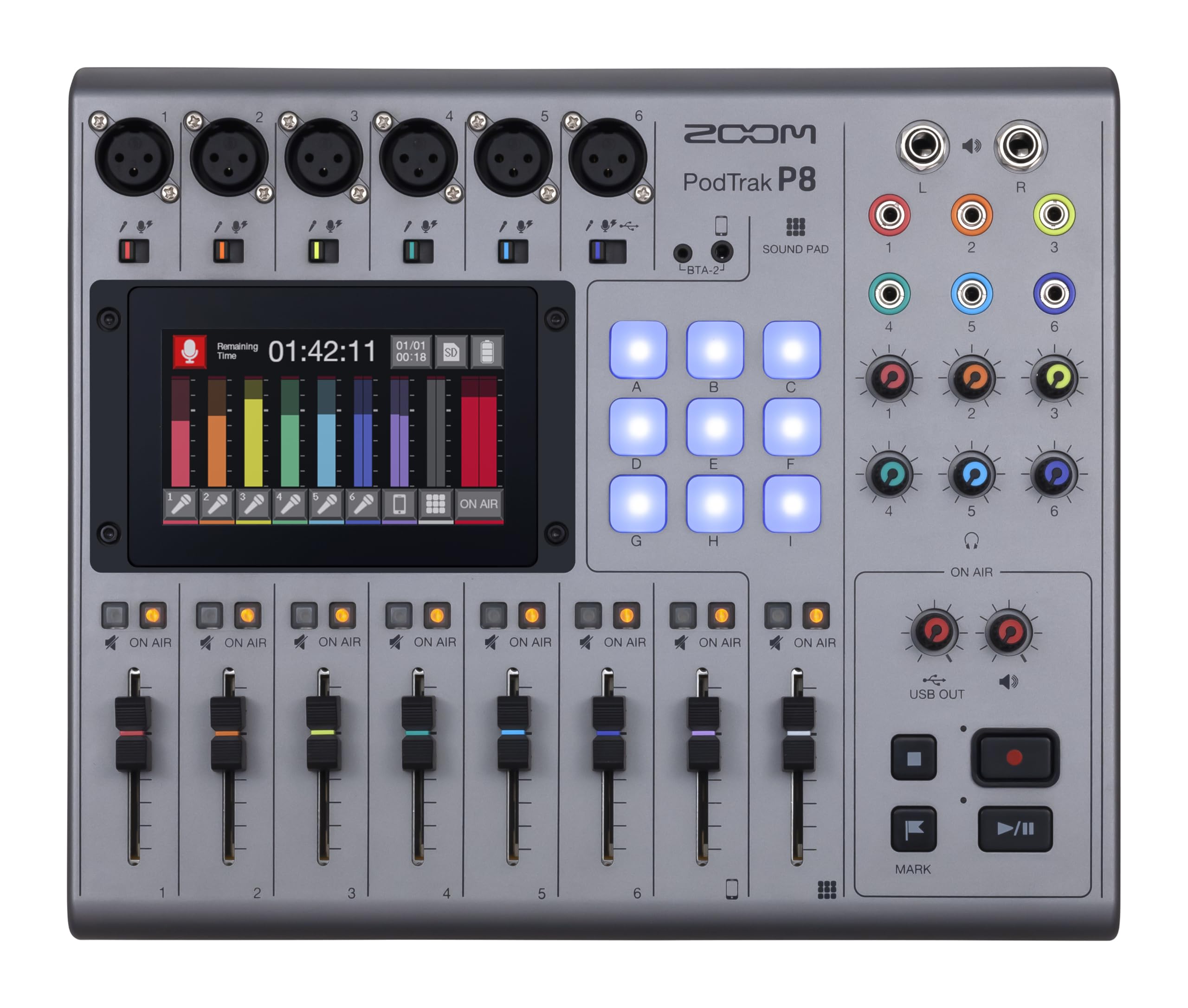
The PodTrak P8 is a complete production studio in a single chassis. With six XLR inputs and six independent headphone outputs, it comfortably accommodates a full roundtable. The color touchscreen puts mic preamp sliders, EQ, compression, de-essing, noise reduction, and limiters at your fingertips.
This unit excels at remote recording. The built-in Mix-Minus eliminates echo during phone calls, and 36 customizable sound pads across four banks give you instant access to intros, jingles, and sound effects. It also records directly to SD card, allowing you to capture individual tracks for post-production.
Battery power capability (four AA batteries for about two hours) makes the P8 genuinely portable for off-site interviews. The 13-in/2-out USB audio interface mode works seamlessly with streaming software. This is the ultimate tool for multi-host podcasts that need professional control.
Why it’s great
- Six XLR inputs cover large panels
- Onboard EQ, compression, and de-essing per channel
- Records to SD card for redundancy
Good to know
- Touchscreen interface has a learning curve
- Battery life is limited to two hours
3. RØDE RØDECaster Duo
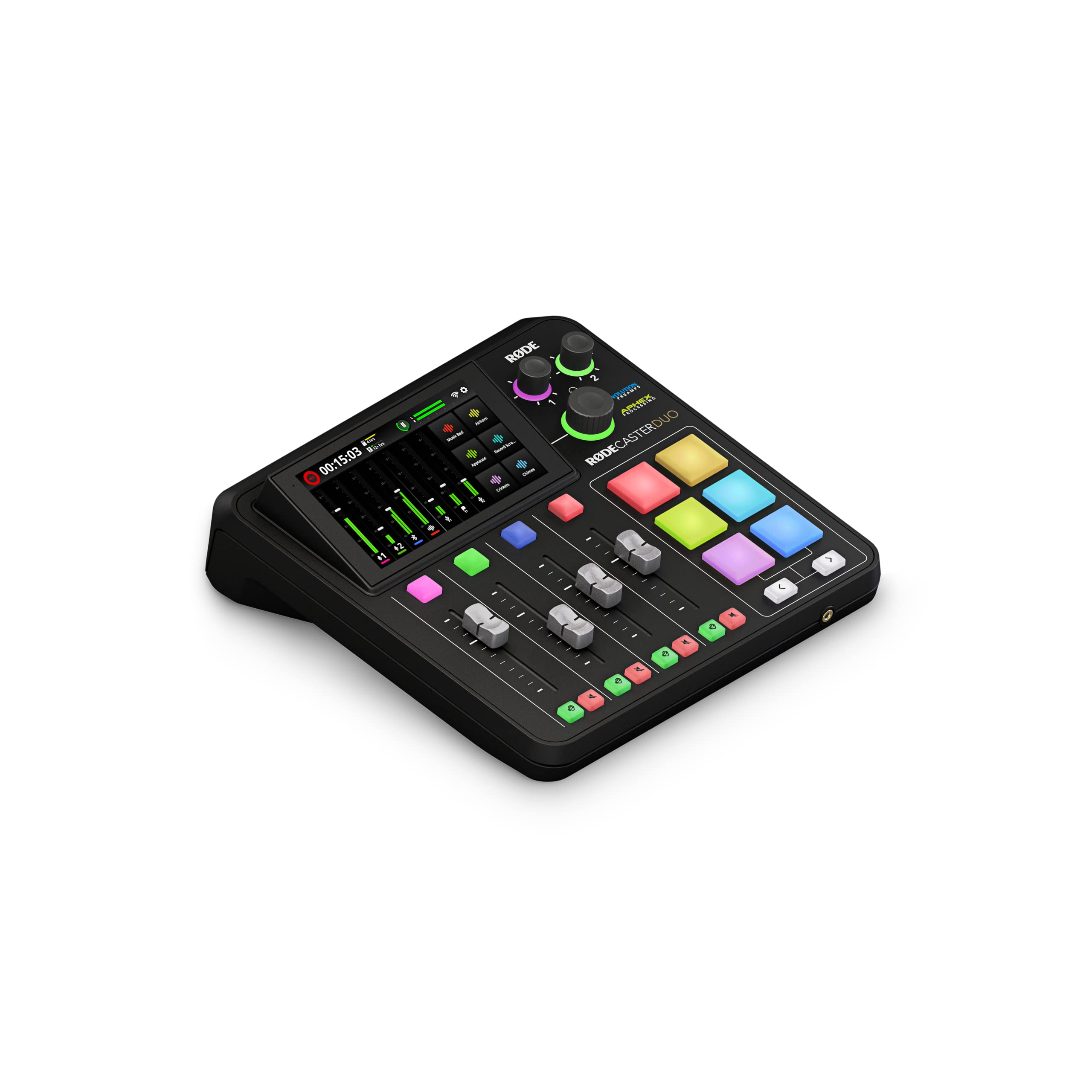
The RØDECaster Duo brings RØDE’s flagship processing to a compact form factor. Its Revolution Preamps deliver an astonishing -131.5 dBV EIN noise floor and 76 dB of gain, capturing every nuance of your voice with zero hiss. Four broadcast-quality faders and a haptic touchscreen allow precise control over your mix.
Studio-grade APHEX processing, including the legendary Aural Exciter and Big Bottom effects, gives your voice a polished, radio-ready quality in real time. The six SMART pads with bank switching let you trigger jingles, sound effects, or even MIDI commands during a live show.
Built for streaming and podcasting, the Duo connects via USB-C and includes a TRRS headset input for monitoring. The companion software offers deep customization for EQ and compression. It’s a premium investment for creators who want the best possible audio without external outboard gear.
Why it’s great
- Ultra-low noise floor and high gain
- APHEX processing for broadcast polish
- Haptic touchscreen and SMART pads
Good to know
- Setup can be complex for beginners
- Only two XLR inputs limit expansion
4. Yamaha AG06MK2

The AG06MK2 is a 6-channel mixer with a built-in USB audio interface, specifically designed for live streaming and podcasting. Its DSP effects include compression, EQ, and reverb that can be applied per channel via the AG Controller software for Windows, Mac, or iOS devices.
The Loopback function lets you blend your microphone signal with computer audio from games, music, or video calls, and send the combined mix to your streaming platform. A dedicated mute button cuts your mic instantly during unexpected noises, and two phantom-powered XLR inputs handle condenser microphones.
Yamaha’s build quality is excellent, and the package includes Cubase AI and WaveLab Cast for post-production. Its compact footprint makes it easy to pack for mobile setups. The AG06MK2 is the go-to choice for streamers who need reliable, low-latency performance.
Why it’s great
- Loopback and mute button built for streaming
- DSP effects with software control
- High-quality Yamaha preamps
Good to know
- No separate master volume knob
- Occasional sleep mode glitch with PC
5. Behringer FLOW 8

The FLOW 8 packs eight channels of digital mixing into a ultra-slim chassis with a wireless control app. Two Midas-designed microphone preamps deliver the warmth and clarity expected from pro audio, while the EZ-Gain function automatically sets optimal gain for your source.
Bluetooth audio input lets you stream music or remote calls directly into your mix without extra cables. The free FLOW App for iOS and Android gives you remote control over EQ, effects, and routing from anywhere in the room, perfect for adjusting levels during a live podcast.
With 60 mm channel faders and a master rotary control with LED collar, the physical interface is satisfying and intuitive. The built-in dual FX processors offer reverb, delay, and modulation. It’s a digital mixer that feels analog, offering flexibility not found in fixed-format interfaces.
Why it’s great
- Wireless app control for on-the-fly changes
- Midas preamps known for sound quality
- Ultra-compact and portable
Good to know
- Setup requires manual mode for app pairing
- Weak headphone amplifier output
6. TASCAM Mixcast 4

The Mixcast 4 is a complete podcast production station with four XLR/TRS combo inputs, four independent headphone outputs, and a touchscreen interface. It records up to 14 tracks directly to an SD card, giving you the peace of mind of a local backup alongside your computer recording.
Eight banks of illuminated sound pads let you trigger jingles, background music, or pre-recorded segments in real time. The unit features Bluetooth audio input and two TRRS phone jacks with Mix-Minus, making it effortless to bring in remote guests without echo or feedback.
TASCAM includes the Podcast Editor software for post-production editing and sound pad assignment. The built-in compressor and EQ per channel allow you to shape your sound without external plugins. It’s a robust, self-contained solution for creators who want a single device to handle recording, mixing, and streaming.
Why it’s great
- Records to SD card for redundancy
- Clear sound modeling and effects per channel
- Two phone inputs with Mix-Minus
Good to know
- Software updates are infrequent
- USB playback can clip with processing enabled
7. MAONO MaonoCaster AME2

The MaonoCaster AME2 packs an impressive feature set into a budget-friendly package. With 10 channels, it includes two XLR inputs with 48V phantom power, a 6.35mm instrument input, and Bluetooth connectivity. The preamp delivers up to 60 dB of clean gain, suitable for both dynamic and condenser mics.
Eleven customizable sound pads (three with 60-second recording and looping capability) let you enrich your podcast with jingles and sound effects. Six reverb modes, 12-step auto-tune, and 3-band tone adjustment give you creative control typically found on higher-end consoles.
The AME2 is designed for streaming with dedicated live outputs for smartphones and a monitor speaker output. The sidechain and loopback switches simplify complex routing. It’s an excellent entry-level choice for podcasters, musicians, and streamers who want versatility without a big investment.
Why it’s great
- Impressive number of sound pads and effects
- Bluetooth input and instrument jack
- Multiple output options for streaming
Good to know
- Long-term reliability concerns reported
- Headphone monitoring may not match stream
8. Behringer XENYX 802S

The XENYX 802S is a classic analog mixer that adds a USB streaming interface for modern connectivity. Its eight inputs include two XLR channels with Behringer’s XENYX preamps, plus multiple stereo line channels for integrating PC audio, gaming consoles, or media players directly into the mix.
The ultra-low noise design ensures a clean signal path, and the separate main and monitor controls allow independent cue mixes. Users report excellent sound quality with no hum or white noise, and the faders require only partial travel to achieve usable levels.
A USB port sends the master mix to a computer for recording or live streaming, making the 802S a simple bridge between analog workflows and digital recording. It’s a reliable, straightforward option for podcasters who prefer tactile control and don’t need advanced digital effects.
Why it’s great
- Clean analog sound with low noise floor
- Separate monitor and main controls
- USB interface for easy PC recording
Good to know
- No built-in effects or compression
- Limited to 2 XLR mic inputs
9. Yamaha MG10XU

The MG10XU is a 10-channel analog mixer with a USB audio interface and Yamaha’s renowned SPX digital effects. Its D-PRE mic preamps deliver clean, transparent sound with plenty of headroom for dynamic and condenser microphones. The 3-band EQ on each mono channel provides immediate tone shaping.
One-knob compressors on the mono channels offer straightforward dynamics control, taming peaks without menu diving. The SPX processor includes 24 reverb, delay, and modulation effects, adding polish to your podcast without external gear. The USB port enables two-track recording and playback with your DAW.
Built to last with a rugged metal chassis, the MG10XU is a trusted workhorse in studios and live settings alike. While it lacks dedicated streaming features like loopback, its superior preamp quality and effects versatility make it a strong choice for podcasters who also record music or want pro-grade analog sound.
Why it’s great
- Yamaha D-PRE preamps with excellent clarity
- 24 SPX effects and one-knob compressors
- Rugged build with 10-channel flexibility
Good to know
- No loopback for streaming audio routing
- Heavier and larger than desktop units
FAQ
Do I need a mixer if I only use a USB microphone?
What is Mix-Minus and why does it matter for remote guests?
Can I use a live sound mixer instead of a podcast mixer?
Final Thoughts: The Verdict
For most users, the audio mixer for podcasting winner is the Focusrite Vocaster Two because it combines over 70 dB of clean gain, Auto Gain, and intuitive Enhance presets in a compact, affordable package perfect for solo and duo hosts. If you need six XLR inputs for a full team, grab the Zoom PodTrak P8. And for premium broadcast-quality processing with APHEX effects, nothing beats the RØDE RØDECaster Duo.

Mo Maruf
I created WellFizz to bridge the gap between vague wellness advice and actionable solutions. My mission is simple: to decode the research and give you practical tools you can actually use.
Beyond the data, I am a passionate traveler. I believe that stepping away from the screen to explore new environments is essential for mental clarity and physical vitality.