Our readers keep the lights on and my smoothie glass nicely filled. As an Amazon Associate, I earn from qualifying purchases.
When the power grid fails, floodwaters rise, or an earthquake rattles your foundation, you don’t have time to gather supplies. A pre-assembled 72-hour survival kit is your single point of readiness — a grab-and-go system that supports you and your family during the critical first three days of any disaster. The difference between a chaotic scramble and a calm evacuation often comes down to one packed backpack.
I’m Mohammad Maruf — the founder and writer behind WellFizz. I’ve spent years analyzing emergency preparedness gear, comparing shelf lives, water capacity, shelter quality, and tool durability across dozens of kits to help you make a confident choice.
After hands-on comparison of food rations, first aid supplies, water filtration options, and backpack construction, I’ve identified the best options for every scenario. This guide will help you find the right 72 hour survival kit for your specific needs and budget.
How To Choose The Best 72 Hour Survival Kit
Not all emergency kits are created equal. The difference between a useful lifeboat and a bag of frustration comes down to a few measurable factors. Here is what experienced preppers check first.
Food Rations: Calorie Density and Shelf Life
The best kits use SOS-brand or similar US Coast Guard-approved food bars that deliver high calories per ounce and require no water to prepare. Look for a minimum of 2,400 calories per person for 72 hours. Shelf life should be at least 5 years from manufacture — storing a kit for a decade only works if the food stays edible.
Water Capacity and Filtration
Your body needs about one gallon per person per day. Many kits include water pouches with a 5-year shelf life, but the truly robust options add a water filtration straw or purification tablets. A collapsible container extends your ability to collect and store water from natural sources.
Shelter and Warmth Quality
Tube tents, emergency bivvies, and Mylar blankets vary dramatically in tear resistance and insulation. A kit with a proper tube tent or bivvy sack offers real protection from wind and rain, while thin Mylar blankets alone can rip within hours. Check the material thickness and included warmth items like hand warmers or sleeping bags.
Backpack Durability and Comfort
The bag itself is the most used component during an evacuation. Look for padded shoulder straps, a waist belt, and water-resistant fabric. A 900D Oxford nylon bag rated at 50 liters offers serious longevity and space. Avoid kits with flimsy seams and thin straps that dig into your shoulders under load.
Quick Comparison
On smaller screens, swipe sideways to see the full table.
| Model | Category | Best For | Key Spec | Amazon |
|---|---|---|---|---|
| Sirius Survival Bug Out Bag | Premium | Complete evacuation readiness | 900D Oxford, 50L, 175 pieces | Amazon |
| First My Family All-in-One | Premium | Red Cross-compliant family kit | 17.55 lbs, 4-person coverage | Amazon |
| Emergency Zone 2 & 4 Person Kit | Mid-Range | Multi-day water & shelter integration | Collapsible container, 121-piece first aid | Amazon |
| 72 HRS Deluxe Emergency Kit | Mid-Range | Heavy-duty build with power station | 56 pieces, radio/power brick | Amazon |
| Ready America 72 Hour Deluxe Kit | Mid-Range | 4-person value with hand crank station | 9.44 kg, 33 pieces | Amazon |
| Emergency Zone Bug-Out Bag (6 Person) | Budget | Compact 2-person go bag | SOS food rations, 5-year shelf life | Amazon |
| Emergency Zone Complete Deluxe Kit | Budget | Entry-level 2-person starter | 53 pieces, flashlight & radio | Amazon |
In‑Depth Reviews
1. Sirius Survival Bug Out Bag – 72 Hour Kit for 2 People
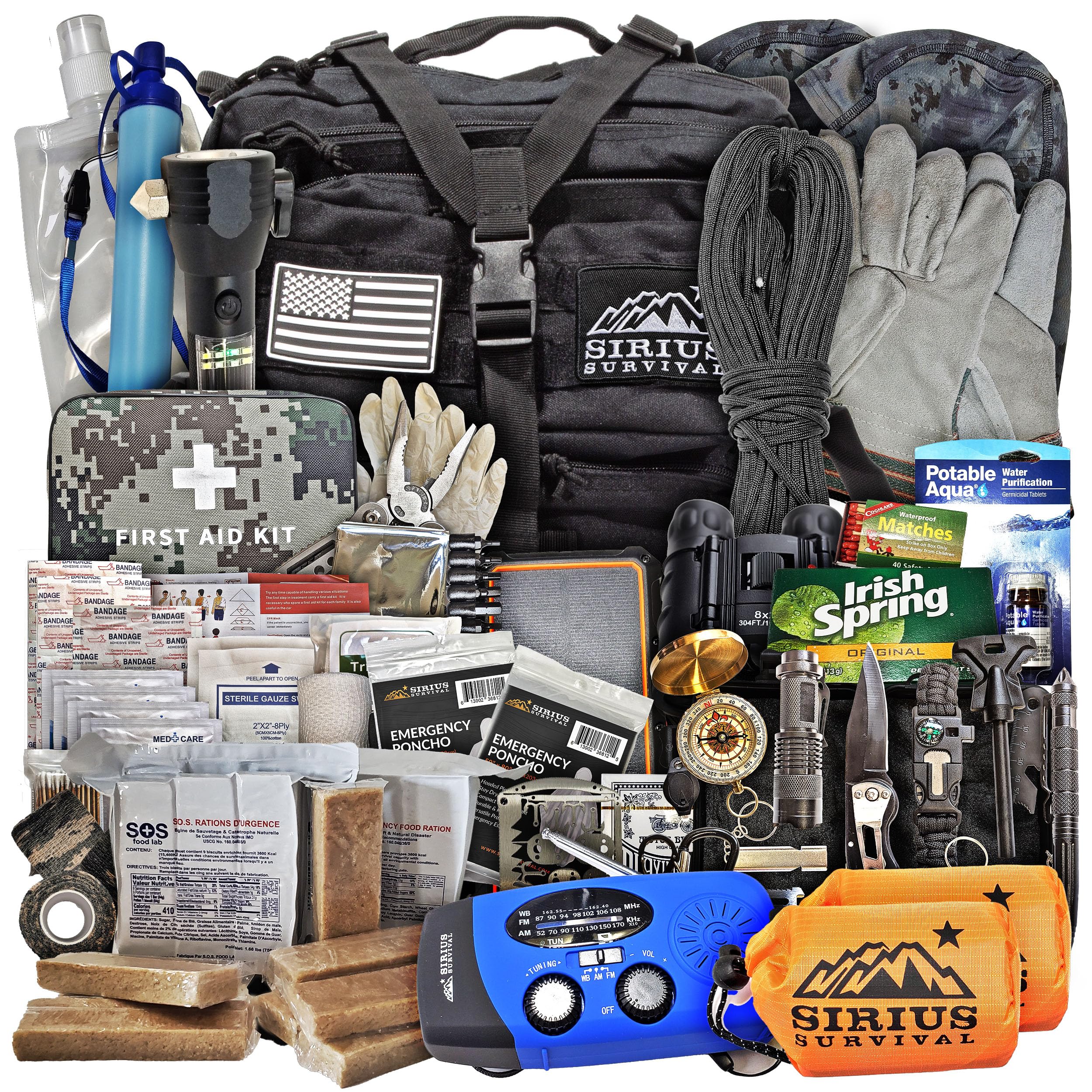
The Sirius kit sets the standard for premium preparedness. It packs 7,200 calories of SOS Labs food rations — enough for two people for three full days — into a rugged 50-liter 900D Oxford tactical backpack. The solar-powered AM/FM/NOAA radio and solar power bank ensure you stay connected and charged even when the grid is down. A stainless steel multi-tool, multiple fire starters, and a water filtration straw cover every practical survival need.
What elevates this kit above others is the thoughtful integration of gear. Tube bivvies, ponchos, and a first aid kit are included, plus the bag has room left for personal items like medications, documents, and extra clothes. The 175-piece count is not inflated by cheap trinkets — every item serves a real purpose. Customers consistently praise the sturdy, weather-resistant construction and the fact that the kit is ready to grab without modification.
If you want a single purchase that covers evacuation, shelter, hydration, and communication comprehensively, this is the kit to beat. The 900D fabric handles rough handling during a bug-out scenario, and the padded straps make carrying a 13.5-pound load comfortable over distance.
Why it’s great
- High-density 900D Oxford backpack with padded straps
- Solar charging for radio, flashlight, and phone
- 7,200 calories of US-made SOS food rations
- Includes water filtration straw
Good to know
- Premium tier — requires a larger initial investment
- 90-day warranty is shorter than some competitors
2. First My Family All-in-One Bug Out Backpack

This kit from First My Family is engineered to meet or exceed Red Cross guidelines for family emergency preparedness. It supports four people for 72 hours with a comprehensive set of trauma and first-aid supplies, food, water, and shelter items. The 17.5-pound weight reflects the depth of the gear included — this is not a lightweight taster kit but a genuine evacuation loadout.
The water-resistant backpack provides enough space to add prescription medications, extra clothing, and important documents without overcrowding. Customers note that the bag serves as an excellent teaching tool for family emergency drills, and the contents give a clear picture of what a complete survival strategy looks like. The external branding is the only point of caution, as it can attract attention in a crisis.
For a family that wants one kit to cover four people and complies with recognized emergency standards, this is the most trustworthy option at this level. The trauma supplies go beyond basic bandages, making it suitable for moderate injury scenarios during prolonged emergencies.
Why it’s great
- Exceeds Red Cross guidelines for 4-person coverage
- Includes trauma and first-aid gear beyond basic bandages
- Roomy backpack with room for personal additions
- Durable, water-resistant construction
Good to know
- External branding may draw unwanted attention
- Consider adding a dedicated water filter for extended use
3. Emergency Zone 2 & 4 Person 72 Hour Survival Kit

Emergency Zone delivers the most thoughtful water strategy in the mid-range segment. Beyond the standard SOS food bars and water pouches, this kit includes a collapsible water container and Chlo-Floc water purification tablets. That combination lets you collect and treat water from creeks or taps long after your pouches are empty — a critical advantage when evacuation lasts longer than 72 hours.
The 121-piece first aid kit is substantial, and the inclusion of sleeping bags, a tube tent, ponchos, and hand warmers makes this a complete shelter solution. Paracord, a multi-tool, duct tape, and a whistle round out the toolbox. Customers appreciate that the discreet gray backpack avoids alarmist labeling and that the contents are neatly organized in ziplock bags, making inventory and additions simple.
At this tier, the combination of multiple water sourcing options and a comprehensive first aid kit makes it the smartest value proposition. It serves as a robust 2-person kit with enough margin to stretch for two more in a pinch.
Why it’s great
- Collapsible water container plus Chlo-Floc purification tablets
- 121-piece first aid kit with quality scissors
- Includes sleeping bags and tube tent for real shelter
- Discreet gray backpack without emergency branding
Good to know
- Bag straps feel cheaper than premium kits
- No MOLLE attachment webbing for expansion
4. 72 HRS Deluxe Emergency Survival Kit
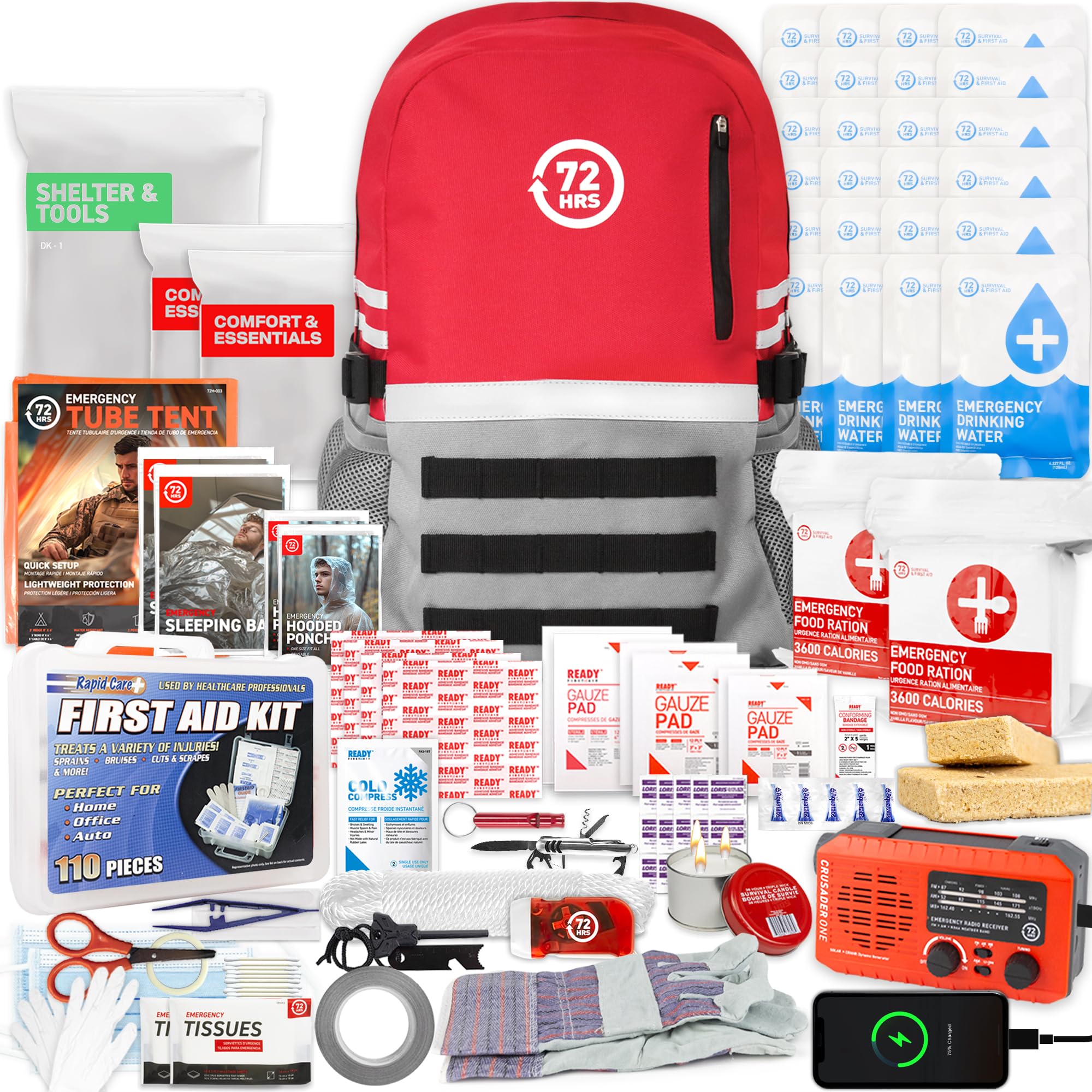
The 72 HRS kit is built around a distinctive red-and-gray backpack with MOLLE straps and padded shoulder supports, giving it a more tactical feel than most mid-range offerings. The included radio integrated with a power brick is a standout feature — it provides AM/FM reception and can charge a phone during a blackout. Water pouches and food bars carry a 5-year shelf life, and a 36-hour candle adds passive warmth and light.
Customers highlight the generous extra space inside the bag for personal gear like clothes and medications. The sleeping bag, poncho, work gloves, and multi-tool cover the basics well. Some users note that the crank radio lacks phone-charging capability, so the power brick is the primary charging source. The first aid kit case is somewhat flimsy, but the contents are serviceable.
For those who prioritize a sturdy, expandable backpack with a built-in radio and power backup, this kit is a strong contender. The MOLLE system allows you to attach additional pouches, making it easy to customize as you gain experience.
Why it’s great
- MOLLE-compatible backpack with padded straps
- Built-in radio and power brick for communication
- 36-hour candle for sustained light and warmth
- Ample extra space for personal items
Good to know
- Crank radio does not charge phones
- First aid kit case feels less durable
5. Ready America 72 Hour Deluxe Emergency Kit
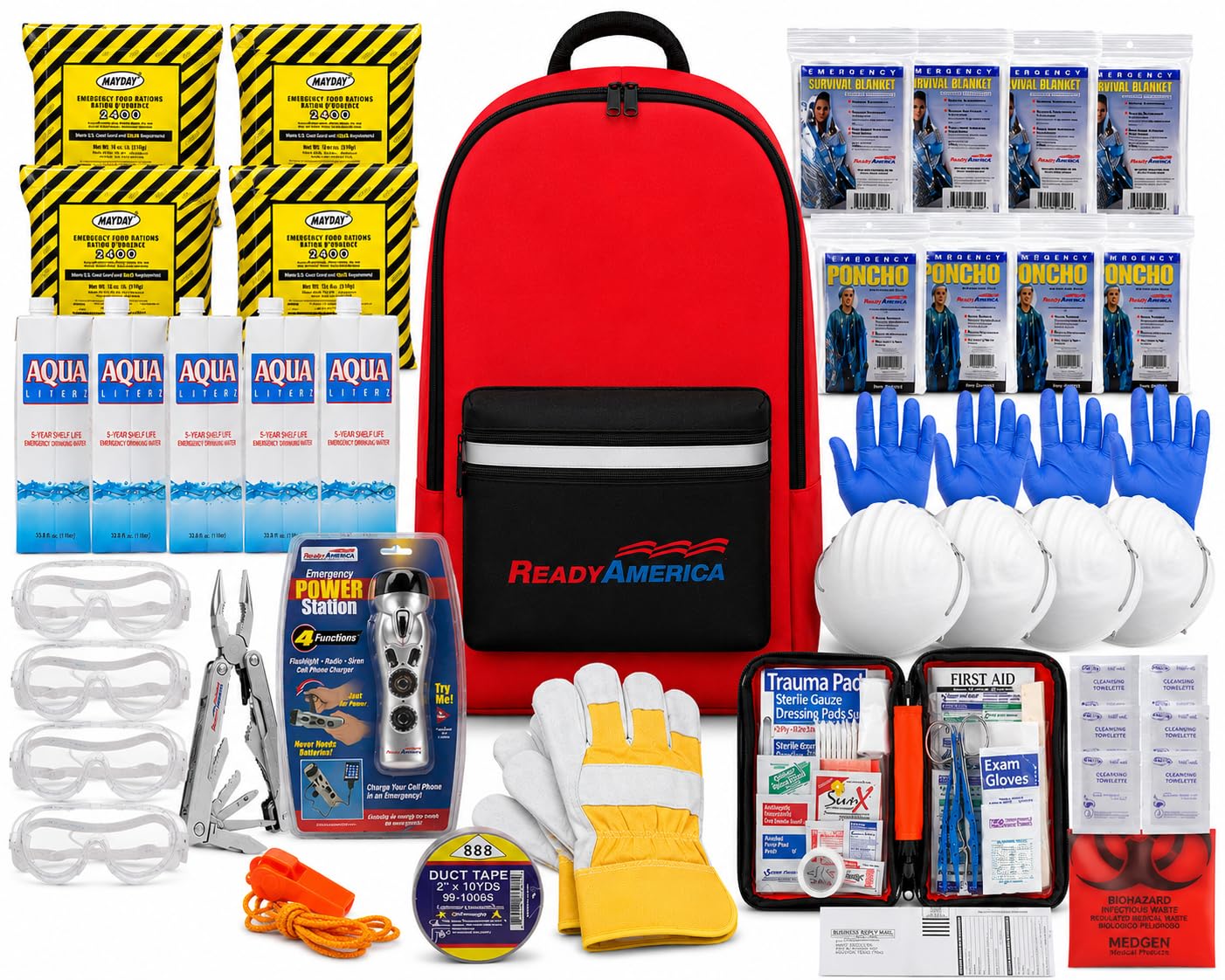
Ready America’s kit is designed specifically for four people, with four 2,400-calorie food bars and four one-liter water cartons. The hand crank power station — featuring a flashlight, AM/FM radio, siren, and phone charger — gives you off-grid communication and light without relying on batteries. The 107-piece first aid kit, safety goggles, N95 dust masks, and leather gloves provide solid personal protection against debris and minor injuries.
Customers consistently praise the lightweight backpack that even children can carry during an evacuation. The inclusion of often-overlooked items like biohazard bags, a multi-tool, and an emergency whistle shows real thought. The main limitation is the water supply — four liters for four people for three days falls short, so adding extra water pouches or a filter is recommended.
For a family of four on a mid-range budget, this kit offers the broadest range of essentials in a lightweight, portable package. The hand crank power station alone makes it worth considering, as it eliminates dependency on disposable batteries.
Why it’s great
- Hand crank power station with flashlight, radio, siren, charger
- Lightweight backpack suitable for children to carry
- Includes overlooked items like biohazard bags and goggles
- Comprehensive 107-piece first aid kit
Good to know
- Water supply insufficient for 4 people for 3 days
- Food and water expire in about 4 years
6. Emergency Zone Bug-Out Bag for up to 6 People

Emergency Zone scales down to a focused, compact 2-person kit that fits inside a discreet black backpack. The SOS brand food rations and water pouches are US Coast Guard approved and carry a 5-year shelf life from manufacture. The food bars require no water for rehydration and are designed to be non-thirst inducing — a smart feature when water is scarce.
The included Emergency Preparedness Guidebook provides practical survival knowledge, from creating a family plan to handling specific disaster scenarios. The backpack is 19x15x10 inches, leaving enough room for personal items like medications, clothes, and important documents. Customers appreciate the cost savings compared to building a kit from scratch and value the peace of mind from a pre-assembled solution.
This is the ideal entry-level kit for a couple or individual who wants a ready-to-go solution without overspending. While it lacks the advanced water filtration and shelter options of higher-tier kits, the core food and water supply is reliable and space-efficient.
Why it’s great
- US Coast Guard approved SOS food rations
- Non-thirst inducing food bars save water
- Compact, discreet black backpack
- 5-year shelf life from manufacture date
Good to know
- Designed for 2 people — not suitable for larger families
- Limited shelter and water filtration options
7. Emergency Zone Complete Deluxe Survival Kit
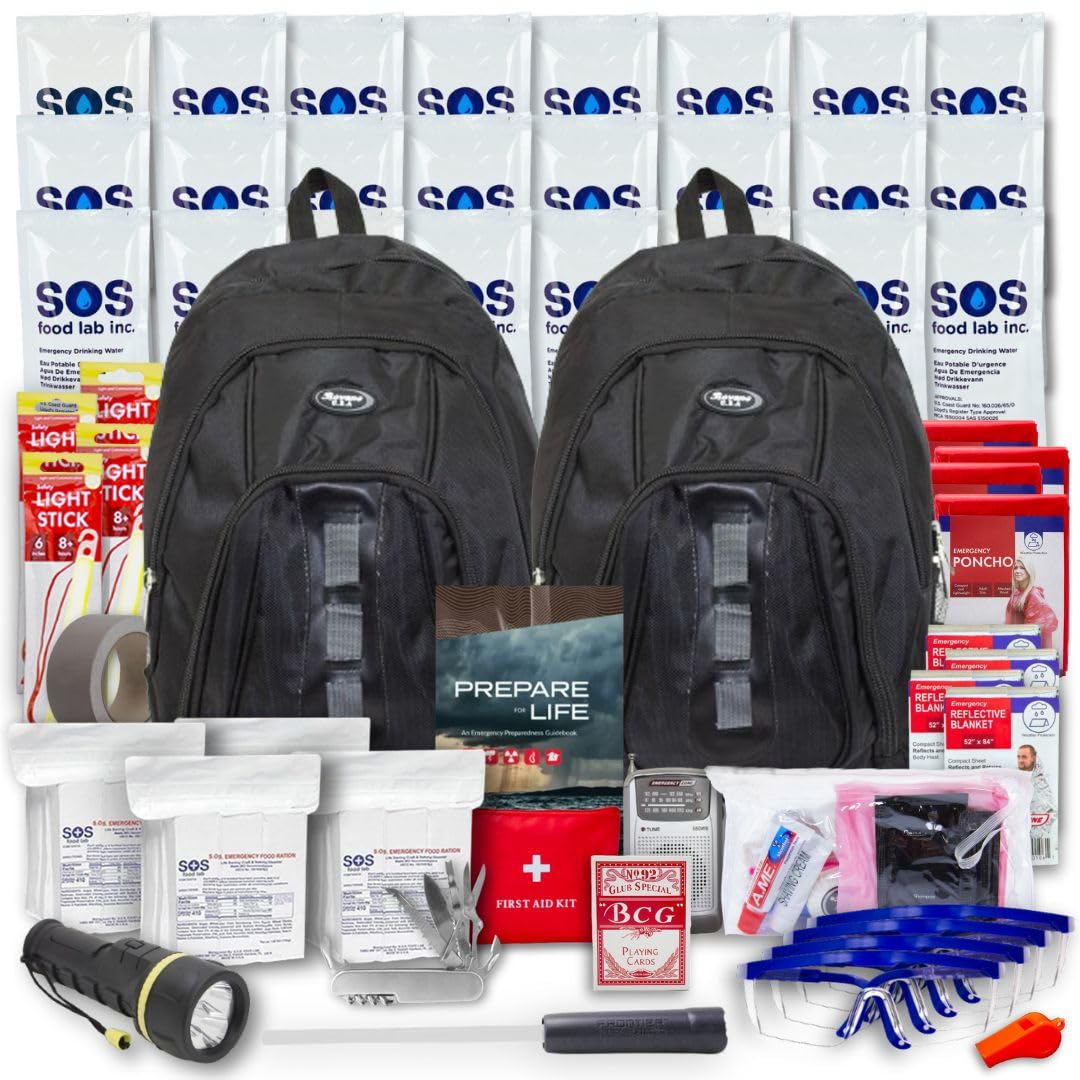
This Complete Deluxe kit from Emergency Zone is a solid starter option for those new to emergency preparedness. With 53 pieces covering first aid, shelter, light, and tools, it provides a baseline of essential gear. The backpack itself is noted for its sturdy construction and strong zippers, which hold up well even when packed fully.
Customers who bought this kit on a discount report being satisfied with the value, though several note that the bag is not fully packed — there is room to add your own gear. The included flashlight and radio are functional but basic, and the single roll of toilet paper is comically insufficient for even one day. Replacing the meal bars and water after 5-6 years is necessary, as with any kit.
If you are on a tight budget or want a customizable base to build upon, this kit gives you a sturdy bag, reliable basics, and the freedom to upgrade individual components over time. It is not the most complete kit, but it is a capable starting point.
Why it’s great
- Sturdy backpack with strong zippers
- Good variety of 53 essential items
- Room for personal additions and upgrades
- Cost-effective entry point for beginners
Good to know
- Not fully packed — you will want to add more gear
- Only one roll of toilet paper included
FAQ
How long does the food in a 72 Hour Survival Kit actually last?
Can I rely on the included water pouches for the full 72 hours?
Should I buy a kit or build my own bug-out bag?
Final Thoughts: The Verdict
For most users, the 72 hour survival kit winner is the Sirius Survival Bug Out Bag because it combines a premium 900D Oxford backpack, solar-powered electronics, and comprehensive food/water/shelter in one grab-and-go package. If you want a family-oriented kit that meets Red Cross standards, grab the First My Family All-in-One. And for the smartest value with advanced water sourcing options, nothing beats the Emergency Zone 2 & 4 Person Kit.

Mo Maruf
I created WellFizz to bridge the gap between vague wellness advice and actionable solutions. My mission is simple: to decode the research and give you practical tools you can actually use.
Beyond the data, I am a passionate traveler. I believe that stepping away from the screen to explore new environments is essential for mental clarity and physical vitality.